Likes
Comments
Share
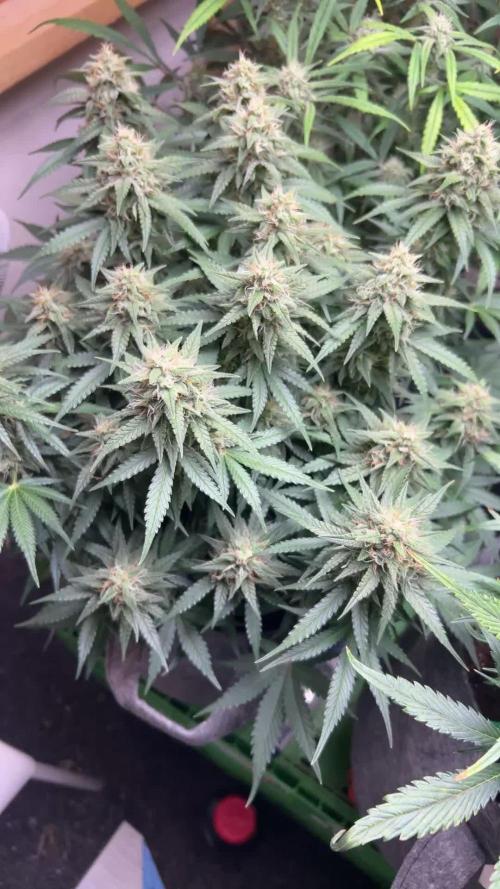
Welcome to Flower Week 8 of SuperStrains OreoZ I'm excited to share my grow journey with you from my SuperStrains Project . It's going to be an incredible ride, full of learning, growing, and connecting with fellow growers from all around the world! For this Project , I’ve chosen the Feminized Photo Strain OreoZ: Here’s what I’m working with: • 🌱 Tent: 225x150x150 • 🧑‍🌾 Breeder Company: SuperStrains • 💧 Humidity Range: 45 • ⏳ Flowering Time: 8-9 Weeks • Strain Info: 22%THC • 🌡️ Temperature: 26 • 🍵 Pot Size: 20 • Nutrient Brand: Hy-Pro • ⚡ Lights : 600W x 2 A huge thank you to SuperStrains for allowing me to try my Best with this amazing collection from Photo Strains they managed to Sponsore side by side with theyre Hy-Pro Nutriets . Big thanks for supporting the grower community worldwide! Your genetics and passion speak for themselves! I would truly appreciate every bit of feedback, help, questions, or discussions – and of course, your likes and interactions mean the world to me as I try to stand out in this exciting competition! Let’s grow together – and don’t forget to stop by again to see the latest updates! Happy growing! Stay lifted and stay curious! Peace & Buds!
Likes
7
Share
@Gram_Solo
Follow
Looking like a Peruvian jungle in here! The Runtz have done really well with the training and defoilation! We now seeing the bud sites slowly coming through. Main job this week.is to keep them big leaves tucked away to expose the bud sites to the light. Just started a tiny feeding of Plagron Green Sensation to begin with 0.5ml PL and then the next week 1ml until we get to 2ml feedings. Humidity now is slowly getting lowered over next 2 weeks until we at 55% Get to the chopprrr!!!! 🚁
Likes
26
Share
Welcome to my Lemon Oasis Twin Auto Diary. 1 Seed 2 fully growing phenos. Thanks to Original Sensible Seeds, Spider-Farmer & Xpert Nutrients. Week 6 Days 36-43 (a lil over a week) Both phenos are strong. The right one is bigger but the left has more shoots but smaller. I actually think I'm gonna get 2 different phenos. If that's even possible with 1 seed. They should be the same or its either 1 is bigger cause its taken up more, but, its hard to tell at this stage. They're acting very similar. But different in ways. The smell on one is my zingy, and the other is real deep candy lemon. Plant(s) smell amazing. Happy they went well be uppoted to a 20L pot. (I actually cut the pot away like you would a dixy cup placing it into new pot already back filled with soil. So no stress. Ruined a pot. But, hey. Wtfc right. Look forward to seen what happens next wk? Then be sure to drop by and let's hope we get two fat twins. Nutrients for this girl is the same. I just give it double the amount and that actually is working fine. 450-550ppm core NPK master bloom 6.6-7ph'ed to. 1x of all that's up above. Over 1200ppm per week. 2x 550ppm core feeds and everything else has little to no NPK value. And are given in-between feeds, every 3-4 days. Much love to my sponsors, whom without, I'd have a lot less gear. Mars, Spider, Terra P, Xpert, ORIGINAL SS and all my breeders i truly appreciate yall over the years. And look forward to starting new relationships come September. !!!!!DISCOUNT CODE FOR XPERT NUTRIENTS!!!!! CODE:GGST 20% OFF Xpertnutrients.com Appreciate all views and look forward to seen your diaries. Either way, thanks for stopping by.
Likes
254
Share
The plants produced really well couldn't be happier, makes me wonder if mistakes weren't made and neglect didn't happen how they would of turned out but no point dwelling on what could of been. Can't be happier with the outcome and will be back with a dry weight and smoke report. Big shout out to my gromies you know who you are for all the support you have given. Thank you to @NutriNPK, @Fast_buds & @eleen marshydro for all the products you have sent me
Likes
7
Share
So this grow is slowly going to finish. Most of the trichromes have turned milky and the first signs of amber are starting to show. The ladies have been fattening up and the nuggets are looking pretty frosty. The girls are stinky and sweet. Switching to the automated watering has made a huge difference. The girls are starting to slow down on water uptake and the leaves are starting to fade. The ladies all look quite different with 2 very distinct pheno types showing. One pheno of a short plant with lots of orange hairs and very dense nuggets. The other pheno is very tall with more white hairs and fluffier bud structure. I will harvest these ladies within the next 2 weeks, depending on how the trichromes develop. I have been using Plagron Green Sensation to help bud development. Thanks again to the sponsors Zamnesia and Plagron. See you next week and happy growing.
Likes
5
Share
@CreoWeed
Follow
And here we are with another week just over... And most probably next week I will also chop her down!! In these week probably for the heat stress she got I started seeing some main buds foxtailing. We are in the 10/14 days of plain pHed water, but I'm considering cutting her before the full flush is complete, this cause I can also see some amber trichomes. For now that's all, but now more than ever stay tuned for the next week, which will be most likely the harvest week! Stay high peeps!!
Likes
13
Share
@Pede97
Follow
two days of darkness satisfied! 👹
Likes
19
Share
Yellow butterfly came to see me the other day; that was nice. Starting to show signs of stress on the odd leaf, localized isolated blips, blemishes, who said growing up was going to be easy! Smaller leaves have less surface area for stomata to occupy, so the stomata are packed more densely to maintain adequate gas exchange. Smaller leaves might have higher stomatal density to compensate for their smaller size, potentially maximizing carbon uptake and minimizing water loss. Environmental conditions like light intensity and water availability can influence stomatal density, and these factors can affect leaf size as well. Leaf development involves cell division and expansion, and stomatal differentiation is sensitive to these processes. In essence, the smaller leaf size can lead to a higher stomatal density due to the constraints of available space and the need to optimize gas exchange for photosynthesis and transpiration. In the long term, UV-B radiation can lead to more complex changes in stomatal morphology, including effects on both stomatal density and size, potentially impacting carbon sequestration and water use. In essence, UV-B can be a double-edged sword for stomata: It can induce stomatal closure and potentially reduce stomatal size, but it may also trigger an increase in stomatal density as a compensatory mechanism. It is generally more efficient for gas exchange to have smaller leaves with a higher stomatal density, rather than large leaves with lower stomatal density. This is because smaller stomata can facilitate faster gas exchange due to shorter diffusion pathways, even though they may have the same total pore area as fewer, larger stomata. Leaf size tends to decrease in colder climates to reduce heat loss, while larger leaves are more common in warmer, humid environments. Plants in arid regions often develop smaller leaves with a thicker cuticle and/or hairs to minimize water loss through transpiration. Conversely, plants in wet environments may have larger leaves and drip tips to facilitate water runoff. Leaf size and shape can vary based on light availability. For example, leaves in shaded areas may be larger and thinner to maximize light absorption. Leaf mass per area (LMA) can be higher in stressful environments with limited nutrients, indicating a greater investment in structural components for protection and critical resource conservation. Wind speed, humidity, and soil conditions can also influence leaf morphology, leading to variations in leaf shape, size, and surface characteristics. Small leaves: Reduce water loss in arid or cold climates. Environmental conditions significantly affect gene expression in plants. Plants are sessile organisms, meaning they cannot move to escape unfavorable conditions, so they rely on gene expression to adapt to their surroundings. Environmental factors like light, temperature, water, and nutrient availability can trigger changes in gene expression, allowing plants to respond to and survive in diverse environments. Depending on the environment a young seedling encounters, the developmental program following seed germination could be skotomorphogenesis in the dark or photomorphogenesis in the light. Light signals are interpreted by a repertoire of photoreceptors followed by sophisticated gene expression networks, eventually resulting in developmental changes. The expression and functions of photoreceptors and key signaling molecules are highly coordinated and regulated at multiple levels of the central dogma in molecular biology. Light activates gene expression through the actions of positive transcriptional regulators and the relaxation of chromatin by histone acetylation. Small regulatory RNAs help attenuate the expression of light-responsive genes. Alternative splicing, protein phosphorylation/dephosphorylation, the formation of diverse transcriptional complexes, and selective protein degradation all contribute to proteome diversity and change the functions of individual proteins. Photomorphogenesis, the light-driven developmental changes in plants, significantly impacts gene expression. It involves a cascade of events where light signals, perceived by photoreceptors, trigger changes in gene expression patterns, ultimately leading to the development of a plant in response to its light environment. Genes are expressed, not dictated! While having the potential to encode proteins, genes are not automatically and constantly active. Instead, their expression (the process of turning them into proteins) is carefully regulated by the cell, responding to internal and external signals. This means that genes can be "turned on" or "turned off," and the level of expression can be adjusted, depending on the cell's needs and the surrounding environment. In plants, genes are not simply "on" or "off" but rather their expression is carefully regulated based on various factors, including the cell type, developmental stage, and environmental conditions. This means that while all cells in a plant contain the same genetic information (the same genes), different cells will express different subsets of those genes at different times. This regulation is crucial for the proper functioning and development of the plant. When a green plant is exposed to red light, much of the red light is absorbed, but some is also reflected back. The reflected red light, along with any blue light reflected from other parts of the plant, can be perceived by our eyes as purple. Carotenoids absorb light in blue-green region of the visible spectrum, complementing chlorophyll's absorption in the red region. They safeguard the photosynthetic machinery from excessive light by activating singlet oxygen, an oxidant formed during photosynthesis. Carotenoids also quench triplet chlorophyll, which can negatively affect photosynthesis, and scavenge reactive oxygen species (ROS) that can damage cellular proteins. Additionally, carotenoid derivatives signal plant development and responses to environmental cues. They serve as precursors for the biosynthesis of phytohormones such as abscisic acid () and strigolactones (SLs). These pigments are responsible for the orange, red, and yellow hues of fruits and vegetables, while acting as free scavengers to protect plants during photosynthesis. Singlet oxygen (¹O₂) is an electronically excited state of molecular oxygen (O₂). Singlet oxygen is produced as a byproduct during photosynthesis, primarily within the photosystem II (PSII) reaction center and light-harvesting antenna complex. This occurs when excess energy from excited chlorophyll molecules is transferred to molecular oxygen. While singlet oxygen can cause oxidative damage, plants have mechanisms to manage its production and mitigate its harmful effects. Singlet oxygen (¹O₂) is considered a reactive oxygen species (ROS). It's a form of oxygen with higher energy and reactivity compared to the more common triplet oxygen found in its ground state. Singlet oxygen is generated both in biological systems, such as during photosynthesis in plants, and in cellular processes, and through chemical and photochemical reactions. While singlet oxygen is a ROS, it's important to note that it differs from other ROS like superoxide (O₂⁻), hydrogen peroxide (H₂O₂), and hydroxyl radicals (OH) in its formation, reactivity, and specific biological roles. Non-photochemical quenching (NPQ) protects plants from damage caused by reactive oxygen species (ROS) by dissipating excess light energy as heat. This process reduces the overexcitation of photosynthetic pigments, which can lead to the production of ROS, thus mitigating the potential for photodamage. Zeaxanthin, a carotenoid pigment, plays a crucial role in photoprotection in plants by both enhancing non-photochemical quenching (NPQ) and scavenging reactive oxygen species (ROS). In high-light conditions, zeaxanthin is synthesized from violaxanthin through the xanthophyll cycle, and this zeaxanthin then facilitates heat dissipation of excess light energy (NPQ) and quenches harmful ROS. The Issue of Singlet Oxygen!! ROS Formation: Blue light, with its higher energy photons, can promote the formation of reactive oxygen species (ROS), including singlet oxygen, within the plant. Potential Damage: High levels of ROS can damage cellular components, including proteins, lipids, and DNA, potentially impacting plant health and productivity. Balancing Act: A balanced spectrum of light, including both blue and red light, is crucial for mitigating the harmful effects of excessive blue light and promoting optimal plant growth and stress tolerance. The Importance of Red Light: Red light (especially far-red) can help to mitigate the negative effects of excessive blue light by: Balancing the Photoreceptor Response: Red light can influence the activity of photoreceptors like phytochrome, which are involved in regulating plant responses to different light wavelengths. Enhancing Antioxidant Production: Red and blue light can stimulate the production of antioxidants, which help to neutralize ROS and protect the plant from oxidative damage. Optimizing Photosynthesis: Red light is efficiently used in photosynthesis, and its combination with blue light can lead to increased photosynthetic efficiency and biomass production. In controlled environments like greenhouses and vertical farms, optimizing the ratio of blue and red light is a key strategy for promoting healthy plant growth and yield. Understanding the interplay between blue light signaling, ROS production, and antioxidant defense mechanisms can inform breeding programs and biotechnological interventions aimed at improving plant stress resistance. In summary, while blue light is essential for plant development and photosynthesis, it's crucial to balance it with other light wavelengths, particularly red light, to prevent excessive ROS formation and promote overall plant health. Oxidative damage in plants occurs when there's an imbalance between the production of reactive oxygen species (ROS) and the plant's ability to neutralize them, leading to cellular damage. This imbalance, known as oxidative stress, can result from various environmental stressors, affecting plant growth, development, and overall productivity. Causes of Oxidative Damage: Abiotic stresses: These include extreme temperatures (heat and cold), drought, salinity, heavy metal toxicity, and excessive light. Biotic stresses: Pathogen attacks and insect infestations can also trigger oxidative stress. Metabolic processes: Normal cellular activities, particularly in chloroplasts, mitochondria, and peroxisomes, can generate ROS as byproducts. Certain chlorophyll biosynthesis intermediates can produce singlet oxygen (1O2), a potent ROS, leading to oxidative damage. ROS can damage lipids (lipid peroxidation), proteins, carbohydrates, and nucleic acids (DNA). Oxidative stress can compromise the integrity of cell membranes, affecting their function and permeability. Oxidative damage can interfere with essential cellular functions, including photosynthesis, respiration, and signal transduction. In severe cases, oxidative stress can trigger programmed cell death (apoptosis). Oxidative damage can lead to stunted growth, reduced biomass, and lower crop yields. Plants have evolved intricate antioxidant defense systems to counteract oxidative stress. These include: Enzymes like superoxide dismutase (SOD), catalase (CAT), and various peroxidases scavenge ROS and neutralize their damaging effects. Antioxidant molecules like glutathione, ascorbic acid (vitamin C), C60 fullerene, and carotenoids directly neutralize ROS. Developing plant varieties with gene expression focused on enhanced antioxidant capacity and stress tolerance is crucial. Optimizing irrigation, fertilization, and other management practices can help minimize stress and oxidative damage. Applying antioxidant compounds or elicitors can help plants cope with oxidative stress. Introducing genes for enhanced antioxidant enzymes or stress-related proteins over generations. Phytohormones, also known as plant hormones, are a group of naturally occurring organic compounds that regulate plant growth, development, and various physiological processes. The five major classes of phytohormones are: auxins, gibberellins, cytokinins, ethylene, and abscisic acid. In addition to these, other phytohormones like brassinosteroids, jasmonates, and salicylates also play significant roles. Here's a breakdown of the key phytohormones: Auxins: Primarily involved in cell elongation, root initiation, and apical dominance. Gibberellins: Promote stem elongation, seed germination, and flowering. Cytokinins: Stimulate cell division and differentiation, and delay leaf senescence. Ethylene: Regulates fruit ripening, leaf abscission, and senescence. Abscisic acid (ABA): Plays a role in seed dormancy, stomatal closure, and stress responses. Brassinosteroids: Involved in cell elongation, division, and stress responses. Jasmonates: Regulate plant defense against pathogens and herbivores, as well as other processes. Salicylic acid: Plays a role in plant defense against pathogens. 1. Red and Far-Red Light (Phytochromes): Red light: Primarily activates the phytochrome system, converting it to its active form (Pfr), which promotes processes like stem elongation and flowering. Far-red light: Inhibits the phytochrome system by converting the active Pfr form back to the inactive Pr form. This can trigger shade avoidance responses and inhibit germination. Phytohormones: Red and far-red light regulate phytohormones like auxin and gibberellins, which are involved in stem elongation and other growth processes. 2. Blue Light (Cryptochromes and Phototropins): Blue light: Activates cryptochromes and phototropins, which are involved in various processes like stomatal opening, seedling de-etiolation, and phototropism (growth towards light). Phytohormones: Blue light affects auxin levels, influencing stem growth, and also impacts other phytohormones involved in these processes. Example: Blue light can promote vegetative growth and can interact with red light to promote flowering. 3. UV-B Light (UV-B Receptors): UV-B light: Perceived by UVR8 receptors, it can affect plant growth and development and has roles in stress responses, like UV protection. Phytohormones: UV-B light can influence phytohormones involved in stress responses, potentially affecting growth and development. 4. Other Colors: Green light: Plants are generally less sensitive to green light, as chlorophyll reflects it. Other wavelengths: While less studied, other wavelengths can also influence plant growth and development through interactions with different photoreceptors and phytohormones. Key Points: Cross-Signaling: Plants often experience a mix of light wavelengths, leading to complex interactions between different photoreceptors and phytohormones. Species Variability: The precise effects of light color on phytohormones can vary between different plant species. Hormonal Interactions: Phytohormones don't act in isolation; their interactions and interplay with other phytohormones and environmental signals are critical for plant responses. The spectral ratio of light (the composition of different colors of light) significantly influences a plant's hormonal balance. Different wavelengths of light are perceived by specific photoreceptors in plants, which in turn regulate the production and activity of various plant hormones (phytohormones). These hormones then control a wide range of developmental processes.
Processing
Likes
11
Share
@Jayndre69
Follow
Still going like a tank. Slowed down slightly as i broke 2 branches training her but the branches have almost healed and shes bouncing back! Well happy with how its going, going to give her 2 more weeks veg. Any tips on getting her out of the 15l pot into the 20l flower pot?? Ive never transplanted anything this big cheers folks
Likes
7
Share
@HookahCli
Follow
La Kosher Kush de la derecha abajo, tiene las hojas más finas y es más alta, las otras 3 Kosher Kush tienen las hojas más gruesas, la del medio abajo tiene un poco de color morado en el apical. Las Kandy Kush se parecen bastante, un poco más altas la de los laterales, pero se las ve bastante bien. Las Lemon Krystal son pequeñas y no se nota mucho, pero la del centro izquierda, tiene las hojas un poco más anchas. Si os fijáis en la de abajo izquierda, tiene una planta pequeñita al lado que es la anterior 1024 que se quedo una ahí en la tierra y la otra la saqué y la puse en una maceta de cactus, que también ha germinado, pero les ha costado, por eso están fuera y tenemos las Lemon Krystal, en el próximo trasplante, la sacare y la pondré en alguna maceta por el patio. Se han trasplantado a maceta de 6L.
Likes
Comments
Share

Vamos familia, actualizamos la segunda semana de vida de esta Amaretto Tarmac de Seedstockers. Empezamos abonando ya con varios productos de la gama Agrobeta. Temperatura y humedad dentro de los rangos correctos, 18 horas luz, 6 oscuridad. Una lástima que de todas solo aguanto una, aún así seguiremos con el diario hasta el final. Está próxima semana trasplantaré a sus 7 litros definitivos. Agrobeta: https://www.agrobeta.com/agrobetatiendaonline/36-abonos-canamo Hasta aquí todo, Buenos humos 💨💨💨
Likes
15
Share
@Deli_Weed
Follow
Semana del flush 🚿🤩 empecé a hacer el flush desde la semana pasada, desde el miércoles, y la coseche el día viernes de esta semana, ahorita ya las tengo curándose, se secaron muy rápido en cuestión de 3 días 😥 Pero se ven muy bien, en una semana subiré los resultados finales 😄
Likes
376
Share
Hello to you all. As a true visionary I decided to go FULL HYDRO this week, that means water in buckets and outside the buckets /s This grow turns out to be an uphill battle but i already decided to bring it to completion no matter what...Icy weather, floods, alien invasions what's coming next a big bank crash?! I bring this grow to the end , who needs banks anyways when you got #coins On 22.02. added nutrients to the 140 liters of solution. That's it, I hope to see y'all next week growmies.
Likes
7
Share
@PCGrows
Follow
This is more preflower week, bud sites emerged bud plant is hasn’t quite stretched yet. This’ll be the week she gets y’all or I know my pots are a little too big and she’s working to much on root growth those first weeks
Processing
Likes
33
Share
These girls are starting to get really big and bushy! This has started to become quite the sea of green setup but they seem to be happy and healthy still! These are definitely slower to flower than my other strains going in the other box but with the long veg/flower time with this strain I know I’m going to get a decent yield compared to the LSD25 and BlueBerry! Continued with a light feeding with Advanced Nutrients, I’m starting to see slight bits of burn on the edges so I will have to keep an eye on them throughout the week. Hopefully she starts to develop some big colas soon!!
Likes
22
Share
@Chubbs
Follow
Weekly update on these beautiful ladies. They've grown amazing this week, starting to really flower showing some really cool pink pistols. Excited about these but nervous at the same time, since they're next to my greenhouse which having some catapiller issues at the moment. All in all Happy Growing.
Likes
6
Share
Se acerca campaña de corte Las demás las seguimos cada 10 días con tes