Likes
2
Share
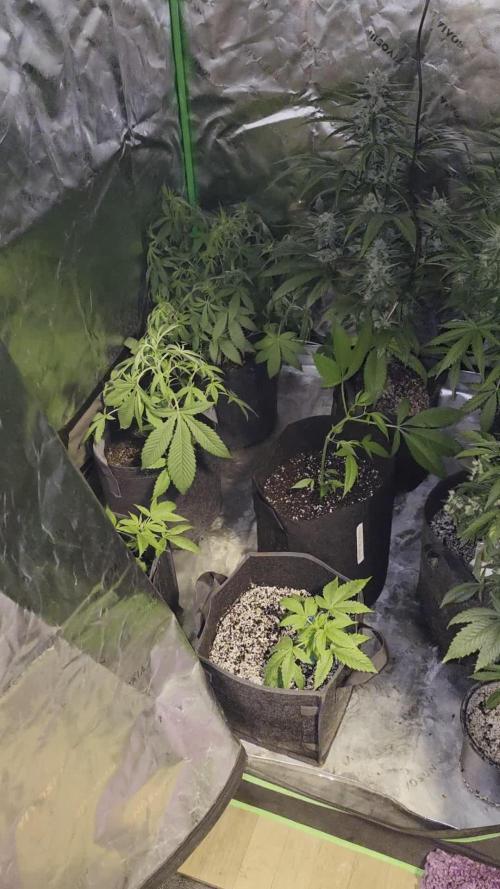
I absolutely love to watch them grow! Especially that moment they hit their first growth spurt. I started with RO water that is remineralized for drinking purposes. The ppm is only 18! My tap is 156! So considering they don’t need much water, I’ve been stealing some of our drinking water. The RO water starts at pH of 7. After I add the nutrients, ppm of 249 @ pH of 5.8 while soil is still sweet @ pH of 7 I think my days are off as a new week begins on the last day of the previous week. I am going to leave that for consistency. 04/21 - Noticing some possible nutrient issues with the Fruity Pebbles for several days now. Going to see what she needs. Up front I’m thinking maybe just a super small amount of Amino Acids with a little Epsom Salt. Maybe she is struggling to access the nitrates from the neem cake. IF it’s a issues with nitrogen. We will see. Maybe she would benefit from some extra calcium?… Any ideas are greatly appreciated. Day 22 and I am noticing how these girls have been burning up a lot of potassium lately, dealing with the wind and sun 💨 ☀️, getting pushed around all day. I plant to top dress with some Kelp Meal pretty soon. Day 24 -> 4/22/22- a quote from the weather on today’s red flag warning and dust storm warning. “ HAZARD...Less than a quarter mile visibility with damaging wind in excess of 60 mph. SOURCE...Satellite imagery. IMPACT...Dangerous life-threatening travel.” I’m keeping the girls inside today. Day 26, I was planning to check the runoff on some of these girls, especially the fruity pebbles, however I messed that up as I also top dressed WAY too much of the seaweed bliss. So I flushed with plain RO water at pH of 7 until there was only slight coloration in the runoff. I didn’t check the runoff as a lot has changed with all that flushing. So next watering/feeding I will make sure I check the runoff on multiple plants. So the seaweed bliss with its 17 on potassium, seems to be the most likely culprit for why there is a bronze-ish color on the inside of the new growth. Hopefully a foliar feed of Epsom salts can correct the problem. Inside tent, lights on LOW. Noticing similar pattern in all of them to a degree, most noticeable in the fruity pebbles.
Likes
Comments
Share
Likes
11
Share
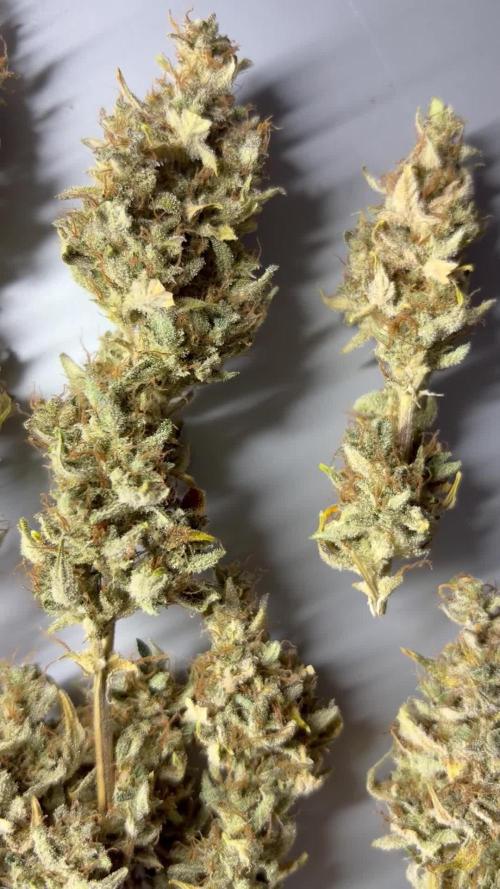
Day 58 : She is fattening her buds also with a slower rhythms. CO2 stopped for all ladies. As you can see trichomes still are in cloudy period. So she needs couple weeks for sure. Edit (Day 62) : I watered again with nutrients. She is very stinky lady. She has a smell that reminds be bubble gum, so lovely. One of favorite tastes in bud.
Likes
100
Share
@AsNoriu
Follow
Day 99. All 3 girls down. Wet trim . Can't wait to try them out. Scissors hash was so sweet ... 1.6 kg for wet plant is not bad too I think. Plant A should be biggest in this grow from all strains ... She has to beat 202 g. of AD. Happy Growing !!!
Likes
12
Share
@GuaroMan
Follow
Esta semana recién empieza a ver signos de flora, hice poda de bajos y defoliación
Likes
29
Share
@Kagesan
Follow
***English version*** Welcome to Week 4 of Flowering! 🥦🥦🥦🥦 Hey everyone! The fourth week of flowering has begun, and it looks like the stretch phase already wrapped up last week. There hasn’t been much vertical growth—Runtz A now stands at 48 cm, while Runtz B has reached 59 cm. Today, I didn’t do a full defoliation but simply removed a few larger, obstructive fan leaves. The buds are visibly increasing in size, and Runtz B is leading the way with impressive speed. She seems to be about three days ahead in development compared to Runtz A. One of this week’s highlights is the incredibly intense aroma filling the entire tent. The sweet notes remind me of a mix of ripe tropical fruits and berries—absolutely irresistible! Although the two plants have some visual differences, I’m now convinced they share the same phenotype. Everything is going according to plan, and I’m excited to see how the buds continue to develop in the coming weeks. Until the next update—happy growing! 🌱 ***Deutsche Version*** Willkommen zur vierten Woche der Blüte🥦🥦🥦🥦 Hallo zusammen! Die vierte Blütewoche hat begonnen, und es scheint, als wäre der Stretch bereits letzte Woche abgeschlossen gewesen. Viel Höhenwachstum gab es jedenfalls nicht mehr: Runtz A misst nun 48 cm und Runtz B 59 cm. Heute habe ich keine vollständige Entlaubung durchgeführt, sondern lediglich einige größere, störende Blätter entfernt. Die Buds nehmen nun sichtbar an Größe zu, und besonders Runtz B legt ein beeindruckendes Tempo vor. Sie scheint in ihrer Entwicklung etwa drei Tage weiter zu sein als Runtz A. Ein weiteres Highlight dieser Woche ist der unglaublich intensive Duft, der das gesamte Zelt erfüllt. Die süßlichen Noten erinnern an eine Mischung aus reifem tropischen Obst und Beeren, einfach unwiderstehlich! Obwohl sich beide Pflanzen äußerlich unterscheiden, bin ich mittlerweile überzeugt, dass sie denselben Phänotyp besitzen. Alles in allem läuft alles nach Plan, und ich bin gespannt, wie sich die Blüten in den kommenden Wochen weiterentwickeln. Bis zum nächsten Update – happy growing! 🌱
Likes
40
Share
Today is day 77 so we are starting week 12 .. all the plants are doing great 👍 Gummiebears is the real star of the show as she's double any other girls I have going right now.. she in 4 gallon pot and is around 44 to 45 inches tall and has so so many bud sites that are stacking fast.. she is 2 weeks behind in flower but you wouldn't know it .. Grease Gun and Froot by the foot are almost ready for the flush stage , today I fed them next to nothing.. Cream however is still getting full dose and she taking it well ...... Early on I cut the lowest 2 branches and cloned them and stuck them in a vase with nutrient water fore 10 days then stuck them in dirt and boy have they takin off .. they started to reveg and I look forward to seeing how crazy that gets ... pictures about illustrating what they once where vs now .. hope all is well.. God bless everyone 🙏 Happy growing ✌️
Likes
6
Share
8/19/2023 Day 46 Veg: she is finally starting to develop some additional branching. I've been LST and leaf tucking. I was thinking about doing some additional defoliating, but I don't want to slow down her growth anymore. 8/20/2023: started the subirrigation today, with filtered water with a 6.0 ph. 8/21/2023: she is definitely reacting positively to the bottom watering. She was praying more than usual this morning, so hopefully the growth will continue to puck up speed now. 8/23/2023: defoliated a few more of the big fan leaves, to allow more light to the lower branches. 8/24/2023: had to fill up the water again for the subirrigation. Used plane water with a 6.2 ph. Plant is doing great.
Likes
1
Share
•Seconda settimana• Buongiorno ragazzi Entrando nella seconda settimana ci siamo accorti che nonostante tutte le precauzioni qualche foglia restava gialla, sempre quelle sottostanti. Da notare che la pianta cresceva benissimo e i pistilli aumentavano di giorno in giorno. A metà settimana circa abbiamo aggiunto 15g a pianta di top dress flo, un preparato organico che è risultato molto efficace e positivo per la pianta, irrigando regolarmente come sempre senza però l’aggiunta di melassa, solo acqua. Per sette giorni dalla somministrazione. Arrivando quindi fino a metà della terza settimana. Ricordo di aumentare sempre la dose di acqua, controllando la pianta e rimanendo sempre costanti nei giorni.
Likes
23
Share
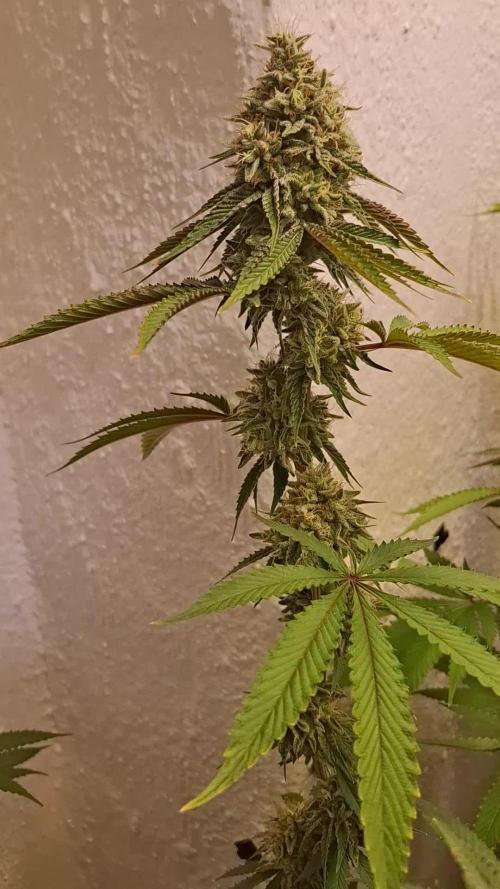
Day42 of flowering:Such a beautiful bud structure. Leaves are mostly changed to dark purple now and some fans are fading out. She will be finished shortly so it got a blast of overdrive. Sugar leaves are very resinous and feel thick. She smells very strong, of ripe berries when you stick your nose right on it. She is doing very well. Day45: Removed old fans blocking bud sites... She smells phenomenal! Sickly sweet scent of over ripe fruits with a hint of fuel. Super sticky.
Likes
7
Share
Este próximo día 14/06/23 entraremos en la 3º semana de crecimiento. A día 12/06/23 llevamos 28 días desde que se empezó a germinar. ya están todas trasplantadas a la macetas definitiva de 7 litros. Las he regado con roots + crecimiento + calmag + enzym. Todo de BOOM nutrients. He realizado el trasplante en 1 hora y 50 minutos en la mañana del lunes 12/06/23 en directo, en twitch.tv/xmackobox
Processing
Likes
1
Share
empezamos con floración, esperando a que crezcan
Likes
42
Share
@Theia
Follow
A good week for sherberts. I'm doing a comparison to see how the growth is effected by growing them both in a different way. They are both beautiful and seem to love the environment for now. Not overly hungry but I did pot them on with ecothrive charge which has all sorts of goodies in so I guess the soil is good. Food wise they took some fish mix which was mixed to an EC of 1.3 PH 6.2. I was planning to train out for 8 colas but I think I might just flip them now to see what I get. I still have more sherbert beans left to play with in my next grow and I also now have 8 clones from the sherbert too which I'm undecided what to do with. All in all these are easy to grow and ask for not much. The reward so far is 2 very pretty plants. Great job with these @weedseedsexpress.👍 Oh and I snapped a stem while training so she is tapped up and should be good in a few days. Thanks for looking. Stay safe😷 Happy growing🌿🌱🌱
Likes
19
Share
Yellow butterfly came to see me the other day; that was nice. Starting to show signs of stress on the odd leaf, localized isolated blips, blemishes, who said growing up was going to be easy! Smaller leaves have less surface area for stomata to occupy, so the stomata are packed more densely to maintain adequate gas exchange. Smaller leaves might have higher stomatal density to compensate for their smaller size, potentially maximizing carbon uptake and minimizing water loss. Environmental conditions like light intensity and water availability can influence stomatal density, and these factors can affect leaf size as well. Leaf development involves cell division and expansion, and stomatal differentiation is sensitive to these processes. In essence, the smaller leaf size can lead to a higher stomatal density due to the constraints of available space and the need to optimize gas exchange for photosynthesis and transpiration. In the long term, UV-B radiation can lead to more complex changes in stomatal morphology, including effects on both stomatal density and size, potentially impacting carbon sequestration and water use. In essence, UV-B can be a double-edged sword for stomata: It can induce stomatal closure and potentially reduce stomatal size, but it may also trigger an increase in stomatal density as a compensatory mechanism. It is generally more efficient for gas exchange to have smaller leaves with a higher stomatal density, rather than large leaves with lower stomatal density. This is because smaller stomata can facilitate faster gas exchange due to shorter diffusion pathways, even though they may have the same total pore area as fewer, larger stomata. Leaf size tends to decrease in colder climates to reduce heat loss, while larger leaves are more common in warmer, humid environments. Plants in arid regions often develop smaller leaves with a thicker cuticle and/or hairs to minimize water loss through transpiration. Conversely, plants in wet environments may have larger leaves and drip tips to facilitate water runoff. Leaf size and shape can vary based on light availability. For example, leaves in shaded areas may be larger and thinner to maximize light absorption. Leaf mass per area (LMA) can be higher in stressful environments with limited nutrients, indicating a greater investment in structural components for protection and critical resource conservation. Wind speed, humidity, and soil conditions can also influence leaf morphology, leading to variations in leaf shape, size, and surface characteristics. Small leaves: Reduce water loss in arid or cold climates. Environmental conditions significantly affect gene expression in plants. Plants are sessile organisms, meaning they cannot move to escape unfavorable conditions, so they rely on gene expression to adapt to their surroundings. Environmental factors like light, temperature, water, and nutrient availability can trigger changes in gene expression, allowing plants to respond to and survive in diverse environments. Depending on the environment a young seedling encounters, the developmental program following seed germination could be skotomorphogenesis in the dark or photomorphogenesis in the light. Light signals are interpreted by a repertoire of photoreceptors followed by sophisticated gene expression networks, eventually resulting in developmental changes. The expression and functions of photoreceptors and key signaling molecules are highly coordinated and regulated at multiple levels of the central dogma in molecular biology. Light activates gene expression through the actions of positive transcriptional regulators and the relaxation of chromatin by histone acetylation. Small regulatory RNAs help attenuate the expression of light-responsive genes. Alternative splicing, protein phosphorylation/dephosphorylation, the formation of diverse transcriptional complexes, and selective protein degradation all contribute to proteome diversity and change the functions of individual proteins. Photomorphogenesis, the light-driven developmental changes in plants, significantly impacts gene expression. It involves a cascade of events where light signals, perceived by photoreceptors, trigger changes in gene expression patterns, ultimately leading to the development of a plant in response to its light environment. Genes are expressed, not dictated! While having the potential to encode proteins, genes are not automatically and constantly active. Instead, their expression (the process of turning them into proteins) is carefully regulated by the cell, responding to internal and external signals. This means that genes can be "turned on" or "turned off," and the level of expression can be adjusted, depending on the cell's needs and the surrounding environment. In plants, genes are not simply "on" or "off" but rather their expression is carefully regulated based on various factors, including the cell type, developmental stage, and environmental conditions. This means that while all cells in a plant contain the same genetic information (the same genes), different cells will express different subsets of those genes at different times. This regulation is crucial for the proper functioning and development of the plant. When a green plant is exposed to red light, much of the red light is absorbed, but some is also reflected back. The reflected red light, along with any blue light reflected from other parts of the plant, can be perceived by our eyes as purple. Carotenoids absorb light in blue-green region of the visible spectrum, complementing chlorophyll's absorption in the red region. They safeguard the photosynthetic machinery from excessive light by activating singlet oxygen, an oxidant formed during photosynthesis. Carotenoids also quench triplet chlorophyll, which can negatively affect photosynthesis, and scavenge reactive oxygen species (ROS) that can damage cellular proteins. Additionally, carotenoid derivatives signal plant development and responses to environmental cues. They serve as precursors for the biosynthesis of phytohormones such as abscisic acid () and strigolactones (SLs). These pigments are responsible for the orange, red, and yellow hues of fruits and vegetables, while acting as free scavengers to protect plants during photosynthesis. Singlet oxygen (¹O₂) is an electronically excited state of molecular oxygen (O₂). Singlet oxygen is produced as a byproduct during photosynthesis, primarily within the photosystem II (PSII) reaction center and light-harvesting antenna complex. This occurs when excess energy from excited chlorophyll molecules is transferred to molecular oxygen. While singlet oxygen can cause oxidative damage, plants have mechanisms to manage its production and mitigate its harmful effects. Singlet oxygen (¹O₂) is considered a reactive oxygen species (ROS). It's a form of oxygen with higher energy and reactivity compared to the more common triplet oxygen found in its ground state. Singlet oxygen is generated both in biological systems, such as during photosynthesis in plants, and in cellular processes, and through chemical and photochemical reactions. While singlet oxygen is a ROS, it's important to note that it differs from other ROS like superoxide (O₂⁻), hydrogen peroxide (H₂O₂), and hydroxyl radicals (OH) in its formation, reactivity, and specific biological roles. Non-photochemical quenching (NPQ) protects plants from damage caused by reactive oxygen species (ROS) by dissipating excess light energy as heat. This process reduces the overexcitation of photosynthetic pigments, which can lead to the production of ROS, thus mitigating the potential for photodamage. Zeaxanthin, a carotenoid pigment, plays a crucial role in photoprotection in plants by both enhancing non-photochemical quenching (NPQ) and scavenging reactive oxygen species (ROS). In high-light conditions, zeaxanthin is synthesized from violaxanthin through the xanthophyll cycle, and this zeaxanthin then facilitates heat dissipation of excess light energy (NPQ) and quenches harmful ROS. The Issue of Singlet Oxygen!! ROS Formation: Blue light, with its higher energy photons, can promote the formation of reactive oxygen species (ROS), including singlet oxygen, within the plant. Potential Damage: High levels of ROS can damage cellular components, including proteins, lipids, and DNA, potentially impacting plant health and productivity. Balancing Act: A balanced spectrum of light, including both blue and red light, is crucial for mitigating the harmful effects of excessive blue light and promoting optimal plant growth and stress tolerance. The Importance of Red Light: Red light (especially far-red) can help to mitigate the negative effects of excessive blue light by: Balancing the Photoreceptor Response: Red light can influence the activity of photoreceptors like phytochrome, which are involved in regulating plant responses to different light wavelengths. Enhancing Antioxidant Production: Red and blue light can stimulate the production of antioxidants, which help to neutralize ROS and protect the plant from oxidative damage. Optimizing Photosynthesis: Red light is efficiently used in photosynthesis, and its combination with blue light can lead to increased photosynthetic efficiency and biomass production. In controlled environments like greenhouses and vertical farms, optimizing the ratio of blue and red light is a key strategy for promoting healthy plant growth and yield. Understanding the interplay between blue light signaling, ROS production, and antioxidant defense mechanisms can inform breeding programs and biotechnological interventions aimed at improving plant stress resistance. In summary, while blue light is essential for plant development and photosynthesis, it's crucial to balance it with other light wavelengths, particularly red light, to prevent excessive ROS formation and promote overall plant health. Oxidative damage in plants occurs when there's an imbalance between the production of reactive oxygen species (ROS) and the plant's ability to neutralize them, leading to cellular damage. This imbalance, known as oxidative stress, can result from various environmental stressors, affecting plant growth, development, and overall productivity. Causes of Oxidative Damage: Abiotic stresses: These include extreme temperatures (heat and cold), drought, salinity, heavy metal toxicity, and excessive light. Biotic stresses: Pathogen attacks and insect infestations can also trigger oxidative stress. Metabolic processes: Normal cellular activities, particularly in chloroplasts, mitochondria, and peroxisomes, can generate ROS as byproducts. Certain chlorophyll biosynthesis intermediates can produce singlet oxygen (1O2), a potent ROS, leading to oxidative damage. ROS can damage lipids (lipid peroxidation), proteins, carbohydrates, and nucleic acids (DNA). Oxidative stress can compromise the integrity of cell membranes, affecting their function and permeability. Oxidative damage can interfere with essential cellular functions, including photosynthesis, respiration, and signal transduction. In severe cases, oxidative stress can trigger programmed cell death (apoptosis). Oxidative damage can lead to stunted growth, reduced biomass, and lower crop yields. Plants have evolved intricate antioxidant defense systems to counteract oxidative stress. These include: Enzymes like superoxide dismutase (SOD), catalase (CAT), and various peroxidases scavenge ROS and neutralize their damaging effects. Antioxidant molecules like glutathione, ascorbic acid (vitamin C), C60 fullerene, and carotenoids directly neutralize ROS. Developing plant varieties with gene expression focused on enhanced antioxidant capacity and stress tolerance is crucial. Optimizing irrigation, fertilization, and other management practices can help minimize stress and oxidative damage. Applying antioxidant compounds or elicitors can help plants cope with oxidative stress. Introducing genes for enhanced antioxidant enzymes or stress-related proteins over generations. Phytohormones, also known as plant hormones, are a group of naturally occurring organic compounds that regulate plant growth, development, and various physiological processes. The five major classes of phytohormones are: auxins, gibberellins, cytokinins, ethylene, and abscisic acid. In addition to these, other phytohormones like brassinosteroids, jasmonates, and salicylates also play significant roles. Here's a breakdown of the key phytohormones: Auxins: Primarily involved in cell elongation, root initiation, and apical dominance. Gibberellins: Promote stem elongation, seed germination, and flowering. Cytokinins: Stimulate cell division and differentiation, and delay leaf senescence. Ethylene: Regulates fruit ripening, leaf abscission, and senescence. Abscisic acid (ABA): Plays a role in seed dormancy, stomatal closure, and stress responses. Brassinosteroids: Involved in cell elongation, division, and stress responses. Jasmonates: Regulate plant defense against pathogens and herbivores, as well as other processes. Salicylic acid: Plays a role in plant defense against pathogens. 1. Red and Far-Red Light (Phytochromes): Red light: Primarily activates the phytochrome system, converting it to its active form (Pfr), which promotes processes like stem elongation and flowering. Far-red light: Inhibits the phytochrome system by converting the active Pfr form back to the inactive Pr form. This can trigger shade avoidance responses and inhibit germination. Phytohormones: Red and far-red light regulate phytohormones like auxin and gibberellins, which are involved in stem elongation and other growth processes. 2. Blue Light (Cryptochromes and Phototropins): Blue light: Activates cryptochromes and phototropins, which are involved in various processes like stomatal opening, seedling de-etiolation, and phototropism (growth towards light). Phytohormones: Blue light affects auxin levels, influencing stem growth, and also impacts other phytohormones involved in these processes. Example: Blue light can promote vegetative growth and can interact with red light to promote flowering. 3. UV-B Light (UV-B Receptors): UV-B light: Perceived by UVR8 receptors, it can affect plant growth and development and has roles in stress responses, like UV protection. Phytohormones: UV-B light can influence phytohormones involved in stress responses, potentially affecting growth and development. 4. Other Colors: Green light: Plants are generally less sensitive to green light, as chlorophyll reflects it. Other wavelengths: While less studied, other wavelengths can also influence plant growth and development through interactions with different photoreceptors and phytohormones. Key Points: Cross-Signaling: Plants often experience a mix of light wavelengths, leading to complex interactions between different photoreceptors and phytohormones. Species Variability: The precise effects of light color on phytohormones can vary between different plant species. Hormonal Interactions: Phytohormones don't act in isolation; their interactions and interplay with other phytohormones and environmental signals are critical for plant responses. The spectral ratio of light (the composition of different colors of light) significantly influences a plant's hormonal balance. Different wavelengths of light are perceived by specific photoreceptors in plants, which in turn regulate the production and activity of various plant hormones (phytohormones). These hormones then control a wide range of developmental processes.
Likes
27
Share
Day 76 Flowering: Ir seems we have a longer flowering pheno of the mimosa Lemon !!. She is a huge bushy, heavy calyx laden monster!!. It has been a roller coaster so far with this pheno of the strain. Watching the huge explosion of growth in the stretch period was amazing and I expected huge thick donkey dick colas like grows of others had shown so i was dissapointed for the majority of the flowering period with how she was progressing. Loose, Berry like patterns were all over the long stems so i knew it would be a "wait and see" ending but I now see the potency and beauty of these ripening classy looking queens. Up close ,her colours are really varied and bright with purples, reds, greens and the ripening fire brown pistils. I do not begrudge her another week flowering now and expect she will benefit from it . Her smell is potent lemon/fuel now and very strong. Hopefully she will finish soon. Be safe and well ..
Likes
16
Share
@nurari
Follow
Первая неделя прошла. Растения развиваются, сейчас нам важно создать отличную корневую систему для мощного и быстрого развития растения. В этот раз взял на тест новый для меня продукт - микоризу "Big Foot". ПО обычаю сделал чай, который готовился сутки. Все что нам нужно это вода, микориза, сахар и кислород. в моем случае заместо сахара я использую мелассу из свеклы Результат не должен заставить себя ждать.
Likes
31
Share
@Cultivate
Follow
Week 8 Looking absolutely huge😂 They’re so tall and wide . Lots of healthy green leaves and strong roots. I was worrying a lot about sex issues as when I did my research I found out they’re quite common to hermaphrodite. Was really worrying but all calyx’s have female signs (so far🙏🏻) so pray for me brothers&sisters.