


Processing
Likes
Comments
Share


@Blazeman
Follow
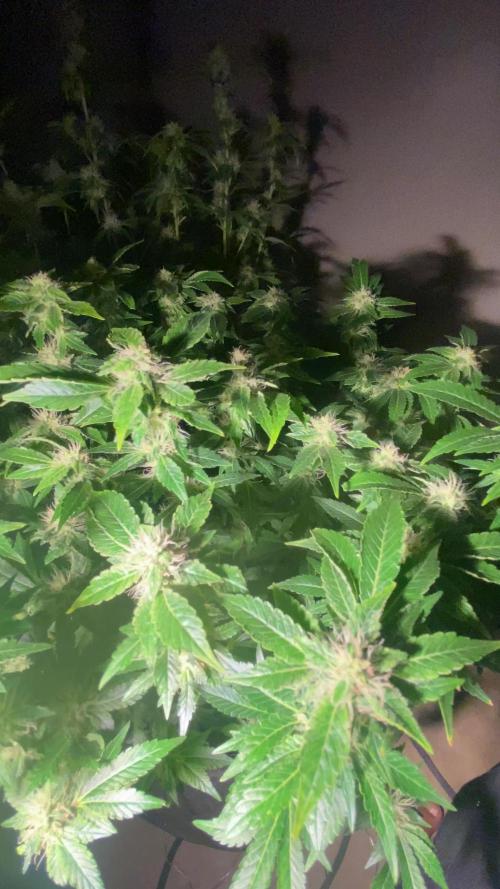
Temps have been low 80s all week but otherwise no other issues. So far so good. Leaves yellowing as expected in the flowering stage. Buds getting fatter 😊




Likes
72
Share


@BodyByVio
Follow
This week I had to Lollipop again (I know is very late and I hope I didn’t stressed the plant to much).
My canopy is so tick and so many overlapping leaves and buds in the center of the plant that don’t receive enough light or any at all , n combination with the RH swings that I got going on (45 and 63 RH), I’m very afraid of mold. I should have did a better job at Lollipoping from day 21. I’m inexperienced grower and I didn’t knew better.
I decided is better to risk to shock the plant a little bit risking a reduction in yield then get mold or pests and lose it all.
My 30 pin dehumidifier works great with the AC but sometimes when the AC( compressor) stops my RH jump at 62% -63%, witch I don’t like . I’m trying to keep the humidity around 50% but in such a small room between the AC and Dehumidifier I got big swings in temp ( 75-82) and RH ( 45%-63%) witch is not ideal but is nothing that I can do. I played with the AC and Dehumidifier setting a lot trying to keep humidity around 50% and temp around 80 degrees and that’s the best I can. My AC is set at 82 degrees and my Dehumidifier is set at 45% RH.
Also during the lights off (day time) is very hard to keep the temperature In control when outside is 110-115 degrees with my portable AC (1400BTU) in the 4x 6 closet. Is crazy but I do my best to keep temp under control.
This is another rocky mistake I made is trying growing weed DWC in the middle of summer where temps are 105-115 degrees constant in a closet without centralized AC port and at second level in the building. LOL
Also I think I underfed her (630 PPM TDS, PH 5.8-5.9) ) and I got a Ca deficiency witch I think is the reason my flowers developed slower then I anticipated.
Hopefully I’m wrong and everything will be good.
P.S. I got a little bit of calcium deficiency caused by salt buildup (to much PK boost) despite my earlier belief that is underfed.
I increased the PPM from week 4 (630-640TDS) to 680 TDS) on week 5 while I kept the PK booster at 3+ml l per gallon. Slightly my PPM’s was rising in my reservoir for few days until I decided that my plant can’t take that much nutrients (PK). 2-3 days after I increased the TDS I’ve noticed more spots on the lower leaves with tip burns on top ( first signs of PK toxicity). One day later found spots and yellowing of the leaves on top of the plant that indicates Ca deficiency caused by salt buildup ( PK toxicity) and reversed osmosis (hope I’m not wrong). Going into week 6 I lowered the PK boost at 1.5ml / gallon and total TDS to 640 PPM. Seems like leaves damage to stop and my PPM to stay stabile at 630-640. Trying to keep PH at 5.8 max 5.9.
I will post pictures of my Ca deficiency/ PK toxicity.
If you guys have any suggestions please leave me a comment.

Likes
4
Share


@SzkolaZiola
Follow
Magnificent plant! Sooo, sooo resinous, covered in trichomes and smells super-citrusy - kind of like lemon scented Geranium 🍋
Small but mighty hard buds. This is one of the most trichome producing flowers I have ever seen. I'm in love 😍
Breeder did great job here!

Likes
1
Share


@HoneyBlunt42
Follow
Day 94 - today the temperature inside the tent dropped to 10-12 degrees Celsius. So it's harvest time.
I trimmed almost all the leaves and hung the plant in a dark place to dry at a temperature of 12 degrees. This is not enough, but unfortunately there are no other conditions. Drying may take longer than the usual 10-12 days.
The plant itself has stretched almost a meter in height, the roots are also impressive.

Likes
1
Share

@Day_1
Follow
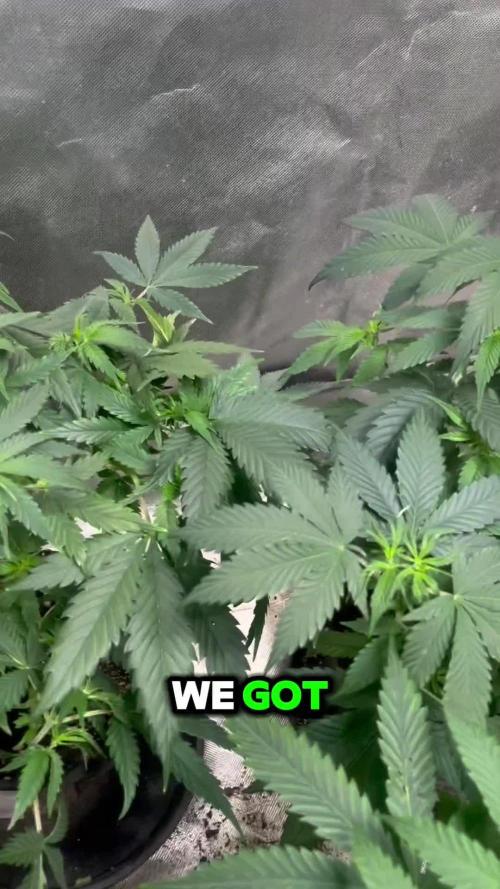
@Fastbuds-Promos @FastBuds42 week 7 ladies are looking good! Will flip to flower end of week 8!!
Likes
25
Share


@Mr2toke
Follow
06/12/23 - Day 0
Here we go again!!
After a successful run of 3 strains, I've decided to pop a 3 pack of MilkyWay F1 from RQS.
3 seeds are in a wet paper towel, inside a plastic sandwich bag, into a dark warm cupboard. Im hoping they all germinate!!
LET'S GROW!!!
08/12/23 - Day 2 from seed
All 3 seeds have cracked and tap roots have come out, so i've put them in the peat pots.
I mixed coco coir and perlite at 70/30.
I've also decided to add a teaspoon of DYNOMYCO’s Mycorrhizae in each little pot too.
10/12/23 - Day 4
2 out of 3 have sprouted, the 3rd isn't too far behind.
11/12/23
3 out of 3 are out and thriving!! we're well within schedule and we're off to a very good start!!
12/12/23 - Day 6
I've decided to move all 3 into their final pots today! I'm using Plagron AllMix in 12L pots with a nice big drip dish.
Into the tent they go!!!

Likes
5
Share


@Olduffybastard88
Follow
Getting the chop next few days going sitn her in darkness for a few days too see what happens

Likes
9
Share

@00000000000001c
Follow
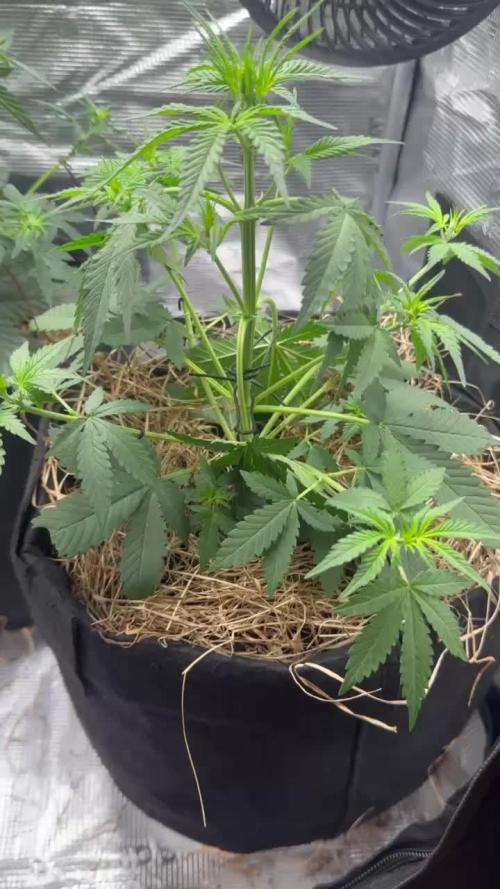
Hi everyone! Week 4 is underway. The results speak for themselves—take a look! 🌱😄
Update – July 21
Today (July 21) I topped up the soil, bringing each pot to approximately 15 L. I also watered each plant with 1.5 L of water mixed with BioBizz Bio-Grow. Everything is looking healthy so far, and the plants are responding well. 🌱💚
📅 July 22
🌱 Today I did some LST to help improve light penetration and encourage even growth.
✨ As you can see, Northern Sun – Soure Rot Candy is already entering the pre-flower stage and looks absolutely beautiful! 😍 Healthy, vigorous, and developing exactly as I hoped. 💚
🌿 Fast Buds – Frostbanger is still a compact little lady, but she's incredibly pretty and looks very healthy. 💪 I raised her so she's now roughly at the same height as the Northern Sun, giving both plants more even light exposure. ☀️
💡 The distance from the canopy to the light is now 40 cm.
So far, everything is going great! 🤞🌱💚
Likes
37
Share


@Pugbutt
Follow
After the move into the larger pots, I noticed the girls starting to lean in, and lift thier leaves. I adjusted the height of the lamp to 23" and thier leaves backed off from over reaching. Thinking of topping this weekend, as the ladies look to have enough nodes now. All in all, things have been going very well.
*** topped 4/5 on sunday

Likes
20
Share


@Inhomerhizome
Follow
All looking frosty around day 42 of flower!
Just been on water for the whole of flower! Watered with aact as well every other week but real happy with this run!
Likes
150
Share


@FrenchxFarmer63
Follow
Ras !
Que du bonheur cette montée en l'espace d'une semaine !
Tout ce déroule bien !!!
Pour rappel :
Black Domina 0 (en pot)
Black domina 1
Purple 2
Big Bud 3
Big Bug 4
Blzck Domina 5
Purple 6
Blzck Domina 7

Likes
4
Share

@DogDoctorOfficial
Follow
💙 Project Blue Tent – Week 6
Blue Waffle F1 – Pheno B (Folder 13B)
Hello everyone, and welcome back to another chapter of Project Blue Tent.
If you're joining the adventure for the first time, welcome! This project follows four individual Blue Waffle F1 plants from Zamnesia, all growing inside exactly the same environment, under the same lighting, receiving the same nutrition and following the same training schedule.
Everything is identical.
The only difference is the seed itself.
That's what makes this project so interesting. Watching genetically stable F1 plants develop their own subtle personalities while removing as many environmental variables as possible allows us to really appreciate both their consistency and their individuality.
Today we're checking in with Plant B.
────────────────────────
🌱 Week Six – Building the Canopy
Another fantastic week has passed inside the Blue Tent, and Plant B continues proving why I'm becoming such a fan of these Blue Waffle F1 genetics.
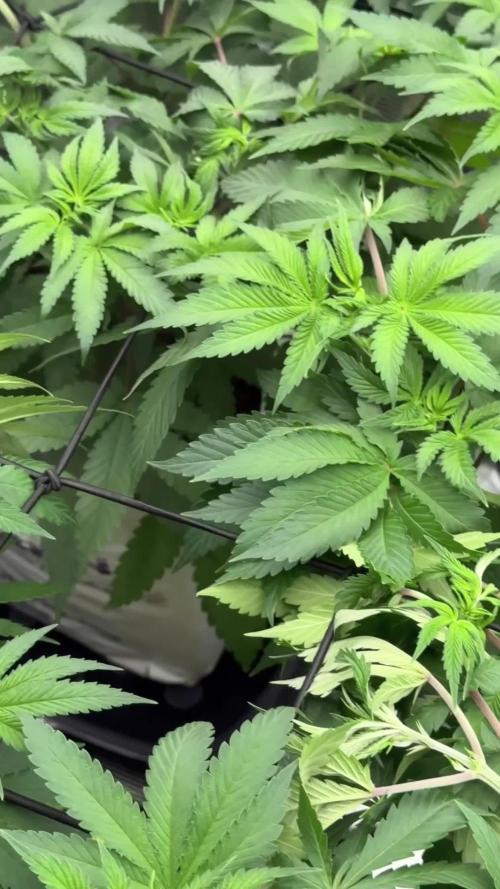
After installing the SCROG net last week, the objective has completely changed.
We're no longer trying to grow taller plants.
Now we're growing sideways.
Since tightening the SCROG net, all four plants are sitting at roughly the same height—around 60 cm—as the branches are continuously guided beneath the screen instead of being allowed to grow vertically.
Every day I spend a few minutes gently tucking the tallest branches back underneath the net. As soon as one shoot rises above the canopy, it's carefully guided into the next square, allowing another branch to catch up.
It's a slow process.
But it's also one of the most satisfying parts of growing.
The reward comes later, when every flowering site receives nearly identical light intensity across the entire canopy.
Plant B has responded beautifully.
She's steadily filling her section of the tent and showing exactly the kind of structure I was hoping for.
────────────────────────
🌿 A Stable F1 Showing Her Strength
One thing becoming increasingly obvious is just how stable these F1 genetics really are.
Although each plant has its own small personality, all four sisters are developing remarkably similarly.
The structure...
The vigour...
The colour...
The response to feeding...
Everything is wonderfully consistent.
Plant B has maintained her compact, organised architecture while expanding nicely across the screen.
The rich green colour has fully returned after increasing the nutrient strength a couple of weeks ago, and the new growth is healthy, vibrant and full of energy.
Looking across the tent now, it's honestly difficult not to smile.
The girls simply look happy.
────────────────────────
🌡️ Blue Tent Environment
The environment has remained very stable once again despite the summer heat outside.
This week's average conditions were:
• Day Temperature: 30°C
• Night Temperature: 25°C
• Relative Humidity: 58%
• pH: 5.8
• EC: 1.92 mS/cm
• CO₂: approximately 450 ppm
• Light Schedule: 18/6
• Irrigation: 1.2 litres per plant per day
The warm nights are something I'll be keeping an eye on once flowering begins, as higher night temperatures can encourage a little extra stretch during the first weeks after the flip.
That's tomorrow's problem though.
Today our only objective is filling every square of that SCROG.
────────────────────────
🥥 Feeding & Irrigation
Nothing changes this week because the plants have given me absolutely no reason to change anything.
The feeding schedule remains:
• Plagron Hydro A — 1.9 ml/L
• Plagron Hydro B — 1.9 ml/L
• Plagron Hydro Roots — 1 ml/L
With only small pH adjustments whenever required.
Some growers may look at an EC of 1.92 and think it's relatively high.
My plants disagree.
Their colour is rich.
The leaves are praying.
Growth is vigorous.
The stems continue thickening every day.
Plants don't care what feeding chart someone else follows.
They care whether their own needs are being met.
These girls have made their opinion very clear.
────────────────────────
💧 Drip Irrigation & Automatic Drainage
The Mars Hydro drip irrigation system continues making life wonderfully easy.
Each plant receives approximately 1.2 litres of nutrient solution every day, delivered slowly and evenly through individual drippers positioned above each grow bag.
Once the nutrient solution has passed through the coco, the runoff is automatically collected and removed by the drainage system installed beneath the pots.
Together these two systems create an incredibly consistent root environment while removing much of the daily workload that normally comes with coco growing.
Instead of carrying watering cans...
I get to spend my time watching plants.
That's a trade I'll happily make every day.
────────────────────────
🐛 The Caterpillar Who Chose The Wrong Plant
Every garden eventually reminds us that nature always finds a way.
This week, Plant B became the only sister to receive an unexpected visitor.
Somehow a tiny caterpillar managed to hitchhike its way from my vegetable garden into the Blue Tent and decided that Plant B's beautiful leaves looked particularly delicious.
I have to admit...
She must have looked especially healthy if even the caterpillar couldn't resist having a taste!
Fortunately, regular daily inspections meant the damage was caught almost immediately.
The caterpillar was removed by hand, the affected leaves were carefully trimmed away, and the problem never had an opportunity to develop into anything more serious.
It also served as a perfect reminder that no matter how careful we are—and I always shower, change clothes and enter the grow room as clean as possible—nature can still surprise us from time to time.
Clean habits reduce risk.
Regular observation eliminates it.
────────────────────────
🛡️ Integrated Pest Management
Following the discovery, the entire tent received a thorough IPM (Integrated Pest Management) inspection.
IPM isn't about waiting until pests become a problem.
It's about combining good hygiene, regular inspections and preventative practices so problems are found while they're still tiny.
As an additional precaution, I also used the Future of Grow UVC LED bar.
Used correctly, UVC light can help reduce unwanted spores and microorganisms that may have entered the grow room, making it another useful preventative tool within an overall IPM strategy.
It's important to mention that UVC should always be handled carefully.
Direct exposure can damage both plants and skin, so eye protection and proper safety procedures are essential whenever using this type of equipment.
Thankfully...
One hungry caterpillar became nothing more than a short interruption to an otherwise fantastic week.
────────────────────────
🌿 Plant B Herself
Plant B continues becoming one of the easiest plants to train inside the tent.
Her branches remain flexible, her internodal spacing is excellent and she seems perfectly happy being guided beneath the SCROG every single day.
She's not racing ahead.
She's building a beautifully organised framework that should become an outstanding flowering canopy once the time comes.
Every week she seems a little fuller.
Every week she looks a little stronger.
And every week these Blue Waffle genetics impress me a little more.
────────────────────────
👀 Looking Ahead
If everything continues progressing at this pace, I expect the screen to be almost completely filled by next week.
Once that happens, the next major milestone will be a final clean-up and defoliation before flipping the Blue Tent into flower.
Until then the routine stays wonderfully simple.
Guide the branches.
Maintain the environment.
Keep the roots happy.
Trust the process.
Nature already knows what she's doing.
We're simply helping her do it a little more efficiently.
────────────────────────
💙 Thank You
A huge thank you to Zamnesia for making Project Blue Tent possible, from these incredibly stable Blue Waffle F1 genetics to the complete ecosystem surrounding this grow.
A heartfelt thank you to Plagron for providing the Premium Coco Growbags together with the Hydro nutrient line that continues producing beautiful, healthy growth week after week.
A special thank you to Mars Hydro for the automatic drip irrigation and drainage system that has transformed daily watering into an almost effortless routine.
A huge thank you as well to Future of Grow for the UVC LED bar, which has now become another valuable tool in my preventative IPM routine.
Thank you to GrowDiaries for providing this amazing platform where growers from around the world can learn from one another, share experiences and document our journeys.
And finally...
Thank you to every single one of you following Project Blue Tent.
Whether you've been here since germination, recently joined the adventure, leave comments every week or simply enjoy looking through the photos, your support genuinely means the world to me.
Hopefully next week the screen will be completely filled, we'll perform our final defoliation and begin preparing these beautiful ladies for the next exciting chapter...
Flowering.
Until next week...
Growers Love, happy growing, and I'll see you all soon. 🌱💙
Likes
22
Share


@bypado_farm
Follow
Day 24:
Watered each plant with 0.5L with nuts
1010 ppm, 2148 us/cm, 2.1 EC
Day 26:
Watered each plant with 0.75L with nuts
1045 ppm, 2223 us/cm, 2.2 EC
Likes
37
Share


@masterofsmeagol
Follow
5/25 watered with pH about six. I finished trellising everything. One end left tacked so I can slide the girls in. Wife had medical emergency or they would be in the ground right now. Oh well I imagine a day more won't hurt but I'm getting excited. Spot treated WPM on a GDP. I have a feeling I'm going to need to be on point with my IPM this year.
5/26 I finally got the girls in their homes! It's a tight fit. Only seven right now. I'm considering using axium to help with any transplant shock. They were already severely rootbound in 2 gal when I got them and some were VERY rootbound in the 3 gal. They were transplanted using mykos and info a 50 gal pot and grow bags 30 and 20 gals. I may use kangaroos or something tomorrow. A few were rough transplants since they were so big and rootbound. I'm hoping everything works out. I'll try to keep this updated. I also put most of them in backwards lol. I'm sure it doesn't matter but I turned the few I was able too.
5/27 Plants look great. I was a little worried about transplant shock but damn they seem fine. Rained lightly last night.
5/31 I see pH fluctuation on some leaves. Soil wasn't mixed enough on a couple plants. pH jumped to 8 on one
I hope the rain lowered it. They survived a couple stops and still doing good. No nutes yet.


Likes
14
Share

@Nony_grows
Follow
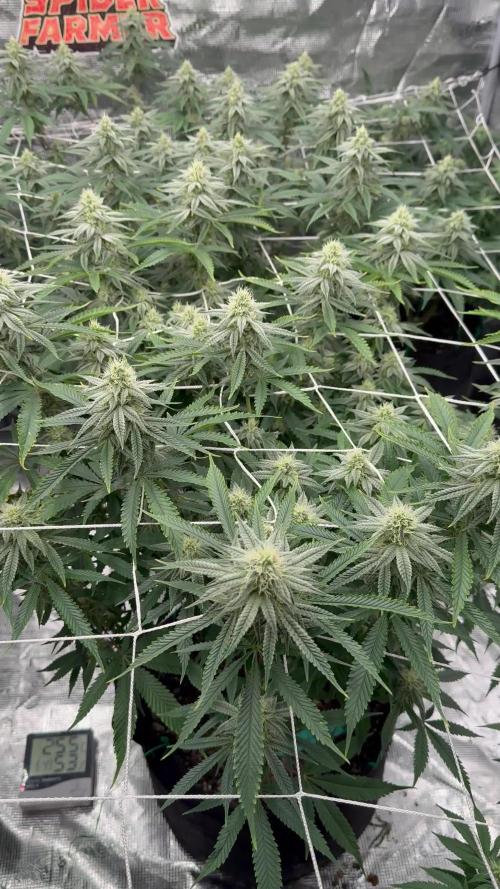
I have a cal mag deficiency I’ve already treated it. We are on cruise control at this point, just waiting in the finish line.

Likes
Comments
Share


@Outdoorman
Follow
Let the nature do her job and just go wet her when the time don’t

Likes
15
Share


@Professor_Daank
Follow
Love and TLC. These girls are boomin'. No probs, no issues... no nada. LET'S GO!
EC Target
1100-1400
ph: 6.06 - 6.3
Sensi Grow A - 16ml
Sensi Grow B - 16ml
B-52 - 8ml
Rapid Start - 1ml
Great White Myco - 1tsp
Fish Sh!t - 6ml


Likes
4
Share


@ukautogrower
Follow
She's starting her streach. I've started to add a mill of bloom with the grow and she's branching out nicely

Likes
6
Share
@DogDoctorOfficial
Follow
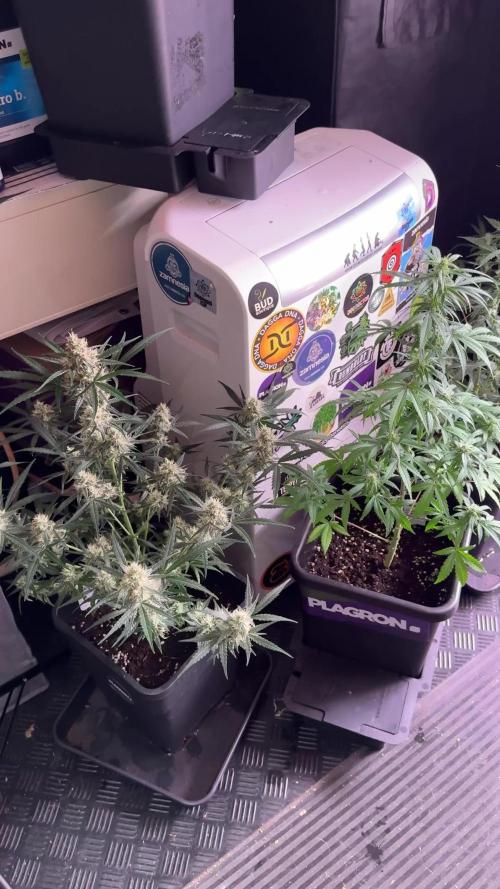
🌸 Pink Rosay Auto by Zamnesia | Pheno A | Week 8 (Flower Week 5) 🌱
Small Frame. Big Flowers. An Absolute Beauty.
Some plants need space to become impressive.
Pink Rosay doesn't.
Standing at approximately 111 cm, she remains one of the most compact plants in the entire 8×8 Adventure.
But somehow, when you look at her, she doesn't feel small.
She feels complete.
Dense.
Elegant.
Full.
Every centimetre of her structure seems occupied by flowers, leaves and developing potential.
She's one of those plants that reminds me that size and presence are two completely different things.
And Pink Rosay has presence.
This week, she also joined the group receiving a selective flowering defoliation.
Again, not because there was anything wrong.
Not because she was struggling.
And not because I believe every plant needs to be stripped at a particular point in flower.
She was actually looking fantastic.
But she's a little more advanced than some of the plants around her, and when I looked closely at her structure, I felt that opening her up would benefit both her and the room.
So we made some space.
And now we're going to watch what she does with it.
🌸 Week 5 Flower – Compact Doesn't Mean Small
Pink Rosay has always had her own way of doing things.
She never chased the ceiling.
She never tried to become the biggest plant in the tent.
Instead, she's packed an incredible amount of flowering structure into a remarkably compact frame.
At approximately 111 cm, she's still relatively short for this room.
But look closer.
The branches are carrying substantial flowering sites.
The flowers are stacking.
The calyxes are beginning to swell.
The pistils remain beautifully bright.
And the resin continues becoming more apparent.
This is where I think the word "compact" can sometimes be misleading.
She's compact in height.
She certainly isn't compact in personality.
And she definitely isn't compact in what she's building.
There's a lot happening inside this little plant.
✂️ Defoliation – Making Space, Not Removing Beauty
This week I decided to selectively defoliate Pink Rosay.
And I want to explain the reasoning because defoliation is one of those subjects where growers can have very different approaches.
For me, this wasn't about looking at the plant and thinking:
"There are too many leaves."
Healthy leaves are valuable.
They're photosynthetic machinery, and I don't remove them simply because they're large or because I want the plant to look cleaner.
Instead, I look at the relationship between the leaves, flowers, light and airflow.
Pink Rosay has become quite dense.
Her compact structure means that a lot of foliage and flowering sites are occupying a relatively small vertical space.
As flowering progresses, that density can create areas where leaves overlap heavily, airflow becomes less direct and light has difficulty travelling deeper into the canopy.
So this time, I selectively removed foliage that was contributing to unnecessary congestion.
Not everything.
Not aggressively.
Just enough to open the architecture.
💡 Let The Photons Travel
One of the reasons I like selective defoliation at this stage is that we're not necessarily trying to make every flower receive direct light.
That's not the objective.
We're trying to improve the distribution of the available light through the canopy.
The Future of Grow Black Series is already delivering around 1,000 PPFD across the upper canopy.
There are plenty of photons available.
The question becomes:
How efficiently can the plant's architecture use them?
When several large leaves overlap one another, some of that light is intercepted before it can reach deeper areas.
By selectively removing leaves from congested sections, we can allow more light to penetrate into the canopy and reach leaves and flowering sites that were previously more heavily shaded.
We're not creating more light.
We're simply changing the path it takes through the plant.
And with Pink Rosay being such a compact and dense phenotype, that can be particularly interesting.
🌬️ And Then There's Airflow
Light isn't the only reason for opening a dense canopy.
Air needs space too.
As the plant becomes more compact and the flowers continue developing, airflow through the interior becomes increasingly important.
Removing selected leaves creates little channels through the plant where air can move more freely.
That helps reduce stagnant pockets inside dense foliage and makes the entire canopy easier to manage as flowering progresses.
Again, this isn't about removing leaves because leaves are bad.
It's about managing density.
Sometimes the best thing you can do for a plant isn't giving her something.
It's simply getting out of the way of what she's already doing.
🌿 A Plant With Serious Density
And this is probably what impresses me most about Pink Rosay right now.
She is dense.
Not just in foliage.
The flowering structure itself is becoming increasingly substantial.
The individual flowers are beginning to look less like isolated flowering sites and more like components of developing colas.
The calyxes are swelling.
The pistils are still predominantly white.
And the resin continues building across the flowers and sugar leaves.
She's entering that beautiful transition where you can start seeing the architecture of the eventual harvest forming in front of you.
I don't want to call it "bulking" just yet.
I prefer thinking of it as stacking, swelling and building flower mass.
But whatever word we choose...
She's definitely building.
And she's doing it beautifully.
❄️ Frost Is Becoming Part Of Her Personality
The resin production continues to impress me.
Looking closely at the flowers, there's already a visible layer of trichomes developing across the calyxes and surrounding sugar leaves.
And this is still only Week 5 of flowering.
The bright white pistils make everything even more dramatic.
Against the deep green foliage, those flowers almost look illuminated from within.
It's one of those combinations that makes photography incredibly rewarding.
Dark green.
Bright white pistils.
Developing frost.
And flowers that become more substantial every time I look at them.
Pink Rosay is definitely starting to look like she knows exactly where she's going.
🌱 Why I Didn't Defoliate Everything
This is important.
After a defoliation, it's easy to look at a plant and think:
"Why didn't you remove this leaf too?"
Because more isn't necessarily better.
I want Pink Rosay to retain enough healthy foliage to continue powering photosynthesis and supporting flower development.
The objective was never to expose every flower.
It was to improve the relationship between:
foliage → flowers → light → airflow.
Some leaves are still doing excellent work.
Some flowers are still perfectly positioned beneath them.
And some shading is completely natural.
A plant doesn't need to look like a perfectly arranged artificial canopy.
She's alive.
She's dynamic.
And I'm much more interested in creating a healthy, functional environment than achieving a perfectly clean photograph.
Although...
I have to admit...
She does look pretty damn good after the cleanup. 😍
💡 Lighting From Above & Below
The primary lighting remains the Future of Grow Black Series LED, providing approximately 1,000 PPFD across the upper canopy.
Below, the Lumiflora under-canopy lighting continues adding another dimension to the system.
This combination is particularly interesting with a plant like Pink Rosay.
Her compact structure means that the lower portions of the plant are physically much closer to the upper canopy than they would be on a tall, stretched plant.
At the same time, her density can create additional shading.
The under-canopy lighting gives those lower areas another source of photons while the defoliation helps improve the movement of light through the plant from above.
It's another experiment within the larger experiment.
And, as always...
Harvest will be the judge.
💧 Hand Watering – One Plant At A Time
Pink Rosay continues receiving individual attention through hand watering.
There's something especially useful about hand watering at this stage.
Every time I approach the plant, I have an opportunity to look.
To inspect the flowers.
To check the leaves.
To feel how the plant is progressing.
To notice changes that might otherwise disappear into the background of an automated system.
Current feeding remains:
Terra Bloom — 2.2 ml/L
Power Buds — 1 ml/L
Sugar Royal — 1 ml/L
Green Sensation — 1 ml/L
Lemon Kick — 0.03 ml/L
Current readings:
pH — approximately 6.0
EC — approximately 2.0 mS/cm
Solution temperature — 21°C
Root-zone temperature — 21°C
Watering — approximately 1.4 L per 24 hours
No unnecessary changes.
The plant is responding well.
So we keep giving her consistency.
🌡️ Environment
The environment continues providing the stability this garden has been built around.
Day temperature: 29°C
Night temperature: 25°C
Relative humidity: 60%
Root-zone temperature: 21°C
Solution temperature: 21°C
CO₂: approximately 529 ppm
The room continues relying on natural CO₂ replenishment through ventilation rather than bottled supplementation.
The important thing isn't chasing one individual number.
It's the interaction between temperature, humidity, airflow, irrigation, root-zone conditions and light.
When those pieces work together, the plant gets to concentrate on what she does best.
Growing.
👀 Looking Ahead – Is Something Special Building Here?
I'm becoming increasingly curious about Pink Rosay's final outcome.
Not because I want to predict a number.
Not because I want to call the harvest before she's finished.
But because the structure is promising.
She's compact.
She's healthy.
She's carrying a remarkable number of flowering sites for her size.
She's producing resin.
She's stacking flowers.
And now we've opened the canopy slightly to give her more room to breathe and allow light to travel more effectively through her architecture.
If she continues at this pace, I have a feeling she could surprise us at harvest.
Sometimes the plants that look modest from a distance are the ones that make you raise your eyebrows when the final numbers come in.
And Pink Rosay has exactly that feeling.
❤️ Final Thoughts – Let Her Shine
Pink Rosay Pheno A continues telling one of my favourite stories in this entire 8×8 Adventure.
She reminds me that you don't need to be the tallest plant in the room to make an impression.
You don't need to stretch toward the ceiling.
You don't need to occupy the most space.
Sometimes you can simply take your little corner...
And make it extraordinary.
This week, we gave her a little more room.
A little more airflow.
A little more opportunity for photons to move through her canopy.
And now we're stepping back again.
Because after making a cultivation decision, the most important thing is knowing when to stop touching the plant and let her respond.
That's where the real lesson begins.
Pink Rosay is compact.
She is dense.
She is elegant.
She is increasingly frosty.
And there is an enormous amount of flower packed into that small frame.
I have a feeling this little lady may have something very interesting waiting for us at harvest.
But for now...
We're going to let her keep building.
Keep stacking.
Keep swelling.
Keep shining.
A huge thank you once again to Zamnesia for these beautiful genetics, Plagron for the nutrition, Future of Grow for the incredible Black Series lighting, Lumiflora for bringing light beneath the canopy, TrolMaster for environmental control, and to everyone following this 8×8 Adventure here on GrowDiaries.
Every phenotype has a different story.
Pink Rosay's story is becoming one of elegance, density and quiet strength.
And I absolutely love where she's going.
Until next week...
Small frame. Big personality. Let her shine. 🌸✨
Growers love and happy growing! 🌱💚
Likes
2
Share


@Mr_nugs_lover_David
Follow
Such a pleasure to grow her, she came from an auto m8 and she ended up being Photoperiod, apart from that I'm glad I've discovered her, because her buds have one of the most special and sweetest fragrance I've ever smelled in a cannabis flower, super sweet and tropical guys, such a cool strain, I definitely want to fill a lot of jars of this for my personal stash, everytime I smell her flowers makes me remember the Caribbean Islands.
