


Likes
Comments
Share

@Shivashamboom1
Follow
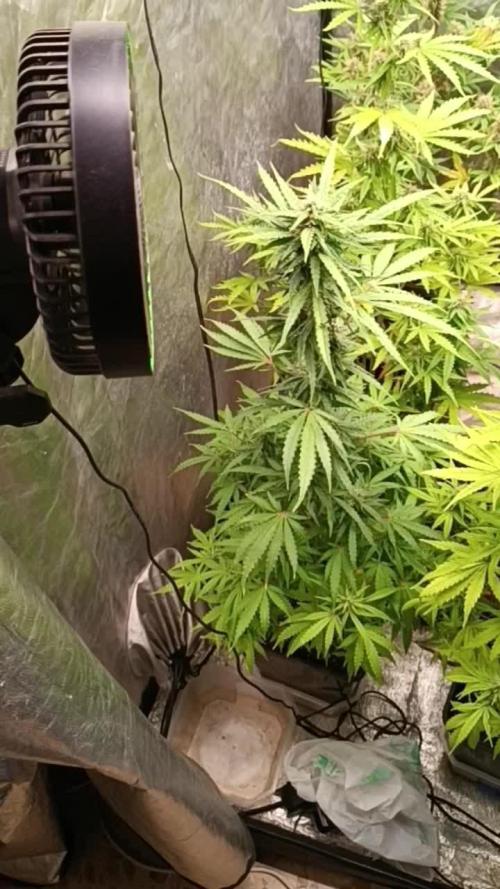
anche questa runtz è arrivata alla quarta settimana di fioritura, come si può vedere , quella che ho toppato è un pochino più indietro dell'altra

Likes
24
Share

@BLAZED
Follow
Average conditions 12 days dry period:
Temps: 20.2 to 22.4 degrees
Humidity: 57.4% to 61.7%
Results:
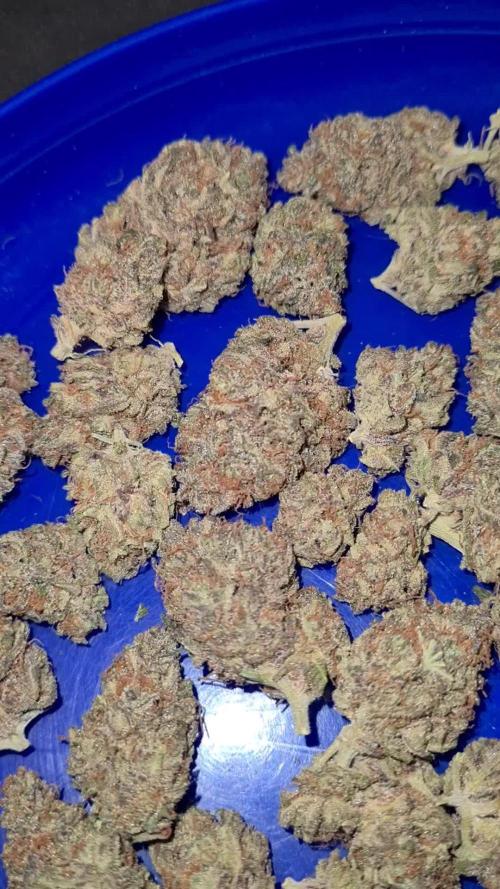
White Widow #1: Buds: 82 grams. Trim: 36.04 grams.
White Widow #2: Buds: 87 grams. Trim: 34.54 grams.
Total gram per watt: 2.22
Thanks for following this journey! See you in the next one!
(Will add smoke report soon)


Processing
Likes
57
Share


@Silverback_Guerilla
Follow
2/1 - 2/4:
I ended up feeding the BJ's and GG's once more, and just plain water for the Zenzations.
Moved the to Zenzations into the dark on the night of 2/4 and will harvest them tomorrow (Friday).
I'll flush the others tomorrow and probably harvest them next weekend.
2/5:
Both Zenzations are having their last bit of beauty sleep before they get trimmed up, cut, washed, and hung to dry.
2/6:
Harvested both Zenzations....damn they smell wonderful and have amazing frost!
2/8:
Watered the BJ's and GG's today with LiquidSoil. Will flush them really well in a couple more days and probably harvest this weekend...time's up bitches, better put on your lipstick and get ready for the big party!


Likes
7
Share


@Messypies
Follow
This week started strong. Some small concerns due to small orange spots appearing on fan leaves which on researching indicates a calcium/magnesium deficiency. Will add a small amount of cal mag to their next feed

Likes
8
Share


@Black_Widow
Follow
Привет любители травки
Началась новая неделя
С утра я подгибал ветки на цветке и одна кола лопнула и переломилась и осталась висеть на четверти стебля
После перелома меня охватила паника и боль , но я вовремя зафиксировал стебель и наложил ей шину
Прошло пол дня и вроде все обошлось
Стебель у этой девочки жесткий , но хрупкий
с ней LST очень аккуратно надо проводить
А в целом мне нравится её генетика .
Day 40
Сегодня я поменял раствор на стадию цветения
будем дальше наблюдать как пойдут дела

Likes
17
Share

@El-Ecko
Follow
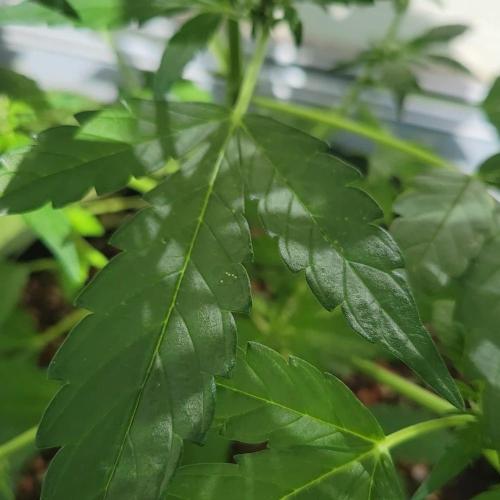
3 Weeks into Flowering
Little Pearl is growing nicely and steadily, and it seems she’s long since put her somewhat hesitant start behind her. 🌱⚪️
Her airy growth structure is absolutely perfect for the often humid climate in the Sauerland region. The flowers are developing beautifully. 🌸👌
And in the middle of the week, I gave her another dose of Azet tomato fertilizer from Neudorff. 🍅🌱
Thank you so much for stopping by. ✌️

Likes
Comments
Share


@Tony2jewerlyseeds
Follow
Hace un año exactamente estábamos cruzando uno de estos blíster de dosi- gelato del cual germinaron 3 de 5 semillas regalando nos dos hembras y un macho muy resinoso y oloroso y varias genéticas campeonas y de ediciones limitadas como amerth souer diesel x somango,souer diesel, como le pondría. A ese cruce o a dosi gelato x dosi gelato de hecho esa siempre fue nuestra intención sacar el máximo de semillas posibles de nuestro primer cultivo con semillas importadas primero necesita vamos unas semillas regulares pero de buena calidad y que supiéramos un poco de su genética investigamos acerca de doci-gelato y decidimos que sería la primera base de nuestros cruces sus efectos y aromas nos llamaron la atención aparte de que el nombre estaba de moda abrimos varios blister más como blackberry gum thunder banana moví d y varias que ya no quiero nombrar porque quiero que esos sabores sean invento mío jajajja leeimos un poco de como podíamos hacer semillas y lo hicimos polinizamos 11 hembras originales o estabilizadas que no se escuche feo y 3 hembras regulares una de ellas nos la vendieron con el nombre de Hulk otra como Cherry y la última una buble gum que comparamos su olor y sabor con el de la blackberry gum de seedstockers fue muy parecido a nuestra buble gum pero con notas a moras muy buenas de hecho es un cruce que tenemos contemplado para ver si con una planta macho de buble gum regular y una blackberry gum de seedstockers podemos mejorar aun mas el sabor y el olor en nuestro país de hecho hay buenas cepas regulares hemos probado genéticas con sabor mango,pastel de arándanos,limón ,sandía ,uva y gas,chicle clásico rosa,plátano,zorrillas todas esas genéticas y variedades nos han hecho llegar a pensar que en realidad hay gente que lleva incluso mas tiempo conociendo las semillas importadas o aun mejor importando las para realizar investigar o mejorar las genéticas y sus distintos efectos en el 2012 llegué a acceder a bancos de semillas quedé deslumbrado de la cantidad de nombres que había pero no era 100% seguro entonces no quise seguir insistiendo pero ya se escuchaban nombres como mango kush, Golden Acapulco,cronic el precio era mas elevado que los demas prensados que podiamos conseguir pero eran mejores efectos y aromas ya para 2018,2021
Se empezaron a escuchar nombres como blueberry,amnecia,skunk,pineaple,og,kalifas,jirafa ,puma,gorila,Hulk, chocolopez,candy, arcoiris,cristal,poison,f1,sueño azul , Tutankamón,shark, snow,Jack jerer, y mas llevamos 13 años recolectando semillas de diferentes genéticas de cannabis siempre hemos cultivado esas semillas regulares pero nunca habíamos intentado un cruce para empezar no sabíamos como hacerlo solo sabíamos que no teníamos que dejar crecer el macho.
Para 2022 después de un obsequio que tuvimos de un conocido volvimos a intentar una vez más conseguir semillas importadas nos regaló un tubo con 10 semillas del banco sweet seeds con fecha de empaquetado en 2017 llevándonos ala misma pregunta desde cuándo estaban llegando las semillas importadas y entonces algunas veces fumamos de genéticas originales al contrario de sentirme mal por no ser el primero en decir que traje genéticas originales o importadas a mi país me sentí feliz por que sabía que lo que estaba guardando todo el tiempo desde 2012 puede ser una gran colección de diferentes breeders tal vez tengamos varias ediciones especiales como la cepa froot loops, jirafe pussy,cronic,ak47 , y así fue como logramos contactar con un banco que parecía de confianza y obtuvimos dos blíster de doci-gelato , blackberry gum,thunder banana ,banana blaze y varias más hemos crecido varios de nuestros cruces pero necesitamos seguir investigando más aún para lograr estabilisar nuestras propias genéticas les dejo una foto de nuestro cruce María Sabina.


Processing
Likes
10
Share


@TrimQueen
Follow
So, guys.. This is her first month blooming. 4 complete weeks has passed. Here we are for 2 more. Gave Her a super powerful egg shell fert (all powdered - Phosforium Whelthy.)
07/10/20 - We are in the middle of week 5. Thats the way they look like. For me a good number of buds and they are as dense as I thought they would be by this time. I think everything is under control despite some foxtails cuz the heat. Loving the experience.
Likes
10
Share


@RandomStreetMerchant
Follow
Hello, well as you can see the girls are doing amazing. I think they have done stretching and are now starting to stack on the weight.
I’m super happy with how these girls have come along they really are big beautiful women 😂
Can’t wait to show you all how they turn out for the next 4-5 weeks will be a nice Journey.
Until next time growmies ✌️ 08/28/23

Likes
28
Share


@Trickybis82
Follow
Will grow again for sure shout out to @420fastbuds for the strain what a all round great plant!!!!

Processing
Likes
2
Share


@Cannibalgardens
Follow
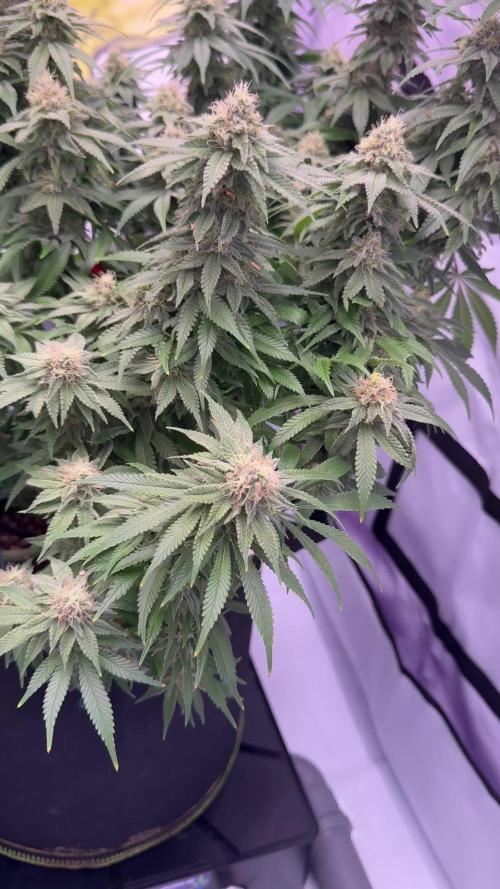
Well as we come up on week 2 the plants are doing great and having no issues beyond the big stretch I had ... The plants all have the same height and leaf ratio all very uniform so far ... They were given a light feeding with the water this morning and the waiting game continues for a while once they big enough I will top and clone the main stem to try and see who is Amelia and female .. great genetics so far can't wait to see where these take me ..


Likes
2
Share


@Ultraviolet_
Follow
Remember that, however you are played, or by whom, your soul is in your keeping alone. Even though those who presume to play you be kings or men of power, when you stand before God, you cannot say, 'But I was told by others to do thus,' or that virtue was not convenient at the time. This will not suffice. Remember that.
Day:18
84°F and 65% RH (VPD) for the vegetative stage. Approximately 1.15kPa(assuming leaf temperature is about 2°F cooler than the air), which falls right into the ideal vegetative sweet spot (0.8kPa to 1.2kPa). At 1.15kPa, plants can draw water and nutrients efficiently without risking stress or wilting. It keeps the leaf pores (stomata) open, allowing for ideal carbon dioxide intake and maximizing vegetative growth. VPD is determined by the leaf's temperature, not just the ambient air. Because leaves usually run 1° to 3°F cooler than room air under bright grow lights, my actual VPD will be slightly lower, closer to the 1.0kPa mark. As she transitions from vegetative growth to flowering, one can gradually lower the humidity (to around 45–60%) and drop temperatures slightly to prevent disease from settling inside dense buds when they appear.
Night:6
At 70°F and 60% relative humidity, Vapor Pressure Deficit (VPD) is 0.86 kPa. This is right on the cusp of whats optimal for the vegetative stage. During the nighttime, plants generally close their stomata and undergo cellular respiration rather than photosynthesis. Transpiration slows to a near stop, making VPD less critical at night than during the day. However, maintaining a nighttime VPD between 0.8 and 1.0 kPa is highly beneficial in that it ensures the air is dry enough to prevent powdery mildew or bud rot, but moist enough to keep the plant from undergoing unnecessary stress. This range keeps the environment comfortable for cellular processes and prevents large atmospheric swings. Keeping it all flowing.
(Not pushing them yet, these are photoperiods)
The optimal soil (root zone) temperature for cellular root respiration and nutrient uptake in cannabis is between 68F & 72F This narrow range balances biological energy production (cellular respiration) with the dissolved oxygen levels in the soil, maximizing plant growth and health. Warmer soils hold significantly less dissolved oxygen. When soil temperature exceeds 74F oxygen depletion occurs, inhibiting cellular respiration almost entirely, At 68-72F root cells generate optimal adenosine triphosphate (ATP) via respiration to power root-tip elongation and the active transport of water and nutrients.
Too Hot (Above 78F) Root respiration increases, demanding more oxygen, while the water's oxygen-carrying capacity drops. This creates a prime environment for anaerobic pathogens and Pythium (root rot).
Too Cold (Below 60F) Root metabolism and cellular respiration slow to a crawl. This severely impairs nutrient and water absorption, leading to yellowing, wilting, and phosphorus deficiencies.
A lot depends on whether it's automatic or photoperiod; with photoperiod, there is not as much of a need to push "hard" as the real countdown only begins once the flower is initiated. Automatics, on the other hand, the chronological "clock" begins ticking the moment the seed germinates. It is of critical importance that the seedling growth gets off to the races, understanding that early growth is like compound interest, which will pay off come harvest. This reality is why getting autoflowers "off to the races" early on yields such exponential benefits. The "compound interest" is directly related to the surface area of the leaves. Larger, faster-growing seedlings process more light and build bigger root networks early on, which translates into an explosion of vertical and lateral growth during their short vegetative window.
The margins for error are so thin with autoflowers; this early-stage momentum depends on several critical practices. Seedlings exposed to increased atmospheric CO2 levels early in life will develop at an increased rate. To effectively "extend" or optimize the capacity of Photosystem II (PSII) for increased photosynthetic efficiency. In standard oxygenic photosynthesis, Photosystem II (PSII) is naturally limited to the red-light spectrum, peaking at 680nm. Extending its light-harvesting capacity past 700nm into the far-red region requires bypassing the natural limits of standard chlorophyll a. Adding 730 nm (far-red) LEDs alongside standard red/blue lights has been shown to increase canopy photosynthesis by 20–30% in several crops by acting synergistically with shorter wavelengths. However, the limitation is that excessive, pure IR/Far-red light (without accompanying red light) can trigger the "shade avoidance response," causing plants to grow tall, weak, and spindly rather than robust. Utilizing infrared light (specifically the 700-750 nm far-red range) is a viable method to boost photosynthetic efficiency. It acts as a bridge to allow PSII to utilize a broader spectrum of light, breaking the traditional 700 nm barrier. UVR8-mediated signaling (often in conjunction with CRY proteins) triggers protective mechanisms that maintain the stability of the photosynthetic apparatus (including LHCII and reaction center proteins), thus ensuring that the efficiency of Photosystem II remains higher in UV-B-exposed plants compared to plants lacking this receptor. ΦPSII indictates the rate of electron transfer from water to plastoquinone, which drives the production of ATP and NADPH. There is a close link between ΦPSII and the true rate of CO2 fixation (Φ*co2).
ETR stands for Electron Transport Rate. It measures the speed at which electrons are moved through the thylakoid membranes in a plant's chloroplasts during the light-dependent reactions of photosynthesis. Infrared light (particularly Near-Infrared or NIR) improves cellular energy by interacting directly with the electron transport chain (ETC) in mitochondria. This process boosts adenosine triphosphate production, which acts as a metabolic coefficient multiplier by accelerating enzyme activity dramatically.
Extend then multiply.
Far-Red photons interact with plant photoreceptors to accelerate the plant’s biological "clock" or trigger a shade-avoidance response. Autoflowers don't use the plant's biological clock, although the IR will initiate a shade avoidance and make them stretchy. You can just add equal measures of 660nm-680nm to negate the shade avoidance effect. Replacing nights' "darkness" with a combination of IR+ and 660nm. Because autoflowers don't require a dark period to flower, many growers just blast them with light. 18/6 24/0. However, this ignores the plant's metabolic rhythms, where daytime photosynthesis (light reactions) must be perfectly balanced with nighttime carbon fixation and assimilation (Calvin cycle) to avoid bottlenecking plant development. Cellular respiration is a 24/7 process, but it can only function while the plant has the free oxidative capacity to do so. A 100% photosynthetically active leaf cannot perform cellular respiration. The viral trend of defoliation of every leaf that isn't "getting enough light" is of great detriment overall, putting 100% of the cellular respiratory "workload" and responsibility on the 0/4/6 hours of darkness in sub-optimal conditions for enzymatic activity. Photosynthesis captures nearly 100% of the initial energy as carbon, while cellular respiration is the process that unlocks 90% of that captured energy into usable ATP so the plant can use it. Respiration is considered only roughly 30% to 40% efficient. It captures enough of the potential energy in glucose to synthesize around 30 to 38 ATP molecules per glucose molecule. The remaining 60% to 70% of the energy in the sugar is not captured in ATP; instead, it naturally escapes into the environment as heat, which helps regulate plant temperature. In plants, the primary enzymes of the Electron Transport Chain (ETC) and the ATP synthase complexes are typically adapted to function optimally in warmer temperatures (roughly 77°F to 95°F, depending on the specific plant strain). As temperatures rise within this physiological range, molecular collisions increase, speeding up respiration and ATP production. The cannabis plant has a branched respiratory pathway. During heat or cold stress, plants activate Alternative Oxidase (AOX). AOX burns sugars to dissipate energy as heat rather than coupling it to ATP production. This pathway actually functions optimally at elevated temperatures to help protect the cell from the damaging build-up of Reactive Oxygen Species (ROS) during heat stress. Enzyme activity generally scales with heat; there is a strict biological limit. If canopy temperatures in a grow room exceed 104°F, the enzymes and their supporting lipid membranes lose stability. Not saying you need to go crazy, just optimize nights the same as we optimize days.
Phosphorus is the driving force behind early seedling development. It acts as the "energy hub" of the plant, directly driving cell division, robust root growth, and the creation of DNA. Without an adequate, easily accessible supply early on, the plant's overall growth potential and final yield can suffer permanently.
Likes
41
Share


@KAPT_SAVE_Da_HOE
Follow
Forbidden Runtz is being harvested to make room for another strain. Sour Stomper has one more week then making room for another strain. I didn't supply the enough nutrients and became evident the last few weeks. I made many mistakes that I hope to dial in next run. The whole experience for a first time indoor autoflower was fun and low maintenance. I look forward to the dry product and will update as soon as is happens.

Likes
20
Share


@Ieiogrow94
Follow
Eccoci qui...
In questa prima settimana di fioritura ho notato come le due piccoline abbiano avuto questa crescita così esponenziale e come tutte le collab DA ORA SI INIZIA CON I VIDEO per testimoniare meglio la fioritura!!!
Grazie a @KhalifaGenetics per la collab e a tutti per il supporto🔥🌲❤️


Likes
6
Share


@tantrumrage
Follow
08/12 - 14/12: nothing much to do right now. Buds are getting really frosty. Not sure if it's a lack of potassium or pH related but some leafs are yellowing, nothing major so I'm not really concerned but I'm going to adjust my soil recipe for the next run.
