Likes
Comments
Share
@Trinidad
Follow
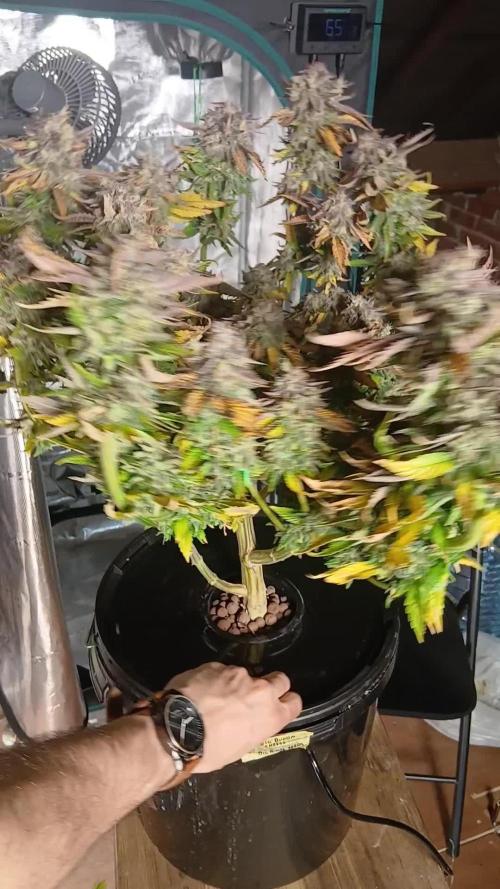
Day 135 (4.5 months)
Day 72 since 12/12 ( for badazz og cheese)
Reservoir change out today. 2 gals of water. 16 grams of full tilt.


Likes
27
Share


@Jungle_James_Grows
Follow
Not really done much last week, they got a bit of light burn from LED. Which I've now move up.
But new growth seems to be doing ok.
Cover crops are coming on fantastic.
26/6 Friday
V) She is the bid sister of the group so I'm going to top her today
29/6
V) Has got 4 new grow tips started where I topped her.
The rest are catching up nicely now. Will start some LST in the next couple of days.
2/7 Done a bit if training on the girls today.
Bent four of them over.
The fifth one that I topped I didn't bend her yet, I just did some leaf tucking and she is coming on fantastic.
3/7 They have all bounced back brilliantly and heading towards the lights.
5/7 End of week 3 and going to do some more LST on them as the have bounced back from the last lot of training.


Likes
50
Share


@Blabina
Follow
5th of november 2021 / DAY 30 👉 The new p.h. seems effectiv, uploaded x18 time laps
👉 👽Calmag 1 ml/2L + 👽 Bio-Heaven 1 ml/2L 👽Bio-Grow 1 ml/2L /// 😇2 L. p.h. 5.8 EC : 0.7 degree 24.8° 👉 Run-off for QuickGreen is : EC 0.7, ph 7.6 20.4° QuickPink is : EC 0.6 ph 7.8 20.2° QuickBlue is : EC 0.5 ph 7.6 20.2°
😥I give up, p.h is increasing. I don't know what to do, but to me they are dead. I will keep doing what I do, but I don't know how to fix this p.h issue. If I have to give them 6 litters per plant with a ph 3 to try to reach a 5.8 p.h. again.😥
6th of november 2021 / DAY 31 👉 1L per plant : Water + ph down : 3.ph. run-off : 6.0-6.1 +1L per plant : 👽Calmag 1 ml/3L + 👽 Bio-Heaven 2 ml/3L 👽Bio-Grow 3 ml/3L
/// 😇3 L. p.h. 5.8 EC : 1.0 degree 24.8° 👉 Run-off about 6.0 per plant.
7th of november 2021 / DAY 32 👉 Upload photos, checking them. I see some greens, I don't want to give up really, I will see if I will have dwarves again... They are small and sick
8th of november 2021 / DAY 33 👉 I took them down to don't see them suffer more. A bit the hart broken.
End of diary... It was an experience.


Processing
Likes
22
Share


@ChronicRyno
Follow
Hi all another week down almost .
I’ve recorded a couple of videos (beginning or week and back end ) as you cannot see the big girl properly with a photo .
She has soo much going on ,I’m not only proud of myself but super pleased with this girl . Having germinated only 2 seeds and got 2 plants granted one was weak from the start , that easily could have been my doing as a newby , I really cannot fault GHSc .
Feed has been easy to work with and without dramas .
Shouldn’t be long now before I start flushing ready for harvest .
Thanks for being here with me , I don’t feel I’ve got any hope regarding the compition but that wasn’t my hopes anyhow , I wanted to see how I did as a newby growing same as some veterans . Happy considering .
Stay safe and happy growing guys

Processing
Likes
32
Share


@Ganjagrandaddy
Follow
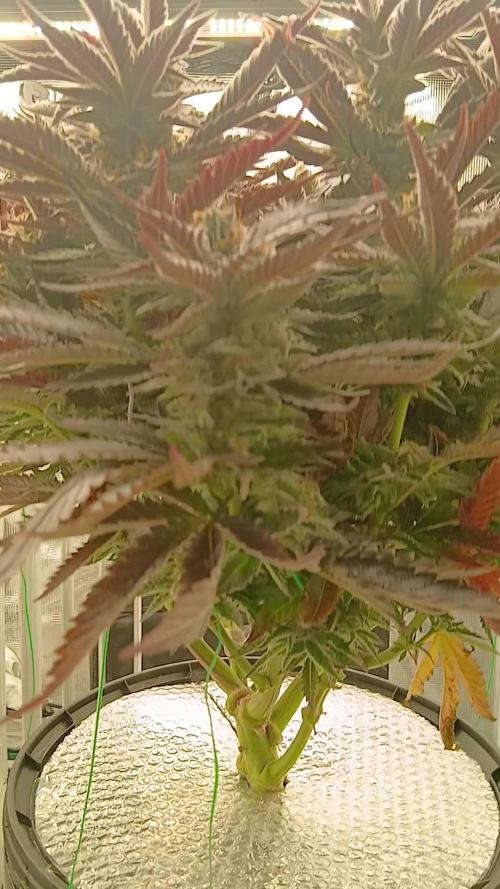
DAY 49: seeing harvests from other grows of these strains, I wonder why am still going strong on the bud building ?. They are more than happy to carry on further at this point it seems with only a small covering of browning pistils on the FFT#1 showing out. She isn't the fattest buddies yet but hopefully this week will finish her off nicely.
FFT#5 is very nice looking now and has so.e.beautiful sized colas across her wide span. She is very hemmed in by the others around her but has easily managed to push some serious buds to the canopy top to create so e rock solid, sweet smelling buds. She is feeding g a hell of a pot on the water now with approx 10L per 2 days. Hungry girl.
FFT#7 Is still the biggest sister here and now with very nice packed out colas at every point I look. I will be very surprised if she isn't the highest yield of the whole run. It is a great strain to work with and watch grow. The smell off her as with the others is a fruity hit and rushes out of the tent when i open up. I think another week at least to find her sweet spot for harvest.

Likes
19
Share


Likes
7
Share


@Lucyfer
Follow
Site is broken, can barely upload anything and it's sad because I'm really proud, of what we've achived here and i tought this may be the place to sahre it but it seems this palce is more for self promotions for brands and so on.
regardless, with all the effort that it took to select pictures heres some of a PARTIAL harvest, i did not harvest the whole plant as the cannopy did not allow lower bud sites to have light and i mean, theres at least 700 grams more waiting from those 2 plants (and thatsd a low ball estimate), currently "only" harvested 672 grams from the top colas, and not all of them were chopped, left some of the auxiliary bud sites that the MASSIVE colas had, im honestly shoked at one of them that weighted on its own 145.4 grams, and still had 4 auxiliary bud sites that i decided to leave for them to rippen, alltogether pretty sure this cola wouldve been 250 g's with all the other bud sites that it developed.
yesterday i decided to chop based on the fact that i felt nugs were moist and was afraid of them developing botrytis. none did and while im suspisicious on some of the nugs no definite answer as of right no nug shows it, but they were moist and better be safe than sorry, still would've given them another week if it was possible, but also i need GMO to rippen, so thats why i decided to do a stage chop, in one week will be chopping everything or maybe more, perhaps 2 weeks more, who knows now. one thing I know is that my house smells DANK, that it was 700 g's a partial harvest and that I still have more than half to chop and harvest, this will be plenty, im really happy with how they're turning out, ocne they dry I'll write here how they smoke and add some nug photos.
THERES STILL WORK TO DO, THIS IS NOT OVER YET. and I'm all for it :)

Likes
10
Share


@AMNESIAHAZEPK
Follow
ok so i started shifting the plant outdoors from sunrise to sunset one of the plants started getting heat stroke and borders of the first pair of leaves got yellow although all three plants were under the same conditions i started watering it more now it is showing success too. when indoors all3 plants are undel cfl light. i am going to transplant them next week and start adding nutrients in this week will also add a little bit of potting mix soil inwitht he peat moss and perlite when transplanting. also will use 35% dose of nutrients NPK only atm with nitrogen higher in liquid form.
going to start rcvng more seeds in 15 days and my target is of 40 plants. working on getting the infrastructure made outdoor of glass roof and steel frame so that i dont have to move the plants and they can be lit in the structure after sunset


Likes
Comments
Share

@HASSE4EVER
Follow
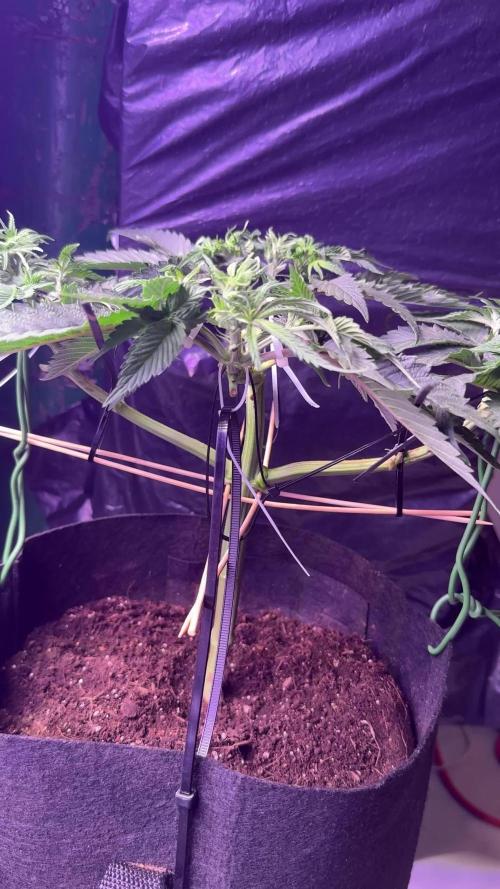
Ligth chuanging tiime to my 6 photoperiodic plants. It was some earthqueke in Colombia , so my seeds mixed up. I lkmow for sure GG4 Spirit Seeds and Banaana Runtz by Barneys is here and if any of you recodnize any straine) Help me )) here is list of 10- Barmeys 3 strains -Dorban Poisson,,Banana Runtz,London Pound Cale, 2x42Buds LemonPaya,Sweet seeds Jack 17 , Sensi seeds Purple Kush and something else)
Enjoy
Likes
3
Share

@Daniss98
Follow
What’s up Growmies!
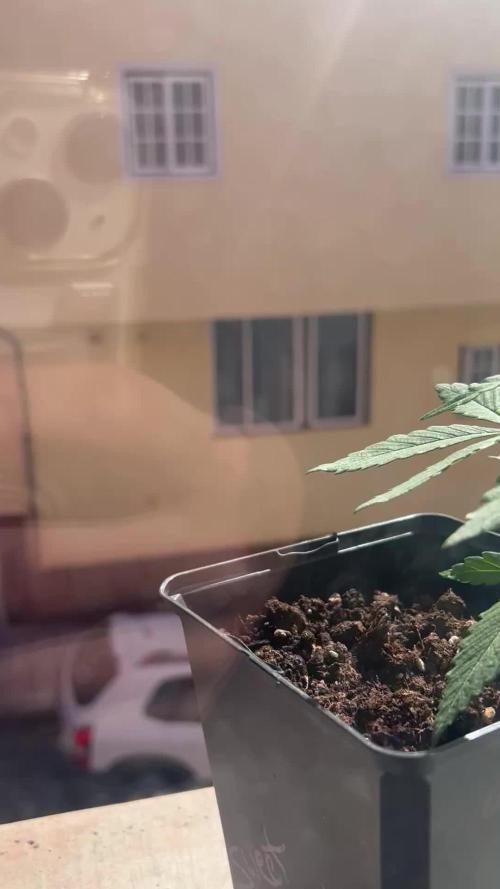
It’s been cloudy the whole week till today so there’s almost no evolution, i did some more lst to the sweet skunk and I noticed today that she is starting to flower.
The gorilla instead is still small and almost no evolution shown, i watered them once only this week.I’ll keep you updated next Sunday till then have some Goodsmokes guys!


Likes
12
Share


@Sundance
Follow
The weak plant becomes very bad. I will see if there will be even a small yeald. The health plan has a beautiful purple color. I checked today the situation under a microscope and it seems to be in a good way. 30% milky, 70% transparent.
Likes
19
Share


@Mattyice
Follow
Great progress. Accidentally broke one of the lowest branches trying to do lst so I won't be trying that again. My methods are going to be defoliation until preflower which is coming up soon/already started, and then a small Supercrop. The defoliation has triggered some increased speed in growth I've noticed. I still feel like it's short though
Likes
22
Share


@Ace_Algorithm
Follow
Everything has been going well , the growth has not stopped and the leaves are nice and green . I raised the power from 40% to 50%. When I did that the leaves on the gsc started curling upwards a little bit so I elevated my lights from 2.5 ft to 3ft . and will continue to raise the power gradually every week until at the max 900 watts . I have been watering them every time they are dry and keeping a close eye on any changes . So far so good !

Likes
11
Share

@NidoR420
Follow
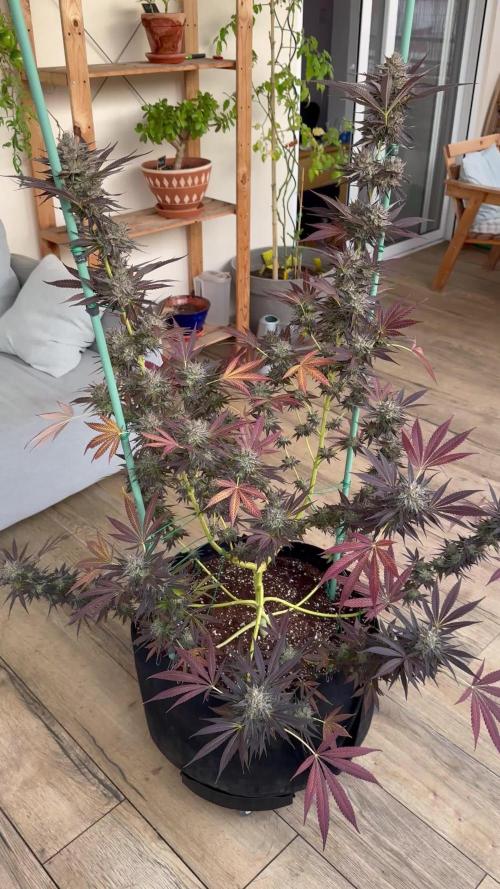
Last week of Ozz! I’m getting some nice trichromes. Surprisingly, she doesn’t smell much, but she’s still beautiful. She also has the best ratio of buds to leaves out of the three plants of the same strain. I’ll start trimming Dorel by Friday and #4 this weekend to free some space. Then it’ll be Ozz’s turn on Sunday or Monday. The relative humidity levels are getting dangerously high, but the temperatures are still fine until next week. Since she’s covered, I have good hopes she’ll hold. No additional bud has rotted since two weeks ago :))
Just finished trimming Dorel and will do #4 tomorrow. Fan leaves were super frosty so I kept them to cook, ended with 17g of trim (only fan leaves and too small buds) as well as 37g of dry buds. Not much but it was the smallest plant of the 3 by far, I wasn’t expecting more. First taste test was really conclusive, looking forward to testing again after some curing!
Edit before I complete the harvest section, all 3 plants cut and just Ozz remaining to dry and trim. Terrible outcome for #4 as I had to throw more than half of the plant away due to bud rots. I’m still really confused about what happened: the day before harvest I noticed and removed 3 bud rots from the plant - so far so good. All remaining buds were fine, but when trimming I realised every single top was maroon-ish at the base and I could clearly see a start of mold when opening some of them. Although I could clearly confirm what it was with a 30x lens, the white spots were extremely scarce and small (less than 1x1mm each time). It doesn’t seem really coherent with how it should have spread. Nonetheless, I didn’t take risk and threw away any bud where I could identify white mold with the lens, and put aside the ones where I had a doubt in pop corns (the “7g maybe”, cf below) to track the evolution.
A quick summary of the harvest so far:
- Dorel: 250g wet, 37g dry / 17g trim (54g total)
- #4: 450g wet, 33g dry / 7g maybe / 29g trim (62-69g total) + a lot thrown away
- Ozz: only weighted the two bigger canopie I cut, 162g+142g≈300g wet. It represents around half of the whole plant (probably less, but stem included), so around 5-600g wet total. Still have a few days before I start trimming, but considering the hassle I might start early to not be overwhelmed.
Likes
11
Share

@Bud_vista
Follow
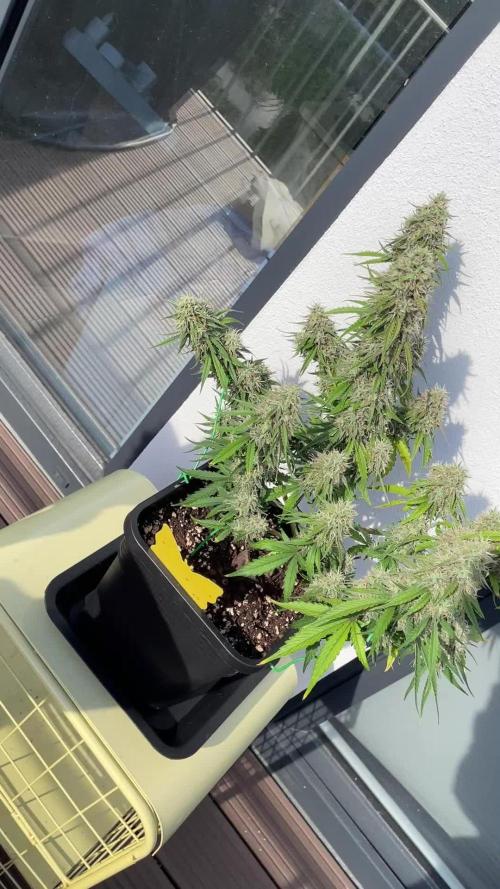
We are entering week 9 now!
She’s an absolute beast! Smells is strong but very fresh and tasty.
The upper buds seems to be ready to harvest but I think I will give the whole plant another week until chop, chop :)
Likes
12
Share