




Likes
6
Share


@Gardens_of_Of
Follow
Both are enjoying life and growing big frosty grape smelling flowers.

Likes
17
Share


@Naujas
Follow
This is my second growth in a suitcase, I got 30 grams of dry flowers from the first growth, but this growth together with FastBuds is obviously much better than the first one :) although the girl's leaves burn from the light, which is only 10-15 cm from the flowers, but the girl copes with it perfectly :) good luck to everyone.

Likes
57
Share


@BigDaddyK
Follow
Ok, lets think about this logically - why are the leaves turning brown? it looks like a Calcium/Phosphorus issue, A LOT OF PEOPLE HAVE THIS ,
is it a deficiency??? Unlikely in Hydro as the solution is more effective as there are no contaminants, so this leads me to believe its a lockout, what can cause this ? 2 things = A) Too Much Nutrient Potassium or B) ph is too low - SO to rectify this, i have added more water to the reservoir and raised the ph to 6.3
As i am using more water in the reservoir its entirely possible that when the water goes down,even though the EC stays the same the proportional concentrations of each nutrient can change - for example EC pen says 2.0 when i first fill with 20 litres, the plant drinks 4 litres of water and consumes lots of bloom A+B so when i put my pen in two days later the 16 litres of solution still reads 2.0 but there is a higher proportion of PK.
Of course it could always be option C) these plants eat phosphorus for breakfast and need more ..😜
I have checked roots they all ok
Wednesday- changed solution , made it slightly weaker EC 1.7 ph 6.2-3
Thursday I had a little chat on Instagram with mammoth , i think they might need less than usual
Saturday - noticed some yellowing on the little plant , it’s a confusing as th3 other plants are all using the same nutrients and they are loving life , it might be the buckets , I am much preferring the size of the 35 litre ones , and the root structure is perfect , because the 45 litre boxes are more rectangular than square the roots are sort of sideways .
Still waiting for some purple on the tall one 🤔
ITS VERY IMPORTANT IN DWC - Do not automatically think you need to add nutrients , in DWC it’s so much more efficient that less is more , 99% of the time it’s overdone it , normally the tips go brown first , but it’s some circumstance s The concentration can increase without you knowing , FIRST change solution with a little bit less , I usually go to 1.6-1.7 EC TOTAL and 6.3 ph that is a universal solution that provides enough without overdoing it .
Updated DAILY
Likes
2
Share


@Aleks555
Follow
Our beauty is now 9 weeks old and is in full bloom, delighting us with her appearance and aroma. Her buds are getting covered in a thick layer of fragrant trichomes, and the air is filled with a pleasant fruity scent—promising a wonderful finish.
The climate in the tent remains stable: daytime temperature is 28°C, nighttime drops to 21°C, and humidity is kept at 65%. The light schedule is still 12/12, and we continue using CO2 to support the flowering process. We’re also consistently feeding her with Xpert Nutrients, which provide everything she needs during this critical stage.
A huge thank you to Xpert Nutrients for their top-quality fertilizers that drive such vigorous flowering, and to Seeds Mafia for the amazing genetics that gave us this strong and aromatic beauty. We’re eagerly looking forward to the moment she fully ripens and rewards us with a great harvest!


Likes
16
Share


@GrowCaCola
Follow
Dont underestimate the potency of the smoke on this girl. It can be unreal if you dont respect it. I smoked a whole blunt of it and expected not to get my head taken off. Lets say I wont make that mistake again. Good Job Fast Buds - another potent fast beast!
Likes
7
Share


@Tiozin
Follow
Hi!
Just harvest both plants, left them with all their leaves and whole main branch intact. Just removed the light panels and hanged them on the same tent.
I’m using some cardboard to cover the recently watered soil, blumats are still running to support the life on the soil through the next amendment and new plants that will come shortly (after the drying period finishes, about 2 weeks for a slow drying process).
That’s it :)
Likes
4
Share


@2x2UkGrow420
Follow
Had to tie up branches to take the weight of these heavy ass nugs, can’t want to taste this smell orangey as f**k! 🔥🔥🔥 started flush midway through the week.
Likes
111
Share


@Herbalize
Follow
Hello folks
Really hard to manage the temp with the heat wave in europe this week
They show us some signs of heat stress but otherwise, they develop well and quickly
4.5 liters of tap water each, every 4/5 days and a little defoliation every day
Stay tuned,see you next week guys 😘
I also have another diary with one Pineapple Kush from Rqs if you want to see
Peace Love & Weed GD Fam😍👊


Likes
31
Share

@Trippie
Follow
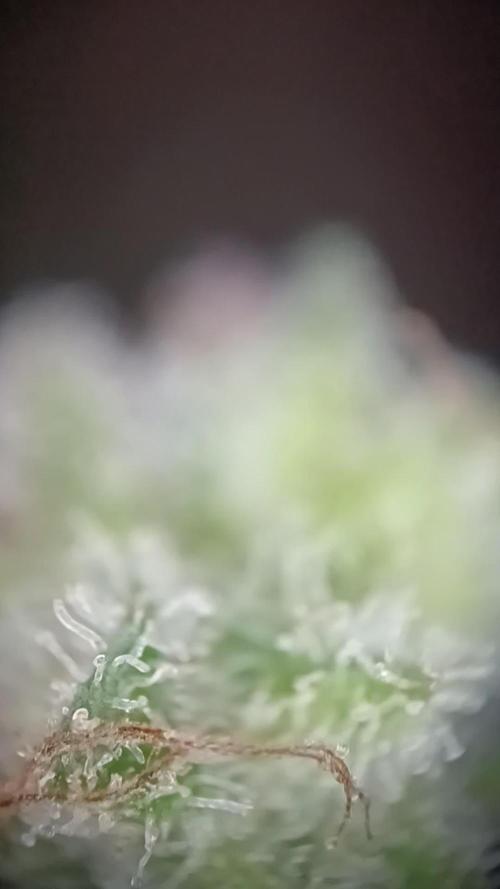
First 45gr of tops are off. Keepin an eye on the rest. Ma lenz came in tha mail today, awesome! Will be easy to follow up harvest times.
2nd layer still good

Likes
5
Share


@gse314
Follow
So I ended up cutting early due to light stress at 51 Flowering days but I got nervous I didn’t want the girls to herm going into the finally week of flower I harvested a dry weight of 195g Flower, 69g of was lemon mandarin, 39g trim/shake, so 234g total, the gorilla melon taste good and it’s a chill high feel like it quiets the room around me and reduces sound to a calm level regardless wats happening lol( if that make sense) Def will grow again the lemon mandarin got a sweet citrus taste buts its dank also, and I know if I would of went the full time and had each plant its own light I would of gotten way more so I made sure I bought another sf1000 for the next 4 pot grow
Likes
21
Share


@MadeInGermany
Follow
Flowering day 12
since time change
to 12/12 h.
Hey everyone ☺️.
Once again a wonderful week goes by 😀.
It has developed so far and is now slowly starting to develop its flowers :-).
As soon as the first forms of buds can be seen (I think in 5-10 days) 2 g GHSC Powder Feeding Bio Bloom per liter of substrate are added.
In the third week, 1 g per liter of substrate is added so that it lasts through to the end :-).
This week it was poured 3 times with 1 liter each 👍.
The entire tent was also cleaned and the electronics checked for functionality.
The humidifier was refilled every day and fresh osmosis water was drained into the tank for the coming week ☺️.
The plants have all been checked for health and pests 👍.
Next week the bamboo sticks are inserted towards the end for support and the lowest shoots are removed so that at the end the energy is not wasted in the lower area 👍.
Otherwise there is nothing more to report this week :-).
I wish you a lot of fun with the update 😎.
Stay healthy and let it grow 🍀.
You can buy this Strain at
https://www.amsterdamgenetics.com/product/kosher-tangie-kush/
Type:
Kosher Tangie Kush
☝️🏼
Genetics:
Kosher Kush
X
Tangie
👍
Vega lamp:
2 x Todogrow Led
Quantum Board 100 W
💡
Bloom Lamp :
2 x Todogrow Led
Cxb 3590 COB 3500 K 205W
💡💡☝️🏼
Soil :
Canna Coco Professional +
☝️🏼
Fertilizer:
Green House Powder Feeding
☝️🏼🌱
Water:
Osmosis water mixed with normal water (24 hours stale that the chlorine evaporates) to 0.2 EC. Add Cal / Mag to 0.4 Ec Ph with Organic Ph - to 5.5 - 5.8 .


Likes
24
Share


@Bud_Porn69
Follow
Bitte entschuldigt meine Kamera, mein Handy ist mir paar mal schon runtergefallen. Dadurch hat die Linse gelitten.😅
Mein erster Grow, wünscht mir Glück


Likes
55
Share


@w33dhawk
Follow
Anfang 6. vegi Woche werde wohl Ende der Woche mein sqrog Netz drüber hängen und das Einweben beginnen.......
Edit:25.02.21 habe heute das sqrog Netz eingebaut ist ein altes Gestänge von nem pavilion hab mein bodengitter nochmal überarbeitet damit die Töpfe nicht schief stehen sind 2 alte Bilderrahmen auf 2 leisten mit Hühner Draht 😬😬😬

Likes
4
Share

@DogDoctorOfficial
Follow
💙 Project Blue Tent – Week 10
🥒 Pickle Lemon Haze F1 – Pheno B
🌸 The Week Where We Let Her Shine
Hello everyone, and welcome back to another chapter of Project Blue Tent! 💙🌱
And this week...
I'm going to start by saying something that has become increasingly obvious while watching this project develop:
These girls are incredible.
😂💙
Not because they're doing something completely different from each other.
Actually...
quite the opposite.
They're becoming remarkably similar.
Same room.
Same environment.
Same lighting.
Same irrigation.
Same nutrition.
Same training philosophy.
Same major interventions.
And now, as we reach this stage of flowering...
they almost look like copies of each other.
And that is fascinating.
Today we're putting the spotlight back on Pickle Lemon Haze F1 – Pheno B.
And honestly?
She's looking absolutely beautiful.
🌿 WEEK TEN – NOTHING TO FIX
After the amount of work we did during the previous weeks, this week was refreshingly simple.
We didn't perform another major defoliation.
We didn't change the structure.
We didn't move branches around.
We didn't install another SCROG.
We didn't start chasing the canopy.
We didn't try to force anything.
We simply watched.
And that's because there really isn't anything screaming at us for attention.
Pickle Lemon Haze Pheno B is approximately 145 cm tall.
She's healthy.
She's vigorous.
She's flowering.
She's supported.
And she's settling beautifully into the structure we created for her.
Sometimes...
doing nothing is actually doing something.
😂🌱
🌸 LOOKING AT THE RESULTS OF THE PREVIOUS WEEKS
This is the part of the project I find particularly satisfying.
During the previous weeks, we were constantly making decisions.
The girls stretched.
We ran out of vertical space.
The LEDs needed to be raised.
The carbon filter and extractor were moved outside the tent.
The canopy became extremely dense.
We performed a deep defoliation.
We installed the second SCROG.
We added additional airflow underneath the canopy.
We adjusted the nutrition.
There was a lot happening.
But now?
We get to watch those decisions play out.
And Pickle Lemon Haze Pheno B is giving us a very nice answer.
She's standing there with a beautifully organized flowering structure.
The branches are visible.
The canopy is open.
The flowers are developing.
The support system is in place.
The airflow is moving.
And the plant looks comfortable.
That's what we wanted.
🌿 THE DEFOILIATION IS NOW IN THE REAR-VIEW MIRROR
One of the biggest things I'm watching this week is how beautifully the plant has settled after the heavy defoliation.
At the time, the room looked completely different.
We had an enormous amount of vegetative material.
The plants had stretched aggressively.
The interior of the canopy was extremely dense.
So we opened everything up.
Not because leaves are bad.
Quite the opposite.
Leaves are essential.
But the structure had become so crowded that we needed to manage the density and make the flowering architecture more functional.
And now...
we're seeing the result.
The plant has had time to recover.
The remaining foliage is doing its job.
The flowering sites are much easier to see.
Air can move through the structure.
And the entire plant feels more organized.
That's the beautiful part.
The intervention is finished.
Now the plant gets to tell us what it thought about it.
And so far?
I like the answer.
💡 LUMIFLORA – LIGHTING THE LOWER CANOPY
The biggest new addition to the setup is still the LumiFlora under-canopy light.
We're now running the **LumiFlora 150W full-spectrum fixture**, with additional emphasis toward the red portion of the spectrum.
And with these girls becoming this large, it makes perfect sense to explore supplemental lighting underneath the canopy.
The main Phytonaut LEDs continue providing the primary light from above.
But with a plant this tall and this developed, the lower portions naturally receive less direct light.
So instead of constantly removing more foliage to try to expose every single flowering site to the overhead fixtures, we're taking another approach.
We're bringing supplemental light to the lower canopy.
The LumiFlora is there to complement the overhead lighting.
Not replace it.
Not compete with it.
Simply add another layer of light where the structure naturally creates more shade.
And now...
we watch.
🌸
I'm particularly interested in seeing how the lower flowering areas develop over the coming weeks.
That's one of the reasons I love documenting these experiments.
We make a change.
Then we wait for the plant to answer.
🕸️ THE SECOND SCROG IS RIGHT WHERE WE WANT IT
The second SCROG remains in place and, just like the rest of the setup, we're not touching it unnecessarily.
It has already done what we wanted.
The first SCROG helped us organize the vegetative canopy.
The second SCROG is now there to provide additional support as flowering continues.
With Pheno B reaching approximately 145 cm, she's built a substantial framework.
As those flowers continue gaining weight, having that extra support available becomes increasingly useful.
We're not trying to reshape her anymore.
We're not trying to force branches into new positions.
The structure is established.
Now we support it.
And then we let her do her thing.
🥒💙
🌬️ AIRFLOW – KEEPING EVERYTHING MOVING
The airflow system also remains unchanged.
We have airflow working through different levels of the canopy, with the additional Zamnesia clip fan underneath helping move air through the lower portion of the plant.
That becomes particularly interesting now that the LumiFlora has been introduced.
We're adding light underneath the canopy, so naturally we want to make sure the lower portion of the room continues to have good air movement as well.
The goal isn't to create a hurricane.
😂
It's simply to avoid stagnant pockets of air inside a very mature flowering structure.
The canopy is open.
The air is moving.
The extraction system is outside the tent.
And the room feels much more balanced than it did a few weeks ago.
NUTRITION – CONSISTENCY IS KING
The nutrition remains exactly where the plants are telling us they want it.
We're continuing with the PLAGRON Hydro program:
PLAGRON Hydro A — 2.2 ml/L
PLAGRON Hydro B — 2.2 ml/L
🌱 PLAGRON Hydro Roots — 1 ml/L
🌸 PLAGRON Power Buds — 1 ml/L
pH adjusted as required
Current EC is approximately 2.49 mS/cm.
And again...
we aren't changing things just for the sake of changing them.
The plants are happy.
They're consuming.
They're flowering.
They're maintaining beautiful foliage.
So we're staying consistent.
This is something I've always enjoyed about working with plants:
They tell you when they're comfortable.
You just have to pay attention.
Don't feed a number.
Watch the plant.
🌸💙
🥒 PHENO B – LOOKING MORE AND MORE LIKE HER SISTERS
Here's the really fascinating part.
Pickle Lemon Haze Pheno B is beginning to look remarkably similar to the other girls in the tent.
And that's something I find genuinely interesting.
These are individual plants.
They're being documented separately.
We're watching their individual personalities develop.
And yet...
under the exact same environmental conditions...
they're showing an incredible amount of uniformity.
The same general height.
The same aggressive vegetative development.
The same flowering transition.
The same response to the structural work.
The same need for support.
The same beautiful recovery after defoliation.
It's almost like looking at several versions of the same plant.
😂💙
Of course, there will still be phenotype differences.
That's what we're here to discover.
But right now?
The uniformity is impressive.
And that's making me even more curious about what happens as they mature.
🔬 SAME ENVIRONMENT – LETTING GENETICS SPEAK
This is exactly why Project Blue Tent is so interesting to me.
We're keeping so many variables consistent.
Same tent.
Same lighting.
Same irrigation.
Same nutrition.
Same environmental conditions.
Same general training.
And then we watch.
The more consistent the environment remains, the more interesting the individual differences become.
Or, in this case...
the lack of obvious differences.
😂
The Pickle Lemon Haze F1 girls are behaving remarkably similarly.
And that's giving us a very interesting picture of how these genetics are expressing themselves in this particular environment.
But we're not jumping to conclusions yet.
We're still early enough in the flowering development that the final differences may become much more obvious later.
So...
we watch.
🌿 THE PLANT DOESN'T NEED US TO CONSTANTLY TOUCH IT
One of the biggest lessons from this stage of the grow is knowing when to step back.
There is always something a grower can do.
You can remove another leaf.
Move another branch.
Change another setting.
Adjust another number.
Add another product.
But that doesn't mean you should.
😂
At this point, Pheno B looks like she doesn't need another intervention.
She needs stability.
She needs time.
She needs light.
She needs nutrition.
She needs airflow.
And then...
she needs to be left alone to do what plants do.
Grow.
Flower.
Develop.
Finish.
And that's exactly what we're doing.
💡 FROM OVERHEAD LIGHT TO A COMPLETE LIGHTING ENVIRONMENT
The introduction of LumiFlora is also changing how I'm thinking about the lighting inside this tent.
Previously, the main story was always the overhead LEDs.
How high are they?
How far from the canopy?
How much stretch?
How much vertical room?
Now we've added another dimension.
We're thinking about the plant in three dimensions.
Light from above.
Supplemental light underneath.
A canopy occupying the space between.
And that's particularly interesting with plants that have become this large.
The LumiFlora 150W full-spectrum fixture gives us another tool to explore how supplemental lower-canopy lighting can fit into the overall system.
We're not expecting miracles.
We're not claiming it will automatically transform the plants.
We're simply giving the lower canopy another source of light...
and watching.
That's what this whole project is about.
Observation.
Experimentation.
Documentation.
🌸 CURRENT GROW CONDITIONS
🌸 Flowering: Week 10
📏 Height: approximately 145 cm
💡 Light schedule: 12/12
☀️ Day temperature: 27°C
🌙 Night temperature: 27°C
💧 Relative humidity: 61%
⚗️ pH: 6.0
⚡ EC: approximately 2.49 mS/cm
🌡️ Solution temperature: 24°C
🌱 Substrate temperature: 24°C
🌬️ CO₂: approximately 666 ppm
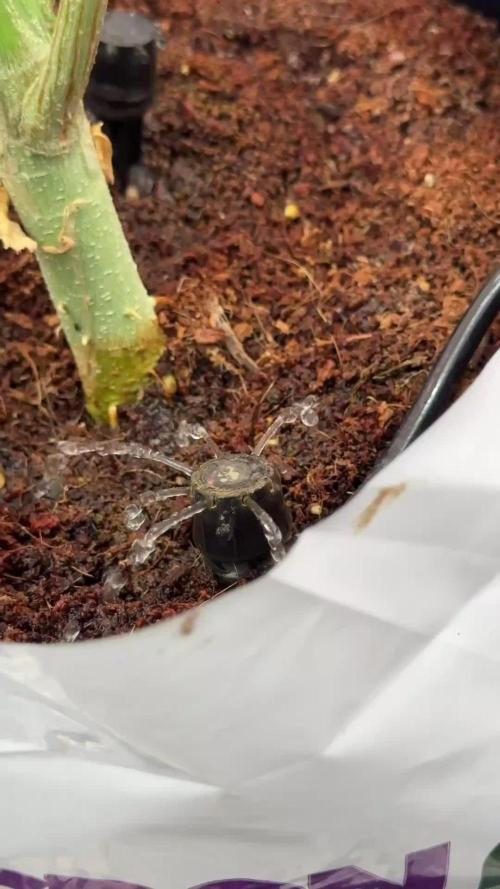
💦 Watering: approximately 1.6 L per plant / 24h
? Pot size: 8 L
💡 LumiFlora Under-Canopy: 150W Full Spectrum
The room is stable.
The plants are stable.
And that's exactly what we want right now.
🔭 WHAT I'M WATCHING NOW
At this point, the questions have changed.
I'm no longer asking:
"How do we control the stretch?"
We've already dealt with that.
I'm no longer asking:
"How do we fit them into the tent?"
We've created the space.
I'm no longer asking:
"How do we open the canopy?"
We've already done that.
Now I'm asking:
How quickly will the flowers develop?
How will the lower canopy respond to the LumiFlora?
How will the second SCROG perform as the flowers gain weight?
Will the Pickle Lemon Haze phenotypes continue looking this similar?
And finally...
what are these girls going to look like when maturity really starts showing?
Those are much more exciting questions.
😂💙
🌸 LET THEM WORK
This week is really about one thing:
Let them work.
We've already spent weeks building these plants.
We've created the structure.
We've managed the canopy.
We've opened the room.
We've improved airflow.
We've raised the lights.
We've added support.
We've adjusted nutrition.
We've now introduced supplemental under-canopy lighting.
There isn't much more I want to manipulate right now.
I want to see what the plants do with everything we've given them.
And Pheno B is making that decision very easy.
She's looking fantastic.
🥒💙
🌸 FINAL THOUGHTS – THE QUIET WEEKS ARE SOMETIMES THE BEST ONES
This week might not have been dramatic.
There was no major training session.
No emergency.
No broken branch.
No big room rearrangement.
No massive intervention.
And honestly?
That's wonderful.
😂
Because sometimes the best grow updates are the ones where you can simply stand back and say:
"Look at her."
And that's exactly how I feel looking at Pickle Lemon Haze Pheno B.
She's standing there at approximately 145 cm.
She's healthy.
She's vigorous.
She's flowering.
The canopy is open.
The branches are supported.
The airflow is moving.
The nutrition is consistent.
The overhead lighting is doing its job.
And now the LumiFlora is giving the lower canopy another source of full-spectrum light.
Everything we've done over the previous weeks is now becoming visible.
This is the payoff phase.
Not the harvest yet.
Not the finish line.
But the point where all those earlier decisions start becoming the plant we're looking at today.
And that's incredibly satisfying.
💙🌸🥒
The most fascinating part?
She looks remarkably similar to her sisters.
Four girls.
One room.
Same environment.
And somehow...
they're developing like they're reading the same instruction manual.
😂
Maybe that's the beauty of these F1 genetics.
Maybe it's simply the environment.
Maybe we'll see more differences later.
That's exactly why we're documenting everything.
We don't need to decide the story today.
The plants will tell us.
And Pickle Lemon Haze Pheno B?
She's telling us she's very happy.
So we're listening.
We're keeping everything stable.
We're giving her the light, nutrition, support and airflow she needs.
And we're stepping back.
Now let's see what the future has waiting for this beautiful girl.
🌸🥒💙
🙏 A HUGE THANK YOU
A huge thank you once again to Zamnesia for making Project Blue Tent possible and for giving us the opportunity to explore these beautiful Pickle Lemon Haze F1 genetics phenotype by phenotype.
Thank you to PLAGRON for the Hydro nutrient line supporting these vigorous girls throughout this incredible flowering journey.
A massive thank you to Zamnesia for the Phytonaut LED lighting, curved scissors and clip fans that have become such important parts of this project.
Thank you to Mars Hydro for the automatic drip irrigation and drainage system that keeps these girls consistently supplied throughout their very thirsty journey.
And a special thank you to LumiFlora for the 150W full-spectrum under-canopy light that we're now introducing into the setup to explore supplemental lighting underneath this beautiful flowering canopy.
And of course, thank you to GrowDiaries for giving us the platform to document this entire adventure.
Most importantly...
thank you to everyone following Project Blue Tent. 💙
This week was quiet.
But sometimes quiet is exactly what you want.
The plants are doing beautifully.
The room is stable.
The structure is established.
The support is ready.
The lighting is working from above and below.
The nutrition is consistent.
And now...
we wait.
Four plants.
One environment.
Different phenotypes.
And an increasingly fascinating amount of similarity between them.
😂💙
Let's see what the future has in store.
For now, Pickle Lemon Haze Pheno B is exactly where I want her to be.
Healthy.
Happy.
Supported.
Flowering.
And shining.
🥒🌸💙
Until next week...
Less intervention.
More observation.
More flowers.
And hopefully...
a little more of that beautiful Pickle Lemon Haze F1 magic.
Growers Love, happy growing, and take care everyone! 🌱💙
Likes
2
Share

@CheeRz
Follow
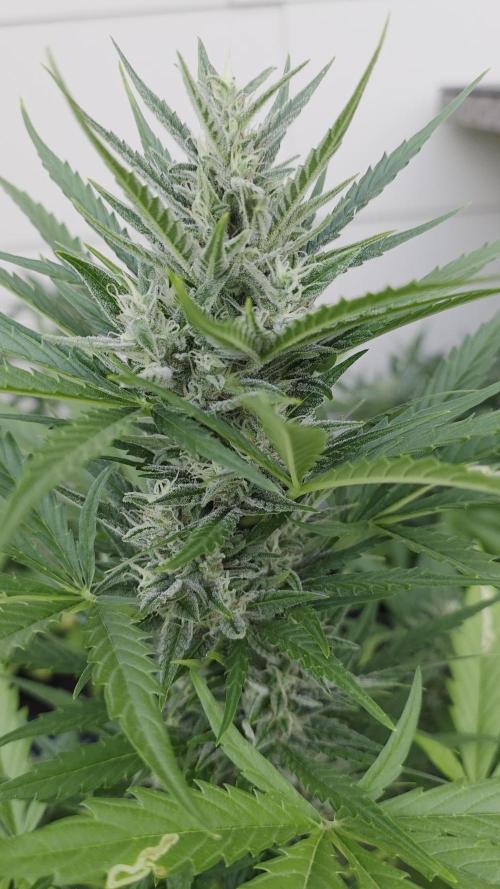
This week we only had bad weather and a lot of rain. But according to the weather forecast, it should get better again in the next few days. ☀️☀️☀️
Likes
24
Share


@Kirsten
Follow
9.1.25:
Watermelon 🍉 is doing well, slowed down a bit, but at least I got the LST going earlier on her. Which will hopefully stand her in good stead going forward.
I've been readjusting the LST. I just took all the pegs out and reshaped her.
Watering with 1ltr of dechlorinated water PH'd to 6.0 with the following nutrients;-
♡ 4ml Biobizz Bio-Grow
♡ 2ml Biobizz Bloom
♡ 2ml Biobizz Top Max
♡ 2ml Cal-Mag
♡ 2ml Ecothrive Flourish.
I water with this every 3 days.
Thanks for checking out my diary 🍃 ✌️