


Likes
Comments
Share

@Ninjabuds
Follow
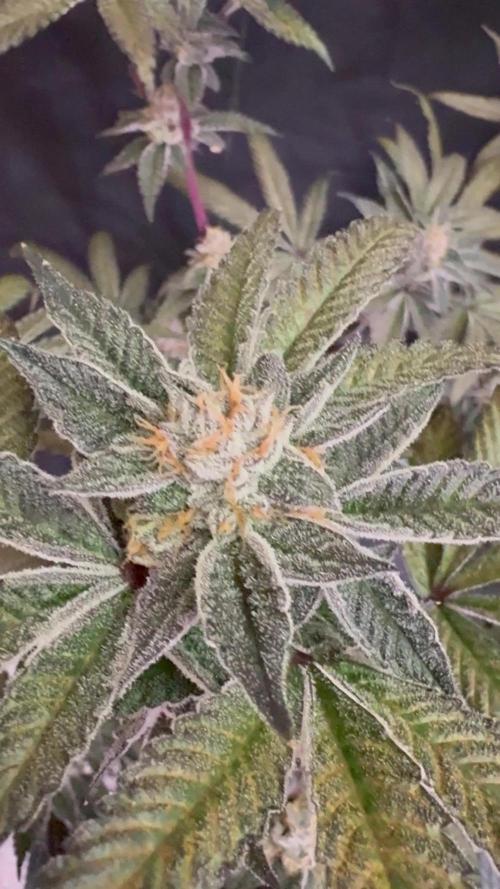
Weird structure but some super fire purple black nugs the kinda small thou
Likes
74
Share


@MrHightimes
Follow
Did a bit of loli-popping and some defoliation on the little guys. They are moved into the new tent and adjusting nicely!
Next week my NEW MARS HYDRO LIGHT! should be here and I'm pumped for that!
I think theses are gonna be some big girls!!!
PH 6.1 and PPM was 1220/550 (yeah! got a ppm meter!)
_______________________________________________________________________
I got my new Marshydro light installed! Its fantastic and after work the first night it was AMAZING to see how the plants had perked up for it!!! Its a very nice study light and totally makes me feel better about having a bigger light!!!
The ladies are having a bit of trouble but I still think things are gonna be just fine. I'll put some pics up of the trouble next week
__________________________________________________________________________
I took em out for a water and realized how much sparkly they are getting! There are some ugly leaves and the plants are a shade lighter green than i want, but really things are going nicely!
I gave the small plant a little booster stand and its canopy is now level with the others but its like 2 weeks behind I feel like. definitely frustrating having 1 plant lag behind the others but it is what it is!


Likes
Comments
Share


@eldruida_lamota
Follow
Vamos familia, actualizamos la sexta semana de floración de estas Sagrada amnesia de Seedstockers, salieron las 5 de 5, 100% ratio éxito.
Aplicamos varios productos de Agrobeta, que son increíbles para aportar una buena alimentación a las plantas.( Justo esta variedad 2 de 3 son bastante sensibles y marcan en las hojas exceso pero no están las puntas quemadas)
Temperatura y humedad dentro de los rangos correctos dentro de la etapa de floración.
La tierra utilizada es al mix top crop, por cambiar.
De 5 ejemplares seleccioné los 3 mejores para completar el indoor y trasplanté directamente a macetas de 7 litros, el fotoperiodo a 12/12, también aplique una buena poda de bajos, se ven bien sanas las plantas, tienen un buen color y progresan a muy buen ritmo por el momento, ya progresan las flores, llevan ya una tricomada… increíble.
Agrobeta:
https://www.agrobeta.com/agrobetatiendaonline/36-abonos-canamo
Hasta aquí todo, Buenos humos 💨💨

Likes
48
Share


@420DeepGrow
Follow
Sorprendido por la noticia de mi primera colaboracion con MarsHydro 😊🙏 y muy sorprendido tambien por el envio de las semillas por parte de 420FastBuds. Gracias
a vosotros puedo compartir mis diarios con los usuarios de growdiares
La marca numero uno en focos 💡, carpas de cultivo ⛺️, extractores 🌬️ y demás aparatos que necesitas para tu cultivo.
Para esta aventura arrancaremos con 💡Mars Hydro TS 1000 Full Spectrum LED Grow Light 150W Regulable y 1 semilla autofloreciente a un ciclo de 20/4.
Verdaderos 150w con este TS1000, la mejor luz de cultivo LED para principiantes.
Ofrece una luz adecuada para 2-4 plantas 🌱. Su precio razonable, la marcada mejora del rendimiento y el control variable de la producción la hacen amigable para los nuevos cultivadores. Todo un tesoro para cualquier cultivador que este comenzando.
Usaremos para esta aventura una carpa de 60x60x90, MarsHydro una carpa para los más exigentes.Con una solapa de cremallera mejorada, dobles cremalleras de metal con forro,reflectante diamante tipo Mylar, postes de metal para una estructura mas solida, no se puede pedir nada mas.
Garantizando una respuesta en solo 24 horas tanto si has usado antes la marca como si no.
Que decir de 420FastBuds, uno de los mejores bancos de semillas a nivel mundial. Si quieres una Auto de verdad, esta es tu cepa.
Increíble 28.5 % de THC! 😵😵💫🤯
La autofloreciente más fuerte del mundo hasta el día de hoy, con una producción increíble de tricomas.
Superfiable e increíblemente resistente. Esta variedad heredó las mejores cualidades de sus padres, por lo que es una variedad infalible incluso para cultivadores principiantes.
Productora masiva. Crece alrededor de 150 cm y puede producir hasta 650 g/m² en 10 semanas.
Cogollos gruesos y densos. Produce cogollos del tamaño de pelotas de golf que terminan completamente cubiertos de tricomas y que tienen un aroma excepcional, una excelente opción para cultivadores y extractores comerciales.
Genial para principiantes. Ideal para cultivadores principiantes que buscan una variedad potente, resistente y fácil de cultivar.
💡 MarsHydro TS1000:
https://www.amazon.com/gp/product/B07PLY1WKK
⛺️ 60 x 60 x 90 MarsHydro:
https://www.amazon.com/dp/B081PN2QDN/
🌻 Gorilla Cookies Auto:
https://2fast4buds.com/es/seeds/gorilla-cookies-auto
Comienza la etapa de floracion, aunque se adelanto a la semana anterior.
Apliqué humus de lombriz y se riega con agua y baka cantidad de nutrientes.
📅 Dia 29: Riego con nutrientes EC 800
📅 Dia 30: Descanso
📅 Dia 31: Descanso
📅 Dia 32: Riego con nutrientes EC 750
📅 Dia 33: Descanso
📅 Dia 34: Riego con nutrientes EC 450
📅 Dia 35: Descanso


Likes
10
Share


@Jozef_Balcerek
Follow
PH ziemi się rozjechało i nie wiem dlaczego? za mało , za dużo, za często podlewane? poczekam aż wyschną i zrobię delikatny przelew wodą o PH 7, będziemy obserwować i zobaczymy...

Likes
19
Share


@Ultraviolet
Follow
Yellow butterfly came to see me the other day; that was nice.
Starting to show signs of stress on the odd leaf, localized isolated blips, blemishes, who said growing up was going to be easy!
Smaller leaves have less surface area for stomata to occupy, so the stomata are packed more densely to maintain adequate gas exchange. Smaller leaves might have higher stomatal density to compensate for their smaller size, potentially maximizing carbon uptake and minimizing water loss. Environmental conditions like light intensity and water availability can influence stomatal density, and these factors can affect leaf size as well. Leaf development involves cell division and expansion, and stomatal differentiation is sensitive to these processes. In essence, the smaller leaf size can lead to a higher stomatal density due to the constraints of available space and the need to optimize gas exchange for photosynthesis and transpiration. In the long term, UV-B radiation can lead to more complex changes in stomatal morphology, including effects on both stomatal density and size, potentially impacting carbon sequestration and water use. In essence, UV-B can be a double-edged sword for stomata: It can induce stomatal closure and potentially reduce stomatal size, but it may also trigger an increase in stomatal density as a compensatory mechanism. It is generally more efficient for gas exchange to have smaller leaves with a higher stomatal density, rather than large leaves with lower stomatal density. This is because smaller stomata can facilitate faster gas exchange due to shorter diffusion pathways, even though they may have the same total pore area as fewer, larger stomata. Leaf size tends to decrease in colder climates to reduce heat loss, while larger leaves are more common in warmer, humid environments. Plants in arid regions often develop smaller leaves with a thicker cuticle and/or hairs to minimize water loss through transpiration. Conversely, plants in wet environments may have larger leaves and drip tips to facilitate water runoff. Leaf size and shape can vary based on light availability. For example, leaves in shaded areas may be larger and thinner to maximize light absorption. Leaf mass per area (LMA) can be higher in stressful environments with limited nutrients, indicating a greater investment in structural components for protection and critical resource conservation. Wind speed, humidity, and soil conditions can also influence leaf morphology, leading to variations in leaf shape, size, and surface characteristics. Small leaves: Reduce water loss in arid or cold climates.
Environmental conditions significantly affect gene expression in plants. Plants are sessile organisms, meaning they cannot move to escape unfavorable conditions, so they rely on gene expression to adapt to their surroundings. Environmental factors like light, temperature, water, and nutrient availability can trigger changes in gene expression, allowing plants to respond to and survive in diverse environments.
Depending on the environment a young seedling encounters, the developmental program following seed germination could be skotomorphogenesis in the dark or photomorphogenesis in the light. Light signals are interpreted by a repertoire of photoreceptors followed by sophisticated gene expression networks, eventually resulting in developmental changes. The expression and functions of photoreceptors and key signaling molecules are highly coordinated and regulated at multiple levels of the central dogma in molecular biology. Light activates gene expression through the actions of positive transcriptional regulators and the relaxation of chromatin by histone acetylation. Small regulatory RNAs help attenuate the expression of light-responsive genes. Alternative splicing, protein phosphorylation/dephosphorylation, the formation of diverse transcriptional complexes, and selective protein degradation all contribute to proteome diversity and change the functions of individual proteins.
Photomorphogenesis, the light-driven developmental changes in plants, significantly impacts gene expression. It involves a cascade of events where light signals, perceived by photoreceptors, trigger changes in gene expression patterns, ultimately leading to the development of a plant in response to its light environment.
Genes are expressed, not dictated! While having the potential to encode proteins, genes are not automatically and constantly active. Instead, their expression (the process of turning them into proteins) is carefully regulated by the cell, responding to internal and external signals. This means that genes can be "turned on" or "turned off," and the level of expression can be adjusted, depending on the cell's needs and the surrounding environment. In plants, genes are not simply "on" or "off" but rather their expression is carefully regulated based on various factors, including the cell type, developmental stage, and environmental conditions. This means that while all cells in a plant contain the same genetic information (the same genes), different cells will express different subsets of those genes at different times. This regulation is crucial for the proper functioning and development of the plant.
When a green plant is exposed to red light, much of the red light is absorbed, but some is also reflected back. The reflected red light, along with any blue light reflected from other parts of the plant, can be perceived by our eyes as purple.
Carotenoids absorb light in blue-green region of the visible spectrum, complementing chlorophyll's absorption in the red region. They safeguard the photosynthetic machinery from excessive light by activating singlet oxygen, an oxidant formed during photosynthesis. Carotenoids also quench triplet chlorophyll, which can negatively affect photosynthesis, and scavenge reactive oxygen species (ROS) that can damage cellular proteins. Additionally, carotenoid derivatives signal plant development and responses to environmental cues. They serve as precursors for the biosynthesis of phytohormones such as abscisic acid () and strigolactones (SLs). These pigments are responsible for the orange, red, and yellow hues of fruits and vegetables, while acting as free scavengers to protect plants during photosynthesis.
Singlet oxygen (¹O₂) is an electronically excited state of molecular oxygen (O₂). Singlet oxygen is produced as a byproduct during photosynthesis, primarily within the photosystem II (PSII) reaction center and light-harvesting antenna complex. This occurs when excess energy from excited chlorophyll molecules is transferred to molecular oxygen. While singlet oxygen can cause oxidative damage, plants have mechanisms to manage its production and mitigate its harmful effects.
Singlet oxygen (¹O₂) is considered a reactive oxygen species (ROS). It's a form of oxygen with higher energy and reactivity compared to the more common triplet oxygen found in its ground state. Singlet oxygen is generated both in biological systems, such as during photosynthesis in plants, and in cellular processes, and through chemical and photochemical reactions. While singlet oxygen is a ROS, it's important to note that it differs from other ROS like superoxide (O₂⁻), hydrogen peroxide (H₂O₂), and hydroxyl radicals (OH) in its formation, reactivity, and specific biological roles. Non-photochemical quenching (NPQ) protects plants from damage caused by reactive oxygen species (ROS) by dissipating excess light energy as heat. This process reduces the overexcitation of photosynthetic pigments, which can lead to the production of ROS, thus mitigating the potential for photodamage. Zeaxanthin, a carotenoid pigment, plays a crucial role in photoprotection in plants by both enhancing non-photochemical quenching (NPQ) and scavenging reactive oxygen species (ROS). In high-light conditions, zeaxanthin is synthesized from violaxanthin through the xanthophyll cycle, and this zeaxanthin then facilitates heat dissipation of excess light energy (NPQ) and quenches harmful ROS.
The Issue of Singlet Oxygen!!
ROS Formation: Blue light, with its higher energy photons, can promote the formation of reactive oxygen species (ROS), including singlet oxygen, within the plant.
Potential Damage: High levels of ROS can damage cellular components, including proteins, lipids, and DNA, potentially impacting plant health and productivity.
Balancing Act: A balanced spectrum of light, including both blue and red light, is crucial for mitigating the harmful effects of excessive blue light and promoting optimal plant growth and stress tolerance.
The Importance of Red Light:
Red light (especially far-red) can help to mitigate the negative effects of excessive blue light by:
Balancing the Photoreceptor Response: Red light can influence the activity of photoreceptors like phytochrome, which are involved in regulating plant responses to different light wavelengths.
Enhancing Antioxidant Production: Red and blue light can stimulate the production of antioxidants, which help to neutralize ROS and protect the plant from oxidative damage.
Optimizing Photosynthesis: Red light is efficiently used in photosynthesis, and its combination with blue light can lead to increased photosynthetic efficiency and biomass production.
In controlled environments like greenhouses and vertical farms, optimizing the ratio of blue and red light is a key strategy for promoting healthy plant growth and yield.
Understanding the interplay between blue light signaling, ROS production, and antioxidant defense mechanisms can inform breeding programs and biotechnological interventions aimed at improving plant stress resistance. In summary, while blue light is essential for plant development and photosynthesis, it's crucial to balance it with other light wavelengths, particularly red light, to prevent excessive ROS formation and promote overall plant health. Oxidative damage in plants occurs when there's an imbalance between the production of reactive oxygen species (ROS) and the plant's ability to neutralize them, leading to cellular damage. This imbalance, known as oxidative stress, can result from various environmental stressors, affecting plant growth, development, and overall productivity.
Causes of Oxidative Damage: Abiotic stresses: These include extreme temperatures (heat and cold), drought, salinity, heavy metal toxicity, and excessive light. Biotic stresses: Pathogen attacks and insect infestations can also trigger oxidative stress. Metabolic processes: Normal cellular activities, particularly in chloroplasts, mitochondria, and peroxisomes, can generate ROS as byproducts. Certain chlorophyll biosynthesis intermediates can produce singlet oxygen (1O2), a potent ROS, leading to oxidative damage. ROS can damage lipids (lipid peroxidation), proteins, carbohydrates, and nucleic acids (DNA). Oxidative stress can compromise the integrity of cell membranes, affecting their function and permeability. Oxidative damage can interfere with essential cellular functions, including photosynthesis, respiration, and signal transduction. In severe cases, oxidative stress can trigger programmed cell death (apoptosis). Oxidative damage can lead to stunted growth, reduced biomass, and lower crop yields.
Plants have evolved intricate antioxidant defense systems to counteract oxidative stress. These include: Enzymes like superoxide dismutase (SOD), catalase (CAT), and various peroxidases scavenge ROS and neutralize their damaging effects. Antioxidant molecules like glutathione, ascorbic acid (vitamin C), C60 fullerene, and carotenoids directly neutralize ROS. Developing plant varieties with gene expression focused on enhanced antioxidant capacity and stress tolerance is crucial. Optimizing irrigation, fertilization, and other management practices can help minimize stress and oxidative damage. Applying antioxidant compounds or elicitors can help plants cope with oxidative stress. Introducing genes for enhanced antioxidant enzymes or stress-related proteins over generations.
Phytohormones, also known as plant hormones, are a group of naturally occurring organic compounds that regulate plant growth, development, and various physiological processes. The five major classes of phytohormones are: auxins, gibberellins, cytokinins, ethylene, and abscisic acid. In addition to these, other phytohormones like brassinosteroids, jasmonates, and salicylates also play significant roles.
Here's a breakdown of the key phytohormones:
Auxins: Primarily involved in cell elongation, root initiation, and apical dominance.
Gibberellins: Promote stem elongation, seed germination, and flowering.
Cytokinins: Stimulate cell division and differentiation, and delay leaf senescence.
Ethylene: Regulates fruit ripening, leaf abscission, and senescence.
Abscisic acid (ABA): Plays a role in seed dormancy, stomatal closure, and stress responses.
Brassinosteroids: Involved in cell elongation, division, and stress responses.
Jasmonates: Regulate plant defense against pathogens and herbivores, as well as other processes.
Salicylic acid: Plays a role in plant defense against pathogens.
1. Red and Far-Red Light (Phytochromes):
Red light:
Primarily activates the phytochrome system, converting it to its active form (Pfr), which promotes processes like stem elongation and flowering.
Far-red light:
Inhibits the phytochrome system by converting the active Pfr form back to the inactive Pr form. This can trigger shade avoidance responses and inhibit germination.
Phytohormones:
Red and far-red light regulate phytohormones like auxin and gibberellins, which are involved in stem elongation and other growth processes.
2. Blue Light (Cryptochromes and Phototropins):
Blue light:
Activates cryptochromes and phototropins, which are involved in various processes like stomatal opening, seedling de-etiolation, and phototropism (growth towards light).
Phytohormones:
Blue light affects auxin levels, influencing stem growth, and also impacts other phytohormones involved in these processes.
Example:
Blue light can promote vegetative growth and can interact with red light to promote flowering.
3. UV-B Light (UV-B Receptors):
UV-B light:
Perceived by UVR8 receptors, it can affect plant growth and development and has roles in stress responses, like UV protection.
Phytohormones:
UV-B light can influence phytohormones involved in stress responses, potentially affecting growth and development.
4. Other Colors:
Green light:
Plants are generally less sensitive to green light, as chlorophyll reflects it.
Other wavelengths:
While less studied, other wavelengths can also influence plant growth and development through interactions with different photoreceptors and phytohormones.
Key Points:
Cross-Signaling:
Plants often experience a mix of light wavelengths, leading to complex interactions between different photoreceptors and phytohormones.
Species Variability:
The precise effects of light color on phytohormones can vary between different plant species.
Hormonal Interactions:
Phytohormones don't act in isolation; their interactions and interplay with other phytohormones and environmental signals are critical for plant responses.
The spectral ratio of light (the composition of different colors of light) significantly influences a plant's hormonal balance. Different wavelengths of light are perceived by specific photoreceptors in plants, which in turn regulate the production and activity of various plant hormones (phytohormones). These hormones then control a wide range of developmental processes.
Processing
Likes
7
Share


@x_grower
Follow
Last week the plants grew looking very healthy although I still have a feeling the low humidity is slowing their growth, by the end of the first week I started raising the EC to make the increasing for this week smoother, run-off EC is substantially increasing so I will start to fertigate them twice a day for this week.
Likes
21
Share


@CBTreee
Follow
This grow for a lot of attention on IG and I appreciate everyone’s support so much!!!
Likes
Comments
Share


@Uneasy
Follow
They were watered with the wrong ph degree due to an error in my ph meter. So they are about a week and ten days behind. However, they have recovered and continue to grow.

Likes
6
Share

@Simba732
Follow
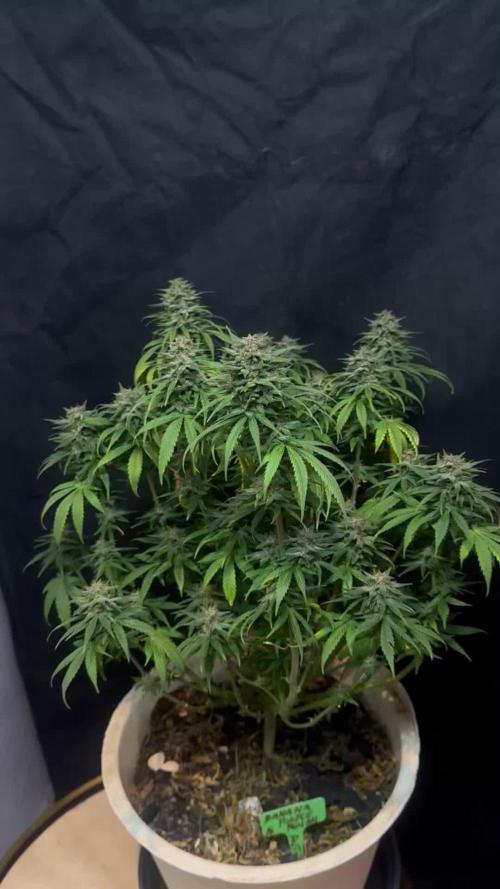
Week 11 has been completed for wa Lady 🍌🍇
She’s taking on weight nicely so this week I removed any of the lowest buds that won’t really make it big either way.
Some shade of purple have started showing out here and there, she’s a cutie indeed 😍
I’m thinking of pushing her for two more weeks, most of the trichomes are still clear and she seems pretty happy with her current conditions.
Onto the next weeks
Happy growing 💚


Likes
16
Share


@Mrg7667
Follow
Another eventful week! Transplanted into 5 gallong pots. Its interesting to see that there hasnt been much vertical growth but allot of branchung out compared to how it was with the other lights

Likes
17
Share


@Lazuli
Follow
Very intense high, hits very fast and long. Im not stoned but still sleep like a rock after a few hits

Likes
70
Share


@Santica_Garden
Follow
I have uploaded a video Update as usual guys, not much changes at the moment, 1st week of Flower done 👍🏾, any questions just ask away in the comments 🌱💚
Likes
5
Share

@HighHolidays
Follow
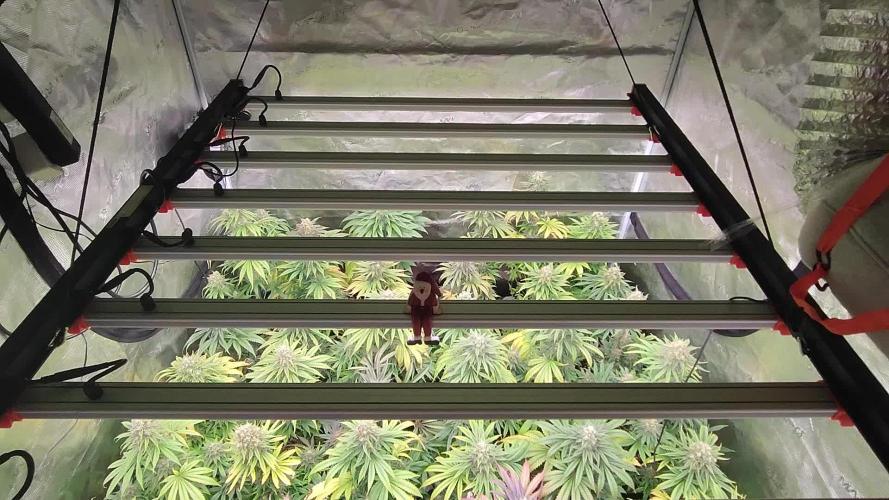
I’m getting close to harvest; I’ve already done a root flush on the most advanced plants. I’ll try to do it gradually, both due to time and to avoid excess humidity, since where I live the lowest I can get, even with everything open, is around 50%. I’m also applying a foliar preventive treatment against fungi.
Additionally, instead of watering lightly and frequently, I’m trying to water less and keep the soil dry for more days. The leaves are starting to change color, a sign that harvest time is approaching. I have a carbon filter, but they still give off a smell that’s hard to hide.

Likes
Comments
Share


@ThatGardnerLeo
Follow
Got some really nice explosive growth this past week, no transplant shock whatsoever and I ended up topping her for the first time, gonna give her a few days then will start LST

Likes
5
Share


@AestheticGenetix
Follow
7/11/25 pistils are showing and she's been stretching so I don't think it's just showing sex but is the transition phase at this point

Likes
2
Share

@PrinceOfHerbs
Follow
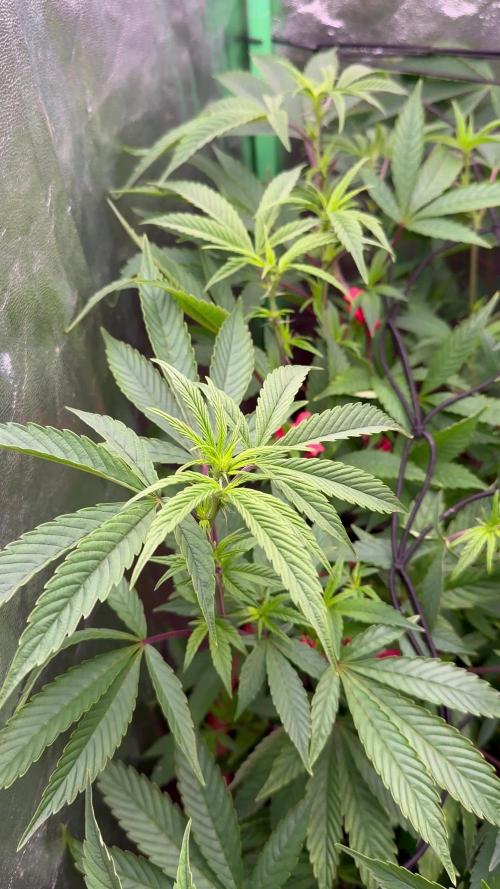
The plants look very healthy and are getting bigger and bigger, so a scrog net has now been stretched out and a few large sail leaves removed. An ac infinity humidifier has been installed and the vpd is now being kept at around 1.2-1.3.
Flowering day: 13

Likes
38
Share


@trelorny
Follow
Day 57, 05.06.2024
- Starting the next week of flowering which brings me up to 3 weeks until harvest
- There will be watering & nutrition today. I expect the plants getting more and more yellow as they approach their lives end
Day 58, 06.06.2024
Today I learned: Double-check for open vents of your tent should be mandatory! "Well, isn't that obvious?" you might ask and yes - I guess it is. But not to me :)
Background: I was struggling with a) getting the humidity down and b) keeping the smell in. Turned out I forgot to close the vent behind the charcoal filter which lead to venting air from the outside to the inside & of course sucking smelly air out of the tent.
However, since this issue was fixed, there is no problem with smell or humidity anymore.
Others than this there was no action today.
Day 59, 07.06.2024
- removed 2 yellow leafs
- Another round of drinks for the girls (600ml with 4/4/4ml)
- sit back and relax
Day 60, 08.06.2024
No action today, but the BioBizz CalMag arrived. I will give it tomorrow to them.
Day 61, 09.06.2024
A round of drinks with nutrition (4/4/4ml Grow, Bloom and TopMax) and also (first time ever) 1,2ml.of CalMag. Leafs showed signs of certain deficiencies so I decided to use it. Let's see how this turns out!
Day 62, 10.06.2024
No action today.
Day 63, 11.06.2024
Water & Nutrition (4/4/4ml Grow, Bloom and TopMax) for the end of the week. I am looking forward to week number 10 which should be the second to last week of this grow - I am quite excited!
