


Likes
Comments
Share

@El_cultivador
Follow
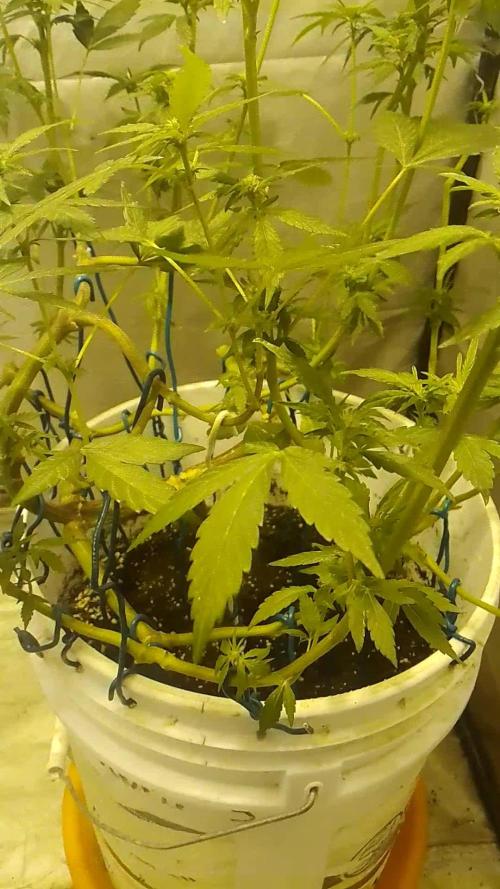
Semana 2: Creo que una de las mejores decisiones fue meter poda de puntas a tiempo. Si las hubiera dejado crecer, a estas alturas ya estarían demasiado cerca del foco, con riesgo de estrés o problemas en una floración más avanzada. Claramente no voy a sacar colas gigantes o “colas de zorro”, pero sí voy a bastante cosecha gracias al buen espacio que hay en interior

Likes
16
Share


@ButterfliesLittleFarm
Follow
Hello Diary,
Epsilon F1 is the fifth hybrid F1 strain from the Royal Queen Seeds lab that grows on my small farm.
This time, all three plants on the farm are Epsilon F1, but the soil mix in which they grow is different.
But before I describe the preparation, a few words about the strain itself.
EPSILON F1:
Epsilon F1 is the fastest of all of our F1 cannabis seeds, and combines genetic traits from some of the most notable cannabis varieties of the last decades, including Blue Dream, Blueberry, Amnesia Lemon Haze, and Black Domina.
She boasts delicious aromas, plenty of cannabinoids, and, like all RQS F1 seeds, unrivaled stability, resulting in a uniform crop that consistently produces buds of unwavering quality.
Plus, her autoflowering trait and extra-fast flowering time make Epsilon F1 an ideal choice for growers focused on getting to harvest as quickly as possible.
Epsilon F1 features a rich aroma that combines hints of fresh herbs and citrus with full-bodied earthy notes and touches of blueberries and lavender.
Epsilon F1 is a mid-strength variety, consistently producing solid levels of THC and a terpene profile dominated by myrcene, farnesene, ocimene, and limonene.
Not only do these terpenes impact Epsilon F1's delicious aroma, but also its effects,
endowing it with a long-lasting, physically relaxing stone that soothes the entire body (predominantly courtesy of myrcene, linalool, and farnesene), mixed with an uplifting, motivational kick (from limonene).
SET-UP ON MY LITTLE FARM:
Box - Secret Jardin DS120W 120x60x178
Lights - MIGRO 200+
Ventilation - TT Silent-M 100
Filter - Primaklima filter PK 100/125
Fan - Oscillating Koala Fan X 2
Humidifier - Beurer LB 45
Soil - BioBizz Light - Mix
Pot - 11L Air pots
Seed - Royal Queen Seeds
Nutrition - RQS Organic nutrition
Let's officially start the diary:
02/08/2023
Planting. I prepared a total of three pots, as usual.
And this time I used AirPots, which proved to be the best option. I've been using them since the beginning.
I used the soil from BioBizz Light-Mix.
Pot #1 - I first put Easy Boost Organic nutrition in the form of pellets into the ground, then I added SeaWeed and Mycorrhiz in the recommended doses and mixed everything well.
Pot #2 - I also put in Easy Bosst Organic nutrition, Seaweed and Trichoderma. Also in doses according to instructions.
Pot #3 - Along with Easy Boost Organic nutrition, I put Bat Guano and Trichoderma.
After I prepared the soil, I soaked all the pots well with water and made small holes in which I placed the seeds.
I then placed the pots in the Grow Box where the temperature was around 28 degrees and the humidity was around 55%.
05/08/2023
I sprinkled a little water on the surface of the soil. Not too much.
06/08/2023
All three plants sprouted.
07/08/2023
I watered the plants with a little water. Approximately 0.5 liters per each plant.
10/08/2023
Watering. Each 0.5 liters of water.
That's all for this stage, see you soon and thanks for your support.

Likes
40
Share


@KingSalomonsWeed
Follow
Oh, day 27. Flower 1
23.10.
For real? Poor plant. She doesn't look happy.

Processing
Likes
57
Share


@MadeInGermany
Follow
Hey everyone .
This week she was left in her 1 L pot, and will not be in the 11 L pot until next week :-).
She was topped again and accepted it super 😃.
By the time she is repotted next week and given Green House Powder Feeding for the first time, she will have received a small portion of Canna Vega :-).
Otherwise it grows very quickly and vigorously, and they look beautiful 😍👌.
I wish you all a lot of fun with the new update, stay healthy and let it grow 🙏🏻👍
You can buy this Strain at :
https://sweetseeds.es/de/red-mandarine-f1-fast-version/
Type:
Red Mandarine F1 Fast Version
☝️🏼
Genetics:
Red Poison Auto®️ (SWS39)
X
Tangie (California Orange x Hybrid Skunk)
👍
Vega lamp:
2 x Todogrow Led
Quantum Board 100 W
💡
Bloom Lamp :
2 x Todogrow Led
Cxb 3590 COB 3500 K 205W
💡💡☝️🏼
Soil :
Canna Coco Professional +
☝️🏼
Fertilizer:
Green House Powder Feeding
☝️🏼🌱
Water:
Osmosis water mixed with normal water (24 hours stale that the chlorine evaporates) to 0.2 EC. Add Cal / Mag to 0.4 Ec Ph with Organic Ph - to 5.5 - 5.8 .




Likes
12
Share


@Kommandant666
Follow
They were super easy to grow but took ill very quickly and didn't bounce back all that well but no great impact on the harvest, I'm still really happy with what's on the scales and I learned plenty from this round.

Likes
6
Share

@DogDoctorOfficial
Follow
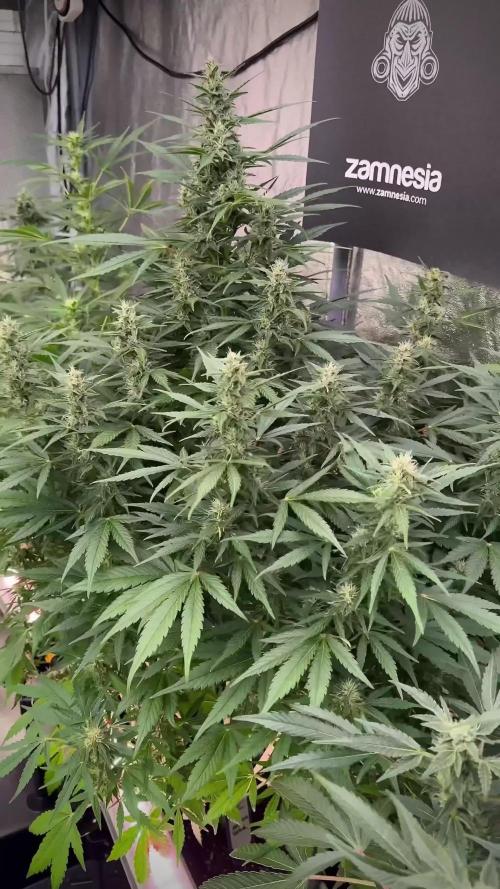
🌱 Zamnesia LSD — Week 10 (Week 6 Flower)
12/12 from seed | No veg | Full bloom expression
⸻
🔁 Quick Recap — The Journey So Far
From day one, this run has been about intention and rhythm.
12/12 straight from seed pushed these girls into early maturity, building structure while already preparing for reproduction. What we saw through the early weeks was a balanced hybrid behavior—but now, in full flower, they are clearly leaning into a more sativa-style expression.
Vertical stretch held longer than expected, apical dominance is evident, and the architecture speaks for itself:
a strong central spear with secondary sites orbiting around it.
No unnecessary stress, no over-handling—just guidance.
This allowed the plants to self-organize into efficient light-capturing structures.
⸻
🌸 White Hairs (Pistils) — What’s Happening Now
At this stage, the explosion of white hairs is the plant fully committing to reproduction.
These pistils are not just visual markers—they are active receptors, designed to catch pollen. In our case (sinsemilla), they remain unpollinated, which triggers the plant to keep pushing energy into flower production.
That’s why you’re seeing:
• Rapid formation of bud sites
• Increased stacking along branches
• Fresh, bright white pistil growth at the tips
This is peak “build phase” energy.
As long as pistils stay white and vibrant:
👉 the plant is still actively growing flowers, not finishing them.
⸻
✨ Trichomes — The Beginning of Resin Production
Now we enter the real magic.
Trichomes are the plant’s chemical defense system—tiny resin glands that protect against pests, UV, and environmental stress. But for us, they are also the carriers of:
• Cannabinoids (THC, CBD, etc.)
• Terpenes (aroma & flavor)
At week 6 flower, what we’re seeing is:
• First full coverage forming on sugar leaves
• Early frost development on calyxes
• Sticky texture beginning to build
Right now, most trichomes are still clear → early cloudy, meaning:
👉 potency is developing, but not yet at peak.
This phase is about production, not ripening yet.
⸻
🌬️ The Room — Same Recipe, Bigger Presence
Nothing changed… and everything changed.
We kept the environment stable because the plants told us they were happy:
• 🌡️ ~26°C
• 💧 ~60% RH
• 💡 Strong, consistent light
But the room itself evolved:
• Bigger biomass
• Denser canopy
• More transpiration
• More microclimates forming inside the canopy
That’s why this week’s move was key:
👉 selective defoliation (room-focused, not plant stress)
We opened airflow channels, improved light penetration, and reduced moisture traps.
This isn’t about removing leaves—it’s about guiding the environment through the plant mass.
⸻
Nutrition — Feeding the Demand
At this stage, the plant is no longer asking—it’s demanding.
Our current stack is perfectly aligned with this phase:
• Terra Bloom → Core flowering nutrition (PK-driven development)
• Green Sensation → Flower hardening + metabolic boost
• Sugar Royal → Carbon allocation + terpene precursor support
• CalMag Pro → Structural integrity + metabolic stability under high demand
• Power Buds → Supports rapid bud formation and site activation
EC at 2.0 shows they are eating confidently without stress.
⸻
⚖️ pH Control — Precision Matters Now
Now more than ever, nutrient availability is everything.
• pH: 6.5 → Sweet spot for soil-based bloom uptake
• Lemon Kick (pH Down) → Bringing solution into range naturally
• pH Plus → Fine-tuning when needed
At this stage:
👉 Incorrect pH doesn’t just slow growth—it limits flower development and resin production.
You’re not just feeding nutrients…
you’re unlocking them.
⸻
💧 Water & Environment Synergy
• Water temp: 18°C → ideal for oxygen retention and root health
• Outside: ~10°C / 84% RH
That external humidity is actually helping stabilize your internal environment, reducing stress on your system and making it easier to maintain that 60% RH sweet spot.
This is one of those hidden advantages:
👉 working with nature, not against it.
⸻
🔮 What to Expect — Week 7 Flower
✅ Expect:
• Increased bud stacking and density
• Pistils still forming, but starting to cluster tighter
• Trichomes shifting more into cloudy territory
• Stronger aroma development (terpenes waking up)
• Plants focusing less on vertical growth, more on mass
⚠️ Don’t Expect (yet):
• Significant amber trichomes
• Final swelling phase (that comes later)
• Major fade in leaves
We’re still in the construction phase, not the finish line.
⸻
🤝 Shoutouts & Gratitude
Big love to:
• The GrowDiaries platform for giving growers a space to document and share
• All the growers on here, from beginners to masters—everyone adds value
• The OG followers who’ve been here since day one
• The new ones joining the journey
• The skeptics and critics—you keep things sharp and honest
And of course:
• The genetics behind this beautiful LSD expression
• The sponsors and supporters who help make these runs possible
⸻
From grower to growers.
We observe, we adjust, we learn—and we share.
Week 6 flower is alive, active, and full of promise.
Let’s see what they show us next 🌱🔥
📡 DELETED @ 1K Please stay tuned.we never quit https://www.youtube.com/@TheDogDoctorOfficial NEW 🙏 Thank you for your patience and continued support.
FOR DISCOUNT CODES AND MORE JUST FOLLOW THE LINK https://website.beacons.ai/dogdoctorofficial
📲 Don’t forget to Subscribe and follow me on Instagram and YouTube @DogDoctorOfficial for exclusive content, real-time updates, and behind-the-scenes magic. We’ve got so much more coming, including transplanting and all the amazing techniques that go along with it. You won’t want to miss it.
GrowDiaries Journal: https://growdiaries.com/grower/dogdoctorofficial
Instagram: https://www.instagram.com/dogdoctorofficial/
YouTube: https://www.youtube.com/@dogdoctorofficial Deleted by Youtube - https://www.youtube.com/@TheDogDoctorOfficial NEW
Vimeo : https://vimeo.com/dogdoctorofficial Under construction stay tuned ⸻
Explore the Gear that Powers My Grow
If you’re curious about the tech I’m using, check out these links:
🔆 Lighting & Environmental Control
• Future of Grow — Advanced LED lighting technology
https://www.futureofgrow.com/
DISCOUNT CODE: DOG20
• Lumiflora — Under-canopy LED lighting
https://lumiflorade.com/
• TrollMaster — Environmental controllers and automation gear (past collaboration)
⸻
Genetics
• Zamnesia Seeds — Genetics used in this project
https://www.zamnesia.com/
⸻
🌱 Soil, Substrates, Boosters & Root Support
• Plagron — Substrates, bio mixes, and supportive products
https://plagron.com/en/
⸻
🎒 Storage, Curing & Preservation
• Grove Bags — Curing and storage solutions
https://grovebags.com/
⸻
📸 Photography Equipment & Tools
(Not sponsors, but part of my creative toolkit)
• Sony A6700
• Sony full-frame macro lens + few more
• Stacking photography workflow - learning
• iPhone (for behind-the-scenes shots)
We’ve got much more coming as we move through the grow cycles. Trust me, you won’t want to miss the next steps, let’s push the boundaries of indoor horticulture together!
As always, this is shared for educational purposes, aiming to spread understanding and appreciation for this plant. Let’s celebrate it responsibly and continue to learn and grow together.
With true love comes happiness. Always believe in yourself, and always do things expecting nothing and with an open heart. Be a giver, and the universe will give back in ways you could never imagine.
💚 Growers love to all 💚
📸 P.S. – The Eye Behind the Lens
All photos in this diary (for now — except for the ones showing the camera, which I took with an iPhone) are taken with a Sony A6700 paired with a Sony full-frame macro lens and a few more.
Photography is part of the story — it’s how we share the fine textures, the glow, and the quiet details that words can’t always capture.
I’ve also started experimenting with photo stacking — a technique where multiple images, each taken at a slightly different focus point, are layered together to create one perfectly sharp image from front to back.
It’s not digital enhancement or AI; it’s pure photography — a way to reveal the plant’s beauty in microscopic depth, from trichome to petal.
You’ll even see a few shots of "ghost me" capturing the shots — camera, lens, setup — because every grow deserves not just to be cultivated, but documented like art.
FOR DISCOUNT CODES AND MORE JUST FOLLOW THE LINK https://website.beacons.ai/dogdoctorofficial
NEW DISCORD - Official Server Invite Link : https://discord.gg/ksjAkA5T74

Likes
Comments
Share


@BuddyHolly
Follow
Pineapple Express and mimosa orange punch will be grown dwc hydroponic. Blue dream and 1 pineapple will be transferred outdoors around 4/20.
Main flower tent has jelly donutz and og kush ready for harvest, will be transferring the dwc from veg tent to flower tent around the same time
Germination 3/9
Distille water, drop of calmag and voodoo juice. Cracked within 24hrs, transferred to seedling tray 48 hours
Likes
1
Share


@Automush888
Follow
The bud looks thickening trichromes,more pungent and pistil change color to orange.
Likes
Comments
Share

@Bncgrower
Follow
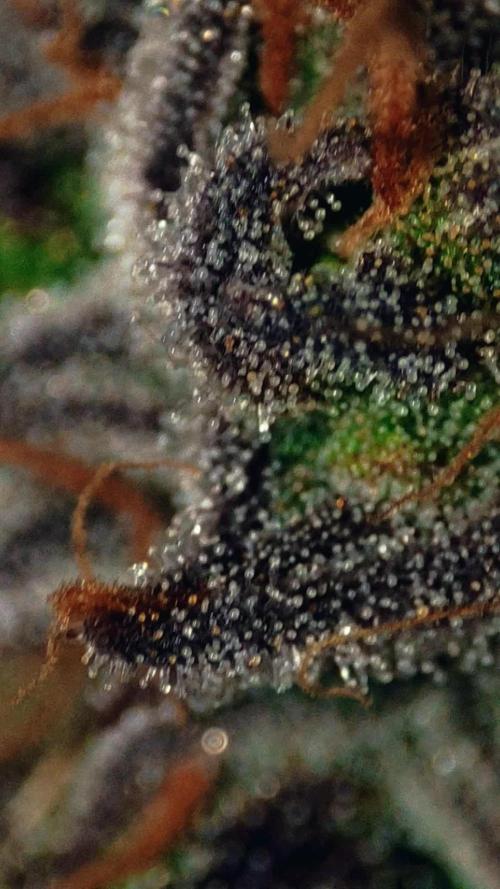
I’ve been a bit short on time, so I ended up falling behind on the diary updates—though I do have the weekly photos ready; I just really lacked the time to post them and to check out our friends' beautiful diaries... We're in the home stretch now; in the coming days, I'll start the flush and ✂️✂️✂️... This girl turned out amazingly well—I'm really happy with the results 💪...
Likes
9
Share


@eldruida_lamota
Follow
Vamos, familia, séptima semana, que ganas ya de que terminen de madurar. No veáis cómo están qué grandes y gordas que contento que estoy es que no fallan las Kritical de GrowBarato.
Tengo 6 ejemplares 2 están algo más maduros pero aun así cre que los aguantare igual que los otros 4.
Ya les hice el lavado de raíces y desde ya están solo Agua.
Ya vamos viendo cómo acaban.
Agrobeta:
https://www.agrobeta.com/agrobetatiendaonline/36-abonos-canamo
Mars hydro:
Code discount: EL420
https://www.mars-hydro.com/
Las maximas de temperatura no superan los 26 grados y las mínimas no bajan 20, así que no me puedo quejar.
Los niveles de humedad también son los correctos van entre 45%/55% de humedad relativa.
Por supuesto el Ph lo estamos dejando alrededor de 6.
Hasta aquí es todo, buenos humos 💨💨💨.

Processing
Likes
52
Share


@CBD_Sweden
Follow
@MephistoGenetics,
Hi all the happy people here in GrowDiaries.
This is my second cultivation ever and it will be fun to try a bigger space than my closet grow.
First, I'm just going to say I'm done with the construction of my new growroom.
The room is 2.14 meters by 1.7 meters and has a ceiling height of 2 meters.
It provides a floor area of 3.6 square meters.
I use a 54 Watt Lightwawe T5 for germination and 2 Pcs 400 Watt HPS lamps.
I have a channel fan that replaces the room air about 40 times an hour to get a comfortable environment in the room, the air enters a fresh air intake from the outside.
The air is purified through a carbon filter to then leave the room to the rest of the basement.
Then I use that heat to heat the rest of the basement.
I will use 10 pcs 15 liter Autopots to grow with and a 100 liter water tank that supplies the pots of water and nutrition.
I will grow completely organically in soil and will watercure my buds to get the best possible medicine for me.
But there are no cultivation rooms to be displayed here, so I continue with what is most important.
Today I have put my seeds in paper towel and hope the seeds have germinated within a few days.
I am very excited to see how the new growroom will work and how this Stilton Special will turn out.
Strain Name: Stilton Special F1
Genetic heritage - Sour Livers F3 x Northern Cheese Haze F3
Strain behaviour - Stilton grows well from the off, and develops into a stout but branchy specimine that leads to a fine yield of awesome flowers. She's not too stretchy but also is sizeable enough with good growth, to train and shape to your liking. Flowers develop pretty fast and grow to a good size, it may to advised to clear out some undergrowth and if needs be a very gentle defoliation mid-way through the grow, although leaf tucking may suffice well enough.The end product is of top shelf quality and she doesn't lack in yield either.Give your garden, nose, and body a treat and be sure to indulge in a slice of Stilton this year, You won't regret it.
Size - 50 - 70 cm
Structure - Medium height but bushy
Flower Density - 9/10
Indica/Sativa - 65/35
Cycle Time - 65 to 70 days from sprout
Yield - 90 to 140 grams as a single plant
Best Method for overall high yield - 9-12 per 1,2m x 1,2m sq in 10-15 Liter pots (Soil)
Aroma - Very strong, Cheesey/fruity/sour/spicey/ with a dash of coffee.
Taste - Dank berries
Effect - Good hybrid powerful but balanced effect
Medicinal Benefits - TBA
Best Grown - Indoor/Greenhouse
Cannabinoids - TBA
Extract information - Ideal extract candidate - High in resin, oil and terps.
.................................................................................................................................................................................................................................................................................................................................................
2017-08-21. Started to germinate the seed.
.....................................................................................................................................................................................................................................................................................................................................................
2017-08-23. Seed germinated and put in small pot in the humidity dome.
.........................................................................................................................................................................................................................................................................................................................................................
2017-08-27. Slow and steady she grows.
----------------------------------------------------------------------------------------------------------------------------------------------------------------------------------------------------
2017-08-28. Transplanted to the 15 liter autopot.
--------------------------------------------------------------------------------------------------------------------------------------------------------------------------------------------------------------
2017-08-29. New movie of the girl and a new pic of the grow room from now.
-------------------------------------------------------------------------------------------------------------------------------------------------------------------------------------------------------------
2017-08-29.
Hello to you who read my diary, I just want to say that I am pleased that you have chosen to check in with me and in my diary.
I just want to say that I do this for myself and for a steady flow of my medicine.
Everything you read and see in my diary is 100% honest and I will never distort or beautify anything here.
I document my crops so that I can learn from my mistakes and also to look back at those different crops.
I try to update with pictures every day and with text if something special has happened in the garden.
This is my strainhunt for the best medicine and the beginning of my journey with cannabis and the cultivation of it.
-----------------------------------------------------------------------------------------------------------------------------------------------------------------------
2017-08-30. Cleaned the room this morning, just vacuuming and cleaning with chlorine solution. Im testing the fan to control temp and humidity, it works great.
Added a movie. Everything is looking great right now.
------------------------------------------------------------------------------------------------------------------------------------------------------------------------------------------
2017-08-31. 3 new pics.
--------------------------------------------------------------------------------------------------------------------------------
2017-09-01. New pics and a video of the room from today.
-----------------------------------------------------------------------------------------------
2017-09-02. New pic
----------------------------------------------------------------
2017-09-03. Video of the girl this morning.
----------------------------------------------------------------------------------------------------------------------
2017-09-04. Week 2 starts, new pics.
----------------------------------------------------------------------------------------------------
2017-09-05. KL 08.00. Cleaned the room this morning, just vacuuming and cleaning with chlorine solution.
KL 12.00. The girl got 2 liters of water with nutes in it, added a video.
----------------------------------------------------------------------------------------------------------------------
2017-09-06. KL 08.00. The girls woke up after their beauty sleep, the leaves are always a bit down after 6 h of darkness, but they will stretch now when the HPS lamp starts.
Everything looks good and I keep trying to tuck the leaves so they get the maximum amount of light where needed. Added pics and video.
--------------------------------------------------------------------------------------------------------------------------------------------------------
2017-09-07. Day 17 from sprouting. I have never tested PH in my grows, when growing organic in soil iv learned that it adapt PH by it self. But im curious by nature so i had to test.
Kl 10.00 Tested PH in the soil, it was 6.9 and tested my tap water and it was 6.8. Added video of the girl.
Kl 22.30. New pics
------------------------------------------------------------------------------------------------------------------
2017-09-08 KL 08.00. Good morning, added new video.
2017-09-08. Kl 23.50. Gave every girl 3 liters of water and nutes, added new video.
--------------------------------------------------------------------------------------------------
2017-09-09. Kl 21.00. Defoliated a lot and added pics.
------------------------------------------------------------------------------------
2017-09-10. Kl 08.00. Last day of week 2. New video.
2017-09-10. Kl 23.00. 3 new videos.
-----------------------------------------------------------------------------------

Likes
14
Share

@GorkedOut
Follow
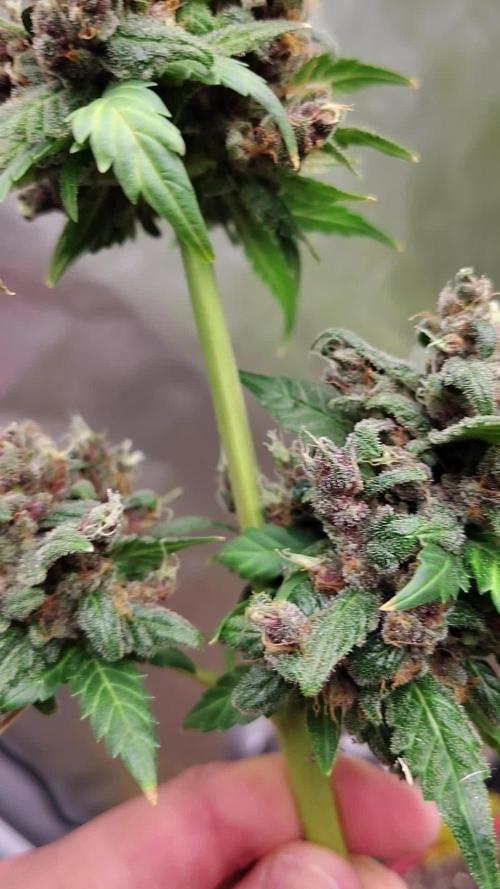
Looking good. One plant is ready to harvest, but I'm going to push it another week anyways, maybe go for around 30-40% amber trichomes, as I prefer the heavier effects.


Likes
5
Share


@RoyColt
Follow
Always R.O Water
Watering the plant 3 times for per week
1st Watering with nutriens.
2st Watering with nutriens.
3st Watering with only R.O water & CalMag

Likes
6
Share

@bkickstand
Follow
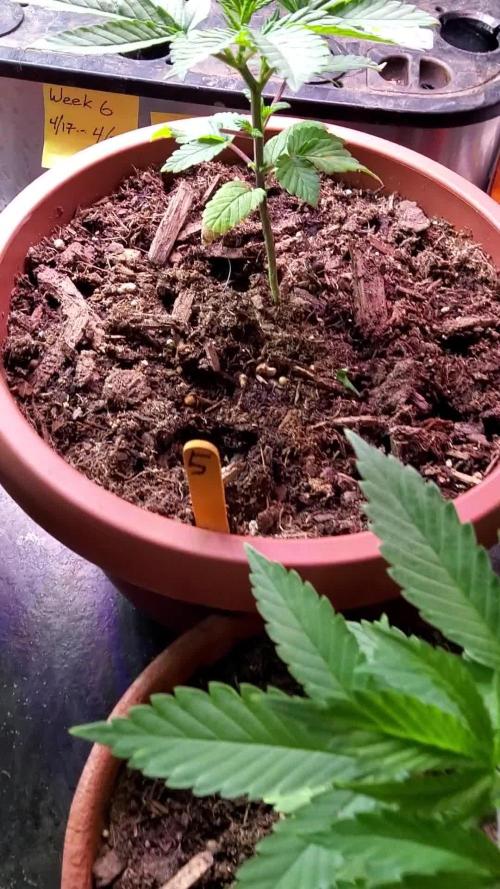
Grow Diary: Durban Poison Girls (Week 6)
Dates: April 17 – April 23, 2026
Status: Vegetative Stage
Overview
The girls (DP1, DP4, DP5, and DP6) are looking robust and vibrant as they hit their stride in Week 6. The foliage is a healthy, deep green, and the stem strength has significantly improved this week. We are maintaining a strong indoor environment while watching the Easter Colorado weather closely to time their move to the deck.
Weekly Environmental Log
The weather was a bit of a rollercoaster this week. While indoor temps remained stable, the external conditions impacted humidity and light intensity coming through the windows.
• Temp/Humidity: Consistent indoor temps at 22°C–24°C. Humidity was slightly lower this week due to the breezy outdoor conditions, requiring a bit more frequent misting to keep the "Sweetener" uptake optimal.
• Weather Highlight: April 17 was quite chilly (5.5°C), but by the 20th, we saw a beautiful spike to 26°C. The girls enjoyed the extra natural light boost from the back porch windows during those sunny afternoons.
Feeding & Maintenance
We stayed the course with the organic regimen this week to ensure no nutrient lockout before the big transplant.
• Nutrients: Half strength FOOP Veg and Sweetener administered on Tuesday (April 21).
• Watering: Soil was drying out faster this week as the root systems expanded. Switched to a slightly heavier watering volume to ensure the 50/50 soil blend stayed moist but well-aerated.
Plant Observations
• DP1 & DP5: Showing the most vertical growth. Might need a final top above the fourth node if they continue to stretch toward the light panel before Mother's Day.
• DP4: Very bushy! The LST is creating a nice wide structure that will fill out the 25-gallon fabric bag perfectly.
• Pest Control: The African marigold seedlings are coming along nicely—no signs of fungus gnats or mites on the Durban girls.
Upcoming for Week 7
• Prepare the 25-gallon fabric bags with the 50/50 Miracle-Gro mix.
• Monitor overnight lows; we are still about three weeks out from the safe "after Mother's Day" transplant date.
• Begin checking the "Garden" calendar for hardening-off windows.

Likes
107
Share


@TheFoxFarmer
Follow
Week 10 Flower
After 4 whole weeks of flush this girl has finally met the scissors ✂️
It took her quite some time to fade out, but after cutting down the most faded half of the plant that was closest to the light on Day 65, and then the rest on Day 70 it was long enough.
I'm very impressed with how fat and chunky this girl has become. I wasn't expecting quite this size from first look at her thinner stems and branchy structure earlier in flower, but her buds have swelled up nonetheless and she's stacked well.
I always cut my girls down around half an hour (or a bit more) before the lights are due to turn on. This prevents her from starting any chlorophyll production in order to maintain the best flavour and burn. Only a few fans were taken off before being left to hang dry as she's absolutely covered in trichomes! Don't throw away your sugar trim (leaves with trichomes) as this can later be used for dry sift, which can then be pressed for some dank rosin. Harvest update coming soon!
Thanks for following and happy growing! 🐺
Processing
Likes
4
Share


@XoticGROW666
Follow
DAY 14 of flower🌸🌼
G41 TALL PHENO
Feed Compost tea n sst tea
No bottles no nutes

Likes
15
Share


@DRO420
Follow
Just repotted these clones ... They have amazing roots... Looking very healthy
Likes
6
Share


