


Likes
Comments
Share

@Drtomb
Follow
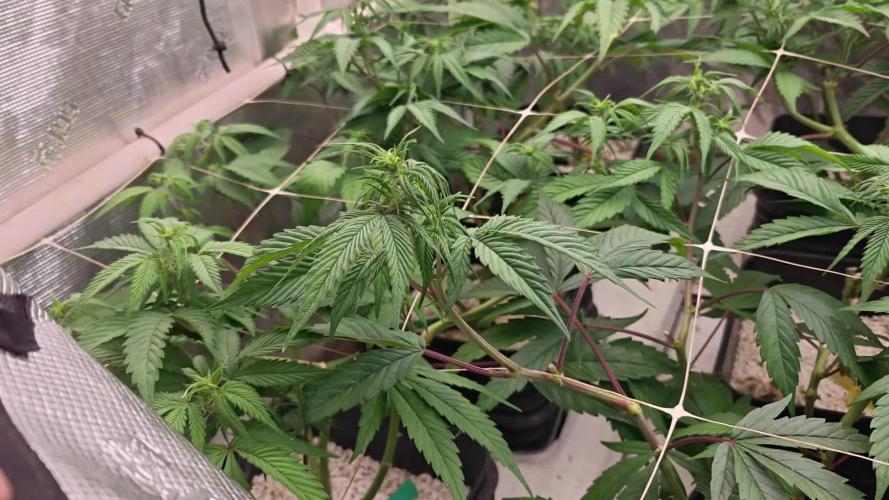
Just flip these plants about 3 or 4 days ago. Had some bud trainers on the branches to get them down a little bit lower is this plant tends to stretch. We should see some nice Frosty buds in a few weeks . Stay tuned and tune in

Likes
11
Share


@Flavio
Follow
One Plant did foxtails but its structures were really resistant. The other plants were resinous and made a pretty good yield. The buds are very consistent with both potency and flavour

Likes
20
Share


@Rubob
Follow
Plant 1 is starting to fatten up nicely , if I had to guess its got about 3-4 weeks left yippee...
Plant 2 is basically almost ready she is eating herself slowly , I'd give her about a week or two will see , all trics are milky so I don't know if I want to do amber as I have never tried a full milky sativa before .. Also plant 2 went much faster than I expected 10 to 12 weeks but now seems like its done... Obviously more of a hybrid pheno then ..the white pistols you see are just new ones that poped up the past couple of days..
Plant 3 is dying off unfortunately have no idea why..
Processing
Likes
58
Share


@Dahoola
Follow
-----------
Week 5:
----------
Beginning of the 2nd week of flowering. I have noticed that the 3 biotabs that went into the ground last week, released just a little too much fertilizer in these early days of flowering. You can see that there is slight discoloration in her leaves. We go from the darker green to the lighter lime green, which indicates that she is getting just a little too much P. I fear this will probably continue for the next few weeks. Fortunately, she has a good start and basis and this will not have too many negative effects. Pushing her a little bit doesn't hurt either. Although I think I might consider using only 2 biotabs in 25l soil in the next round. First, let's wait and see how this evolves. Furthermore, of course nothing to complain. Nice further development of her budsites and she also has 2 main branches fighting for dominance. . Unwards to the second week of bloom.
Until next week!

Likes
23
Share


@adam_pawloski87
Follow
This week has been great ,today is day 78 and the girls are just doin their thang , 1 looks ready for flush already and the rest look about another longer then flush for them aswell,, can’t wait to see how these girls finish out over the next couple of weeks 😍!! Y’all keep them eyes peeled an stay tuned for next week! Peace love an positive vibes to y’all Cheers.💨💨💨


Likes
50
Share


@Rwein93
Follow
Ciao ragazzi e bentornati da me per una nuova pagina di questo diario!😉
Che dire ragazzi tutte le sorelle sono fantastiche.😍
La numero 1 è il capo famiglia, davvero imponente.
La numero 2 ha staccato le altre di 5 cm, ora è lei la più alta con i suoi 155 cm.
La numero 3 invece ha i buds già bellissimi.
Nel complesso crescono bene e forti con una distanza intermodale marcata che le fanno respirare bene. Ora le fragoline misurano circa 1 cm di diametro e quelle della numero 3 misurano circa 1.5 cm💪
L odore inizia a marcare i suoi aromi, pungenti note di mapo (Citrus × tangelo) si mischiano a leggeri sentori di gasolio.😋
Ho defogliato loro nel giorno 67 e ho allargato tutti le apicale dalla pianta 1 con Lst, i nuts rimangono invariati.👍
Eh niente! Anche per questa settimana è tutto ragazzi.
Grazie a tutti per aver guardato e restate sintonizzati per nuovi aggiornamenti.🙏
Buona settimana e felice crescita 🌱 🌱 🌱
Likes
9
Share

@PPFDaddy
Follow
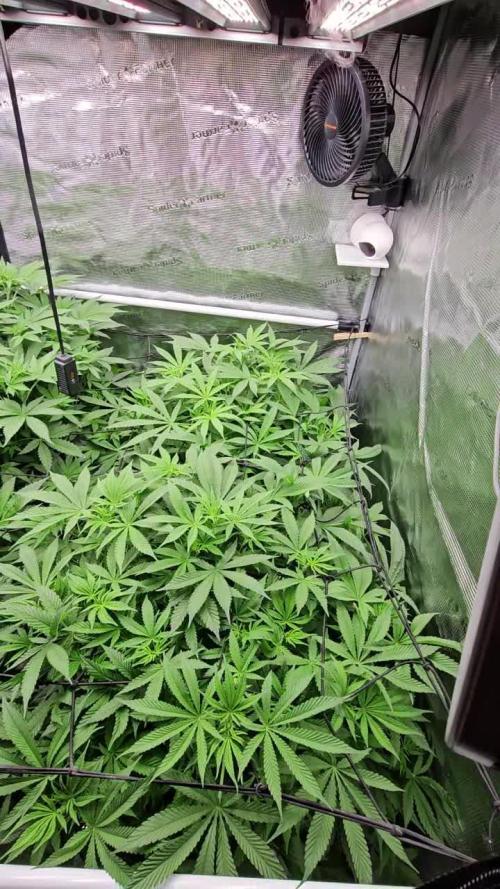
Hey everyone! As you can see from the photos, the girls are looking great overall and have already gained significant volume since the flip.
The only note this week is that two out of four plants are still lagging slightly behind in growth. No surprises there, as they're the same ones that ran into some issues early on. At this point there's not much more I can do about it, so the plan is to LST the bigger ones a little wider to open up space and light, while leaving the smaller two untouched, giving them every chance to catch up and even out the canopy. Fingers crossed.
On the environmental side, both temperature and humidity are starting to creep up, which is becoming something to actively manage. I'll most likely be adding a proper air conditioning unit soon, one that helps keep temps in check while also giving a hand with dehumidification. The dehumidifier I currently have inside simply isn't keeping up anymore given the density of the canopy.
On the nutrient side, I added Bud Ignitor to the stack this week. It's a product that's consistently delivered in previous runs and I have no reason to think this time will be any different.
That's all for now. Happy growing everyone, and as always critiques and advice are more than welcome! 🙌




Likes
5
Share


@mobbly
Follow
Week 4: Had no problems at all. Some leaves turned brown, but that's okay. Unintentionally, I doubled the fertilizer amount because I thought I had 2 liters to mix, but I only had 1 liter. Next week, you'll see how this affects the plant. Despite this, everything has grown well.

Likes
14
Share

@ShinWeed
Follow
.
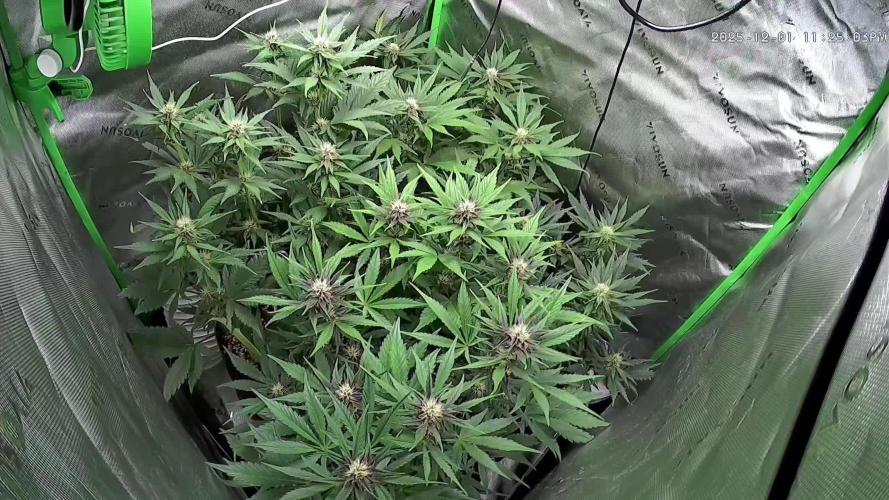
Vorwort: Einige Mängel sind sichtbar, aber viel kann ich nicht mehr dagegen machen, da die ernte in 1-2 Wochen bevorstehen sollte.
Sollte Phospormangel sein, 100% sicher bin ich mir nicht.
Licht wird zum Endspurt auf 24/0 gestellt
🌿 Woche 7 - Blütenfokus, Charakter zeigen, Duft wird ernst
Ich, Banana Purple Punch, habe meinen Höhenrausch hinter mir. Keine Eskapaden mehr nach oben. Meine Energie ist jetzt kompakt, zielgerichtet und deutlich schwerer geworden. Meine Blüten verdichten sich, als wüsste ich genau, was erwartet wird. Der Duft? Süß, warm, ein bisschen frech. Der Gärtner bleibt öfter stehen. Ich merke das. 🍌
Ich, Purple Haze, bleibe mir treu. Keine Überraschungen, keine Ausreißer. Meine Struktur steht stabil, meine Blüten bauen sich gleichmäßig auf. Alles wirkt kontrolliert, fast meditativ. Mein Duft kommt langsam, klar und leicht würzig. Nicht aufdringlich, aber man übersieht mich nicht.
Wir beiden Lemon Cherry Cookies zeigen jetzt deutlich, wer wir sind.
Ich, die Schnellere, lege ordentlich nach. Meine Buds werden sichtbar dichter, die weißen Härchen schieben weiter selbstbewusst nach. Mein Duft wird intensiver, süß-sauer, fast verspielt. Ich weiß, dass ich auffalle. 🍋🍒
Und ich, die Ruhige, bleibe bedacht. Meine Entwicklung ist gleichmäßig, Mängel sind vorhanden, aber kein Stress.
Woche 7 fühlt sich erwachsen an.
Kein wildes Strecken mehr, kein Chaos. Licht, Wasser und Zeit greifen routiniert ineinander. Die Blüte spricht jetzt deutlicher. Nicht laut, aber mit Nachdruck. Jede von uns auf ihre Weise.
p.s. Bilder werden nachdem nächsten gießen hinzugefügt, wenn ich es nicht vergesse.
Likes
40
Share


@Totogrowuk
Follow
Most are transitioning from veg to flower this last couple of days.
All fairly small plants but I kinda expected so much due to the weather in the UK and the amount of medium they have too.
Likes
Comments
Share

@bigsmoke42069
Follow
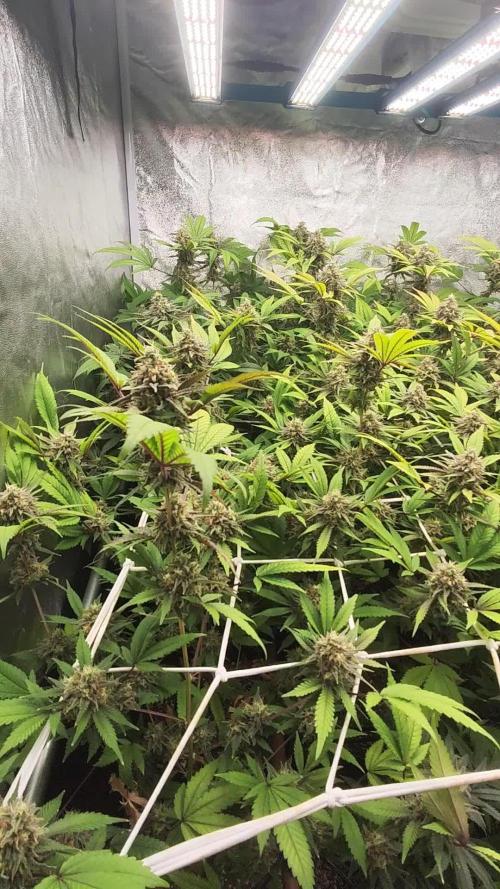
Week 7 (1.29.26 --2.5.26)
took photos on 2.5.26
2.1.26
Transitioned to ripen nutes
2.3.26
Transitioned to T.A. FinalPar
Likes
32
Share


@Sejnik
Follow
3 dny po posledním tréninku (53 dní od vyklíčení) jsem změnil světelný cyklus na 12/12. Nastavil jsem SCROG síť do finální výšky a nyní zbývá jen čekat až holky vyrostou 🤩 snad se mi podaří vytvořit rovnoměrný baldachýn.
Blumat zavlažování funguje skvěle a rostliny jsou s ním velmi spokojené.
V substrátu se mi rozmnožili springtails. Beru to jako dobrou zprávu poukazující na dostatek organického materiálu kterým se živí. Ale i tak budu jejich počty hlídat a redukovat postřikem substrátu pomocí nimbového oleje (1 polévková lžíce na 1 litr vody + 3 kapky mycího prostředku na nádobí) vždy když mi přijdou jejich počty moc vysoké.
Likes
50
Share


@BudXs
Follow
I was extremely happy with this grow. I was aiming for 1 lbs and I achieved 1.43 lbs total. The strain is a simple grow for anyone that can keep the environment on point. They are susceptible to pests, so a bit of previous experience in treating bugs is a plus. There seems to be either a rogue strain or a very special pheno within my garden. One plant showed a deep purple color starting in week 5 of flower. It grew out to some stanky and solid golf ball sized colas. Im keeping this stuff separate for the cure, as it is exotic looking and smokes like a dream.
The Scroggernaut performed well. I was initially concerned that I would have issues trying to grow a scrog next to a free form. However, keeping diligent on the LST/HST right through midway flower made sure that the canopies were fairly level, and no ladies went missing valuable lumens, and none got light burnt. All in all, the Scroggernaut worked well and allowed me the flexibility of moving unscrogged plants, and with the extra space, made for easy watering of the scrogged plants.
Harvest results:
Plant 1 = 246g wet, dried to 64g
Plant 2 = 345g wet dried to 103g
Plant 3 = 338 g wet dried to 93g
Plant 4 = 256g wet dried to 64g
Plant 5 = 248g wet dried to 63g
Plant 6 = 240g wet dried to 75g
Plant 7 = 330g wet dried to 91g
Plant 8 = 302g wet dried to 88g
Improvements for next round include:
1) Increasing grow room size
2) Will raise the height of the scrog by 6 inches or so to help with comfort during watering
3) Will likely run Hempy buckets next to soiless mix and compare the growth rates
4) Will grow 1 extra week in veg
I want to thank the GrowDiaries community, and especially the creators of the site for allowing me to share my grow with the world. It has been very fulfilling to track my progress, receive feedback from others, and have a resource for solutions to problems that I have never encountered before. 👊 Thank you as well to my Grower network who have provided some laughs and some interesting chat . Big ups! See you next year

Likes
Comments
Share

@Crusty_Juggler
Follow
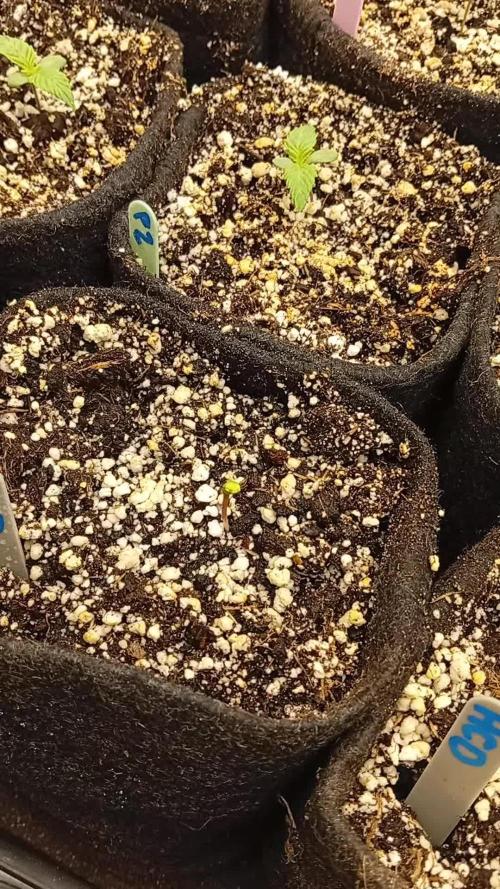
Up and running with 16 seedlings, one must go in 2-3 weeks to make room for a curculation fan.
Feeding Canna base nutes soon
EDIT:
DAY 14 = 10L RO w/ 10ml Vega


Likes
6
Share

@infinitemysterymagic
Follow
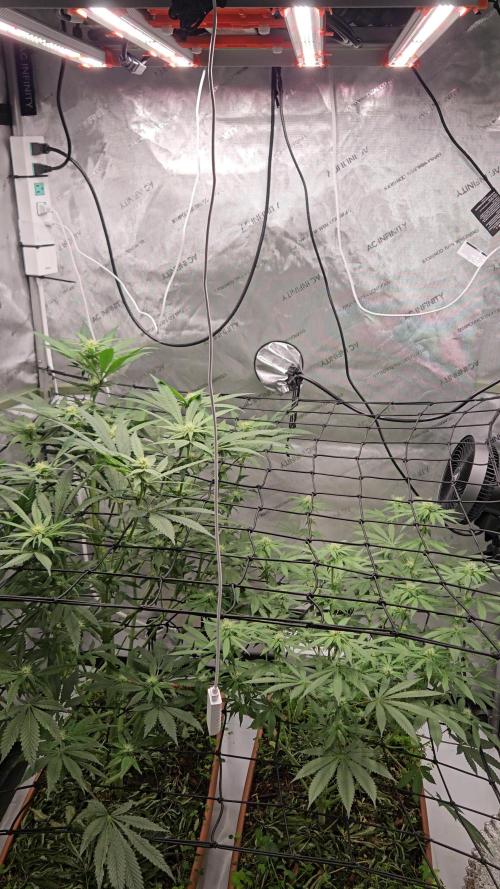
7/20/25
D64 F22
7/21/25
D65 F23
-water still in each reservoir
-both EBs growing nicely
7/22/25
D66 F24 RW SB
-SB reservoir empty
-1 gallon water with 1/8 tsp ascorbic acid down SB reservior
7/23/25
D67 F25
7/24/25
D68 F26 RW SB
-SB reservoir empty
-1 gallon water with 1/8 tsp ascorbic acid down SB reservior
-BB reservoir empty by end of light cycle
7/25/25
D69 F27
-going to leave BB reservoir dry until SB reservoir is dry, then top water with plain water 1 gallon each EB, after they drink what ends up in the reservoir from that watering, then I'll do a microbe top watering with fermented plant extracts pumpkin ferment and rootwise biophos
-I see no sign of gnats at all in this tent so the way I used wdg3000 worked, just use after any application of worm castings or compost and taper it off until not needed
7/26/25
D70 F28 TW
-added 1/8tsp ascorbic acid, quialla to 1 gallon of water
-top watered BB EB
-added 1/8tsp ascorbic acid, quialla to 1 gallon of water
-top watered SB EB


Likes
9
Share


@Buddyhighs
Follow
Another good week doubling size, loads of starts of buds blossoming. Both seem to to have grown more of an appetite water a feed every day this week.
Stage 5: budding/flower
Day36: water and tied down and defoliate
Day 37: feed
Day38: last spray
Day39:water
Day40: water
Day 41:feed more defoliation
Day 42: water
Likes
83
Share


@RunWithIt
Follow
What a fun experience! This was my first time trying a mixed grow style of synthetics and organic. I think I may have found my new go-to strategy. This definitely wasn't a perfect run by any means - as a matter of fact, I botched the feedings earlier in her life. However this grow definitely taught me a lot more about how to treat this strain properly. Now I'm running her clones in the 3x3x6. So the legacy will continue! Let's see how this strain does during the summer months!
Cheers everyone! This has been an awesome grow. What I'm lacking in yield, I yet again make up for in quality. And I don't think yield will be an issue with the clones, they're week 6 veg - and quite massive!
- RWI out!! 😁 😶🌫️🤑
