


Likes
Comments
Share

@frigo_camelo
Follow
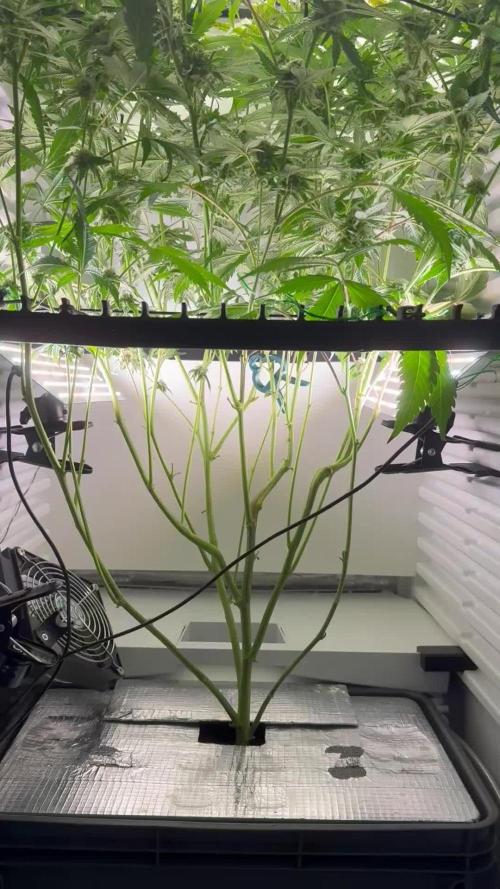
start of week 7 flower | smell is insane | i just love this cut | very slight lightburn | i dropped the night temperatures to 20C | dropped overall temp to 25 | dropped 5% of light | gonna decrease day temperature in the coming days | one more week of hesi mineral line |

Likes
23
Share


@Horseluisweed
Follow
Bueno, le salió la radícula en las primeras 24h, pero quise esperar a que se desarrollara más antes de transpartarla al sustrato, tras pasar más de 48h me quedé sorprendido que siguiera (aparentemente) igual, la pase a la tierra(💦mojada en el centro con 100ml del agua que utilicé para germinarla), se me hizo eterno esperar a que sacara la cabeza, tremenda alegría al 4 día ❤️🙌🌱, al ver el sustrato relativamente seco volví a mojar💦(esta vez con la mitad, 50ml aprox.). Decidí comer hummus (como ella jijiji) y ponerle el plástico de invernadero con la idea de manter la humedad alta💦💦💦

Likes
12
Share


@Herbalist7
Follow
Plant stayed small, but buds were full and dense. Structure was nice, although it could not take much LST.


Processing
Likes
12
Share


Likes
6
Share


@Borberad
Follow
Die gute scheint es eilig zu haben. Eigentlich ist sie erst zu Valentinstag ausgezählt. Aber gut. Es werden wohl nur um die 8 Wochen so wie sie jetzt schon glitzert.

Likes
26
Share


@pifflestikkz
Follow
Day 17
17/07/24 Wednesday
De-chlorinated tap water pH 6 with calmag 5ml -5L.
Very humid week, noticed a green turning colour on top of soils where the humidity has been far to high.
I have installed door netting and recently left open all day and night now so they can condition over night in colder temps.
All are doing well, one overdose slightly behind and looking ABIT swifted. But she'll come around 💪💚
Day 19
19/07/24 Friday
Lite Feed today, 250ml each pot small run off.
Seeing excellent start to these babies. Let's get it 👌💚
Day 21
21/07/24 Sunday
De-chlorinated tap water pH 6 with calmag 5ml to 5L.
Watering in 1L each day from now.
Updated video

Likes
38
Share


@Green_Mountains
Follow
Another good week!! I defoliated the smaller of the 2 plants mid-week... I think she is doing very fine.
A small hiccup with the feed that same night. Only a few leaves are showing any sign on nutrient burn. I went ahead and fed them again today.
I plan on watering them in a day or two... they were very thirsty this afternoon!! So, I definitely need to up the watering. I've still been feeding 3 quarts twice a week.
Otherwise, all seems to be going well!!
They are frosting up very nicely!! So exciting!!
Peace!!
Update for grow question: @The8thChevron thanks!!! I pulled them and will hope for the best for now. So close to the finish line. If I see more trouble brewing I will pull the plant. I don't know how to answer directly to you on the grow question.... Thanks again!!
Processing
Likes
17
Share


@Gordy
Follow
Beginning of week 8 of flower.
This week I tossed a different light into the tent to be able to see what it really looks like. I think she’s looking really good. Today I gave her the last feeding before harvest. Regular water from here on out.
The plant doesn’t seem to be doing anything at all. I don’t notice much difference, but I am looking at it each day, so it will be harder for me to notice.
I'm receiving a dehumidifier today. This will help me really control the humidity in here.

Likes
76
Share


@Cannabeast40
Follow
Let´s get this going asap 😎
See you again very soon 😍
____________________________________________________
If you want to see more macro and micro photos, don’t forget to visit my Instagram page 🙂🙏🏻
https://instagram.com/cannabeast40?igshid=YTQwZjQ0NmI0OA%3D%3D&utm_source=qr

Likes
13
Share


@raulmoat123
Follow
So as we step into week 6 things are starting to shape up nicely
Seedsman - strawberry banana grape are fantastic frosty and loads and loads of heads due to me topping
Seedsman- peyote gorilla wow I have not smelt bud like it before wonderful and full of thc
Inhouse genetics- dolato is one frosty girl and starting to pack on weight
Inhouse genetics- platinum gushers 2 different phenos one throwing out more people's red
Inhouse genetics- slurrcaine smells like heaven and is the most dankest in my pheno hunt
Phoenix seeds - super kush I brought these over from my last run very fast strain and smells really sweet
Zamnesia seeds-larry bird kush 3 different phenos all smell different can't wait to see the out come
Barney's farm - phantom OG I don't know where to start with this just simply dank
Seedsman - bubba kush was a freebie which I didn't care about or take clones and omg its probly one of the best smelling plants I'm running so Im going to reveg it I can't lose this pheno
Seedsman - super silver haze OG another freebie what I got and am quite pleased with
Last but not least Seedsman- limited edition wedding cake 😋 I'm excited for this one but takes quite long to pack on the weight all in all I'm quite happy


Likes
18
Share


@berlinbeginner
Follow
beginning of second week of flowering. I have been underfeeding the sour diesel for a while now. I noticed when i measured ppm of the nutrient solution that i was feeding them. Will give 900 ppm next feed
Likes
9
Share

@Flavors
Follow
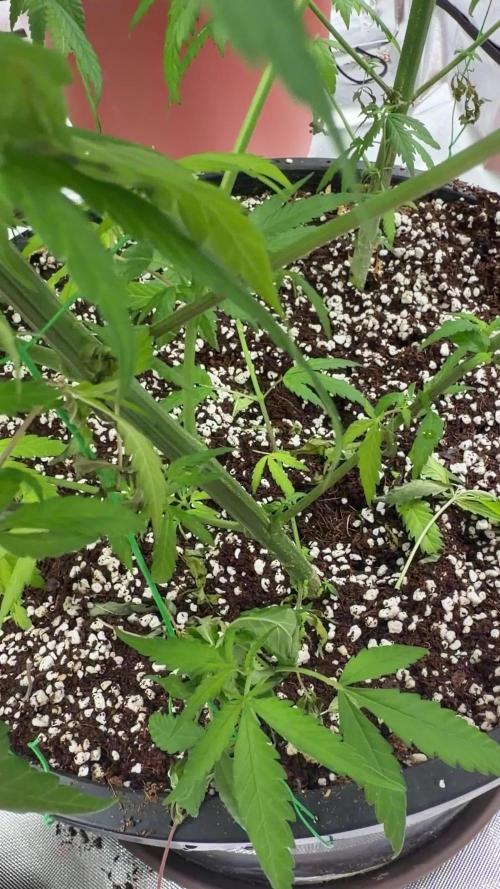
🌱 Sticky Broccoli – Grow Diary 🌱
Week 12 | Transition Week | Coco + Perlite
This week is the final stage before flower 🌸
Plant is fully mature with a dense, even canopy under the SCROG 🌐
Plan is to take clones from healthy top growth ✂️🌱
Selecting strong branches to preserve genetics before the flip.
One more defoliation will be done to clean up the canopy 🍃
Removing excess fan leaves to maximize light penetration and airflow 🌬️
Structure is dialed in—flat, wide, and ready for stretch 🚀
All bud sites are exposed and positioned evenly.
Plant remains healthy with deep green foliage 💪
No signs of stress going into transition.
Watering consistent with slight runoff 💧
Environment stable and optimized for flip.
📈 Next step: final defoliation, take clones, then flip to flower cycle 🌸🔥
Likes
4
Share


@Lilze
Follow
This week I changed the scrog net (2”holes) it’s about 7” above the pots
upped the nutes to 1.8-2 ec .
Watering every morning to about 10% run off
Sprayed with canna cure (350ml per ltr)
They have really started taking off
Lollipop and defoliation
There’s still not sign of sex but they are feminised seeds so I will be flipping to 12/12 by next week hopefully they show signs by then .
Likes
23
Share


@AntiGestrecktesGras
Follow
Only water and no water for the last 5-6 days. Also no light in the last 24 hours.
Likes
4
Share


@DankAutos
Follow
I just recently made a growdiaries account and wasn’t able to get one of my Gelato Auto by Fastbuds. But I was really happy with the results and wanted to show it off a bit. I ended up with 105 grams dry from the 1 autoflower plant alone! Also mid grow as I was entering the flowering stage I broke one of the bigger stems during lst so I know for sure I would have pulled a QP off of her alone. Really happy with that and not to mention the quality of nugs I got off of her.
Likes
5
Share


@AK1210
Follow
This lady is growing in height at an astonishing rate, the buds sites are already chunky and coated in tricomes.
I'm glad I topped this lady when I did as otherwise she could have reached a hight that would certainly give the neighbors something else to moan about. 😀

Likes
4
Share

@420DeepGrow
Follow
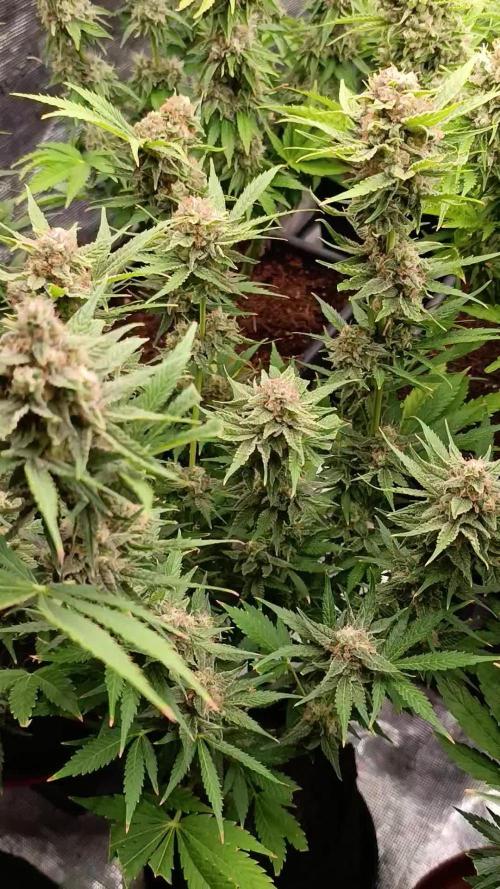
📆 Semana 9
El engorde alcanza su punto máximo y los cogollos terminan de compactarse por completo, mostrando una dureza y peso muy marcados en todas las puntas. La estructura ya está totalmente cerrada y definida, sin cambios visibles más allá del endurecimiento y maduración final.
La resina se encuentra en su punto más alto, cubriendo las flores de forma abundante. Los tricomas pasan de mayoritariamente lechosos a una mezcla más equilibrada con ámbar, señal clara de que la ventana de corte ya está abierta y en su mejor momento según el punto deseado.
La planta reduce prácticamente toda actividad vegetativa, centrando su energía en terminar de madurar, intensificar aromas y estabilizar su perfil final. La canopia se mantiene uniforme mientras aparecen signos naturales de final de ciclo.
Seguimos creciendo fuerte 💪!

Likes
200
Share


@Ferenc
Follow
Day 58, 7th of November 2020:
The 6th day since the lamp switched to be 12/12.
I raised up the nutrition intake as it can be seen above only the BioBizz family 2ml/l and removed some LST because the plants remain in shape or just set a bit but nothing significant....
They look good and strech is on the way.....
These Original Sensible ones are having really nice smell :)
Nothing really to report there is crazy 2-3 weeks from now ;)


Likes
4
Share

@DogDoctorOfficial
Follow
🥒 Project Blue Tent – Week 7
Pickle Lemon Haze F1 – Pheno B (Folder 14B)
Hello everyone, and welcome back to another chapter of Project Blue Tent! 💙🌱
If you're discovering this diary for the first time, welcome aboard!
Project Blue Tent follows four individual plants, each documented in its own dedicated diary from seed all the way to harvest. Every plant shares the exact same environment, lighting, irrigation, nutrition and training strategy, allowing us to observe how each phenotype develops its own personality while keeping the growing conditions as consistent as possible.
Today we're checking in with Pickle Lemon Haze F1 – Plant B.
And this week marks another important milestone.
The canopy is full.
The structure is ready.
And we're preparing these beautiful ladies for their transition into flowering.
────────────────────────
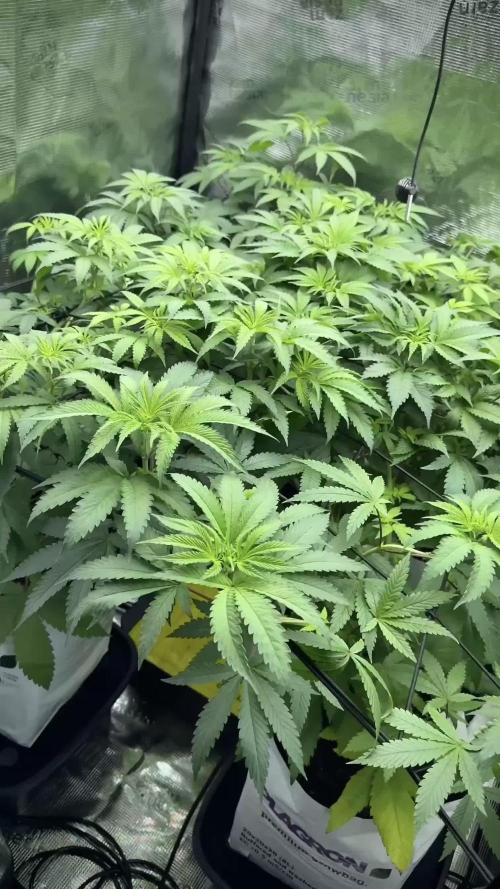
🌱 Week Seven – The Canopy Is Complete
Looking across the Blue Tent this week, it's becoming increasingly difficult to distinguish the four plants from above.
The SCROG has done exactly what we wanted it to do.
Instead of four individual plants growing vertically, we now have one remarkably even canopy spreading across the available space.
Plant B has been particularly well suited to this process.
From the beginning, she's shown a natural tendency to grow outward rather than constantly trying to reach upward. Her compact structure, strong side branching and excellent response to training have allowed her to fill her section of the screen beautifully.
After lowering and tightening the SCROG net, all four plants are now sitting at approximately 60 cm.
At this point we're no longer trying to gain height.
We're managing the surface we've created.
Every branch has found its place.
Every available section of the screen has been used.
And now it's time to prepare that canopy for what comes next.
────────────────────────
🕸️ SCROG – From Training to Flowering
For anyone joining this diary without having followed the previous weeks, SCROG stands for Screen of Green.
The purpose of the screen is to guide branches horizontally instead of allowing a few dominant tops to grow significantly taller than everything around them.
As branches reach the screen, they're gently guided into neighbouring openings.
This spreads the future flowering sites across a wider area and creates a much more uniform canopy.
It's not about forcing the plant into an unnatural shape.
It's about taking the growth the plant is already producing and distributing it more efficiently across the available space.
And after several weeks of doing exactly that, the mission has essentially been completed.
The screen is full.
The canopy is even.
Now we move into the cleanup phase.
────────────────────────
✂️ Defoliation – Preparing the Plants for Flower
This week's biggest job is defoliation.
And because this technique is often misunderstood, it's worth explaining what we're actually doing.
Defoliation isn't about stripping a plant of every leaf.
Leaves are essential to the plant. They capture light and support photosynthesis, so removing healthy foliage without a reason isn't the objective.
Instead, we're performing a deliberate canopy cleanup.
After weeks of vigorous vegetative growth and SCROG training, the interior of the plants has become extremely dense.
Leaves overlap.
Branches cross through one another.
Some areas are heavily shaded.
And airflow through the middle of the canopy becomes increasingly important.
So we're selectively removing foliage from areas where the density has become excessive.
We're opening the interior.
Creating more space between branches.
Improving airflow.
Improving visibility.
And creating a cleaner structure for the flowering cycle.
The objective isn't:
"Remove as many leaves as possible."
It's:
"Remove what is no longer helping the structure we're trying to build."
That's a very important difference.
────────────────────────
🌬️ Why Defoliate Before the Flip?
Timing is everything.
A significant defoliation is a form of stress. Even when performed correctly, the plant needs some time to adjust to the loss of foliage and return to its normal growth rhythm.
That's why we're doing this before flowering, rather than waiting until we're already well into the bloom cycle.
Right now the plants are still running an 18/6 vegetative schedule.
They have time to recover.
We can perform the cleanup.
We can watch how they respond.
We can allow fresh growth to resume.
And then we can flip the lights once the plants have settled again.
I don't want to ask the plants to deal with a major cleanup at the same time they're dealing with the physiological transition into flowering.
Instead, we're following a simple sequence:
Build the canopy.
Fill the screen.
Clean the canopy.
Recover.
Flip.
The goal is to enter flowering with healthy plants and a well-organised structure.
────────────────────────
🌿 Pickle Lemon Haze F1 – Plant B
Plant B continues showing exactly the personality we've come to know throughout this project.
She's balanced.
She's compact.
She's incredibly branchy.
And she seems perfectly happy growing sideways.
While Plant A has always shown a little more vertical ambition, Plant B has naturally concentrated her energy into lateral growth and secondary branching.
That has made her particularly enjoyable to work with under the SCROG.
Her stems have continued thickening nicely, her internodal spacing remains compact, and her foliage has developed that rich green colour we've been looking for.
The recovery from topping is now nothing more than a memory.
She's completely moved on from that stage and has spent the last few weeks concentrating on building the framework that will eventually support her flowering sites.
Looking at her now, it's easy to see how much the plant has changed.
She's no longer simply a young vegetative plant.
She's become a properly structured little bush with a full section of the canopy to her name.
And now we're preparing her for the next chapter.
────────────────────────
🥥 Feeding – Staying With What Works
The nutrient recipe remains unchanged this week.
Current feeding:
• Plagron Hydro A — 1.9 ml/L
• Plagron Hydro B — 1.9 ml/L
• Plagron Hydro Roots — 1 ml/L
Current pH:
5.8
Current EC:
1.92 mS/cm
The plants continue showing excellent colour and vigorous growth, so I don't see a reason to change the recipe simply because we're approaching flowering.
Sometimes consistency is the better decision.
We'll see how the plants respond after defoliation, and depending on their recovery and appetite, we may increase the nutrient strength next week.
For now, however, they're telling me exactly what I want to hear.
Healthy colour.
Strong growth.
Good leaf posture.
And no obvious signs that they're asking for anything different.
So...
Nothing changes.
────────────────────────
💧 Drip Irrigation – Keeping the Roots Consistent
The Mars Hydro automatic drip irrigation and drainage system continues to perform beautifully.
Each plant is receiving approximately 1.2 litres of nutrient solution per 24 hours, delivered through the automated drip system.
The slow and consistent irrigation keeps the coco supplied with fresh nutrient solution while the automatic drainage system removes the resulting runoff.
This is particularly valuable in a project like this.
Four plants are sharing the same environment.
The same nutrient recipe.
The same lighting.
The same irrigation schedule.
That consistency helps us keep another major variable under control.
And as the plants become larger, the benefit becomes even more obvious.
The irrigation system simply keeps doing its job every day.
No rushing around with watering cans.
No trying to remember which plant received what.
Just consistent irrigation while I concentrate on observing the plants themselves.
It's one of those systems that doesn't necessarily demand attention when it's working properly.
And honestly...
That's exactly how I like it.
────────────────────────
🌡️ Blue Tent Environment
The environmental conditions have remained very stable as we approach the transition into flowering.
This week's average conditions were:
• 🌡️ Day Temperature: 28°C
• 🌙 Night Temperature: 25°C
• 💧 Relative Humidity: 65%
• 🥥 Substrate Temperature: 24°C
• 💦 Nutrient Solution Temperature: 18°C
• ⚗️ pH: 5.8
• ⚡ EC: 1.92 mS/cm
• 💨 CO₂: approximately 450 ppm
• 💡 Light Schedule: 18/6
• 💧 Irrigation: approximately 1.2 L/plant/24h
• ? Pot Size: 8 L
• 📏 Height: approximately 60 cm
At this stage, stability is more important than constantly changing numbers.
The plants are healthy.
The canopy is full.
The roots are receiving consistent irrigation.
And the current nutrient strength is producing beautiful growth.
So we're staying the course.
────────────────────────
🌿 A Full Canopy Means a Different Kind of Work
One of the interesting things about reaching this stage is that the work changes completely.
Earlier in the grow, the challenge was getting the plants to occupy the space.
Now the challenge is managing everything they've produced.
When the canopy was still developing, every new branch was welcome.
Now we have to start asking different questions.
Does this leaf contribute enough?
Is this area too crowded?
Can air move through here?
Is this branch getting enough light?
Is this part of the plant going to benefit from remaining in the canopy?
That's what good canopy management is really about.
It's not simply growing as much as possible.
It's deciding what growth deserves to remain part of the final structure.
And Plant B has given us plenty to work with.
────────────────────────
Recovery Before Flowering
Once the defoliation is complete, the most important thing we can do is give the plants time.
No unnecessary additional stress.
No rushing.
No immediately piling another major intervention on top of the first one.
The plants need time to rebalance after the cleanup.
We'll watch the new growth.
We'll monitor their posture and overall appearance.
We'll keep the environment stable.
And we'll let them recover.
Once they're settled again, we'll be ready to move forward.
This is why the timing of the defoliation matters so much.
We're not trying to make the plants do everything at once.
We're preparing them step by step.
────────────────────────
👀 Looking Ahead
The next few days should be particularly interesting.
The SCROG has been filled.
The canopy has been cleaned.
The plants now have room to breathe.
And we're approaching the moment we've been working toward for weeks.
The nutrient recipe will remain unchanged for now, although we may increase it once we see how the plants respond after defoliation.
The irrigation continues at approximately 1.2 litres per plant per day.
The environment remains stable.
And most importantly...
We're not rushing the flip.
We'll allow the plants to recover properly first.
Then, when they're ready...
We flower.
🌸
────────────────────────
💙 Thank You
A huge thank you to Zamnesia for making Project Blue Tent possible and for providing these outstanding Pickle Lemon Haze F1 genetics.
A heartfelt thank you to Plagron for the Premium Growbags and Hydro nutrient line that continue supporting this beautiful growth.
A special thank you to Phytonaut for the LED lighting helping us maintain such a consistent and beautifully structured canopy throughout the Blue Tent.
And a massive thank you to Mars Hydro for the automatic drip irrigation and drainage system that continues bringing consistency and simplicity to the daily routine.
Thank you to GrowDiaries for providing growers around the world with a place to document their journeys, exchange knowledge and inspire one another.
And finally...
Thank you to everyone following Project Blue Tent.
Whether you've been here since germination, recently discovered this diary, leave comments every week or simply enjoy watching these four sisters develop...
Your support genuinely means the world to me. 💙
Plant B has spent the last several weeks quietly building herself into one beautiful, compact and incredibly well-structured phenotype.
Now the canopy is ready.
The cleanup is complete.
All that's left is to give her time to recover...
And then see what she can do.
Until next time...
Growers Love, happy growing, and take care everyone! 🌱💙
Likes
2
Share

@Luxengrow
Follow
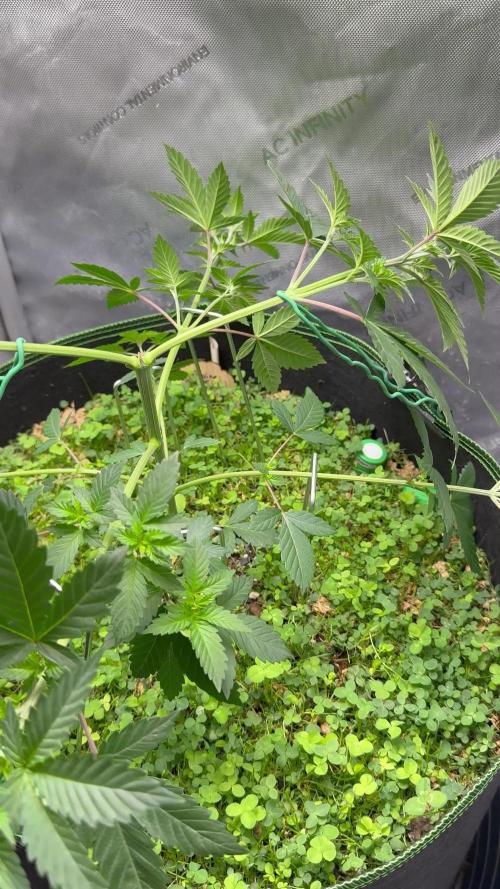
She rocketed up! Given her some LST to stretch her out and topped her one last time just before. Will be flipping in the next week or so, she’s got big internodal spacing, so this has helped her gain some more veg on her. Nothing fed other than a compost tea - the soil is doing totally fine without anything more added in yet.