


Likes
Comments
Share

@CadillacGreen_420
Follow
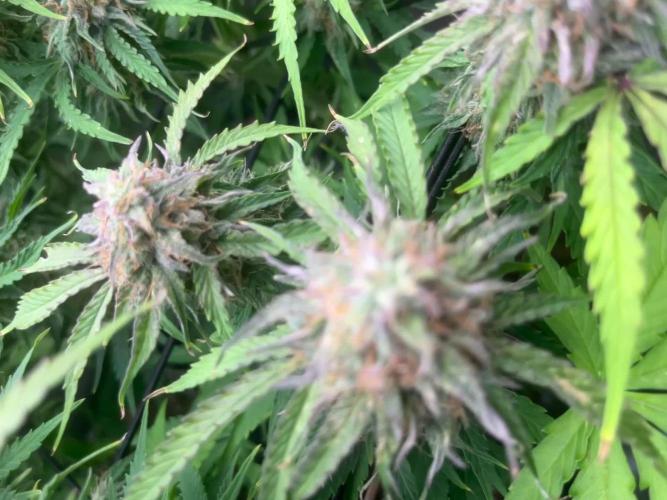
The buds have built up a nice layer of resin, but I’m hoping they’ll bulk up a bit more.
Toward the end of last week, I gradually trimmed off all the fully yellow leaves and some fan leaves that were shading the buds. Some of the chlorosis has gotten worse even with Cal-Mag and no light stress — not sure why, honestly.
The buds haven’t swelled up as much as I was expecting; about 15 days left till harvest, so by the end of the week we’ll see if things take a turn for the better. 🤞

Likes
104
Share


@Hou_Stone
Follow
Let's start growing the Z' Gelato😙
I place my seeds in water for 2 hours before planting them in a 0.5L pot of universal potting soil.
3 days later, I see the seedling emerging 🌱😄
I let my seedling grow for a few days before replanting it in its final 7L pot. she seems to like it there.😉
-------------------------------------------------------
My Instagram 🌱❤️️ :
https://www.instagram.com/hou_stone420/
----------------------------------------------
Equipment used :
Light FC3000 Mars hydro. power 25% at 30cm
Extractor 6 inch Mars Hydro. power 1/10. ON 24/24h
No other fan this week
Heating mat Romberg 95x95cm. ON half an hour every hour
-------------------------------------------------
Thanks for your visite mate 🙏💪

Likes
69
Share


@nonick123
Follow
Día 9 (10/06) N/A
Día 10 (11/06) N/A
Día 11 (12/06) Llueve mucho. Humedad alta por aquí. Eso les favorece
Día 12 (13/06) Se empiezan a desarrollar las hojas verdaderas a una buena velocidad! Todo en marcha! 💨
Día 13 (14/06) Riego ligero 100 ml sólo H20 EC 0,5 en previsión del trasplante en el día 15 de la planta
Día 14 (15/06) Se nota que estamos en el día 14 desde germinación y la mayoría de las plántulas van viento en popa!
Día 15 (16/06) Hoy procedemos a trasplantar a las chicas a su maceta intermedia de 6,5 litros
Se prepara con 5,5 Litros (85%) de sustrato PRO-MIX HP BACILLUS+MYCORRHIZAE + 1 Litro de Insect Frass (15%) + 65 gramos de Earth Vibes Super Soil (10 g/L substrato)
Se llena la maceta de sustrato con las manos (limpias) y rompiendo los trozos más gruesos, para que el sustrato esté aireado y esponjoso, sin presionar
Se coloca una maceta vacía de 1L para que quede la forma perfecta de la maceta donde están las plántulas (ver fotos)
Se espolvorea la parte proporcional de la probeta de microorganismos sobre el agujero de trasplante
Se saca la plántula de su maceta actual (bonitas raíces 😍) y se coloca en la maceta final
Se riega muy lentamente hasta percolación profunda con H2O EC 0,5 pH 6,5
Se coloca mulch (acolchado) de paja para evitar traspiración excesiva y cuidar a los microorganismos del suelo
A ver como reacciona al trasplante!
💦Nutrients by Lurpe Solutions - www.lurpenaturalsolutions.com
🌱Substrate PRO-MIX HP BACILLUS + MYCORRHIZAE - www.pthorticulture.com/en/products/pro-mix-hp-biostimulant-plus-mycorrhizae

Likes
27
Share


@Wicked_Stix
Follow
Had a lot going on this week so the plants didnt get any care or maintenance at all other than just checking on the water level a couple times. They need some major defoliation which I wanted to do this week but procrastination is the vibes currently. Will probably get some done next week.... the plants are looking good and most of them are bushing out pretty nice. They dont seem to be stretching as much as they normally do by this time, but they are transitioning to flower. Will probably do a flush and water change soon since they haven't had one in over a month. I'm just anxious to see some frosty buds at this point.
Processing
Likes
24
Share


@Cogollo_eu
Follow
**Encontrarás la traducción a español al final de la descripción**
From/Desde: 23/09/19 || To/Hasta: 29/09/19
From day/Desde día: 63 || To day/Hasta día: 69
If you like this week, please hit a like, it costs you nothing! 👊. Thanks in advance 😉!
-----IMAGES & VIDEOS-----
I'm sorry to not having more Alice timelapses, the tent is too small to record some decent videos due to Alice size, a think that I must have in mind for upcoming grows.
-----WEEK SUMMARY-----
One week more that Alice overpass my expectations, I'm really not having any time to do nothing to her, but she's still beauty. Those buds are looking amazing on it's start, I can't wait more to see those full buds formed.
I'm not vey proud of using mineral s#@ts, but i already tested it and results are really appreciable. Anyway I'm not using it in excess, just the day 29 and probably at October 8, just 2 applications. I'm also using Bloombastic, Organic PK Booster & Overdrive.
-----WATERING CALENDAR-----
25/09/19 DAY 65 - 3 l with Rhino Skin, Bud Candy, Big Bud, MegaBud (1 g/l) @ (1.9 EC | PH 6.4 | 25.7ºc)
29/09/18 DAY 69 - 4 l with all week nutrients -(MegaBud) @ (1.65 EC | PH 6.2 | 25ºc)
*****ESPAÑOL*****
Por favor, si te gusta esta semana dale un like, no te cuesta nada 👊. ¡Gracias por adelantado 😉!
-----IMÁGENES & VÍDEOS-----
Siento no tener más timelapses de Alice, el armario es muy pequeño y no me permite grabar videos decentes dado el tamaño de Alice, una cosa que he de tener en cuenta para futuros grows.
-----SUMARIO SEMANAL-----
Una semana más que Alice sobrepasa mis expectativas, no estoy teniendo tiempo para cuidar nada de ella, pero por lo que parece ni falta que le hace. Los cogollos se ven hermosísimos en su inicio, no puedo esperar a que se unan y engorden.
No estoy muy orgulloso de usar mi@#¢das minerales, pero este producto ya lo he probado y los resultados fueron muy buenos. De todas maneras uso muy poquito, 2 aplicaciones durante todo el periodo de floración. También uso los demás PK's así que no hay problema.
-----CALENDARIO DE RIEGO-----
25/09/19 DÍA 65 - 3 l Con Rhino Skin, Bud Candy, Big Bud, MegaBud (1 g/l) @ (1.9 EC | PH 6.4 | 25.7ºc)
29/09/18 DÍA 69 - 4 l Con todos los nutrientes semanales -(MegaBud) @ (1,65 EC | PH 6,2 | 25ºc)

Likes
1
Share

@CannaWolf420
Follow
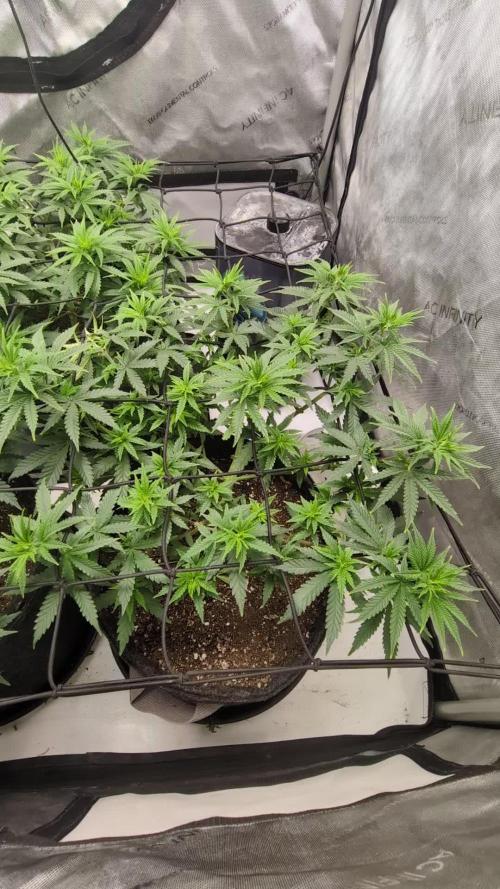
Another good week for the ladies with good growth. They are strong and vibrant with many tops starting to take form. With some of the taller branches I used HST by rolling the stem untill it bends basically in half, giving the lower branches plenty of time to grow up. Once they have reached past the scrog net I begin to LST by tucking branches under also making way for new growth. One more week with minimal training and mostly defoliation of bigger fan leafs before I'll flip to flower

Likes
20
Share

@Hempcules
Follow
WEEK 14
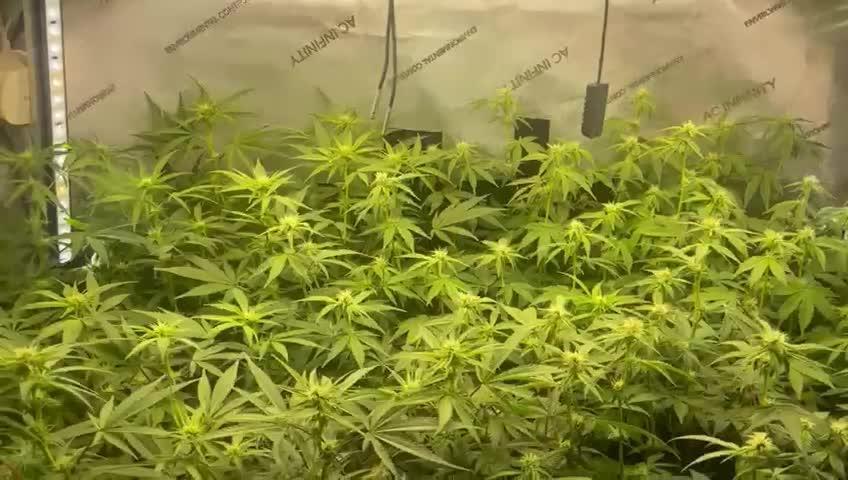
I’m thrilled. The plants are developing beautifully. They’ve gained a good bit in height again, but the canopy has become exceptionally even and bushy. Thanks to the long training, many strong shoots have grown, and both plants have a massive stem and impressive root system.
They’re slowly beginning to give off a light scent as well. A very sweet cannabis aroma is already noticeable. I believe this will become one of their key characteristics in the future.
Due to their height, I had to remove my internal dehumidifier and now use it as an intake dehumidifier. That way, I’m also able to further reduce the humidity in my grow space.
I only fertilized once this week because I repotted the plants into fresh Allmix a few weeks ago, so the soil is still very rich in nutrients. The leaves have a healthy color and the plants are generally in great condition.
Next week, I’ll raise the VPD and begin fertilizing twice a week. Other than that, I’ll leave the plants to continue growing undisturbed and hope all my shoots soon develop fully into blossoms.
Likes
11
Share


@AGrowerNotAShower
Follow
Week 15 - August 09, 2020 -Day 99
08/09: We’re almost at the end. I gave Aaliyah her first watering with plain water. I’m planning on chopping the top colas off of her in a week. Hopefully I can get something out of the lower growth that isn’t getting any light right now. Alexis is coming down in two and Annie in three. Annie has some damage due to the light, but she is hanging in there. Alexis looks the healthiest overall. She stayed pretty compact, so light is still able to reach her lower parts. I think I could’ve had a better grow overall if I would have stuck with using only 3-gallon pots.
[General notes: The nutrients on the diary are based off what I’m giving Aaliyah. Alexis is on the previous weeks schedule and Annie in the schedule from two weeks ago.]

Processing
Likes
16
Share


Likes
5
Share


@pzwags420
Follow
I had to top Cantaloupe haze and White widow as they were too close to the lights and I didn't want to loose any ppfd on my lowers. My GSC seems perfect for not topping. next time I would top those strains at least once. I have been flushing the CH and getting run off around 1200ppm which seems like the max she can take the others like it stronger so I have been flushing them every 2-3 days. CH is tough to keep happy but will continue to monitor. All plants are in week 4 of flower 12/12 from seed.


Likes
40
Share


@SubliminalSociety
Follow
Week 26 - bud shots!
Growmies, why did I defoliate so late? Look at these nugs. Had I taken more leaves away earlier, they would've gone bigger. But I'm not complaining. This is going to be a HUGE harvest and a new record for me.
The buds are frosty and the smell is so yummy. I want to harvest them already but my weather station predicts another week of sunshine so why waste it?
I'm really happy with this strain. It's uncomplicated and seems to thrive despite my neglect. Well done, Super Sativa Seed Club. And thanks again, Johnny, for believing in us


Likes
33
Share

@Wicked_Stix
Follow
They survived another week. Lowered the temp to 72 for the remainder of the grow. Wanting to see if it adds anything to the flavors and aroma. Just going to keep the juice pumping until they dont want anymore.

Likes
14
Share


@BruWeed
Follow
Todo su desarrollo fue perfecto, no tuve ningún problema con nada, la planta se fue formando sola de manera perfecta. Me sorprende los pesados que son los cogollos y lo lleno de resina que están, en un mes aproximadamente pretendo ya probarlo para ver que onda el pegue.
Solo tuve un problema que fue culpa mía por el tema de la humedad ya que una pequeña parte de la planta fue afectada por moho, pude solucionarlo rápido y sin ningún inconveniente alguno.
Como ya dije más arriba recomiendo el banco de semillas de BSF SEED, las mejores plantas que tuve fueron gracias a sus semillas de muy buena calidad.

Likes
7
Share


@MicroHidroGrow
Follow
Día 22. El estirón ha frenado. Las plantas están empezando a llenarse de flores. Se me hace extraño tener las plantas con esta forma, dado que siempre he usado cortes y LST. Se ven bastante bien, aunque cada vez que las miro, me dan ganas de cortarle alguna otra rama. Pero no quisiera mermar el rendimiento. Ya a esta altura sería más.contraproducente que otra cosa. Pero creo que debí haber sacado más ramas de las que saqué.
Día 24. Fui un iluso al pensar que el crecimiento había frenado. Hoy ya las plantas tienen 5 cm más que hace dos días. Voy a tener que doblarlas si siguen a este ritmo. Tuve que hacer un video, ya que no tengo lugar para sacar fotos en contra picado. Veo que se están llenando de flores y empiezo a imaginar el resultado final.
Día 26. Las plantas crecieron otros 5 cm en estos dos días. Ya estan 65 cm. Me empieza a preocupar, por lo que supongo que voy a tener que doblarlas un poco. Seguramente solamente doble las dos mas altas cruzadas entre si. Vengo ilusionado, pero sospecho que van a ser necesarias entre 7 y 8 semanas. Tuve que agregar solución, ya que había bajado mucho el nivel del depósito, y agregué un poco de bud blood. Voy a seguir usándolo hasta el momento del PK. Seguiré actualizando.

Likes
38
Share


Likes
3
Share


@BubatzSherrif
Follow
Grow Diaries Report: Flower Week 1 – Stretch Madness & Heavy Grooming 🌿🚀
Week 9 – Flower Week 1 Update
The flowering phase has officially kicked off, and wow, this plant is on a mission to touch the sky! The stretch this week has been intense, with the plant shooting up significantly. To manage her vigor and focus her energy on bud production, I’ve had to step in with defoliation and additional lollipopping.
This Week’s Highlights
Massive Stretch: The plant stretched dramatically this week, filling up the vertical space in the tent.
Defoliation: I removed a significant amount of fan leaves to improve light penetration to the lower branches.
Lollipopping Redux: Further cleaned up the lower parts of the plant, focusing her resources on the top colas.
What I Did
Lollipopping: Removed more of the lower branches and leaves that were unlikely to contribute to bud production.
Defoliation: Took off some large fan leaves to improve airflow and light exposure throughout the canopy.
Nutrients: Continued with the bloom feeding schedule, ensuring a balance of phosphorus and potassium for flower development.
Environment Management: Adjusted the light height to prevent light burn and tweaked the fan placement to improve airflow in the now more open canopy.
Observations
The plant’s stretch has been both impressive and challenging, but the defoliation and lollipopping seem to be working. The top canopy looks well-lit and primed for flower development. No signs of stress from the grooming, which is always a relief during such an aggressive stretch.
Challenges
The rapid vertical growth is pushing the limits of the grow tent. I’ll need to monitor her closely to prevent overcrowding or light burn.
Next Steps
Keep monitoring the stretch over the next week—potential supercropping if necessary to control height.
Fine-tune the nutrient schedule to ensure the plant has everything it needs as bud sites develop.
Maintain low humidity to reduce the risk of mold or mildew during early flowering.
Conclusion
The first week of flowering has been an explosive start! The stretch is real, but with proper management, she’s looking set to develop some fantastic buds in the weeks ahead. 🌟
Any tips for managing a stretch-happy plant in a tight grow tent? Drop your advice below! 😊

Likes
5
Share


@Scrublord
Follow
Just letting the girl do her thing. she starting to give off grape notes when smelling fan leaves that have been cut. Night time temps and humidity were lower than normal. 65/45 at night with almost no humidity spikes.


