


Likes
Comments
Share

@po710
Follow
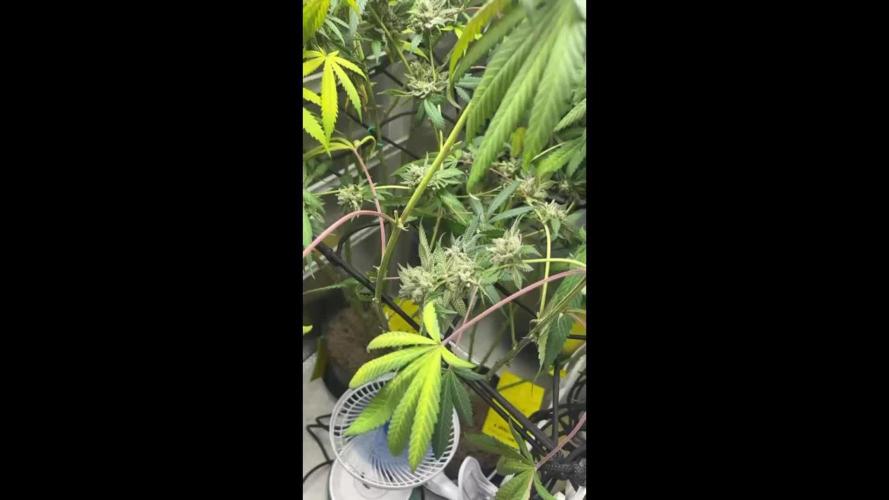
I have finished this cicle, and this image shows you everything you need to know. OBS: UV light on the holl flowering stage, except in flush.

Likes
8
Share


@Ch33cH
Follow
Superb in veg, her nodes are quite close and she has really taken off.
Would be very suited to a scrog. Shes heading into flip soon. Expecting this girl to do really well.


Likes
3
Share


@Bdawg
Follow
Think mighy av slight magnesium or calcium defiency on plant where i zoomed in on viseo.
Am feedin cana a&b.
And green sensation.
Stopped calmag last week

Likes
39
Share


@MrHightimes
Follow
They are bushy af, but the bud is looking really good on them! I think i'm gonna be pleasantly pleased wit the final results!

Likes
12
Share


@gr3g4l
Follow
Sigo añadiendo humedad pulverizando con agua destilada, tres o 4 vecs al dia.


Likes
70
Share


@Insaniac_0
Follow
So I have decided to only note when changes are made, observations are warranted, or I feel something of note has happened. I'll still do daily progressions, but the rest has already been documented and no need to create a hundred new pics showing the same. Just understand that if I say "7.1ph," or something with tested amounts that I mean I first calibrated and tested my ph pens and all units are measured for accuracy. I am learning as I go, so it would be of no benefit to report inaccurate details.
112/42
VPD and PPFD are still the same this week. 73-76F in the day and 66-68 overnight with RH set to not exceed 55% but is mostly at 45 to 50% now that winter is here. The fan is set to auto and I have 2 de-humidifiers in the tent. The PH lockout issue is still in progress but I am starting to get the soil up to snuff now. I think using the knitting needles has the most beneficial effect on the soil as it both aerates and allows the nutes to get deeper.
113/43
Defoliated today. I removed the worst of the affected fan leaves and this unfortunately only leaves sugar leaves to run photosynthesis process. Im hoping she still gets enough of everything else to grow the buds, but only time will tell. I will take new control pics for new progression on 3 other sites now.
Watering Days.
All feeds with nutes use either a whole ratio, or combination, of "Veg Mix" and "Bloom Mix"concentrates. These are/will be DILUTED in water until a total ppm of add-in is reached using a (Total Dissolved Solids) TDS Meter measured in PPM (parts per million). The "Veg Mix" concentrate will eventually be added-in larger, then smaller, ratios while the "Bloom Mix" concentrate will eventually replace the "Veg Mix" concentrate entirely. The ppm and ratios will be listed when I feed. Veg mix recipe is on week 3. Bloom Mix recipe is on week 5.
Last feed was day 110/40 (next will be +3)
I expect to continue to use 7.1ph with 650ppm of bloom mix concentrate and feed 2.5 gallons every 3 to 4 days, so I expect about 8 to 11 cups of runoff at that time as well. I have decided that I will try to add 1 ml of CaliMagic (General Hydroponics 1-0-0) per gallon of feed on each feed for a week or two to see if this can help against ph lockout of calcium since it cant be N,P, or K. Cant be N because she uses WAY less N in flower, and it cant be P or K because I am getting nute burn with the feeds I am already using... so my conclusion is that she need more micro nutes from the lockout, and since I was thinking it was Calcium in the start, I am going to try a more detailed treatment to test results against from here.
Day 113/43 (last feed was day 110/40)
Tested and Calibrated my ph pens. Fed 2.5 gallons of purified water (starting with 16ppm) mixed with 658ppm of 100% Bloom Mix Concentrate. Due to this soil showing a possible calcium deficit, I am starting a 1ml per gallon add-in to test on all plants using this soil, so I added 2.5ml of CaliMagic (General Hydroponics 1-0-0) to the feed then I ph balanced before feeding. The ph on this feed was balanced to 7.1. I used knitting needles to help both aerate the soil and create new water pathways for the roots. (a practice I may consider a new feeding standard for all my plants) I got ~7 cups of runoff (~11 cups last feed). Higher runoff volume was expected with the feed volume but glad to see she's taking it better now since I started knitting needles. Runoff was tested at 6.12ph and 2250ppm (5.9ph with 1860ppm last feed). Top soil tested at 6.23,6.31,6.57,6.38 for an avg of 6.372 (6.327 avg after last feed) - next feed will be 7.1ph again as I'm still liking where the ph is finally going, but rather see it closer to 6.3 or 6.4 top and bottom. I dont see any issues with the feed's data other than the possible calcium deficit and I will continue to monitor runoff ppms as I expected this to be lower with less runoff but have to consider they maybe washing out salt with the knitting needles. Next Feed should be 3 gallons of de-chlorinated tap water ph balanced to 7.1 in +4 days (117/47). I will run 650ppm and 3ml of CaliMagic (General Hydroponics 1-0-0) again.
Day 117/47 (last feed was day 113/43)
Tested and Calibrated my ph pens. Fed 3 gallons of de-chlorinated tap water (starting with 299ppm) mixed with 671ppm of 100% Bloom Mix Concentrate. Due to this soil showing a possible calcium deficit, I am starting a 1ml per gallon add-in to test on all plants using this soil, so I added 3.0ml of CaliMagic (General Hydroponics 1-0-0) to the feed then I ph balanced before feeding. The ph on this feed was balanced to 7.4. I used knitting needles to help both aerate the soil and create new water pathways for the roots. (a practice I may consider a new feeding standard for all my plants) I got ~20 cups of runoff (~7 cups last feed). Higher runoff volume was expected with the feed volume increase might let her go to 4 days again and 2.5 next feed. It could be a result of the knitting needle treatment when feeding. Runoff was tested at 6.10ph and 2070ppm - again thinking it could be a result of the knitting needles (6.12ph and 2250ppm last feed). Top soil tested at 6.23,6.31,6.57,6.38 for an avg of 6.372 (6.372 avg after last feed)- next feed will be 7.1ph again as I'm still liking where the ph is finally going, but rather see it closer to 6.3 or 6.4 top and bottom. I dont see any issues with the feed's data other than the possible calcium deficit and I will continue to monitor runoff ppms as I expected this to be lower with less runoff but have to consider they maybe washing out salt with the knitting needles. Next Feed should be 2.5 gallons of de-chlorinated tap water ph balanced to 7.1 in +4 days (121/51). I will run 700ppm and 2.5ml of CaliMagic (General Hydroponics 1-0-0) again.
Likes
6
Share


@Izzydawizzy
Follow
Supper cropped because plant got taller than expected. Was too close to light. Tallest branches around 3 feet tall. I defoliated 2 weeks into flower. I also took clones today. Sweet gassy smell. Have light on 75% intensity since it is so close. Depending how plants respond I may just keep the intensity there.

Likes
18
Share


@DreamIT
Follow
Sponsored by:
🌴SPLIFF SEEDS🌴-💡VIPARSPECTRA💡-💐GREEN BUZZ LIQUIDS💐-🛠️WEDRYER🛠️
4/9 here are the updates! being indica dominant it hasn't stretched a lot, but it's pretty chubby in size. today water and fertilizer
__________________________________________
Personal advertising (contains affiliate links)
__________________________________________
🦄 Are you new to the world of cultivation and don't know where to safely buy your seeds?
Fast and anonymous shipping. Check out their hilarious graphics. (no affiliate links)
✅https: //bit.ly/spliffseeds_
__________________________________________
Did you know that Green Buzz Liquids fertilizers are 100% vegan? A complete line of products ready to give the best to each of your plants! Visit the site and see my journals to see how they work 🦄
🤯 And with the code "dreamit" you will immediately receive a 15% discount on your purchases
✅https: //bit.ly/GreenBuzzLiquidsPro
__________________________________________
👀 Are you looking for a good lamp to start with? 👀
🌞Viparspectra has something more than the others, take a look at their site.
⏩ Use "GDVIP" for an extra discount or "DREAMIT3" for an extra 5 %% discount
👀 Search for it on Amazon
✅Amazon USA: https://amzn.to/30xSTVq
✅Amazon Canada: https://amzn.to/38udUVe
✅Viparspectra UE: bit.ly/ViparspectraUE
✅Viparspectra USA: bit.ly/ViparspectraUS
______________________________________________
🌈 Tired of blowing on your weed hoping it dries quickly? Check out the Wedryer website! You will find a well-made accessory that will help your weed dry in just 8-10 days without the annoying risk of finding mold or other annoyances! (no affiliate links)
✅https: //bit.ly/Wedryer_
______________________________________________
📷🥇Follow the best photos on Instagram 🥇📷
https://www.instagram.com/dreamit420/
Backup
https://www.instagram.com/dreamit4200/
🔻🔻Leave a comment with your opinion if you pass by here🔻🔻
🤟🦄💚 Thank you and good growth 💚🦄🤟

Likes
14
Share


@eldruida_lamota
Follow
Vamos familia cuarta de floración de estás Punch Pie de RoyalQueenSeeds .
Que ganas tengo de ver el progreso de esta variedad, las plantas están sanas, se ven con buen color.
La cantidad de agua cada 48h entre riegos, nutrientes de la gama Agrobeta.
Esperaremos que no me suba mucho la temperatura , por el momento se mantiene entre 25-26 así que lujo.
Esta vez me pasé un pelín con los productos pero echaré agua destilada y en unos días apañamos.
Estas próximas semanas veremos cómo avanzan y progresan estas flores.
Mars hydro:
Code discount: EL420
https://www.mars-hydro.com/
Agrobeta:
https://www.agrobeta.com/agrobetatiendaonline/36-abonos-canamo
Hasta aquí todo, Buenos humos 💨💨.
Likes
12
Share


@BudXs
Follow
What dat mouf do? It eats Lemon Pie
All health, all good. Countdown to harvest now baby!!

Likes
283
Share


@love_2_grow
Follow
FD29 - Lmao. Similar to last week I (almost) forgot to snap some pics. When I finally remembered it, the lights were in sunset mode and almost turned off. Hence the weird color in the terrible pics. I will upload better pics tomorrow.
FD30 - Pics!
FD35 - We're at the end of yet another week. It's been uneventful, as it mostly is in flower. I prefer veg, while flower can be a bit ZzzZzzzt at times, where it's mostly a waiting game.
However, in my lazy approach, I missed that the second girl stretched lately and got close to the light.
I noticed that her leaves were taco-ing in, and I measured 1300 PPFD in the center. Holy smokes, Batman!
I raised the light to around 1000, and I will observe her in the next few days.


Processing
Likes
16
Share


@MG2009
Follow
12/20/2018
Got some Omaha Steaks in mail today so I put a little dry ice in tent to see what happens, temps maybe too low to utilize extra c02 but we will see. Other than that all is well . I have chosen 2 distinctly different phenotype to grow out
#1 is short stocky, fat leaves
more Indica leaning. #3 is more pale green more lanky, thinner leaves more
Sativaish, but definitely some Indica traits as well.
#1 very healthy , #3 a little behind, but in my opinion sativas are slower than indicas, to grow any way. Maybe need different feeding schedule as well we will see.
12/26/2018
Was planning to flip on Jan. 1, but I want to clone the Indica leaning one she is showing great growth and structure,and grows twice as fast as her sisters,(maybe a male?) Hope not cause,she is fastest growing plant i can remember growing. Beautiful fat chunky leaves, and great internodal spacing,and a nice lush green leaves.
Likes
9
Share

@TheGreenfulOne
Follow
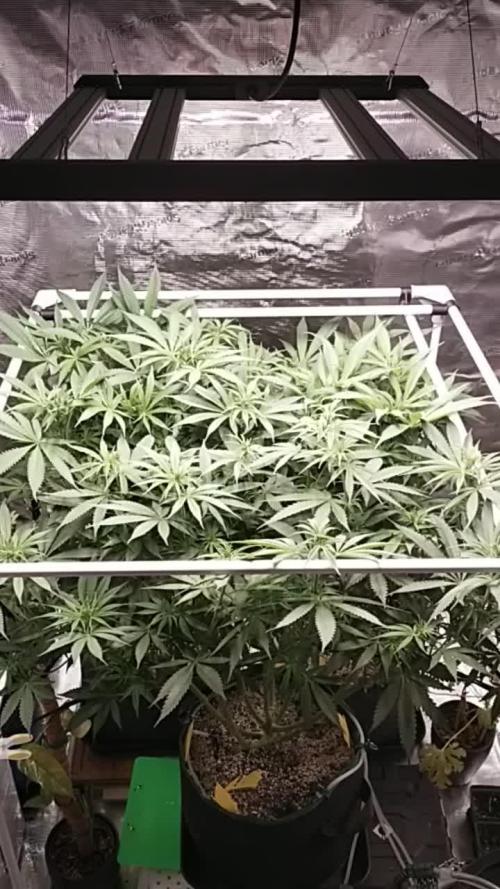
The stretch is slowing down, and the first pistils are appearing across the canopy. The SCROG net is full and the lollipoping has significantly improved airflow.

Processing
Likes
30
Share


Likes
32
Share


@Dunk_Junk
Follow
I think she's done!!
Lots of leaves went yellow during the week and dried up.
Harvesting her in the next few days.