





@Organic_G
Volgen
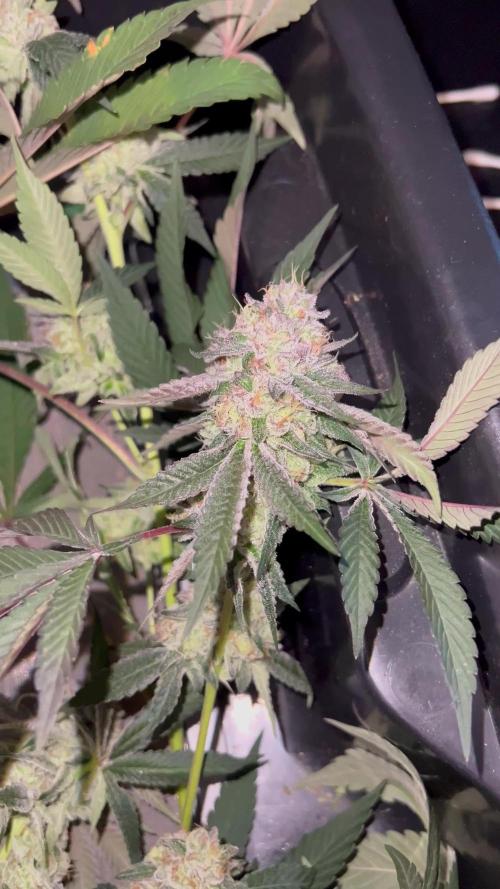
Das obere Drittel wird geerntet, sehen wunderschön aus.
Die Qualität wird von Grow zu Grow immer besser.
Super Juicy, richtig lecker und einfach wunderschön wie aus dem Lehrbuch.
Sind nun am Trocknen danach kommt der Rest ab.


@Natrona
Volgen
This week, my Titans are sleeping in a cooler dark room until harvest.
So for your viewing pleasure, I've loaded some videos made of the Titans during there time with me.
I'm wondering what to serve at my Queens Tea Party... I made some butterscotch pistachio bars and modified the recipe for less sugar. 😋 We experimented with topping the bars with black cherry spread, orange marmalade and a mango jelly. All are very tasty as the bit of sour/tart enhances the butterscotch sweet.
A few solar eclipse pics.








@FishOil
Volgen
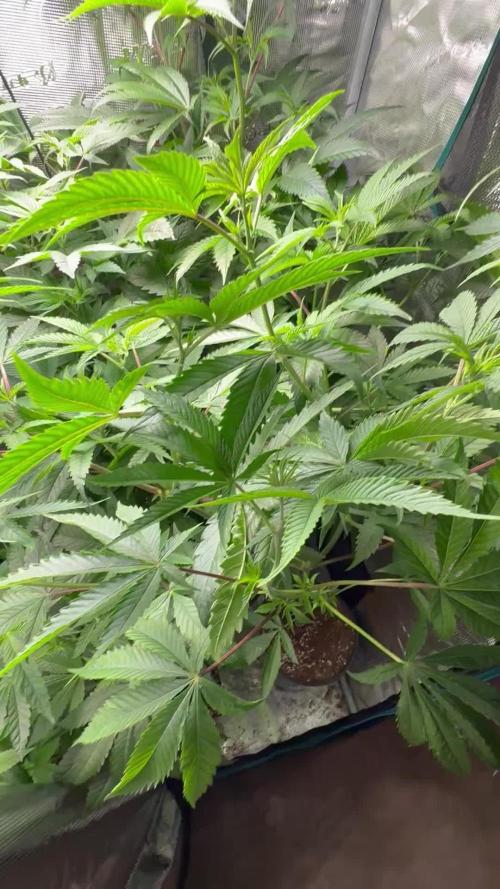
This strain is certainly giving me its fair share of problems. First, it was the yellowing of leaves. Now, I'm noticing early signs of bud rot. Just a few colas are affected right now and I'm hoping it doesn't become too widespread. I've cut off affected areas and I'm hoping for the best. On the bright side, one of the plants isn't presenting with any of these problems. In fact, the buds on this plant in particular are looking quite beautiful and have just started showing off its purple tint.
Being a first time grower, I expected I may run into problems. That's why I decided to hedge my bet and plant four seeds instead of just one. I suppose that insurance policy is paying off.


@MarihuAchA
Volgen
Verdaderamente por estar en maceta de 5 litros fue una productora en potencia. 68 gramos en seco de cogollos resinosos, compactos y dulces. Buena generación de resina. Se aguanto mucho las defoliaciónes y las podas en los bajos. Gran abrazo gente




@DogDoctorOfficial
Volgen
💙 Project Blue Tent – Week 7
Blue Waffle F1 – Pheno A (Folder 13A)
Welcome back everyone to another week inside Project Blue Tent! 💙🌱
If you're new here, welcome aboard.
This project is all about exploring the incredible Blue Waffle F1 genetics from Zamnesia while putting the complete growing ecosystem through its paces.
Rather than documenting four plants as a single diary, each phenotype receives its own individual journey from seed to harvest. They share the same tent, the same environment, the same nutrition, the same irrigation and the same lighting.
And yet...
They still manage to tell four completely different stories.
As I always like to say:
We're not just growing plants.
We're getting to know them.
────────────────────────
🌿 Week Seven – The Final Cleanup
This week feels like a milestone.
The SCROG has done its job.
The canopy is full.
The plants have established their structure.
And now it's time to prepare everything for the next chapter...
Flowering. 🌸
Plant A is looking absolutely beautiful at the moment.
Her foliage has developed into the rich, healthy green I've been hoping to see, and the overall structure is remarkably balanced. After several weeks of gently guiding branches underneath the SCROG, we've managed to create a canopy that is surprisingly even from one side of the tent to the other.
At approximately 60 cm, she's sitting comfortably within the space we've created for her.
And although she could certainly continue growing vegetatively, I don't want to simply keep filling the tent with more and more foliage.
At some point, you have to stop building the canopy...
...and start preparing it for what comes next.
That's exactly where we are now.
────────────────────────
🕸️ From SCROG to Flower
Over the last couple of weeks, the SCROG has completely changed the way these plants occupy the tent.
Instead of allowing individual branches to dominate vertically, we've been gently guiding them horizontally beneath the screen.
The result is exactly what we were looking for:
A broad, relatively even canopy with many developing tops sharing the available light.
SCROG isn't about forcing a plant into submission.
It's about working with its natural growth and redistributing that growth across the available space.
And looking at the tent now...
I'd say the mission has been accomplished.
The screen is filled.
The plants have claimed their territory.
Now we need to create the best possible starting point for flowering.
Which brings us to this week's main job.
────────────────────────
✂️ Defoliation – Cleaning Today for a Better Tomorrow
This week we're performing a deep, purposeful defoliation across the canopy.
For anyone unfamiliar with the technique, defoliation simply means selectively removing leaves from the plant.
But it's important to understand what defoliation isn't.
It isn't stripping a plant bare.
It isn't removing leaves just because they're in the way.
And it isn't something that should automatically be performed every week.
The purpose is to improve the structure we've already created.
After several weeks of SCROG training, there is now a tremendous amount of foliage packed into a relatively small space. While those leaves are essential during vegetative growth, too much overlapping foliage can eventually create unnecessary congestion inside the canopy.
So we're removing selected leaves that are:
• Blocking developing growth
• Creating unnecessary overlap
• Restricting airflow through the interior
• Shading lower areas that we've decided to retain
• Or simply no longer contributing enough to justify occupying that space
The goal isn't to make the plant look empty.
The goal is to make the plant efficient.
────────────────────────
🌬️ Why Defoliate Before Flower?
Timing is everything.
We're doing this now because the plants are still in vegetative growth and have time to recover before we ask them to transition into flowering.
Defoliation is a form of stress.
Even when performed carefully, removing a significant amount of foliage temporarily changes the plant's balance between its leaves, roots and growing points.
That's why I don't want to perform a major cleanup deep into flowering unless there's a very good reason.
Right now, the plants can take that short period of recovery while they're still operating under an 18/6 light schedule and actively producing new vegetative growth.
After the cleanup, we'll give them time to recover, settle and rebuild their foliage before flipping the lights.
The idea is simple:
Stress now.
Recover now.
Flower later.
Rather than asking the plant to simultaneously deal with a major transition into flowering and a significant amount of pruning, we're separating those events.
One step at a time.
That's especially important in a project like this, where I'm trying to observe the plants rather than simply push them as hard as possible.
────────────────────────
🌿 Plant A – Looking Better Than Ever
Plant A continues to impress me.
The first thing that stands out this week is the colour.
That slightly lighter appearance we saw earlier in the grow has completely disappeared. The foliage is now displaying that rich, healthy green that tells me the current nutritional strategy is working extremely well.
She's vigorous without looking excessive.
Healthy without showing signs of nutritional stress.
And most importantly...
She's balanced.
Her branches have responded beautifully to the SCROG, and the canopy has developed into a very usable structure for flowering.
This is one of those moments where you can look at the plant and realize that the weeks of small adjustments have finally come together.
The topping.
The recovery.
The daily SCROG work.
The irrigation.
The feeding.
The environmental stability.
None of those things created this canopy by themselves.
They're all pieces of the same puzzle.
────────────────────────
💧 The Drip Irrigation System
One of the things I have become particularly impressed with during this project is the automatic drip irrigation system.
It's working beautifully.
With the plants now drinking more consistently and the canopy becoming increasingly demanding, having a reliable irrigation system makes maintaining uniformity across the tent considerably easier.
Each plant is currently receiving approximately 1.2 L per 24 hours, delivered through the drip system.
And the plants are clearly enjoying the consistency.
One of the advantages of automated irrigation isn't simply saving time.
It's repeatability.
Instead of relying on every watering being manually performed at exactly the same interval and volume, the system provides a much more consistent routine for the plants.
That consistency becomes increasingly valuable as the root systems develop and the plants transition toward flowering.
So far...
The system is doing exactly what I wanted it to do.
And honestly, watching four plants respond so uniformly to the same irrigation strategy has been one of the most satisfying parts of this project.
────────────────────────
🥥 Feeding Program
The feeding recipe remains unchanged this week.
And for now, I don't see a reason to interfere with something that is clearly working.
Current nutrition:
• Plagron Hydro A — 1.9 ml/L
• Plagron Hydro B — 1.9 ml/L
• Plagron Hydro Roots — 1 ml/L
Current EC remains approximately:
1.92 mS/cm
with the solution maintained around 18°C and pH at 5.8.
The plants are showing excellent colour, strong growth and healthy leaf development, so I'm perfectly comfortable maintaining the current recipe for now.
We may increase the nutritional strength next week depending on how the plants respond after defoliation and as flowering approaches.
But that's exactly why I don't like changing several variables at once.
First, we observe.
Then we adjust.
The plants will tell us what they need.
────────────────────────
🌡️ Environmental Conditions
The Blue Tent continues to remain remarkably stable.
This week's average conditions were:
• 🌡️ Day Temperature: 28°C
• 🌙 Night Temperature: 27°C
• 💧 Relative Humidity: 65%
• 🥥 Substrate Temperature: 24°C
• 💦 Nutrient Solution: 18°C
• ⚗️ pH: 5.8
• ⚡ EC: 1.92 mS/cm
• 💨 CO₂: approximately 450 ppm
• 💡 Light Schedule: 18/6
• 💧 Irrigation: approximately 1.2 L/plant/24h
• ? Pot Size: 8 L
• 📏 Plant Height: approximately 60 cm
The plants are continuing to respond beautifully to these conditions.
The root-zone temperature remains particularly stable, irrigation is consistent, and the canopy has enough air movement to support vigorous transpiration.
As we move toward flowering, environmental management will become even more important.
The room we've created now needs to support not only vegetative growth...
...but the much denser flowering structure that is coming next.
────────────────────────
🌬️ Why the Cleanup Matters
One of my main objectives with this defoliation isn't simply aesthetics.
It's airflow.
When four vigorous plants completely fill a 100 × 100 × 200 cm tent, the amount of foliage inside that space becomes considerable.
From above, everything can look absolutely perfect.
But underneath that beautiful canopy is another story.
Leaves overlap.
Branches cross.
Interior spaces become crowded.
Air needs to move through all of that.
By selectively removing excess foliage now, we're opening those internal spaces before flowering begins.
That gives us a cleaner structure going forward and makes it much easier to inspect the plants, maintain airflow and monitor the developing flowers.
This is also one reason I'm much happier doing the major cleanup before the flip rather than waiting until the plants are deep into flowering.
Once flowering begins, the priorities change.
I want the plant concentrating its energy on developing flowers rather than repeatedly recovering from major structural work.
So we're preparing the room now.
Clean canopy.
Good airflow.
Healthy structure.
Then...
Flower.
────────────────────────
🧠 Defoliation Isn't About Removing Leaves
One of the biggest misconceptions surrounding defoliation is that more leaves automatically means a worse plant.
That's not true.
Leaves are incredibly important.
They're the plant's solar panels.
They capture light and help drive photosynthesis.
So the objective should never be:
"How many leaves can I remove?"
The better question is:
"Which leaves are no longer contributing enough to justify occupying this space?"
That's the philosophy I'm following here.
We're not trying to weaken the plant.
We're trying to improve the relationship between:
Light → canopy → airflow → growing sites.
And because we've already spent weeks creating the structure with SCROG, this cleanup is simply the final refinement of that work.
────────────────────────
🌱 Plant A's Personality
Every phenotype continues to develop its own personality, even when all four plants are living under almost identical conditions.
Plant A has consistently been one of the more balanced girls in the tent.
She doesn't appear interested in becoming the biggest plant in the room.
Instead, she seems much more interested in becoming an efficient one.
Her growth is structured.
Her canopy is balanced.
Her foliage is beautiful.
And after weeks of training, she has settled into the SCROG extremely well.
Now, after today's cleanup, she looks almost like a different plant.
Less crowded.
More open.
More organized.
And ready for the next chapter.
That's the part of growing I really enjoy.
You spend weeks slowly building something...
Then one day you step back and suddenly realize:
It all came together.
────────────────────────
👀 Looking Ahead
The next few days will be about one thing:
Recovery.
No unnecessary training.
No chasing perfection.
No constantly changing the environment.
Just observation.
The plants have been through topping.
They've been trained beneath the SCROG.
They've filled the canopy.
And now they've received their final major vegetative cleanup.
So we're going to let them breathe.
Let them recover.
Let them continue growing.
And then, assuming everything continues to look as good as it does today...
we flip the Blue Tent into flower. 🌸
This is the point where all those weeks of preparation finally start paying off.
The screen is full.
The structure is ready.
The plants are healthy.
Now we just need to let them do what plants do best.
Grow.
────────────────────────
💙 Thank You
A huge thank you to Zamnesia for making Project Blue Tent possible, from these fantastic Blue Waffle F1 genetics to the complete ecosystem surrounding this grow.
A massive thank you to Plagron for providing the Premium Growbags together with the Hydro nutrient line, which continues delivering excellent results and beautifully healthy growth.
A special thank you to Mars Hydro for the drip irrigation and automatic drainage system. After watching these plants respond to the consistency of automated irrigation week after week, I'm genuinely impressed with how well the system is performing.
Thank you as well to GrowDiaries, for giving growers around the world a place to document their journeys, exchange knowledge and learn from one another.
And finally...
Thank you to everyone following Project Blue Tent.
Every comment, every question, every bit of feedback and every person simply stopping by to see how these four phenotypes are developing means more than you probably realize.
We've spent weeks building this canopy together.
Now the really exciting part is about to begin.
The plants are cleaned.
The SCROG has been filled.
The room is ready.
Flower is next. 🌸💙
Until next week...
Growers Love, happy growing, and take care everyone! 🌱💙


@Staffedition
Volgen
Привет друзья. Моей растихе сегодня 71 день.
Был в отъезеде, не поливал. В связи этим растение не много подсохло.
Как придёт в чувства. переведу на цвет.
Начал применять LST технику на 19 дне и продалжаю применять её через день, а 18 августа добавил ДЕФОЛИЗАЦИЮ
С 20.08 ДЕФОЛИЗАЦИЮ делаю каждые 3,4 дня
С 20.08 LST технику делаю каждые 4.6 дней
На сегодняшний день влажность 54%
26 дней назад заметил высокий Ph 7.9
С 48 дня Ph не ниже 5.8
На сегодняшний день Ph 6.0
Начал кормить с 60 дня Canna Terra Vega
PPM 550
Погладитель влажности, выполняет свои функции. Посмотрю на динамику.
Всем мира и добра!
https://t.me/smail_seeds
#Smail_Seeds


@Philippovic
Volgen
Sie entwickelt sich gut, vermutlich wird man Ende der Woche die ersten Pistils sehen.
Sie hat eine stattliche Größe erreicht, wenn der strech dazu kommt vermute ich eine Höhe von ca. 60cm


@Hommero75
Volgen
The first 7 days were good the plant is growing nicely. She just got fed for the first time with Goldleaf feterlizer. I had to raise the light higher because she is a little sensitive to the light.


@Cysolja
Volgen
Was really good to grow. Ran into some difficulty during flower one bud grew slightly too close to the light and died, which then Began to rot, I cut that bud off only to find that 2 other top buds had become rotten on the inside. So in order to salvage the grow I cut them off and threw them all away which ended up with me losing around 80grams of Wet weight which wasn’t the happiest moment! We managed to save her though all the buds have been thoroughly checked and are all in great condition! 4.5 ounces of one plant even after losing a lot is still a good result


@Green_Dream
Volgen
Big week here.
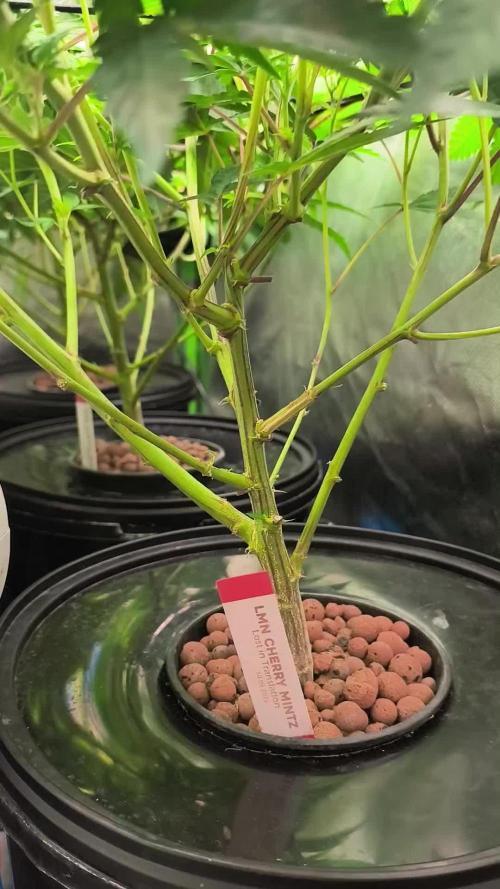
The girls got moved into the tent and also into the Autopot system.
I'm excited to see how the Autopot performs!
There appeared some burns, I had been busy with xmas, so I didn't had that much time to attend them. I believe they will get back on track now. The biggest challenge is to keep the PH stable in the water tank.

@ellioschka
Volgen
Den süßen LCM-Damen geht es gut. Mittlerweile schieben sie kräftig nach oben durchs Netz und überholen mit manchen Trieben sogar wieder die Lemon Zkittle. Da es nur einzelne Triebe sind, liegt das vermutlich an apikaler Dominanz trotz Topping. 🌱
Den VPD habe ich angehoben, er liegt nun im Zielbereich. Dank der Bikinizonen-Rasur weht unten rum jetzt auch ein laues Lüftchen 😄
Die Wurzeln sind weiß, aber etwas trocken. Sobald der schlimmste Stretch vorbei ist, gibt es etwas längere Sprühstöße. Im Moment halte ich die Damen wegen des begrenzten Raums nach oben aber lieber etwas kleiner.
Der leichte Eisenmangel ist durch den höheren VPD und eine etwas höhere Micro-Dosis ebenfalls verschwunden. Die hellen Stellen im Video wirken nur durch das Blaulicht so extrem. Das 440-nm-Blaulicht wird jede Stunde für 45 Minuten zugeschaltet, 660-nm-Rot läuft seit BW1 dauerhaft mit. 💡


@RoyColt
Volgen
Always R.O Water
Watering the plant 3 times for per week
1st Watering with nutriens. (750 ppm) (06.03.2023) 4 liter
2st Watering with nutriens. (750 ppm) (08.03.2023) 4 liter
3st Watering with only R.O water & CalMag. (300 ppm) (10.03.2023) 4 liter
this time is preflowering.
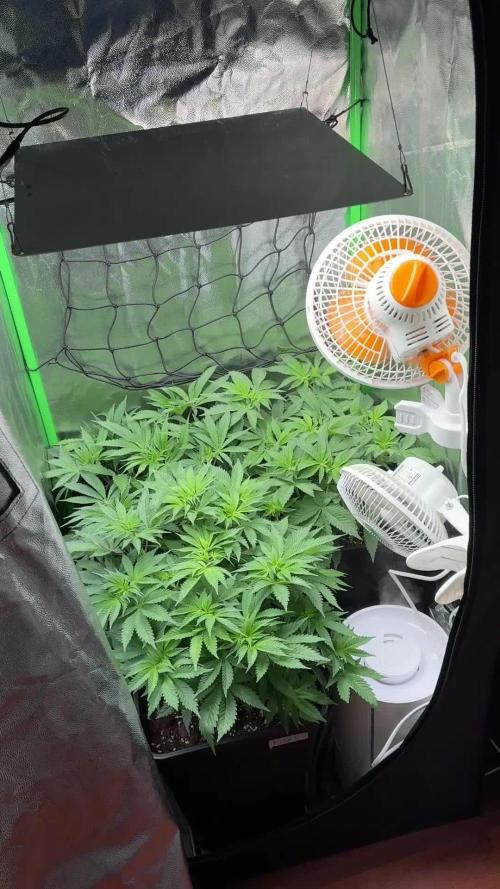
-Day48 Finally I did some lollipopping and LST. I reduced the ones that can't go up from the below a little bit. And I did empty watering R.O water and CaMg+ Total 300 ppm pH 6.2. Light 700 PPFD.
it will be in full bloom next week💪




@Hidden
Volgen
- Day 1 week 2 flow: watered them with 1,5 L ph 6,4 to 6,5 following biobizz schedule. Growing big and tall right now.
- Day 2 week 2 flow: just checking factors and controlling humidity and air flow
- Day 3 week 2 flow: not much to do, checking the tent to watch them grow:)
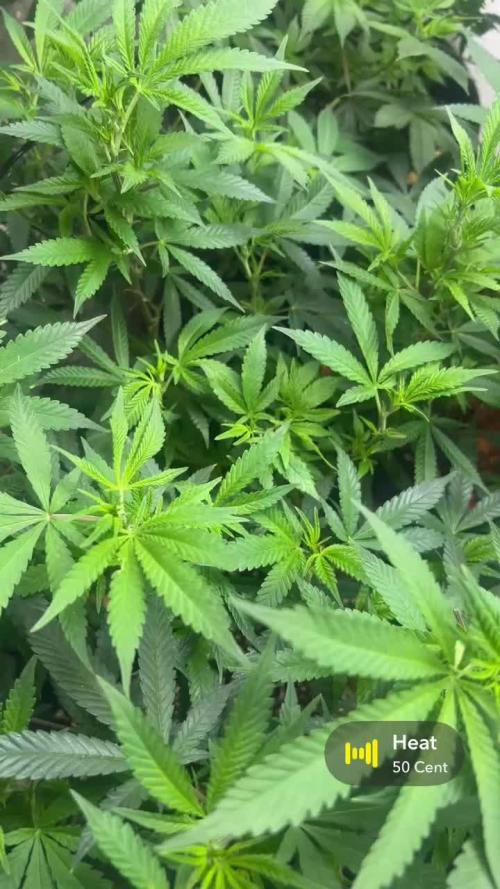
- Day 4 week 2 flow: watered them with 1,5 L ph 6,4 to 6,5 following biobizz schedule. Defoliation has been made and humidity is the biggest challenge. Small tent and difficult air flow.
- Day 5 week 2 flow: had to adjust light height and change it to full power. The limits of my setup but it’s ok not planing to do something too big :)
- Day 6 week 2 flow: beautiful girls, hairs are coming ou
- Day 7 week 2 flow: watered them with 1,5 L ph 6,4 to 6,5 following biobizz schedule. They have grown a lot this week, love how they can just almost double their size in flow.







@PollenSax
Volgen
I just noticed my PH has been around 7, and a couple of the seed mothers are showing CAL/MAG deficiencies..
I use well water, and I don't have to adjust it in the summer, but around late fall the PH raises.
I forgot to get good pics of the seed mothers, since I was focused on the STS formulas at the time, but these are the Pollen donors transforming into male flowers. 5 weeks old.
The seed mothers are coming along nice with dime sized buds on them. I Topped them all at the 5th node, just before the cola, so the canopy would all be even under the lights.
I just sprayed these reversed buds 1 time only on day 17, after the first STS treatments, with 50ppm of Gibberellic Acid (GA3) to stretch them out away from each other.
Gibberellic Acid causes plants to stretch enormously, and PPM's of 50 to 100 can cause females to reverse to males.