


Likes
Comments
Share

@Borberad
Follow
Woche 11
Blütewoche 4
Es geht voran!
Die Blüte gibt Vollgas
Die Pflanze streckt sich nicht mehr sondern steckt ihre Energie nun in die Knospen und entwickelt nun dicke Blütenstände. Der DLI wurde sukzessive auf 40-45 angehoben. Der Düngeplan bleibt unverändert.
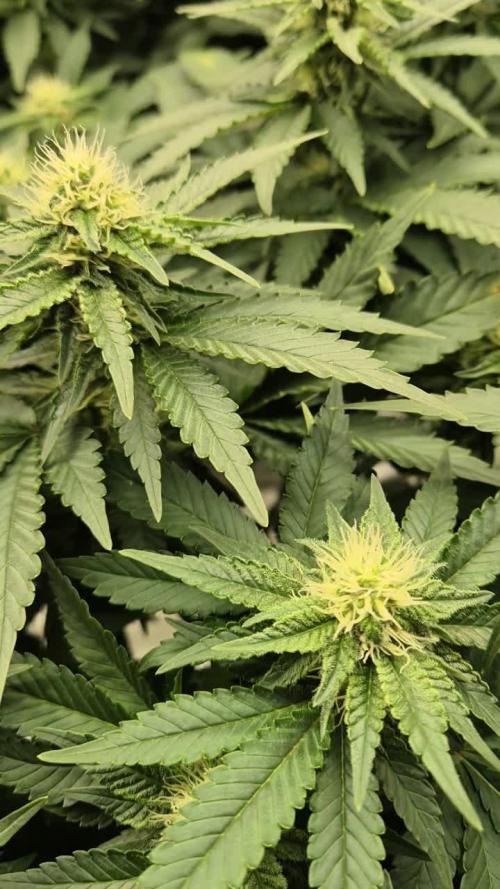
* Zustand der Pflanze: Kräftiger Blütewachstum, die Blütenstände werden immer dicker und sitzen voller Trichome
* Wichtige Ereignisse: Anhebung des DLI.
* Düngung & Messwerte:
* Gießwasser: pH ca. 6,3. Leitwert 1,4 bis 2 S.
* Drain: Wir stellen sicher, dass der pH-Wert nicht unter 5,5 und nicht über 6,8 liegt und der Leitwert die +/- 500 S Abweichung einhält.
* Anpassungen: Spuradisches Entfernen der Sonnensegel wenn Blüten abgedeckt werden

Likes
Comments
Share

@youdan
Follow
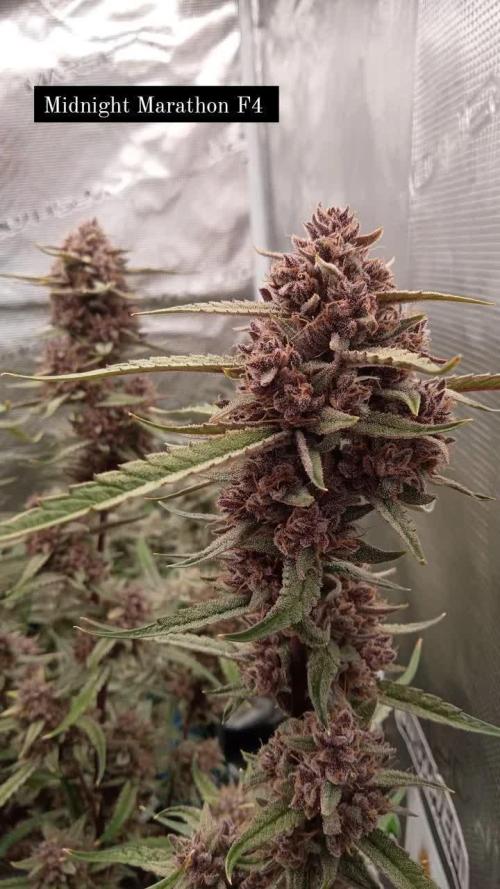
Colori, tricomi, struttura al loro massimo, e un piacere sempre vederla fiorire questa genetica, prossima ettiman raccolgo e si preannuncia un buon raccolto

Likes
3
Share


@Organic473
Follow
This was a rainy week so not much watering however she took the new 5 gallon pot really well. I am just extending her veg for the best possibly yield.

Likes
7
Share

@MistaOC
Follow
11.08.
Update – Day 13
• The plants are continuing steady early vegetative growth.
• Leaf development looks good, with a healthy green color and compact structure.
• Stems are becoming stronger, showing stable progress since germination.
⸻
Pest Situation
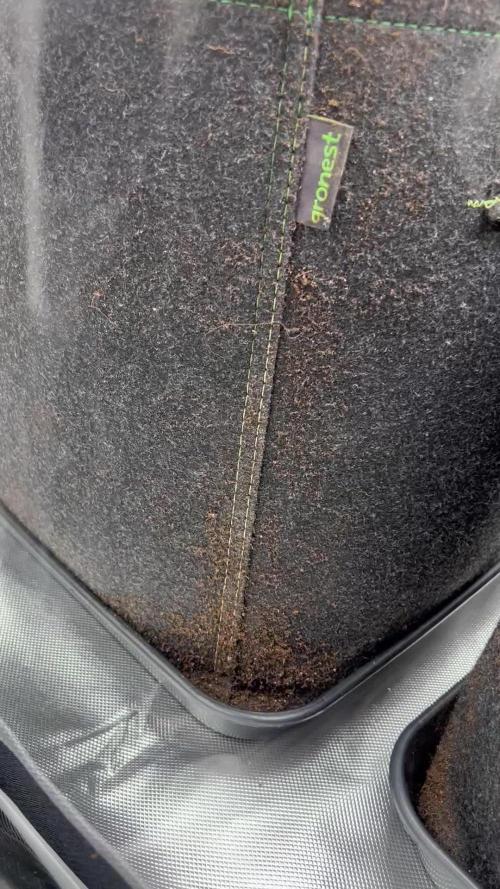
• Unfortunately, the thrips problem is still present, despite thorough cleaning of the grow area beforehand.
• To address this issue in a natural way, I have ordered beneficial nematodes.
• They are expected to arrive in the next few days and should help control the thrips population effectively.
⸻
Notes & Outlook
• Until the nematodes arrive, close observation of the leaves continues to be necessary.
• The plants themselves are holding up well, showing resilience despite the pest pressure.
• I am confident that once the nematodes are applied, the situation will improve and allow for uninterrupted growth.
⸻
🌱 Day 13 – steady growth continues, with pest control measures soon being implemented.

Likes
6
Share


@MG2009
Follow
10/26/2020
6 Days into week 4, all looking great, update a little early but going out of town. Calyx are getting bigger, pistils
popping up everywhere drinking about 6 liters a week.
10/29/2020
3 days into week #5 day 3 she took 4 liters today she is drinking plenty of water! next week will topdress with 4-9-3
Likes
10
Share


@KushManF
Follow
No nutrients for now. Straight water. Will add nutrients on day 2/3 of week 11. Growing quite nicely for a first grow. Will have to implement a proper LST on next grow. This time around was just to learn about the growing process. Good progress over the past few weeks.
Likes
9
Share


@HUMO_Cultiva
Follow
Update week 1 day 4 of bloom , this week we put the net to make the technique that calls scrog we see next week what is the resul

Likes
13
Share


@Prozak
Follow
to mutch cold here 2 week with low temps at night cicle betwen 12 &16 graus in europe.
maybe this is the reason of that purple orange colors (:

Processing
Likes
45
Share


@AsNoriu
Follow
Day 106. Pure water for both girls and heavy feed on friday. It will be last feed for FastDiesel.
Girls are running fine and its so sad to leave them when they a such beuties ;)
Day 108. I just fed them hard and left for 3 weeks almost. There will be no updates till then.
Girls just flower, pray and bloom and i am very happy with that. Nothing to add.
Strawberry would need a bit of LST, because her branches growed back to centre again, but i flattend the canopy for last time and now fingers crossed ;)))
Tried Fim on Strawb girl, so very high atempt brough interesting double bud, we shall see is there any profit in such action, this type of FIM produces almost no split branching. Other parts recovered better from lower FIM and made Y form double little colas.
Still think that 5 days after heavy training not enough before flower , i think 7-9 days for proper cola to develop.
P.s. in Tangies harvest i showed how little nutes i used for all this grow.


Likes
28
Share


@Mitch
Follow
Growing very well, nice colas cover in white, almost finishing 2 week with beastie blumz, starting to create huge looking nugs, really excited about the finish result.
Processing
Likes
17
Share


@Weedo_The_Hempstar
Follow
Day 7. we will now move the cuts from under the t12 lights on the clone table to underneath the shade leaves of the mothers under a Mars 300 (150 hps equivalent). They will remain in the propagator until day 14 as they must wait for the girls currently occupying the pre-flower area to graduate to the flowering tent. We will still spray Clonex mist once every day until roots are visible


Likes
1
Share

@RevvshiWoW
Follow
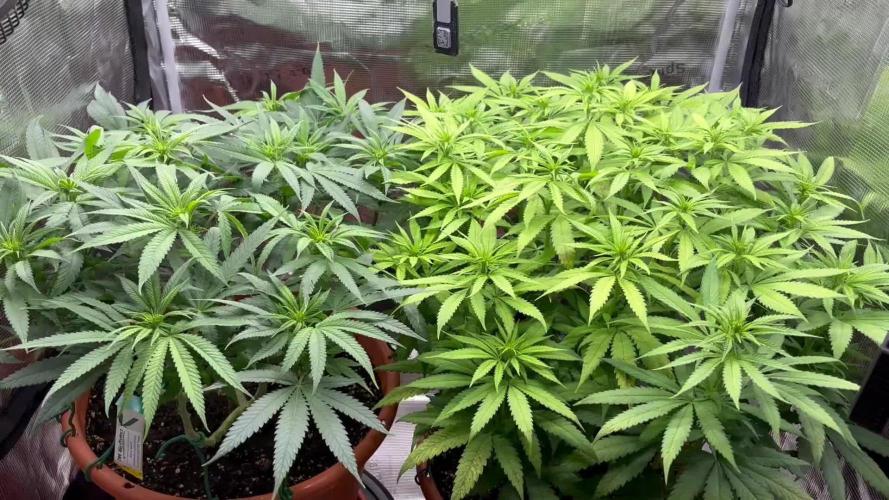
Week 1 – Flowering (Day 1–7)
The light is now running at 100% intensity (300 watts). The dark period is from 8 AM to 8 PM, meaning no light during those hours.
The lamp is kept at a 40 cm distance from the canopy.
I’m currently watering with 2ml on 5 Liters and adjusting the pH to 6.0–6.5.
As of now, I’m planning to apply a top dress on day 14 of flower, following the transition feeding strategy.
If anyone has an idea what’s going on with the right plant (slightly pale leaves, some odd coloration), feel free to leave a comment – it might just be a nutrient deficiency, but I’d appreciate any insights.

Likes
4
Share


@Mr_nugs_lover_David
Follow
She did not get very big but she has produced very compact and sticky nuggets, she has given 31,2g of high quality buds

Likes
10
Share


@Qaggy
Follow
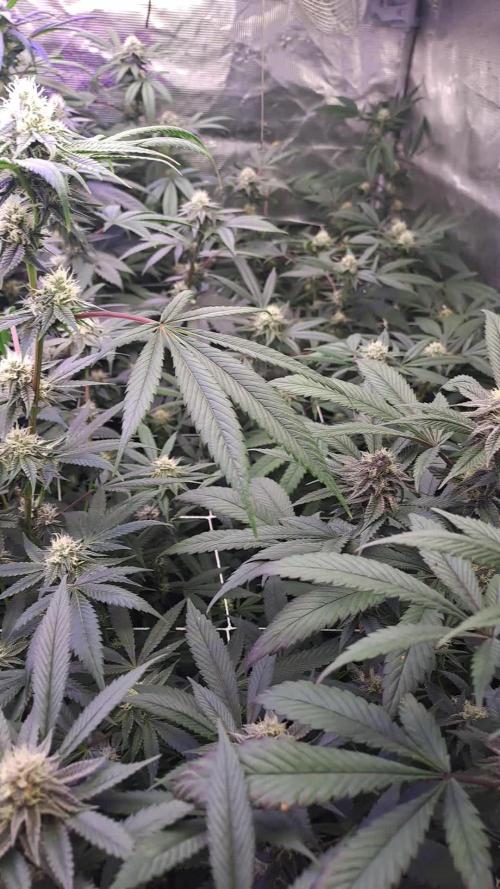
Lst went well. She was nice and bendy.
Very healthy girl with lots to give. Gave her a top dressing of charge for the upcoming weeks of vigorous training.
Topped her the day after. Was a bit daunting as I have never topped before. Went well, and topped on the 5th node. Looking forward to the next week of growth and training before I scrog for the first time as well.



Likes
7
Share


@ShiftyGaijin
Follow
Running a partial flush this week to see if anything helps with the Caramelino leaf discoloration that continues to advance. I know I’m close, but being my first grow, getting jumpy to pull the trigger. Haven’t seen any amber trichomes yet. But getting a decent amount of opaque. The smells are absolutely out of this world. 😌✌️🏻

Likes
12
Share

@DogDoctorOfficial
Follow
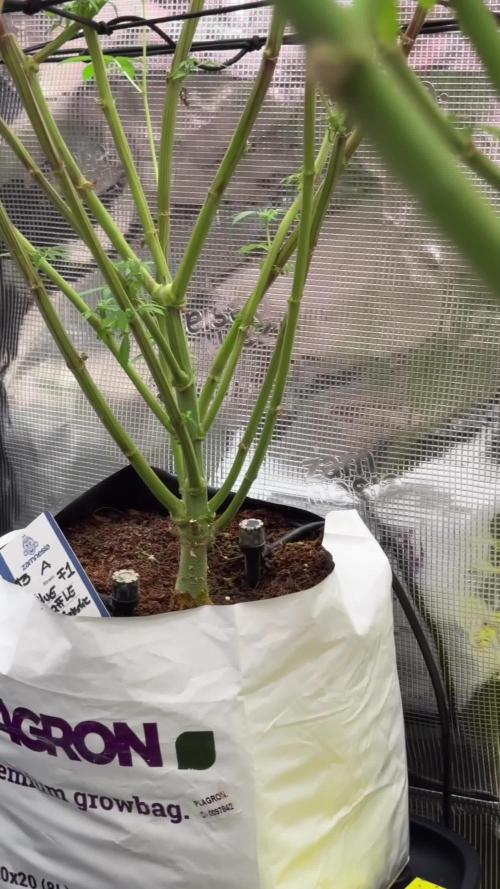
💙 Project Blue Tent – Week 11
💙 Blue Waffle F1 – Pheno A
🌸 The Frost Is Coming... And She's Looking Incredible
Hello everyone, and welcome back to another chapter inside Project Blue Tent! 💙🌱
And honestly...
I'm not even sure where to start this week.
Because...
LOOK AT HER. 😂💙🌸
After everything we've done over the previous weeks, we're finally reaching that beautiful stage where the plants don't need us to constantly interfere.
They just need us to watch.
And what we're watching right now?
Absolutely amazing.
The bud formation is developing beautifully.
The frost levels across the tent are going absolutely crazy.
The structure we built is doing exactly what we wanted.
The second SCROG is supporting the flowering branches.
The airflow is working beautifully.
The irrigation and drainage systems are running flawlessly.
And now we've introduced a second LumiFlora under-canopy light to help illuminate the lower portions of this enormous flowering structure.
So yes...
there was a little bit of tinkering this week.
😂
But mostly?
We stood there staring at the plants.
Because sometimes...
that's the best job in the grow room.
🌿 PHENO A – THE WORK IS NOW SPEAKING FOR ITSELF
Blue Waffle F1 Pheno A is still sitting at approximately 145 cm.
And at this point, her height almost isn't the interesting part anymore.
Because now we're watching what all that structure is turning into.
Weeks of vegetation.
Training.
SCROG.
Stretch management.
Defoliation.
Canopy organization.
A second SCROG.
Additional airflow.
Raised lighting.
And now...
flowers.
Lots of them.
And the development we're seeing is making me extremely happy.
The plant has moved from:
"How are we going to control all of this?"
to:
"Okay...
now let's see what all of this becomes."
😂💙
That's a very good transition.
🌸 BUD FORMATION – OUT OF THIS WORLD
This week, the thing that really catches my eye is the bud formation.
The flowering sites are developing beautifully throughout the plant.
And the amount of frost we're seeing now?
Oh my God.
😂
The whole tent is starting to look like somebody has been throwing powdered sugar around in there.
The flowers are getting increasingly covered in trichomes, and the close-up photographs are really starting to show what these girls are capable of.
This is the stage where all those weeks of structural work become incredibly rewarding.
We spent so much time talking about branches.
Canopy.
Spacing.
Stretch.
Support.
Light penetration.
Airflow.
And now?
The flowers are taking over the conversation.
Exactly as we hoped.
🌿 THE DEFOILATION – NOW WE SEE WHY WE DID IT
One of the things I really appreciate about this stage is being able to look back at the previous weeks.
When we performed the major defoliation, the plants looked dramatically different.
We removed a significant amount of foliage.
And at the time, the goal wasn't to make the plants look pretty.
It was to make the flowering structure more functional.
We wanted better visibility.
Better airflow.
Less unnecessary congestion.
More access to the flowering sites.
And a canopy that would be easier to manage as the flowers developed.
Now?
We're seeing the result.
The plant has recovered beautifully.
The remaining foliage is working.
The flowering sites are clearly visible.
The branches are supported.
And the flowers are developing exactly where we wanted them.
This is one of my favorite parts of cultivation.
You make a decision weeks earlier...
then you wait.
And eventually the plant gives you the answer.
And right now?
I'm very happy with the answer.
💡 TWO LUMIFLORA LIGHTS – LET'S LIGHT UP THE LOWER CANOPY
And this week we decided to take the under-canopy experiment one step further.
We brought a second LumiFlora into the game.
The first 150W full-spectrum LumiFlora was already helping us provide supplemental light underneath the canopy.
But looking at the size and density of these plants...
it simply felt like we could do more.
The lower portions of the plants are naturally receiving less direct light from the main fixtures above.
And with this much vertical structure, that becomes even more noticeable.
So instead of trying to solve everything by removing more foliage, we're exploring another option:
Give the lower canopy more light.
And now we have two LumiFlora fixtures working underneath the plants.
Both are 150W full-spectrum fixtures, with additional emphasis toward the red portion of the spectrum.
The idea is simple:
The main LEDs handle the upper canopy.
The LumiFlora fixtures supplement the lower canopy.
And the plant gets a more complete lighting environment from top to bottom.
We're not trying to replace the main lights.
We're complementing them.
And now...
we watch.
🌸
Because that's the whole point of the experiment.
We introduce something.
We observe.
We document.
And then we let the plants tell us what they think.
💡 THE UNDER-CANOPY LIGHTING DESIGN
And because we're apparently incapable of doing anything in a boring way...
😂
we decided not to simply place the two LED bars side by side.
The LumiFlora bars are quite long, approximately 1.20 metres each, with a central section of around one metre.
So instead of following the traditional side-by-side arrangement, we played around with the positioning.
We've arranged them diagonally across the lower portion of the tent, running from corner to corner.
And honestly?
I really like the way it looks.
It gives the lower canopy a much more interesting distribution of supplemental light rather than concentrating everything into one central area.
And visually...
it looks pretty damn cool too.
😂💡🌸
Sometimes the functional solution can also look beautiful.
🌿 LIGHT FROM ABOVE. LIGHT FROM BELOW.
This is becoming one of the most interesting parts of the Blue Tent experiment.
We're now looking at the plant as a three-dimensional structure.
The main fixtures are providing the primary lighting from above.
But the plant isn't flat.
It has height.
Branches.
Layers.
Lower flowering sites.
Interior flowering sites.
And all those areas don't necessarily receive the same amount of light from above.
So we're experimenting with supplemental lighting underneath.
The goal isn't to make some huge claim about what the lights will accomplish.
The goal is to see.
Will the lower flowering sites respond?
Will the additional light help us maintain development deeper into the canopy?
Will we see differences as flowering progresses?
That's what makes this fun.
We don't need to know the answer before we run the experiment.
We're here to find out.
🌸 FROST EVERYWHERE
And I have to say this again...
THE FROST.
😂💙
Oh my God.
The whole tent is getting ridiculously frosty.
The close-up photographs are becoming almost ridiculous.
The sugar is showing up everywhere.
The flowers.
The sugar leaves.
The surrounding structures.
Everything is starting to sparkle.
And this is one of those moments where you can finally see the genetics expressing themselves visually.
We're not talking about potential anymore.
We're looking at actual flowers developing in front of us.
And Blue Waffle F1 Pheno A is putting on quite a show.
🌿 THE SECOND SCROG IS DOING ITS JOB
The second SCROG continues to be one of those decisions I'm extremely happy we made.
When we installed it, the plants were already getting too tall.
The original SCROG had done its job beautifully during the vegetative phase.
But with all the stretch that followed, we needed another layer of support.
Now we're seeing why.
The flowering branches are developing more weight.
The structure is substantial.
And the second net is helping keep everything organized and supported.
We're not constantly moving branches anymore.
We're not trying to reshape the plant.
We're simply allowing the support structure to do its job.
And that's exactly how I want it.
The plant built the branches.
We built the support.
Now the flowers build the weight.
Everyone has a job.
😂💙
🌬️ AIRFLOW – STILL SPOTLESS
The airflow situation is also working beautifully.
The upper airflow continues circulating through the canopy.
The additional lower fan keeps air moving underneath.
The canopy was opened through the previous defoliation.
And now the lower portion of the tent also has the supplemental lighting system.
So we've got light and air working together throughout the structure.
That's important.
Adding more equipment underneath the canopy only makes sense if we're still maintaining good environmental movement down there.
And right now?
I'm extremely happy with how everything is working.
No stagnant feeling.
No obvious problem areas.
Just good continuous circulation through the room.
🌬️ THE EXTRACTION SYSTEM – STILL GIVING US SPACE
Moving the carbon filter and extractor outside the tent a few weeks ago was another one of those decisions that keeps paying dividends.
It gave us valuable vertical space.
That allowed us to raise the main LEDs.
That reduced the pressure we had on the tallest tops.
And now we're able to maintain this enormous flowering structure without constantly fighting the ceiling.
Sometimes the biggest improvements aren't made to the plant.
They're made to the room around the plant.
And this was definitely one of those changes.
💧 IRRIGATION – ABSOLUTELY SPOTLESS
And I have to give a little love to the irrigation system this week.
Because honestly...
I have absolutely nothing to complain about.
😂💙
It's working flawlessly.
The plants are receiving their water consistently.
The system is keeping up with their demand.
And the drainage system is performing just as well.
No drama.
No problems.
No complaints.
Just doing its job.
And when you have a flowering room this large and this thirsty, that consistency is incredibly important.
The plants can concentrate on growing.
We can concentrate on observing.
And the irrigation system can quietly do its job in the background.
That's exactly how I like it.
💧🌿
⚗️ THE EC MYSTERY
Now...
there is one little thing that caught my attention this week.
And I honestly don't have a definitive explanation for it.
😂
We didn't intentionally change the reservoir recipe.
The nutrient mix remained the same.
We're still using:
PLAGRON Hydro A — 2.2 ml/L
PLAGRON Hydro B — 2.2 ml/L
PLAGRON Hydro Roots — 1 ml/L
PLAGRON Power Buds — 1 ml/L
And yet...
the EC came out slightly lower this time.
Current recorded EC:
2.24 mS/cm.
Last week we were around 2.49 mS/cm.
Why?
Honestly...
I don't know.
😂
My first thought is that the rainwater may simply have been a little softer this time.
But that's only a possibility.
I don't want to invent an explanation when I don't actually know.
The important thing is that the plants are looking fantastic.
They're healthy.
They're developing beautifully.
The foliage looks good.
The flowers are progressing.
So for now?
We're simply recording the observation.
No panic.
No unnecessary correction.
Just:
"Interesting."
😂
And we continue watching.
🌱 SOMETIMES THE PLANTS MATTER MORE THAN THE NUMBER
This is another reason I like documenting all the environmental data.
Numbers are incredibly useful.
But they're only one part of the story.
You can have a number that looks slightly different from last week and still have plants that are absolutely thriving.
And that's exactly what we're seeing here.
The EC is a little lower.
The plants?
Beautiful.
The flowers?
Amazing.
The frost?
Absolutely insane.
The irrigation?
Perfect.
The drainage?
Perfect.
So we're not going to chase the number simply because it changed.
We're going to observe the entire system.
And right now...
the system looks fantastic.
🌸 CURRENT GROW CONDITIONS
🌸 Flowering: Week 11
📏 Height: approximately 145 cm
💡 Light schedule: 12/12
☀️ Day temperature: 28°C
🌙 Night temperature: 27°C
💧 Relative humidity: 63%
⚗️ pH: 6.01
⚡ EC: approximately 2.24 mS/cm
🌡️ Solution temperature: 24.9°C
🌱 Substrate temperature: 24°C
🌬️ CO₂: approximately 666 ppm
💦 Watering: approximately 1.6 L per plant / 24h
? Pot size: 8 L
CURRENT NUTRIENT RECIPE
PLAGRON Hydro A — 2.2 ml/L
PLAGRON Hydro B — 2.2 ml/L
PLAGRON Hydro Roots — 1 ml/L
PLAGRON Power Buds — 1 ml/L
PLAGRON pH Plus — 0.03 ml/L
PLAGRON pH Minus — 0.03 ml/L
💡 LumiFlora Under-Canopy Lighting:
2 × 150W Full Spectrum
🌸 THE FLOWERS ARE NOW THE MAIN STORY
This is probably the biggest change from where we were a few weeks ago.
Earlier, the main story was:
Stretch.
Height.
Canopy management.
Defoliation.
LED clearance.
Support.
Airflow.
Now?
The flowers are the story.
And they're telling a beautiful one.
The branches are loaded with developing flowers.
The structure is holding beautifully.
The frost is increasing.
And the whole room has that feeling of:
"Something special is happening here."
😂💙🌸
That's the feeling I love most.
Not knowing exactly how the final result will look.
But seeing enough clues to know that we're heading somewhere very interesting.
🔬 THE F1 UNIFORMITY CONTINUES TO AMAZE ME
And once again, I have to mention something that keeps catching my attention.
These F1 genetics are looking incredibly uniform.
The four girls are sharing the same room.
Same environmental conditions.
Same irrigation.
Same nutrition.
Same lighting philosophy.
Same structural work.
And they're responding with an almost uncanny similarity.
There are individual differences, of course.
That's exactly why we're keeping separate diaries.
But when I look across the room now...
it's almost like looking at different expressions of the same idea.
And honestly?
That's fascinating.
Maybe the biggest differences will reveal themselves later.
Maybe they'll become more obvious as the flowers mature.
Maybe the similarities will continue all the way to harvest.
That's what we're here to discover.
🌸 THE QUIET PART OF THE GROW IS GETTING LOUD
This is funny because technically...
we're doing less.
But visually?
The plants are becoming more impressive every week.
😂
We're not training.
We're not performing major defoliation.
We're not rearranging the room.
We're not fighting stretch.
We're not solving emergencies.
We're simply maintaining the environment.
And yet...
the flowers are getting bigger.
The frost is increasing.
The structure is becoming more impressive.
And every photograph seems to show more development than the previous one.
This is the reward for all the work that came before.
🌿 FROM BUILDING THE PLANT TO WATCHING THE PLANT FINISH
We spent weeks building this plant.
Now we're watching it finish.
The vegetative period created the framework.
The SCROG organized it.
The stretch tested it.
The defoliation opened it.
The second SCROG supported it.
The raised LEDs gave it room.
The additional airflow keeps it breathing.
The irrigation keeps it supplied.
The nutrition keeps it moving.
And now the LumiFlora lights are helping us explore the lower canopy.
At this point...
there's very little I want to change.
I want to let the plant show us what all of that work was worth.
🌸 WHAT I'M WATCHING NOW
The questions are becoming much more exciting.
How much larger will these flowers become?
How much more frost will develop?
How will the lower canopy respond to the two LumiFlora fixtures?
Will the additional supplemental light make a visible difference as flowering progresses?
How much weight will the second SCROG eventually need to support?
And perhaps the biggest question of all...
what are these beautiful F1 girls going to look like when they finally reach maturity?
I have absolutely no idea.
And I love that.
😂💙
🙏 FINAL THOUGHTS – THIS IS WHY WE GROW
If I had to describe this week in one sentence, it would probably be:
"We didn't do much... and everything looks amazing."
😂💙
And honestly?
I'll take that.
The plants are healthy.
The bud formation is incredible.
The frost levels are getting ridiculous.
The second SCROG is working beautifully.
The airflow is performing exactly as planned.
The irrigation is spotless.
The drainage is spotless.
The main lighting is doing its job.
And now we've added a second LumiFlora to complement the first and give the lower canopy even more supplemental light.
We even changed the positioning of those long LED bars into a more interesting corner-to-corner arrangement.
And I have to say...
I really like it.
It looks good.
It distributes the light in a way that makes sense for this huge lower canopy.
And it gives us another part of the experiment to watch.
As for the slightly lower EC?
We don't know exactly why.
Maybe the rainwater was softer.
Maybe there was another small variable.
Maybe it's simply one of those little differences that happen in a real system.
The important thing is that the plants are showing us no reason to panic.
So we're not going to chase numbers.
We're going to observe.
And right now...
what we're observing is absolutely beautiful.
Blue Waffle F1 Pheno A is standing there at approximately 145 cm, covered in flowers and increasingly covered in frost.
The structure is strong.
The canopy is organized.
The support is ready.
The lower lighting is installed.
The irrigation is flawless.
The drainage is flawless.
And the whole room is beginning to look like something very special.
💙🌸🌿
We've done the hard work.
Now we get to enjoy the show.
Let's see what the next few weeks bring.
Because if the frost continues at this rate...
Oh boy.
😂💙
We're going to have some very interesting photographs coming.
Until next week...
Keep watching.
Keep observing.
Keep the environment stable.
And let these beautiful girls do what they do best.
Grow.
Flower.
Frost up.
And shine.
💙🌸🌿
🙏 A HUGE THANK YOU
A huge thank you once again to Zamnesia for making Project Blue Tent possible and for giving us the opportunity to explore these beautiful Blue Waffle F1 genetics phenotype by phenotype.
Thank you to PLAGRON for the Hydro nutrient line supporting these girls through this incredible flowering journey.
A massive thank you to Mars Hydro for the automatic irrigation and drainage system that continues working absolutely flawlessly and keeping these thirsty girls supplied.
Thank you to Zamnesia for the Phytonaut LED lighting, the curved scissors and the clip fans that have all become such important parts of this project.
And a huge thank you to LumiFlora for providing the 150W full-spectrum under-canopy lighting that we're now using in pairs to explore supplemental lighting throughout the lower canopy.
I'm really excited to see what this experiment brings.
And of course...
thank you to GrowDiaries for giving us the platform to document all of this.
The successes.
The mistakes.
The unexpected moments.
The experiments.
The lessons.
And now...
the frost.
😂💙🌸
Most importantly, thank you to everyone following Project Blue Tent.
We're getting deeper into flowering now.
The plants are looking incredible.
The frost is everywhere.
The flowers are stacking beautifully.
The systems are working.
And we're finally at the stage where we can sit back a little and enjoy the work we've spent so many weeks building.
Four girls.
One room.
Same environment.
Incredible F1 uniformity.
Two LumiFlora under-canopy lights.
One very frosty future.
Let's see what comes next.
💙🌸🌿
Until next week...
More frost.
More flowers.
More observation.
And hopefully...
even more reasons to stand in front of the tent and say:
"Oh my God..." 😂💙
Growers Love, happy growing, and take care everyone! 🌱💙
Likes
28
Share


@SmokingTiki
Follow
- The trichomes photos have been taken just before the harvest.
- Drying was made between 22-24°C and between 55-70% of humidity (5 days).
- Curing before smoke test : 15 days
Veg time : 27 days
Flowering time : 39 days
Total time from seed to harvest : 70 days
Height : 33cm
Pot size : 1.5l


Likes
51
Share


@Cannabeast40
Follow
Description
Autoflowering strain. This is the result of the cross between our most awarded strain, the original Cream Caramel®️ (SWS04), and an exotic purple flowered autoflowering strain, descending from Pakistani Kush ancestors.
This plant looks like an indica strain, with a short internodal distance, numerous small branches in the main stem, compact buds and a big main cola. This strain is a great resin producer.
The aroma of Black Cream Auto®️ (SWS37) is very sweet and fruity, with a background that features outstanding earthy tones inherited from our Cream Caramel®️.
Gender Feminised
Genes 95% Indica / 5% Sativa
Genetics Cream Caramel x Pakistani Kush (automatic)
Harvest 350 - 550 g/m²
Flowering 32 - 42 days
THC 15.0 - 18.0%
CBD 0.7 - 0.8%
Vegetation 21 - 36 days
Ruderalis 3%
Room Type Indoor
Room Type Outdoor
Room Type Greenhouse
