




@gentlegiantgrows
Volgen
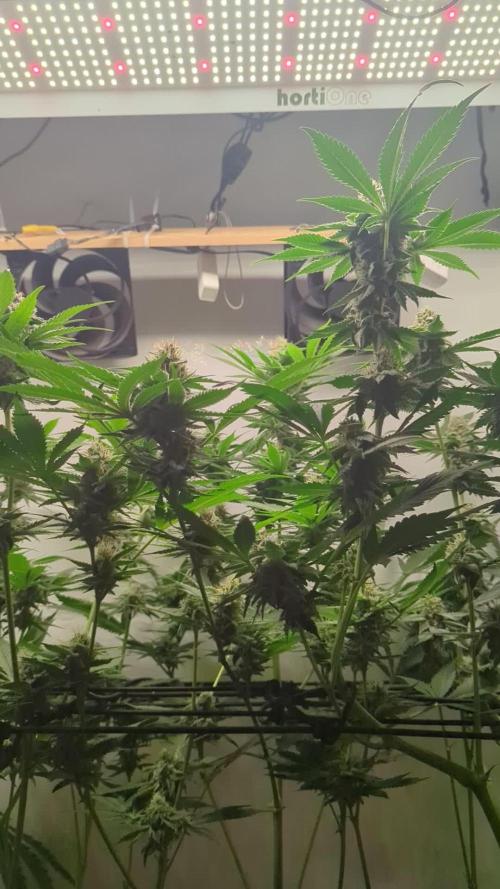
Smooth sailing, but if there's no pest pressure, that's mostly the case for me at this stage. Early flower and finishing can be tricky, but mid flower is just watching the ladies get plump.
I did spot the first signs of an imbalance, will not intervene in any way, as I want to see what the baseline of just stupidly sticking biotabs in the soil is. I cut my tap water with RO to an EC of 0,4 and we have almost no Mg in the tap water, no runoff either, probably there is an imbalance of the K:Ca:Mg ratio causing some problems. If i intervened, I would start pHing the water and adding some epsom salts. Like this I just hope that it will lead into a nice fade and not have too much impact on flavor.





@Bluemels
Volgen
Die Cookie Gelato duftet immer stärker von Tag zu Tag. Und die Blätter werden von der Mitte an rötlich und erscheinen somit lila😍
Sie ist sehr pflegeleicht. Ich arbeite aber auch mit Thermostat und Hygrostat 😁 und jetzt im Winter kann ich optimale Bedingungen für Sorten schaffen die "mildes" Klima benötigen 😎


@gottagrowsometime
Volgen
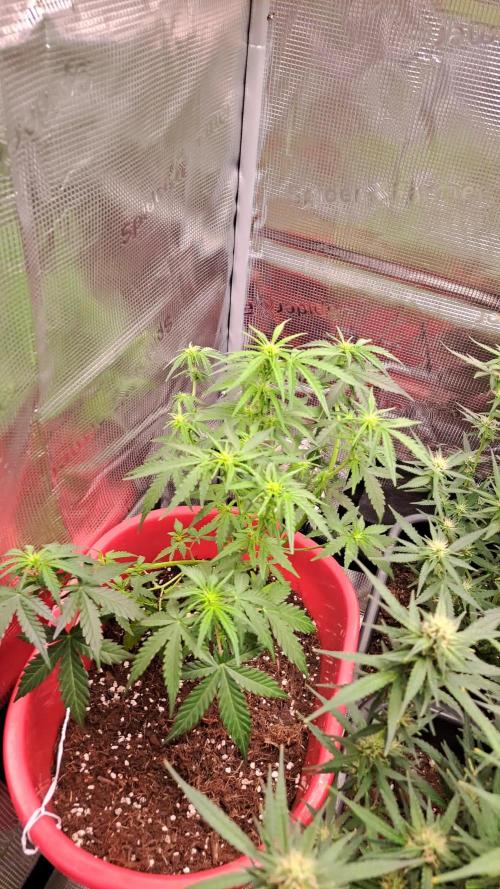
Plant is doing well, she's thin but let's see what I can get from her. She's tall. Haven't checked her height in a few days but nearly 60cm I'd say. Vegged out at 54cm.
4/6/22 Took her height today. Has put on 18cm this week. Topping out at 72cm. Not much to her though. Hoping for long nice dense colas. There is lots of tight bud sites coming right up the colas.
6/6/22 Doing great. Putting on 1.5-2cm every day. All nodes have also took a decent stretch and are all nearly level. Also she's starting to get lots of frost.


@Hoodoo
Volgen
2020-07-12 New week, same nutrients. I've been carefully monitoring nutrient intake and topping up plant 1 quite often, almost a gallon a day now. The 2nd plant is growing slower and eating a bit less but it's also a week behind developmentally. Plant 1 is happy with EC=1600 and I dilute that down to EC=1400 for plant 02. Plants are looking good!
2020-07-18 Last day of the week. Plant 01 is completely insane. It is so tall that I keep having to supercrop the top as more colas try to hit the light. I obviously let it veg for way too long but I struggled early on with nutrition so I didn't know what would happen when I finally dialed everything in!!! I am gonna take them to the end, I just hope I don't have to cut any colas off that become unmanageable. I have to be way more aggressive with my LST next time. Very very light nutrient burn on plant 2. Still running EC=1600 and EC=1400 for plant 1/2.



@Comfrey
Volgen
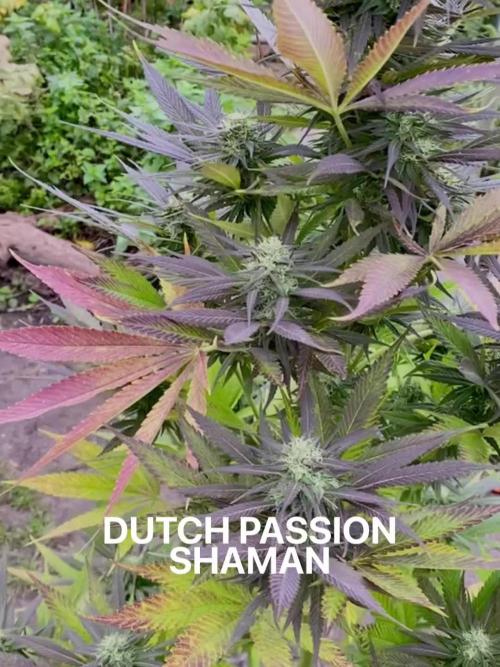
Dutch Passion Shaman
Beide Pflanzen haben die tagelangen teils heftigen Regenfälle unter ihrem Schirm gut überstanden. Sie kamen auch beide gut ohne Wasser zurecht. Mein Plan, sie durch Reduktion der Wasserverdunstung vor Schaden zu schützen, hat funktioniert. Beobachten konnte ich eine deutliche Zunahme an Trichomen. Der Duft der beiden ist sehr angenehm floral und fügt sich unauffällig in den Geruch des Gartens ein. So kann es weiter gehen. Die Wetterprognose sieht gut aus. Zwei Nächte wurde der Taupunkt unterschritten, die Pflanzen und Blüten waren bis mittags mit Tau bedeckt. Ich kontrolliere die Blätter und Blüten deshalb weiterhin täglich. In der kommenden Woche soll es aber keinen Nebel mehr geben und so freue ich mich, dass beide weiterhin gesund sind und weiter reifen können.
Bis nächste Woche! 💚



@Ultraviolet
Volgen
Yellow butterfly came to see me the other day; that was nice.
Starting to show signs of stress on the odd leaf, localized isolated blips, blemishes, who said growing up was going to be easy!
Smaller leaves have less surface area for stomata to occupy, so the stomata are packed more densely to maintain adequate gas exchange. Smaller leaves might have higher stomatal density to compensate for their smaller size, potentially maximizing carbon uptake and minimizing water loss. Environmental conditions like light intensity and water availability can influence stomatal density, and these factors can affect leaf size as well. Leaf development involves cell division and expansion, and stomatal differentiation is sensitive to these processes. In essence, the smaller leaf size can lead to a higher stomatal density due to the constraints of available space and the need to optimize gas exchange for photosynthesis and transpiration. In the long term, UV-B radiation can lead to more complex changes in stomatal morphology, including effects on both stomatal density and size, potentially impacting carbon sequestration and water use. In essence, UV-B can be a double-edged sword for stomata: It can induce stomatal closure and potentially reduce stomatal size, but it may also trigger an increase in stomatal density as a compensatory mechanism. It is generally more efficient for gas exchange to have smaller leaves with a higher stomatal density, rather than large leaves with lower stomatal density. This is because smaller stomata can facilitate faster gas exchange due to shorter diffusion pathways, even though they may have the same total pore area as fewer, larger stomata. Leaf size tends to decrease in colder climates to reduce heat loss, while larger leaves are more common in warmer, humid environments. Plants in arid regions often develop smaller leaves with a thicker cuticle and/or hairs to minimize water loss through transpiration. Conversely, plants in wet environments may have larger leaves and drip tips to facilitate water runoff. Leaf size and shape can vary based on light availability. For example, leaves in shaded areas may be larger and thinner to maximize light absorption. Leaf mass per area (LMA) can be higher in stressful environments with limited nutrients, indicating a greater investment in structural components for protection and critical resource conservation. Wind speed, humidity, and soil conditions can also influence leaf morphology, leading to variations in leaf shape, size, and surface characteristics. Small leaves: Reduce water loss in arid or cold climates.
Environmental conditions significantly affect gene expression in plants. Plants are sessile organisms, meaning they cannot move to escape unfavorable conditions, so they rely on gene expression to adapt to their surroundings. Environmental factors like light, temperature, water, and nutrient availability can trigger changes in gene expression, allowing plants to respond to and survive in diverse environments.
Depending on the environment a young seedling encounters, the developmental program following seed germination could be skotomorphogenesis in the dark or photomorphogenesis in the light. Light signals are interpreted by a repertoire of photoreceptors followed by sophisticated gene expression networks, eventually resulting in developmental changes. The expression and functions of photoreceptors and key signaling molecules are highly coordinated and regulated at multiple levels of the central dogma in molecular biology. Light activates gene expression through the actions of positive transcriptional regulators and the relaxation of chromatin by histone acetylation. Small regulatory RNAs help attenuate the expression of light-responsive genes. Alternative splicing, protein phosphorylation/dephosphorylation, the formation of diverse transcriptional complexes, and selective protein degradation all contribute to proteome diversity and change the functions of individual proteins.
Photomorphogenesis, the light-driven developmental changes in plants, significantly impacts gene expression. It involves a cascade of events where light signals, perceived by photoreceptors, trigger changes in gene expression patterns, ultimately leading to the development of a plant in response to its light environment.
Genes are expressed, not dictated! While having the potential to encode proteins, genes are not automatically and constantly active. Instead, their expression (the process of turning them into proteins) is carefully regulated by the cell, responding to internal and external signals. This means that genes can be "turned on" or "turned off," and the level of expression can be adjusted, depending on the cell's needs and the surrounding environment. In plants, genes are not simply "on" or "off" but rather their expression is carefully regulated based on various factors, including the cell type, developmental stage, and environmental conditions. This means that while all cells in a plant contain the same genetic information (the same genes), different cells will express different subsets of those genes at different times. This regulation is crucial for the proper functioning and development of the plant.
When a green plant is exposed to red light, much of the red light is absorbed, but some is also reflected back. The reflected red light, along with any blue light reflected from other parts of the plant, can be perceived by our eyes as purple.
Carotenoids absorb light in blue-green region of the visible spectrum, complementing chlorophyll's absorption in the red region. They safeguard the photosynthetic machinery from excessive light by activating singlet oxygen, an oxidant formed during photosynthesis. Carotenoids also quench triplet chlorophyll, which can negatively affect photosynthesis, and scavenge reactive oxygen species (ROS) that can damage cellular proteins. Additionally, carotenoid derivatives signal plant development and responses to environmental cues. They serve as precursors for the biosynthesis of phytohormones such as abscisic acid () and strigolactones (SLs). These pigments are responsible for the orange, red, and yellow hues of fruits and vegetables, while acting as free scavengers to protect plants during photosynthesis.
Singlet oxygen (¹O₂) is an electronically excited state of molecular oxygen (O₂). Singlet oxygen is produced as a byproduct during photosynthesis, primarily within the photosystem II (PSII) reaction center and light-harvesting antenna complex. This occurs when excess energy from excited chlorophyll molecules is transferred to molecular oxygen. While singlet oxygen can cause oxidative damage, plants have mechanisms to manage its production and mitigate its harmful effects.
Singlet oxygen (¹O₂) is considered a reactive oxygen species (ROS). It's a form of oxygen with higher energy and reactivity compared to the more common triplet oxygen found in its ground state. Singlet oxygen is generated both in biological systems, such as during photosynthesis in plants, and in cellular processes, and through chemical and photochemical reactions. While singlet oxygen is a ROS, it's important to note that it differs from other ROS like superoxide (O₂⁻), hydrogen peroxide (H₂O₂), and hydroxyl radicals (OH) in its formation, reactivity, and specific biological roles. Non-photochemical quenching (NPQ) protects plants from damage caused by reactive oxygen species (ROS) by dissipating excess light energy as heat. This process reduces the overexcitation of photosynthetic pigments, which can lead to the production of ROS, thus mitigating the potential for photodamage. Zeaxanthin, a carotenoid pigment, plays a crucial role in photoprotection in plants by both enhancing non-photochemical quenching (NPQ) and scavenging reactive oxygen species (ROS). In high-light conditions, zeaxanthin is synthesized from violaxanthin through the xanthophyll cycle, and this zeaxanthin then facilitates heat dissipation of excess light energy (NPQ) and quenches harmful ROS.
The Issue of Singlet Oxygen!!
ROS Formation: Blue light, with its higher energy photons, can promote the formation of reactive oxygen species (ROS), including singlet oxygen, within the plant.
Potential Damage: High levels of ROS can damage cellular components, including proteins, lipids, and DNA, potentially impacting plant health and productivity.
Balancing Act: A balanced spectrum of light, including both blue and red light, is crucial for mitigating the harmful effects of excessive blue light and promoting optimal plant growth and stress tolerance.
The Importance of Red Light:
Red light (especially far-red) can help to mitigate the negative effects of excessive blue light by:
Balancing the Photoreceptor Response: Red light can influence the activity of photoreceptors like phytochrome, which are involved in regulating plant responses to different light wavelengths.
Enhancing Antioxidant Production: Red and blue light can stimulate the production of antioxidants, which help to neutralize ROS and protect the plant from oxidative damage.
Optimizing Photosynthesis: Red light is efficiently used in photosynthesis, and its combination with blue light can lead to increased photosynthetic efficiency and biomass production.
In controlled environments like greenhouses and vertical farms, optimizing the ratio of blue and red light is a key strategy for promoting healthy plant growth and yield.
Understanding the interplay between blue light signaling, ROS production, and antioxidant defense mechanisms can inform breeding programs and biotechnological interventions aimed at improving plant stress resistance. In summary, while blue light is essential for plant development and photosynthesis, it's crucial to balance it with other light wavelengths, particularly red light, to prevent excessive ROS formation and promote overall plant health. Oxidative damage in plants occurs when there's an imbalance between the production of reactive oxygen species (ROS) and the plant's ability to neutralize them, leading to cellular damage. This imbalance, known as oxidative stress, can result from various environmental stressors, affecting plant growth, development, and overall productivity.
Causes of Oxidative Damage: Abiotic stresses: These include extreme temperatures (heat and cold), drought, salinity, heavy metal toxicity, and excessive light. Biotic stresses: Pathogen attacks and insect infestations can also trigger oxidative stress. Metabolic processes: Normal cellular activities, particularly in chloroplasts, mitochondria, and peroxisomes, can generate ROS as byproducts. Certain chlorophyll biosynthesis intermediates can produce singlet oxygen (1O2), a potent ROS, leading to oxidative damage. ROS can damage lipids (lipid peroxidation), proteins, carbohydrates, and nucleic acids (DNA). Oxidative stress can compromise the integrity of cell membranes, affecting their function and permeability. Oxidative damage can interfere with essential cellular functions, including photosynthesis, respiration, and signal transduction. In severe cases, oxidative stress can trigger programmed cell death (apoptosis). Oxidative damage can lead to stunted growth, reduced biomass, and lower crop yields.
Plants have evolved intricate antioxidant defense systems to counteract oxidative stress. These include: Enzymes like superoxide dismutase (SOD), catalase (CAT), and various peroxidases scavenge ROS and neutralize their damaging effects. Antioxidant molecules like glutathione, ascorbic acid (vitamin C), C60 fullerene, and carotenoids directly neutralize ROS. Developing plant varieties with gene expression focused on enhanced antioxidant capacity and stress tolerance is crucial. Optimizing irrigation, fertilization, and other management practices can help minimize stress and oxidative damage. Applying antioxidant compounds or elicitors can help plants cope with oxidative stress. Introducing genes for enhanced antioxidant enzymes or stress-related proteins over generations.
Phytohormones, also known as plant hormones, are a group of naturally occurring organic compounds that regulate plant growth, development, and various physiological processes. The five major classes of phytohormones are: auxins, gibberellins, cytokinins, ethylene, and abscisic acid. In addition to these, other phytohormones like brassinosteroids, jasmonates, and salicylates also play significant roles.
Here's a breakdown of the key phytohormones:
Auxins: Primarily involved in cell elongation, root initiation, and apical dominance.
Gibberellins: Promote stem elongation, seed germination, and flowering.
Cytokinins: Stimulate cell division and differentiation, and delay leaf senescence.
Ethylene: Regulates fruit ripening, leaf abscission, and senescence.
Abscisic acid (ABA): Plays a role in seed dormancy, stomatal closure, and stress responses.
Brassinosteroids: Involved in cell elongation, division, and stress responses.
Jasmonates: Regulate plant defense against pathogens and herbivores, as well as other processes.
Salicylic acid: Plays a role in plant defense against pathogens.
1. Red and Far-Red Light (Phytochromes):
Red light:
Primarily activates the phytochrome system, converting it to its active form (Pfr), which promotes processes like stem elongation and flowering.
Far-red light:
Inhibits the phytochrome system by converting the active Pfr form back to the inactive Pr form. This can trigger shade avoidance responses and inhibit germination.
Phytohormones:
Red and far-red light regulate phytohormones like auxin and gibberellins, which are involved in stem elongation and other growth processes.
2. Blue Light (Cryptochromes and Phototropins):
Blue light:
Activates cryptochromes and phototropins, which are involved in various processes like stomatal opening, seedling de-etiolation, and phototropism (growth towards light).
Phytohormones:
Blue light affects auxin levels, influencing stem growth, and also impacts other phytohormones involved in these processes.
Example:
Blue light can promote vegetative growth and can interact with red light to promote flowering.
3. UV-B Light (UV-B Receptors):
UV-B light:
Perceived by UVR8 receptors, it can affect plant growth and development and has roles in stress responses, like UV protection.
Phytohormones:
UV-B light can influence phytohormones involved in stress responses, potentially affecting growth and development.
4. Other Colors:
Green light:
Plants are generally less sensitive to green light, as chlorophyll reflects it.
Other wavelengths:
While less studied, other wavelengths can also influence plant growth and development through interactions with different photoreceptors and phytohormones.
Key Points:
Cross-Signaling:
Plants often experience a mix of light wavelengths, leading to complex interactions between different photoreceptors and phytohormones.
Species Variability:
The precise effects of light color on phytohormones can vary between different plant species.
Hormonal Interactions:
Phytohormones don't act in isolation; their interactions and interplay with other phytohormones and environmental signals are critical for plant responses.
The spectral ratio of light (the composition of different colors of light) significantly influences a plant's hormonal balance. Different wavelengths of light are perceived by specific photoreceptors in plants, which in turn regulate the production and activity of various plant hormones (phytohormones). These hormones then control a wide range of developmental processes.


@KingSalomonsWeed
Volgen
Hallo, Banana Dessert,
Weltexklusiv zuallererst hier auf Growdiaries!
(lul, ziemlich cool das zu schreiben... Vor allem wenn es stimmt. Deswegen mach ichs auch)
02.08 Tag46/ Blüte 11
Noch immer ein Augen schmauß. So blüte nicht wirklich(noch nicht).
Ich versuche es euch mit nem Video zu zeigen.
Revidiere. Die Blüte geht los.
03.08. Stretch.
Recht wenig Dünger, ist aber mit Absicht.
Soll so gegrowed werden. Und alle Pflanzen reagieren äußerst positiv darauf. Auch andere.
04.08. Stretch. Danke, es reicht...
05.08. Tag 49. Blüte 14.
Prächtig. Beide mit Verlaub gesagt.
Riecht nach trockenem Heu. Seltsam.



shorts_status_processing


@levensfiets
Volgen
Starting to feel like autopilot. Running into some minor problems this week in terms of feeding.
Plant #3 had a runoff PPM of around 4000. Immediately decided to fllush her, but because of the medium's waterholding - the earth feels really heavy, even multiple days afterwards. She will be enjoying a two week flush and will then be chopped.


@pifflestikkz
Volgen
Day 106
14/10/24 Monday
Her colours are really coming through now 🤩
Nearing her end now, possibly another week after this ✌️💚
Picture and video update 📸💚
Day 108
16/10/24 Wednesday
Light watering, she isn't drinking anything, trichomes only just starting to turn amber. I'll leave her now till I chop
Day 109
17/10/24 Thursday
She is starting to dry from 1" now.
Putting her in 24hrs dark 🌑 now.
Will harvest Tomorrow


@killerjoint
Volgen
10-24-2024
ALL THE STRAIN RECOMMEND FLOWERING TIME IS 7-8 WEEKS
TRY TO FINISH WEEK 8
STILL HAS 19 MORE DAYS...
LAST FEED WITH NUTS .BURNED SOME OF TOP FAN LEAVES ......
BUT CHECK OUT QUEEN,DR SLEEP , WULFF ,POWER... CRAZY FROST TOE TO HEAD
SMELLS .............NEED TO RUN FANS WITH HIGHER SPEED FOR SMELL...
NO MORE NUTS....JUST WATER .....STAY IN THE COURSE...
STAY GREEN ....
10-27-2024
-HIT THEM WITH HUMBOLDT COUNTY NUTS
G10 -5ML PER GAL
SNOW STORM -5ML PER GAL
PURPLE MAXX-7ML PER GAL
EVERY TWO DAY NEED TO WATER....


shorts_status_processing


@JohnnyBlaz3
Volgen
wowzers!! I think this might be the fattest auto i've ever grown lol well see when the weight comes of course but she has some thiiiiiick colas!!!! Seeing lots of trichs with mostly clear still so I have a feeling another 3-5 days until chop chop!!! she smells amazing!!! have a feeling shes gonna be a really nice smoke 😵

@Natrona
Volgen
Strawberry Trop Cherry - STRNG Seeds
W18 F9 3/8-14 Harvest week 3/9
The Strawberry Trop Cherry’s hung in the closet hanging to dry. With summer temperatures outside harvest week, the humidity in the garage was over 75% and the temps in the garage were in the mid-70s. I did not want mold after all this work. In the closet with the air conditioner running and the door closed, I can achieve 54-60%rh and temps of 66-74F.
The S. Trop Cherry were #1 40’,’ #2 50” tall and inches from the lights and #1 was overshadowed by the Cadillacs. I flushed 3x with flawless finish.
I used all 577 wet trim of all 6 plants in the strawberry collection in bubble hash. I was in awe as the bagged leaves swirled in the washing machine, the water was Kool-Aid red and later was a deep wine red. The strawberries show their true colors.
These were harvested on 3/9 and dried for 2 weeks dry weights taken on 3/27.
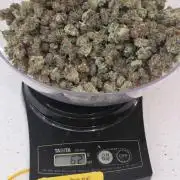
Strawberry Trop Cherry 1 149g wet 10g dry
Strawberry Trop Cherry 2 522g wet 62g dry
This totals 72 grams or 2.57 ounces
The yield is like my previous auto harvests. For a photo period strain I think the yield would have been larger per plant given their size.
The taller Cadillacs overshadowed these as they were pushed to one side. The smaller harvest is confirming my preference for growing autoflowers since the harvest is about the same size but is finished in 8-10 weeks seed to harvest rather than 18-20 or more. However, for my first time growing photos in the tent, I feel this was successful.
Stay green, growers love 💚🌿
💫Natrona💫


@Hydrokomahfarms
Volgen
Very easy first grow very happy with results best weed I ever smoked and I can only get better from here so I'm excited to keep seeing more and more progress


@MadeInGermany
Volgen
Hey everyone 😀.
These weeks they have continued to develop very well 👍.
They have made a huge leap forward since they were repotted 😃.
They will be topped again this week, and will then move to the flower tent next week 😍.
I am very curious to see how it will develop until next week.
I wish you a lot of fun with the new update, stay healthy 🙏🏻 and let it grow 🌱🍀
You can buy this Strain at :
https://sweetseeds.es/de/cream-caramel/
Type:
Cream Caramel
☝️🏼
Genetics:
Blue Black
x
Maple Leaf Indica
x
White Rhino
👍
Vega lamp:
2 x Todogrow Led
Quantum Board 100 W
💡
Bloom Lamp :
2 x Todogrow Led
Cxb 3590 COB 3500 K 205W
💡💡☝️🏼
Soil :
Canna Coco Professional +
☝️🏼
Fertilizer:
Green House Powder Feeding
☝️🏼🌱
Water:
Osmosis water mixed with normal water (24 hours stale that the chlorine evaporates) to 0.2 EC. Add Cal / Mag to 0.4 Ec Ph with Organic Ph - to 5.5 - 5.8 .

shorts_status_processing


@dirty_jay
Volgen
Started flushing and increased water to 6l per plant. I think I may be harvesting next week some time. Plants are still looking great. I have the top colas tied outward to make sort of a bowl so the distance is between 16-24 inches from all the colas to the light. I should have done this from the start and it probably would have made larger buds.
