Likes
Comments
Share

@DogDoctorOfficial
Follow
White Widow – Week 6 | Second Big Flower, Buds Forming 🌸🌿
Light Schedule: 12/12 from seed
Room Temp: ~28°C (stabilized with AC)
Humidity: ~66%
VPD: ~1.33 kPa
CO₂: 450–800 ppm
Watering: Hand watering
Soil Content EC: ~2.96
⸻
From Hairs to Buds
This week marks a real turning point. Our White Widow is moving past simple hairs, now we can clearly see the beginnings of tiny buds forming. It’s the second big flower stage in her journey, and the structure is starting to express the true White Widow personality: compact, resinous, and promising.
I took her out of the tent for another photoshoot, capturing her in detail with the Sony A6000. Close-ups show her leaves, structure, and those first clustered flowers. I also filmed short videos, including one where I share how I talk with my plants daily. For me, it’s not optional — it’s part of a symbiotic relationship. Plants respond to energy and care, and I believe everyone should try it. 🌱💭
⸻
Light Strategy – Emerson Effect Simulation
A special note this week: I recorded a screen video from the TrolMaster TM+ app to show how the lights are scheduled.
🌅 Wake-up: The reds switch on 15 minutes before the whites and blues.
🌇 Wind-down: At night, the reds also stay on 15 minutes longer than the other spectrums.
This is designed to simulate sunrise and sunset while taking advantage of the Emerson Effect, a synergistic boost in photosynthesis efficiency when far-red and red light are combined with other wavelengths.
The result? Plants wake up and settle down more naturally, with smoother light transitions, reduced stress, and potentially increased energy capture. It’s a small tweak, but it reflects how every detail of this environment is tuned with intention.
⸻
Environmental Changes
This week, a big addition: the AC unit. Before, the room was running hot at 31–32°C and more, but now it’s stable at 28°C (occasionally 29°C). Combined with ~66% RH, this gives a steady VPD of 1.33, right in a comfortable zone for flower.
CO₂ naturally fluctuates between 450–800 ppm, and the plants are thriving in these conditions. Even during the hotter weeks, they adapted beautifully, proof of the resilience of both the genetics and the environment we’ve been building.
⸻
Feeding & New Recipe
Until now, she’s been on the Aptus base recipe:
• Regulator – 0.15 ml/L
• CalMag Boost – 0.25 ml/L
This week, I introduced a Plagron trio to push flower development:
• Power Buds – 1 ml/L
• Sugar Royal – 1 ml/L
• Green Sensation – 1 ml/L
Why now? Because she’s transitioned from stretch to actual bud formation. Power Buds helps with compact flowering sites, Sugar Royal enhances metabolism and energy (especially under high light), and Green Sensation supports resin and bud swelling later on. Together with Aptus, it’s a blend of precision and experimentation, trusting experience, intuition, and past results.
⸻
12/12 From Seed – A Quick Recap
This run is about exploration:
• Started from seeds, with early germination struggles (mistakes included, lessons learned).
• This White Widow is the sole survivor of those early days.
• Straight into 12/12 from seed, she grew compact and resilient, surprising us by taking her time to flower despite the cycle.
• Now, at Week 6, we see her first true buds.
She’s not the tallest, but she’s beautiful, living proof of how genetics + environment + patience = results.
⸻
Looking Ahead
What to expect:
• Buds thickening and clustering.
• Stronger aroma starting to emerge.
• More demand on nutrition as flowering sites expand.
What not to expect:
• A tall, stretchy plant — she’s compact and will likely stay that way.
• Early harvest — White Widow still takes her time, even under 12/12.
⸻
Shoutouts & Gratitude 🙏
🌱 Zamnesia – for the legendary White Widow genetics
💧 Aptus Holland – for the precise, reliable base nutrients
🌸 Plagron – for the flower enhancers that now join the recipe
💡 ThinkGrow – for the bar LEDs keeping perfect spread
🚀 Future of Grow – for the Black Series 600W full-spectrum power
🧠 TrolMaster – for automating and stabilizing the grow environment (and letting us dial in the Emerson effect with custom light scheduling!)
And of course, thank you to everyone following this diary, reading, supporting, and sharing this journey. This project is about more than just one plant, it’s about experimenting, learning, and connecting with the grow along the way.
⸻
📸 Check the gallery for:
• Close-ups of bud formation
• Studio shots with the Sony A6000
• Behind-the-scenes of the grow room
• Video captures including the TrolMaster light scheduling demo
• Daily plant connection moments 🌱
📲 Don’t forget to Subscribe and follow me on Instagram and YouTube @DogDoctorOfficial for exclusive content, real-time updates, and behind-the-scenes magic. We’ve got so much more coming, including transplanting and all the amazing techniques that go along with it. You won’t want to miss it.
• GrowDiaries Journal: https://growdiaries.com/grower/dogdoctorofficial
• Instagram: https://www.instagram.com/dogdoctorofficial/
• YouTube: https://www.youtube.com/@dogdoctorofficial
⸻
Explore the Gear that Powers My Grow
If you’re curious about the tech I’m using, check out these links:
• Genetics, gear, nutrients, and more – Zamnesia: https://www.zamnesia.com/
• Environmental control & automation – TrolMaster: https://www.trolmaster.eu/
• Advanced LED lighting – Future of Grow: https://www.futureofgrow.com/
• Root and growth nutrition – Aptus Holland: https://aptus-holland.com/
• Nutrient systems & boosters – Plagron: https://plagron.com/en/
• Soil & substrate excellence – PRO-MIX BX: https://www.pthorticulture.com/en-us/products/pro-mix-bx-mycorrhizae
• Curing and storage – Grove Bags: https://grovebags.com/
⸻
We’ve got much more coming as we move through the grow cycles. Trust me, you won’t want to miss the next steps, let’s push the boundaries of indoor horticulture together!
As always, this is shared for educational purposes, aiming to spread understanding and appreciation for this plant. Let’s celebrate it responsibly and continue to learn and grow together.
Friendly reminder all you see here is pure research and for educational purposes only,
With true love comes happiness. Always believe in yourself, and always do things expecting nothing and with an open heart. Be a giver, and the universe will give back in ways you could never imagine.
💚 Growers love to all

Likes
11
Share


@Heregrowsnothing
Follow
I've kept this beauty longer than the rest and she has piled in with some dense nuggs that I can't wait to taste!! She's now being flushed. The smells coming from the tent are amazing. To sum it up in three words it'd be "what a strain!" Thanks for stopping by ✌️🏻😎

Processing
Likes
12
Share


@rhodes68
Follow
9/22
Week 10 update... finally
Looks good but going to add more Phos due to some red stems showing upping to 3ml/g
9/23
Reducing Bloom nuets @10% a day for a couple, down to the 80% mark now
Add Soul Peak PK to mix as well as Koolbloom need to use up the Peak and we want to see if it brings anything special.
Be in flush within 7-10 days on all but the sativa FF2
Vids finally
9/25
Adjusted nuets slightly
9/26
Like how it looks leaving nuets as is till flush down the road
9/27
And the tricones have over ruled me they are getting ready, 80-90% white 10-20% clear so taking the nuets to our ripening doses.
Up PK down Bloom nuets

Likes
152
Share


@SlowpokeFuegobud
Follow
🍪 🍒 🍰🍩 🎀🍪 🍒 🍰🍩 🎀🍪 🍒 🍰🍩 🎀🍪 🍒 🍰🍩 🎀🍪 🍒 🍰🍩 🎀
Day 95 chop time, harvest went fast, the stems were loaded with buds. Hehehehe.. Cannot wait to smoke this one! 😎😍
As you can see, we made a real break-up cake. 😋 You will find the recipe in the smoke report, down there! ⬇️ 😏 Beware! It's a really strong cake, I do not take responsibility whatsoever! ✌️😁
Thanks for showing up and supporting me and the girls, bless you, growmies!! 😘 ❤️
Shouts go out to my sponsors @GreenBuzzNutrients, thanks so much for your support!! 💚 💚 💚
If anyone would like to try their amazing organic products, you can find a generous discount code of 25% in my weekly comments! 😜 🙏
If you want a recommendation which product to get first.. BIGFRUITS!! 😍 I love the tasty terps with this one!!
https://greenbuzznutrients.com/
Thanks also of course @Kannabia, for the beautiful genetics!! 🧡🧡🧡
Pouring all my love into this grow, thank you for joining in, growmies!! 💚 💚 💚 😘 ❤️ ❤️ ❤️
Wishing you all the best for your beautiful gardens!🌱 🙏 Grower love!! 💚
_________________________________________________________
Strain Info:
https://www.kannabia.com/en/feminized-cannabis-seeds/break-up-cake
We need to talk
You’ve got to celebrate everything in this life, and that includes love and heartbreak. Since you’re all familiar with Wedding Cake feminised marijuana seeds, we’ve put a Break-up Cake in the oven at the Kannabia Seed Company – because things don’t always go well, and we sometimes need a friendly seed to lean on.
Break-Up Cake has a base of Girl Scout Cookies, one of North America’s best-known strains, which is earthy with a very potent indica effect. And we top it off with a delicious Cherry Pie which, in addition to giving it an elegant dark attire, adds a silky, deeply sweet flavour of cherries and berries. Look no further – it’s the perfect cake.
This seed will be celebrated for its ease of cultivation and abundant production. It’s one of the best investments you’ll make this year. But if it’s going to be memorable for one thing, it’s for its sweet complex flavour that’s full of contrasts. If we have to break up, let’s do it sweetly and amicably, right?
How to: Break-Up Cake
Break-Up Cake is an “all-terrain” marijuana seed, which will adapt to the place you allocate to it. An ode to independence, it’s a plant with only the most basic needs that knows how to grow by itself.
It’s a pale branching plant with tremendous dark green leaves, purple tips, and an icing sugar coating of trichomes. Its immense buds are some of the stickiest ones we’ve found in our seed bank recently.
Indoors, it needs 60 days of flowering to give no less than 600 grams per square metre. Use a Screen of Green method without hesitation, or plant it using hydroponics if you want to obtain the full benefit of its potency.
Outdoors, it reaches two metres in height with a harvest of 800 grams per plant, which is reason enough to give it a go. Like a good break-up cake, this plant doesn’t need to live with a partner, and knows how to live well in a Guerrilla plot. Between 25th and 10th October is its moment.
Taste and effect of Break-up Cake
Very relaxing but not causing lethargy, it’s a good indica-dominant plant. Its effect is mellow (we’re too old for childish games). It calms the consumer but it also gives rise to creative moments. Head on up to the top floor, later to make your way, little by little, down to the kitchen later (where you might want to give in to temptation if you need to stimulate your hunger).
The flavour is full of nuances. It will remind you of a vanilla sponge or cheese cake: you’ll notice a cherry topping, something sweet that you can’t quite distinguish, and an earthy undertone on a biscuit base… You’ve got to sample it to know it.
_____________________________________________________________________
SETUP:
80x80x180 cm Zelsius
240W Full Spectrum LED IR UV dimmable
DW240H-A6-HS
Heatsink color red
LED Chips:
512pcs SAMSUNG LM301H
24pcs Osram 660nm
8pcs Osram IR 730nm
8pcs UV 385nm
Color mix: 2700K
4000K
2,8umol/J
Driver HLG-240H-C2100B
Coverage: veg 5x3ft / flower 4x2ft
Product size: 628x205x68mm
Green Buzz Nutrients
Shouts go out to my sponsors @GreenBuzzNutrients, thanks so much for your support! 💚 💚 💚
If anyone would like to try their amazing organic products, use code GD42025 for generous 25% discount (for orders of minimum 75€) ✨
https://greenbuzznutrients.com/
Biobizz Lightmix
custom exhaust fan 320/270cm³/h
Carbon Active Granulate 240cm³/h
tab water pH 8 - EC 0,25 with Calmag to 0,5
Advanced Hydroponics pH minus Grow
Bloom to pH 6.2
🍪 🍒 🍰🍩 🎀🍪 🍒 🍰🍩 🎀🍪 🍒 🍰🍩 🎀🍪 🍒 🍰🍩 🎀🍪 🍒 🍰🍩 🎀

Likes
23
Share


@SonomaSungrown
Follow
Started hardening off all plants this week.
I was bringing them in at night for 4-5 days, then finally letting them stay out all night.
Also gradually brought them more and more into the sunlight over the course of a week or so.
You can see that there is a fair amount of damage from fungus gnats... and moreso of me overdoing it with neem oil (and using dawn foaming soap, which apparently is a big no-no).


Likes
12
Share


@rickhaZe
Follow
debido a quemaduras que encontre en las plantas el dia 14/06, dia 29 desde germinacion, debi regar con cal max, ya que creo que hay falta de calcio - magnesio. aplique 1.2 ml por litro de agua.
no creo que sea exceso de ferti ya que todos riegos se han preparado con la dosis minima que indica.
se sigue regando con 0.4 L cada 48hrs
una tecnica que he hecho es ir acomodando o doblando las hojas hacia abajo dando prioridad a los bracitos de cada planta.
Dia 30: riego de agua 600 ml de agua
Dia 32: todas las plantas en floracion
Aplicamos solo tek groow ya que las manchas en las plantas se debian a falta de azúfre lo concluimos con un grupo de amigos todos growers y un agrónomo.
Por que queremos continuar con la tabla de grotek nutrients y el domingo dia 34 aplicar blossom blaster

Likes
43
Share


@TheCannaProphet
Follow
~ GG4 SHERBET FAST FLOWER by FastBuds ~
Well fam, here we go again with another epic strain from FastBuds Fast Flowering stable. After having such tremendous success growing their Gorilla Cookies Fast Flower outdoors last year, I've decided to run another of their fast flowering strains outdoors this year... GG4 Sherbet Fast Flower!
The best description of this awesome cultivar comes directly from my friends at FastBuds which is as follows:
"Bred from extremely potent and flavorful Gorilla Glue and Orange Sherbet genetics, GG4 Sherbet FF (Fast-Flowering) takes all the best traits to the next level, offering a high-yielding strain that can produce up to 600 g/m2 in a 7-week flowering time. This super resilient Indica-leaning hybrid thrives indoors and outdoors, and in all types of climates while producing mouth-watering sweet, fruity, spicy and earthy terps that translate into a delicious sugary hazelnut aroma. Expect an extremely relaxing and overall happy effect that’ll leave you with a huge smile from ear to ear. It’s the perfect strain for growers of all levels of experience seeking low-maintenance yet highly productive photoperiod varieties that deliver quality and quantity without extra effort.
GG4 Sherbet FF grows chunky buds with long dark orange hairs and spade-shaped calyxes that get encrusted with trichomes by harvest time, giving them a gorgeous silvery-white appearance. This medium-sized photoperiod can reach up to 200 cm in height and yields up to 650 g/m2 while developing that typical hybrid structure. GG4 Sherbet FF grows with a stocky, bushy appearance, developing one sturdy main cola and fat side branches that support huge yields without much effort. This super-fast variety produces distinctive light-green buds with a high bud-to-leaf ratio, making your trimming sessions a breeze. It’s a top-notch resin producer that doesn’t need much maintenance and will thrive in almost every climate, rewarding growers of all levels with extremely flavorful resin that makes for outstanding hash end extracts."
________________________________________________________________________________________________________________________________________________________________________________________________________________________________________________________________________________________________________________________
The Setup:
This is going to be an outdoor grow, but I have started the GG4 Sherbet Fast Flower indoors as our weather is still too cold to put her outside (nighttime temp's dipping regularly into the 30's℉).
The plan is simple... let her grow inside under a 19/5 light schedule until the nighttime temperatures stay above the mid 40's℉, at which point she'll be moved outside and transplanted into the soil which I have already setup and inoculated with beneficial microbes, and then let the fun begin!🤪💚
________________________________________________________________________________________________________________________________________________________________________________________________________________________________________________________________________________________________________________________
Weekly Updates:
8/10- Wow! Here we go into Week 4 of flower for the GG4 Sherbet Fast Flower by FastBuds and this lady is on a mission! The GG4 Sherbet FF has large cola's forming all over her and they are rapidly stacking up. Her flowers are continuing to develop and are beginning to get a thick layer of trichomes on them!
8/12- Today, the daily watering routine continues at sunset with around 5g of well water from the hose. I also went into the canopy and removed a bunch of dead and/or completely yellowed leaves to keep the foliage clear of debris which can cause insect and fungal issues if allowed to get out of hand.
8/14- I am continuing to water the FastBuds GG4 Sherbet Fast Flower daily with 5-8 gallons of well water from the garden hose.
Yesterday, I top dressed the FastBuds GG4 Sherbet FF with 3 cups of Gaia Green 2-8-4 Power Bloom which I watered in with well water from the hose. I then applied 1/2 gallon of a nutrient mix I made up in 2 1/2g of well water consisting of: 1/4 cup Neptune's Harvest Seaweed(kelp) plant food and 2 1/2 tsp. of Plantonics Amino Bliss.
8/16- We have rain in the forecast over the next three days. There were a couple of passing light rain showers today which didn't provide a lot of rain so I went ahead and watered the GG4 Sherbet FF with approximately 5g of well water just to make sure that she didn't get thirsty.
There's a month in flower for this beautiful fast flowering cultivar from the experts at FastBuds and all I can say is WOW! I can't say enough positive things about this strain and will, for sure, be running it again! See you next week!😎✌️
Thank you for checking out my diary, your positive comments and support make it all worthwhile! 💚Growers Love!💚😎🙏
Likes
9
Share


@TiRobotProds
Follow
Nous somme à la 6ème semaines de floraison tout se passe comme prévu les bourgeons continuent de gonflés les paramètres sont excellents 24 degrés en température 55% en hydrometrie.
- L'ajout de RQS guano a redonner un coup pouce à la plante les bourgeons ont sacrément gonfler aimer et regarder par vous même. Cet semaine sera aussi la dernière irrigation avec nutes. Ce run est l'une de mes préférée.
Léger carences en azote post-stretch cela es dû a un faible apport de celui-ci mais rien de grave cela indique les derniers semaine de vie de cette dame le rinçage sera simple et éfficace.
L'odeur quelle dégage es fortement fruité cela sent le 🍬 🍬. A plus pour d'avantge d'informations.👍🏼

Likes
16
Share


@Mrg7667
Follow
Day 15 of flower! Kinda goofed this week i gave the babies week two nutes after the last post wich was like day 10 and i noticed a little bit of nitrogen over dose. I think the Powersi is also helping nutrients absorption! So i actually did this week a little different then i planned just cut the bio bloom in half because i didnt realize the powersi npk ratio inceases p and k
Havent seen anymore aphids might do another couple sprays to be safe. Grow safe allows full spray through flower

Likes
8
Share


@HydroBudz91
Follow
Week 4 of flower Mann I think she’s looking pretty good!!! She’s really starting to swell up. I was running my ppms at 800 the last week but I upped it to 950 this week. She’s responding great and no leafs have burnt. And Mann is she popping trichomes like crazy already and she smells nice light but you smell her. I’m loving DWC more and more. She is drinking a lot so I am constantly watching water level. Week 5 lets get it!!!!

Likes
2
Share


@Aleks555
Follow
Our beauty is now 4 weeks old and continues to grow strong and healthy. She has already surpassed 18 cm in height, showing excellent progress. The light schedule remains 12/12, and we continue to monitor her response to these conditions.
The daytime temperature stays steady at 28°C, nighttime at 21°C, with humidity maintained at 65%. We are consistently feeding her with Xpert Nutrients fertilizers, ensuring she gets all the necessary elements for active growth. Additionally, we are continuing the use of CO2, which, based on our observations, has a positive impact on development.
A huge thank you to Xpert Nutrients for their high-quality fertilizers, helping our plants grow strong and healthy!
Likes
21
Share


@J4kpvp
Follow
Hey:)
I flipped them to 12/12, added some nutrients as recommended by biotabs and then just let them grow this week. They immediately started stretching a lot.
Very minor defoliation of dead leaves, I also bought a scrog net but I’m asking myself if I should even use it, the top is flat enough and spread nicely. I count at least 10 nice main tops per plant, last grow I had about 4 per plant, I‘m really happy with the results so far:)
Also the bugs are gone now, haven‘t seen any this week, my yellow sticky traps are completely covered though.
Sadly the wasabi is clearly ahead already… I hope I can harvest them together without the wasabi being too much overripe, I would have loved to veg them a bit longer…

Likes
9
Share


@Herbz_Unkraut
Follow
another resin monster from seedstockers, with a very special scent, full of flavors! grinded it smelled like peppermint, and vaped it has a great sweet creamy taste!


Likes
422
Share


@Crashoverite
Follow
Hi all 😁
Welcome to my 🍌💜👊 week update.
Hope everyone keeping well and having a great week.
Thank you so much for your all support on this bananas journey 💜💚💜💚
What a amazing week. Very little to work around those beauties. The smell is so delicious already. They smells like sweet berries. Buds are loaded with trichomes, very sticky and hard as rocks especially on Athena. Trichomes are mainly clear and some parts milky. Absolutely love power of LST and how it worked on this strain. If you won't look under net it's almost impossible to see which cola belongs to main stem.
Week 11
Dec 25 - Dec 31
Dec 25-26
Joyful observation
Dec 27
Selective defoliation and
First watering for this week. Nutes adjusted, almost 8ltr between both. Runoffs PH on both at 6.2. I am finding this PH level for this strain as perfect. Girls are looking super healthy and drinking they mixture like crazy.
Dec 28-30
All is going smoothly. I can see more and more weight each day.
Dec 31
Secomd watering foe this week. 8 ltr beetwen both.
It's the last day of this week and also end of 2023!!
See you in the new year 🍾🥂🍀
Peace and love brothers and sisters ✌️💚
Links
https://2fast4buds.com/seeds/banana-purple-punch-auto
https://plagron.com
https://www.biobizz.com/
https://fishheadfarms.com/
Likes
10
Share


Likes
28
Share


@Southofheaven
Follow
Fan leaves are not looking too great. Added abit of npk to supplent so no longer a full organic grow


Likes
3
Share

@Minuteman_Organics
Follow
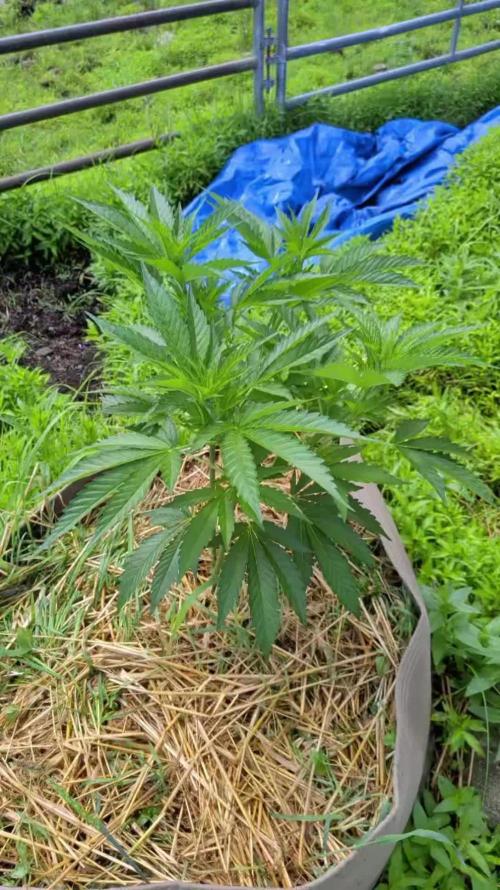
Another week gone by. I am going to need to trellis these girls next week and move them to their final resting place about 30 yards over. It's a little bit more of a sunny spot and it will allow them to get about about 2 hrs of sunlight come autumn. Last year I noticed some trees that blocked the sun as it dropped closer to the horizon, so we are going to avoid that...or Ill just chop down the couple trees blocking the sun
Plants are looking great! They're doubling in size every week about
The grandpas stash r2's are thickkkkk
They smell very similar to my hash plant bx1. Skunky, hashy, spicey
The og kush bxf2 all over the place in terms of smell. My favorite have to be the grapefruit one I found. It's so goddamn citrusy kinda crazy....others I would say are more piney
The lemon Berry's are what ever. Not my fav by who knows what will happen in the next month. Sativas always look sickly to me so I'm very biased

Likes
18
Share