Likes
Comments
Share

@Kyledn27
Follow
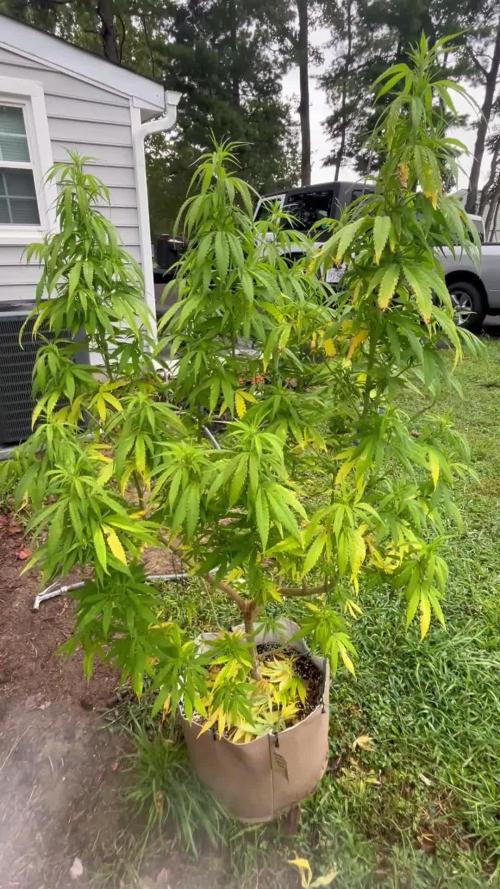
Have been slacking on keeping notes however in the past weeks I have top dressed with 1tbsp/gal of GG 284, treated her with a generous amount of growers ally crop defender 3 that got rid of 95% of the bugs on her, moved her to a spot that is not in the path of light put out by a light on a power pole, and trimmed off all of the large yellowing leaves.
After weeks of waiting she has finally shown her preflowers and will be getting one more good defoliation this weekend before flowering fully kicks in and she is focused on bud production.
All is on the up and up even though we had a slight decline in plant health and my worriness for her but it seems as though she is loving life at the moment.

Likes
Comments
Share


@Noidz
Follow
Cooltube doesnt arrive in mail. Temperature too hot and too dry. Maybe I should feed them.


Likes
5
Share


@Eljardindemargarita_grower
Follow
Buenas
7 semana y ya van con bu n ritmomde limpieza
Ellas vienen con buena resina
Increíble olor
A pesar de las calores que tenemos ahora
Seguimos en marcha
Continua el juego

Likes
18
Share


@RFarm21
Follow
9 março - 15 março
12 março - feeding
16 março - cheese #1 feeding:
Bio bloom 0.5ml ; top max 0.5ml ; bio heaven 1.5ml; sílica 0.1ml; bio grow 0.7ml
16 março - cheese #2 feeding:
Bio bloom 0.5ml ; top max 0.5ml ; bio heaven 1ml; bio grow 0.5ml

Likes
9
Share


@MG2009
Follow
01/19/2022
She was a he.
And he will be used for some pollination.
Not sure what both parents were, but growing nice, stem rubs stinky and definitely has fuzzy Melon smell.
Kinda reminds me of Tangie and model glue. Hopefully a good breeder will hit some choice branches on
Blue Matter F2 and test the offspring.
If interested Fuzzy Mellon is
Forbidden Fruit x Watermelon Zkittlez bred by Dying Breed Seeds & 3rd Gen Family.
Which is good genetics imo. But the wild card is who is th daddy?... Jerry springer show lol
According to leafly both parent are heavily on indica side so his stretch and node length points to a sativa daddy?
I never seen an indica with such large internodal spacing.
I know males will be stretching out more but still large compared to other males I've grown out.
So hope you follow along to see how his offspring will develop,
I will pollinate one branch of my favorite Blue Matter F2, and save some pollen for my Biscotti Skunk, Grape Skunk,and lemon og.
Likes
7
Share


@herbcrusted
Follow
As usual Moscow Blueberry is growing fast and hardy, and the Strawberry Cheesecake is happy in her early flowering stage. She’s starting to smell a good bit, and her terp profile so far smells like sweetened coffee! French Macaron’s growth is speeding up now that it’s gotten the chance to grow into its pot. I’m concerned with Northern Lights, as the new growth is twisted and weird. Hopefully I’ll figure out the cause by the end of the week or it may solve itself once the twisted leaves grow out more.


Likes
47
Share


@blazin_skywalker
Follow
Day 44 - Today it's time to say sayonara to the undergrowth as I clear away a lot of the fan leaves and make room to further shape the canopy.
I took each of the 8 branches that I previously cuffed off to fan leaves, and tied them down into their final resting place - rounding out the final shape of the plant.
Day 47 - Defoliation ✂️ - over the course of 3 days, this lady bushed out like woah - causing me to dive back in the the scissors.
Ermahgerd! 😱 She showed me a ♥️!

Likes
29
Share


@yvet_te
Follow
The ladies are really putting on some height this week! Starting to smell good too. At the end of my video you can see the little plant that could - was originally going to trash it but it started coming back so I gave it a little spot in the corner to fill in. Getting her repotted this week.
My AC Infinity self-watering fabric pot bases came in as well, really excited to get that going tomorrow.
Likes
12
Share

@Northern_Ent
Follow
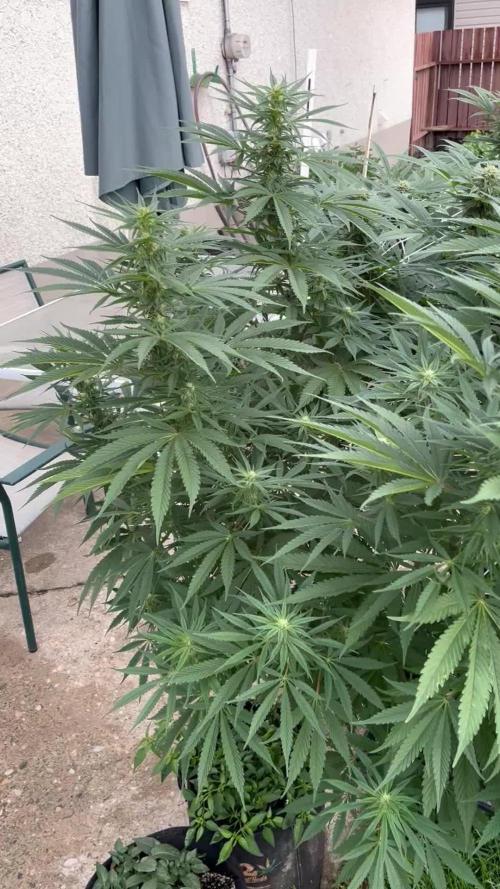
Aug 9: Mimosa Shot is doing fine. She was slower starting than her wagon partner Sunday Punch EV, but she is liking the warmer weather.
Got UV led lights from AC Infinity going today. These are designed for indoor so I can only put them out on nice weather days. Did this last year and seems to work. The UV lights make Edmonton in the fall feel more like California in the summer, or at least that’s the idea. UV is critical for trichome production so it’s a good way to boost THC percentage.
Aug 14: rainy the last few days.
Mimosa Shot likes to be a bit warmer. It was slower getting going in the spring, and now it seems to be suffering from a P deficiency. Reddish petioles, and a blueish tint to the leaves. She has received Power Bloom and barley just like the other plants, but still seemed to be lacking something. Ed Rosenthal’s Grower’s Handbook says P deficiency can be due to cold weather. Decided to try and dissolve 0.5 tsp of Power Bloom in 1 L of warm water to use as a high P foliar spray. As always, used a bit of Dr. Bronner’s Peppermint Soap as a surfactant, and apple cider vinegar to adjust pH. Power Bloom mostly dissolved but with some undissolved. Unfortunately I don’t have a working TDS or EC meter. Not sure how strong it was so just sprayed a bit on the fan leaves.

Likes
3
Share


@Diy_autoflowers
Follow
It will supply a good oz of buds for about a week or so. It wasn't a huge investment. I just sorta wanted to use the beans along side my flowering plants.

Likes
3
Share

@eldruida_lamota
Follow
Que pasa familia, vamos con la séptima semana de floración de estas Barcelona Puff feminizadas de Seedstockers.
Vamos al lío ,se trasplantaron en macetas de 7 litros definitivamente.
El ph se controla en 6.0 , la temperatura la tenemos entre 25/21 grados y la humedad ronda el 50%.
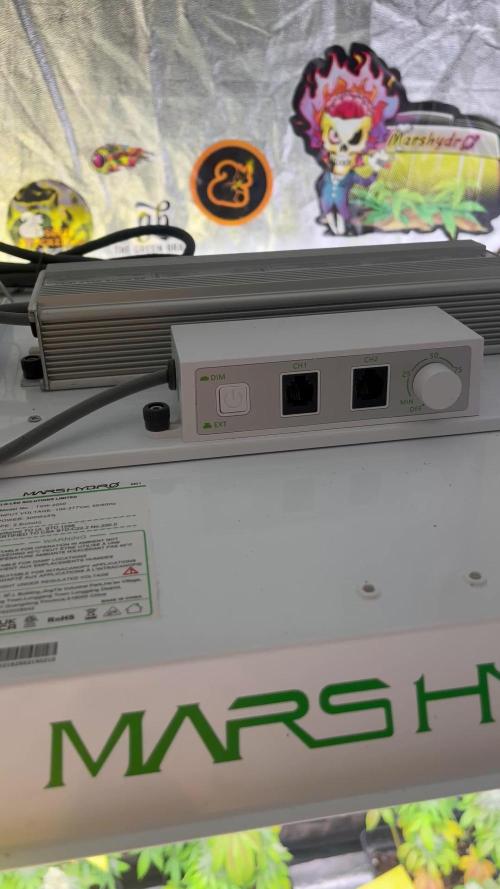
El ciclo de floración puse 12h de luz, el foco está al 100% de potencia.
De momento van creciendo a buen ritmo y tienen un buen color, la flor ya empezó a engordar y a tricomar, por el momento todo bien.
Agradecer a Agrobeta por el envío del kit gold series para la temporada 🙏.
- os dejo por aquí un CÓDIGO: Eldruida
Descuento para la tienda de MARS HYDRO.
https://www.mars-hydro.com
Hasta aquí todo, Buenos humos 💨💨💨
Likes
11
Share

@masterofsmeagol
Follow
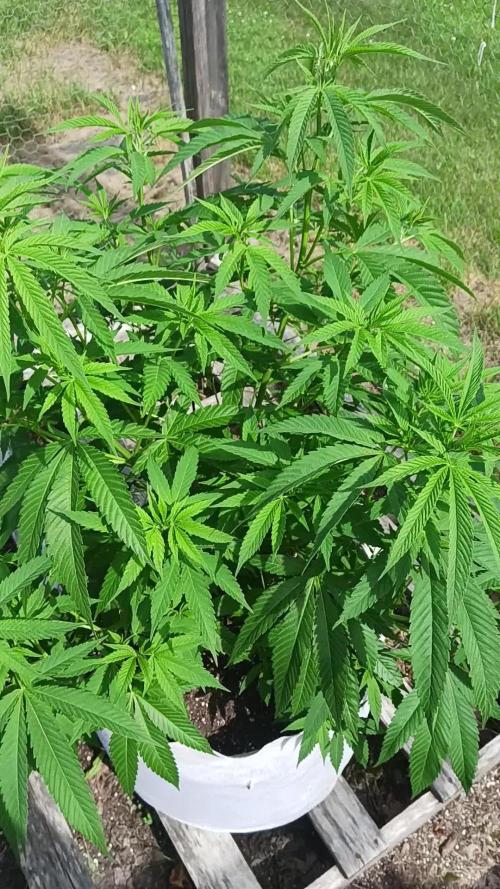
6/30 I messed up and put 8 days last week so I'll have tp do a six day week to get back on schedule. Pounded rain last night I guess. Very intense but very brief. As you can see in the video the plants are found great. A few have revegged so I'll need to defoliate the middle. I could make a TON of clones but it's pretty late for that. I might clone a couple outstanding plants to keep the genetics. Still seeing some pillar damage. Might do bt tonight. I'll keep this updated.
7/1 Super hot yesterday. Reached 90°. We are getting SOME rain today and thunder showers day after tomorrow. Bags still had some heft and everything looked good. I went back aroundcand found about half were at the point of needing water. He'll, they probably all did. My watering can is 2 gallons not 1.5 as advertised. So that means I used 5 gallons on the garden (not watering the 50) focusing the more water on the lightest bags. That tenth planet I'm seeing more septoria like leaves. This makes enough for me to be fairly positive ill need to treat it. I have plant doctor but I think copper works better. I also see more pillar damage so I've gotta apply something. I also need to lst more and I keep to clean put the interior of the plants so they don't get pm.
EDIT: IT WAS 80° and no rain at 6:30. Humidity close to 100% bit plants look AMAZING! I'm hoping this may be my best year yet! I won't grow a bigger plant than tjat blue cheese in the 50 but so far everything is looking good. I may add some nutes to the pink kush in the 50 due to tje slightly less green color. I assume it's just because the other soil is all New amd this was a mix. I defoliated lightly to prevent pm but I have more to do. I just wanted to get a video of the girls looking good.
7/2 82° at 9am. Glad I decided to water even thoughvi watered yesterday. I need to up my volume. Thirty degree temp swings don't help much either. I said I used 4 gals but I used 5. I had one phed already. I'm hoping this will be one of my best years. IT looks like it! I won't have that MONSTER blue cheese in the 50. It was the smallest plant anyway and shows the difference between using NEW soil and mixing old soil WITH new soil. It's a much lighter green. Still need to apply bt and do a little more defoliation.
EDIT: IT'S 90° WITH LIKE 100% RH. PLANTS LOOK A LITTLE HEAT STRESSED BUT OTHERWISE PRETTY DAMN GOOD. EVEN MY FATHER MENTIONED (KNOCK ON WOOD) "THAT I DONT HAVE ANY SHOT ON THEM THIS YEAR." LOL. I UPLOADED A VIDEO TO SHARE. HOPE YOU GUYS ARE HAVING AS MUCH FUN AS I AM!
7/3 83° at 9:40a.m. I need to increase my watering volume so I don't need to water every day. I used 5 gallons to water everything but the 50. I think I'm underwatering. However it was supposed to be severe thunder storms with torrential rain, high winds and hail. I'll gratefully take this hot sunny day instead. However in the future I think I'm not goingvto add in the predicted rainfall in my schedule. Unless it's a torrential down pour obviously. Everything g is still looking good and I've still got some work to do.


Likes
39
Share


@eldruidamx
Follow
Day 106. Watering with fertilizers.
Day 107. Watering with clean water.
Day 108. Watering with fertilizers.
Day 109. Watering with clean water.
Day 110. Watering with fertilizers.
Day 111. Watering with clean water.
Day 112. Watering with fertilizers.

Likes
92
Share


@Krisis
Follow
04/09/24. Time to start week 7.
Not much to say other than about the girls themselves. I haven’t changed anything other than I think I’ve given them the last feed yesterday. I’m thinking they’ll be done within 2 weeks and I’ve read that it’s best to give water the last 2 weeks. Hope this is the right thing to do.
The buds are thickening up and the pistols are getting pretty dark and starting to recede.. well.. on two of the girls that seem the most similar to each other. The middle plants much frostier, smellier, and skinnier buds- with lighter pistols. All are becoming colorful.
It’s smelling very spicy with like rotting fruit or something currently. The smells very strong through the house.
I don’t think these will be the biggest buds, but they are definitely dense af and lovely and smelly.. oh and sooo sticky wew
Guess that’s it until the start of week 8 flower. We’re gettin close!
My video for the week won’t load up for some reason. Idk what the problem is.
Update: don’t be an idiot and run out of space on your phone. I made space and it uploaded LOL. Derrrrrrr

Processing
Likes
32
Share


@Ganjagrandaddy
Follow
Day 21: I think these girls are amazing. They have been growers from the off and never fail to impress at every turn. There stretch is finished I think and they are a good height to build some buds on with a little head space if needed. Their development for 21 days is amazing. They look so much further along than they are and seeing how they are stacking up below is a welcome sight.
FFT#1 Has remained short and wide so far with a lot of mini versions of herself around the various quad branches. She has some nice chunky budlets on top and will hopefully use all her space to make them.
FFT#5 Is huge and very happy to go big. She has impressed me with her stretch in all directions. Buds are stacking well among the podgy stems. Approx 20 mains that could create some baseball bats when finished.
FFT#7 Is still way out in front for size and development. she is nearly 3ft and has a very good circumference at the back. There is plenty of room for her lateral growth too so she could be a major yield In the room.
I will be cleaning out some leaf to get air moving through the canopy but won't be doing a defol as such as I want to see what they do fully leafed.
Likes
9
Share


@Garamantes
Follow
The start of cultivation was not at all favorable at temperatures below 10 degrees then came a storm that caused cracks and tears in the leaves ...
The leaves were very dirty from clay and perlite, so I tried to wash them all with a paper tissue.
The weather was not at all kind, so I added Advanced Nutrients- B52 vitamins and Rhino Skin to strengthen the stem and leaf
I often meet different animals on my way through the forest, today I met a newly born young fallow deer

Likes
19
Share


@pifflestikkz
Follow
Day 64
02/09/24 Monday
Feed today using de-chlorinated tap water pH 6 with calmag.
Day 66
04/09/24 Wednesday
De-chlorinated tap water pH 6 today only. Smell is really coming on strong now!!
Day 69
07/09/24 Saturday
De-chlorinated tap water pH 6 only today.
Depression has hit, so has mould 🤦♂️😔
Had to chop her main colar, and two sides, so the overall production will be more than halfed... But I will finish diary off till she completes. I hope I saved her

Likes
22
Share


@NanoLeaf
Follow
End of Week 7
CO2 is definitely increasing growth rates but also changes the game with controlling your environment now that it has to be sealed in order to not waste CO2 unnecessarily. You change one thing and it adds many other variables to keep everything in check. I am learning everyday and that's why I grow.
The trellis net is doing its job and the canopy is looking nice and even.
I also added a soil top-up and top dress of some BioBloom and Mycorhizae so it can start breaking down before I flip to flower next week (Slow release dry organic amendments). And the ladies are using up nutrients in the soil much faster because of the added CO2 (another variable to take into consideration - faster growth = faster nutrient consumption)
In detail:
-Carefully removed trellis netting
-Ammended each plant individually with my soil mixture and nutrients
-Placed them back in the tent
-Reinstalled trellis netting and trained the ladies to shape
Pest Report:
Thrips VS Ladybugs...
I decided to fight fire with fire - I purchased Swirski-Mites from Koppert (They are beneficial insects that feed on the eggs and larvae of thrips and other unwanted pests). As for the adult thrips - I got very lucky and found about 10 Ladybugs in my garden and decided to introduce them into my grow room as they will feed on adult thrips and any other unwanted pests.
I did not spray any insecticide this week and it really seems like the ladies are happy with my new method of bio-warfare and are wilting less and less often
Likes
19
Share


@Chucky324
Follow
Hello. This is the end of week 7 and the beginning of week 8 of flowering.
It's been very cold for around here this week. -10 c and it going down to -21 c with the wind chill.
This week we will be going back to normal temps. The weather broke all sorts of freezing records for around here.
I worked to keep the hummingbird feeders from freezing, (they need sugar water) and checked them hourly.
This is the last week of food for these beautiful girls. I will flush with water with a bit of Hydrogen Peroxide in it.
When the pots leach out their nutrients the reservoir water still has some ppm in it. The first week it will round off at 600 ppm.
And the second week it will round off at around 300. So the plants will still get a bit of nutrients.
But not what they are use to so they start bringing in the nutrients they have in the fan leaves and the leaves turn yellow.
Have Fun.
Chuck.
Likes
6
Share


@DrShotzUK
Follow
BANANA PURPLE PUNCH - 420 FAST BUDS
This plant started off stunted and looking all round unhealthy but I gave hear time lowered her nutrients and she’s come right back to life forming nice dense dark purple buds …
The smell is amazing she smells of berries and lemony woody gassy smell. Nothing like banana if you ask me!
Cannot wait to smoke this strain
DRSHOTZUK
Likes
Comments
Share

@420abbybox
Follow
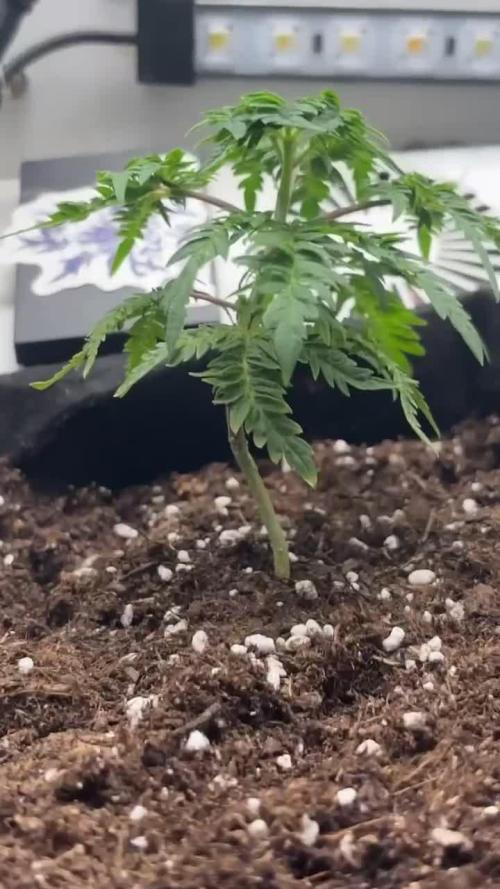
On week 7 of the vegetative stage the plant is stretching more & the root system seems to be expanding in the 14L pot nicely along with some side branches coming from the lower nodes