Likes
Comments
Share
@AsNoriu
Follow
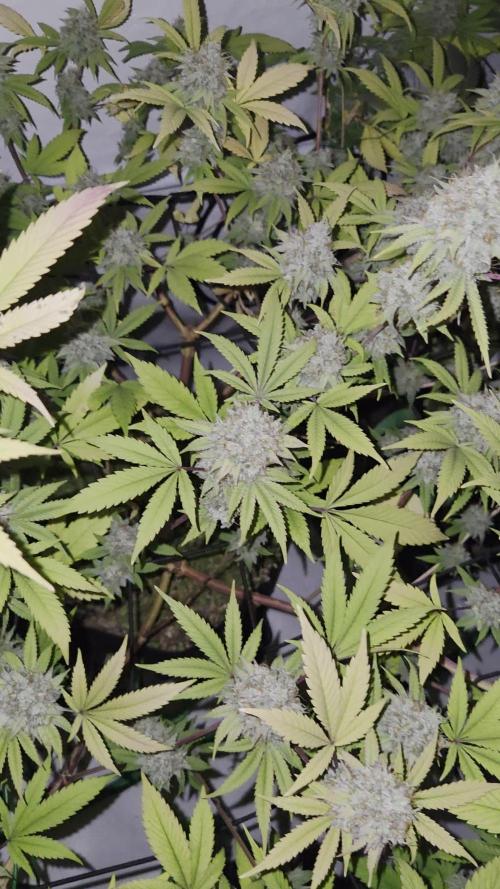
Day 102 since seed touched soil. Again troubles .... Came to check them and found tent dark. Normally theirs day was in the night, now one day we again had no electricity and everything moved 8 hours, so day is day now .... Humidity spikes as hell. I dont want to make wounds, so no defoliation ... just too big of a risk to damage or bring infection in .... Ground level 99% rh, canopy level - 85, lights level - 80 .... never grew in such hight, i did in 65-70 without problems, but this goes overboard ... Drinking slowed down, will reduce volume by 20% next watering. One more feed left. Keeping sticky pads as prevention and it helped to catch 50 or so bugs and maybe prevent infestation. Gnats mostly ... This this girl despite standing in shade , is very very nice. I managed to flatten her out without any HST, proud of myself a bit ;))) 10 days till chop !!! Hope no bud rot !!! Happy Growing !!!
Likes
6
Share
@IQuSX
Follow
Formula 1 Royal Queen presents: [Medusa]; Orion; Epsilon; Titan; & One sssecret seed… Watch them, topman, and see the revolution. Here goes!
Likes
22
Share
Day 49: Watered each plant with 1L with nuts 1568 ppm, 3345 us/cm, 3.3 EC (purple punch, strawberry banana, wedding Cheesecake) 1573 ppm, 3346 us/cm, 3.3 EC It wasn't me who did the feeding (gorilla cookies) 2 different feedings for the 10 plants Day 51: Watered each plant with 1L with nuts 1562 ppm, 3325 us/cm, 3.3 EC (purple punch, strawberry banana, wedding Cheesecake) 1514 ppm, 3293 us/cm, 3.2 EC It wasn't me who did the feeding (gorilla cookies) 2 different feedings for the 10 plants Day 53: Watered each plant with 1L with nuts 1632 ppm, 3472 us/cm, 3.4 EC (purple punch, strawberry banana, wedding Cheesecake) ??? ppm, ??? us/cm, ??? EC It wasn't me who did the feeding (gorilla cookies) 2 different feedings for the 10 plants Day 55: Watered each plant with 1L with nuts 1655 ppm, 3521 us/cm, 3.5 EC (purple punch, strawberry banana, wedding Cheesecake) 2142 ppm, 4557 us/cm, 4.5 EC ? It wasn't me who did the feeding (gorilla cookies) 2 different feedings for the 10 plants
Likes
52
Share
Its time to prepare for war. *Blows bagpipe* FISH SH!T THE ORGANIC SOIL CONDITIONER (used twice before and always noticed instantly) Fish Shit is a living product! It provides a complex Microbial profile that includes thousands of different species of bacteria, fungi, and protozoa. This profile is closer to a natural ecosystem than anything you will find on the market. Fish Shit helps release essential oils and terpenes which contribute to the building of a myriad of flavonoids. Flavanoids play a key role in the development of the most potent aromas and tasteful flavors of a plant and its fruit. Fish Shit contains beneficial microorganisms that help plants maximize nutrient uptake. It does this by transforming nutrients into more usable forms and keeping these nutrients in the soil longer. During photosynthesis plants naturally produce exudates (chemicals that are secreted through their roots). Through these exudates, plants can attract the types of good bacteria that are beneficial to them at different points in their growing cycle. These good bacteria cover the roots and act as a barrier to the invasion of disease-causing organisms that may harm the plant. What Are Enzymes? Before we dive headfirst into how, exactly, enzymes can benefit cannabis plants, it helps to understand a little about what these microscopic proteins do. Essentially, enzymes facilitate chemical reactions. They do so by binding with a substrate and forming or breaking molecular bonds. In this context, the substrate is the molecule upon which an enzyme acts to boost the efficiency of a reaction. •substrate /sŭb′strāt″/ •noun •The material or substance on which an enzyme acts. A surface on which an organism grows or is attached. An underlying layer; a substratum. Enzymes are proteins with complex 3D shapes that feature regions called active sites. When the substrate binds to these active sites, it forms an enzyme-substrate complex that causes a chemical reaction to take place, temporarily changing the structure of the enzyme and ultimately causing molecules to either come together or break apart. As a result, molecular products are released, and the enzyme returns to its original shape. Specific enzymes are capable of binding with certain substrates, as the substrate fits into the active site more or less via a lock-and-key principle. Although, new research suggests a more accurate theory of "induced fit", in which enzymes and substrates undergo structural changes to facilitate the reaction. If you take the human body as an example, we have an abundance of enzymes in our saliva and digestive system. These molecules bind with substrates in these regions (food particles), working to break down the food we eat into usable parts before converting them to energy. Enzymes in cannabis work in a similar way to the example highlighted above. Typically, enzymes occur in soil naturally, but if your soil mix is lacking organic material, or you're growing hydroponically, then adding enzymes directly to the substrate is crucial. By using them in cannabis growing, enzymes not only help break down essential nutrients into smaller, more readily available pieces, but they also support the digestion of dead root cells, clearing a direct path for nutrients. Overall, enzymes make it easier for your cannabis plants to absorb all the elements they need to reach their full potential. For growers, a plant that reaches its full potential means a bucketload of juicy buds come harvest. This is essential if you want to reuse a pot with old systems left over like mine. Common plant enzymes include: •Cellulase •Xylanase •Beta-glucosidase •Hemicellulase •Amidase Amino acids are a crucial, yet basic unit of protein, and they contain an amino group and a carboxylic group. They play an extensive role in the gene expression process, which includes an adjustment of protein functions that facilitate messenger RNA Nitrogen, phosphorus, and potassium are the three main pillars of nutrient solutions and fertilizers, but there are countless other nutrients that your cannabis plants need to produce the best possible harvest. Amino acids are one of them. You may have noticed that amino acids get a lot of attention from bodybuilders and other athletes. That’s because they play a key role in the synthesis of protein, which, as you probably know, is super important for sports recovery and muscle growth. Amino acids are the building blocks of protein and the foundation of both plant and animal life. But what do amino acids do for cannabis? WHY IS PROTEIN IMPORTANT FOR CANNABIS? Just like proteins are important for the human body, they are equally important for the growth and development of plants. For example, proteins help plants: •Facilitate the growth of intracellular plant structures •Promote energy generation •Stimulate metabolic processes •Facilitate the absorption and transportation of nutrients So, where do plants get these vital proteins from? Well, unlike humans, plants can’t source proteins or amino acids from other organisms. Instead, they need to create their own amino acids, and then use these to build protein. That's why gardeners, much like athletes, go wild for amino acid supplements. Amino acids help plants by… • Increasing their production of chlorophyll, which ultimately improves their ability to photosynthesize • Serving as an easily absorbable form of nitrogen • Stimulating the synthesis of key vitamins • Improving their resistance to pests and diseases • Boosting the strength of their cells Amino acids also serve as the precursors to auxins, a group of plant hormones produced in the meristems—the apex of the stems where new leaves and stems are born. Auxins play a key role in the plant, activating genes for plant growth and development by triggering a multitude of vital plant functions. In other words, they determine what its size and architecture will look like. Auxins influence the development of branches, flowers, and roots, and even help to regulate the photoperiod response of the plant. Some amino acids, like cysteine, also work together with antioxidants like glutathione to help cannabis plants deal with oxidative stress, which can be caused by high-intensity lighting, some nutrient solutions, and high levels of CO₂. Unlike humans, plants can synthesize all the amino acids they need to survive and develop properly. Unfortunately, however, amino acid synthesis is a really high-energy process, and plants may struggle to produce enough amino acids when exposed to stress. WHAT FACTORS AFFECT A PLANT’S ABILITY TO SYNTHESISE AMINO ACIDS? Any kind of stress can affect a plant’s ability to produce enough amino acids. This includes: • Drought • Temperature extremes • Poor soil health • Pests • Diseases • Poor lighting • Lack of space • Poor root health WHAT DOES ALL OF THIS MEAN FOR WEED PLANTS? If you want to push your plants to their extreme in terms of floral growth and resin production, you should look into amino acid fertilizers. By making amino acids readily available to your plants, they’ll be able to use crucial energy to grow and bloom, rather than focusing on synthesizing amino acids themselves. Game of Inches, this is another Plants can absorb amino acids via their roots and leaves. They can also benefit from amino acids during both their vegetative and flowering phases. The fastest way for plants to absorb amino acids is via their leaves. The foliar application of amino acids is believed to improve the transportation of nutrients, increase transpiration, and boost photosynthesis. Hence, I recommend feeding your plants with foliar amino acid fertilizers. When doing so, however, carefully measure the amount of fertilizer you use, as—like with any nutrient—overfeeding can damage your plants. FOLIAR FEED AND SOIL SOAK • 1 crushed queen anne carrot • Add 2 tbsp of NPK Raw powdered water-soluble cane molasses • 20ml h2o2 • 1 crushed radish • 0.25 tsp NPK Enzymes • 0.25 tsp NPK Amino Acids • 50ml coconut water ( nature's own amniotic fluid packed with amino, enzymes ) + The sound of songbirds. Onto the predators 1250 -Green Lacewings Lacewings are extremely voracious predatory insects that feed on several pests. In adulthood, it feeds on pollen and nectar. In the larval stage, it feeds on aphids, thrips, and mealybugs at all stages of growth. It can also attack spider mites in moderate quantities. It is initially an aphid predator, but very effectively controls thrips and mealybugs infestations. It is so voracious that in the absence of prey, it will feed on its congeners. Lacewings are cannibalistic if there is no food available for them. It is therefore important to introduce them into an infestation situation, and not just preventively. •congener /kŏn′jə-nər/ •noun •A member of the same kind, class, or group. •An organism belonging to the same taxonomic genus as another organism. •A thing of the same kind as. or nearly allied to, another; specifically, in botany and zoology, a plant or an animal belonging to the same genus as another or to one nearly allied. Ideal temperature 20°C – 26°C Ideal humidity 60% – 70% Predatory stage life cycle 21 days Introduction rate 4 weeks Storage Refrigerator Use Immediately Are there any specific instructions on how to use this predator? Lacewings are available on small paper cards that you can hang to plant stems. On the cards are dozens of eggs ready to hatch. There are also sterile eggs they can feed on once they have hatched before they are ready to disperse in the foliage. It is important to use them quickly upon receipt to avoid cannibalism. If you don't use them right away, you can store the cards in the refrigerator for 24 to 48 hours to prevent the eggs from hatching too quickly. Avoid storing them for longer than this or you risk losing eggs. 1250 eggs are divided into 7.5 cards, 2500 eggs on 15 cards, and 5000 on 30 cards. The application rate is one card per square meter of growing surface. Is this predator best used for preventive or curative treatments? Lacewings are used as a curative solution. Anything else I should know? Lacewing eggs hatch approximately 24-72 hours after the cards are exposed to room temperature. When they emerge, the lacewings are just 1.5-2 mm long. They are very small so they are difficult to see. Once hatched, they will stay on the cards for a few hours and then disperse in the foliage. You quickly lose sight of them if you have not witnessed the hatching. They then live in the foliage for about 3 weeks. Often, you will see them towards the end of their larval cycle. After feeding for 3 weeks, they will triple and even quadruple in size. At that point, they are easier to see. But they remain very discreet insects, it is not abnormal not to see them. Egg carcasses left behind on the cards do not disappear after the hatching has happened. It's normal to see eggs still on the cards. Visually it is very similar before and after hatching. Also, on the boxes, there are sterile ephestia eggs which are used to feed the lacewings once hatched. Not all lacewing eggs are viable either. Only a certain percentage of lacewing eggs will hatch. Once hatched, the eggs are white. You can observe this using a magnifying glass. With, 5000 Stratiolaelaps Scimitus It is used to prevent or control thrips pupae, fungus gnats larvae, and root mealybugs in the soil. It can also be used for red mites in bird farms or hen houses. The adult is about 1 mm long and is medium brown with a beige triangle on its back. Another fun fact about them is they can survive without prey. They can eat algae and plant debris. This is why they can reproduce and stay in plants for long periods. Ideal temperature 15°C – 23°C Predatory stage life cycle 18 days Introduction rate 2 weeks Storage Room temperature Use Within one week Are there any specific instructions on how to use this predator? Sprinkle directly on the growing media. They can live in all types of substrates like potting soil, coconut fiber, rock wool, cedar mulch, etc. Stratiolaelaps establish easily so they are permanently fighting pests. One introduction is generally enough unless you have an infestation. In this case, introduce them at least twice at a 2-week interval for best results. If you grow your plants in a 100% mineral substrate, it will have to be released more often since there is less organic matter than in traditional soil. Do I need to take any specific precautions? Stratiolaelaps breed in the top layer of the soil. So it is important not to disturb them in the first days following their introduction. They don't like temperatures below 8 ° C. So be sure not to introduce them in a water-saturated or cold environment. Release them 24-48 hours after your last watering. They are very sensitive to chemical acaricides and diatomaceous earth. These methods are incompatible with their use.
Likes
20
Share
@squalino
Follow
franchement je suis assez satisfait. les engrais biotabs fonctionnent à merveille je trouve .bon je suis pas un expert en figues 🤣🤣 mais celon moi elle grandi bien , elle a refait une belle jeune pousse qui grandit bien a l'ombre de sa mère malgré ses chaleurs accablante de cette dernière semaine.
Likes
2
Share
The girls are doing well so far. Advanced nutrients in combination with the Lumatek Zeus 600W Pro 3.1 is a killer combo. Also the coco substrate is working well so far. I placed them in bigger pots today . 🌱
Processing
Likes
4
Share
Estamos a meio da 2° semana a crescer bem ja cm boa ramificação mas a dar indicios de falta de magnezio, mais uma semana começa o lst Afinal vai começou mais cedo q o esperado.. a crescer muito rápido, mais uns dias estamos no inicio da 3°semana
Likes
99
Share
Wilkommen zu Woche 5 Die Ladys befinden sich nun am Ende der fünften Wachstum Woche. Sie entwickeln sich einfach nur prächtig . In dieser Woche haben Sie die letzte Fütterung bekommen . Ab Morgen werden die Ladys unter einer schönen Sanlight EVO 4 80 in die Blüte geleitet. Freu mich mega auf die nächste Phase und hoffe ihr Bleibt dabei . Falls ihr Lust auf unschlagbare Preise in Sachen Grow habt und gute Beratung , lasse ich euch gerne einen Link da 🍻 https://www.tomate-growshop.de/ Danke und bis nächste Woche Much love 🍀 GrowWithFlow 🍀
Likes
Comments
Share
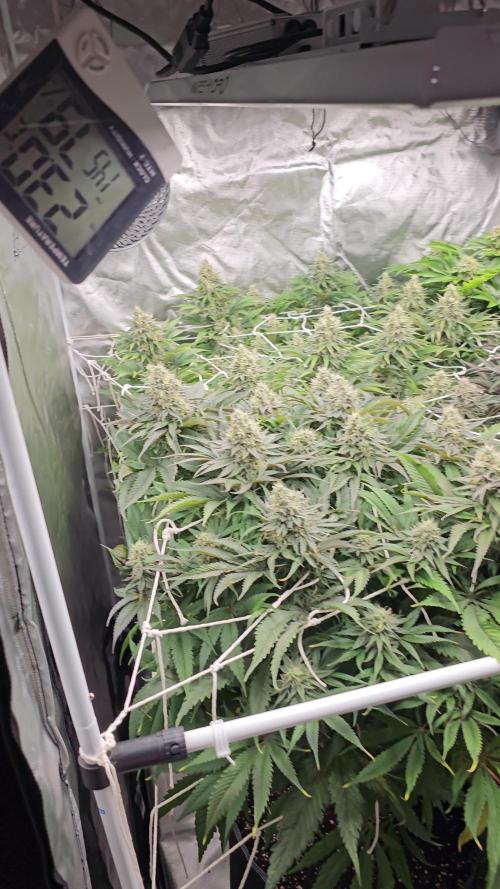
Perdi mais uma semente , agora vamos tocar essas duas para ver se elas crescem bem saudáveis e fortes. Estão com um bom tamanho vieram para o quintal, ainda pode ter algum ataque de pássaros mas preciso do espaço na estufa para novas sementes que germinaram. Perdi mais uma só restou uma , mas ela está bem .
Likes
8
Share
April 4th 2024 Went on vacation for few days and came back to lil disappointment with one I was using the acinfinity bottom watering pot and one plant didn’t even drink from its water reservoir I have no clue why not and other did came back to empty pot so hopefully the water I watered with from top works that’s only problem I came back to other plant is going did some defoliation Welp today April 7th I messed around and found out what to much LST can do if ya to rough I cracked one plant right down the middle but with quick thinking got some tape and taped that hoe right up so hopefully I’m good besides that feed recharge today bout half gal each to scared to go full gallon don’t want to drown them
Likes
14
Share
Likes
10
Share
@KCgrows
Follow
Definitely interesting temps stayed about 26 degrees C humidity around 60-65%. They’re still alive after a week and I transferred them to the buckets 4/15. Just watered them in the rockwool from 4/3-4/15 pretty much feed the myco + voodoo mix towards the end and plain ph’d water in the mean time.
Processing
Likes
8
Share
@sweetkaya
Follow
Day 57 - Yesterday I noticed that the leaves are darker than they should be, so I re-made the mixing solution lowering the PPM from 750 to 550. I've tried to raise it to see how much nutes that ladies can handle since it's my first time in coco and I like to experiment. Now I'm going to finish this mixing solution and then stabilize the next ones on 650 PPM. Keep learning every day 🙏 Day 60 - Today I added one extra equivalent 75W LED to give the lower nodes more power. Some fan leaves touch it, wish they will not burn. New update in the next days.
Likes
7
Share
Just giving her water on the daily now won’t be long now hopefully till harvest👨‍🌾