


Likes
Comments
Share


@Kirsten
Follow
Well this little lady is certainly growing nicely! We have some unusual growth going on here, the plant is also quite bendy for some reason. I'm not sure why but I'm still very hopeful that we will get to harvest without issue.
So here's what I did this week!
3.7.25:
I watered with 2ltrs of dechlorinated water PH'd to 6.2 containing the following nutrients per 2ltrs;
♡ 1/4 TSP Cal-Mag
♡ 1/4 TSP Ecothrive Biosys
PH: 6.2
PPM: 824
Plus an additional 2ltrs of dechlorinated water PH'd to 6.6 containing the following nutrients;
♡ 1/4 TSP Ecothrive Biosys
♡ 1/2 TSP Cal-Mag
PH: 6.6
PPM: 1010
6.7.25:
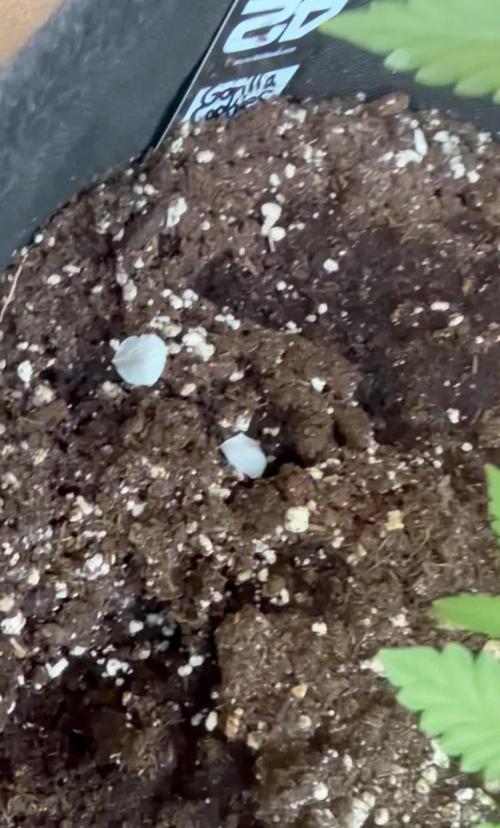
I had some water left over from watering in a seed. This was not PH'd but it was between 6.0 and 7.0. Containing Ecothrive Biosys. I watered about 1.75L of that to this plant.
Thanks for checking out this week 😊💚🤞🌱✌️🍃


Likes
31
Share


@BigBadLion
Follow
Sorry for the huge delay, I wanted to update this earlier but COVID-19 happened everywhere and many things happened where I live. Nonetheless, I have all the photos and I'll be finishing this diary soon.
The smell of both of my babies was quite, quite strong. It even made me feel very dizzy every time I checked them.
During the week the leaves from Pistachio started to turn yellow while the ones from Matcha finally started to show signs of the excesses and burn, the mistakes I made earlier started to become more and more apparent so it was only a matter of time. Also, everytime a leaf started to die I removed it as soon as possible... but that might become more evident at the time lapse I uploaded!
This was the last week of flower for Pistachio, and I'll leave Matcha a couple more days with some direct light on her (I want her pistils to mature a bit more), but next week is finally the week when I cut them. Trichomes on both plants are ready! 😲
Thanks for reading!

Likes
7
Share


@HegauHillsFarmers_D23
Follow
Der Samen hat ca 3 Tagen nach den Keimen aus dem Boden geschaut.
Mit einem Besprüher habe ich die Erde feucht gehalten.
Als Start habe ich 1ml Voodoo Juice dem Wasser hinzugefügt. So haben die Wurzeln von Anfang an einen guten Start zum wachsen.🌱
Likes
28
Share


@TheHighentist
Follow
Welcome to week 5 of flower.
Trichome production and the density of the buds is really starting to accelerate.
My dehumidifier is not stable, so VPD ranges from 1.2-1.4.
I lightly defoliated 31/10 and last watering was 6/11
👽👉7/11 The day after watering and the day my timer messed up my 12/12 schedule. But hope it brings no problems.
I defoliated lightly and only removed most under the SCROG line.
Even a couple of underdevoloped branches that stretched below SCROG-net got cut.
👽👉8/11 Their smell is starting to get more extreme.
👽👉9/11 I removed a bit of the bottom foliage and cleaned up the dead leaves.
It has been really tight around the SCROG net, so it was highly needed for airflow and humidity
👽👉10/11 Waterday*
ml/L change from last watering - to this.
BioHeaven 4 > 4
BioGrow 4 > 2
BioBloom 3.5 > 4
TopMax 1.5 > 4
Calmag 0.5 > 0
Rootjuice 1 > 0.5
👽👉11/11
Amazing growth in thickness and they look alot more frosty today!
👽👉12/11 Same story as yesterday
👽👉13/11 Today should have been waterday, however i was missing some nutrients so postponed till tomorrow
👇_____________________________________________
Flowering feeding recommendations:
Early bloom: 5:7:10
Mid-bloom: 6:10:15
Mid–late bloom: 4:7:10
BioHeaven The NPK ratio is 0.91-0.18-0.24;
BioGrow The NPK ratio is 4-3-6.
BioBloom The NPK ratio is 2-7-4;
Topmax The NPK ratio is 0.1-0.001-0.1;
Rootjuice The NPK ratio is 0.1-0.1-0.1;
👆_____________________________________________
Likes
6
Share


@IQuSX
Follow
Formula 1 Royal Queen presents:
[Medusa];
Orion;
Epsilon;
Titan;
&
One sssecret seed…
Watch them, topman, and see the revolution.
Here goes!
Likes
17
Share


@Hoodoo
Follow
2020-08-17 Beginning of Week 9 of flowering! Wow! The buds in the middle are getting super frosty now and I noticed that I had some colas that had dipped below the light canopy. They're now back up on top! I am still giving nutrients as I don't see many amber trichomes yet but I am going into the tent without the LEDs on to take some more updated pics. Don't wanna miss my window as I prefer to be stimulated instead of sedated by cannabis. Hoping this strain delivers.
IF anyone wants to comment on the 'readiness' of my buds for flushing (or not flushing) please leave a comment or message me!
2020-08-23 Updated with this week's entire set of pics! Trying to take more with the lights off and just the flash to capture the trichomes. Looks like the sugar leaves have more amber trichomes. I've been advised by at least one person that it's time to harvest.
Still looking for more opinions! Cheers.

Likes
11
Share


@RedEagle
Follow
Plantes très facile à poussez, malgré la chaleur de la box ainsi qu'une petite invasion d'araignée, elle ne s'affaiblie jamais. En plus niveau goût c'est une des meilleures que j'ai fait poussez donc si vous voulez essayer n'hésitez pas.
Merci dinafem


Likes
7
Share


@vertex8
Follow
Thing's are still going well, feeding is going well and they are eating at 2.2 e.c, plenty of food and boost in the solution with no burn, I may increase over recommended amount, had some weird stretching on two of the plants, not sure if something is wrong or just the genetics.. seen first video for example..
Ended up having a fair amount of stretching from the two Jaffa Cakes relative to the washing machine so I've out up the second support net but used it to further hold down the branches.
They are drinking lots at the moment, fill recommended dose of A/B/B-52/BigBud, drinking a total of 5-6ltr per 48hrs, e.c coming on around 2.4 to 2.6 however plants seem to be absolutely loving life :)


Likes
13
Share


@Sadhus
Follow
4 ème jour en 12/12 , vpd autour de 1 , légère defoliation, le stretch commence a se faire, plante saine , je suis satisfait pour le moment, les boutures sont très jolies ma table a marée est devenue une vraie jungle bien dense x)
#trolmaster
#madame grow
#seedstocker


Likes
34
Share


@Ultraviolet
Follow
Yellow butterfly came to see me the other day; that was nice.
Starting to show signs of stress on the odd leaf, localized isolated blips, blemishes, who said growing up was going to be easy!
Smaller leaves have less surface area for stomata to occupy, so the stomata are packed more densely to maintain adequate gas exchange. Smaller leaves might have higher stomatal density to compensate for their smaller size, potentially maximizing carbon uptake and minimizing water loss. Environmental conditions like light intensity and water availability can influence stomatal density, and these factors can affect leaf size as well. Leaf development involves cell division and expansion, and stomatal differentiation is sensitive to these processes. In essence, the smaller leaf size can lead to a higher stomatal density due to the constraints of available space and the need to optimize gas exchange for photosynthesis and transpiration. In the long term, UV-B radiation can lead to more complex changes in stomatal morphology, including effects on both stomatal density and size, potentially impacting carbon sequestration and water use. In essence, UV-B can be a double-edged sword for stomata: It can induce stomatal closure and potentially reduce stomatal size, but it may also trigger an increase in stomatal density as a compensatory mechanism. It is generally more efficient for gas exchange to have smaller leaves with a higher stomatal density, rather than large leaves with lower stomatal density. This is because smaller stomata can facilitate faster gas exchange due to shorter diffusion pathways, even though they may have the same total pore area as fewer, larger stomata. Leaf size tends to decrease in colder climates to reduce heat loss, while larger leaves are more common in warmer, humid environments. Plants in arid regions often develop smaller leaves with a thicker cuticle and/or hairs to minimize water loss through transpiration. Conversely, plants in wet environments may have larger leaves and drip tips to facilitate water runoff. Leaf size and shape can vary based on light availability. For example, leaves in shaded areas may be larger and thinner to maximize light absorption. Leaf mass per area (LMA) can be higher in stressful environments with limited nutrients, indicating a greater investment in structural components for protection and critical resource conservation. Wind speed, humidity, and soil conditions can also influence leaf morphology, leading to variations in leaf shape, size, and surface characteristics. Small leaves: Reduce water loss in arid or cold climates.
Environmental conditions significantly affect gene expression in plants. Plants are sessile organisms, meaning they cannot move to escape unfavorable conditions, so they rely on gene expression to adapt to their surroundings. Environmental factors like light, temperature, water, and nutrient availability can trigger changes in gene expression, allowing plants to respond to and survive in diverse environments.
Depending on the environment a young seedling encounters, the developmental program following seed germination could be skotomorphogenesis in the dark or photomorphogenesis in the light. Light signals are interpreted by a repertoire of photoreceptors followed by sophisticated gene expression networks, eventually resulting in developmental changes. The expression and functions of photoreceptors and key signaling molecules are highly coordinated and regulated at multiple levels of the central dogma in molecular biology. Light activates gene expression through the actions of positive transcriptional regulators and the relaxation of chromatin by histone acetylation. Small regulatory RNAs help attenuate the expression of light-responsive genes. Alternative splicing, protein phosphorylation/dephosphorylation, the formation of diverse transcriptional complexes, and selective protein degradation all contribute to proteome diversity and change the functions of individual proteins.
Photomorphogenesis, the light-driven developmental changes in plants, significantly impacts gene expression. It involves a cascade of events where light signals, perceived by photoreceptors, trigger changes in gene expression patterns, ultimately leading to the development of a plant in response to its light environment.
Genes are expressed, not dictated! While having the potential to encode proteins, genes are not automatically and constantly active. Instead, their expression (the process of turning them into proteins) is carefully regulated by the cell, responding to internal and external signals. This means that genes can be "turned on" or "turned off," and the level of expression can be adjusted, depending on the cell's needs and the surrounding environment. In plants, genes are not simply "on" or "off" but rather their expression is carefully regulated based on various factors, including the cell type, developmental stage, and environmental conditions. This means that while all cells in a plant contain the same genetic information (the same genes), different cells will express different subsets of those genes at different times. This regulation is crucial for the proper functioning and development of the plant.
When a green plant is exposed to red light, much of the red light is absorbed, but some is also reflected back. The reflected red light, along with any blue light reflected from other parts of the plant, can be perceived by our eyes as purple.
Carotenoids absorb light in blue-green region of the visible spectrum, complementing chlorophyll's absorption in the red region. They safeguard the photosynthetic machinery from excessive light by activating singlet oxygen, an oxidant formed during photosynthesis. Carotenoids also quench triplet chlorophyll, which can negatively affect photosynthesis, and scavenge reactive oxygen species (ROS) that can damage cellular proteins. Additionally, carotenoid derivatives signal plant development and responses to environmental cues. They serve as precursors for the biosynthesis of phytohormones such as abscisic acid () and strigolactones (SLs). These pigments are responsible for the orange, red, and yellow hues of fruits and vegetables, while acting as free scavengers to protect plants during photosynthesis.
Singlet oxygen (¹O₂) is an electronically excited state of molecular oxygen (O₂). Singlet oxygen is produced as a byproduct during photosynthesis, primarily within the photosystem II (PSII) reaction center and light-harvesting antenna complex. This occurs when excess energy from excited chlorophyll molecules is transferred to molecular oxygen. While singlet oxygen can cause oxidative damage, plants have mechanisms to manage its production and mitigate its harmful effects.
Singlet oxygen (¹O₂) is considered a reactive oxygen species (ROS). It's a form of oxygen with higher energy and reactivity compared to the more common triplet oxygen found in its ground state. Singlet oxygen is generated both in biological systems, such as during photosynthesis in plants, and in cellular processes, and through chemical and photochemical reactions. While singlet oxygen is a ROS, it's important to note that it differs from other ROS like superoxide (O₂⁻), hydrogen peroxide (H₂O₂), and hydroxyl radicals (OH) in its formation, reactivity, and specific biological roles. Non-photochemical quenching (NPQ) protects plants from damage caused by reactive oxygen species (ROS) by dissipating excess light energy as heat. This process reduces the overexcitation of photosynthetic pigments, which can lead to the production of ROS, thus mitigating the potential for photodamage. Zeaxanthin, a carotenoid pigment, plays a crucial role in photoprotection in plants by both enhancing non-photochemical quenching (NPQ) and scavenging reactive oxygen species (ROS). In high-light conditions, zeaxanthin is synthesized from violaxanthin through the xanthophyll cycle, and this zeaxanthin then facilitates heat dissipation of excess light energy (NPQ) and quenches harmful ROS.
The Issue of Singlet Oxygen!!
ROS Formation: Blue light, with its higher energy photons, can promote the formation of reactive oxygen species (ROS), including singlet oxygen, within the plant.
Potential Damage: High levels of ROS can damage cellular components, including proteins, lipids, and DNA, potentially impacting plant health and productivity.
Balancing Act: A balanced spectrum of light, including both blue and red light, is crucial for mitigating the harmful effects of excessive blue light and promoting optimal plant growth and stress tolerance.
The Importance of Red Light:
Red light (especially far-red) can help to mitigate the negative effects of excessive blue light by:
Balancing the Photoreceptor Response: Red light can influence the activity of photoreceptors like phytochrome, which are involved in regulating plant responses to different light wavelengths.
Enhancing Antioxidant Production: Red and blue light can stimulate the production of antioxidants, which help to neutralize ROS and protect the plant from oxidative damage.
Optimizing Photosynthesis: Red light is efficiently used in photosynthesis, and its combination with blue light can lead to increased photosynthetic efficiency and biomass production.
In controlled environments like greenhouses and vertical farms, optimizing the ratio of blue and red light is a key strategy for promoting healthy plant growth and yield.
Understanding the interplay between blue light signaling, ROS production, and antioxidant defense mechanisms can inform breeding programs and biotechnological interventions aimed at improving plant stress resistance. In summary, while blue light is essential for plant development and photosynthesis, it's crucial to balance it with other light wavelengths, particularly red light, to prevent excessive ROS formation and promote overall plant health. Oxidative damage in plants occurs when there's an imbalance between the production of reactive oxygen species (ROS) and the plant's ability to neutralize them, leading to cellular damage. This imbalance, known as oxidative stress, can result from various environmental stressors, affecting plant growth, development, and overall productivity.
Causes of Oxidative Damage: Abiotic stresses: These include extreme temperatures (heat and cold), drought, salinity, heavy metal toxicity, and excessive light. Biotic stresses: Pathogen attacks and insect infestations can also trigger oxidative stress. Metabolic processes: Normal cellular activities, particularly in chloroplasts, mitochondria, and peroxisomes, can generate ROS as byproducts. Certain chlorophyll biosynthesis intermediates can produce singlet oxygen (1O2), a potent ROS, leading to oxidative damage. ROS can damage lipids (lipid peroxidation), proteins, carbohydrates, and nucleic acids (DNA). Oxidative stress can compromise the integrity of cell membranes, affecting their function and permeability. Oxidative damage can interfere with essential cellular functions, including photosynthesis, respiration, and signal transduction. In severe cases, oxidative stress can trigger programmed cell death (apoptosis). Oxidative damage can lead to stunted growth, reduced biomass, and lower crop yields.
Plants have evolved intricate antioxidant defense systems to counteract oxidative stress. These include: Enzymes like superoxide dismutase (SOD), catalase (CAT), and various peroxidases scavenge ROS and neutralize their damaging effects. Antioxidant molecules like glutathione, ascorbic acid (vitamin C), C60 fullerene, and carotenoids directly neutralize ROS. Developing plant varieties with gene expression focused on enhanced antioxidant capacity and stress tolerance is crucial. Optimizing irrigation, fertilization, and other management practices can help minimize stress and oxidative damage. Applying antioxidant compounds or elicitors can help plants cope with oxidative stress. Introducing genes for enhanced antioxidant enzymes or stress-related proteins over generations.
Phytohormones, also known as plant hormones, are a group of naturally occurring organic compounds that regulate plant growth, development, and various physiological processes. The five major classes of phytohormones are: auxins, gibberellins, cytokinins, ethylene, and abscisic acid. In addition to these, other phytohormones like brassinosteroids, jasmonates, and salicylates also play significant roles.
Here's a breakdown of the key phytohormones:
Auxins: Primarily involved in cell elongation, root initiation, and apical dominance.
Gibberellins: Promote stem elongation, seed germination, and flowering.
Cytokinins: Stimulate cell division and differentiation, and delay leaf senescence.
Ethylene: Regulates fruit ripening, leaf abscission, and senescence.
Abscisic acid (ABA): Plays a role in seed dormancy, stomatal closure, and stress responses.
Brassinosteroids: Involved in cell elongation, division, and stress responses.
Jasmonates: Regulate plant defense against pathogens and herbivores, as well as other processes.
Salicylic acid: Plays a role in plant defense against pathogens.
1. Red and Far-Red Light (Phytochromes):
Red light:
Primarily activates the phytochrome system, converting it to its active form (Pfr), which promotes processes like stem elongation and flowering.
Far-red light:
Inhibits the phytochrome system by converting the active Pfr form back to the inactive Pr form. This can trigger shade avoidance responses and inhibit germination.
Phytohormones:
Red and far-red light regulate phytohormones like auxin and gibberellins, which are involved in stem elongation and other growth processes.
2. Blue Light (Cryptochromes and Phototropins):
Blue light:
Activates cryptochromes and phototropins, which are involved in various processes like stomatal opening, seedling de-etiolation, and phototropism (growth towards light).
Phytohormones:
Blue light affects auxin levels, influencing stem growth, and also impacts other phytohormones involved in these processes.
Example:
Blue light can promote vegetative growth and can interact with red light to promote flowering.
3. UV-B Light (UV-B Receptors):
UV-B light:
Perceived by UVR8 receptors, it can affect plant growth and development and has roles in stress responses, like UV protection.
Phytohormones:
UV-B light can influence phytohormones involved in stress responses, potentially affecting growth and development.
4. Other Colors:
Green light:
Plants are generally less sensitive to green light, as chlorophyll reflects it.
Other wavelengths:
While less studied, other wavelengths can also influence plant growth and development through interactions with different photoreceptors and phytohormones.
Key Points:
Cross-Signaling:
Plants often experience a mix of light wavelengths, leading to complex interactions between different photoreceptors and phytohormones.
Species Variability:
The precise effects of light color on phytohormones can vary between different plant species.
Hormonal Interactions:
Phytohormones don't act in isolation; their interactions and interplay with other phytohormones and environmental signals are critical for plant responses.
The spectral ratio of light (the composition of different colors of light) significantly influences a plant's hormonal balance. Different wavelengths of light are perceived by specific photoreceptors in plants, which in turn regulate the production and activity of various plant hormones (phytohormones). These hormones then control a wide range of developmental processes.



Likes
1
Share


@PhinolaGreen
Follow
11. Woche
Sie reift weiter fleißig aus und produziert massiv Budmasse, wunderschön mit anzusehen. Denke in 7 Tagen ist sie soweit 😊
Ich habe die gestern alle gespült. Insgesamt habe ich 4x Wasser durch jeden Topf laufen lassen.
Likes
13
Share


@MJ_LIVINGSOIL
Follow
Good performance we plan to flowering in next week and use craft blended DIY organic fertilizer for these girl we use ratio 6-4-2 5-4-2 for vegetative stage and take microbe in soil for make NOTILL LIVINGSOIL

Likes
33
Share


@Dudders
Follow
Have had some challenges this week. In my lack of experience, I have struggle to discern whether my plant is deficient in nutrients, suffering lockout or approaching harvest.
Symptoms were yellowing leaves... The cause of which can be, of course, many different things.
I decided to flush last week, thinking that a nutrient lockout was most likely.
Leaves less yellow this week so think it may have done the trick.
I have spent some time researching and considering flushing as a technique to improve final bud quality.
I have decided that there simply isn't enough evidence to deny my girl of nutrients at a critical phase of her growth.
I am therefore continuing a reduced feeding schedule of
- 1mls topmax
- 2mls BioBloom
- 1 scoop biosys ecothrive
- 2.5mls Cannazym.
And, unless indicated otherwise, will continue with this schedule up until harvest.
Today I have tested PPM of the run off and measure it to be approx 1050ppm.
I will measure again in 24 hours to monitor change after a feed.
Purchased a 60x microscope and am able to see that 90% of trichomes are still clear.
I am therefore anticipating at least another couple of weeks before harvest.
Buds look fluffier than I'd like, but resin and trichome production haven't disappointed.
I'm hoping that over the next few weeks the buds will continue to fatten.
19/11/2021 - Day 79.
Have a few days off so have managed to catch some photos in day light.
Have also uploaded a video.
Feel that she isn't particularly happy... But on the other hand, she is showing the resistance and ability to adapt to less than ideal growing conditions; as promised by the strain genetics.
Plenty of trichs, plenty of resin, plenty of buds.
Just need them to fatten and fill out for maximum yield and quality.
23/11/21 - Day 83 - Still some deficiencies but she doesn't seem to be using much water so reluctant to feed at risk of overwatering.
Noticing lots of new pistil formation.
Looking frosty, but all trichomes still clear.
Temperatures dropping to around 2°c overnight here. Managing to maintain temperatures around 10°c in the shed.
Appreciate that this is too cold for growth but she seems to be coping with it well.
I think that a gradual reduction in temperature has been tolerated better than fluctuant or sudden drops would be.
Fingers crossed that her hardy nature keeps her strong.
Fed today:
1mls BioBloom
2mls Topmax
Half scoop Biosys Ecothrive
Filtered water - pH 6.5, TDS 320
Run off 953 TDS
29/11/21 - Day 90 - no sign of any amber yet. Still mostly clear with a splattering of cloudy.
Really worrying about the night time temps now and holding out hope that it doesn't die off before the trichomes mature.