Likes
Comments
Share
Likes
142
Share
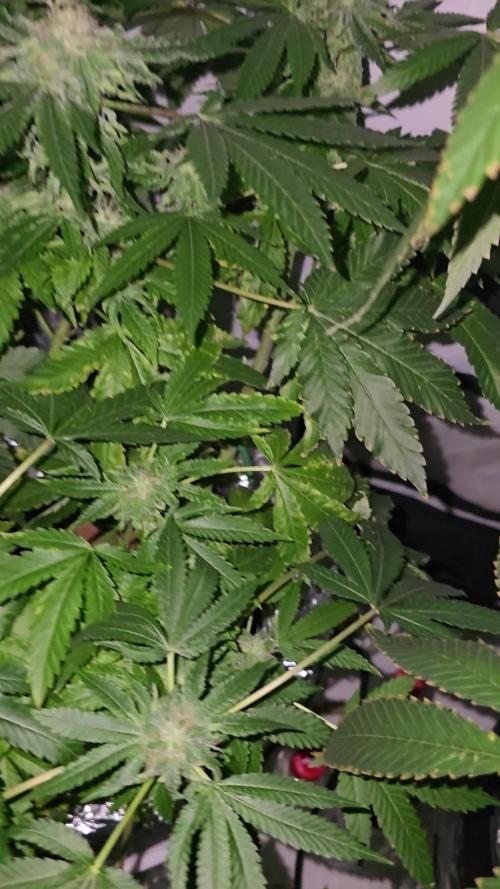
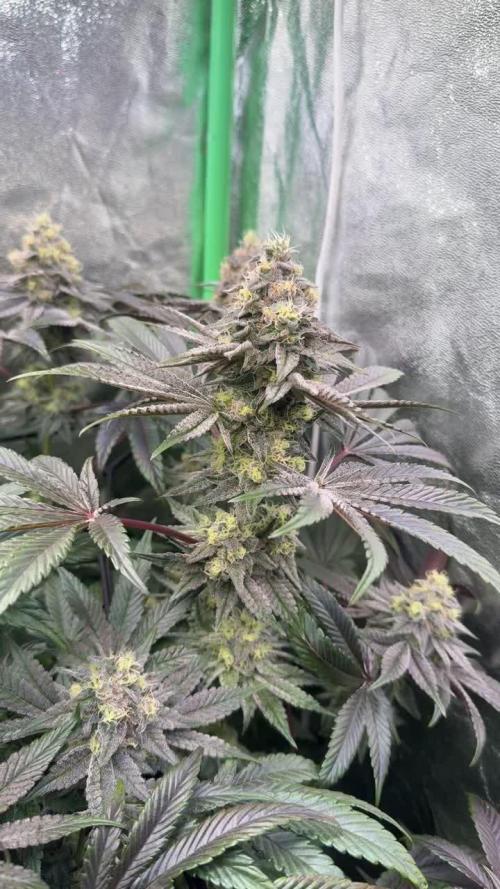
Hey everyone :-) This week it smells more and more sweet and fruity in the whole room 😍. There is actually not much to report, everyone is now under 12/12 :-). This is the last grow that comes in the entire diary. From now on, each plant will be added to the diary 👍. I wish you all a lot of fun watching, stay healthy 🙏🏻 and let it grow 😎👌
Likes
3
Share
@jeolicas
Follow
I start today, my experience is just with undefined strain growing outdoor. I put the seed directly on substrate (20% perlite 80% soil) and put water
Likes
1
Share
En plenitud de floración de la mano de Royalqueenseeds y Quemanta Nutrientes. Engordan y engordan estas flores, Se viene cosecha! solo un par de semanas mas y a piso 🌴
Likes
26
Share
Day 17 well I think I’ll try and price LH & MD sometimes later this week or next. Happy to see the Dr has finally shown up and is starting to stretch. Hopefully a couple more dominate limbs will show, and will trim her up too. As of Saturday Fozzy Bear (we wanted it Fozzie but official paper work says otherwise) joined the family and his new big brother Buddy. He has already grown a few inches since we got him but god is he ever cute, and god bless Buddy for taking his playful shit since
Processing
Likes
28
Share
Considering this the official first week of flower. Had light timer issues again smh, but got it fixed again. Plants doing great! Weakened led because the plant is growing right into it almost. Hoping she’s done stretching. Watered with week 7 Nutes @50%. Temp min 67 max 77 Fahrenheit Rh min 33% max 42% may need trellis to keep her from snapping when flowering. Still debating.
Likes
9
Share
another resin monster from seedstockers, with a very special scent, full of flavors! grinded it smelled like peppermint, and vaped it has a great sweet creamy taste!
Likes
3
Share
@Ketamine
Follow
This run should yield about 2.5 ounces a plant I would estimate, maybe more. I will update this in about 2 weeks to let ya know after it has dry'd/cured. If that estimate is accurate which it likely is not that is like .6g/watt which is poor result. But then again I am looking at the top canopy and not really even seen the underneath. We will see. Short lil plants for sure, that typically yield on the lower end. I am excited to start the next one which will be TOAD VENOM bred by Green Dragon in N.Hollywood.
Likes
9
Share
This is going very well, the buds have grown in abundance and there are still new flowers sprouting, there are still a couple of weeks imag
Likes
45
Share
2nd net is up. Early bud formations are promising. holding up to the extremes pretty well, some leaves taking minor damage, but overall, she is holding up, gave her 1 night at 50F see how she would react, stressful. Not advised as it messes with her metabolism, but I want to see if it triggers any anthocyanin response. Love to see her purp up but no signs yet. Remember, For every molecule of glucose produced during photosynthesis, a plant needs to split six molecules of water. This process provides the hydrogen needed for synthesizing glucose and other organic compounds, while oxygen is released as a byproduct. Homework. If Rubisco activity is impaired and it cannot properly function or regenerate its substrate, the plant's leaves are likely to turn a pale green or lime green, a condition known as chlorosis. Essentially, Rubisco activity is highly regulated and susceptible to various environmental and metabolic factors that can cause it to become inhibited, leading to an apparent failure in RuBP regeneration due to a lack of consumption. Rubisco regeneration is intrinsically linked to nitrogen supply because Rubisco is a major sink for nitrogen in plants, typically accounting for 15% to over 25% of total leaf nitrogen. The regeneration phase itself consumes nitrogen through the synthesis of the Rubisco enzyme and associated proteins (like Rubisco activase), and overall nitrogen status heavily influences the efficiency of RuBP regeneration. RuBisCO is a very large enzyme that constitutes a significant proportion (up to 50%) of leaf soluble protein and requires large investments in nitrogen. Insufficient nitrogen supply limits the plant's ability to produce adequate amounts of RuBisCO, thereby limiting the overall capacity for photosynthesis and carbon fixation. Maintaining the optimal, slightly alkaline pH is crucial for the proper function and regeneration of Rubisco. Deviations in either direction (too high or too low) disrupt the enzyme's structure, activation state, and interaction with its substrates, leading to decreased activity and impaired RuBP regeneration. (Lime/yellowing) Structural Component: Nitrogen is an essential building block for all proteins, and the sheer abundance of the Rubisco protein makes it the single largest storage of nitrogen in the leaf. Synthesis and Activity: Adequate nitrogen supply is crucial for the synthesis and maintenance of sufficient Rubisco enzyme and Rubisco activase (Rca), the regulatory protein responsible for maintaining Rubisco's active state. Nitrogen deficiency leads to a decrease in the content and activity of both Rubisco and Rca, which in turn limits the maximum carboxylation rate, Vmax, and the rate of RuBP regeneration Jmax, thus reducing overall photosynthetic capacity. Nitrogen Storage and Remobilization: Rubisco can act as a temporary nitrogen storage protein, which is degraded to remobilize nitrogen to other growing parts of the plant, especially under conditions of nitrogen deficiency or senescence. Nitrogen Use Efficiency (NUE): The allocation of nitrogen to Rubisco is a key determinant of a plant's photosynthetic nitrogen use efficiency (PNUE). In high-nitrogen conditions, plants may accumulate a surplus of Rubisco, which may not be fully activated, leading to a lower PNUE. Optimizing the amount and activity of Rubisco relative to nitrogen availability is a target for improving crop NUE. Photorespiration and Nitrogen Metabolism: Nitrogen metabolism is also linked to the photorespiration pathway (which competes with carboxylation at the Rubisco active site), particularly in the reassimilation of ammonia released during the process. To increase RuBisCO regeneration, which refers to the process of forming the CO2 acceptor molecule Ribulose-1,5-bisphosphate (RuBP) during photosynthesis, the primary methods involve optimizing the levels and activity of Rubisco activase (Rca) and enhancing the performance of other Calvin-Benson-Bassham (CBB) cycle enzymes. Biochemical and Environmental Approaches: Optimize Rubisco Activase (Rca) activity: Rca is a crucial chaperone protein that removes inhibitory sugar phosphates, such as CA1P (2-carboxy-D-arabinitol 1-phosphate), from the Rubisco active site, thus maintaining its catalytic competence. •Ensure optimal light conditions: Rca is light-activated via the chloroplast's redox status. Adequate light intensity ensures Rca can effectively maintain Rubisco in its active, carbamylated state. •Maintain optimal temperature: Rca is highly temperature-sensitive and can become unstable at moderately high temperatures (e.g., above 35°C/95F° in many C3 plants), which decreases its ability to activate Rubisco. Maintaining temperatures within the optimal range for a specific plant species is important. •Optimize Mg2+ concentration: Mg2+ is a key cofactor for both Rubisco carbamylation and Rca activity. In the light, Mg2+ concentration in the chloroplast stroma increases, promoting activation. •Manage ATP/ADP ratio: Rca activity depends on ATP hydrolysis and is inhibited by ADP. Conditions that maintain a high ATP/ADP ratio in the chloroplast stroma favor Rca activity. Enhance Calvin-Benson-Bassham (CBB) cycle enzyme activity: The overall rate of RuBP regeneration can be limited by other enzymes in the cycle. •Increase SBPase activity: Sedoheptulose-1,7-bisphosphatase (SBPase) is a key regulatory enzyme in the regeneration pathway, and increasing its activity can enhance RuBP regeneration and overall photosynthesis. •Optimize other enzymes: Overexpression of other CBB cycle enzymes such as fructose-1,6-bisphosphate aldolase (FBA) and triose phosphate isomerase (TPI) can also help to balance the metabolic flux and improve RuBP regeneration capacity. Magnesium ions, Mg2+, are specifically required for Rubisco activation because the cation plays a critical structural and chemical role in forming the active site: A specific lysine residue in the active site must be carbamylated by a CO2 molecule to activate the enzyme. The resulting negatively charged carbamyl group then facilitates the binding of the positively charged Mg2+ion. While other divalent metal ions like Mn2+ can bind to Rubisco, they alter the enzyme's substrate specificity and lead to dramatically lower activity or a higher rate of the non-productive oxygenation reaction compared to Mg2+, making them biologically unfavorable in the context of efficient carbon fixation. The concentration of Mg2+ in the chloroplast stroma naturally increases in the light due to ion potential balancing during ATP synthesis, providing a physiological mechanism to ensure the enzyme is activated when photosynthesis is possible. At the center of the porphyrin ring, nestled within its nitrogen atoms, is a Magnesium ion (Mg2+). This magnesium ion is crucial for the function of chlorophyll, and without it, the pigment cannot effectively capture and transfer light energy. Mg acts as a cofactor: Mg2+ binds to Rubisco after an activator CO2 molecule, forming a catalytically competent complex (Enzyme-CO2-Mg2+). High light + CO2) increases demand: Under high light (60 DLI is a very high intensity, potentially saturating) and high CO2, the plant's capacity for photosynthesis is high, and thus the demand for activated Rubisco and the necessary Mg2+ cofactor increases. Mg deficiency becomes limiting: If Mg2+ is deficient under these conditions, the higher levels of Rubisco and Rubisco activase produced cannot be fully activated, leading to lower photosynthetic rates and potential photo-oxidative damage. Optimal range: Studies show that adequate Mg2+ application can enhance Rubisco activation and stabilize net photosynthetic rates under stress conditions, but the required concentration is specific to the experimental setup. Monitoring is key: The most effective approach in a controlled environment is to monitor the plant's physiological responses e.g., leaf Mg2+ concentration, photosynthetic rate, Rubisco activation state, and adjust the nutrient solution/fertilizer to maintain adequate levels, rather than supplementing a fixed "extra" amount. In practice, this means ensuring that Mg2+ is not a limiting factor in the plant's standard nutrient solution when pushing the limits with high light and CO2. Applying Mg2+ through foliar spray is beneficial to Rubisco regeneration, particularly in alleviating the negative effects of magnesium (Mg) deficiency and high-temperature stress (HTS). While Mg can be leached from soil, within the plant it is considered a mobile nutrient, particularly in the phloem. Foliar-applied Mg is quickly absorbed by the leaves and can be translocate to other plant parts, including new growth and sink organs. Foliar application of: NATURES VERY OWN MgSO4 @ 15.0g L-1 in a spray bottle. For those high-intensity workouts when 1 meal a day is just not enough! Foliar sprays are often recommended as a rapid rescue measure for existing deficiencies or as a supplement during critical growth stages, when demand for Mg is high. Application in the early morning or late evening can improve absorption and prevent leaf burn. The plant was getting a little limey yellow in the centre. Shortly thereafter, she was back in business, green mostly regenerated. The starting point [of creativity] is curiosity: pondering why the default exists in the first place. We’re driven to question defaults when we experience vuja de, the opposite of déjà vu. Déjà vu occurs when we encounter something new, but it feels as if we’ve seen it before. Vuja de is the reverse—we face something familiar, but we see it with a fresh perspective that enables us to gain new insights into old problems. Confidence is evidence... nothing more. You are confident because you have driven 10,000 times, you are confident because you have spoken 10,000 times. People think confidence is a feeling, but it's not. If you want more confidence, then you need to create evidence, take more shots, collect more data, build more experiences, take more risks; fail, confidence doesn't come first; it is the reward you get for doing the work. no one else wants to do.
Likes
6
Share
@Naujas
Follow
That's how I know the crop was harvested too early:( ..... but only because someone started visiting my place of cultivation and took my two girls, and left two, so that he wouldn't come back a second time and take them, I decided to cut her down earlier:( that's it such news awaited me when I returned from vacation, but overall the girl looked very beautiful, although she got a lot of stress when the snails ate her, but she endured it and recovered very well:) I will dry the bigger flowers and make bubble hash from the rest, good luck to everyone be careful in nature :).
Likes
3
Share
I’m so loving this girl… this was my last seed of the pack and she made me proud. No complaints thus far, I am just getting ready to flower.
Likes
2
Share
@Danylo
Follow
I would describe myself as a grower who gets more enjoyment out of the growing process itself than from the result of it. Not on this one though.
Likes
5
Share
@BigGGrows
Follow
She is now in preflower showing budsite/tops. So far i counted 10. Still doing LST and did a light defoliation removing maybe 5 leaves. She is growing nicely with a decently even canopy. I have started 1/4 strength nutrients. Calmag, fox farms big bloom, and fox farms tiger bloom.
Likes
3
Share
Likes
28
Share
The first week of vegetation is now behind us and the 1 liter pots are already well rooted. They will now be repotted in their final pots in the 2nd week. Everything is still going according to plan and now all the plants will move into their final tent.
Processing
Likes
13
Share
@mr_smooke
Follow
we pass 5. week, in this week i been spred my girls and make some defoliation. she grow nicely week by week. in next week i will flip them on flower mode. tent is ollmost full
Likes
70
Share
All feeds with nutes use either a whole ratio or combination of "Veg Mix" and "Bloom Mix"concentrates DILUTED in water until a total ppm of add in is reached using a (Total Dissolved Solids)TDS Meter measured in PPM (parts per million). The "Veg Mix" concentrate will eventually be added in smaller ratios and "Bloom Mix" concentrate what will eventually replace the "Veg Mix" concentrate entirely with the ppm and ratios listed when I feed. Veg mix recipe is on week 3. Bloom Mix recipe is on week 5. Day 28 Just a quick update for this morning since I had to move the ties a little. LST, I now have them above the 3rd node branches. Stats are normal and the growth tips are turning upward now. Stats 73F/ 63% RH /IL Vent at 33% - Lights also same as before 345ppfd highest, 330 center, and 315 at lowest. No need for adjustment. She seems to be taking the training well. Day 29 Water day - checked last night and decided it was time again - Water by weight again so no runoff to measure at about 4 cups. (4 days since last feed by weight) 13lbs even par is 15lbs 4oz so I prepared 2lbs 4oz of water. Tested my meter and discovered it needed calibration (the temp is off and cant be calibrated - so I used a trusty meat thermometer. started with 4ppm and added 300ppm of epsom and vegmix ph balanced to 6.34 at 69.8F - then splashed with H2O2. Poured around roots and splashed the stem base - sprayed some on the leaves and use the whole amount. Had to adjust lights now to be brighter so I brought them down to 18.5" and ppfd is now 375highest 360 center and 345 at lowest. VPD is normal at 1.0 with 73F /63% RH /33% IL Vent - fans are pointed to directly now as the leaves are starting to get rough feeling - so I moved them a bit to blow less directly Training is doing good nice upward turn on the training (making small LST movements with the ties other than than... just letting it make new branches. Day 30 Checked PH and got 5.0 on my meter(+1.25 tested differential = 6.25) Stats normal too - 73F /64% RH /33% IL Vent - Lights at 385highest 370 center and 355 at lowest Removed cross ties since they are no longer needed to hold the fan leaves- training still looking nice as the new nodes are formed with 2nd node leaves growing already. Day 31 Identified an issue this morning - went back through my pictures, identified the start, looked at the day before, and noted my changes that I took notes on at that time. Went to google to diagnose a few possible hypothesis and am now testing with a treatment. (suggestions from more experienced growers welcome) This morning the issue was brown spots on the older fan leaves. Mostly just the left fan leaf. Seems to have started 2 days ago (day 29) when I changed the lights and fed her. When I fed her, I left water droplets on the leaves instead of drying them off after a short time (I had been drying them with a tissue after a wet pic. The fans were also adjusted after the lights were dropped closer as well. Hypothesis: I think the water was magnifying the light and caused light stress at the those spots. I dont think the wind of the fan had much to do with it other than they helped dry the leaves faster as noted by the water being completely gone by the time I took pictures later that night for measurements. Test: Raised my lights to a max of 350ppfd (from 385 highest reading this morning) Had to adjust fans again since they rest on my lights. Will observe looking for improvement over the next few days. ... another possibility was given to me by Guru @Roberts (thank you) as it possibly being a ph issue locking out calcium. So I thought I might test ph and then try diluted cal/mag in a spray if my soil is too low (also looked at pics and seen VERY close similarities in my pics and those) and so on that advice, I tested/calibrated my soil meter (it FINALLY calibrated for me!)I found my soil was avg of 3 readings at 5.153 (5.08,5.09,and 5.29) NOT GOOD - potentially locking out most all nutes. I weighed out about 2 cups of purified water with and added about half ml of CalMag, ph balanced the water to 6.5 at 69.7F (my research shows Calcium lockout starting at 6.3 or lower) and splashed with H2O2 - I poured most around the base and sprayed the leaves too. I made sure to use the whole solution by pouring the last of the solution in the spray bottle over the stem and stem base. EOD follow-up Found a possible calcium blockade in my ph and on my leaves (of which are now starting to curl so I placed my fans on oscillate to ensure they aren't doing more damage) --- fully documented now. otherwise measurements are now documented too. -- second node is starting to pull away from the last top so I will be looking to top again (3rd of possibly 4 total) and then HST and bind in a new spot Day 32 Doing a morning and evening check her now while I see this issue resolved. So far no sign of improvement since last night - might have gotten worse in comparison (will check pics side by side today) but I think because it's a immobile micronutrient so it should take time to stop then reverse. So in the mean time I am doing a slurry test as a 2nd test for my soil before I treat it. I took soil from 3 different spots and made sure I got some from about 4 inches deep in each spot (ensured calibrations were still good with buffer tests) 1st test is a PH meter tested directly in the soil. After using the 2 cups of 6.3 yesterday I got 3 readings today = 5.47, 5.32, and 5.5 to avg 5.43 - (yesterday's readings prior to treatment were 5.08, 5.09, and 5.29 to avg 5.153) - still far below the normal 6 to 7 for soil and the requirement of 6.3 and above for calcium to enter roots. suggesting again lockout. So while I am checking the plant conditions I also looked at the new nodes - 2nd node is starting to pull away from the first, but not quite enough to top yet - thinking I will be able to top tomorrow evening - should be able to correct the ph tonight, so I can see if there's results in that by then as well. I also set the fans to oscillate last night, so here's a video for that now. Measurements, ppfd, and vpd will be in tonight's check-up Day 32 So I started this evening by testing the run off with 2 meters, 5.7 and 5.67 - prepared 1 gallon of 7.5 ph water and splashed with H2O2 (checked with both meters) Before flushing, I documented the leaves again - still curled and look very dry but they still have some flexibility with them - they dont seem to getting any worse so the spray may have gotten enough to the leaves most affected. The new nodes and growth tips seem to be okay but not growing as fast as they were. That would still mean that the soil needs treatment before the roots begin to die off and I end up with stunted growth overall. SO I flushed the whole gallon and noted the runoff from the sides and bottom. I then tested the soil directly with 3 readings 5.95, 5.8, and 5.73 for avg 5.826 and tested the runoff water with 2 separate meters for 5.91 and 5.85 Not sure if I should feed dunk in 7.5 still or just use that number on the next feed in like 3 or 4 days. will discuss Other than that ppfd highest is 360, 350 at center, and 330 at lowest. VPD was 1.0 with temp at 74F /63% RH /33% IL Vent Growth tips could be ready to top again tomorrow night, but I would like the get the ph taken care of first. Day 33 Started the day by noticing the lower branches seem to stop turning and the next level branches seemed to have finally turned but nearly as fast as the first. (Noticed them having a start yesterday) Newer branches dont have any signs of issues. So the plan today is to make Bloom Juice for later. Feed Dunk with 100% Veg Juice at a ph of 7.3 test runoff and ppm. Top the 4 nodes and remove the lower leaves. Calcium issue or not, that was always the plan with main-linning the plant. However, because of the health issues, I dont think I am going to go past these 8 colas - rather instead I will simply stop here and do some HST to set them how I want them to grow and let her recover and finish her veg for about two or three weeks. Dunk had 300ppm of Epsom, Veg juice, in a little over 3 gallons of purified water. I had 7.4 ph and splashed with h2o2. I pushed the entire plant into the water and soaked for a few seconds. Drained by hanging the pot up for about 10 minutes and the stream started dripping instead. Checked the runoff with 2 meters 6.01 and 5.93 with 2580ppm. Then I topped all four nodes and removed the fan leaves from under my mainline. I used LST to finger press the new branches apart into the direction I plan to move them to get the nodes powering up. Next I will wait for a day to do HST on those new branches. Tonight I will simply let her rest. VPD still at 1.0 - 73F /63% RH /33% IL Vent - Lights are at 365 highest, 355 center, and 335 lowest. No need to measure for growth now as I dont plan to top anymore Day 34 Early entry to day for HST the morning after topping. So I started off the morning checking stats and health. PH levels are still low. 3 soil meter tests 5.41, 5.41, and 5.44 for an avg of 5.42 - kinda at a loss here but can only monitor now. VPD and lights are mostly the same - 74F /63% RH / 33% IL Vent - VPD not relevant today as the settings are the same and I am using HST to change the plant position. leaves are noted for future reference - all four lower fan leaves have signs of calcium deficiency but not progressing nearly as fast as the first two did, so I think my attempts via higher ph water and feed may have helped. (I know the microbes in the soil are supposed to help get past ph issues , but mine seem to not be heathy) HST used a cuticle rod from my wife's nail case and a paint stick to press the rod against the branches and smash the inside of the elbows I want to bend. LST I then cut 4 strips of garden wire at the same length, hooked the ends like candy canes and aligned them about 1/2 inch above the new node and into the soil. From the side they look level but have the leaves now facing sideways. They will turn in a day or two.
Likes
22
Share
@Rangaku
Follow
Good growth on the wedding glue , not quite ready to be tied down but she’s next on the list prolly at the end of the week . She was transplanted again into her forever home looking to double her size again the coming week . Life’s good .
Likes
58
Share
@nonick123
Follow
Bienvenidos la semana #3! 😁 Día #18. Crystal Candy XL Auto ha empezado a crecer de forma espectacular! Northern Lights auto ha mostrado las primeras preflores y también están empezando a crecer muy rápidamente Royal Bluematic ha pasado por el bloqueo de nutrientes por el ph alto en el agua de riego (es la única strain que la ha manifestado). Se ha regado con agua con ph ajustado para controlar el bloqueo. Orion F1 están yendo más lento que el resto...  Día #19. Crystal Candy XL Auto y Northern Lights han empezado una carrera hacia el cielo Se decide empezar con LST en todas las variedades (ver fotos)  Es primera vez con LST, así que espero hacerlo bien! Pero supongo tendré una curva de aprendizaje o ensayo y error Día #20. Crystal Candy XL Auto se muestra muy sedienta. Sus compañeras siguen con 100 ml de agua desde hace unos 4 días, y ella necesita 250 ml de agua cada 3 días (también es la más rapida). Se ha regado Crystal Candy XL Auto con 250 ml de agua más 2 ml/l de Bio-Grow de Biobizz Es necesario ajustar el LST a diario  Día #21 Se hace un riego con 100 ml a todas las plantas (excepto Crystal Candy XL que se regó día anterior). LST es exigente en su revisión diaria pero divertido! 😃 Día #22. El tiempo se está volviendo soleado y hacemos el primer baño de sol.  Crystal Candy XL Auto está respondiendo muy bien al LST, necesita ajustes a diario Royal Bluematic tbm responde bien al LST. Las Orion F1 están yendo lentas... No sé si cogerán velocidad la próxima semana He detectado que Northern Lights tiene una pequeña plaga de minadores de las hojas (solo una hoja afectada). Para atacar la plaga y por precaucion, se hace aplicación foliar a todas las plantas de jabón potásico y aceite de neem.  Día #23. Descubro que he quemado algunas hojas tras la aplicación foliar de ayer y meter demasiado rápido bajo la lampara... Salimos al exterior! 😂 La idea es dejarlas en exterior el resto del cultivo, a no ser que vuelvan las lluvias (espero que no! 🙏) Pequeños ajustes de LST  Gracias por leerme!  😄
Likes
14
Share
This week was no less stressful, but the previous week prepared us. More and more snow turns white. The microscope is ready. Nutrient solution at the maximum recommended parameters. But there is a problem with the tips of the leaves, they turn yellow first and then dry up and turn brown. I think this is the consequence of the maximum ppm. direct sunlight, a running giant fan at a distance of 20 cm, and an unstable ph lvl. There were significant changes in temperature from 16 at night to 31 during the day. The funnest is when it rains after a hot day. and they turn off the electricity at night. A humid environment of 65-70% without a fan is my nightmare in reality. So a piece of cardboard and energetic hand movements created the wind and the impression that I crazy But there are often good times, when the temperature is 26-27 degrees and the humidity is 45% without a humidifier. The girls smell amazing 😎