Likes
Comments
Share
@Targona
Follow
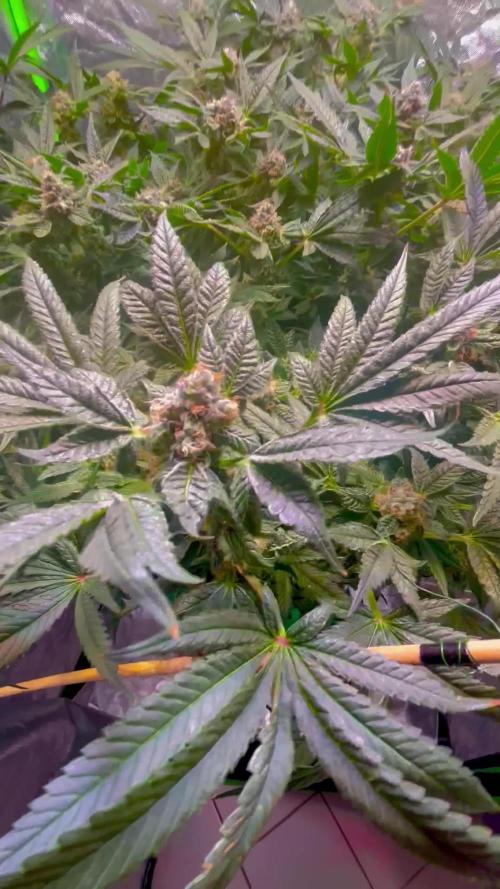
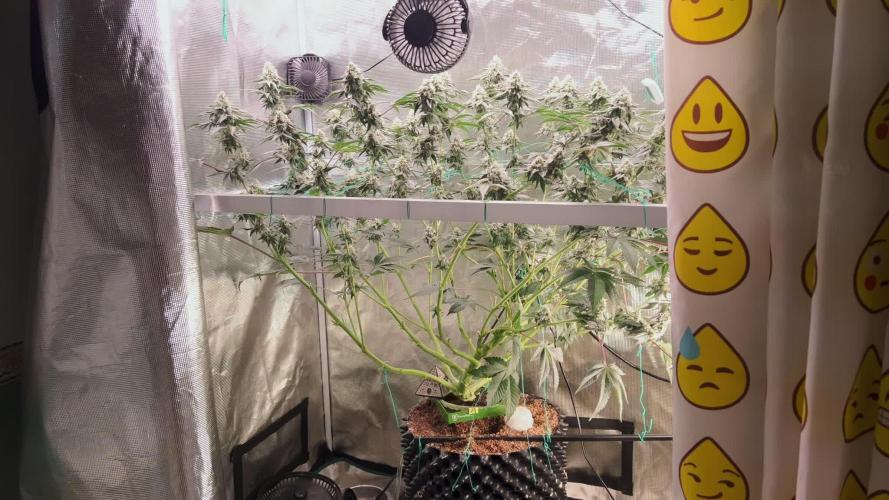
Targona: 29 days since my little girl sprouted from seeds🌱 Fourth week of vegetation of my Apple Fritter Automatic 🍎🍏🍎 Nutrients: I use Advanced Hydroponics Of Holland nutrients - three basic components, still according to the table for growth during the flowering period 💓 - - Dutch fertilizer Formula 1 Grow - supplies the plant with substances necessary for the perfect development of roots, stem and leaves; intended for the growth phase 🌾 - Dutch fertilizer Formula 2 Bloom - contains a large amount of nutrients necessary for rapid growth and fruit development, supplies the plant with energy; intended for the flowering phase 🌸🌿 - Dutch fertilizer Formula 3 Micro - increases oxygen intake, improves plant immunity, ensures better absorption of nutrients; intended for the growth and flowering phase 🌴 ----------------------------------------------------------------------------------------------- Plagron Power Roots - Root Stimulator Plagron Roots is a biological root stimulator that supports the formation of the root system. I use it until the fifth week of growth 🍃🍃 - I fertilize for the last time in the fifth week of plant growth. -------------------------------------------------- -------------------------------------------------- -------- BioBizz Calmag - The special Calmag supplement was designed for professional and hobby growers who need to supply their plants with calcium and magnesium in organic quality for a long time or immediately. The 100% organic 💩💩 and certified BioBizz Calmag product is made of calcium carbonate and magnesium sulfate supplemented with humic acid. -------------------------------------------------- -------------------------------------------------- -------- BioBizz Bio pH - is an organic pH regulator. An aqueous solution of citric acid, which occurs naturally in citrus fruits 🍋🍋 ------------------------------------------------------------------- ---------------------------------------------- During the flowering period, I add Advanced Nutrients stimulants: - JUNGLE X Environ is a highly effective complex preparation for stimulating flower formation. 🌸🏵️ - Bud Candy - carbohydrates for my girls 🍭🍭🍭 General: Apple Fritter Automatic 🍎🍏🍎 - The girl started to bloom beautifully, so I changed the fertilizer dosage to match the flowering phase, and also added carbohydrate + flowering booster🌿💚 The girl grew a lot in height, I had to raise the light and I'm worried that her little sisters won't quickly reach for the light 💡🌞 Training: Classic, I continuously perform defoliation and small LST - I tie up the branches that grow towards the pot just like the others so that they don't shade each other's buds💚🌞🌞 Light: Mars Hydro TS1000 The plants respond effectively and the light is technically very well managed - I try to have 50 cm between the light and the plants, so I regularly move it up 💡💡💡 Thanks for the likes :) See you soon 😍😍
Likes
8
Share
Week 7 Weather conditions stable, relative humidity and some sunny days with low wind. Day Temperature around 23°C. Daylight 15h40 - 6h10/21h50 Good growth: plants are enlarging and stretching in a healthy way. I continue to stimulate the rotting system and start a low fertilization. Sprayed Alga mic for plants vitality and a special mix manure: horsetail (prêle), comfrey (consoude), fern (fougère), nettle (or tie) = fungicide, insecticide, stimulating plant Watering 1.5L/3days Rain water + roots stimulator + Algamic Rain water + roots stimulator + growing nutrients Still waiting for Summer….
Likes
47
Share
@S2340420
Follow
Well this is us after 2 week germination planted in the final pots these are the only 2 survivors had a couple fail on me!!
Processing
Likes
39
Share
Started using a Canadian product, Hygrozyme, to ward off Root Rot and help my roots. After 24 hours PH went from 5.7 to 6.7. A bit of slime as well. Did a sterilization with H2O2, rinsed the roots, waited an hour, then re-inoculated with Hygrozyme and my Tarantula Tea. 24 hours later (today). PH is up the same but no sign of rot. RePHed and good to go. Dinamed Plus from Dinafem Seeds (1) and Blueberry Headband (1)from Humboldt Seeds. https://www.dinafem.org/en/dinamed-cbd-plus/ https://www.humboldtseeds.net/en/blueberry-headband/ Lighting https://www.horticulturelightinggroup.ca/products/260w-qb-v2-led-kit DWC Nutients https://generalhydroponics.com/floraseries FloraGro 1 ml/l FloraBloom .5 ml/l FloraMicro 1 ml/l Diamond Nectar: N/A https://generalhydroponics.com/diamond-nectar Cal Mag: 2 ml/l https://generalhydroponics.com/calimagic SuperThrive: .5 ml/l https://superthrive.com/ https://hylineproducts.com/products/hygrozyme/#one Grozyme: 2.5 ml/ltr Tarantula https://www.advancednutrients.com/products/tarantula/ Epsom salts Tarantula Tea 4 liters RO or tap water 5 ml (1 tsp) organic sulphur free molasses 5 ml Alaskan Organic grow fertilizer (or something comparable) 5 ml Alaskan bloom fertilizer (or something comparable) 5 ml Seaweed or kelp fertilizer 2-4 ml Advanced Nutrients Tarantula
Likes
5
Share
Finally bud sights day 38 from seed 👌🏾🤞🏾
Likes
6
Share
@Discepolo
Follow
Last week, last round, last ride! What a lovely journey till know. I checked with my microscope the trichomes and are getting at right point cloudy. My pistils are on that 70% mark I rate, and think that just got the timing right before I exit the apartment. I also think that having a few days available I would have go on a little more. Can't wait to harvest!!!😉
Likes
Comments
Share
@Cultiv8or
Follow
They’re doing their thing outside, harvest will come up very soon for at least 2 of them. No nutrients, no water, just rain water and lightning LOL 🌩️
Likes
10
Share
@L_Choppa
Follow
I had some Explosive growth this week at least to me it seams like it haven’t seen my girls in a week I must say I’m Impressed this crazy how I’m better with clones then Germinating seeds anyway that’s it tell next week with these girls oh yeah regular water for next feed for my record
Likes
3
Share
Zdarec Growers, tak tento týden zase o kousek větší tak přišel čas na přesazení. Substrát jsem zvolil flora gard TKS 2 smíchaný s perlitem a napufrovanym kokosem. Po přesazení každá holka dostala 4l zálivky s výluhem z wormhumusu. Jinak žádná změna. Holky rostou bez nějakých velkých fuckupu. Tak growu zdar a ať vám to taky roste 🤘🏻🍌
Likes
52
Share
Once again she passes my expectations, late to the show with trichome production. I'm surprised there is purple on the bud, maybe Purpinator does work. I thought I could see hints under the grow lights and thought my eyes were deceiving me, I was just being hopeful. But nah 2 of the 3(under the UV) have developed a beautiful tone of purple. I was never going to bother with a deep freeze but maybe the whole bud will change given conditions, that would be something, fingers crossed. 🤔 was a little skeptical that reducing temps humidity would change density, but it does, buds are solid something I've not been able to achieve before. Rule of thumb is never to surpass 60% RH in the flowering phase and try to progressively reduce it down to 40% in the last 2–3 weeks before harvest. The plant will react as it seeks to protect its flowers, responding by producing denser buds and a higher concentration of resin. Cannabis plants are sensitive to sudden temperature changes, especially in the flowering stage. Extreme heat or cold can impact bud density and overall yields. In nature as a defense mechanism from cold, the plant sensing sudden dips in temperature will attempt to remove the pockets of air within the bud, it achieves this by compacting itself in doing so to better protect itself from cold snaps which are normally indicators in nature that worse weather is on the way. Terpene levels are the highest just before the sun comes out. Ideally, you want as many terpenes present in your plants as possible when you harvest. Cannabis plants soak up the sun during the day and produce resin and other goodies at night. The plant is at its emptiest from "harvest undesirables" so to speak right before the lights on. Boiling cannabis roots during harvesting slows down the drying process. When you boil cannabis roots, it shocks the plant, closing the stomata on the leaves. This prevents massive moisture loss through the leaves, leaving only the floral clusters actively losing moisture at a reduced pace. I've always run a strict 60/60 and it took almost twice as long to dry to a snap than previous grows where I didn't boil for what it's worth. Chlorophyll is good for the plant but not for you. When you harvest the buds, even after you flush them, if you flush them, they’re still filled with chlorophyll. Freshly cut buds are greener than dried buds because they still contain loads of chlorophyll. However, when rushed through the drying process, the buds dry but retain some chlorophyll, and when you smoke it, you will taste it. Chlorophyll-filled buds are smokable, but they aren’t clean. Slow drying gives the buds enough time and favorable conditions to lose the chlorophyll and sugars, giving you a smoother smoke. How the plant disposes of the chlorophyll and sugars by a process of chemically breaking them down and attaching the decomposed matter once small enough to water molecules which then evaporate back into the ether. Time must be given to the process to break down the chlorophyll and sugars. Think of it like optimizing the environment for decay. All the nutrients it could ever need are in abundance, it eats nutrients based on its demand for growth, which is dictated primarily by available light. Plant growth and geographic distribution (where the plant can grow) are greatly affected by the environment. If any environmental factor is less than ideal, it limits a plant's growth and/or distribution. For example, only plants adapted to limited amounts of water can live in deserts. Either directly or indirectly, most plant problems are caused by environmental stress. In some cases, poor environmental conditions (e.g., too little water) damage a plant directly. In other cases, environmental stress weakens a plant and makes it more susceptible to disease or insect attack. Environmental factors that affect plant growth include light, temperature, water, humidity, and nutrition. It's important to understand how these factors affect plant growth and development. With a basic understanding of these factors, you may be able to manipulate plants to meet your needs, whether for increased leaf, flower, or fruit production. By recognizing the roles of these factors, you'll also be better able to diagnose plant problems caused by environmental stress. Water and humidity *Most growing plants contain about 90 percent water. Water plays many roles in plants. It is:* A primary component in photosynthesis and respiration Responsible for turgor pressure in cells (Like the air in an inflated balloon, water is responsible for the fullness and firmness of plant tissue. Turgor is needed to maintain cell shape and ensure cell growth.) A solvent for minerals and carbohydrates moving through the plant Responsible for cooling leaves as it evaporates from leaf tissue during transpiration A regulator of stomatal opening and closing, thus controlling transpiration and, to some degree, photosynthesis The source of pressure to move roots through the soil The medium in which most biochemical reactions take place Relative humidity is the ratio of water vapor in the air to the amount of water the air could hold at the current temperature and pressure. Warm air can hold more water vapor than cold air. Relative humidity (RH) is expressed by the following equation: RH = water in air ÷ water air could hold (at constant temperature and pressure) The relative humidity is given as a percent. For example, if a pound of air at 75°F could hold 4 grams of water vapor, and there are only 3 grams of water in the air, then the relative humidity (RH) is: 3 ÷ 4 = 0.75 = 75% Water vapor moves from an area of high relative humidity to one of low relative humidity. The greater the difference in humidity, the faster water moves. This factor is important because the rate of water movement directly affects a plant's transpiration rate. The relative humidity in the air spaces between leaf cells approaches 100 percent. When a stoma opens, water vapor inside the leaf rushes out into the surrounding air (Figure 2), and a bubble of high humidity forms around the stoma. By saturating this small area of air, the bubble reduces the difference in relative humidity between the air spaces within the leaf and the air adjacent to the leaf. As a result, transpiration slows down. If the wind blows the humidity bubble away, however, transpiration increases. Thus, transpiration usually is at its peak on hot, dry, windy days. On the other hand, transpiration generally is quite slow when temperatures are cool, humidity is high, and there is no wind. Hot, dry conditions generally occur during the summer, which partially explains why plants wilt quickly in the summer. If a constant supply of water is not available to be absorbed by the roots and moved to the leaves, turgor pressure is lost and leaves go limp. Plant Nutrition Plant nutrition often is confused with fertilization. Plant nutrition refers to a plant's need for and use of basic chemical elements. Fertilization is the term used when these materials are added to the environment around a plant. A lot must happen before a chemical element in a fertilizer can be used by a plant. Plants need 17 elements for normal growth. Three of them--carbon, hydrogen, and oxygen--are found in air and water. The rest are found in the soil. Six soil elements are called macronutrients because they are used in relatively large amounts by plants. They are nitrogen, potassium, magnesium, calcium, phosphorus, and sulfur. Eight other soil elements are used in much smaller amounts and are called micronutrients or trace elements. They are iron, zinc, molybdenum, manganese, boron, copper, cobalt, and chlorine. They make up less than 1% of total but are none the less vital. Most of the nutrients a plant needs are dissolved in water and then absorbed by its roots. In fact, 98 percent are absorbed from the soil-water solution, and only about 2 percent are actually extracted from soil particles. Fertilizers Fertilizers are materials containing plant nutrients that are added to the environment around a plant. Generally, they are added to the water or soil, but some can be sprayed on leaves. This method is called foliar fertilization. It should be done carefully with a dilute solution because a high fertilizer concentration can injure leaf cells. The nutrient, however, does need to pass through the thin layer of wax (cutin) on the leaf surface. It is to be noted applying a immobile nutrient via foliar application it will remain immobile within the leaf it was absorbed through. Fertilizers are not plant food! Plants produce their own food from water, carbon dioxide, and solar energy through photosynthesis. This food (sugars and carbohydrates) is combined with plant nutrients to produce proteins, enzymes, vitamins, and other elements essential to growth. Nutrient absorption Anything that reduces or stops sugar production in leaves can lower nutrient absorption. Thus, if a plant is under stress because of low light or extreme temperatures, nutrient deficiency may develop. A plant's developmental stage or rate of growth also may affect the amount of nutrients absorbed. Many plants have a rest (dormant) period during part of the year. During this time, few nutrients are absorbed. Plants also may absorb different nutrients as flower buds begin to develop than they do during periods of rapid vegetative growth. 432 Hz is said to be mathematically consistent with the patterns of the universe. Studies reveal that 432 Hz tuning vibrates with the universe’s golden mean PHI and unifies the properties of light, time, space, matter, gravity and magnetism with biology, the DNA code and consciousness. When our atoms and DNA start to resonate in harmony with the spiraling pattern of nature, our sense of connection to nature is said to be magnified. Another interesting factor to consider is that the A=432 Hz tuning correlates with the color spectrum while the A=440 Hz is off. Audiophiles have also stated that A = 432 Hz music seems to be non-local and can fill an entire room, whereas A=440 Hz can be perceived as directional or linear in sound propagation. Once you adopt the idea that sound (or vibration in general) can have an equalizing and harmonizing effect (as well as a disturbing effect), the science of harmony can be applied to bring greater harmony into ones life or a tune to specific energies. There is a form of absolute and of relative harmony. Absolute harmony can for example be determined by the tuning of an instrument. The ancients tuned their instruments at an A of 432 Hz instead of 440 Hz - and for a good reason. There are plenty of music examples on the internet that you can listen to in order to establish the difference for yourself. Attuning the instrument to 432 Hz results in a more relaxing sound, while 440 Hz slightly tenses up to body. This is because 440 Hz is out of tune with both macro and micro cosmos. On the contrary, 432 Hz is in tune. To give an example of how this is manifested micro cosmically: our breath (0,3 Hz) and our pulse (1,2 Hz) relate to the frequency of the lower octave of an A of 432 Hz (108 Hz) as 1:360 and 1:90. It is interesting to note that 432 Hz was the standard pitch of many old instruments, and that it was only recently (19th and 20th century) the standard pitch was increased. This was done in order to be able to play for bigger audiences. Bigger audiences (more bodies) absorb more of the lower frequencies, so the higher pitch was more likely to “cut through”. One of the oldest instruments of the world is the bell ensemble of Yi Zeng (dated 423 BC), tuned to a standard F4 of 345 Hz which gives an A= 432 Hz. The frequency of 345 Hz is that of the platonic year! Similarly many old organs are tuned in an A=432 as well; for example: St. Peter’s Capella Gregoriana, St. Peter’s Capella Giulia, S. Maria Maggiore in Rome. Maria Renold’s book “Intervals Scales Tones and the Concert Pitch C=128 Hz” claims conclusive evidence that 440 Hz and raising concert pitch above scientific “C” Prime=128 Hz (Concert A=432 Hz) disassociates the connection of consciousness to the body and creates anti-social conditions in humanity. The difference between concert pitch A=440 Hz and Concert A=432 Hz is only 8 cycles per second, but it is a perceptible difference of awareness in the human consciousness experience of the dream we share called existence.
Likes
39
Share
Potted up four gorilla girl xl in to 5 gal pots, using plagron light mix.🇬🇧 moistened the The soil gently in advance with 1l regular tap water and 4ml root juice. Using gloves pushed the seed just under the soil. dusted over With a bit more soil, added A tiny bit more water gently as possible and finally covered with humidity domes *Day 2, all four seeds germinated over night, chuffed! removed Humidity domes *Day 3, Two of the Four seeds are expressing yellowing, one just Having 1 yellow leaf. I’m guessing this was down to the seed case partially being stuck. and or bad ph. Ph up and down on route. *Day 4, mixed up a litre of cal-mag buffed Tap water, left out to dechlorinate/come to room temp and watered accordingly. Plant’s #1 and #2 progress. Plant 3# yellow leaf dropped. Plant 4# stunted but think she’ll be ok *Day 5, gave mini feed bio- grow and cal-mag then ph to 6.0. I changed the light cycle to 18hrs on, 6 off also *Day 6, possible nitrogen toxicity:/, just water from now
Likes
4
Share
Die Woche ist im großen und ganzen sehr gut geloffen. Sie hatte nochmal einen deutlichen Schub gemacht und nach Anzeichen der Blüte gab ich ihr das erste mal mein selbst gemachten Full Spectrum Bloom Ferment (angelehnt an knf aber deutlich verändert mit vielen tropical ingredients🙃💚)worauf sie super reagiert hat ,sie zeigt schon noch drei Tagen eine deutlich satteres grün. Dann nahm ich als vorsichts Maßnahme die Blütenstände die am nähesten am hauptspamm waren weg um einen besseren Air flow zu bekommen und dann gab es nochmal lecker essen (Bloom ferment )💚🙃 Was meint ihr ? Danke fürs rein schauen Happy grow💚
Likes
9
Share
With this strain I vegged for 5 weeks and flowered for just over 10 weeks. The plants produced some impressive size buds with minimal popcorn bud. The buds are coated in trichomes which produce a sweaty-like resin which I haven’t seen before. Man this plant is LOUD - I loved it.
Processing
Likes
8
Share
She has a bit if the test turns out right she may be a mom instead. Nothing to do to her yet.
Likes
1
Share
There looking amazing and g breath started flowering this week Shes going to be a monster
Likes
4
Share
Week 2 flower (day 9) the plants looks healthy and they straching everyday more and more its going to continue stretching till 3 from my experience. I added second trellis net (scrog) and raised the CO2 enrichment to around 1200 PPM, lights is on arouned 1000-1100 PPFD, I raised the nutrients EC to 2.0, so far so good. I noticed that the plants want more water they’re always hungry the want more and more. I never grow plant that drinks that much of water. Hehe. *update: Week 2 flower day 12 the ladies are starching alot every day, I keep an eye on them and I lift the lights every day. Don’t want to burn the them, I raise the EC to 2.1 2.2 .
Likes
64
Share
2 months and 3 days this auto is a killer, I put her in a 5 gallon pot, because why not? well first of all her root ball was tiny i'd be surprised if she went all the way down actually. You'd easily fit her into a 2L pot and get a ball park result. I might add a few in my next grow to fill the space beween the tray and the wall I have just enough space for one row in a 4x4 that's like 8 plants lol . If i do that I'll cross her side colas in front of her so there's no damage with the tent when it get sucked in when it's closed. What I really want to do is to do a full tent with these little pots, maybe do it SOG coco, because you can get a shit ton of the small pots in there then pull a decent amount of bud - strength in numbers! The harvest went okay, went in chopped it down at like < 5% ambers all milky not clears. hung it up to dry, it was moist the first three days but then on day 4 it dried out almost instantly, i pulled it and jarred it with boveda 62% (I couldnt find the 58s anywhere??) stems and all, prayed for 10 days, didnt open them, no burping necessary, not really with what happened and the boveda in there. Came out incredible. Strong, like I said, really smooth smoke, snow white ash, and it litterally tastes like grapes. Can't believe it how much it tastes distinctive, i'm guessing the rudiralis cross really supports the grapey taste. when you're pulling the smoke is sweet and a grapes, and it's not other berries, it's really grapes. For sure one of the better smokes I've ever had, and I smoked some GSCxGrape cross recently, these reminded me of that smoke but better on the grapes-side of things, still earthy though maybe a hint of coffee... The plant itself grew just like other rudiralis-dominant strains I've had, straight up in a pinetree shape, side colas grew almost as tall as the main cola the end. She had really thick indica leaves, amazing green colors on the stems even after the chop, that contrasted with the incredibly dark purple and royal purple flowers. Straight from the start of flower the purnurples started creeping straight from the flower nodes onto the leaves. Their coloration process was really amazing to watch happen purples literally bleeding onto the leaves. as she flowered, her nodes opened up in typical "strawberry"-strain fashion, like making those nice open flowers, full of trichomes and sugar leaves covered in trichs and oil. Loved it ! She didnt really smell that loud until the very end then she really smelled strong like lemon peel, a testament to how strong she actually is. If I find the space, i'll try to make some extracts from a full tent, probably the best vape juice anyone ever has tasted.