


Likes
Comments
Share


@ProlificGrowth410
Follow
Mad I only had one seed can't wait to grow more 420 Fast Buds


Likes
38
Share


@All_our_small_plants
Follow
10000 ml jeden 3 Tag in der dreiundzwanzigsten Woche
pH-Wert: 6,2
EC-Wert: 1,1 mS/cm
Temperatur: 24ºC
Luftfeuchtigkeit: 60%
Schädlingsbekämpfung: /
Düngemittel: Sie bekommen ab jetzt Brenneseljauche und Schachtelhalmjauche da sie im Outdoor Bereich ist.
Besonderheiten: Wir mussten sie jetzt toppen da sie zu hoch wurde und das Dach berührte, es besteht die Gefahr von Schimmel oder das die Blätter Schlächter wachsen.
-Tag 157 Heute wieder gegossen und nochmals etwas Beschnitten, so langsam werden Blüten sichtbar
-Tag 159 Sie wächst weiter und bildet immer mehr Blütten 😊

Likes
126
Share


@love_2_grow
Follow
D32 - The first day in the first week of flower.
D34 - I gave her 1.2-liters of compost tea @ pH 6.5. I'm not sure yet, but I suspect that the thrips in my other tent have made it over here. No definite proof, though, so I might just be imagining things.
Yesterday, I turned on the UV on my light. It's a bit early for this girl, but the other girl in the tent is three weeks further along and can use some UV.
D35 - It looks like the thrips have made it into the tent :(
The good news is that there's currently only damage on one leaf, so I removed it. Let's hope the predatory mites do their thing.
D38 - The last day in the first week of flower. Not much to report. She must be stunted, considering how small she is. I have no idea why, as she looked happy and healthy throughout the grow.
Maybe I screwed up when I transplanted her, or maybe there's something with the soil after all.

Likes
18
Share


@Rumbleleaf
Follow
Chopped her down after 2 days of darkness before a slow dry for 1-2 weeks
Keeping humidity at 58-63 and temperature in mid to low 60s.

Likes
21
Share


@REALB
Follow
I was pleasantly surprised with Green Crack as a whole throughout the grow. She stayed healthy throughout her lifespan while producing decent sized colas in bloom. I would suggest a slightly higher temp in late veg, closer to 80-84. I have her hanging in my dry room at 66 degrees and 62% RH. The smell is starting to envelope the room with a strong fruity almost tropical aroma. I can’t wait to update my diary after she’s dry enough to smoke but even more excited to try her after a solid 30 day cure.
I harvested one of the Mimosa Cakes last week. It’s in day 7 of drying with about 3-5 days to go. Stay tuned for the smoke results and final weight!


Likes
13
Share


@Robeeriegenetics
Follow
I went ahead and transferred this week I also decided to start up my out door project things are looking good clones are Adapting well to new systems
Likes
10
Share


Likes
20
Share


@Chubbs
Follow
420Fastbuds
FBT2305 Week 7
What up everyone. Week 7 update for these two powerhouses. They are growing absolutely ideal. Nothing special done. Just keeping the same feeding schedule of nutes every 3rd time with water and calmag on the other times. All in all Happy Growing
Likes
15
Share


@Insaniac_0
Follow
Flower Week 4 Day 28 to 34 - 3/12 to 3/18
Just monitoring now. All seems okay so far, just a few minor adjustments of the rings
Feed this week was 1.25 gallons two times with about 4 days between. 750ppm total before add-ins. I used 750ppm Bloom concentrate mix (recipe week 5). However, I also added 1ml/gal of CaliMagic (General Hydroponics 1-0-0) to all feeds. PH balance this week was 6.5.
I plan to feed the same amounts again next week and 6.5ph and 6.6 by week 7, when I also plan to start flushing with reduced nutes and HP2 again.
Likes
2
Share


@Altitonans_Fulmen
Follow
For most crops, a slightly acidic soil pH between 6.0 and 6.8 is ideal because it optimizes nutrient availability. When soil pH rises above 7.0 (alkaline), the concentration of hydrogen ions H+ drops significantly, and they are replaced by calcium, magnesium, or sodium ions on the clay colloid exchange sites. To naturally lower alkaline soil pH, you can add organic matter (carbon-rich materials), which produces weak organic acids as it decomposes. Maintaining this slightly acidic range stimulates a highly active, diverse microbial community; these microbes decompose organic matter and release carbon dioxide CO2, which plants absorb through their roots and leaves to boost photosynthesis and sugar production. Furthermore, the added organic carbon acts like a sponge, drastically improving the soil's water-holding capacity.
While soil biological activity does involve cellular electron transport, electrical conductivity (EC) in soil is actually a measure of dissolved mineral salts, not a voltage carried by individual microbes. Soil microorganisms secrete organic acids and chelate metallic and non-metallic minerals, transforming locked-up inorganic compounds into bioavailable organic complexes. Unlike harsh synthetic fertilizers that can dehydrate soil life in high concentrations, these naturally chelated nutrients safely nourish the plant, creating a thriving, self-sustaining ecosystem where plants can efficiently synthesize their own food.
Metal-based: Could include elements like iron, manganese, copper, or zinc, which are essential nutrients for plants but can exist in forms not readily accessible.
Non-metal-based: Examples like calcium carbonate, phosphate, or sulfur are also important for plant growth and potentially serve as building blocks for the organic salt.
Chelation in a plant medium is a chemical process where a chelating agent, a negatively charged organic compound, binds to positively charged metal ions, like iron, zinc, and manganese. This forms a stable, soluble complex that protects the micronutrient from becoming unavailable to the plant in the soil or solution. The chelate complex is then more easily absorbed by the plant's roots, preventing nutrient deficiency, improving nutrient uptake, and enhancing plant growth. Chelation is similar to how microorganisms create organic salts, as both involve using organic molecules to bind with metal ions, but chelation specifically forms ring-like structures, or chelates, while the "organic salts" of microorganisms primarily refer to metal-complexed low molecular weight organic acids like gluconic acid. Microorganisms use this process to solubilize soil phosphates by chelating cations such as iron (Fe) and calcium (Ca), increasing their availability.
Added sugars stimulate soil microbial activity, but directly applying sugar, especially in viscous form, can be tricky to dilute. Adding to the soil is generally not a beneficial practice for the plant itself and is not a substitute for fertilizer. While beneficial microbes can be encouraged by the sugar, harmful ones may also be stimulated, and the added sugar is a poor source of essential plant nutrients. Sugar in soil acts as a food source for microbes, but its effects on plants vary significantly with the sugar's form and concentration: simple sugars like glucose can quickly boost microbial activity and nutrient release. But scavenge A LOT of oxygen in the process, precious oxygen. Overly high concentrations of any sugar can attract pests, cause root rot by disrupting osmotic balance, and lead to detrimental fungal growth. If you are one who likes warm tropical high rh, dead already. Beneficial, absolutely, but only to those who don't run out of oxygen. Blackstrap is mostly glucose, iirc regular molasses is mostly sucrose. Sugars, especially sucrose, act as signaling molecules that interact with plant hormones and regulate gene expression, which are critical for triggering the floral transition. When sucrose is added to the growth medium significantly influences its effect on floral transition.
Probably wouldn't bother with blackstrap given its higher glucose content. Microbes in the soil consume the sugar and, in the process, draw nitrogen from the soil, which is the same nutrient the plant needs. Glucose is not an oxygen scavenger itself, but it acts as a substrate for the glucose oxidase (GOx) enzyme, effectively removing oxygen from a system. Regular molasses (powdered if you can), as soon as she flips to flower or a week before, the wrong form of sugar can delay flower, or worse. Wrong quantity, not great either. The timing of sucrose application is crucial. It was more complicated than I gave it credit for, that's for sure. When a medium's carbon-to-nitrogen (C:N) ratio reaches 24:1, it signifies an optimal balance for soil microbes to thrive, leading to efficient decomposition and nutrient cycling. At this ratio, soil microorganisms have enough nitrogen for their metabolic needs, allowing them to break down organic matter and release vital nutrients like phosphorus and zinc for plants. Exceeding this ratio results in slower decomposition and nitrogen immobilization, while a ratio below 24:1 leads to faster breakdown and excess nitrogen availability.
Carbon and nitrogen are two elements in soils and are required by most biology for energy. Carbon and nitrogen occur in the soil as both organic and inorganic forms. The inorganic carbon in the soil has minimal effect on soil biochemical activity, whereas the organic forms of carbon are essential for biological activity. Inorganic carbon in the soil is primarily present as carbonates, whereas organic carbon is present in many forms, including live and dead plant materials and microorganisms; some are more labile and therefore can be easily decomposed, such as sugars, amino acids, and root exudates, while others are more recalcitrant, such as lignin, humin, and humic acids. Soil nitrogen is mostly present in organic forms (usually more than 95 % of the total soil nitrogen), but also in inorganic forms, such as nitrate and ammonium. Soil biology prefers a certain ratio of carbon to nitrogen (C:N). Amino acids make up proteins and are one of the nitrogen-containing compounds in the soil that are essential for biological energy. The C:N ratio of soil microbes is about 10:1, whereas the preferred C:N ratio of their food is 24:1 (USDA Natural Resource Conservation Service 2011). Soil bacteria (3-10:1 C:N ratio) generally have a lower C:N ratio than soil fungi (4-18:1 C:N ratio) (Hoorman & Islam 2010; Zhang and Elser 2017). It is also important to mention that the ratio of carbon to other nutrients, such as sulfur (S) and phosphorous (P) also are relevant to determine net mineralization/immobilization. For example, plant material with C:S ratio smaller than 200:1 will promote mineralization of sulfate, while C:S ratio higher than 400:1 will promote immobilization (Scherer 2001).
In soil science and microbiology, the C:S ratio helps determine whether sulfur will be released (mineralized) or tied up (immobilized) by microorganisms.
A carbon-to-sulfur (C:S) ratio smaller than 200:1 promotes the mineralization of sulfate, when the C:S ratio is low, it indicates that the organic matter decomposing in the soil is rich in sulfur relative to carbon. Microorganisms require both carbon and sulfur for their metabolic processes. With an excess of sulfur, microbes take what they need and release the surplus sulfur into the soil as plant-available sulfate
A carbon-to-sulfur (C:S) ratio higher than 400:1 will promote the immobilization of sulfur from the soil. This occurs because when high-carbon, low-sulfur materials (like sawdust) are added to soil, microbes consume the carbon and pull sulfur from the soil to meet their nutritional needs, temporarily making it unavailable to plants.
200:1 C:S 400:1: In this range, both mineralization and immobilization can occur simultaneously, making the net availability of sulfur less predictable.
This dynamic is similar to how the carbon-to-nitrogen (C:N) ratio regulates the availability of nitrogen in soil. Just as microbes need a certain amount of nitrogen to process carbon, they also require a balanced amount of sulfur. Both mineralization and immobilization are driven by the metabolic needs of the soil's microbial population.
Sulfur is crucial for protein synthesis. A balanced ratio is particularly important in relation to nitrogen (N), as plants need adequate sulfur to efficiently use nitrogen. A severely imbalanced C:S ratio can hinder the efficient use of nitrogen, as seen in trials where adding nitrogen without balancing sulfur levels actually lowered crop yields.
Maintaining a balanced carbon-to-sulfur (C:S) ratio is highly beneficial for plant growth, but this happens indirectly by regulating soil microbial activity. Unlike the C:N ratio, which is widely discussed for its direct effect on nutrient availability, the C:S ratio determines whether sulfur in the soil's organic matter is released (mineralized) or temporarily locked up (immobilized).
Glucose will hinder oxygenation more than sucrose in a solution because glucose is consumed faster and has a higher oxygen demand, leading to a more rapid decrease in oxygen levels. When cells respire, they use oxygen to break down glucose, and this process requires more oxygen for glucose than for sucrose because sucrose must first be broken down into glucose and fructose before it can be metabolized.
In a growth medium, glucose is a more immediate and universal signaling molecule for unicellular and multicellular organisms because it is directly used for energy and triggers a rapid gene expression response. In contrast, sucrose primarily acts as a signaling molecule in plants to regulate specific developmental processes by being transported or broken down, which can be a more complex and slower signaling process.
Critical stuff.
Likes
25
Share


@JeyGanesha
Follow
Queste korngarden seeds mi stanno stupendo di giorno in giorno.complimenti..
Cresce a vista d'occhio.ho dovuto pure piegarla in testa sennò troppo alta veniva
Likes
9
Share


@GrowStiga
Follow
a planta vem se desenvolvendo muito bem somente com agua de torneira , sem o uso de fertilizantes quimicos pretendo adicionar fertlizantes flora para verificar os resultados...
Likes
3
Share

@Bizno
Follow
September 22, 2026
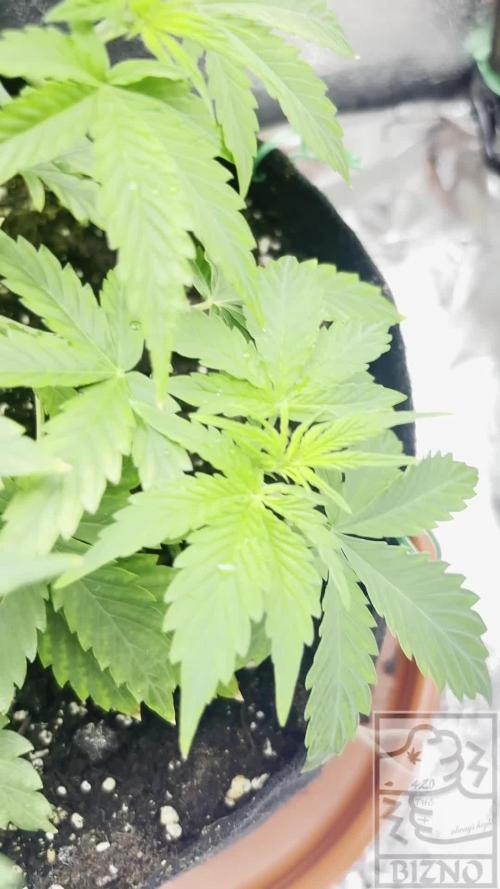
Unfortunately, not everything goes as planned. That wasn't my intention at all, since the only reason I'm here is to show the plant's true potential. Since I wasn't very careful, the plant is experiencing unnecessary stress, but it's nothing that can't be fixed—in fact, even for more serious mistakes, there's a solution. Just don't forget that Mother Nature is in charge.
🗓️ Day 22-25 - Vegetative phase:
As you can see in the first image, unfortunately, while removing the fan leaves, the scissors nicked the main stem. At first, it didn’t seem like a big deal, but since there were clips holding the stem at a 90-degree angle for the LST, the cut opened up even more. I had to abandon the LST and focused solely on securing the main stem and carefully wrapping tape around the cut. The plant has never lost its rigidity, but it's always a good idea to seal the wound right away to prevent fungus or to keep the plant from losing its ability to transport nutrients to the top.
🗓️ Day 26-27 - Vegetative phase:
Obviously, this week will simply be “wasted”; the plant will focus all its energy on healing, and as expected, there will be very little vegetative growth. I limited the nutrients because the plant experienced a big stress due to buildup in the soil; Will only use water until I see the first signs that it’s transitioning to the flowering phase. Today, I switched the LED settings to BLOOM (red lights).
🗓️ Day 28-29 - Vegetative phase:
Luckily for me, the Wedding Cake strain is very resilient, and so is my determination to show the final result even after all this stress—I don't like discarding plants just for the sake of it...
As you can see, it’s actually healing well. After 5 days, I replaced the tape to put on a new one and refresh the cut area. The plant never lost its rigidity or strength. Today I just made the final LST adjustment, but not on the main stem—since I can’t do anything with it for now—but I spread the side branches further apart to make room for light to get through the middle. The fan leaf cutting and LST were stopped as soon as the cut was made, so now it’s best to forget about it, as it will cause unnecessary stress.
__________________________________________________________________________________________________________
📌Nutrition:
- [Water 6.2 ph]: 350ml - When 2 cm of the soil is dry
📌Watering:
Day 23- 350 ml - (Pure water)
Day 25 - 350 ml - (Pure water)
Day 27- 350ml - (Pure water)
📌Hardware Setup:
- [LED Display]: 50W - 55cm distance
- [Light Schedule]: 20/4h


Likes
2
Share


@Bluemels
Follow
Tag 34: Schon wieder kriegen meine Pflanzen helle Blätter! Ich halte mich an das Düngeshema von Biobizz und stelle den ph Wert ein.

Likes
8
Share


@DoMoNe
Follow
Following RQS auto guide : https://www.royalqueenseeds.com/blog-how-to-grow-autoflowering-cannabis-n83
WEEK 4: LATE VEGETATIVE PHASE #22 5.4.- #28 11.4.
#22 5.4.
-Beginning of week VEG #4, flowering will most likely start during this week, so this VEG week might end up short, will see
-Added 1,75liters of clean water to plants, readjusted few LST, and noticed my "wire" is almost too thin to keep plants in place, have to take way longer pieces from now on and properly push em in to ground
-Took some new close-ups, thought i saw few new pistils but after checking the photos, id say they are still all in VEG phase
-Metered Luxes with my new meter, it showd 'bout the same ratings as the LUX meter phone app, so i would say if you need to measure your luxes, 30euros meter works just as fine as an app on your phone (depens on the phone surely)
-Oh, as stated in grow tecniques selected for this week, i will continue LST, i FIMmed (maybe) the purplematic #2 earlier (in base cam the one on the right), and i will possibly do some minor defoliation later this week.
#23 6.4.
-Did nothing but remote monitoring
-Added daily pics and updated weekly timelapse
-Updated/Reorganized also pictures from earlier weeks.
#24 7.4.
-Water with nutes
-Removed all LST to give a few days of upwards growth
#25 8.4.
-Watered 1,5liters with nutes and 3liters without nutes.
-Planning on increasing the waterings to reach the recommended ½liter/24hours (now at 0,48l/24h on this week)
-Also there were some drooping going on, so its best to start going towards that 1liter/24hours meaning ill be using 'bout 3x 1,5liters a day, damn all the carrying :D
(https://www.royalqueenseeds.com/blog-how-to-grow-autoflowering-cannabis-n83)
-Biggest plants felt rough/dry, and also soil looked like it could use a proper amount of water all around the pot.
-Removed few fan leaves from strsklr and prlmtc#1 from bottom
#26 9.4.
-Just remotemonitoring
-on ydays check up, didn't notice any pistils, so maybe its then next week when they start to act up
-still need to get em to grow about 50% more height before ill resume LST
-because sides of the pots are so high (had a too small amount of soil) i need more height so that i will be able to ScrOG when time comes.
-Might take out few leaves tomorrow again when watering, trying to get the lollipopped scrog -look
#27 10.4.
-Watered 1,5liters clean water
-Re-LST:d plants
-Spotted pistils, will still change from VEG to FLO not now nor tomorrow but then monday, to continue with the weekly rythm of mo-su in diary. also Solomatic didn't show pistils yet.
-Added plenty of new photos, and a grow-question 'bout the leaves in StressKiller
-Took few bottom fanleaves from strskllr and prplmtic #1
#28 11.4.
-Just remotemonitoring
Processing
Likes
5
Share

