


Likes
Comments
Share


@NurseGreen23
Follow
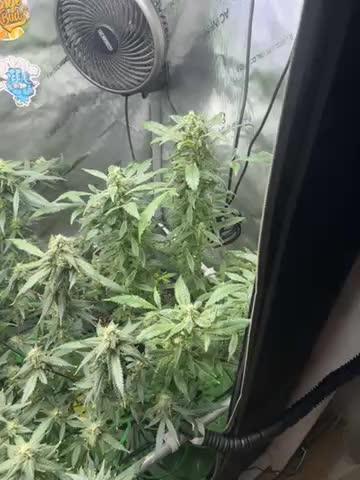
So we're a couple weeks into flower now. I finally got my hands on a ph meter. Our water has a ph of 7.8 but with nutrients comes down to high 6s. Runoff ph was 6.3ish. I'll keep an eye on it the next few feeds and see what happens. Found a little caterpillar that had been munching on my leaves, no eggs that i could see so hopefully not a prob. Had a couple weekends where I've been away and girl has dried out a bit between waterings but she's held up under the stress ok.

Likes
4
Share


@Fortunato
Follow
Fed the plants for the first time. They produced their first big fan leaves which was exciting to me. Humidifier stopped.

Likes
2
Share


@Romobo16
Follow
They are growing so fast, I’m in love lol
I bought Hydroguard because I was losing the battle with hydrogen Peroxide and I’m so glad I did the change, I no longer have root rot, I highly recomend Hydroguard.


Likes
69
Share


@nonick123
Follow
Cosecha
Reporte de Peso húmedo & Peso Seco de LemonPaya by FastBuds!
⚖️ Total peso húmedo 186
⚖️ Total peso seco TBD
💦Pérdida de H2O durante el proceso de secado TBD
🎨Colores
Un color verde claro brillante!
👃Olores
💐Floración Papaya (predominante) con un toque (potente) de delicioso limón
🏜️ Secado TBD
🍗 Curado TBD
🍽️Sabor
A definir cuando esté bien curada en el reporte de humo
Variedad
💪Resistencia
Resistente 9/10! - Floración detenida por 10 días por el bloqueo de nutrientes que se ha presentado en la mayoría de plantas de este ciclo.
Pero ella se recuperó muy bien y ha hecho unos cogollos densos al final de floración!
🏋️♂️Entrenamiento:
Se ha adaptado bien al topping (en 2 ocasiones), supercropping y LST!
Una crack!
🌱Vegetativo:
Un vegetativo sin incidencias, con una bonita estructura!
Ya en vegetativo al frotar las ramas, se desprendía olor a Papaya 😍
💐 Floración:
Cogollos muy densos a pesar del bloqueo de nutrientes que superó sin problemas en 10 días!
El olor a Papaya y fondo de limón es impresionante!
Genética:
Estupendo trabajo de breeding de FastBuds!
👨⚖️Conclusión:
Una cepa deliciosa a plantar una vez en la vida! Muy interesante el perfil de Papaya y Limón!

Likes
34
Share


@Birale91
Follow
Harvested on day 113 after ending week 9 of bloom. after washing week ago with adding flora kleen and then after 3 days turn light to 48 hours darkness before harvest.
First trim in harvest defoliated big fan leaves with all the leaves without sugar and the tip of the small leaves.
When the buds will be dry ill do second trim untill the bud will be like dense diamond.
So, really love this strain and i give her a score of 9/10.
First, for the buds beauty,dense.
purple,red,yellow,pink and blue are showing on buds and its realy amazing.10/10.
Smell are very sweet and strong of grapes.9/10.
Taste is very fruity sweet grapes and i like it.9/10.
Very strong effect on mind but feel very good.9/10.
So, for final, 9/10.
Something like week drying and ill update more pics and videos.
*Added video of drying buds at day 4.
*Added video and pics of well dried buds.
ill add more stunning pics soon.

Likes
45
Share


@masterofsmeagol
Follow
9/24 Busy as fuck and personal emergencies always hit during harvest season. I took a few tops from my favorite gmo just so I have some if the weather fucks me. I'll take more today probably. WATERED YESTERDAY. I'll post pictures of dry flowers and do the reports. Three are still standing. That huge gmo is going to extracts though.
9/25
9/26 We are getting a week of rain. After looking at my trichs I decided to pull the GMO's I had left. I was sick of cutting branches due to grey mold and I was starting to lose buds to botrytis. Trichs got to about 10% amber on most. Maybe more. I worked like a mule. I was going to leave my favorite gmo and the sherb pie. However, my wife had multiple medical emergencies that required hospitalization. I couldn't risk letting my girls turn to mush if she had to stay. I'm glad with my decision. Everyone now I see is asking about bud rot and pm cures. This happened at the same time last year. She was hospitalized during late late flower. I couldn't keep this updated and I took the plants ad quickly as I could and rough wet trimmed some of them. Some plants got hung whole. I have been in trim jail. I have finished two plants and that is working my balls off. The one in the fifty and the event horizon. I'll do the harvest reports and add pictures but with my wife how she is and the work load I'm going to have to wait. I also left buds to ripen right before the rain and got lots of nice amber flowers that I froze to make a temple ball. I have lots of content. I just need time and a place to do it. I have one lone survivor. The seedling in the ten that seems to be a sativa hybrid. She's a beast and I think can handle the rain due to the fluffy buds. If I see problems I could easily carry it inside. I'll be back with some pics and videos but for now breaks.
9/28 Busy as FUCK. SICK. Been in and out of the hospital with the wife. Looking back on diaries she's in the hospital when I'm harvesting the past few years. I got two strains curing right now. I got a shit ton drying and I'm in trim jail. I haven't taken picturesor been on here but ill be more active i just havent hadcthe time. I'll wait until shits dry and I can do my harvest reports. I'll look to see if I have any pictures I can upload My sativa hybrid survived the rain. All this rain has made its leaves turn yellow and start to drop. It needs food I think. I'll check the trichs but I know it's not ready. The buds are like soda bottles but they are loose. Like a string of calyxes. I don't flgrow sativas so I'll have to ask for some help. I'm trying to decide if I should feed it. It looks hungry. I'm going to have to scope it and then I'll feed if necessary. I'll take pictures and a video when I have the chance.
9/29 Rain stopped and the sun came out. I need to take some pictures and put them up here and do a harvest report. My little BIG Sativa hybrid in the ten got scoped today. It's weird it's starting to foxtail some. . I've had tons of emergencies but I've bern kicking asses and taking names. I've got one GMO (one pheno was much faster flowering than the others), one event horizon and the sherb pie all curing. I'm just waiting on the others to dry. I've got a couple gmos that are just going to extract. One is really nice though and I'm keeping it for smoke. That's trimmed too. I have been working on the other event horizon which will be done today because it's time for it to be cured. I am sick and sore as fuck but I know how important this is and it's mine and my wife's medicine for the year. Sherb pie was a let down quantity wise but I let it get eaten by ear wigs for too long. I've got to get back to it but when I get it done I'll take the pictures and do the reports reports but this breaks over. I've got a BUNCH of fresh frozen too that I'm planning on running bubble hash with and aging a temple ball.


Likes
8
Share


@Jalfax
Follow
➡️ Risultato molto scadente per quanto riguarda la resa. Ma c era da aspettarselo questa runtz ha attraversato la transizione della grow room in una grow con condizioni ottimali. In più è cresciuta in un vaso da 3L ed è stata la mia prima esperienza.
➡️Per quanto riguarda il prodotto finale nulla da dire, molto aromatico di frutti tropicali con note dolci e terrose.
➡️Riprenderò questi Semi per vedere cosa possono rendere in vasi da 7L e tutte le cure possibili😊
Likes
18
Share


@Ultraviolet
Follow
Green light is radiation with wavelengths between 520 and 560 nm and it affects photosynthesis, plant height, and flowering. Plants reflect green light and this is why they appear green to our eyes. As a result, some growers think that plants don’t use green wavelengths, but they actually do!
In fact, only around 5 – 10% of green light is reflected from leaves and the rest (90 – 95 %) is absorbed or transmitted to lower leaves [1].
Green wavelengths get used in photosynthesis. Chlorophyll pigments absorb small amounts of green wavelengths. Light that doesn’t get absorbed is transmitted to leaves that are shaded out from direct light. This means that leaves at the bottom of the canopy get more green light than leaves at the top. A high proportion of green wavelengths compared to other colors tells lower leaves that they are being shaded out, so they are able to react accordingly. Lower leaves may react by opening or closing their stomata or growing longer stems that help the leaves reach brighter light [1, 2, 3].
When it comes to growing cannabis, many cultivators are interested in the quality of light used for the flowering stage. In many plants, flowering is regulated by two main photoreceptors: cryptochrome and phytochrome. Both photoreceptors primarily respond to blue light but can also respond to green, although to a lesser extent. Green can accelerate the start of flowering in several species (although cannabis has yet to be tested) [1, 4, 5]. However, once flowering has begun, it’s important to provide plants with a “full spectrum” light that has high amounts of blue and red light, and moderate amounts of green, in order for photosynthesis to be optimized.
Green light mediates seed germination in some species. Seeds use green wavelengths to decide whether the environment is good for germination. Shade environments are enriched in green relative to red and blue light, so a plant can tell if it is shady or sunny. A seed that senses a shaded environment may stay dormant to avoid poor growing conditions [1]. Some examples of plant species where researchers have documented this response are: ryegrass (a grass that grows in tufts) and Chondrilla (a plant related to dandelion) [1, 6].
Although green wavelengths generally tell plants NOT to germinate, there are some exceptions! Surprisingly, green wavelengths can stimulate seed germination in some species like Aeschynomene, Tephrosia, Solidago, Cyrtopodium, and Atriplex [1, 6, 7].
Of course, light is not the only factor affecting seed germination – it’s a combination of many factors, such as soil moisture, soil type, temperature, photoperiod, and light quality.
When combined with red and blue light, green can really enhance plant growth [1, 8]. However, too much green light (more than 50% of the total light) can actually reduce plant growth [8]. Based on the most current research, the ideal ratio of green, red, and blue light is thought to be around 1:2:1 for green:blue:red [9]. When choosing a horticultural light, choose one that has high amounts of blue and red light and moderate amounts of green and other colors of light.
Not many studies can be found about the effect of green light on cannabis growth or metabolism. However, if one reads carefully, there are clues and data available even from the very early papers.
Mahlberg and Hemphill (1983) used colored filters in their study to alter the sunlight spectrum and study green light among others. They concluded that the green filter, which makes the environment green by cutting other wavelengths out, reduced the THC concentration significantly compared to the daylight control treatment. It has been demonstrated that green color can reduce secondary metabolite activity with other species as well. For example, the addition of green to a light spectrum decreases anthocyanin concentration in lettuce (Zhang and Folta 2012).
If green light only reverses the biosynthesis of some secondary metabolites, then why put green light into a growth spectrum at all? Well, there are a couple of good reasons. One is that green penetrates leaf layers effectively. Conversely red and blue light is almost completely absorbed by the first leaf layer.
Green travels through the first, second, and even third layers effectively (Figure 2). Lower leaf layers can utilize green light in photosynthesis and therefore produce yields as well.
Even though a green light-specific photoreceptor has not yet been found, it is known that green light has effects independent from the cryptochrome but then again, also cryptochrome-dependent ones, just like blue light. It is known that green light in low light intensity conditions can enhance far red stimulating secondary metabolite production in microgreens and then again, counteracts the production of these compounds in high-intensity light conditions (Kim et al. 2004). In many cases, green light promoted physiological changes in plants that are opposite to the actions of blue light. In the study by Kim et al. blue light-induced anthocyanin accumulation was inhibited by green light. In another study it has been found that blue light promotes stomatal opening whereas green light promotes stomatal closure (Frechilla et al. 2000). Blue light inhibits the early stem elongation in the seedling stage whereas green light promotes it (Folta 2004). Also, blue light results in flowering induction, and green light inhibits it (Banerjee et al., 2007). As you can see, green light works very closely with blue light, and therefore not only the amount of these two wavelengths separately is important but also the ratio (Blue: Green) between these two in the designed spectrum. Furthermore, green light has been found to affect the elongation of petioles and upward leaf reorientation with the model plant Arabidopsis thaliana both of which are a sign of shade avoidance symptoms (Zhang et al. 2011) and also gene expression in the same plant (Dhingra et al. 2006).
As mentioned before, green light produces shade avoidance symptoms which are quite intuitive if you consider the natural conditions where the plants grow. Not all the green light is reflected from the highest canopy leaves in nature but a lot of it (50-90%) has been estimated to penetrate the upper leaves at the plant level ((Terashima et al., 2009; Nishio, 2000). For the plant growing in the understory of the forest green light is a signal for the plant of being in the shade of a bigger plant. Then again, the plants growing under unobstructed sunlight can take advantage of the green photons that can more easily penetrate the upper leaves than the red and blue photons. From the photosynthetic pigments in higher plants, chlorophyll is crucial for plant growth. Dissolved chlorophyll and absorb maximally in the red (λ600–700 nm) and blue (λ400–500 nm) regions of the spectrum and not as easily in the green (λ500–600 nm) regions. Up to 80% of all green light is thought to be transmitted through the chloroplast (Terashima et al., 2009) and this allows more green photons to pass deeper into the leaf mesophyll layer than red and blue photons. When the green light is scattered in the vertical leaf profile its journey is lengthened and therefore photons have a higher chance of hitting and being absorbed by chloroplasts on their passage through the leaf to the lower leaves of the plant.
Photons of PPFD (photosynthetic photon flux density) are captured by chlorophyll causing an excitation of an electron to enter a higher energy state in which the energy is immediately passed on to the neighboring chlorophyll molecule by resonance transfer or released to the electron transport chain (PSII and PSI). Despite the low extinction coefficient of chlorophyll in the green 500–600 nm region it needs to be noted that the absorbance can be significant if the pigment (chlorophyll) concentration in the leaf is high enough.
The research available clearly shows that plants use green wavelengths to promote higher biomass and yield (photosynthetic activity), and that it is a crucial signal for long-term developmental and short-term dynamic acclimation (Blue:Green ratio) to the environment. It should not be dismissed but studied more because it brings more opportunities to control plant gene expression and physiology in plant production.
REFERENCES
Banerjee R., Schleicher E., Meier S. Viana R. M., Pokorny R., Ahmad M., Bittl R., Batschauer. 2007. The signaling state of Arabidopsis cryptochrome 2 contains flavin semiquinone. The Journal of Biological Chemistry 282, 14916–14922.
Dhingra, A., Bies, D. H., Lehner, K. R., and Folta, K. M. 2006. Green light adjusts the plastic transcriptome during early photomorphogenic development. Plant Physiol. 142, 1256-1266.
Folta, K. M. 2004. Green light stimulates early stem elongation, antagonizing light-mediated growth inhibition. Plant Physiol. 135, 1407-1416.
Frechilla, S., Talbott, L. D., Bogomolmi, R. A., and Zeiger, E. 2000. Reversal of blue light -stimulated stomatal opening by green light. Plant Cell Physiol. 41, 171-176.
Kim, H.H., Goins, G. D., Wheeler, R. M., and Sager, J. C. 2004.Green-light supplementation for enhanced lettuce growth under red- and blue-light emitting diodes. HortScience 39, 1617-1622.
Nishio, J.N. 2000. Why are higher plants green? Evolution of the higher plant photosynthetic pigment complement. Plant Cell and Environment 23, 539–548.
Terashima I., Fujita T., Inoue T., Chow W.S., Oguchi R. 2009. Green light drives leaf photosynthesis more efficiently than red light in strong white light: revisiting the enigmatic question of why leaves are green. Plant & Cell Physiology 50, 684–697.
Zhang, T., Maruhnich, S. A., and Folta, K. M. 2011. Green light induces shade avoidance symptoms. Plant Physiol. 157, 1528-156.
Wang, Y. & Folta, K. M. Contributions of green light to plant growth and development. Am. J. Bot. 100, 70–78 (2013).
Zhang, T. & Folta, K. M. Green light signaling and adaptive response. Plant Signal. Behav. 7, 75–78 (2012).
Johkan, M. et al. Blue light-emitting diode light irradiation of seedlings improves seedling quality and growth after transplanting in red leaf lettuce. HortScience 45, 1809–1814 (2010).
Kasajima, S., et al. Effect of Light Quality on Developmental Rate of Wheat under Continuous Light at a Constant Temperature. Plant Prod. Sci. 10, 286–291 (2007).
Banerjee, R. et al. The signaling state of Arabidopsis cryptochrome 2 contains flavin semiquinone. J. Biol. Chem. 282, 14916–14922 (2007).
Goggin, D. E. & Steadman, K. J. Blue and green are frequently seen: responses of seeds to short- and mid-wavelength light. Seed Sci. Res. 22, 27–35 (2012).
Mandák, B. & Pyšek, P. The effects of light quality, nitrate concentration and presence of bracteoles on germination of different fruit types in the heterocarpous Atriplex sagittata. J. Ecol. 89, 149–158 (2001).
Darko, E. et al. Photosynthesis under artificial light: the shift in primary and secondary metabolism. Philos. Trans. R. Soc. B Biol. Sci. 369 (2014).
Lu, N. et al. Effects of Supplemental Lighting with Light-Emitting Diodes (LEDs) on Tomato Yield and Quality of Single-Truss Tomato Plants Grown at High Planting Density. Environ. Control Biol. 50, 63–74 (2012).

Likes
7
Share


@Xpie77
Follow
During the second week of flowering for Purple Kush, here’s what you can expect and steps to ensure a successful grow:
Plant Development
1. Bud Formation: Small pre-flower buds (calyxes) will begin forming along the nodes. Pistils (white hairs) may be visible.
2. Stretch Phase: The plant will still be stretching, potentially doubling in height as it transitions into full flowering mode.
Care Tips
1. Lighting: Ensure a consistent 12/12 light cycle. Use strong flowering lights (HPS, LED) with red spectrum dominance.
2. Nutrients: Transition to flowering nutrients with a higher phosphorus (P) and potassium (K) ratio. Avoid overfeeding nitrogen to prevent leafy growth.
Example: 1-3-2 NPK ratio is common in flowering.
3. Watering: Keep watering consistent but avoid overwatering. Allow slight drying of the topsoil between watering.
4. Temperature & Humidity:
Ideal temperature: 65–80°F (18–26°C).
Humidity: Reduce to 40–50% to prevent mold/mildew as buds develop.
Training
If you’re doing any low-stress training (LST), finish this early to avoid stressing the plant during full bloom.
Remove any dying or large fan leaves blocking bud sites to improve light penetration.
Monitoring
Watch for pests like spider mites and early signs of mold or nutrient deficiencies.
Look for healthy, vibrant leaves and steady growth in bud sites.
By week 2, your Purple Kush should show noticeable progression in flower development, setting you up for a good yield in the weeks to come.

Likes
34
Share


@Spliffi
Follow
Germination 20 September 2023
Heya 🤙👍🤙🌱🌱🌱
In the heart of a humble garden, a miraculous journey is about to unfold. Beneath the soil's dark, nurturing embrace, a seed lies dormant, awaiting the precise moment to burst forth into life. It is a marvel of nature, a tiny capsule of potential, encoded with the blueprints of the plant it aspires to become.
As the heavens open, raindrops penetrate the earth, quenching the thirst of the soil and signaling to the seed that its time has come. The seed absorbs this life-giving moisture, swelling as it takes in water. It's as if the seed is awakening from a long slumber, stretching its embryonic limbs for the very first time.
Within this subterranean realm, the seed's outer coat softens, and a tiny rootlet begins to emerge. This is the radicle, the seed's first root, and it instinctively knows to journey downward, anchoring itself into the soil. It is the plant's lifeline, seeking out water and nutrients essential for growth.
Simultaneously, a delicate shoot, known as the plumule, makes its way upwards, drawn by an invisible force towards the sky. It is a daring expedition, fraught with obstacles, as it navigates through the soil. Yet, guided by an innate sense of direction, it perseveres.
Finally, breaking through the soil's surface, the shoot unfurls its first leaves, miniature versions of what they will one day become. These are the cotyledons, a pair of leaves that have been stored within the seed, packed with nutrients to sustain the young plant in its earliest days.
As the sun's rays touch these fledgling leaves, photosynthesis begins. It's a momentous occasion, the plant's first breath, as it converts sunlight into energy. The seedling, still fragile yet full of promise, has successfully embarked on the first chapter of its life. From here, it will face countless challenges and opportunities, but for now, it stands as a testament to the remarkable resilience and complexity of nature.
Thank you for Reading 👍🤙👍🌱
Likes
16
Share


@SubliminalSociety
Follow
The flowers have started to swell and increase in size nicely. She's not stretching much, so I guess, these 18cm will be it.
She's getting a really shimmery purple colour. I tried capturing it in a video.
I removed some of the older leaves to optimize for light and optimized fertilizer for bud size (Hi PLAGRON Alga Bloom!).
Give us all your CBD goodness, purple lady!

Likes
7
Share


@Viccrazyweed
Follow
Flushing week, i have overwatteres her and let her drain to wash off the roots, fruit and mature week it seems like in another week she well be done ☺️
Likes
20
Share


@420DeepGrow
Follow
Gracias al equipo de Divine Seeds, Marshydro y XpertNutrients sin ellos esto no seria posible.
💐🍁Fractal:
La semilla de marihuana Fractal es una cepa especialmente psicodélica que Semillas Divinas desarrolló para experiencias esotéricas y místicas, meditación y creatividad. La potente y vívida Skunk#1 fue cruzada con una pegajosa Afghani Indica, y el resultado es ahora conocido como Fractal. Este exótico híbrido es resinoso, picante y productivo. La mejor opción para el cultivo comercial: un compromiso entre mayores rendimientos y maduración rápida.
En interiores se espera una altura de 1,70 m, en exteriores las plantas crecen hasta 2 m. Fractal se adapta a todo tipo de entorno de cultivo: cajas de cultivo, instalaciones hidropónicas o aeropónicas, plantaciones exteriores, balcones, terrazas e invernaderos. Para un mejor rendimiento se recomienda entrenar a las plantas de Fractal para ampliar su estructura y limitar su crecimiento vertical. Usar ScroG o SoG, LST, FIM o topping.
Fractal tiene una inmunidad inherente al moho y a las plagas de insectos, pero como sus colas son gruesas, proteja sus plantas del aire viciado. También durante las semanas de lluvia su plantación puede necesitar ser cubierta. Listo para la cosecha al aire libre en octubre. Grandes y densos cogollos.
Los cogollos de marihuana de la variedad Fractral huelen a hachís y algo a tierra, desprenden cedro y notas afrutadas al romperse. Mida su porción con cuidado: su potencia está por encima de la media. Con Fractal experimentas un apedreamiento general que te hace sentarte o frena tu movimiento. Perfecto para pasar una noche junto a una hoguera. Es mejor consumirlo por la noche.
🚀🌻 Consigue aquí tus semillas:
https://divineseeds.net/es/fractal-fem/
💡FC6500: Eficiencia líder en el mercado: la lámpara de cultivo LED FC-E6500, que ostenta un estatus líder en el mercado, es una solución rentable con un PPE de 2,8 µmol/J y un rendimiento máximo de 2,5 g/vatio. Ofrece un PPF alto de 2026 umol/S y es adecuada para una cobertura de vegetación de 1,50 m x 1,50 m y una cobertura de flores de 1,20 m x 1,20 m.
Iluminación versátil y uniforme.
https://marshydro.eu/products/mars-hydro-fc-e-6500-730w-commercial-led-grow-light/?gad_source=1&gclid=Cj0KCQjw1qO0BhDwARIsANfnkv9IIrYSbmJqz8PqpJOIyWwJfp5bc3SGJgUV68USLQ4tjmXDYwoBuAsaAue3EALw_wcB
🏠 : Marshydro 1.50 x 1.50 x 1.80, carpa 100% estanca con ventanas laterales para llegar a todos los lugares durante el grow
https://marshydro.eu/products/diy-150x150x200cm-grow-tent-kit
🌬️💨 Marshydro 6inch + filtro carbon para evitar olores indeseables.
https://marshydro.eu/products/ifresh-smart-6inch-filter-kits/
🍣🍦🌴 Xpert Nutrients es una empresa especializada en la producción y comercialización de fertilizantes líquidos y tierras, que garantizan excelentes cosechas y un crecimiento activo para sus plantas durante todas las fases de cultivo.
Consigue aqui tus Nutrientes:
https://xpertnutrients.com/es/shop/
📆 Semana 5:
Gran semana , he eliminado las ramas bajas y a algunos ejemplares se les ha practicado poda apical.
Voy a dejarlas unos dias mas en crecimiento antes de pasarlas a floración para asi ocupar mas espacio en la carpa.
Continuo con las dosis de nutrientes recomendadas por el fabricante.
Se vuelve a aplicar tierra de diatomeas para evitar plagas indeseadas.
Potencia del foco: 42%
Extra UV: 5min x dia

Processing
Likes
12
Share


@2Stones1Bird
Follow
Checkout my Instagram @smallbudz to see the Small budget grow setup for indoor use, low watt, low heat, low noise, step by step.
01/11/2019 -
Started using BioBizz Alg-a-Mic on spray, using it once per day at lights off, 1 or 2 puffs to create a light mist, only on non feed days,
I mixed 0.1ml on 100ml water 6.4 PH.
03/11/2019 - Gave her 250ml plain water with 6.4PH
05/11/2019 - Gave her 0,15ml of each BioBizz Grow, Max and Bloom on 300ml water 6 PH didn't manage to get it higher to 6.3 at least.
06/11/2019 - She started to show some pistols, probably entering pre-flower.
07/11/2019 - Soil was to dry due to 2930c temps gave her 0,500ml of 6.5PH water with 0,25ml Grow, 0,25ml Max, and 0,45ml Bloom BioBizz.

Likes
9
Share


@rolling_stoned
Follow
I completely changed the water and nutrients this week and added some Canna PK13/14. I have also added another MARS Hydro TW2000 light to the tent to try and get more light to the lower buds. Gave both plants a trim also for the same reason. I was concerned they were still not ready to harvest, but expert advice from FastBuds420 told me they probably needed a further 4 weeks. And I will give them an update and the information they requested. I think it's probably because I had the lights turned down to 25% during the veg stage and only at 50% for the early flowering stage; it was not till recently, about 3 weeks, I think the lights got turned up to 100%.


Likes
8
Share


@Ikalimkury
Follow
Craaazyyyy weeks
Craaazyyyy growth
Loving it AAALLLL
Ok, so, this is the 5th week.
Plants started flowering during 4th. They've had massive growth (from my perspective and experience 😅😅) and started to smellll
I think I was consistent on that LST. Always trying to give all the heads as much light as possible. It was a lot of work, but I still loved it. Having 2 plants makes it more fun because I need to have a diferent point of view for each one.
S has been toped, and with LST I was able to have lots of heads very well positioned
B is responding marvelously to bending, wich makes it hard to bend because THERE IS NO MORE ROOM TO RUN TO 😂 she is growing a lot, and there's just to much leaves to tuck...
As I was saying they're different, wich I am loving
I decided to defoliate them as my last stress move towards the plants.
Cutted the leaves that were on the bottom and covering the top heads, and the very small, tiny, thiny side branches.
I am lowering the LST to minimum.
Since the heads I chose, now have space and LIGHT to grow at will, I want to not disturb them as much as I can.
You can see that when I defoliated them, there was light on the soil. And just in 1 day difference, even at this point, you almost can feel them grow! I was amased, because of the stress I had caused them.
Yet, look with attention, you can spot the differece.
(I hope you can see it too through the screen, because it's real 😅)
Look at the S. She is doing just greaaaaat. Think it was a good decision to top her. Hope it keeps growing as it is!
Smell is increasing
Day 30 changed the light to 24h ON.
Day 31
- Heads bigger
- !QUESTION!
-I always water the plants simultaneously. B's vase is noticeble heavier. Cant understand why... I'm going to start checking if they need to be watered at different times. I can only imagine that the root system is different, due to its "differences outside". But really! They have suffered different stress at different times... different root system = different drainage?
Food for thought
Day 32
Defoliated them because I thought they were too bushy. Felt like it maybe was a mystake, later, due to some recommendations i read...
Day 34
Plants seem to have reacted ok to defoliation, lets see how the next days go by
Day 36
Starting to get frosty and smelly
Plants seem healthy ❄️
TEMPERATURE: 22-27°C
RH: 40-60%
WATER PH: 6.2-6.5


Likes
8
Share


@Black_Widow
Follow
Пред последняя неделя
Сделал сегодня Flush для Bruce Banner
Dos Si Dos#1 и Kalaschnikova еще 2 недели , Ripen и Flush
Dos Si Dos#2 через пару дней harvest


Likes
2
Share


@Albanymedicinalgarden
Follow
Everybody is looking happy and healthy. Applied cover crop to Glueberry OG and regret not doing the rest now. No signs of stress

