


Likes
Comments
Share


@Topshelf_only
Follow
Still no amber trichomes in sight but starting flush from next watering. Only have 3 weeks till I move and need this all trimmed and dry within 3 weeks . Throwing every trick in the book at it get it to finish. Lifted light as high as I could get it and cut back to 75 % from 100. As well as cutting light hours back to 10/14

Likes
75
Share


@Dedon
Follow
Hi everyone !
it's the end, a bit sad for these ladies, but happy to taste my own production and i hope i can be self sufficient
i learn a lot from this first experience, and i want to thanks all people who support me 🙏. I have a goal for the next session, keep a healthy plant / root system until the end 💪 thanks for all the advices.
if i can leave a feedback and some advice for my next grow and for people who are interested by this method :
- NEVER use a (too big ) rigid frame if you can't walk around your plant. you need full access to remove leaf, cut some branch, etc ... and check plant/root health during the whole session.
- For NFT Setup, Change the nutrient solution frequently and if you are a beginner and don't know how to keep a healthy system,
Don't take risk ! and change the solution each week or 10 day MAX, "you are not a wizard Harry !"
- Oxygen is life ! Oxygen is life ! Oxygen is life ! Oxygen is life ! Oxygen is life ! Oxygen is life !
- Don't try to make too big buds. with a 400W HID & cooltube, buds are correct 40cm from the top, after 40cm, bud are fluffy, popcorn bud 😕 so i think i'll keep only 40/50cm for plant who are under the light, 30 for plants on the edge and cut everything lower.
- Check water consumption daily ! the better way to know about plant health : 1:
- Thanks for support and see you on next grow 😁
- Here's your potatoe & a timelapse from 2018/11/02 to 2019/01/06 ( 4115 photos / 60 Go )

Likes
79
Share

@McBubatz
Follow
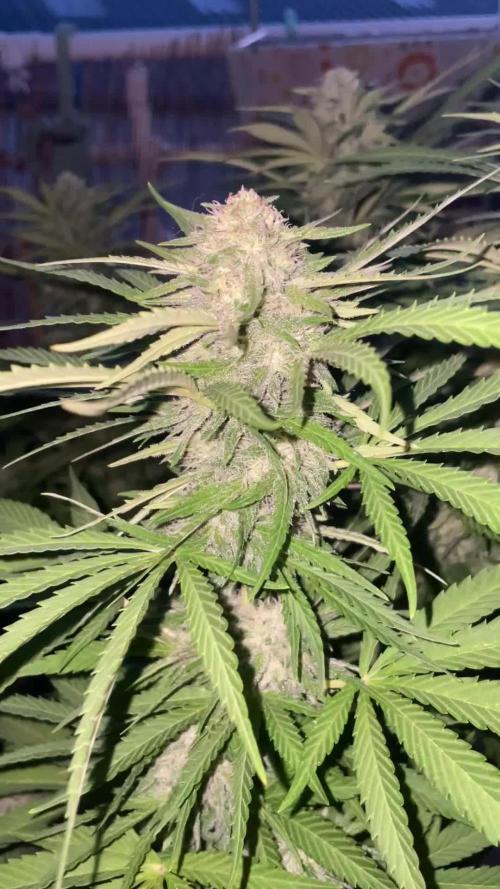
13. Woche, BW 7. Nectar Drip performt ordentlich, meiner Meinung nach die schönste bis jetz was die Buds angeht, macht auch ordentlich Tempo, muss nächste woche schon mal die Trichome checken. Ansonsten sieht sie wirklich gut aus, Geruch is ziemlich süß aber schwer zu definieren nach was 😅🤣.


Likes
6
Share

@Furet
Follow
September 12 : End of the first week without nutrients. The buds have continued to swell nicely, the trichomes are almost all cloudy on the buds, and some amber ones are starting to appear on the sugar leaves.
I might be able to harvest next week, or the week after at the latest 🔥
September 13 : Mold appeared this night on a bud 😭 I’m ready to cut this stem if it happen again

Likes
25
Share


@Ultraviolet
Follow
Permanent Marker weed strain possesses the genetics for high anthocyanin production, which is responsible for its signature deep purple. While the genes are present, the expression of these colors is often enhanced by "thermal stress" (lower temperatures) during the final three weeks of flowering, which triggers the production of these pigments.
👋 Raising the Carbon-to-Nitrogen (C:N) ratio in the growing medium to avoid over-immobilizing nitrogen, on the flip side, being careful not to trigger early autophagy. Moderate, controlled increases in sugar support the energetic demands of flowering and act as a signal trigger, but excess sugar is more likely to inhibit flowering or damage the plant. Balance, like everything else. Visually, when the chloryphyll green gets darker, it is a subtle indicator that the concentration of nitrogen is increasing / more is being stored than is being used. I noticed when you push very high intensity lighting, it slowly fades the green as the plant degrades chloryphyll faster than it can be replenished. When the green of the leaf continually gets darker, it is an indication that the concentration levels of nitrogen are increasing, and I dont want to increase light intensity.
Turn down the nitrogen faucet. C:N ratio dictates the rate at which nitrification occurs, if at all.
The Carbon-to-Nitrogen (C:N) ratio acts as a critical biological "on/off switch" (or regulator) for nitrogen turnover by determining whether microbes
immobilize (consume/tie up) or mineralize (release) nitrogen during the breakdown of organic matter. This ratio regulates microbial activity by defining the balance between available energy (carbon) and building materials (nitrogen). The C:N ratio in a medium acts as a critical regulator of nitrification, effectively functioning as an "on/off" switch for the dominance of either autotrophic nitrifying bacteria or heterotrophic bacteria.
The shade of green in chlorophyll is subtly linked to the enzyme Rubisco through a co-evolutionary, functional relationship designed to optimize photosynthesis. Chlorophyll absorbs blue and red light for energy, reflecting green light, a process that ensures the "light-dependent" reactions provide the correct, controlled amount of energy (ATP and NADPH) needed by Rubisco to perform its "light-independent" carbon fixation. Because Rubisco is a relatively inefficient and slow enzyme—often considered the bottleneck of photosynthesis—chlorophyll and the overall structure of the leaf have evolved to manage energy distribution to prevent overwhelming the Calvin cycle.
While chlorophyll absorbs mainly red and blue light, it is not perfectly efficient, and leaves appear green because some green light is reflected or transmitted. This reflection allows light to penetrate deeper into the leaf, preventing the surface chloroplasts from becoming overloaded and enabling a more efficient distribution of energy to the high volume of Rubisco located throughout the leaf's mesophyll.
The rate of chlorophyll-driven electron transport (light reactions) is matched to the potential rate of carbon fixation (Rubisco activity). If Rubisco were faster, leaves might be darker; however, the "shade of green" represents a balance that prevents chlorophyll from producing more energy than the inefficient Rubisco can process. The green color itself is a byproduct of a photosynthetic system tailored to feed a slow, yet crucial, enzyme (Rubisco) just enough energy to maximize carbon assimilation without inducing excessive oxidative stress or inefficiency.
The shade of green in leaves is directly linked to the concentration of chlorophyll, which is in turn strongly correlated with the amount of
Rubisco (Ribulose-1,5-bisphosphate carboxylase/oxygenase) and, consequently, the rate of carbon fixation. Darker green leaves generally indicate a higher concentration of both chlorophyll and Rubisco, signifying greater capacity for photosynthesis.
Increase output or reduce input. Subtle tells.
While an excess of nitrogen (specifically ammonium) can cause an imbalance, nitrification—the microbial conversion of ammonia to nitrate—is highly sensitive to a variety of environmental, chemical, and physical factors. Because it depends on specific, slow-growing bacteria (Nitrosomonas and Nitrobacter) and archaea, anything that stresses these organisms can disrupt the process.

Likes
2
Share


@Nofeckingclue79
Follow
I've not had to trim any fan leaves they have all died on their own and I have just picked them off with tweezers apologies for the video I don't know what happened but I add smoked a doobie before 😂😵💫

Likes
20
Share


@Cultiuherba
Follow
Ultima semana. Empiezo el flush. Reduzco horas de luz y potencia progresivamente.


Likes
35
Share


@Kin_G
Follow
Not actually sure if end of week 5, I will check at some point maybe :P
Removed 3 Hermies, will check think 1 wasn't random/"?".
Pinched tops of pretty much all plants.
Chopped the males up a bit, probably just remove them soon anyways, but some super early pollination would be okay I rate.
Maybe try grow like, a carrot, pumpkin, between or where I removed males.
Guess today I feed a lil bit and water well otherwise. About 700ml per plant now.
Processing
Likes
38
Share


@snowybudz
Follow
Light schedule will be changed to 1212 today. One of the plants (lemon drop) basically already has full buds.. is that normal? Other then that things are good and can't wait to flip today!!!
Edit: changed light schedule on 3/14


Processing
Likes
4
Share


@Andres
Follow
she grows healthy ... with top substrate of mills ... she has a height of 79 cm ... the days are cloudy and under the temperature ... let's hope as we go with it ...
Likes
3
Share


@Spankstheedanks
Follow
Still been very hot lately but she doesn't seem to mind it growing nicely her topped area healed nicely with new growth already steming out nice color and even a faint smell


Likes
19
Share


@SirBudAlotts
Follow
Apologies for the delayed updates..
Week 5 and she is in flower...She experienced no training at all..
I was abit skeptical about growing her outside..even though she is not that big and branchy..
I just wanted to see how she would respond.
I do know that the yield will be jeopardized but it's all in good sport hehe 😜 😉..
Feeding: She has been in living soil since a baby added ocean mix dry amendments to the top soil once I saw her first pistils..


Likes
16
Share


Likes
15
Share

@Radagast_
Follow
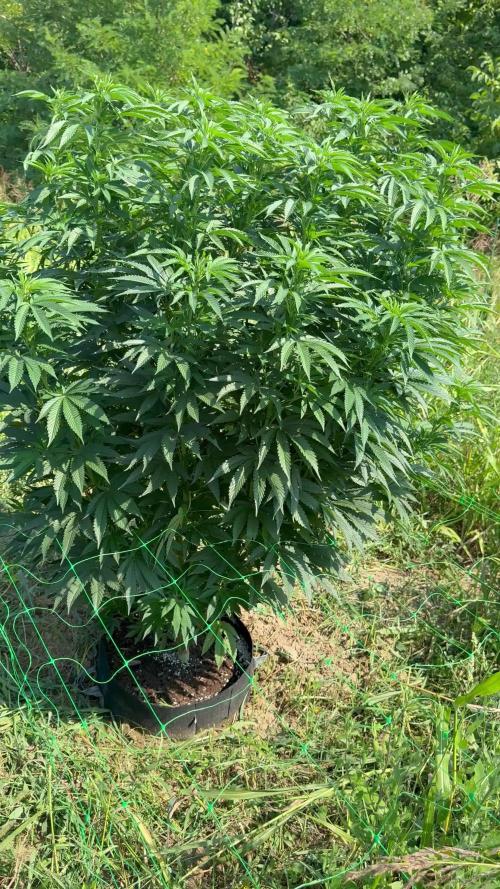
07.08.
White Runtz
Day 100#
The plant was at the end of its fourteenth week two days ago.
Since the last update, it hasn't grown in height, at least that's what the meter says, and if it seems to me that it's much bigger than the last update, if it's not taller, it's definitely wider.
Although the plant is entering preflower for the second week, it has never really entered and maybe it is because it is focusing on creating future flowers because it was not under any visible stress except for 2-3 minor storms, but it had absolutely no effect on it.
The next watering will get bloom and a half dose of boost to try to stimulate flowering.
The pictures and video are from yesterday.
Stay High and Keep Growing!!!

Likes
69
Share


@Mimi420
Follow
Hi guys!
The girls streched out I think.The tallest is Blue Kush with 95 cm,and the shortest is Mataro Blue with 85cm.Some leafs on the botom are yellowing,becouse of bad air floow,need to upgrade ventilation for next grow!They started to produce nice buds.I started to feed them with green sensation.The smel is geting strong.Cookies Kush have such a amazing sweet smel.They on FD 26.I'am falling in love with them 😍


