Likes
Comments
Share


@Kevs_Best
Follow
Woche 6 - Übergang zur Blütephase und erste Herausforderungen
Die sechste Woche markierte den Übergang von der Vegetations- in die Blütephase. Bis zum Wochenende wurde weiterhin der Terra Vega Dünger verwendet, mit einem Verhältnis von 30 ml pro 10 Liter Wasser. Am Samstag, dem ersten Tag der Blütephase, wurde jedoch deutlich, dass ein Wechsel auf den Blütedünger nötig war. Leider führte die verspätete Umstellung auf die Canna Terra Bloom Linie zu einem leichten Nährstoffmangel, der sich in den ersten Tagen der Blüte zeigte. Anfang der ersten vollen Blütewoche wurde dies korrigiert, indem vollständig auf Canna Bloom umgestellt wurde.
Die pH- und EC-Werte blieben stabil und optimal eingestellt. Die Temperaturen stiegen minimal an, blieben jedoch bei angenehmen 26 Grad. Mit Beginn der Blütephase startete der sogenannte Stretch, und die Pflanzen legten beeindruckende 2,5 cm pro Tag zu.
Während dieser Woche wurden die ersten unteren Blätter entfernt – ein leichtes Lollipopping, um die Energie auf die oberen Bereiche zu konzentrieren. Die entfernten Blätter wurden getrocknet und sogar laminiert, um den Fortschritt dieses besonderen Grows festzuhalten. Es wurden ebenfalls einige kleinere Zweige und Blätter im unteren Bereich entfernt, um die Belüftung zu verbessern. Das eigentliche, umfassendere Lollipopping wird jedoch erst in zwei bis drei Wochen erfolgen.
Trotz des anfänglichen Mangels aufgrund der zu späten Umstellung des Düngers blieben die Pflanzen insgesamt kräftig, gesund und wuchsen konstant weiter. Der Übergang in die Blütephase verlief somit erfolgreich, und die Pflanzen zeigten weiterhin ihr beeindruckendes Potenzial.
ENGLISH
Week 6 - Transition to Flowering and Initial Challenges
The sixth week marked the transition from the vegetative to the flowering phase. Until the weekend, the Terra Vega fertilizer was still used at a ratio of 30 ml per 10 liters of water. On Saturday, the first day of flowering, it became clear that switching to the flowering fertilizer was necessary. Unfortunately, the late transition to the Canna Terra Bloom line caused a slight nutrient deficiency that appeared in the first few days of flowering. This was corrected at the beginning of the first full flowering week by fully switching to Canna Bloom.
The pH and EC levels remained stable and optimally adjusted. Temperatures increased slightly but stayed at a comfortable 26 degrees. With the start of the flowering phase, the stretch began, with the plants growing an impressive 2.5 cm per day.
During this week, the first lower leaves were removed—a light lollipopping to focus the energy on the upper parts. The removed leaves were dried and even laminated to document the progress of this unique grow. Some smaller branches and leaves were also removed from the lower areas to improve ventilation. However, the main lollipopping will take place in about two to three weeks.
Despite the initial deficiency due to the late fertilizer switch, the plants remained overall strong, healthy, and continued to grow beautifully. The transition to the flowering phase was successful, and the plants continued to showcase their impressive potential.


Likes
57
Share


@nonick123
Follow
Día 41 (03/06) Riego 750 ml sólo H2O pH 6.2
Día 42 (04/06) Riego con 750 ml H2O + Regulator 0,15 ml/l + P-Boost 0,5 ml/l + CaMg-Boost 0,25 ml/I +TopBooster 0,2 ml/l - pH 6.2
Día 43 (05/06) Riego 750 ml sólo H2O pH 6.2
ANDF se ha convertido en una bestia de 1 metro de altura (96 cm)! 😍
Día 44 (06/06) Riego con 750 ml H2O + Regulator 0,15 ml/l + P-Boost 0,5 ml/l + K-Boost 0,5 ml/l +TopBooster 0,2 ml/l - pH 6.2
Día 45 (07/06) Riego 750 ml sólo H2O pH 6.2
Día 46 (08/06) Riego con 750 ml H2O + Regulator 0,15 ml/l + P-Boost 0,5 ml/l + K-Boost 0,5 ml/l + CaMg-Boost 0,25 ml/I +TopBooster 0,2 ml/l - pH 6.2
Día 47 (09/06) Riego con 1 Litro H2O + Regulator 0,15 ml/l + P-Boost 0,5 ml/l + K-Boost 0,5 ml/l + CaMg-Boost 0,25 ml/I +TopBooster 0,2 ml/l - pH 6.2
ANDF parece que ha detenido el strecht en 98 cm. Impresionante
💦Nutrients by Aptus Holland - www.aptus-holland.com
🌱Substrate PRO-MIX HP BACILLUS + MYCORRHIZAE - www.pthorticulture.com/en/products/pro-mix-hp-biostimulant-plus-mycorrhizae

Likes
107
Share


@MrJones
Follow
Mr-Jones Strawberry Pie Auto by FastBuds
🍓╰⊰🍓´🍓⊱╮🍓╰⊰🍓´🍓⊱╮🍓╰⊰🍓´🍓⊱╮🍓╰⊰🍓´🍓⊱╮🍓
🌞Environment - Contenu to work on ensuring that the Humidity stays above 45%
💧 Feeding - Using "Super Coco" amended soil. compost teas, Dechlorinated H20 PH/6.5 Fish Fertilizer
🍃Training / None just keeping things defoliated.
🕷️ IPM - Will be using Green Cleaner" 1 OZ per Gallon, and CannControl from Mammoth alternating between product each month for Integrated Pest Management.
💡"960 Watts of LED's 4x8x8 Custom Grow Closet"💡
🍓╰⊰🍓´🍓⊱╮🍓╰⊰🍓´🍓⊱╮🍓╰⊰🍓´🍓⊱╮🍓╰⊰🍓´🍓⊱╮🍓
Rambling - Completing Week 10 here, and this girl continues to do much better, stacking on the bud weight.
🍓╰⊰🍓´🍓⊱╮🍓╰⊰🍓´🍓⊱╮🍓╰⊰🍓´🍓⊱╮🍓╰⊰🍓´🍓⊱╮🍓
▶️Monday 01.18.21 / Watered w/ Dechlorinated H20 PH 5.8 / 6.2
▶️Tuesday 01.19.21 / Watered w/ Dechlorinated H20 PH 5.8 / 6.2
▶️Wednesday 01.20.21 / Watered w/ Dechlorinated H20 PH 5.8 / 6.2
▶️Thursday 01.21.21 / Watered w/ Dechlorinated H20 PH 5.8 / 6.2
▶️Friday 01.22.21 / Watered w/ Dechlorinated H20 PH 5.8 / 6.2
▶️Saturday 01.23.21 / Watered w/ Dechlorinated H20 PH 5.8 / 6.2
▶️Sunday 01.24.21 / Watered w/ Dechlorinated H20 PH 5.8 / 6.2
🍓╰⊰🍓´🍓⊱╮🍓╰⊰🍓´🍓⊱╮🍓╰⊰🍓´🍓⊱╮🍓╰⊰🍓´🍓⊱╮🍓
SOIL MIX
COCO - 70/30% Tupur Royal Gold 30 GALLON
WORM CASTINGS 5 GALLON
LOBSTER COMPOST 5 GALLON
PERLITE 6 GALLON
INSECT FRASS 2 CUP
ORGANICALLY DONE GROW 5 CUPS
BUILD A SOIL COCO MINERAL MIX 6 CUPS

Likes
4
Share


@Mr_nugs_lover_David
Follow
She looks so amazing with those fat colas, very dense and sticky, beautiful strain to grow same sweet cherry strawberry aroma just like her sisters. 🔝. I could grow her endless times

Likes
3
Share


@CalGonJim
Follow
3/19 230pm I just got the three new ones and I’m really excited to start them. I’ll be using Cannakan for germination 3pm That was easy all done.
3/20 12am almost ready. 2am poured out the water put in new distilled water below the notch and we are good to go. Set at 88 for 78 target.
130 pm I got the dirt work finished. It’s the part that I hate the most. I try to keep it as clean as I can. They are ready to go. I’ll be putting them in the dirt in a little bit.👍👍👍
3/21 1am..... going to see if they woke up.. I put the dirt in without much mess. The dirt is clean and easy to work with. I poured CAREFULLY in lines in both directions of a red party cup of Rapid Start and pH 6.5 each💦. nothing yet, but gnats...
3/22 Surgery was a success times 3!!!! All delivered happy and healthy!!!!!
3/23 12 am looking great!!!
Likes
3
Share


@GorkedOut
Follow
Harvested 7.49 Oz of dry flower after drying for 8 days. This plant is fairly difficult to grow and not resilient in my opinion. I would advise looking at their other strains like apple strudel if you want something easy to grow.
Check out my videos on Youtube/Rumble/IG - DabKing7200


Processing
Likes
142
Share


@MadeInGermany
Follow
Hey everyone :-)
This week a lot has happened 🤗🍀.
The 5 that are already in the 12/12 cycle explode day after day 😍😅.
All others have been repotted, and will remain in the vegi phase for 1-2 weeks.
Otherwise there is not much to say 😃.
I wish you all a good start into the week, let it grow and stay healthy 🙏🏻🍀🌱


Likes
12
Share

@DogDoctorOfficial
Follow
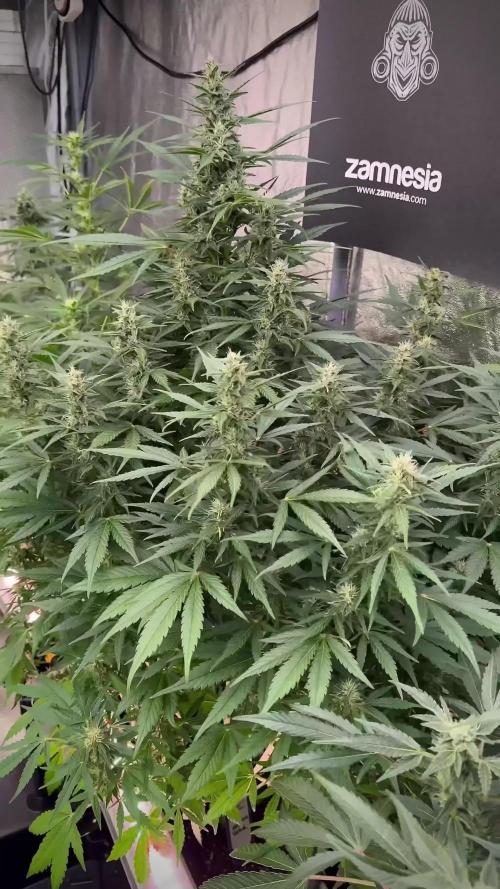
🌱 GMO Cookies Auto — Week 10 From Seed (Week 5 Flower)
🔁 Quick Recap — How We Got Here
This run started under a 12/12 from seed approach, pushing these autos into a slightly different rhythm compared to traditional schedules. From early on, the focus was on building a strong, healthy structure without over-intervention — letting the plant express itself while guiding it gently.
Through the vegetative phase, they developed into compact but well-branched plants, with a natural bushy structure. No aggressive training, just light leaf management to maintain airflow and light penetration.
As we transitioned into flower, everything started stacking quickly — and now here we are, mid-flower, with the plants fully committed to production.
⸻
🌿 Week 5 Flower — Current State
This week, they’re looking beautiful, full, and alive.
• Structure: Bushy, dense, well-filled canopy
• Bud development: Stacking nicely across all sites
• Resin: Starting to frost up properly now — visible increase day by day
• Overall health: Strong, stable, and responsive
There are a few minor light stress signs — slight leaf tip burn from the LEDs — but nothing concerning. It’s the kind of stress that comes with pushing intensity, and the plants are clearly handling it well.
And the standout feature right now:
👉 That main cola.
It’s already separating itself from the rest — bigger, more dominant, and showing real potential. Definitely one to watch over the coming weeks.
⸻
🌡️ Environment & Feeding
Dialed and stable — exactly where we want to be:
• 🌡️ Temperature: 26°C
• 💧 Humidity: 60%
• ⚡ EC: 2.0
• pH: 6.5
Instead of chasing generic room VPD charts, the focus remains on leaf VPD and plant response — and honestly, the plants are confirming everything.
The rule stays the same:
Plants speak louder than numbers.
Right now, they’re not just speaking — they’re thriving.
⸻
💡 Light Intensity (PPFD)
Light levels are being pushed into a productive range:
• Average canopy: ~1000 PPFD
• Top colas: up to ~1200 PPFD
• Full room range: ~800–1500 depending on plant height
The variation comes from canopy differences — taller tops naturally receiving more intensity.
And the key point:
👉 They’re handling it comfortably.
No major stress, no slowdown — just steady development and increasing resin production.
⸻
🔮 What to Expect Next
Things are moving fast now — this is where the magic really begins.
Over the next week, we’re expecting:
• 📈 Increased bud swelling and density
• ❄️ Noticeable jump in resin production
• 🌸 Stronger aroma development
• 🏆 That main cola to really define itself
This is the phase where small daily changes start becoming visible differences.
⸻
🤝 Shoutouts & Gratitude
Big love to everyone walking this journey:
• 🌍 The GrowDiaries platform
• 💬 The entire community — here and across all platforms
• The genetics behind this run
• 🤝 The supporters and partners
• 🌱 The new followers joining the ride
• 🐺 And the OGs that have been here since day one
Energy matters — and this one is built on shared passion.
⸻
🧠 Final Thoughts
Everything is flowing naturally right now.
No forcing, no chasing — just reading the plants and moving with them.
There’s something special building here… and we’re right in the middle of it.
Let’s see where it goes 🌿🔥
📡 DELETED @ 1K Please stay tuned.we never quit https://www.youtube.com/@TheDogDoctorOfficial NEW 🙏 Thank you for your patience and continued support.FOR DISCOUNT CODES AND MORE JUST FOLLOW THE LINK https://website.beacons.ai/dogdoctorofficial
📲 Don’t forget to Subscribe and follow me on Instagram and YouTube @DogDoctorOfficial for exclusive content, real-time updates, and behind-the-scenes magic. We’ve got so much more coming, including transplanting and all the amazing techniques that go along with it. You won’t want to miss it.
GrowDiaries Journal: https://growdiaries.com/grower/dogdoctorofficial
Instagram: https://www.instagram.com/dogdoctorofficial/
YouTube: https://www.youtube.com/@dogdoctorofficial Deleted by Youtube - https://www.youtube.com/@TheDogDoctorOfficial NEW
Vimeo : https://vimeo.com/dogdoctorofficial Under construction stay tuned ⸻
Explore the Gear that Powers My Grow
If you’re curious about the tech I’m using, check out these links:
🔆 Lighting & Environmental Control
• Future of Grow — Advanced LED lighting technology
https://www.futureofgrow.com/
DISCOUNT CODE: DOG20
• Lumiflora — Under-canopy LED lighting
https://lumiflorade.com/
• TrollMaster — Environmental controllers and automation gear (past collaboration)
⸻
Genetics
• Zamnesia Seeds — Genetics used in this project
https://www.zamnesia.com/
⸻
🌱 Soil, Substrates, Boosters & Root Support
• Plagron — Substrates, bio mixes, and supportive products
https://plagron.com/en/
⸻
🎒 Storage, Curing & Preservation
• Grove Bags — Curing and storage solutions
https://grovebags.com/
⸻
📸 Photography Equipment & Tools
(Not sponsors, but part of my creative toolkit)
• Sony A6700
• Sony full-frame macro lens + few more
• Stacking photography workflow - learning
• iPhone (for behind-the-scenes shots)
We’ve got much more coming as we move through the grow cycles. Trust me, you won’t want to miss the next steps, let’s push the boundaries of indoor horticulture together!
As always, this is shared for educational purposes, aiming to spread understanding and appreciation for this plant. Let’s celebrate it responsibly and continue to learn and grow together.
With true love comes happiness. Always believe in yourself, and always do things expecting nothing and with an open heart. Be a giver, and the universe will give back in ways you could never imagine.
💚 Growers love to all 💚
📸 P.S. – The Eye Behind the Lens
All photos in this diary (for now — except for the ones showing the camera, which I took with an iPhone) are taken with a Sony A6700 paired with a Sony full-frame macro lens and a few more.
Photography is part of the story — it’s how we share the fine textures, the glow, and the quiet details that words can’t always capture.
I’ve also started experimenting with photo stacking — a technique where multiple images, each taken at a slightly different focus point, are layered together to create one perfectly sharp image from front to back.
It’s not digital enhancement or AI; it’s pure photography — a way to reveal the plant’s beauty in microscopic depth, from trichome to petal.
You’ll even see a few shots of "ghost me" capturing the shots — camera, lens, setup — because every grow deserves not just to be cultivated, but documented like art.
FOR DISCOUNT CODES AND MORE JUST FOLLOW THE LINK https://website.beacons.ai/dogdoctorofficial
NEW DISCORD - Official Server Invite Link : https://discord.gg/ksjAkA5T74


Likes
2
Share


@Greenthumby
Follow
Week 10, Day 1... Now its 2 Months since The Ladys startet growin (April 21 ) and I think IT will be 1-2 Weeks to The Harvest,
Trichome are Milky.

Likes
67
Share


@Only4passion
Follow
Crazy smells i already smoke 💨 this strains so I know what to expect from those buds and they are getting bigger👌😋
Likes
11
Share


@adam_pawloski87
Follow
Let’s go day 9 of flower!! This week went real well , all these lil babies just doin there thang , got a nice bit of stretch goin on an staying super healthy for week 2 of flower 🌺! Either sometime this week or next week we will do some Defoliation, clean up them legs lil bit lol! Hope you all enjoy an have an amazing productive Week! Peace love an positive vibes to all y’all Cheers 😶🌫️💨💨💨💨🤙🏻


Likes
Comments
Share


@Cannabees_grows7691
Follow
These were two different types of plants. Item 9 was short and bushy, red velvet was stocky and tall.
Processing
Likes
18
Share


@Barcelona_Farmers710
Follow
Esta semana apesar de tener temp Máxima de 28... se va recuperando bien de las podas, el led de TodoGrowled funciona perfectamente para sus 55w farmers!🍁

Likes
13
Share

@majklsoft
Follow
Week 9 | Days 57–63: August 23 – August 29
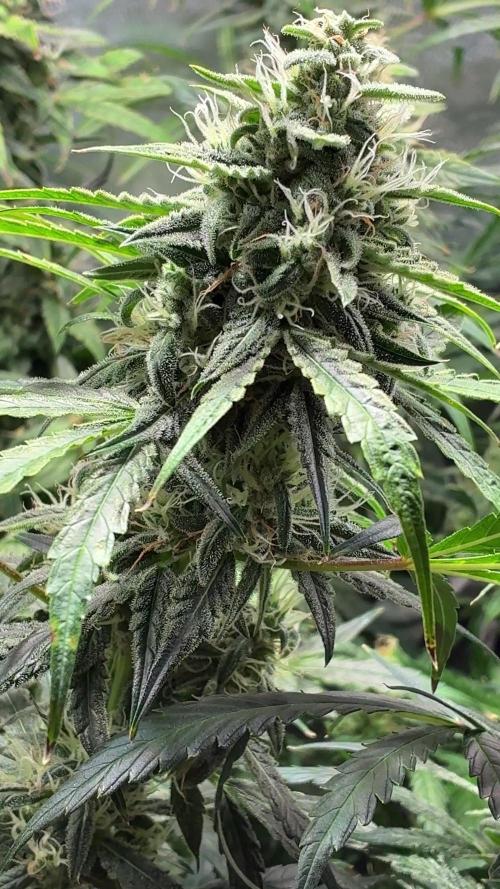
Main focus this week was stabilizing irrigation and watching the transition from stacking into bulking.
* Bud development continued without any obvious stall
* Main colas became noticeably heavier and several branches started needing support
* Long flower sections continued filling in and becoming more continuous
* Water demand stayed very stable at around 2.0 L/day
* Plant remained around 80–90 cm tall
Irrigation
The new setup worked much better:
* 12 × 8 mm polyester wicks
* new lower and wider reservoir
* fabric-pot bottom stayed consistently moist
* reservoir dropped from 9.0 L on Day 59 (08:00) to 1.5 L on Day 62 (22:00) — roughly 7.5 L over 86 hours (~2.1 L/day)
Water transfer remained stable even as the reservoir level dropped, strongly suggesting the previous low-reservoir wick-flow problem has largely been solved.
Nutrients
Returned to a slightly lighter feed after mild tip burn:
* Sensi Coco Bloom A+B: 2 + 2 ml/L
* Big Bud Powder: 0.25 g/L
* EC: ~1.6
* pH not adjusted (trusting the Ph perfect technology)
The earlier brown/rust spots showed no meaningful progression, suggesting a temporary uptake issue after the previous drybacks rather than an active deficiency.
Environment
Main concern this week was humidity:
* RH around 65–73% (!!!)
* VPD around 0.8–1.0
Airflow to be increased as the buds became denser.
Overall, a good bulking week: irrigation is much more stable, water uptake remains high, and flower development continues well.