


Likes
Comments
Share


@Ohio_Autoflowers
Follow
This plant man. Had to remove the 2nd and 4th node branches because they just weren’t doing anything. Stems were bright purple and the buds were tiny. Decided it was best to just chop them off. Buds are plumping up nicely. She is actually at day 72 right now. Think she’s got 7-10 days left, we’ll see.

Likes
22
Share


@julian100614
Follow
El ciclo fué perfectamente desde el principio. Bien es cierto que puse dos plantas y una fué la que tiró realmente bien. Se realizó una poda apical que respondió perfectamente creando dos grandes puntas y con un pequeño LST conseguimos ajustar el resto de ramas a la misma altura para que crecieran uniformemente y la luz les diera de igual manera a todas las puntas.
En general me ha gustado mucho cultivar la AK48 DE WEEDSEEDSEXPRESS en primer lugar por la novedad, en segundo por la facilidad de cultivo y por ultimo por los resultados tan maravillosos de esta genetica 👌👏
Repetiré sin duda 😊💪
BUENOS HUMOS 🔥


Processing
Likes
3
Share


@Chemist
Follow
I am going to start my new week 24-11-2019 because the soil is telling that it needs water and it's technically the beginning if the new week so why not.
If you look at the still Pic the leaves look like a deficiency or maybe light burn I did not notice that earlier today.
I have si ce raised the light and I will check tomorrow to see if the color of the leaves have turned green all through the veins where there is some signs of yellowing.
If I see change the maybe both concerns have been addressed because I also increased the ppm's in feeding.
Likes
9
Share


@DisTentAint4Campin
Follow
This smoke absolutely stunned me first this was a clone sent to me from California to Virginia in the mail in the middle of winter didn't think it was gna make it but she prevailed and turned out to be so gassy and funky with a zing and it jus lays you down but puts you in a good mood too not a groggy couch lock but a good couch lock lol tastes like candy on the exhale nugs are super dense and the cure and dry came out perfect she was definitely a box
Likes
12
Share


@GizaWRZ
Follow
I can recommend White Widow from seedsman. This auto plants gets loads of stress from LST, HST, topping, lollipoping, scrog And what's the most important think they finish on time! Great plants, great yeld, great stuff couldn't be better 💪


Likes
Comments
Share


@Growfather1
Follow
Hello everyone.
The girls underwent a major heavy defoliation approximately 12 hours ago, primarily as a drastic measure to eliminate a thrips nesting ground.
While a standard defoliation would normally be done to open up the airflow and canopy, this aggressive stripping was deemed necessary due to the heavy pest pressure.
Two of the plants are tolerating the harsh haircut well, but one plant is currently exhibiting significant stress, with its leaves crawling or curling inward.
To help mitigate a potential root-zone issue or nutrient lockout, a comprehensive root flush was performed on all three plants immediately following the pest management session.
Additionally, a preventive and reactive neem oil treatment was applied to fully address any remaining thrips before moving forward.
Current Environmental Metrics
Metric | Current Status
Light Schedule | 24/7 (Continuous 24-hour runtime)
Day Temperature | 26°C (At peak illumination)
Night Temperature | 21°C (Ambient target)
## Troubleshooting & Recovery Timeline
Taking off more leaves than usual, flushing the root zone, and applying foliar neem oil creates an intense triple threat of mechanical, environmental, and root-zone shock.
Neem oil can temporarily clog leaf stomata and cause heavy drooping or clawing, especially when applied to a plant already weakened by thrips damage and heavy defoliation.
* Recovery window: Expect a timeline of 3 to 5 days for the stressed plant to stabilize its transpiration, adjust to the root-zone moisture level change, and bounce back.
## Next Week's Strategy
* Monitor the sluggish plant closely to ensure it shakes off the shock before attempting any further high-stress training (HST).
* Keeping a close eye on the under-canopy areas to ensure the thrips infestation was successfully eradicated.
* Maintain steady environmental conditions to encourage structural recovery.
And finally, a little joke, Why did the thrip get kicked out of the cannabis lounge?
Because he kept bugging the budtenders!
Thank you for stopping by and have a nice day.
Best regards,
Growfather

Likes
30
Share

@All_our_small_plants
Follow
Bewässerung: 2000 ml jeden 2 Tag in der achten Woche
pH-Wert: 6,3
EC-Wert: 1,9 mS/cm
Temperatur: 30ºC
Luftfeuchtigkeit: 55%
Schädlingsbekämpfung: im Moment haben wir keine Anzeichen das es was zu bekämpfen gibt, sobald die ersten Anzeichen da sind werden wir handeln :), aber zur Sicherheit haben wir wieder ein paar Raubmilben an die Pflanzen gehenkt.
PPFD: 600 µmol/m²/s
DLI: 38 mol/m²/Tag
Düngemittel: Sie bekommt CalMag von BioBizz zu Prävention. Ab Tag 44 haben wir angefangen sie mit einem Mineralischen NPK Dünger (NPK 3,5-6-6) zu Gießen, Plagron wurde auch hinzugefügt.
Besonderheiten:
-Tag 44 heute wurde sie gegossen und wir haben den Dünger angepasst
-Tag 46 sie war beim Friseur 😛
-Tag 48 die Blumen werden langsam dicker 😍

Likes
25
Share


@Gutismoke102
Follow
The genetics of this planet of the grapes is amazing her structure her build and ability to pack heavy buds is a must have. Very easy to grow she requires medium feeding and takes well with multiple defoliation techniques

Likes
54
Share


@GarciasGarden
Follow
MAY 9th (day 50)
Well we finally started flowering yesterday and within the first 12 hours they stretched a good 2-3 inches already starting to get that Danky dank smell I have to say I’m being able to train a plant the perfect way you want it .. is probably my favorite part of the whole cycle! Since last week they almost doubled in size. Made the decision to go completely LED got one more light coming in today and that will leave me with 940 true watts led also made some improvements to the grow room like runoff catchers and a whole new veg tent !! Don’t mind the end just a little experiment I’m doing lol!! ENJOY THE VIDEO.
P.s. always love to hear any helpful tips or feedback !!

Likes
11
Share


@Just_Jazz
Follow
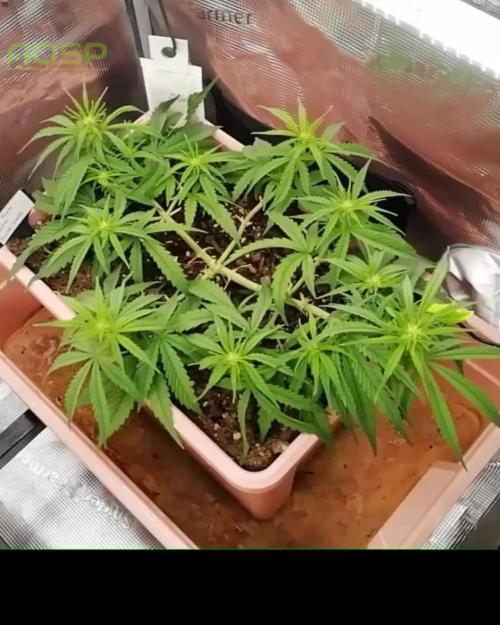
Two weeks after the germination of the seeds, the plants look great. Next week, they will be moved to larger 19-liter pots. Next, we'll perform topping (fimming) and low-stress training (LST).

Likes
9
Share


@MistaOC
Follow
24.06. Tag 17
Die Pflanzen sehen super aus und wachsen sehr gut.
———————————————————-
Likes
1
Share


@Sur_cannabico
Follow
Estamos en plena floración ya engordando esos buds resinosos de las Withe Widow de RQS. Subimos la dosis de nutrientes y como se puede apreciar ningún síntoma de estrés o exeso de fertilizantes
Todo muy bien recibido 🙌🏻
Vamos por mas ❗️

Likes
7
Share


@Damonkey
Follow
Transplant tomorrow and new home then after. Flowering will begin in a week or so. She’s responded well to all training and is ready to open up into a nice wide canopy. She’ll be tied down to her new pot a little to encourage a bit more spread and open her up a bit so light can get in.
Likes
260
Share


@SlowpokeFuegobud
Follow
🐒 🍌 🌴🐒 🍌 🌴🐒 🍌 🌴🐒 🍌 🌴🐒 🍌 🌴🐒 🍌 🌴🐒 🍌 🌴
Welcome to week 2!! 😘
Babies are being watered every 3 days with mini dose of nutes. 💧
They are soon going to be potted in 1 Liter pots.
DAY 7 (we take the days count of the second monkey now for both)
They have been potted in 1L containers now, I added some stone meal which has a ca/mg ratio of 2:1 :stone:
LED is at 60cm and 80% burning down 😜
I couldn't find a monkey sticker, so they are monkey (1) and donkey (2) now. 💚 🧡 🐒 🐒
(edit: I just tried to look at the pics and make sense of it 😂 😅 😂 please feel free to smoke a spliff and sort the pics in your heads lol)
Monkey is growing real small, maybe I found a method to make bonsais. 😝
Some of my baby plants have shown damage, I think it's caused by thrips in their first stage.. the soil they're in is really alive, I will discard it. I used tomato soil just for the start. Shouldn't have 😅
They all received 1/3 dose of Celaflor sticks into the soil - it's poison. It works inside the plant. Everybody who dares to poke a hole in my plant and suck the juice will die a horrible death. 💀
I sprayed the plants with organic anti-pest spray but the babies don't respond well to this, so I applied the poison once and later work with more natural tools. ✌️
DAY 10
Did a foliar spray with Nutrispray. 💦
Thanks, my growmies for visiting and reading and commenting, I love reading your comments! Mwah! 😘
Thank you, @Kannabia, for sponsoring this grow, aaaaand for the amazing gift pack! 😍 I hope to make you proud!
Grower's love!! 💚
__________________________________________________________________
https://www.kannabia.com/en/feminized-cannabis-seeds/monkey-grease
Monkey Grease
At Kannabia Seeds we have put all our effort into bringing out our own feminized Monkey Grease, a cross between Monkey Grease x White Widow, focusing above all on giving it its own personality in flavor and aroma (frankly unmistakable).
Its own personality
At Kannabia Seeds we have put all our effort into bringing out our own feminized Monkey Grease, a cross between Monkey Grease x White Widow, focusing above all on giving it its own personality in flavor and aroma (frankly unmistakable) and, of course, in Highly demanded characteristics, such as high resistance to diseases and pests, and adaptability to all types of growing conditions, making it close and easy to grow to the widest possible range of growers. The result is a really powerful and versatile indica-sativa marijuana seed, with a powerful relaxing effect, ideal for those moments when you want to disconnect from the madding crowd.
Cultivation of Monkey Grease
Which cultivation method would be most appropriate for this variety? Good question… and one that is easy to answer. Its versatility and adaptability make it a true all-rounder, with remarkably uniform results, whether you choose SOG, SCROG, hydroponics or guerrilla growing. Moreover, we invite you to experiment and play, varying the techniques from moment to moment, and to draw your own conclusions. We are convinced that in all cases, apart from minor variations, the results will always be optimal, giving remarkable yields and in a short time.
Attention should be paid to its high bud production, which can be fat, dense and heavy, although its sturdy branches are able to bear heavy loads without major problems. If you are a fan of extractions, our Monkey Grease is also optimal, given its high production of caramelised resin.
If it is already amazingly productive indoors, this variety excels on its own merits outdoors, where it can easily reach 200 cm in height, and can reach between 700 and 800 grams per plant.
It is therefore an easy and grateful plant, which demands little from its gardeners, making do with simple basic care, and with little or no propensity to develop diseases or mildew, or to attract pests (despite its striking aroma!).
Taste and effect of Monkey Grease
Our Monkey Grease stands out first and foremost because of its powerful, strong smell, which is hard to camouflage. A penetrating aroma that unfolds, in a balanced way, on the palate in the form of a wide range of spicy and sweet flavours, reminiscent of wild honey, nougat and cinnamon, and distant notes of milk chocolate. A delicious treat to be savoured calmly, without haste, as a preamble to its pleasant effect: extremely relaxing and narcotic, powerful, ideal for meditation and moments of introspection and meditation.
Don’t be in a hurry with Monkey Grease. It can be your perfect ally to treat those stress and anxiety problems, but for that you must let yourself go, surrender to its charms, especially if you are inexperienced.
________________________________________________________
Setup:
60x60x180 cm Zelsius
Mars Hydro TS1000 2022 Version
Mill's Nutrients
Plagron Growmix
Carbon Active Granulate 240cm³/h
tab water pH 8 - EC 0,25 with Calmag to 0,5
Advanced Hydroponics pH minus Grow + Bloom to pH 6.5 💧
🐒 🍌 🌴🐒 🍌 🌴🐒 🍌 🌴🐒 🍌 🌴🐒 🍌 🌴🐒 🍌 🌴🐒 🍌 🌴


Likes
4
Share


Likes
57
Share


@Zurban_Poison
Follow
Well guys! home stretch!
as you can see in the photo, harvest day is not far away))
Both plants look amazing! the structure of the Buds, trichomes, smell, stickiness and oiliness, all this is in excess!))
Buds are very solid and elastic .. very happy ..
