


Likes
Comments
Share


@Ultraviolet
Follow
If you are lonely when you are alone, then you are in bad company.
Bee pollen is considered a “vitamin bomb” due to the presence of almost all vitamins with an average of 0.02–0.7% of its total content, with a higher amount of water-soluble than fat-soluble vitamins. Bee pollen contains vitamins A, D, E, B1, B2, B6, and C. It also provides minerals such as calcium, magnesium, phosphorus, potassium, zinc, copper, manganese, iron, and selenium, I mixed a bunch of that with some honey and RAW cane molasses to make a nice big bucket of tea. A family friend who is a beekeeper was kind enough to share some honey. The nutritional content of raw honey is impressive and includes high levels of protein, amino acids, B vitamins, calcium, manganese, potassium, magnesium, zinc, and iron, as well as various polyphenolic antioxidants.
I am loading up nature's finest sugars, and sweet things, Honey & Mollases.
UV-B-induced DNA damage (CPDs and 6–4 PPs) can be repaired efficiently by photolyases. Pyrimidine dimers can be repaired by nucleotide excision repair (NER), or bypassed by replicative polymerases (Britt 2004). The expression of the CPD photolyase (PHR) gene is induced by UV-B light dependent on UVR8 signaling pathway, and is also induced by blue and UV-A light (Li et al. 2015)
https://link.springer.com/article/10.1007/s44154-022-00076-9?fromPaywallRec=true
Old but gold.
The camera picks up far more light than there is during the night cycle, camera is showing bright pink violet collages but my eyes barely see a thing, about 0.25ppfd in that tent overnight. Have been tweaking the spectrum of moonlight/intensity and watching the responses overnight.
Tweak, tweak, tweak all week.
PAR is 400-700nm,
Overnight UVA in the tent is all 365nm and 385nm, so the meter only picks up a fraction of the light curve that makes it photosynthetically active past 400nm. Of the light in the tent, 0.25ppfd is from UVA
Looks like It makes them 🕺 🕺 💃 all night.
Better flower soon or ill be screwed for space, they are stretching, but is it "the stretch"? She has fire in her belly.
Growing crops with insufficient light (i.e., below “optimal,” as defined here) limits the yield potential, which in turn wastes the other production inputs including labour, water, nutrients and electricity. As lighting fixture is one of the most expensive investment of the production, what is the relationship between light intensity and yield?
Potter and Duncombe (2012) grew cannabis plants with varying canopy-level PPFDs during the flowering stage and found that increasing PPFD from 400 to 900 μmol·m−2·s−1 increased yield an average of 1.3 times higher, across seven cultivars, with no light intensity treatment effects on floral cannabinoid concentrations. Vanhove et al. (2011) found that cannabis yields were 1.3 to 3.1 times higher (depending on cultivar) when plants were grown under approximately 1000 μmol·m−2·s−1 compared to approximately 450 μmol·m−2·s−1 during the flowering stage.It was predicted that cannabis yield would exhibit a saturating response to increasing Light intensity, thereby signifying an optimum light intensity range for indoor cannabis production.
However, a new research from Morrison (2021), after 81 days‘ experiment, found that When plants grew under LI ranging from 1200 to 1800 μmol·m–2·s–1 provided by light emitting diodes (LEDs), inflorescence yield increased linearly as LI increased up to 1800 μmol·m–2·s–1.
"Cannabis will not stop flowering if the lights are turned on for a few minutes once or twice during the 2-month-long flowering cycle. If a light is turned on for 5 to 30 minutes—long enough to disrupt the dark period—on 3 to 5 consecutive nights, plants will start to revert to vegetative growth."
"Less than one half of one foot-candle of light (0.1ppfd) from sunlight will prevent cannabis from flowering. That is a little more light than is reflected by a full moon on a clear night. Well-bred indica-dominant plants will revert within three days. Sativa-dominant plants take four to five days to revert to vegetative growth. Once they start to revegetate, it can take from four to six additional weeks to induce flowering again!"
Guess ill find out my answer soon.

Likes
12
Share


@viriato0811
Follow
I am loving how strong this sativa strain is. I keep defoliating her to expose as many bud sites as possible. At the same time, I am trimming those side branches with low chances of making it to the top. 🌱🌱👍🏻👍🏻

Likes
80
Share


@Mrs_Larimar
Follow
Monday, Mrch 1st.
The Strawberry Cough Plants recovered very good from the Last Weeks " Dogcropping"
They doubled Size too, and showing good structure
So i can do some LST and a little defoiliating ( only lower leaves and shoots)
And they will get a feeding soon, too
Until now only water and Benefical stuff


Likes
6
Share

@CalGonJim
Follow
2/2 12am Hotel is looking great, got a great feeling about this.
2/3 1:31M BILLY MAY'S VERSION OF STRANGERS IN THE NIGHT....THE GREATEST SONG FOR STONER EARS...SO MOVING.
2/3 12:01 PM I have all three of the trailer Park boys going in one tent. I cut Ricky down way way down and I’ll cut bubbles back a little bit. I want them all to flower at the same time and the Ricky plant has been growing since September so I can cut quite a bit off. She’ll be just fine. It’s kind of funny looking so they’re kind of trailer trash looking. It’s all perfect what I lack in ability. I’m making up for in showmanship so if I screw up, it’s on purpose. It’s part of the show you wouldn’t understand.🎥
2/6 12:22AM CBG'S ARE ALL FAILS...BAD SEEDS? NOT ONE TURNED OUT GOOD. SO CBG SEEDS ARE ALL GARBAGE AND IN THE FUCKING TRASH NOW.
AND I GOT LOTS OF DEVISTATING FINANCIAL NEWS SO I WILL BE SUICIDING OUT THIS MOTH SO FUCK YOU YOU THOSE WHO CAUSED THIS
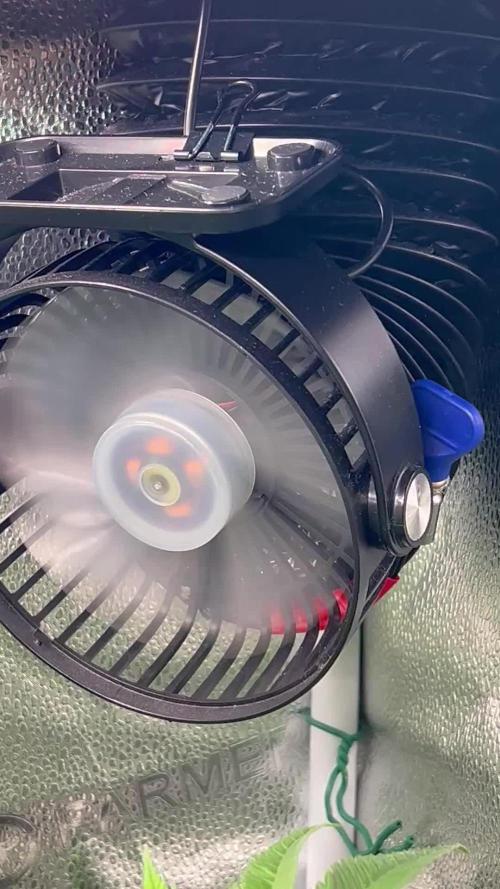
2/8 11:47 AM still working on the plants though I added an AC Infiniti small boost fan cause I had one when my USB fan failed. It looks like a pretty solid set up. 2/8 2:51 PM KEIF Tray is full


Likes
5
Share


@CanarianGrow92
Follow
Last week of flowering for our strawberry gorilla from fastbuds 420
This week only water was given to the girls, as at the end of week we are harvesting the plants!
Very nice smells comes out of the tent, cant wait to try all of the fastbuds strains i have in the tent 🤗🤗🤗

Likes
7
Share


@XYZ123
Follow
this is the first week of the flowering i hope my plants will get bigger the same I turn off the ventilation and i get +5 cm height
💪


Likes
34
Share


@rhodes68
Follow
11/29 Start week 4 still solidly in veg
Tighten training daily . Still on same feed of 800ppm
Water filter be in Monday-ish and so I can drop the tap water TDS so to raise the nuet level.
12/1 Continuing to get hang of coco, the runoff in particular will be worked on. Happy with it
12/2 Seeing the first signs of flower so beginning the intro of bloom nuets. dropped the CT A&B Grow to 9ml/gal adding 1 ml/gal Bloom A&B. Will increase the bloom over the next week to full.
12/5 Into the flowering tent still on half grow half bloom nuets 800ppm for a while.
Changed feeding to once per day 1 qt(liter) with @ one cup runoff each (25%)
New camera learning how to use it
Likes
51
Share


@kansasscott725
Follow
Little bit of a delay. Wanted to get climate perfect before the flip. Upgraded ventilation and have the tent dialed in well at 74 degrees and 60% humidity during day and 70deg/ 55% at night.
Started a second scrog on Day 42. Nervous about the stretch but hopefully I can maintain it (I wish T5 lights could flower...)
Did extensive trimming underneath clearing pretty much anything that will never reach the ceiling of green above it.
Day 45 marks last day of Veg
Day 46 marks first day of flower
AND.
HERE.
WE.
GO.


Likes
15
Share


@DevelGrow
Follow
Hallo Freunde 👋 Frost Banger von Fast Buds ist 42 Tage Alt! Sie steht schön in Blüte und baut schön ihre Buds! ✌️🍀💚🍀
Likes
45
Share


@masterofsmeagol
Follow
8/1 This wad the most fucked up morning ever. Didn't get much time with the girls. I was able to take a few pics when I got back amd a video this morning. Pillars are still around. I killed a couple but I probably should spray BT. I think we got rain last night. Bags are heavy. I defoliated a little bit more on the interior and found some small yellow leaves. Event horizon is still on point to flower first. I NEED to lst and add supports for flower bit I've got a lot of other things going on too. I'm going to TRY to spray BT tonight if weather permits and I should have the supports up this weekend. At least that's what I'm hoping.
8/2 Quickly watered as I had to fix a flat tire to get my wife to the doctor. Gave most a gallon but closer to 3/4 on one event horizon and the sherb pie. Half g for the 10 and I gave the 5 and the 50 a little water. I didn't give the 50 much. That holds water far longer. I'm glad I got it done. It was 90°+ and sunny all day. Earlier everything looked great. I think I'm gonna go check them and maybe add a few pictures.
WENT OVER AND FOUND THE EVENT HORIZON I GAVE A LUTTLE LESS WATER TO, IN THE BACK COMPLETELY DEOOPED OVER AND DRY. I QUICKLY WATERED A GALLON. I CHECKED THE OTHER PLANTS AND SAW A COUPLE THAT "MIGHT'VE STARTED DROOPING BUT WERE LIGHT SO I GAVE ALL THE GMO'S HALF A GALLON. I WATERED THE CONTAINER PLANTS AND THE ONE IN THE 50. BETTER SAFE THAN SORRY. THEY WERE SUPER LIGHT. SOME ARE SHOWING SOME HEAT STRESS BUT I DONT BLAME THEM WHEN ITS PUSHING 100° OUT. I HOPE THIS PLANT WILL PICK UP BUT ILL HAVE TO WAIT UNTIL MORNING TO SEE. I GOTTA GO EAT DINNER AND IT WAS IN ROUGH SHAPE. CANT BELIEVE THIS. ITS THE FURYHEST IN FLOWER TOO. INTERNET TOO SLOW TO UPLOAD
8/3 This morning it was "maineing" out. Basically like raining but more of an alternating mist. The event horizon that looked DEAD is completely recovered! I'm so stoked. I've had a really rough few days but at least I've still got my girls. After this little bit of rain I'll do the supports and a spray of BT for the pillars. I'm noticing more damage and I don't want them arpund when they can burrow into buds.
WENT BACK AT LIKE FIVE. THE 5 GAL WAS DROOPING AND THE 10 WAS DRY AF. OTHERS WERE ALSO LIGHT. I USED 5 GALLONS ON THE GARDEN AS SOME STILL "LOOKED GOOD" BUT WERE DUSTY AND DRY. I ONLY GAVE THE GMO IN THE 30 A HALF GALLON. DIDNT WATER THE ECENT HORIZON IN THE BACK AND THE GMO IN THE FRONT BY THE DOOR ASXTHE LOOKED GOOD AND STILL HAD SOME WEIGHT TO THEM. THIS WAS ANOTHER DAY IN THE 90s THAT WAS SUPPOSED TO HAVE RAINED. LUCKILY IVE GOT THAT INTUITION AND I CAN CHECK. CAMS HELP WITH THAT BUT ITS BEST TO CHECK A FEW TIMES A DAY IN WEATHER LIKE THIS. FAR TO HOT TO SPRAY ANYTHING.
8/4 Chose not to water as we were supposed to get an inch of rain, then a half in and now it says .1in. I'm going to go over and check on the garden and see what they look like. I took pictures but I'll have to wait to upload them.
WENT BACK OVER IN THE AFTERNOON AROUND 2ISH. GMO IN THE FRONT WAS DROOPY. WATERED THAT A GALLON AND IT WAS UP BY THE TIME I LEFT. THE GMO ON THE END (MY CANARY) WAS SUPER LIGHT SO SHE GOT A GALLON. THE EVENT HORIZON I DIDNT WATER YESTERDAY GOT ABOUT 3/4 OF A GALLON AND I WATERED THE ONE IN THE 10 1/2 GALLON. SHOWERS ARE IN THE FORECAST AND EVERYTHING ELSE LOOKED PRETTY GOOD AND WASNT DEAD LIGHT. AS OF 3 EVERYTHING IS GOOD. I IMAGINE ILL PROBABLY NEED TO WATER SOMETHING TOMORROW. IT SUCKS HAVING TO DO THIS SEPERATELY BUT SOMETIMES THATS HOW IT GOES. I DONT EXPECT THESE 90 TEMPS WILL CONTINUE. ALSO NOTICING SOME FADING AS THEY TURN TO FLOWER. DEF NEED NUTES. AND ONCE THE TEMPS GO DOWN I NEED TO SPRAY EITHER BT OR SPINOSID.
8/5 It Rained last night so I didn't need to water. Everything was nice and heavy. Beautiful day today. Hopfully I can do an app of bt tonight. Weather man needs to get things right. It says we got .005in last night but I heard it and it was way more than that. This is a tiny town.
WENT BACK OVER AND FED. EVERYTHING GOT 1.75 PINTS. THE 10 GOT HALF THAT. THE FIVE A LITTLE LESS. I DEFINATELY NEED TO SPRAY FOR PILLARS. I ALSO HAVE A BIT OF DEFOLIATING ON A COUPLE PLANTS THAT I NEED TO DO. USUALLY I'VE LOST TONS OF LEAVES BY NOW. I JUST NEED TO IMPROVE AIRFLOW. THE TRELLIS WILL HELP WITH THAT PLUS SUPPORT. I THINK I MAY BE ABLE TO SPRAY PISSIBLY TONIGHT (DEPENDING ON WEATHER) AND SUPPORTS AND DEFOLIATION THE NEXT FEW DAYS.

Likes
147
Share


@MrJones
Follow
MrJones Black Berry OG
🔹🔹🔹🔹🔹🔹GOALS🔹🔹🔹🔹🔹🔹
🌞Flowering Environment - 75/80℉ and 50% Humidity
💧 Feeding - Advanced Nutrients Bloom Regiment - Great APP!
🍃Training / Added the second trellis last week, it is doing a great job with support, SCROG process makes it hard to defoliate the plants.
🕷️ IPM - Will be using Green Cleaner" 1 OZ per Gallon, and CannControl from Mammoth alternating between product each month for Integrated Pest Management.
💡Mars Hydro LED / Veg TS-1000 / Flower 480W FC 4800, this light is just performing very well!
🔹🔹🔹🔹🔹🔹🔹🔹🔹🔹🔹🔹🔹🔹🔹🔹🔹🔹
📝 Rambling - With week 14 here, will be the last week of nutrients and will be starting with PH H20, the buds continue to get fat!
🔹🔹🔹🔹🔹🔹🔹🔹🔹🔹🔹🔹🔹🔹🔹🔹🔹🔹
▶️ Friday - 04.16.21 / Feeding 40 OZ of Advanced Nutrients
▶️ Saturday - 04.17.21/ Starting to Flush with H20 PH 6.2
▶️ Sunday - 04.18.21/Just feeding H20 PH 6.2
▶️ Monday - 04.19.21/Just feeding H20 PH 6.2
▶️ Tuesday - 04.20.21/Just feeding H20 PH 6.2, the buds are still getting fatter, they are looking amazing!
▶️ Wednesday - 04.21.21/ Just feeding H20 PH 6.2, the buds are still getting fatter, they are looking amazing!
▶️ Thursday - 04.22.21/Just feeding H20 PH 6.2, the buds are still getting fatter, they are looking amazing!🔹🔹🔹🔹🔹🔹🔹🔹🔹🔹🔹🔹🔹🔹🔹🔹🔹🔹
📜 Cultivar Information - We have created this strain by crossing the best Black Domina available with Very Berry and our own Lost Coast OG Kush, this plant produces large colas with a super intense sweet berry flavor with a sweet-smelling aroma that varies from fruit and berries to sweet candy. This lady offers tight internal stacking giving a perfect structure for those super heavy colas, which is perfect for growth both indoors and out, if grown outside she is fairly resistant to mold and powdery mildew which is a real bonus with such large colas.
🔹🔹🔹🔹🔹🔹🔹🔹🔹🔹🔹🔹🔹🔹🔹🔹🔹🔹

Likes
19
Share


@nonick123
Follow
Día 6 (29/04) Spray solo agua el top del sustrato. DLI 13
Día 7 (30/04) Spray solo agua el top del sustrato. DLI 13
Día 8 (01/05) Spray solo agua el top del sustrato. Subo a DLI 17
Día 9 (02/05) Elimino la cúpula casera de humedad y empiezo a regar con 300 ml solo agua
Día 10 (03/05) Empiezo a luchar con una ola de calor inesperada para esta época, que me trae temperaturas exteriores de 30 ºC y humedad relativa del 30%...
Mantengo la cúpula casera de humedad
Día 11 (04/05) Hace muchísimo calor.. 30 °C. A ver como lo llevan
Hago un invento casero para aumentar la humedad
Día 12 (05/05) Primera alimentación con Aptus! 300 ml H2O + Regulator 0,15 ml/l + CaMg-Boost 0,25 ml/l + Startbooster 0,25 ml/l - pH 6.2
Creo que las plantas se ven un poco pequeñas para tener 12 días... esperando por explosión de crecimiento en los próximos días....
💦Nutrients by Aptus Holland - www.aptus-holland.com
🌱Substrate PRO-MIX HP BACILLUS + MYCORRHIZAE - www.pthorticulture.com/en/products/pro-mix-hp-biostimulant-plus-mycorrhizae


Likes
37
Share


@XperencdGmanXG
Follow
What can I say she is coming along nicely. Not showing any signs of deficiencies or nutrient burn. Bud size is the same as a salts run with General Hydroponics Flora Series. Fingers crossed I've got my bloom formula nailed down now. Resolved an issue with fungus gnats and having a small problem with some 2 spotted spider mites, which I treated with some predatory mites which is the reason I had to turn up the humidity as this species of predator mite likes it above 60%.
Likes
10
Share

@Muuuy
Follow
Such a stunning little beauty!
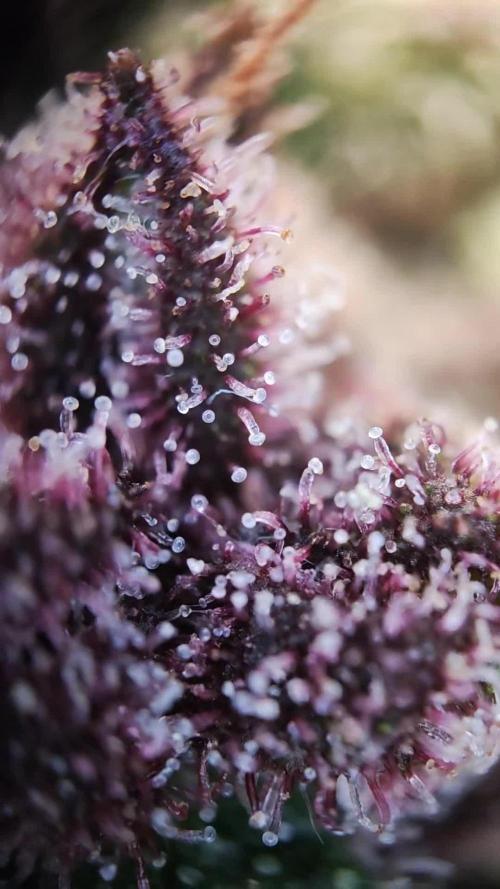
She's almost ready for harvest, just waiting for a few more trichome heads to turn amber; aiming for a ~20%'ish rate.
Buds are looking massive and dense and are accompanied by some pretty frosty leaves.
The smell has developed into a rather tart and herbal aroma with most of the citrussy scents gone by now.
So excited! Can't wait to chop her up and taste these fascinating terps :D Hopefully she's gonna be all ready in a week!
Decreased the amount of nutrients we're giving her a bit further by fertilizing only once this week with overall fewer nutrients.
Likes
3
Share


@Bluemels
Follow
Tag 50: Ich gebe noch Alg a mic ins gießwasser zur Stressbehandlung.
Tag 52: Ich beginne mit dem scroggen, das 1. Netz ist eingebaut die Pflanze reingefrimelt.
Likes
14
Share


@LokalGrenz
Follow
Got a dehumidifier it’s reading different from what mine controller 69 is saying but I have it set at 40% it’s the lowest so it’s going pull humidity regardless right now it’s about 53% which is okay would like it to get down to the 40’s I also changed the light schedule today to 20/4 the humidity raises at in my tent when lights are out so I figured change it to 20/4 instead of the 18/6 I’ve been running so if humidity does go over it won’t be for as long as before hopefully this works just trying to avoid any mold situation
So far the Amneisa Haze 2 is at stretching she’s going be big I can but the haze 2 is done seems to just be flowering the sour diesel is looking good as well so far I’m happy with its looking like left town for two days and the auto watering pots worked!


Likes
21
Share


@MadeInGermany
Follow
Hey everyone :-).
This week she continued to develop very nicely 😍.
I started with LST training and topping 😊.
The training took it very well and after 1-2 days it grew again immediately 👍.
This time it will be an extreme bush 😂👍.
It was poured once this week with 1.2 l.
Otherwise there is nothing to report this week.
I wish you all a lot of fun until the next update. stay healthy and let it grow 😀
You can buy this Strain at
https://www.amsterdamgenetics.com/product/kosher-tangie-kush/
Type:
Kosher Tangie Kush
☝️🏼
Genetics:
Kosher Kush
X
Tangie
👍
Vega lamp:
2 x Todogrow Led
Quantum Board 100 W
💡
Bloom Lamp :
2 x Todogrow Led
Cxb 3590 COB 3500 K 205W
💡💡☝️🏼
Soil :
Canna Coco Professional +
☝️🏼
Fertilizer:
Green House Powder Feeding
☝️🏼🌱
Water:
Osmosis water mixed with normal water (24 hours stale that the chlorine evaporates) to 0.2 EC. Add Cal / Mag to 0.4 Ec Ph with Organic Ph - to 5.5 - 5.8 .
