


Likes
Comments
Share


@Meechnmerchfarms
Follow
I had turned the light up to 75% last week and they def started showing signs of light stress, I turned it to about 70% but they don’t seem any less stressed, I think the tops are just too close to be honest. Not sure if I should go back to 75%. Other than that they seem incredibly happy. They pray every day even with the curled tips. I ordered some overdrive which should arrive just in time for when it’s supposed to used, going to defoliate tonight anything under the trellis I think.



Likes
15
Share

@GoodTimesOrganics
Follow
Welcome Back!💚
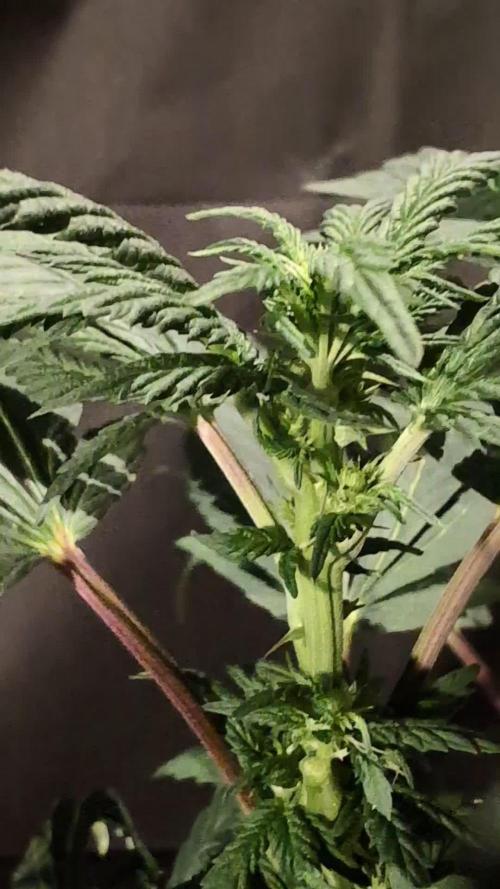
Nach der zeiten Blütewoche sieht man allmählich die Blüten/Stigmenansätzen.
Ich bin mir noch nicht sicher ob auch männliche Polenansätze zu sehen sind.
Sollte dass der Fall sein wird mein besonderer Freak leider dass zeitliche segnen müssen.
Ansonsten habe ich die Pflanze nun Mal stark ausgedünnt, damit die besser gewachsenen Triebe besser beleuchtet werden.
Die Struktur der Pflanze ist sehr knotig und fest.
Sie ist bisher echt der krasseste LowGainer, den ich seit ich Growe gesehen hab.
Mal schauen ob die Pflanze in der Blüte noch was reißt 😁
🙈
Die Umgebungsgegebenheiten sind top:
—————
🌞 Temp: 23°C
🌚 Temp: 18°C bis 19°C
💨 RH: 51%
VPD: 1,05 kPa
😎 PPfD: 630 mqm
—————
Viele Grüße 👋
Likes
14
Share

@MindFlowers68
Follow
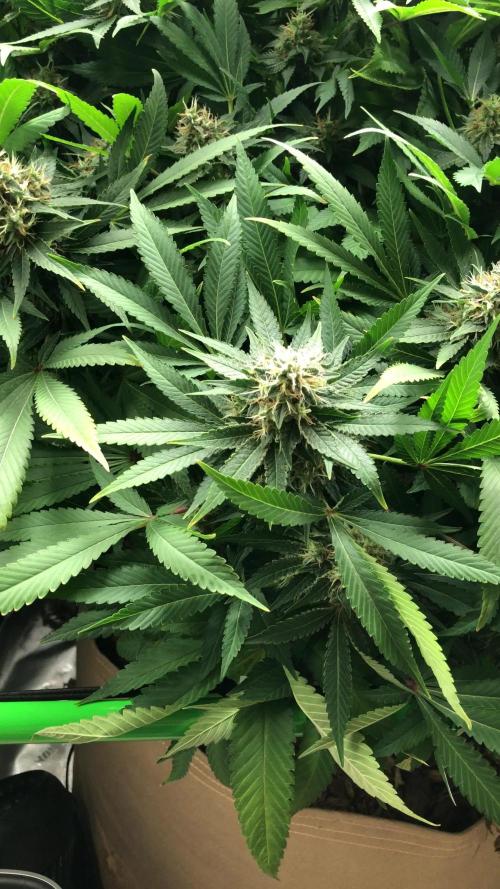
Karibbean Mango looked beautiful this last week. She could've used another week I think, but definitely in a harvestable state. Honestly, when getting the seed, I thought it was more of a sativa, so always double check things, but I think I'm gonna like this one a lot regardless. It's got a tropical end of fruity smell for sure. Really dank smell I could tell from even in veg It was gonna be pretty smelly. But then, when I harvest, I got the full sense of what she's going to be like it had a real intense, not exactly burnt rubber, but in that territory, where I just like sits in your nose. That was from mostly touching the stems when you open the flowers up a little bit it's a sweeter floral, tropical fruit and gas.
Harvest went really well with the plants. It's always a little nerve-racking going in there wondering if you're gonna run into anything like budrot or pests you didn't see but this round, nothing to speak of. Which most rounds are but I've had a few issues with some bud rot in some big colas before. Everything looked really clean. No signs of bud rot, no pests in or our of the soil. No powdery mildew. The tent really wasn't even that dirty. I had to clean it after I recommended my 65 gallon pots for my next round and was shocked how clean I got it within a day of having those plants in there growing.
This week my main focus was trying to get the temps down a little bit and humidity is low as I could. At the beginning of the week I dropped the lights down a full hour, down to 10/14. Also, the last few days before harvest, my temps were getting above 83 towards the end of the night and cut them off even earlier, so there was a few days they got roughly 9 hours of light last few days. I watered twice this week but the last dry back before cutting them my soil moisture's got around 18%, so pretty dry. I would've like to keep them a little wetter but ambient humidity has been very high. The last few days I managed to get into the 78°F 55% humidity range which I was happy with.
Harvesting the four plants took from 8 PM to 4 AM after their night cycle by myself. Each plant taking an hour and a half With very tiny breaks in between. I was on the second plant taking a hanger out to my dry area and I hear a loud shuffle in my mind thought it was the cat at first and then I realized that was too big of a sound to be my cat. Then I thought I was getting robbed or something and then I looked up and it was like a three year old buck about 250 pounds big antlers! We both looked at each other and jump scared, and both took off in opposite directions. It was kind of hilarious, but I was a little spooked after that, so I kinda had to set up a light outside so I could see better and the first few trips after that, I may have grabbed a PVC pipe in my off hand like I was in the game Doom or something lol.
I wasn't able to fit all the pictures I took from harvesting. I'll have to add them to my next week after they're dry, of all the plants hanging. It seems like I've got my drying area carved out pretty good for the flowers space I have. Does suck having to move my drum set out for two weeks and freezing in my studio though but better than not having a decent drying space that's for sure I had my twine still up from during my auto flowers and utilized a few of those hanging from the ceiling to get a couple extra hangers in.

Likes
10
Share


@Ktims420
Follow
All the ladies are comming along nicely going to start the flush, might try chopping a few tops and letting the bottoms fill out a little longer. Very excited. ✌️🏻💚

Likes
30
Share


@WeWantItToGrow
Follow
This week has been one of great gains in both size and vegetation we have seen a vertical leap in two plants that is astronomical almost 4 inches in a week! Had to do some pruning to expose new bud and a little bit of low stress training on to plants to see if we can expose light to the underside and perhaps get a little more love out of our lower buds The stalk size on almost all of these plants is almost as big as your thumb but on one it is actually relatively skinny that is the one we’re doing the low stress training on we just started the low stress training and it is taking very well to it One of these plants is extremely dark in color on the vegetation and has typically about 11 fingers per leaf! Not sure what that means yet

Likes
5
Share

@GANJAT
Follow
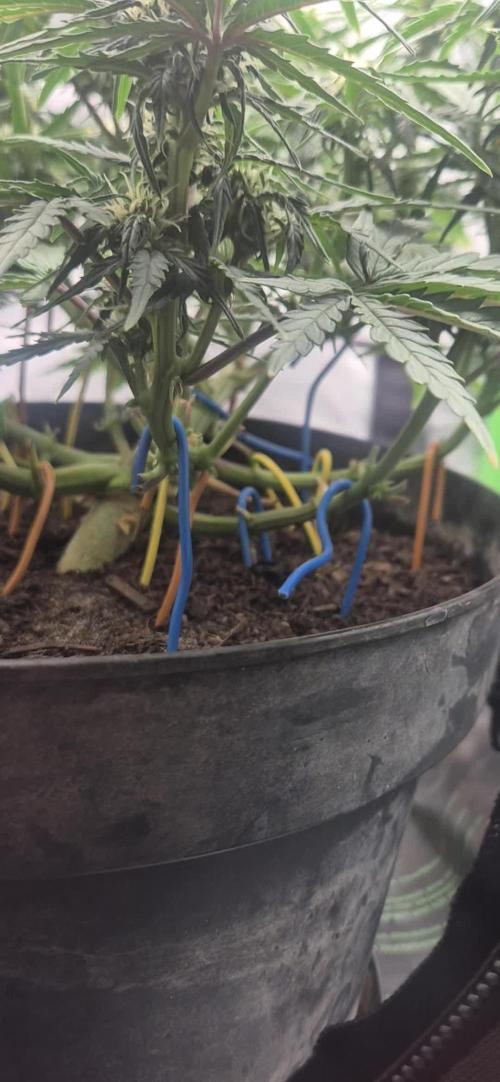
Die Pflanze gedeiht gut und mit der Entlaubung und etwas Lollipopping lege ich den Fokus auf gleichmäßig große Buds.
Die Luftfeuchtigkeit hält sich bei 40 bis 55%, je nachdem ob gegossen wurde.

Likes
5
Share


@SkunkyDog420
Follow
Hallo zusammen 🤙.
Das war es für sie wir sehen uns in 2 Wochen wieder.

Likes
17
Share


@TAXFR33
Follow
Everything is starting to bud up nice, as you can see the girls are hungry so will be giving them a heavy feed next time
Likes
Comments
Share

@WMinerva007
Follow
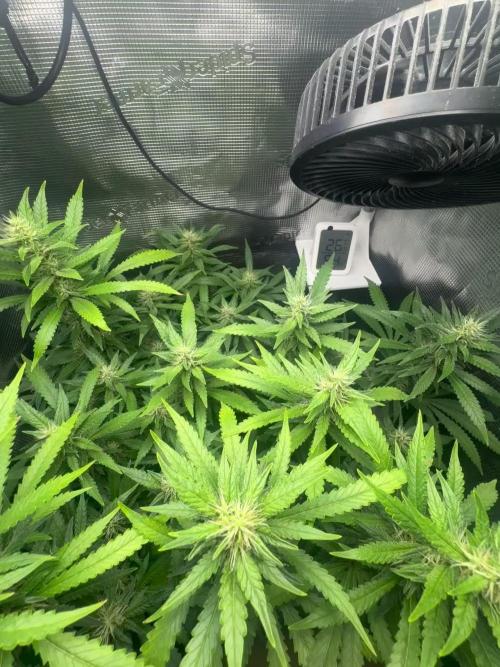
7 weeks into flowering and she’s bulking stable and well. She’s expressing her terpenes and the smell is super skunky with a touch of citrus.
Recently, my humidifier ran out of water while I was out, and she had to endure about 2 hours of super low humidity (~40%) and high temp (~30C+), but recovered fast and continued bulking like nothing happened — she’s reallyyy stress-resilient, very good genetics from Zamnesia 🙏

Likes
20
Share


@Boomdrawfyah
Follow
Dia 118 4a semana de floración sigue todo perfecto, hay que ir con cuidado con las orugas, sigue haciendo mucha calor y humedad aunque no muy tarde todo va a cambiar

Likes
3
Share


@The_Lonely_Farmer
Follow
This strain is an awesome smelling strain which begins too give beautifull colours towards the end of harvest! Shes definatley one too grow and I'd highly reccomend as she grows effortlessly and with ease. Well done fastbuds! I shall return too this strain indoors in the future hopefully too get a full harvest in perfect conditions
Likes
19
Share


@GoldenWeedGrower
Follow
07/05: made LST and Defolation
New res
EC: 1,13
PH: 5,8
I'm only adding PH- for now..
PH usally raise and EC remain constant
Installed carbon filter and an additional air extractor

Likes
11
Share


@WhiteWidow
Follow
Perfectly healthy not a single sign of defficiency or burning / overfeeding.
First day of week 2 of flowering, next feeding i will add flowering nutes.


Likes
31
Share


@MadeInGermany
Follow
Info:
Unfortunately, I had to find out that my account is used for fake pages in social media.
I am only active here on growdiaries.
I am not on facebook instagram twitter etc All accounts except this one are fake.
Flowering day 40
since the time
change to 12/12 h.
Hi everyone :-) .
The lady continues to develop her buds. Unfortunately, she had a little bit of cal / mag which was not too bad now Is why I'll let her go to the end like this.
Otherwise she is developing very well and it won't be that long since she has started to use up her nutrients :-).
Otherwise the tent was cleaned and everything checked.
lots of fun and stay healthy 🙏🏻
You can buy this Strain at :
https://www.royalqueenseeds.de/feminisierte-hanfsamen/220-pineapple-kush.html
Type:
Pineapple Kush
☝️🏼
Genetics:
Pineapple x O.G. Kush
👍
Vega lamp:
2 x Todogrow Led
Quantum Board 100 W
💡
Bloom Lamp :
2 x Todogrow Led
Cxb 3590 COB 3500 K 205W
💡💡☝️🏼
Soil :
Canna Coco Professional +
☝️🏼
Fertilizer:
GHSC Powder Feeding Bio
☝️🏼🌱
Water:
Osmosis water mixed with normal water (24 hours stale that the chlorine evaporates) to 0.2 EC. Add Cal / Mag to 0.4 Ec Ph with Organic Ph - to 5.5 - 5.8 .
Likes
21
Share

@Bncgrower
Follow
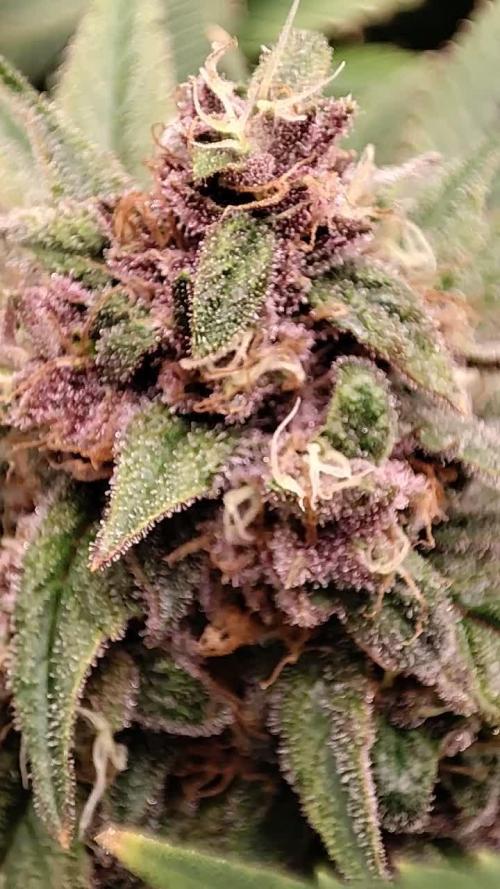
Another week is coming to an end, everything is fine with this girl, she gets more beautiful every day. We are reaching the final weeks, so.. until next time. ✌️🌿🙏


Likes
12
Share


@Jays_Not_Here_Man
Follow
The girls have survived another week ❤️ I did a light defoliation and have been monitoring the RH closely. We have had a very damp week here, and the RH kept climbing and had my fan working hard.
They are starting to plump up and fill in 😋. They have also started to slow their drinking habits, instead of watering every three days, it has moved to every 4 now. Just a couple of weeks left, I think I will be harvesting these over Christmas 🎄, and will have some great bud ready for the new year! 🎉🎊🍾

Processing
Likes
23
Share


@HanzGrowz
Follow
Amazing progress across the board in the tent the last week. Development has been positive for The New and Black Dog, Bubba has swollen up bud wise, and it’s still another week away or so (flowering is supposed to be 50-55 and we’re at 50 today). Chemdawg smell is getting stronger but not too aggressive, and it’s fate king nicely on most colas. Even at the bottom of the plant the buds look nice. It’s an amazing strain, can’t wait to smoke it.


