


@Algar
Volgen
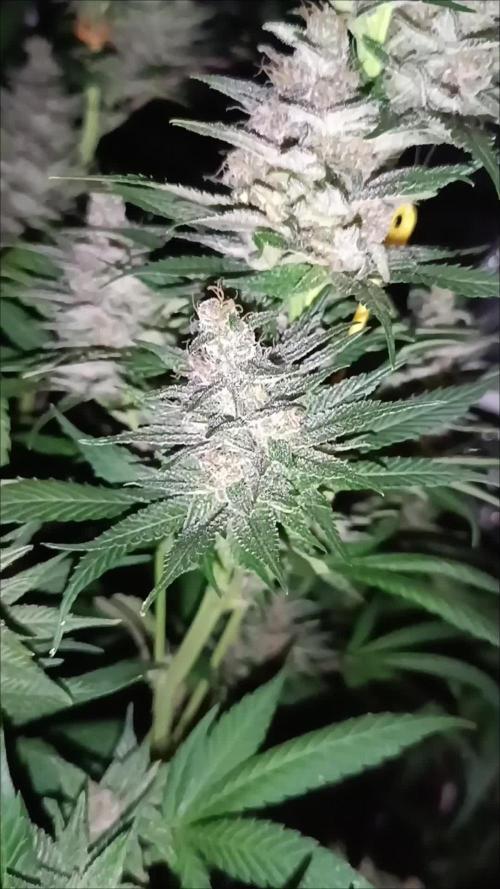
Weeks 14 thru 16 I had to eliminate my other 2 plants(too strong of an oder). But after drying out had 1400grams from both plants.
This one that’s left smells like diesel gas??, and the buds are turning rust colored? Is this normal for NL#5XHAZE
My other 2 didn’t have these charactoristics.
Not giving her any nutruents…just plain ole water.
She’s at 16 1/2 weeks and growing fat fast now that the other 2 are gone, all of the sun for her. Hope I can wait until the end of the month before harvesting…but, I don’t know😅



@RockoCalenberg
Volgen
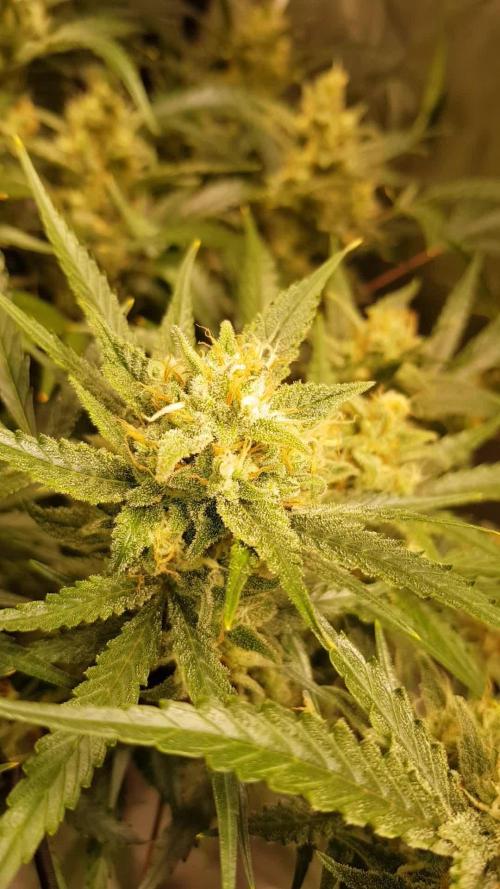
Die 7.te Blüte Woche beginnt...
Sie riecht betörend und das Harz schimmert und funkelt so schön 😍
Gezwittere hat zum Glück nachgelassen und ihre Blätter herbsteln jetzt auch etwas...


@AustinRon
Volgen
El Diablo Week 11 - Flower 9
[Twenty20Mendocino]
(X-Factor X Whiskey Zulu)
Overview -
- We’ve lowered Lighting to 50%, in an attempt to to lower overall temperature through end of grow.
- Full Watering every 4 - 7 days (If not harvested)
Objective
- Trained Plant - @3Nodes - Bend apical meristem to Node 1 Height, 7 STEMS . . .
Week 11 : [ Fri
Apr 11, 2025, ED 1Q25 78:F:11:1]
[ Thu Apr 17, 2025, ED 1Q25 84:F:11:7]
24/0 @ Germination through 24 Hour Open Cotyledons (then 18/6)
Germination: 25 Jan 2025
#3A Earliest Harvest Date: Thu Apr 10 2025
#3B Latest Harvest Date:
Mon April 21, 2025
__
Fri Apr 11, 2025
ED 1Q25 78:F:11:1
Observation:
We’re wrapping up - but see clear signs of More NITROGEN than I’d like …
We’re STILL pushing fresh Pistils.
Would like to have a few more days of High Potassium (RLA - Resin Bloom) in hopes of hastening senescence.
Pre-Lights Out
1L - Resin Bloom @8ml/gal, 2 to go
Full Watering
2 Liters
- [x] Photosynthesis Plus: [ 4.5, ml] # [ 6, ml, gal]
- [x] Resin Bloom: [ 7, ml] # [ 8, ml, gal]
Then, for each Liter Delivered
- Quillaja 60 Powder: [scant]
__
Sat Apr 12, 2025
# First Harvest Oppty
ED 1Q25 79:F:11:2
No Water Today
__
Sun Apr 13, 2025
ED 1Q25 80:F:11:3
No Water Today
__
Mon Apr 14, 2025
ED 1Q25 81:F:11:4
No Water Today
__
Tue Apr 15, 2025
ED 1Q25 82:F:11:5
No Water Today
__
Wed Apr 16, 2025
ED 1Q25 83:F:11:6

No Water Today
__
Thu Apr 17, 2025
ED 1Q25 84:F:11:7
Watering Today (If No Harvest Yet) : 2 Liters
- [x] Photosynthesis Plus: [ 4.5, ml] # [ 6, ml, gal]
- [x] Resin Bloom: [ 7, ml] # [ 8, ml, gal]
- [x] Quillaja 60 Powder: [scant]


@Regenwurm
Volgen
Die Außentemperatur spielt mir voll für die Blütezeit in die Karten. Permanente Zuluft von draußen über starken EC Lüfter mit Leistung 240m3/Std über einen Airsock für die Beleuchtungszeit von 12 Std. In der Nachtphase keine aktive zuluft da keine Photosynthese (Temp draußen = 0-5 Grad während der Beleuchtungsphase, HID Lampe ohne Cooltube)
Im Zelt die Leistung der HID Lampe auf 570 Watt erhöht.
Schwankungen Temp 18bis 19 in der Nacht 23-25,5 Grad am Tag , Schwankungen Luftfeuchtigkeit 35-48 % . EC Wert konstant im fertigen Gieswasser inclusive Nährstoffe bei 1,1. PH Wert Schwankung 5,8 - 5,9. Die Stärke der aktiven Umluft wurde auf maximale Leistung erhöht. Es wurde in dieser Woche ein letztes Mal alles entlaubt. Harzbildung und Geruch stark..... bis nächste Woche


@GERGrowDesigns
Volgen
Welcome to Flower Week 5 of Fast Buds Z-Up Auto
I'm excited to share my grow journey with you from my
FastBuds Project . It's going to be an incredible ride, full of learning, growing, and connecting with fellow growers from all around the world!
For this Project , I’ve chosen the Feminized Auto strain Z-Up :
Here’s what I’m working with:
• 🌱 Tent: 120x60x80
• 🧑🌾 Breeder Company: Fast buds
• 💧 Humidity Range: 50
• ⏳ Flowering Time: 8-9 Weeks
• Strain Info: 29%THC
• 🌡️ Temperature: 26
• 🍵 Pot Size: 12
• Nutrient Brand: Hy-Pro
• ⚡ Lights : 600W x 2
A huge thank you to Fast Buds for allowing me to try my Best with this amazing collection from Automatic and Photo Strains they managed to Sponsore . Big thanks for supporting the grower community worldwide! Your genetics and passion speak for themselves!
I would truly appreciate every bit of feedback, help, questions, or discussions – and of course, your likes and interactions mean the world to me as I try to stand out in this exciting competition!
Let’s grow together – and don’t forget to stop by again to see the latest updates!
Happy growing!
Stay lifted and stay curious!
Peace & Buds!





@eldruida_lamota
Volgen
Vamos familia, actualizamos la quinta semana de floración de estas Black Rainbow de Seedstockers, salieron las 3 de 3, 100% ratio éxito.
Aplicamos varios productos de Agrobeta, que son increíbles para aportar una buena alimentación a las plantas.
Temperatura y humedad dentro de los rangos correctos dentro de la etapa de floración.
La tierra utilizada es al mix top crop, por cambiar.
De 3 ejemplares seleccioné los 2 mejores para completar el indoor y trasplanté directamente a macetas de 7 litros, cambien el fotoperiodo a 12/12 y aplique una buena poda de ramas bajas, se ven bien sanas las plantas, tienen un buen color y progresan a muy buen ritmo por el momento, están cogiendo ya una tricomada seria.
Agrobeta:
https://www.agrobeta.com/agrobetatiendaonline/36-abonos-canamo
Hasta aquí todo, Buenos humos 💨💨💨





@DogDoctorOfficial
Volgen
💙 8×8 Adventure – Week 14 🌿
Blueberry Muffin – Pheno A
❤️ Seeing Red Before Bed — Beautiful Flowers, Slow Motion, and a Little Light Science
Welcome back to another chapter of the 8×8 Adventure! 🌱💚
And our little Blueberry Muffin is still doing her thing.
Beautifully.
Slowly.
And, apparently, in absolutely no hurry whatsoever.
😂💙
Seriously, girl...
Could we perhaps pick up the pace a little?
Just a little?
No?
Okay. Fair enough. 😂
The funny thing is that while she may be slow as fuck compared with some of the other girls in this room, I really cannot complain about what I'm seeing.
The colours are beautiful.
The flower structures are beautiful.
The overall development is beautiful.
And she's still evolving.
That's the important part.
We're not seeing a plant that has simply stopped doing anything. We're seeing a plant that continues to develop, but follows a much slower timeline than many of her neighbours.
And it's not just Pheno A.
Both Blueberry Muffin sisters are taking their sweet time compared with much of the 8×8 Adventure.
Same room.
Same general environment.
Same lighting ecosystem.
Same overall nutritional approach.
Yet these girls are clearly following their own clock.
😂💙🌸
So, this week, we're not making dramatic changes.
Actually, we're not changing anything at all in the general setup.
We're continuing to observe, document, and let the plants do their thing.
But we do have something interesting to talk about today:
❤️ Red light at the end of the lighting period.
And, because I love understanding what happens behind the scenes, we'll also have a quick look at the science behind the Emerson effect.
Let's get into it!
────────────────────────
💙 STILL SMALL, STILL BEAUTIFUL, STILL MOVING
Blueberry Muffin Pheno A continues to look beautiful.
And that's what I want to focus on this week.
Not her height.
Not how quickly she's progressing compared with the others.
Not whether she should already be somewhere else in her flowering journey.
Let's look at the actual plant.
The colours.
The flowers.
The structure.
The details.
Because there's plenty to appreciate.
Her flowers continue developing, and the overall structure is looking lovely. There's a visual character to this girl that I really enjoy, and the photographs help show it much better than simply looking at her from across the room.
She's compact.
She's taking her time.
But she's still giving us something beautiful to follow.
💙🌸✨
And honestly, that's what these diaries are about.
We're documenting the plant we have in front of us, not the plant we imagined we'd have when we started.
────────────────────────
🐢 THE BLUEBERRY MUFFIN SISTERS ARE IN SLOW MOTION
Let's be honest for a moment.
😂
These two girls are slow.
Not just a little slower.
Compared with much of the room, they're moving in their own time zone.
While some of the other plants seem to be racing through their flowering development, the Blueberry Muffins are taking the scenic route.
And yet, both are still evolving.
That's an important distinction.
Slow development doesn't automatically mean something is wrong. Different genetics and phenotypes can follow different timelines, and the environment being shared doesn't make every plant develop at the same speed.
That's one of the things this project keeps reminding me.
We can create a shared environment, provide consistent care, and observe the differences.
But we cannot expect every plant to read the same calendar.
😂💙
The Blueberry Muffin sisters clearly didn't get that memo.
And that's fine.
We're watching their actual development rather than trying to force them to match the faster plants.
────────────────────────
🌸 THE COLOURS AND FLOWER STRUCTURE ARE BEAUTIFUL
This is where I really want to give her the spotlight.
Because when I look at this girl, the first things that catch my attention are the colours and the flower formation.
There's something very satisfying about seeing a plant continue to develop while maintaining such a beautiful overall appearance.
The flowers have their own character.
The structure is interesting.
And the photographs capture little details that can easily be overlooked when you're checking the room quickly.
📸💙
This is also why I like keeping individual phenotype diaries.
If we only looked at the room as a whole, it would be easy to focus on the biggest plants or the fastest-moving ones.
But that would mean missing some of the interesting details happening elsewhere.
Blueberry Muffin might not be winning any speed competitions.
😂
But she's still worth looking at.
She's still worth photographing.
And she's absolutely worth documenting.
────────────────────────
🌱 SAME ROOM, SAME CARE, DIFFERENT CLOCK
The 8×8 Adventure continues to demonstrate one of its central ideas.
Different plants can respond differently even when they're sharing the same general growing environment.
We're not creating a separate room or an entirely different program for every phenotype.
We're observing individual plants within a shared setup.
The Blueberry Muffin sisters are a good example of why that matters.
They are moving more slowly than many of their neighbours, but they're still developing.
That difference is part of the story.
And rather than treating it as something that must be corrected, I'm interested in documenting it.
The plants don't have to be identical to make the experiment interesting.
In fact, the differences are precisely what make it interesting.
💙🌿
────────────────────────
💡 THE LIGHTING SETUP — NOTHING NEW THIS WEEK
We're keeping the lighting setup unchanged.
The Future of Grow Black Series LEDs remain the main lighting system in the room, with the two additional Black Series 600W fixtures still contributing to the upgraded setup.
After adding those fixtures, we reduced the output to approximately 59% from the plug rather than simply running everything at maximum.
Our working reference remains around:
☀️ Approximately 1,500 PPFD across the upper canopy.
Actual intensity varies with plant height and position, of course.
And Blueberry Muffin Pheno A continues to share this lighting environment with the rest of the room.
No special lighting arrangement just for her.
No dramatic changes because she's slower.
The setup remains the same, and we're continuing to observe how each plant develops within it.
A huge thank you to Future of Grow for supplying the additional fixtures and giving us the opportunity to explore the capabilities of this lighting setup. 💡🙏
────────────────────────
❤️ RED LIGHT BEFORE BED — A NEW LITTLE DETAIL
Now let's talk about the red lights.
One of the things we're doing at the end of the lighting period is giving the room an additional 15 minutes of red light after the main lighting period.
The idea is to explore how this end-of-day lighting treatment fits into the lighting routine.
And because this is a topic that often gets discussed in growing communities, I want to separate what we know about plant light responses from what we might hope to achieve with a particular setup.
🌱 Plants don't simply experience light as bright or dark.
They respond to different wavelengths, and those wavelengths can influence different physiological processes.
Red and far-red light are particularly relevant to the way plants perceive their light environment and regulate responses associated with the day-night cycle.
But there's an important distinction here:
**Red light and far-red light are not the same thing.**
A red LED treatment isn't automatically equivalent to a far-red treatment, and the exact response depends on the wavelengths involved, the intensity, the duration, and the plant's condition.
So, for our 15-minute red-light finish, I'm treating it as an additional part of the lighting routine that we're exploring, rather than claiming it will automatically produce a specific result.
❤️💡🌱
────────────────────────
🔬 QUICK SCIENCE BREAK — WHAT IS THE EMERSON EFFECT?
Time for a little science!
😂🔬
The Emerson effect comes from research into photosynthesis.
In simplified terms, researchers found that when plants were illuminated with certain combinations of red light and far-red light, photosynthetic activity could be greater than expected from the effects of the two wavelengths used separately.
This helped scientists understand that photosynthesis involves two cooperating photosystems:
🌿 Photosystem II (PSII)
🌿 Photosystem I (PSI)
These systems work together in the photosynthetic electron transport chain.
The classic Emerson enhancement effect is associated with the complementary contribution of different wavelengths to the two photosystems, particularly when red and far-red light are combined under the appropriate conditions.
In other words, the wavelengths can complement each other.
That's the interesting part.
But here's where I want to be careful.
The Emerson effect is **not simply another name for giving plants 15 minutes of red light after the main lights switch off**.
And it doesn't automatically mean that a short red-light treatment at the end of the day will increase growth, improve flower development, or make a plant finish faster.
Those outcomes depend on the actual light spectrum, intensity, timing, and plant response.
The classic effect concerns photosynthetic activity under particular illumination conditions. An end-of-day treatment is a different lighting scenario, and we shouldn't assume the same result without evidence.
So, yes, the science is fascinating.
But we shouldn't stretch the explanation further than the evidence allows.
🔬💡🌱
────────────────────────
❤️ SO, WHAT ARE WE TRYING TO ACHIEVE WITH THOSE 15 MINUTES?
For this run, we're adding a short red-light period after the main lighting period.
The important thing is to be precise about what we're saying.
Red light can influence plant photoreceptors, including phytochromes, which participate in sensing the light environment.
However, the effect of a red-light treatment depends on its spectrum and timing, and red light alone does not guarantee that the plants will interpret the treatment as a signal to enter darkness or "go to sleep."
The transition into the dark period involves a broader set of plant responses.
So I like the idea of exploring an additional end-of-day lighting treatment, but I'm not going to claim that those 15 minutes automatically improve the plants' sleep, boost yields, or trigger the Emerson effect.
That's not how good experimentation works.
We try something.
We understand what it is intended to do.
We keep track of the setup.
And we avoid turning a plausible explanation into a guaranteed result.
💚🔬
That's how I prefer to approach new ideas in the grow room.
Curiosity first.
Evidence always.
And no magic claims.
😂🌱
────────────────────────
🌙 THE LIGHTS GO OUT — AND THE PLANTS CONTINUE THEIR RHYTHM
The plants' dark period remains an important part of the overall lighting cycle.
For our 12/12 setup, the main light schedule continues unchanged.
The additional 15 minutes of red light is a separate finishing period after the main lighting period, not a reason to assume that the plant's normal night-time responses can be reduced to one simple switch.
Plants have internal rhythms and respond to changes in their light environment.
The spectrum matters.
The timing matters.
And the conditions surrounding the treatment matter.
That's why I want to document what we're doing accurately rather than simply repeating something we've heard.
We're experimenting with the lighting routine.
We're observing the plants.
And we're keeping the rest of the setup stable.
That gives us a much clearer picture of the overall run than changing multiple variables at once.
────────────────────────
🌿 SAME NUTRITIONAL PROGRAM — NO CHANGES
And on the nutritional side?
Nothing new this week.
We're keeping the current program unchanged rather than making adjustments simply because the Blueberry Muffin sisters are progressing more slowly than the others.
The current recipe remains:
🌱 Plagron Pure Zym — 1 ml/L
⚗️ Plagron pH Plus — 0.03 ml/L
🍋 Plagron Lemon Kick — 0.03 ml/L
🌸 Plagron Terra Bloom — 2 ml/L
🌱 Plagron Power Buds — 1 ml/L
🍯 Plagron Sugar Royal — 1 ml/L
🌿 Plagron Green Sensation — 1 ml/L
We're keeping the nutritional approach consistent with the current room program.
No sudden changes.
No attempts to force a faster timeline.
And no assuming that a slower phenotype necessarily needs a different recipe.
The plants are still developing, and we're continuing to observe their individual responses.
────────────────────────
🌡️ WEEK 14 — ROOM OVERVIEW
🌸 Flowering: Week 14
💡 Main lighting schedule: 12/12
❤️ Additional end-of-day red-light period: 15 minutes
💡 Lighting system: Future of Grow Black Series LEDs
⚡ Fixture output: approximately 59% from the plug following adjustment
☀️ Upper-canopy PPFD reference: approximately 1,500
🌱 Pot size: 15 L
The overall room setup remains unchanged this week.
We're keeping the environment and general care consistent while observing the differences between the plants.
────────────────────────
😂 THE GROWER IS NOT TRYING TO MAKE HER WIN A RACE
I think this deserves its own section.
Because sometimes it's tempting to look at a slower plant and start wondering what we should change.
Should we do something different?
Should we push harder?
Should we change the environment?
Should we try to make her catch up?
And sometimes, those questions are absolutely worth investigating.
But not every difference means that something needs fixing.
Blueberry Muffin Pheno A is still developing.
Her flowers are beautiful.
Her colours are beautiful.
And she continues to show us her own rhythm.
So I'm not going to change the whole approach just because she's slower than some of the other girls.
She's not competing against them.
She's not trying to win the 8×8 Olympics.
😂💙
She's simply growing.
And we're letting her do that while continuing to observe what happens.
────────────────────────
📸 THE CAMERA STILL HAS A JOB TO DO
One of my favourite parts of this project is looking back through the photographs.
Because individual images capture moments that can be difficult to appreciate when you're standing in the room.
A particular flower.
A change in structure.
A different colour.
A new detail.
And with the Blueberry Muffin sisters, those comparisons are especially interesting because their progress is slower than much of the room.
That gives us a chance to document their development over time rather than rushing toward a conclusion.
I want to see how their flowers continue to change.
I want to see what their individual structures look like as they progress.
And I want to keep those records so that we can compare the actual journey later.
That's what these diaries are for.
Not just the final result.
The whole story.
💙📸🌱
────────────────────────
💙 FINAL THOUGHTS — SLOW AS FUCK, BEAUTIFUL AS EVER
Week 14.
Blueberry Muffin Pheno A.
And she's still doing her thing.
😂💙
We're not changing the setup this week.
We're not changing the general nutritional approach.
We're not trying to force her to catch up.
The Blueberry Muffin sisters are both moving more slowly than much of the room, but they're still evolving.
And the colours?
Beautiful.
The flower structures?
Beautiful.
The development?
Still happening.
So we're going to keep observing.
We're going to keep documenting.
And we're going to let these girls follow their own timeline.
We've also added that 15-minute end-of-day red-light period to the lighting routine, and we've taken a moment to discuss the science behind red light, far-red light, and the Emerson effect.
Because I enjoy exploring these things.
But I also want to be honest about what they mean.
The Emerson effect is a real photosynthesis phenomenon involving complementary contributions from different wavelengths under suitable conditions.
It isn't proof that a short red-light treatment after the main lighting period will automatically improve the plants' performance.
And that's okay.
We don't need to make extraordinary claims to find the science interesting.
We can experiment.
We can observe.
We can learn.
And we can let the results speak for themselves.
💡🔬🌱
As for our little Blueberry Muffin?
She's still slow as fuck.
😂💙
But she's beautiful.
She's developing.
She's giving us something worth documenting.
And she absolutely deserves her spotlight.
So let's keep watching.
Let's keep learning.
Let's keep appreciating the differences.
And let's give this girl the time she needs to finish writing her story.
💙🌸✨
────────────────────────
🙏 THANK YOU
A huge thank you to Zamnesia for the Blueberry Muffin genetics and for giving us the opportunity to follow these individual phenotypes throughout the 8×8 Adventure. 💙🌸
Thank you to Plagron for supporting the nutritional side of the project. 🌱
A big thank you to Future of Grow for the Black Series lighting and for supplying the additional fixtures that have expanded the lighting capability of the room. 💡🙏
Thank you to LumiFlora for helping illuminate the deeper parts of the canopy.
Thank you to TrolMaster for helping keep the environment stable behind the scenes.
And, of course, thank you to everyone following the journey on GrowDiaries.
Every comment, every question, every observation, and every person taking the time to follow these girls means a lot.
And to Blueberry Muffin Pheno A?
Keep doing your thing, little lady.
Keep evolving.
Keep showing us those beautiful colours and flowers.
Take your time.
We're watching. 💙🌸
Growers Love, my friends, and happy growing! 🌱💚💙
See you next week in the 8×8 jungle...
where the faster girls keep moving,
the Blueberry Muffin sisters continue taking the scenic route,
the red lights get their 15 minutes of fame...
😂❤️
and we keep learning something new along the way.
Let's grow, observe, and let every plant tell her own story. 🌱💚💙

@DogDoctorOfficial
Volgen
🌿 Frosted Guava Auto by Zamnesia | Pheno A | Week 8 (Flower Week 5) 🌿
Finding Her Own Spice
There are always a few plants in a room that seem determined to compete for the crown.
The tallest.
The widest.
The biggest.
And then there are plants like Frosted Guava.
She doesn't need to be the biggest plant in the room to make an impression.
She has simply found her own way of doing things.
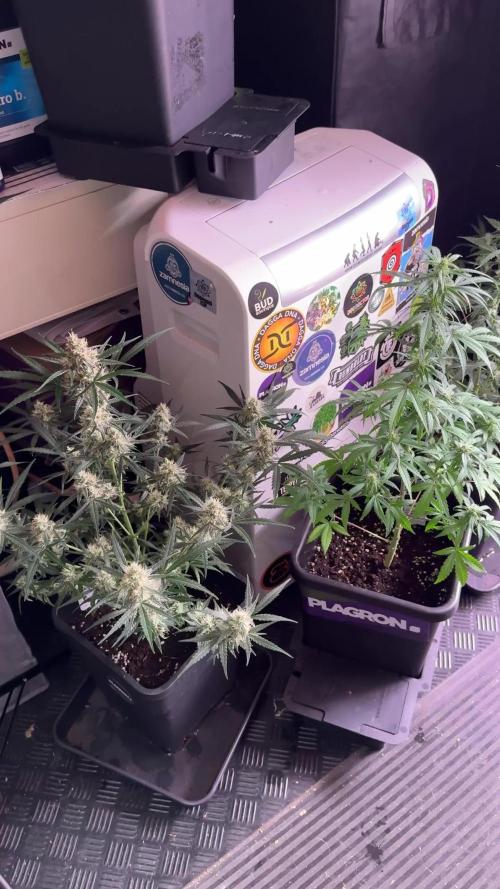
Week after week, Frosted Guava Pheno A has continued developing with beautiful consistency. Her foliage remains lush and deeply green, her structure is filling out beautifully, and her flowers are becoming increasingly dense and noticeably frosty.
The plant is now entering her fifth week of flowering, and the difference is becoming impossible to miss.
She's eating photons.
She's converting them into flowers.
And slowly but surely, she's filling out everywhere.
This girl is finding her own spice.
And I really like it.
🌸 Week 5 Flower – The Flowers Are Coming Into Their Own
At approximately 120 cm, Frosted Guava may not be the tallest plant in the 8×8 Adventure.
But height isn't everything.
What matters now is what she's doing with the structure she built.
And she's doing a beautiful job.
The stretch has largely settled, and the energy of the plant is increasingly directed toward developing the flowers. The individual bud sites are becoming much more substantial, with the flowers beginning to stack and fill along the branches.
The most beautiful part right now is the contrast.
Those deep green leaves surrounding flowers covered in bright white pistils create an almost electric appearance.
The white hairs seem to be reaching in every direction, forming those beautiful little crowns around each developing flower.
And beneath them, the flowers are beginning to gain real volume.
They're no longer simply there.
They're building.
🍃 Deep Green, Lush & Full of Life
One of the first things that catches my eye when looking at Frosted Guava this week is the foliage.
That beautiful, deep green colour is still everywhere.
The leaves look healthy, strong, and full of life, creating a lush backdrop for the developing flowers.
There is something particularly satisfying about seeing this combination at this stage of flowering:
deep green foliage + bright white pistils + increasing frost.
The plant looks like she's completely comfortable in her environment.
She's not trying to be something she's not.
She's simply growing.
And that's becoming her personality.
❄️ The Frost Is Arriving
The name Frosted Guava is starting to make more and more sense.
Resin development is becoming increasingly visible across the flowers, and the developing frost is beginning to give the buds that beautiful sparkling appearance we've been waiting for.
We're still far from the finished product, of course.
But this is the stage where things start becoming really exciting.
Every week, the flowers gain a little more structure.
A little more volume.
A little more frost.
And a little more personality.
The white pistils are still beautifully prominent, standing proudly away from the flowers and giving every bud site that classic flowering appearance.
They're almost like little flags announcing:
"We're not finished yet."
And I certainly hope they're not.
There's still plenty of work for these flowers to do.
☀️ Eating Photons
This is one of my favourite parts of watching a plant develop.
We can't actually see photosynthesis happening.
But we can see the results.
Light enters the canopy.
Leaves capture those photons.
And the plant turns that energy into growth, structure, flowers, and eventually the beautiful resin-covered buds we're watching develop week by week.
Frosted Guava is doing exactly that right now.
She's standing underneath the Future of Grow Black Series LED, taking in the light, while the Lumiflora under-canopy lighting continues bringing additional illumination into the lower portions of the plant.
And the response is becoming visible.
She's filling out.
She's building flower mass.
She's turning energy into structure.
The room might look like it's simply full of green plants and bright lights.
But underneath all of that is an incredible biological process happening every second.
And Frosted Guava is working.
💡 Light Above & Below
The Future of Grow Black Series LED continues providing the main source of light above the canopy, while Lumiflora continues supporting the lower flowering areas.
At approximately 1,000 PPFD across the upper canopy, the plants have plenty of photons available during this stage.
The under-canopy lighting adds another layer to the system, particularly as the room becomes increasingly full and the foliage naturally creates more shade below the main canopy.
I'm especially interested in watching how Frosted Guava's lower flowering sites develop as the flowers continue gaining size.
But once again, I'm not going to write the ending before we reach it.
The harvest will tell us what the photons actually accomplished.
🌿 A Plant Finding Her Own Personality
This is probably what I appreciate most about Frosted Guava.
She isn't trying to be the biggest plant in the room.
She's not trying to stretch endlessly toward the ceiling.
She's simply developing her own shape.
And now that the flowers are becoming more substantial, that individuality is becoming easier to appreciate.
Some phenotypes announce themselves immediately.
Others reveal themselves slowly.
Frosted Guava feels like the second kind.
She's quietly been building a foundation week after week, and now we're beginning to see the reward.
A lush plant.
Strong foliage.
Beautiful flowering sites.
Increasing frost.
And flowers that are slowly but surely filling out.
She's finding her own spice.
💧 Nutrition
The feeding program remains consistent this week:
Plagron Terra Bloom – 2.2 ml/L
Plagron Power Buds – 1 ml/L
Plagron Green Sensation – 1 ml/L
Plagron Sugar Royal – 1 ml/L
Plagron pH Plus – 0.03 ml/L
Plagron Lemon Kick – 0.03 ml/L
Current recorded parameters:
pH: 6.0
EC: approximately 2.0 mS/cm
Watering: approximately 1.3 L per 24 hours
Solution temperature: 21°C
Root-zone temperature: 21°C
There is no reason to reinvent the wheel when the plant is responding beautifully.
Consistency continues to be the name of the game.
🌡️ Environment
The room continues running with remarkably stable conditions:
Day temperature: 29°C
Night temperature: 25°C
Relative humidity: 60%
CO₂: approximately 639 ppm
The combination of stable temperature, humidity, airflow, lighting and irrigation continues creating the environment I'm looking for throughout the flowering room.
And Frosted Guava seems perfectly happy inside it.
🌬️ The 8×8 Is Becoming One Garden
One of the most exciting things about this stage isn't just watching Frosted Guava.
It's looking around the entire 8×8.
What began as individual plants occupying their own little spaces has gradually transformed into one enormous flowering ecosystem.
Every phenotype still has its own personality.
Different structures.
Different stretch.
Different flower shapes.
Different rates of development.
But together they're becoming one living canopy.
And Frosted Guava has found her place within it.
She's not the tallest.
She's not trying to dominate.
She's simply contributing her own character to the garden.
And that's exactly what this project was designed to show.
🔭 Looking Ahead
The coming weeks should be fascinating.
The flowers should continue gaining volume and density, the frost should become increasingly obvious, and those beautiful white pistils will slowly begin telling us more about the plant's progression toward maturity.
For now, though, I want to see her continue doing exactly what she's doing.
Keep the leaves healthy.
Keep eating photons.
Keep building.
Keep filling out.
And keep showing us what this particular Frosted Guava phenotype has hidden inside her genetics.
She's got her own rhythm.
I'm just here to watch it unfold.
❤️ Final Thoughts – She Has Found Her Spice
Frosted Guava doesn't need to be the tallest plant in the room.
She doesn't need to be the biggest.
She doesn't need to compete with anyone.
She's Frosted Guava.
And she's starting to look really, really good.
The deep green foliage.
The beautiful white pistils.
The first serious signs of frost.
The developing flower mass.
The way she's gradually filling out across her branches.
Everything is coming together.
And perhaps that's the most satisfying part of growing different phenotypes together.
You give them the same environment.
The same philosophy.
The same care.
And then you step back and watch them tell you who they are.
Frosted Guava is telling us now.
She's elegant.
She's consistent.
She's lush.
She's frosty.
And she's got her own spice.
A huge thank you once again to Zamnesia for making this adventure possible with these fantastic genetics, Plagron for the nutrition, Future of Grow for the incredible Black Series lighting, Lumiflora for adding the under-canopy dimension, TrolMaster for environmental control, and of course to everyone following this journey on GrowDiaries.
Your support, comments, and enthusiasm make documenting this entire 8×8 Adventure incredibly special.
Until next week...
Let's keep watching this girl eat photons and turn them into flowers. ☀️🌿❄️
Growers love and happy growing! 🌱💚


@Salokin
Volgen
Gu Guys,
she is continuing to develop as she should, however doesn't seem to be stretching all to much even with lower light intensities. I have therefore decided to push the ppfd to roughly 600 and let her finish her pre flower, no matter if she will fill the entire scrog or not. the roots are bit stained, however, this seems to be nutrient related, no slime or smelly roots thus far and it seems like she is constantly shooting out new ones from the net pot. She is going to be a nice little bonsai bush :)


@FlyHighhh
Volgen
Gaat goed alles toont gezond . Gewoon afwachten met een lekkere dikke blow . Over een paar weken word het pas wat spannender 😁😁😁



@RageTdavis
Volgen
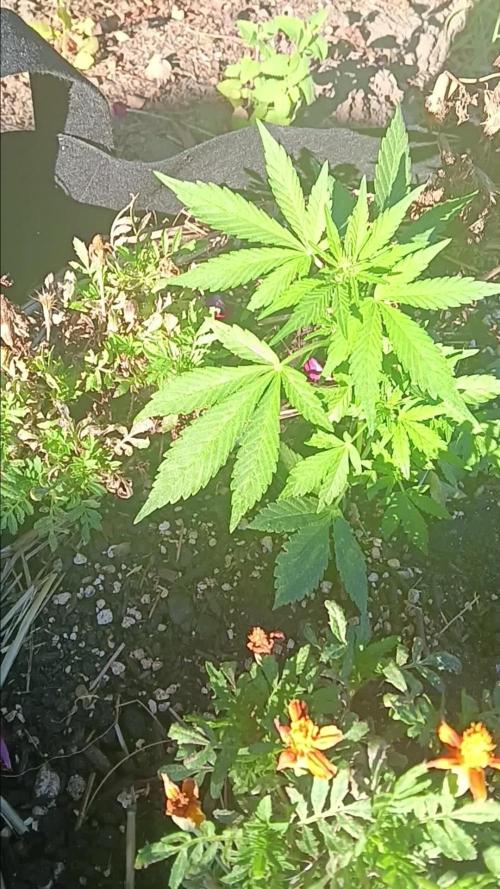
This week im off I've been debating on keeping up with the diary 😅 😩 just typing away sucks we any ways .5 in growth nothing to bad another update tomorrow promise
shorts_status_processing


@Reaper
Volgen
at this week u can compare the stems and bush in the videos, keep in mind this is my first hydro grow and i messed the PPM and PH a few times..
also snapped a whole branch of the hydro plant around week 4.
still the hydro plant looks bigger and fatter stem. lol


@GoldenWeedGrower
Volgen
D36/V32 - 06/05/23 - SCROG net added. Some LST
D37/V33 - 07/05/23 - LST on SCROG
D38/V34 - 08/05/23 - LST on SCROG
D39/V35 - 09/05/23 - LST on SCROG
D40/V36 - 10/05/23 - LST on SCROG
D41/V37 - 11/05/23 - 👉 Water Change - Pure water for 2 days she's going to bloom
D42/V38 - 12/05/23 - 👉 second day of flush
shorts_status_processing


@eldruida_lamota
Volgen
Que pasa familia, ya estamos de vuelta, estás skunk huelen una barbaridad 10/10. Ya entramos en la recta final, se ve bien en el color amarillo de las hojas, que la propia planta chupa el alimento.
Ph controlado temperatura y humedad están dentro de los parámetros, son una variedad con un porte Indico pero una floración algo más lenta, vaya puntas amigo, esas flores van a estar ricas.
La semana que viene os vemos fumetillas, y sobre todo buenos humos.


@pzwags420
Volgen
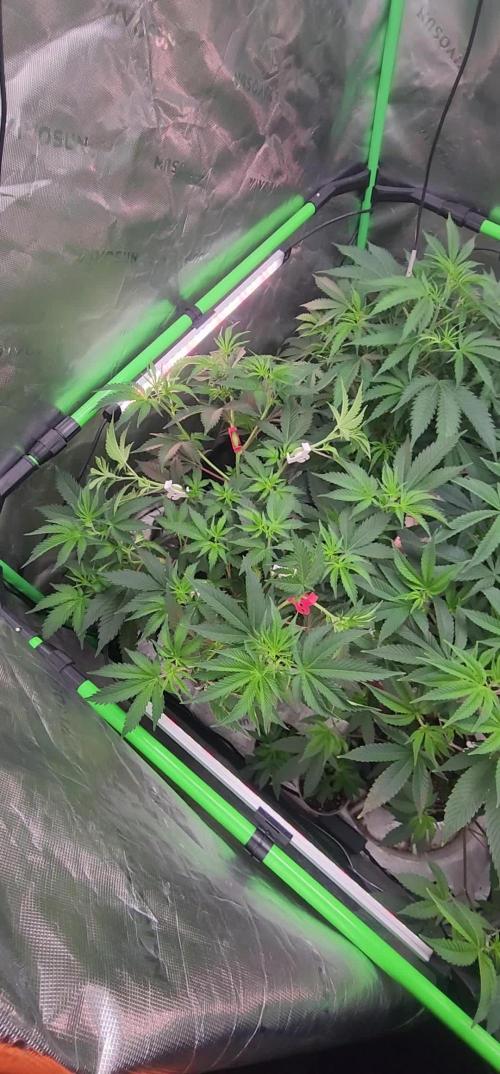
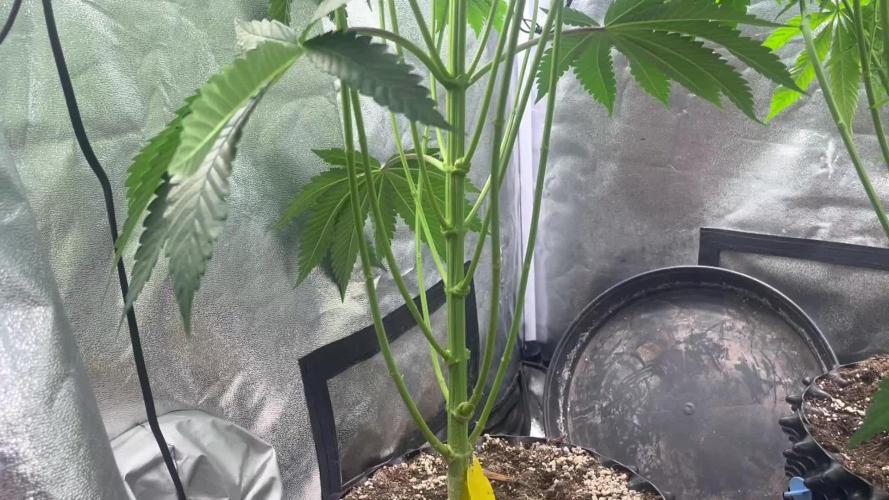
I started the GSC seeds from HSC by soaking in a glass of water overnight then planted in coco coir under a humidity dome in my veg tent. I will plant them in flower box in a couple weeks when they can handle the feed that my BB clone is on right now. On day 5 my 2 other Gsc seeds rotted perhaps too wet but I have one good remaining for this run. I started White widow seeds and will run 2 phenos. Gsc is looking good so far.





@GreenEldritchGardens
Volgen
Black Orchard recovered very well from the stress and now is pushing some nice flowers.
second week of flower is gone and for it means lolipoping and defoliation time!


@CRiSPrGrow
Volgen
I'm really digging the Chem OG, squat plants with those trademark thick thick thick indica leaves, clearly it's gonna be a heavy smoke lol Wasnt able to get the juices flowing this week, hopefully next week i'll get the smart protein into feed. Started training some of these, did two more defoliations (total of three light defos so far) ... and then flipped them 4 days ago. the f-ing landlord has been attempting to enter the lab according to my security cameras lol, motherfucker !!!! anyway i have to pack up the lab, hopefully i'll be able to complete the grow cycle , but for sure i'll have to move the grow op ... that's my problem, sure but it also means that i'll have to wait in order to set up my perpetual cycle... and of course i cant really take cuttings if i'm moving the lab... why must people be so curious? really wish there would be at least a bit more tolerance around this hobby just so i can sleep peacefully at night... in the mean time , I lowered my lights to 22cm, i heard from someone (forgot who) that it's a good thing to get the lights closer when you flip so that the plant gets that extra energy for the stretch. I'll let know how that works out ! Any comments or suggestions are welcome , veg is over so it's gonna get interesting - drop me a message if you want ! that's it 🚀
