


Likes
Comments
Share


Likes
94
Share


@love_2_grow
Follow
We're halfway through flower, and the girls are trucking along without much help from me.
This week's only exciting thing was making compost tea (worm castings, insect frass, kelp, rock dust, basalt, biochar, molasses, and LAB) for the girls (and to kickstart my new veggie soil.)
The tent has more color changes, and considering that they are clones, it's fascinating to see the differences between each plant.
DLI: 42
UV: 2,5 hours per day

Likes
126
Share


@WhiteWidow
Follow
You can find tbe first week of all girls on my profile, second week is missing coz its just boring and now i start week 3 so its day 15 today from placing seeds to germination.
Uploaded a video of their habitat, i still wont name each one indifidually coz i still didnt choose winners / keepers.
Unfortunatelly i have a bit low RH for this stage of growth but they obviously dont mind, i spray them twice a day, no burns from spraying with lights on, no electroshocks caused by spraying so all good now.
I tried it all enough to be able to say i cant be assed anymore :D
Since @growdiaries are not keen on resolving a problem with uploading each pic individually on androids, i will keep one diary for all girls, dont even mind not being able to compete in dom.
Stay tuned these girls will rock.


Processing
Likes
8
Share


@eldruida_lamota
Follow
Impresionante, mirad que flores se están formando aquí , Zambezaseeds si a echo un buen trabajo con estas candy caramelo version fast flowering.
6 semanas de floración y ya no queda casi para cosechar, Añadi esta semana overdrive y retire big bud de advanced nutrients.
Las flores no son muy grandes pero si se ven flores muy compactas y con mucha resina.
Ph controlado 6.2 , humedad entorno al 50% y temperatura media de 26.5 grados, que cara al verano no está mal.
Todas estas flores fueron logradas gracias a una buena iluminación (ts-600 mars hydro) y vaya resultados.
Estas semanas sigo actualizándoos todo , sin más novedades me despido, un saludo fumetillas y buenos humazooos 💨💨💨

Likes
6
Share


@Mackorodoo
Follow
Day-1 put 41 blue dream seeds which i beleive are non gendered autos into pellets to grow as backups, I am primarily trying to grow a white widow autoflower from crop seed kings and 3 of a peyote strain unspecified gender and flowering style.
Day-2 humidity and temperature are sitting at 98up to +100 and 23-31 degress celsius will be leaving top more open after about 6 today to lower humidity just wanted it cranked up for a day or so
Day-3 things are looking good many seeds are starting to show taproots between a quarter inch and five eights of an inch popping through the bottom of the seeds.
Day-4

Likes
14
Share


@AndrewC
Follow
So this is the Tear Down week. The timing of it makes it so i will need to the harvest flag in a few days when I can weight and test the plants.
I have included the Cleaning, and Cutting and some Root Porn.
I will make the harvest post in about 4-5 days, when I can trim these plants. There is a lot of Plant here. I got way more than I was expecting. I don't have a scale that measure this amount of plant, without taking like 10 measurements and then adding them together. So I will just be posting the dry weight. I will post the wet weight as dry weight * 1.65.
Autopots: Wow, what a great product. I have been blown away by how well and how easy it was to work with them. They really did solve the watering issues. Excellent product. If you are a beginner, start with Autopots.
-= Lessons Learnt =-
- Overdrive the air to your Autopots. In my control plant, I used a small rectangle air stone (instead of a standard air dome). This lead to root rot and some other issues, it also put significantly less air into the water. The root rot, give the material for the Brown Algae to grow. Using a huge Air-disc-Air-Stone would be an excellent combo to mix in with the air dome itself. Something like this: https://www.amazon.ca/Pawfly-Diffuser-Suction-Hydroponics-Aquarium/dp/B01MY3AQ33 at the bottom and the air-dome on top of it, will be what I do with my next experiment.
- Air stone in the reservoir. I had two instances where algae grew into the res. An air stone would have helped. It would have also helped my control plant get less root rot. Given the amount that the air-domes and air sources got engulfed, having the water have more o2 in it would have only been beneficial.
- Don't grow 6 plants in a 4x4. Since my control plant was about 1/8th the size of the others, I think I could have grown 5 in the shape of a 5 (on a 6 sided dice)⚄ This placement would give a much more spaced canopy for airflow and more importantly light. The sides of some of the plants were lighter green and produced larf due to lack of light penetration.
- This tent was on 19-5 schedule. This worked out very well for this strain. After every lights on, they were in the praying position, so this strain was able to recover in that 5hrs off. If I had more seeds, I would run these again, and try 20-4. I think this strain could handle it. All for all, I think I'm going to 19-5 as my default timing. This kept up a solid DLI.
- Staring at .9EC (really .7 EC cause my water here is .2 EC) Then bumping up at .1 a week, until 1.6EC worked out VERY well. I experimented on this crop all the way up to 1.9EC, which burnt the tips of this plant. I think if I did this strain again, I would do 1.6EC until 3-4 weeks left then crank it to 1.9. It did plump them up when I went to 1.9, however it left them looking rough. Bulk was added though.
- Sticking to 6.0PH for all of veg, and 2 weeks into flower worked great. The plant had solid and consistent color and leaf shape . The plant's did get hurt, due to some issues (as noted on the weeks). I switched to 6.5 PH in the last 3-4 weeks and it helped them recover, and plump up noticeably.
-VPD. The #1 thing I focused on was VPD. I keep it .9kpa range, as best as humanly possible. It was honestly, HUGELY noticeable compared to my other grows. I know truly understand the value of properly dialed in VPD. This is the one lesson that will stick with me forever.
- Super-cropping: On the plants I give the chiropractic treatment too, had much thicker stems as much larger channel internally. I did this treatment to 4 of the 6, and the 4 that had it done has larger buds and recovered from defoliation faster.
TLDR; VPD is king. Super-cropping is worth the time. Keeping PH and EC dialed in were all wins. Autopots kick ass.
Likes
45
Share


@GreenHouseLab
Follow
DWC stripped to the wood no suckers only AAAA quality buds I’m looking for especially if she’s a leafier bud. It’ll be a challenge keeping her in Veg any longer but still looking at minimum two week before she sees the flower tent.
Week 7 Flower, frosty, smells great, she really puts on the weight late flower so it’ll be interesting to see where she stops.
Likes
4
Share


@Shigg
Follow
Some light defoliation and leaf tucking.
Installed the Tray2Grow today and I’m excited.
It’s looking great. The silica gave it a really beefy center stem. I dig it.
I love this plant so much.

Likes
18
Share


@KushAllDayLong
Follow
Week 10! First week of flower! I was eager and may have jumped the plan I had the other day of waiting another week but after some sound advice from a few people that inspired me to flip them to flower and watch them flourish!!
Day 1..fed fox farm trio with some added aloe vera, very little..won't add anymore from here on out..I added some peroxide as well!! I opened the tent this evening and they were praying up to the mary Jane gods!! Just what their daddy wants to see!! Let's get this smoke to the heavens for the loved ones!! Aye!!!
Thanks again to everyone who inspires me and has helped me along the way! Oh and I ordered a trellis net so it should be set up in the coming days!!
I was going to enter the solo cup challenge with the mini Starbucks cup you see but I didn't realize time was ticking and i may end up throwing her away unfortunately as I dont have a tent to put her in with a light set at the right hours or whatever!! She wouldn't survive on 12 12 or would she?
Day 2 of flower - I opened the tent this morning and the girls are reaching for the sky even more! I forgot to mention I made some fresh Aloe Vera tea/juice for the last feeding I did before flipping to flower..next run I'm going to try not using aloe vera on one of my plants to see the differences..I feel the aloe vera has helped my girls alot but I'm not too sure!! I made a video on youtube about how I made it!! If you have some time and are interested in making your own...
Day 3..I opened the tent and BAM!! These girls know how to make you feel good!!
https://youtu.be/ud9Yi-F5HSQ ( one of my high school friends band is called Katastro, Andy Chaves..lead singer, passed away in a tragic car accident this past year and it's been really tough on everyone!! R.I.P Brobro! The link above is a song I listen to, it's helps me through on tough days and sometimes it helps me shed a much needed tear!! I'm here for anyone that is struggling..have a good day!!
Day 4 of flower..Half way through the day I made the video above titled day 4 of flower..they are all looking happy but the Watermelon Zkittelz is really taking off!! If you have any advice please send it my way!!
Day 5 of flower in the books. Plants look healthy, few minor adjustments next watering for one of the girls..but for the watermelon Zkittelz she's taking off like crazy!!
Also I'm doing a SPIDAR FARMER SF1000 NEW YEARS GIVEAWAY (PURCHASED BY ME ) ON MY NEW YOUTUBE CHANNEL. IF YOU ARE INTERESTED COME CHECK IT OUT AND GIVE ME A LIKE COMMENT AND SUBSCRIBE TO ENTER THE GIVEAWAY!! I FIGURED WHEN I UPGRADE MY LIGHT SET UP WHY NOT GIVE ONE AWAY TO ONE LUCKY WINNER!!
FOLLOW THIS LINK BELOW TO ENTER:
https://youtu.be/pqEeoWQjCAM
End of Day 6 of flower - the girls are filling out and stretching high!!! Let's go!!!
THANK YOU!!
CHEERS!!
One love!!
Likes
23
Share
@eldruida_lamota
Follow
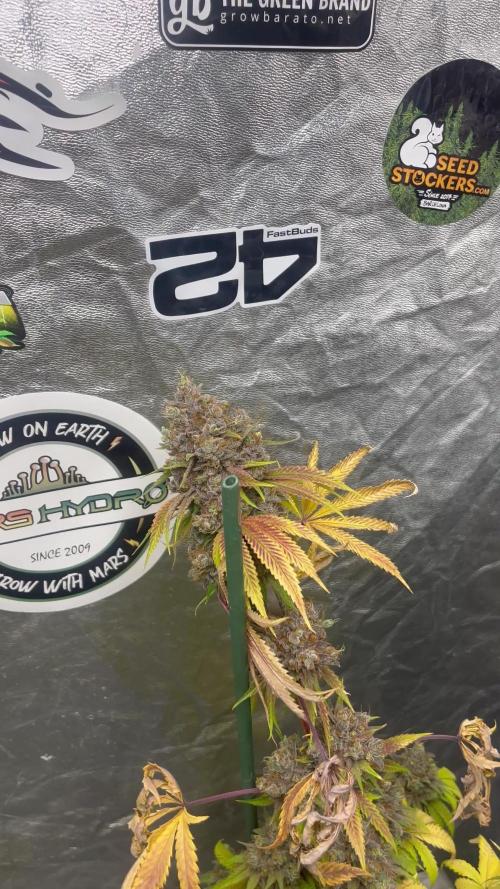
Vamos familia, actualizamos la décima y última semana de floración de estas Lemon Cherry Runtz de FastBuds.
La temperatura que estuvo entre los 23-24 grados y humedad entorno al 40% están dentro de los rangos correctos.
En cuanto a las plantas las veo muy bien, estiraron guay y ensancharon bien.
Ya van 2 semanas solo agua para limpiar bien las plantas.
Hay que reivindicar que en este indoor no tengo ni plagas ni problemas.
Las flores han madurado y explotado bien, por el momento todo correcto.
Tienen un aroma cítrico y veo una resinada bastante seria, creo que si no es la mejor del cultivo estará entre las mejores.
- os dejo por aquí un CÓDIGO: Eldruida
Descuento para la tienda de MARS HYDRO.
https://www.mars-hydro.com
Hasta aquí todo, Buenos humos 💨💨💨

Likes
9
Share


@Budking420
Follow
Oh my goodness this has to be the most massive bad I've ever had forming. This lady is going to be the densest & most potent plant I've ever grown I can just tell. She loves the environment. I've been trying hard to keep temps cool but was away for a few days and didnt wanna risk leaving the window open to animals without bieng home :/ but I tried hard and the girls look GREAT. I hope you guys enjoy this diary as much as I am. I promise to upload again next week. Check back to see just how fast she buds & remember its 4:20 somewhere!!!!!!!
Likes
8
Share


@Tweak
Follow
GG12 is putting out buds like crazy even though she’s quite small, I think I’ll still get a decent harvest from her. The Alien OG and Pineapple Express both had a few branches that needed supercropping to keep the canopy nice and even. Stretch looks over and the 3 not named GG12 are just starting to bud out. Girls are Only getting plain water and look super healthy. Excited to see what the next week brings. Thanks for stopping by and add my grow please.


Likes
3
Share

@JackJolla
Follow
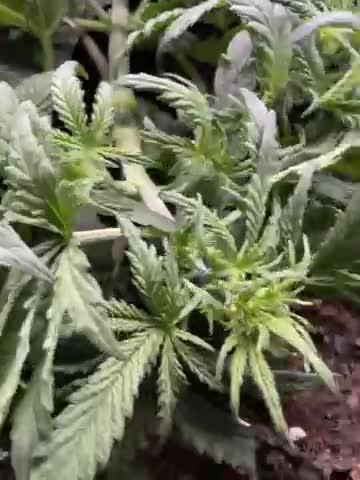
Diesel: The plant has slowed a bit after topping but now growth seems stable.
Wedding Cake: Still the lil one of the three, growth is now more stable after topping.
Sunset Sherbet: It was the one with the least expectation of the three, but after FIMIing, growth continued without a hitch and is now almost as tall as the other two.


Likes
30
Share


@Konkookush
Follow
Flushing, harvest in the end of week 13
Adding some organic nano for my girl

Likes
12
Share


@GREENPHOENIX6262
Follow
*Week 3 Flowering 09/17*
Fastbuds - Mimosa Cake (Auto) (2)
Thus far the flower transition has run smoothly and both plants are running accordingly
Nute feeds have increased
*Week 3 End of week Flowering 09/23*
Flowering for both Mimosa's is proceeding accordingly.
Light defoliation was applied
Light LST to heavy COLA's was applied, anchored to the trellis net.
*FRONT TENT (MIMOSA-2) QUICK VIDEO ADDED*
Likes
1
Share


@Ross4Twenty
Follow
Nearly there, will start to add overdrive soon. Pistils turning orange real
Fast. Maybe this isn’t a long strain???

Likes
20
Share


@Bongman
Follow
Hi all,
It the start of week three. Am thinking of switching the switch this week but since I am doing this grow with a bunch of WW 2nd gen clones and they seem to be drinking a bit too much (need to water everyday) I knew this would happen but didn't expect it to happen before flowering.
I only filled the pots with 2/3 soil initially, so I topped all the WW and the SQ with a mix of worm casting (50%), fox farm ocean breeze 25%, Perlite 15% and coco 10%. Will wait two days to see if this will slow down my need to water the plants in smaller pots. WIll update this over the course of the week.
Mid week update. I only tested out adding the wormcastling is to the WWs will wait and see cause I don’t think they like it that much. Will probably flip next week.

