


Likes
Comments
Share


@Tony2jewerlyseeds
Follow
Hace un año exactamente estábamos cruzando uno de estos blíster de dosi- gelato del cual germinaron 3 de 5 semillas regalando nos dos hembras y un macho muy resinoso y oloroso y varias genéticas campeonas y de ediciones limitadas como amerth souer diesel x somango,souer diesel, como le pondría. A ese cruce o a dosi gelato x dosi gelato de hecho esa siempre fue nuestra intención sacar el máximo de semillas posibles de nuestro primer cultivo con semillas importadas primero necesita vamos unas semillas regulares pero de buena calidad y que supiéramos un poco de su genética investigamos acerca de doci-gelato y decidimos que sería la primera base de nuestros cruces sus efectos y aromas nos llamaron la atención aparte de que el nombre estaba de moda abrimos varios blister más como blackberry gum thunder banana moví d y varias que ya no quiero nombrar porque quiero que esos sabores sean invento mío jajajja leeimos un poco de como podíamos hacer semillas y lo hicimos polinizamos 11 hembras originales o estabilizadas que no se escuche feo y 3 hembras regulares una de ellas nos la vendieron con el nombre de Hulk otra como Cherry y la última una buble gum que comparamos su olor y sabor con el de la blackberry gum de seedstockers fue muy parecido a nuestra buble gum pero con notas a moras muy buenas de hecho es un cruce que tenemos contemplado para ver si con una planta macho de buble gum regular y una blackberry gum de seedstockers podemos mejorar aun mas el sabor y el olor en nuestro país de hecho hay buenas cepas regulares hemos probado genéticas con sabor mango,pastel de arándanos,limón ,sandía ,uva y gas,chicle clásico rosa,plátano,zorrillas todas esas genéticas y variedades nos han hecho llegar a pensar que en realidad hay gente que lleva incluso mas tiempo conociendo las semillas importadas o aun mejor importando las para realizar investigar o mejorar las genéticas y sus distintos efectos en el 2012 llegué a acceder a bancos de semillas quedé deslumbrado de la cantidad de nombres que había pero no era 100% seguro entonces no quise seguir insistiendo pero ya se escuchaban nombres como mango kush, Golden Acapulco,cronic el precio era mas elevado que los demas prensados que podiamos conseguir pero eran mejores efectos y aromas ya para 2018,2021
Se empezaron a escuchar nombres como blueberry,amnecia,skunk,pineaple,og,kalifas,jirafa ,puma,gorila,Hulk, chocolopez,candy, arcoiris,cristal,poison,f1,sueño azul , Tutankamón,shark, snow,Jack jerer, y mas llevamos 13 años recolectando semillas de diferentes genéticas de cannabis siempre hemos cultivado esas semillas regulares pero nunca habíamos intentado un cruce para empezar no sabíamos como hacerlo solo sabíamos que no teníamos que dejar crecer el macho.
Para 2022 después de un obsequio que tuvimos de un conocido volvimos a intentar una vez más conseguir semillas importadas nos regaló un tubo con 10 semillas del banco sweet seeds con fecha de empaquetado en 2017 llevándonos ala misma pregunta desde cuándo estaban llegando las semillas importadas y entonces algunas veces fumamos de genéticas originales al contrario de sentirme mal por no ser el primero en decir que traje genéticas originales o importadas a mi país me sentí feliz por que sabía que lo que estaba guardando todo el tiempo desde 2012 puede ser una gran colección de diferentes breeders tal vez tengamos varias ediciones especiales como la cepa froot loops, jirafe pussy,cronic,ak47 , y así fue como logramos contactar con un banco que parecía de confianza y obtuvimos dos blíster de doci-gelato , blackberry gum,thunder banana ,banana blaze y varias más hemos crecido varios de nuestros cruces pero necesitamos seguir investigando más aún para lograr estabilisar nuestras propias genéticas les dejo una foto de nuestro cruce María Sabina.

Likes
18
Share


@BufoAlvarez
Follow
This is my first grow ever. I obtained a small grow tent and have sprouted seeds that are now in dirt. I have 3 now in dirt. It seems I have done much work in getting the proper equipment ect, its just there isn't that much solid information on watering your seedling at the very beginning stages after they grow tails and put in dirt. I have heard someone say that you should use a shot glass worth if around the center of the pot but directly in the center. Then ive heard people completely soaking the pot. I have 5 gallon fabric pots that i chose to use since they say to put autos in it's final home to start since they dont like to be transplanted which again, i have heard conflicting info about. I have 3 going but already kinda freaking out about if i didnt water them enough or too much. Anyway im learning and open to new info as it comes.
UPDATE - I had 2 seeds pop up on 6/13 which was 3 days after planting the first seed and 2 days after planting 2nd. Humidity is high in the tent at around 76 which i believe is ok. I have a couple bowls of water in there for humidity and and small humidifier. I wasn't sure i was going to need the humidifier but got it anyway. I figure it may come into use at a later time as I am currently not running any exhaust fan as that seems to take the humidity and temp way down and im only using 1 light on the lowest setting. Im honestly just super excited to get a couple seeds to sprout out of dirt and would take that as a win. Im into this though and really hopeful for a good first run. Cheers.

Likes
3
Share

@frankensoil
Follow
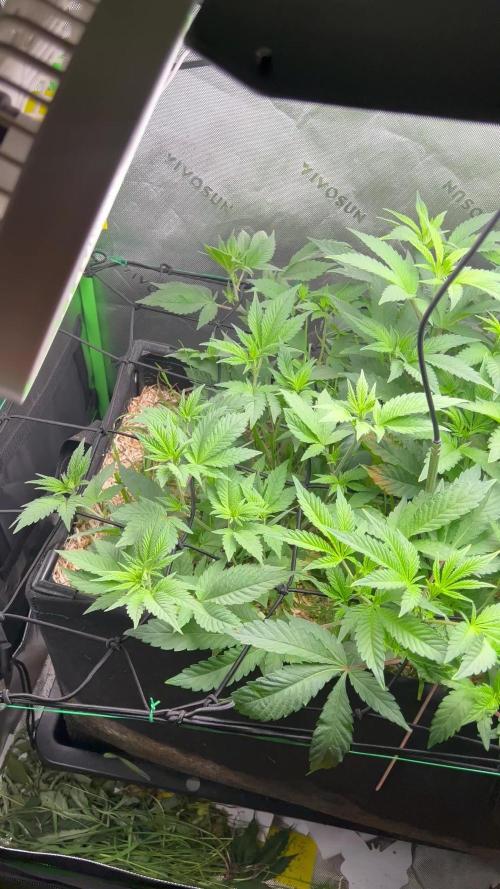
Die Pflanzen wurden endlich in die Blüte geschickt und dürfen jetzt erstmal schön nach oben wachsen
Likes
17
Share


@Fabhz
Follow
Hi!!!! week #12. 1-2 weeks lefts Im waiting for the lower buds to fully flower. Stopped fertilizing 1 week ago, harvest is coming. ...........


Likes
59
Share


@GreenHobbit
Follow
Auto Malawi × Northern Lights – Woche 8
Die Malawi hat diese Woche tatsächlich nochmal etwas zugelegt. Nachdem sie zwischendurch eher so aussah, als hätte sie beschlossen, den Grow persönlich zu boykottieren, werden die Colas langsam dicker. 😅
Vor allem im Vergleich zur letzten Woche ist sichtbar mehr Blütenmasse vorhanden. Wirklich kompakt werden die Buds allerdings nicht – die Struktur bleibt ziemlich luftig und fluffig. Dafür hat sie mehrere schöne längliche Colas aufgebaut und mittlerweile auch eine ordentliche Schicht Harz angesetzt.
Optisch geht sie inzwischen deutlich in Richtung Herbst. Die großen Fächerblätter werden immer heller und gelber, teilweise kommen rötliche und violette Töne dazu. Die Zuckerblätter und Blüten sehen dagegen noch wesentlich besser aus. Nach den Problemen der vergangenen Wochen scheint sie jetzt einfach alles, was noch da ist, in die Blüten zu stecken.
Viele Pistillen sind inzwischen orange/braun geworden und haben sich zurückgezogen, an einigen Stellen kommen aber weiterhin frische helle nach. Sie ist also definitiv weit fortgeschritten, aber fertig sieht sie für mich noch nicht aus.
Unterm Strich: Diese Woche endlich sichtbar dickere Buds – nur eben Malawi-typisch eher fluffig als steinhart. 😁

Likes
42
Share


@Trainrails
Follow
### Day 22 ###
Jeej, the last week of vege! She looks to respond pretty well to the LST, I see nice new growth everywhere. She is also very dence as shown in the video up above. I hope she will get a mayor stretch when starting to flower. I'm already very proud of how this little plant is turning out. 😁🌱
Also ordered some biobizz top max and bio heaven to boost flowering when it happens.
### Day 23 ###
Decided to add more LST, a lot more LST (like 7 wires extra in addition to the 2 initial ones)! 😂 Was a little hard because of the density, but it worked out. I think only one budsight does not have access to direct light. I just could not get it in the right place, oh well, there looks to be enough others 😋. Hope she is not stressed too much, some of the bends are pretty hard, but she is still flexible.
After reviewing the photos again I realized that I'm growing her in kind of a spiral.
### Day 24 ###
Started the day by tucking the bigger leafs underneath the small ones who need more light. She looks happier now! Also watered her 0.6l with nutrients, the soil was becoming pretty dry and it was 3 days ago since her last watering.
### Day 25 ###
Pretty uneventful day. She is still liking the LST, like a lot! Readjusted the LST and tucked the bigger leaves under. There is only one part of new growth I'm concerned about! It is in the middle of the top view picture, so it is from a few nodes before, but looks terrible in comparison to the rest of the plant. Like it was eaten by something. Hopefully she will rebound from this.
### Day 26 ###
I put some cardboard in a V shape in front of the intake fan to defuse the airflow more. Now the new growth that had problems yesterday looks a little better, the brown red-ish is fading away. Windburn is a real thing apparently 😲
Did a lot of LST again today, trying to stay ahead of the growth.
### Day 28 ###
The last day of week 4. Did some more heavy LST to make sure all potential budsights get enough light. The growth that was struggling a few days ago is doing a lot better and seems to be recovering.

Likes
15
Share


@RunWithIt
Follow
Whole grow went off without a hitch. Actually haven't had this smooth of an experience with a plant in a while. This strain is a MUST TRY!!! I'm going to be toking on pure gas for a while! 👌😎
Cheers all! Got another one of her right around the corner as well 😂


Likes
9
Share


@Rock_n_Roll_Randy
Follow
FOR EVERYTHING MARS HYDRO VISIT:
www.mars-hydro.com
www.marshydroled.ca
PROMO CODE: rocknroll
VISIT THE ALIEXPRESS STORE:
@marshydro_aliexpress
Instagram: @marshydropenny
Thanks for taking the time to read and check out my diary🤜🤛
REMO NUTRIENTS 👍
TS3000 FEATURES:
WIDEBAND SUNLIGHT FULL SPECTRUM LED GROW, Infinite close to natural sun light, suit for all plants whole stages indoor growing, rapid plant response from seed to flower, achieve maximum quality and quantity, much better than traditional HPS grow systems.
HIGH REFLECTIVE & NOISE FREE-Fanless LIGHT BOARDS design will make your growing life easy and quiet, quickly heat dispersing material aluminum reducing light lost to aisles and walls, increase the light intensity up to 20%, allowing your plants receive more energy and without burning your plants for maximum headroom.
HIGH EFFICIENCY ENERGY SAVING PLANT LIGHT, high-power NEW LED grow, Compares to traditional 3000 watt HPS lamp and other brand led grow light while only 450 watts true output with 1016 LEDs, more scientifically and energy-efficient! Perfect for 5' x 5' veg stage, 4' x 4' bloom stage, higher intensity in a MARS HYDRO grow tent, reflective area, or by crossing over using multiple TS3000.
BOOM YIELD LARGE GROW LIGHT, NEWEST SMD LED technology provide highest PAR/LUMEN output(1095.6umol/), makes you get 30% higher yield compare OLD led lights, can get max yield at 2.5g/watt, less pay but get more yield, bring a amazing grow trip to any home grower as it beams huge amounts of light energy to plants below.
COMMERCIAL LED GROW LIGHT, Updated easy dimming & daisy chain function, main light controlled, especially come with two waterproof and dimmable Mean Well Drivers, auto sensing power supply works on both 120VAC and 240VAC and 277VAC, suit for Large Rooms and Commercial Setups.
Low Energy-Consuming LED Grow Light: Consuming 300w and also mounted with 1016 chips, TS3000 has the ability to replace a 450w HPS light while reducing 40% power intake.
High Efficiency LED Grow Light: With overall light output PPF 343umol/S as well as amazing PPE 2.3 umol/j, it's 50% even more photon efficient and can assure a 30% more return than the old HPS/MH lights.
Patent Highly-Reflective Hood Shape: The reflector design on TS3000 is patented, which can effectively gather the light dispersed in all directions to enhance its light intensity as well as assist plants in absorbing more light.
Full Spectrum Plants Favorite Spectra: By the unique mix of spectra that makes most light in the 400-700nm waveband, incredibly conducive to plant photosynthesis. Adequate IR(730-740nm) is additionally consisted of in the range to generate larger buds.
Dimming And Daisy Chain Feature Available: Upon an independent dimming button on the external driver, backing 0-100% settings adaptation and up to 30 LEDs daisy-chained in a group, it supplies different light levels for various plant stages meanwhile saving energy.
Safety Certifications And Service Warranty: CE, ETL, RoHS, UKCA security certifications accepted, 50,000 hours durability, 5-year service warranty, and local after-sales repair
5x5 GROW TENT:
LOCK ALL LIGHT INSIDE MARS HYDRO Indoor Grow Tent interior is made of diamond mylar which is highly reflective. (Other brand's mylar and reflective rate is as low as 50%, won't provide efficient light. )MARS HYDRO 1680D canvas, being double stitched, it is tear proof and has perfect light locking. Mars Hydro's grow tent keeps 100% lighting beams inside and helps your plant absorb more lights. EXTRA-THICK --No light leaks or rips at all
DURABILITY GROW TENT Stable metal corner adapters and poles are the trustful supporters of the tent, standing sturdy, neither rusting nor paint-falling, quick easy tool-free installation. Mars Hydro's heavy-duty metal zippers, with double layer black lining, are the best on the market which create a light-proof seal
EASY OBSERVATION FOR YOUR PLANTS. Special observation windows are made by double layers of cloth. Observe the growing conditions of your plants without opening the tent and avoid disturbing plants. The observation window also serves to dissipate heat and ventilate air
AUTOMATIC 6 INCH EXHAUST FAN KIT W/ CONTROLLER:
Mars Hydro 6'' Inline Fan uses a mixed-flow design to maintain peak performance in a high static pressure environment.
GROW TENT FAN: MARS HYDRO inline fans are designed to ventilate hydroponic grow rooms, transfer heating/cooling, cool AV closets, and exhaust odors.
EFFECTIVE VENTILATION: Variable speed controller for easy fan speed adjustment. Optimal ventilation for your planting.
LOW NOISE LEVEL: Durable plastic fan housing and blades for extremely low noise(32dB-A); create a truly quiet growth environment.
EASY INSTALLATION: Removable duct ends with locking tabs for quick removal and easy maintenance and a cord length of 4.9 feet for hassle-free setup. This grows tent fan with a controller for easy fan speed adjustment.
BASIC PARAMETERS: Ventilation exhaust fan size: 6” | Dimensions: 315mm*225mm*210mm. | Weight: 2.7. | Airflow: 402CFM | Noise: 32dB-A | Bearings: Dual Ball.
Likes
20
Share


@SmokyPinball
Follow
Added couple of pics. Today was feeding and final defoliation. LST adjustments were minor.

Likes
3
Share

@TTerpz
Follow
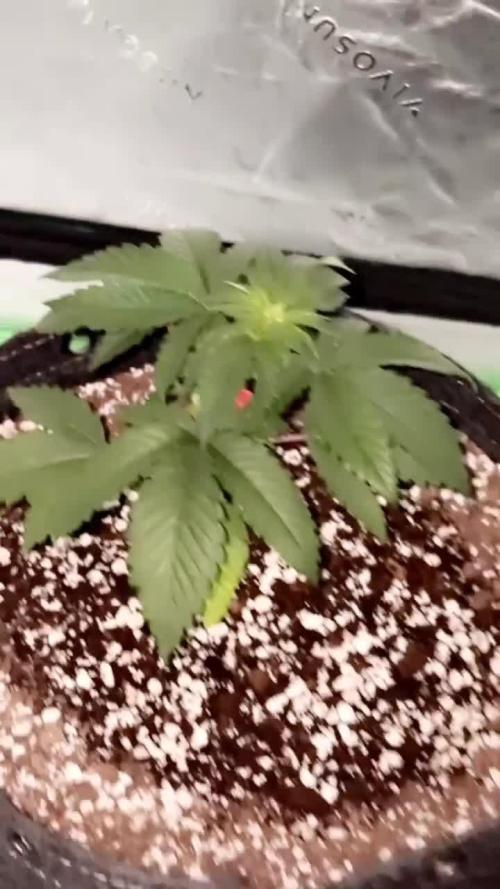
STARTED FOLLOWING WEEK 1 feeding chart lotus Fed with lotus 3/18/26
Watered plain - 3/21/26
Likes
26
Share


@GrowInger420
Follow
Week was good too, Buds getting bigger, started giving her just water now till the end, and hopefully she will reach 28 percent🤯 have a nice week ✌️

Likes
12
Share


@Jays_Not_Here_Man
Follow
Week 7 of Veg for these beautiful ladies! It was a stressful week for the girls but they made it❤️
Day 44 I decided the girls had outgrown their 2 gallon nursery pots and were ready to move on. After a quick cleanup of the undercarriage, they were ready to go.
I like to keep my soil in a Rubbermaid bin, either with a fan lightly blowing, or the exhaust line from my tent blowing at it. Since I started doing this, I have not had any gnats or pests in my grows, of course with regular cleanings and IPM…
This time around, I decided to use some Dynomyco to increase the mycorrhiza count of my Promix HP. This will increase root development and allow for better uptake of nutrients overall. Within an hour or so all of the ladies were transplanted ❤️ 2 in 7 gallon fabric pots, and 1 in a 5 gallon fabric pot ( the 5 gallon will finish in my 2x4 tent)
Once the girls bounce back and take hold of their new forever pot, I will be setting up my custom “floating” SCROG net and allowing them some time to get bent and tucked all nice snug before I flip to a flower schedule. Happy Gardening ❤️🇨🇦🌱😎

Likes
14
Share


@MG2009
Follow
05/06/2021
All is progressing nicely and I want to see how lowering blue spectrum to only
1/4 on just enough for fan to kick on, and leave red at 100% Last picture is the 2 cuttings looking healthy.
Likes
8
Share


@BearBuds
Follow
All dried and cured this plant produced about 2.6 ounces of good flower. Not the best haul, but for all the troubles it had I am still pretty stoked. Will definitely be trying again with this strain and every other Barney's Farm strain I can get my hands on.

Likes
4
Share


@DogDoctorOfficial
Follow
# 💙 Project Blue Tent – Week 12
## 🥒 Pickle Lemon Haze F1 – Pheno B
### 🌸 Another Girl, Another Story, Another Ridiculously Frosty Week! ❄️📸
Hello everyone, and welcome back to another chapter of Project Blue Tent! 💙🌱
And honestly, my friends...
WHAT IS HAPPENING INSIDE THIS TENT?! 😂❄️
Every week, I think we're going to run out of ways to describe how beautiful these girls are becoming.
And every week, they prove me wrong.
The flowers are developing beautifully, the frost is becoming increasingly impressive, and the whole ecosystem is looking absolutely fantastic.
This week, we're giving Pickle Lemon Haze F1 Pheno B her individual spotlight.
And she certainly has something worth showing!
We spent some time behind the camera again, creating three detailed photo stacks from hundreds of individual photographs. We ended up with stacks containing 299, 299, and 333 photographs respectively.
That's 1,931 individual frames across the three stacks.
Yes, my friends, that's a lot of photographs for one girl! 😂📸
We also made a few environmental adjustments this week. We've brought the temperatures down slightly and increased the output power across the lighting setup.
The overall approach remains the same: observe, adjust when necessary, document the results, and give the plants the stability they need to continue developing.
So, let's take a closer look at Pheno B and see what she's showing us this week!
## 🌸 WEEK 12 – PHENO B IS LOOKING OUTSTANDING
Pickle Lemon Haze F1 Pheno B continues to impress.
She's approximately 145 cm tall, and the plant structure we've established over the previous weeks is now supporting the flowering development beautifully.
The major training work is behind us. The canopy is established, the SCROG nets are providing support, and the flowering sites are developing throughout the plant.
We're no longer in the stage of trying to build the structure.
We're watching the structure do its job while the flowers continue to develop.
And that's one of my favourite transitions in a grow diary.
You spend weeks working on the plant's architecture, making decisions about topping, training, canopy management, and defoliation.
Then you reach a point where you can step back and appreciate the result.
That's where we are now.
The plant is looking beautiful, the canopy remains organized, and the flowers are giving us plenty of reasons to keep the camera close.
And the frost?
Oh, the frost! 😂❄️
## ❄️ THE FLOWERS ARE STEALING THE SHOW
Let's get straight to the obvious.
These flowers are becoming seriously photogenic!
The close-up photographs reveal the intricate details of the developing buds, the prominent pistils, and the trichomes covering the flowers and surrounding sugar leaves.
There's something special about reaching this stage of flowering.
From a distance, you can appreciate the plant's overall structure and how the flowering sites are distributed throughout the canopy.
But when you get close enough to examine the flowers properly, there's an entirely different level of detail to appreciate.
And that's precisely why I enjoy macro photography.
It lets us document the small details that are easy to miss when we're simply looking at the whole plant.
Pheno B is giving us some beautiful subjects to work with, and I wanted to capture that as clearly as possible.
So, instead of taking a handful of photographs and moving on, we spent more time creating detailed photo stacks.
And I think you'll understand why when you look at the results.
😂📸🌸
## 📸 THREE PHOTO STACKS – 931 PHOTOGRAPHS IN DETAIL
This week, we created three separate photo stacks of Pickle Lemon Haze F1 Pheno B.
Here's the breakdown:
- Photo stack 1: 299 photographs.
- Photo stack 2: 299 photographs.
- Photo stack 3: 333 photographs.
That's a combined total of 931 individual frames!
Each stack represents a considerable amount of work, both behind the camera and during post-processing.
And this is where patience becomes essential.
Focus stacking involves combining photographs taken at different focus distances to increase the depth of field in the final image.
When working with macro subjects, the area in focus can be extremely narrow. A small change in focus can bring one section of a flower into sharp detail while leaving another section outside the focus plane.
By combining multiple frames, we can capture more of those details in a single final image.
Of course, the results depend on the source photographs and how well the stacking process handles them.
But when everything comes together, the finished image can reveal a remarkable amount of detail.
And that's what I wanted to achieve with Pheno B this week.
Three stacks.
Hundreds of frames.
One very photogenic girl.
And plenty of frosty details to appreciate! 😂❄️
## 🌿 SAME TENT. SAME ECOSYSTEM. HER OWN STORY.
One of the defining features of Project Blue Tent is that we're documenting the plants individually while keeping their shared growing environment consistent.
The plants share the same tent, reservoir, irrigation system, lighting environment, nutritional program, and general cultivation approach.
That gives us an opportunity to observe their development side by side.
And the similarities remain fascinating.
The plants have developed remarkably similar structures, and their flowering progression has been impressively consistent.
But that doesn't mean the individual diaries are interchangeable.
Each plant deserves her own record, photographs, observations, and development history.
That's why we're documenting Pheno A, Pheno B, and the other cultivars separately.
Even when the plants look remarkably similar, their individual details remain worth recording.
For Pheno B, this week's story is about her continued flower development, the close-up photography, and how she looks following the latest environmental adjustments.
She's sharing the same ecosystem as her sisters, but she's still the star of this particular report.
And today, we're giving her the attention she deserves!
💙🥒🌸
## 💡 LIGHTING – INCREASING THE OUTPUT
We made another adjustment to the lighting setup this week, increasing the output power across the lighting equipment.
The main LEDs continue to provide the primary illumination from above, while the two LumiFlora 150W full-spectrum under-canopy fixtures supplement the lower portions of the canopy.
The under-canopy bars remain arranged in the X-cross configuration beneath the plants.
With the structure now established, this arrangement gives us another aspect of the growing environment to observe as flowering progresses.
We're interested in how the different parts of the canopy develop under the combined lighting arrangement.
At the same time, we've increased the lighting output, so we're keeping an eye on the overall environment and the plants' response.
It's important to remember that increasing light output doesn't automatically guarantee a particular result. The response depends on the conditions around the plants and how they develop over time.
That's why we're documenting these adjustments rather than assuming what the outcome will be.
We make a change, monitor the conditions, and observe.
And Pheno B will continue to be part of that story.
## 🌡️ ENVIRONMENT – SLIGHTLY COOLER CONDITIONS
Alongside the increase in lighting output, we reduced the temperatures slightly this week.
It's a small but meaningful part of the latest environmental adjustments.
Lighting and temperature are connected, so whenever we change the lighting setup or its output, we need to consider the wider environment rather than looking at each setting in isolation.
We're keeping an eye on the day and night temperatures, relative humidity, solution temperature, and substrate temperature while the plants continue flowering.
The idea isn't to keep changing everything for the sake of it.
It's to make deliberate adjustments and then observe how the environment settles.
The latest readings have been updated in the GrowDiaries record, so the conditions listed there are the reference for this week's report.
And that's another reason I appreciate keeping detailed records.
When we look back at the end of the project, we'll be able to see not only how the plants developed, but also which environmental changes took place along the way.
## 🕸️ SCROG AND CANOPY STRUCTURE – THE FRAMEWORK IS THERE
The SCROG structure continues to provide support as the flowering branches develop.
The first net helped us distribute the canopy, while the second net provides additional support to the established structure.
The earlier topping, training, and defoliation also remain important parts of this plant's story.
Those interventions helped us create the architecture we're looking at today.
And now, we're allowing that structure to do its job.
We don't need to keep moving branches simply because we can.
We don't need to keep reshaping a canopy we've already established.
The important thing now is to monitor the plant, observe how the flowers develop, and make adjustments only when there's a genuine reason.
Sometimes the most satisfying part of cultivation is seeing the results of work you completed weeks earlier.
You train the plant, give her time to respond, and eventually you get to appreciate the structure that training helped create.
That's exactly what we're seeing with Pheno B.
## ✂️ DEFOliATION – LETTING THE EARLIER WORK SPEAK
The substantial defoliation performed in the earlier weeks also remains part of this story.
At the time, opening the dense canopy made a dramatic difference to the plant's appearance.
Now, we can appreciate the structure that remained after that work and how the plant has continued developing.
The flowering sites are visible throughout the canopy, the branches are supported, and the plant has had time to respond to the earlier interventions.
This is why I believe it's important to think carefully about timing.
There is a time to train.
There is a time to remove foliage.
There is a time to provide support.
And there is a time to stop interfering and observe.
For Pheno B, the major structural work has already been done.
Now we're concentrating on the flowering development and the way the plant responds to the environment we've established.
## 🌬️ AIRFLOW – SUPPORTING THE ENTIRE CANOPY
The airflow arrangement remains an important part of the shared ecosystem.
With a substantial canopy, we want air moving through the upper, middle, and lower portions of the plants rather than allowing stagnant pockets to develop.
The earlier canopy management helped open the structure, while the circulation equipment supports air movement throughout the tent.
The under-canopy lights also make it important to keep the lower portion of the growing space in mind when assessing the overall environment.
We're looking at the complete picture.
Lighting, temperature, humidity, and airflow all interact.
The goal is to maintain a balanced environment rather than focusing on one parameter in isolation.
And as the plants continue developing, we'll keep monitoring those conditions and making adjustments when needed.
## 💧 IRRIGATION AND DRAINAGE – KEEPING THINGS CONSISTENT
The irrigation and drainage systems remain part of the established setup.
The recorded watering volume is approximately 1.6 litres per plant over 24 hours.
Because the plants share the reservoir and irrigation system, maintaining a consistent approach across the tent is an important part of this project.
We continue observing how the plants are responding and monitoring the system's operation.
The idea is simple: maintain the established setup, record what happens, and avoid unnecessary changes when everything is working as intended.
Good equipment should make our lives easier.
It should help us maintain consistency while allowing us to concentrate on the plants themselves.
And that's exactly the approach we're continuing with this week.
## ⚗️ NUTRITION – THE CORRECT PLAGRON RECIPE
The nutritional program remains unchanged this week.
We're using the PLAGRON Hydro line, with Green Sensation included in the current recipe.
The previous reports are also being corrected where necessary to ensure that Green Sensation is recorded accurately instead of Hydro Roots.
For this week's report, the recipe is:
- PLAGRON Hydro A — 2.2 ml/L
- PLAGRON Hydro B — 2.2 ml/L
- PLAGRON Power Buds — 1 ml/L
- PLAGRON Green Sensation — 1 ml/L
- PLAGRON pH Plus — 0.03 ml/L, as recorded
- PLAGRON pH Minus — 0.03 ml/L, as recorded
The recorded pH is 6.01, and the EC is 2.24 mS/cm.
As the recipe has remained unchanged, we're continuing to record the measurements and observe the plants rather than inventing an explanation for every variation.
The important thing is to document what was actually used, keep the record accurate, and monitor how the plants develop.
That's what makes these diaries useful when we eventually look back at the complete project.
## 🌡️ CURRENT BLUE TENT CONDITIONS
The GrowDiaries record for this week has been updated with the latest environmental readings.
The reference measurements shown in the current record include:
- Cultivar: Pickle Lemon Haze F1
- Phenotype: Pheno B
- Flowering: Week 12
- Height: Approximately 145 cm
- Light schedule: 12/12
- Day air temperature: 27°C
- Night air temperature: 27°C
- Relative humidity: 59%
- pH: 6.01
- EC: 2.24 mS/cm
- Solution temperature: 25°C
- Substrate temperature: 24°C
- CO₂: Approximately 666 ppm
- Pot size: 8 litres
- Watering volume: Approximately 1.6 litres per plant per 24 hours
- Under-canopy lighting: 2 × LumiFlora 150W full-spectrum fixtures
- Under-canopy arrangement: X-cross configuration
- Nutrient line: PLAGRON Hydro
- Green Sensation: 1 ml/L
The temperatures have been reduced slightly, and the lighting output has been increased for this week's update.
The values above reflect the updated record rather than the older Week 11 measurements.
## 🔬 FOUR PLANTS, FOUR STORIES
This is something I want to keep emphasizing throughout Project Blue Tent.
Yes, the reports share some common elements.
That's intentional.
The plants share the same ecosystem, so it makes sense that their reports will cover the same environmental systems, lighting arrangement, irrigation setup, and nutritional program.
But the individual reports are not simply copies of one another.
Each one focuses on a different plant and documents her own development.
For Pheno B, we have the three photo stacks, her individual flower development, and her response within the shared growing environment.
For her sisters, we'll continue documenting their own characteristics and the details that make each plant worth following.
The shared conditions provide context.
The individual observations give each diary its purpose.
And that's what makes the project interesting.
We're not trying to manufacture differences where there are none.
We're documenting what we actually see.
Sometimes that's variation.
Sometimes it's remarkable uniformity.
And sometimes it's a tent full of plants that look so similar you have to remind yourself that they're not clones!
😂💙
## 🔭 LOOKING AHEAD – MORE TO OBSERVE
As we continue through flowering, I'm particularly interested in watching how the flowers develop under the updated lighting arrangement and slightly cooler environmental conditions.
We'll keep observing the canopy, the flowering sites, and the details that become visible through the macro photography.
We'll also continue recording the environmental measurements and maintaining the shared nutritional program.
The next stage will bring more opportunities to document the plants and compare their development over time.
But we're not going to rush ahead.
We have the structure.
We have the established ecosystem.
We have the equipment in place.
And now we have the time to observe the results.
That's what we're here for.
## 💙 FINAL THOUGHTS – ANOTHER BEAUTIFUL WEEK FOR PHENO B
My friends, Pickle Lemon Haze F1 Pheno B is looking absolutely outstanding.
The flowers are beautiful, the frost is impressive, and the close-up photography has given us another opportunity to appreciate the intricate details of her development.
We created three photo stacks from 931 individual photographs, made some environmental adjustments, increased the lighting output, and continued maintaining the established ecosystem.
Nothing about this week required us to reinvent the entire setup.
Instead, we made deliberate adjustments, updated the records, and continued observing.
And that's an important part of cultivation.
You don't need to make dramatic changes every week to make progress.
Sometimes you simply need to understand what you're seeing, record it properly, and give the plants time to respond.
Pheno B is sharing her environment with her sisters, but her individual story is still unfolding.
And I'm looking forward to documenting every step of it.
The canopy is established.
The flowers are developing.
The trichomes are giving us plenty to admire.
The photography is looking beautiful.
And the whole ecosystem continues to be the foundation of this project.
So, for now, we're going to keep doing what we've been doing.
Observe.
Measure.
Document.
Adjust when necessary.
And appreciate the beautiful plants we're fortunate enough to follow.
💙🥒🌸❄️
## 🙏 A HUGE THANK YOU
A huge thank you to Zamnesia for making Project Blue Tent possible and giving us the opportunity to document these Pickle Lemon Haze F1 cultivars individually.
Thank you to PLAGRON for the Hydro nutrient line supporting the project, including Green Sensation as part of the current nutritional recipe.
Thank you to Mars Hydro for the irrigation and drainage equipment helping us maintain consistency throughout the tent.
A massive thank you to Zamnesia for the Phytonaut LED lighting, curved scissors, and clip fans that continue playing important roles in the project.
And a special thank you to LumiFlora for the under-canopy lighting that we're exploring as another part of our cultivation setup.
Thank you to GrowDiaries for providing the platform where we can document the experiments, share the photographs, and record the lessons we learn along the way.
And finally, thank you to everyone following Project Blue Tent! 💙
Your support makes sharing these individual chapters even more enjoyable.
Pickle Lemon Haze F1 Pheno B is looking beautiful, and I'm delighted to have another week of her journey documented.
Until next week...
Keep growing.
Keep learning.
Keep observing.
And keep appreciating the details!
Growers Love, happy growing, and take care everyone! 🌱💙🥒❄️
Likes
23
Share


@Horseluisweed
Follow
Teniendo el sustrato preparado con antelación un par de días antes.. nos animamos a germinar, tengo una tremenda ilusión con esta pequeña, me hace muy feliz verla crecer!🌱 Ojalá todo salga bien y pueda acompañarla hasta el final en este precioso viaje 👽❤️🌱
Nos hemos marcado tres objetivos en este cultivo:
1-hacer un cultivo seguro y no ser detectados👮♂️🥇
2-conseguir una cosecha en menos de 2 meses con éxito 🏇🥈
3-gastar la mínima cantidad de recursos posible con el máximo rendimiento posible🤑🌍⚡🥉


Likes
33
Share


@FlavoursUk
Follow
So far things are going well. Bloom has started and already seeing purple/pink hues on the buds. Will be back to update properly just posting up a few pictures before i forget. Check out the YouTube channel.
Water change at day 31 and pH'd the water to 5.8. I also got a new RO 4 stage water filter for the best water quality for the girls so ill be using that on the next water change. The smell is sweet in the tent. All seems to be going ok.
Day 34 - The girls seem happy enough, a few colder nights than needed but all in all, happy with there progress.


