


Likes
Comments
Share


@Tony2jewerlyseeds
Follow
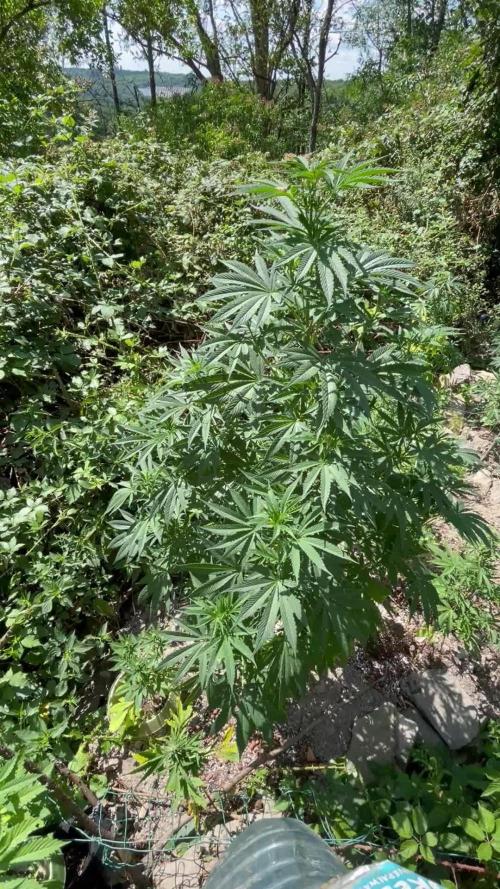
Protejere a mis nenas 2 semanas más seguirán en exterior pero las pondre en un lugar que no se mojen tanto con la lluvia igual aprovechare las lluvias para regarlas en cuanto necesiten agua estás bellezas y les he colocado un poco de lombricomposta esperando que tenga buen efecto en ellas.



Likes
19
Share


@Comfrey
Follow
Day 78
☀️☀️🔥☀️ 16-28 degrees, humidity 45-65%. Tropicana and I start into the 12th week with intense autumn colors and an explosion of fragrances. It‘s very hot during the last days but bu the night temperatures fell more than 11 degrees last night. When I check my plants in the early morning, give them water and attention, a cloud of Tropicanas fruity and floral fragrances surrounding me.
Night 79
⚡️🌈 This will be Tropicanas last night. I found a little bud rott in the main flower. Glad that I made a video inside. I just saw a yellow leaf as a sign and remembered what I read last week about this problem connected with high humidity and very dense buds. I didn‘t follow any hygiene rules and humidity on the balcony was very high for too long period. So this could happen unfortunately.

Likes
12
Share


@Naujas
Follow
Well, that day has come, the girl would have been really different if not for the high temperature, strong light, and a huge lack of potassium :( well, everything will be fine next time :) live and learn :) I am satisfied with the result, which is what I need :) got 200 gr of liquid :) gathered a lot of sugar leaf :) they are already in the sweet shop :D I will make an addition!! good growth and success :)

Processing
Likes
5
Share


@Bloom_Room_By_Jared
Follow
4/17: More of the same as usual.......l can only imagine what she would’ve been doing with the needed light instead of 12/12
4/18: For the remaining time until I harvest her in like a week or 2 I’m going to take her out the tent during light off period so she can receive much more needed light

Likes
37
Share


@masterofsmeagol
Follow
Week begins 8/12 LAST FEED 2 gallons 8/12 AFTER A RAINING NIGHT.
8/13 I've found what appears to be septoria on a couple plants. Looks like the weather will be OK tonight so I can apply organocide or something similar before dark. I've seen random pillar damage so this will be a two-for. I also should move the middle plant back and utilize my space more. Ph seems on point around 7.3. Higher in some places of the soil. I've noticed what looks like root issues on my blueberry. Winds were horrible yesterday and this plant doesnt hace a vertical trellis for support. Stem was pretty wobbly for a while but the plant seems to be growing fine. Either that or a jpn beetle munched the top of a bud. That's probably what happened. It was in the low 50's this morning. That's a 40 degree temperature swing in just a few days. This grow season has been the most challenging I've faced. Of course it had to happen when personal, family, and health concerns rear their head. Oh well. I can only do my best.
8/14 Went over at 5am to apply organocide to treat WPM or septoria as well as insecticide for pillars. I got there and one of my healthiest plants had been turning a little lime green now it was drooped over just like the larger GDP. This one is a 9lb kush though and they were doing good. Now it looks like it's dead over night. Maybe it's that liquid kool bloom. The soil seemed dry so I watered the plants. It MIGHT have picked ok a little. I'll have to check tonight. If not something is going on at night or in the rootzone and I really don't know what the fuck is going on. I will post updates and check later tonight. Damn. This has been a real challenging year.
8/15 That plant might be overwatered or not be draining correctly. At least I was able to get underneath it and the ground was dry. It was also hard packed dirt so elevating the bag may help. I'm going to wait a few days and see if things improve. This really sucks. I'm getting that defeated feeling. I need to get out of it though as I'm starting to see flower begin. The blueberry is probably the farthest along. I need to remember to take pictures of the newly developing flowers. Granted I've had numerous medical and other issues that have taken me off my game but losing two plants in one year is pretty shitty. I was able to fix things with COVID last year or the year before so I hope I can at least save this 9lb kush plant. If I lose this plant too it will be a substantial amount of cannabis lost. I need to rearrange my cage as well to make use of the extra space. Maybe I could've overwatered that plant that had been in the rain for a long time. I need to get my water routine down pat instead of doing the "lift the pot" method I have been doing. I went to several different commercial growers and got a bunch of crazy answers. Only time will tell. Last night I finished the organocide application on all the other plants except for the two babies and the drooped 9lb kush. Don't want to stress it further. I'll see how it goes.
8/16 Despite the soil drying out the newest disaster (my 9lb kush) is much worse with chlorosis killing leaves. Stalks and branches seem good. Soil smells musty and a little wetter than the rest. It was roofed to the ground slightly. NO water underneath. I stuck my hand in the bag from a bunch of angles. It's like the same thing that happened with the other one. I added to my surveillance. I also smell bleech and I hace an idea this might not be my doing at all. I can't be detailed but I'll find out one way or another. UPDATE. Went back over after the dentist and plants were dry as a fucking bone and droopy. I mixed up five gallons of phed water and watered everything. Even the 9lb kush that is pretty much dead. The soil was dry though. Everyone is saying overwater but I really doubt that. We had some massive rainstorms bur still. I need to review a game cam I have because unfortunately my cams went on the frits for a couple days (and the dogs went wild during that time around midnight) couple nights in a row. I fucking smell bleech. I'm a good dude and don't really have any enemies but we'll see what the game cam pulls up.
8/17 Of course we are getting a shit ton of rain. I watered yestetday because everything was dry as a bone
I watched yesterday as my blueberry was almost horizontal due to the wind. I added several supports to every branch and a few more up the main stalk. That may be what has been happening. The wind blowing so hard it separates the stalk from the roots. My problems started after I took my windbreaker tarp down. I put it back up for this storm. Or maybe it's just root rot. I dont fucking know. I cut all the dead stuff off the 9lb kush thats pretty mucb dead. Its holding on though. I probably shouldnt have watered that but it seemed bone dry. Maybe further down was wet. I dont know. Extra cams are up. I didn't smell that chemical bleachy smell today so it's probably in my head. I have better peace of mind with the night cams up though.and the dogs though. I've had a visitor this year but he left very quickly.
8/18 We got a shit ton of rain last night. No damage though. I spent what time I had in the garden working on the 9lb kush that looked like it was dieing. I'm not giving up on this one so easy. It seems to want to hold on. Despite the severely overwatered medium (due to this storm) I cam see new growth that looks healthy. The branches also seem stronger. I'm cautiously optimistic. The other one straight up died. So I might be able to salvage this. I'll go over later today and check on it. I debated putting it inside for the storm bur I figured I'd let the rain leech out anything in the medium in case it's locked out or something. At least I've got a couple real healthy ones this year. That NYCSA is amazing. That's a strain I'll probably grow again. Resilient as all all. Vigorous and doesn't seem impacted by things like WPM or other fungal ok infections or diseases like some other strains. I got a great recommendation from my buddy to use pots all the same size. It makes things easier watering. I just used what I had this year. I had bigger pots so I wanted to fill them. That tarp being up I think greatly helped with the wind. It's down now so things cam dry out. Still raining bit not yard and no wind. I think that may have played a large role in killing the 7ft GDP. Wind ripping the stalk away from the roots. Or it could've been a million other things. I'll never know. I do know that I have a better mindset, a great set of resources and I'm learning something new every year. If I can br8ng this plant back to life I'm going to be very proud of myself.....and her. Oh and I'm going to buy new tiger bloom. I'll start beasty bloom (hesitant as it has caused lockout in the past) as it goes better with my other nutes than the liquid kool bloom. Plus I started getting portables around tge time I used the liquid kool bloom. That being said, after two weeks I can see buds where there weren't before so I don't know. Next year I'm using seeds and I'm doing things different. I'm STRONGLY considering rapacaps idea about adding a removable roof for flower. The more I think about it tge better it sounds. That and putting wheels on pallets (buddy suggestion) and I could attach my supports directly to the pallet. I've got a lot of work to do that's for sure. Plants look healthy but I needvto him them again with organocide to fight any fungal stuff or pillars that might be hiding.


Likes
15
Share

@Chubbs
Follow
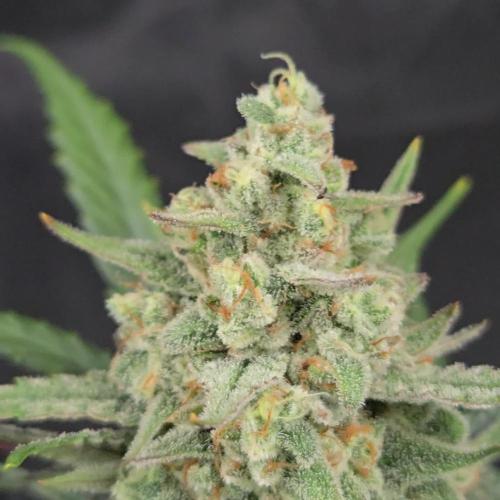
Weekly update, sorry for being a little late. I was out of town the passed week. Wow is it wild to come back and see them after being gone. The smell,look, amd beyond sticky is amazing. I chopped half as they're ready, the other half will come down in the next couple of days. All in all happy growing.
Likes
34
Share


@Gassedupfromthemaskup
Follow
This week one of the plants has really began looking tropical and the smell is danker by the day. It wreaks of fruity gas in my tent. Everything is basically on cruise control from here. Two of the plants look ready for a flush while the others are a week or two behind. One of the phenos is a good bit behind and was since day one but looks like it will yield a good bit.
🍻🍻
Mid week: I spotted few amber trichomes and started flushing on two of the 5 girls. One is way behind and two are maybe a week behind. 👌💨 Ready for these beauties to finish😍
Likes
19
Share

@Suemchen
Follow
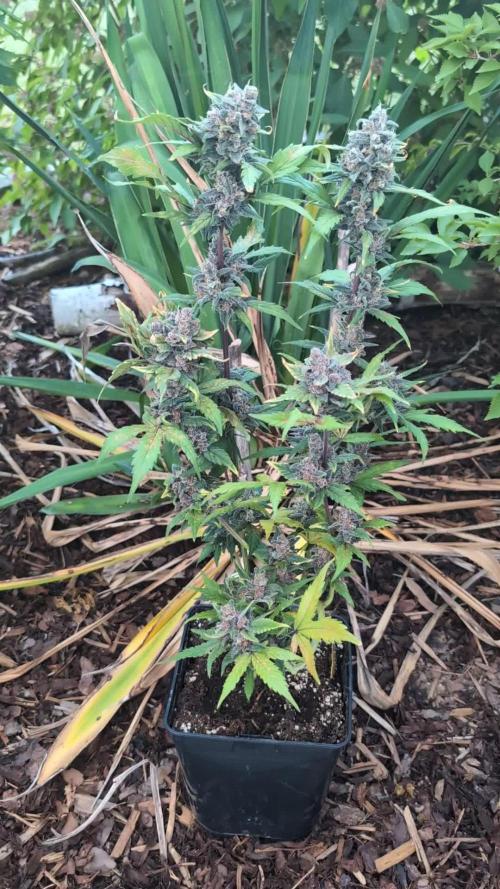
Outside all the time
Day 71: looking really good 🤗 watered with rain water.
Day 74: Almost finished, giving her maybe two more weeks👌🏻 Smell is Intoxicating watered today with supplements: 1ml/l Green Sensation, 1ml/l Cal Mag, 2 ml/l Powerzyme. Rain water and a little tap water to get to an EC of 1.6 and a pH of 6.4👌🏻
Day 76: Today she got rain water from me🤗 She's drinking a lot because it's really hot outside right now. IT should cool down in a couple days to more tolerable temperatures 🌞🌞🌞
Processing
Likes
5
Share


@AgroCultiveta
Follow
Son fotos y videos de múltiples cultivos debido a que nunca e realizado un seguimiento como tal, espero realizar uno ahora!
Nutrientes Utilizados en general Trybac y Trypack biobizz.
Las criticas siempre serán bien recibidas!😋
Espero les guste el contenido!


Likes
20
Share



Likes
28
Share

@BudVision
Follow
Hello growers,
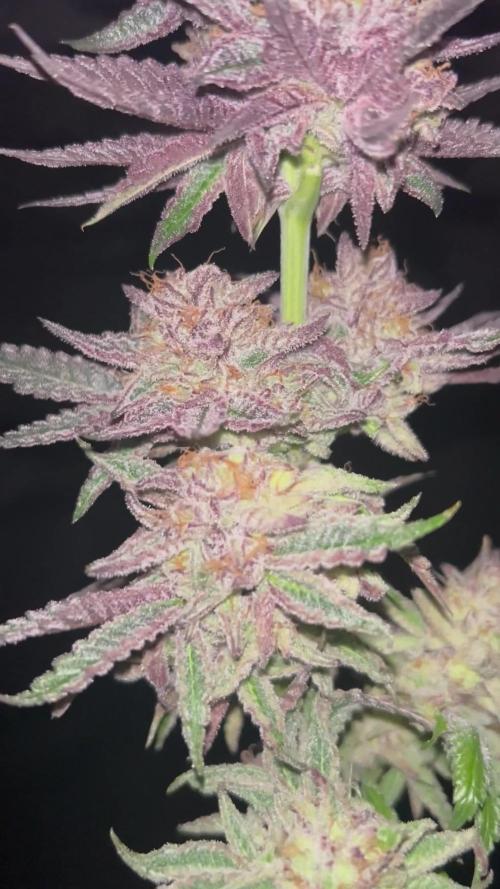
I harvested because she had completely consumed everything in her pot, so there was nothing left to wait for. The aroma is sweet and spicy, hard to describe but very pleasant. The bud is dense and beautifully colored.
Peace and happy growing! ✌️


Likes
6
Share

@Punkndrublic187
Follow
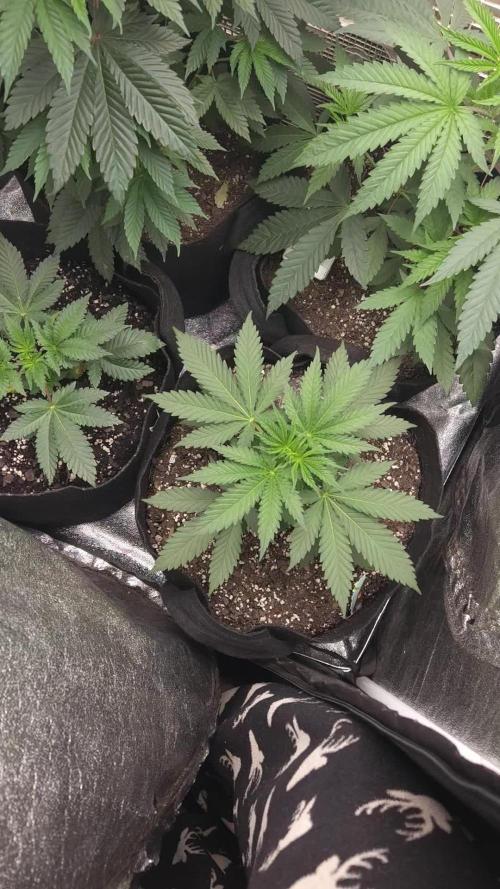
Flipped the flower Tent March 22nd. The big Charmz Slushie & the PBBF4 are female sadly the end one is a male. Veg Tent chugging along the other PBBF4 is gonna be joining the flower Tent and give the Space Peaches some room


Likes
5
Share

@Chucky324
Follow
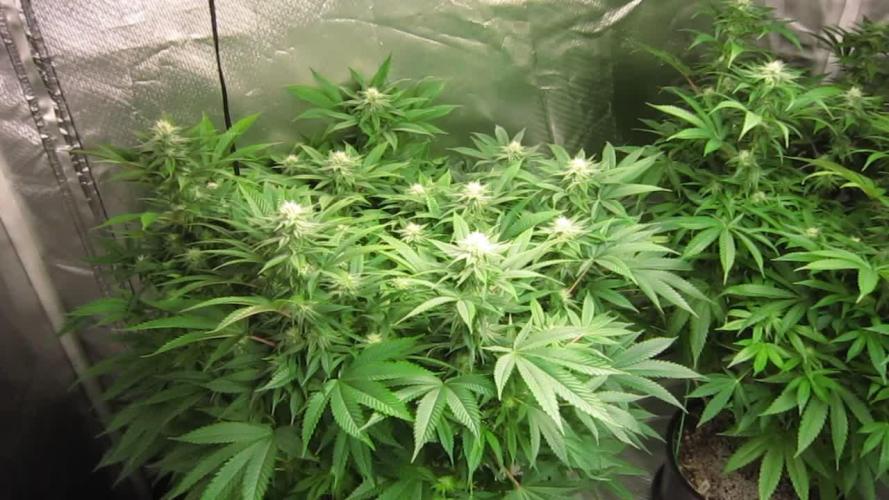
Hello. This is the end of week 4 and the beginning of week 5 of flowering.
Did a smell check of the resin and found that
Plant #1 smells of Sweet Mandarin Orange.
Plant #2 smells like a freshly washed Sweet Carrot right out of the garden.
Plant #3 smells like a average Sweet Round Orange.
I'm hoping plant #1 have big, dense, strong smoking, buds. Love that smell.
OK. Be Cool.
Chuck.
Likes
76
Share


@DogDoctorOfficial
Follow
🌸 Week 9 – Letting Go to Shine Brighter 🌸
Welcome to Week 9 of flower in the Eternity Grow Cup, a milestone moment where we shift gears and let the plants begin their final expression. This is the week we cut all nutrients — a bold move made with care and trust — leaving only System Clean to keep our lines pristine in the Autopot system. No harsh flushes, no dry backs, just gentle guidance toward the finish line.
We didn’t wait for the reservoir to hit empty. Instead, we added pure water early, letting the system blend into a soft EC of 0.45, with a reservoir temperature of 21.9°C and a pH tuned to 6.3 — perfect for this phase. In the soil, EC sits at 0.95, giving the plants enough to sip on while encouraging them to cannibalize their stored energy, pushing out their richest colors, aromas, and trichome production.
And what a show they’re putting on.
The colors in the room are breathtaking: purples, oranges, yellows, deep greens — a painter’s palette. But above all, there’s this serene dark fade taking over, a sign of maturity and final expression. Trichome production is off the charts, with Runtz #1 still dominating the aroma game — sweet, powerful, unforgettable — while Runtz #4 emerges as the frost queen, covered head to toe in shimmering resin.
The environment is dialed in:
• Humidity at 52%
• Temperature holding at 28°C
• PPFD reduced to 683 to ease the plants into ripening
• CO₂ around 1000 ppm for that final metabolic push
We’re focusing now on presence and precision — ensuring airflow, temperatures, and humidity are in harmony. Every decision from here is about preservation, encouragement, and letting nature take the lead.
This week’s update includes a special series of photos taken through the mask lens — showing the garden from my eyes, from tops to bottoms, sides to centers, trichomes to fade tones. It’s a personal view I’m grateful to share.
The structure of the grow has become something of a symbol: four phenos in each corner, one in the center — creating an X from above, a cosmic mark that feels intentional, aligned, and just… right. They’ve bushed out so beautifully that this symmetry, almost a message from the plants themselves, is impossible to ignore.
And from the top down to the lowest buds, there’s no weak link. No “B-buds” here — they’ve become A-tier expressions, worthy of jars and not just extracts. The synergy between Plagron, Aptus Holland, and the TrolMaster & ThinkGrow lighting ecosystem is performing at an elite level — tuning spectrum, dialing environment, and nurturing these compact queens into full form.
This is a week of wonder, of silence before the final bloom. A week of gratitude.
⸻
🌟 With Grower’s Love, I want to thank:
• Our incredible community — lovers, haters, dreamers, doers
• The sponsors who make this possible
• And every grower competing in this cup — you are the fire that keeps this space glowing. I’m humbled to grow alongside you.
🎥 Full 4K episodes now on YouTube — come join us there for the full experience
📸 Daily beauty and behind-the-scenes on Instagram
Let’s celebrate the craft. Let’s finish strong.
Good luck to all. Eternity is in bloom.
Genetics - Runtz https://www.zamnesia.com/6000-zamnesia-seeds-runtz-feminized.html
Nutrients - Plagron https://plagron.com/en/hobby
- Aptus Holland https://aptus-holland.com/
Controls - Trol Master https://www.trolmaster.eu/
LED - https://www.futureofgrow.com/en
LED - https://www.thinkgrowled.com
Soil - https://www.promixgardening.com/en
Germination - Cannakan https://cannakan.com/?srsltid=AfmBOopXr-inLXajXu3QFgKXCXXos4F1oEvScjMKIB5MR5dk8-GJ-F49
DOGDOCTOR 15% off
Smoking Papers - https://ziggioriginal.com/
Terpene saver - https://grovebags.com/
As always thank you all for stopping by, for the love and for it all , this journey of mine wold just not be the same without you guys, the love and support is very much appreciloved and i fell honored with you all in my life
With true love comes happiness Always believe in your self and always do things expecting nothing and with an open heart , be a giver and the universe will give back to you in ways you could not even imagine so
As always, this is shared for educational purposes, aiming to spread understanding and appreciation for this plant. The journey with nature is one of discovery, creativity, and respect. Let’s celebrate it responsibly and continue to learn and grow together!
Growers Love To you All 💚
#EternityGrowCup #RuntzHunt #GrowersLove #CannabisCommunity #AptusHolland #ProMixSoil #TrolMaster #Zamnesia #Plagron #ZiggiPapers #Grovebags

Likes
17
Share


@Rooflower
Follow
Hey there everyone ,
Im so happy to start this diary and this new project for this spring season.
I just received some seeds from Amsterdam Genetics seeds team and im really happy and thankful for this chance those guys gave me to grow their genetics 😁🙏
Due to limited space at the moment , I cannot go bigger than 60X60 grow tent and at the same time I cannot wait to grow at least one of them all so this can only be a multi strain grow under just 100W. So , I will be growing :
2 X FatKid's Cake
1 X Royal Choco (fresh one 2022 😋)
1 X Double Blue
Will be growing them in 3,5lt plastic pots in 100%coco enriched with mycorrhiza and will not transplant at all.
Thinking of keeping them in vegetation for 4 weeks maximum but the plants themselves will show me if they need some more time .
Germinated them using the paper towel old time classics method for me , 4/4 showed little root after less than 48 hrs so I stuck them in the substrate , straight in the 3,5lt pot of coco.
Decided to skip the germination in 0,5 lt cups, like I used to do because I had the feeling that I was just loosing time and adding a bit more stress in their early phase while transplanting. Coco is a well aerated substrate so lack of air/ oxygen won't be an issue, hopefully !
Germination date : 4-4-2022
Date in coco : 6-4-2022
Sprout date : 10-04-2022
Let's GROW then !
Will be updating this Diary at least once a week here and im really excited to share that one with you all!
Follow this Diary so you won't miss my updates 👻
BIG THANKS to AG team once more🙏
Wanna see more content? --> https://www.instagram.com/roof.lower/
UPDATE: 2/2 FatKids Cake seeds never sprouted, after some days I did a bit of digging in the coco and found both seeds still there with no visible roots or anything.
I still have some more seeds of them but decided to just grow those two for the moment and grow FCs on my next round.
Although, considering that fact, I will keep those two in vegetative schedule for more time to cover up the canopy as much as possible!

Likes
1
Share


@Tygrows420
Follow
This plant is not going to get that big at all, but the buds will be nice sized.
Likes
41
Share


@Kmikaz420
Follow
Bonjour a toutes et à tous bon début de semaine je suis juste passé vous fire voir en vidéo un petit soucis que j ai eu avec mon grow 😉
Je passerai d ici 1 .2 jours mettre des photos et comentaires j avais juste envie de partagé l avancement de la floraison qui m'a fois s annonce vraiment pas mal !!!

Likes
23
Share


@Zuppler
Follow
🦆**Grow Report by Zuppler - Week 6 Flowering Phase**🏆🏻
Ayo, what’s poppin’, fam? Zuppler back with that Week 6 flowering update, straight from the heat. We hittin’ the late stages of flower, and the girls are still stackin’ up them buds, but I had to make a few adjustments this week. Caught a little leaf burn – nothin’ major, just a sign the nutes were hittin’ too hard. So I dialed it back a bit, gave ‘em a lighter mix to keep things in check.
I also switched things up with the feed – swapped out Big Bud for Overdrive. Figured it’s time to really push these girls through the finish line, and Overdrive’s gonna help bring out that extra weight and resin in these last weeks. So far, they’re takin' it well, no stress.
The buds are still thickening up nice, and trichs are gettin’ cloudier by the day. The whole grow room’s smellin' loud now, like someone cracked open a stash. Temps and humidity still locked in, keepin' everything balanced while they finish out strong.
We’re cruisin’ towards the end, just lettin’ these ladies do their thing. With the nutes adjusted, I’m expecting them to bounce back from that slight burn and finish up real clean. A few more weeks, and we’re lookin’ at a solid harvest.
Zuppler out. Almost there, JoeNimbal!
Likes
10
Share


@Northern_Ent
Follow
July 9: added Power Bloom and a handful of malted barley as a top dressing.