


Likes
Comments
Share


@Still_Smoq
Follow
📆 Week 12, 7-12 July 2024 Harvest
8 July - Turned light power down to 25%. Changed nutrient solution to RO water to begin flush.
11 July - Harvest
12 July - Begin curing time.
📑 Harvest time! She is ripe, danky, sticky, full of resin, solid, and I am pleasently suprised at the yield. This is not your ordinary Auto Afghan variety. She produces heavy buds and a lot of them. This is also the first auto I have grown using DWC in 12 weeks without manipulation - 18 hours straight from start to finish. I pushed her to the limit.
Now she will hang in the closet at 50-55% RH and 70 degrees F, for about 7-10 days curing. Then she will trimmed and put into one quart glass mason jars, with 62% Boveda TurpShield and burped until 62% RH is maintained. The full potency potential and terp profile will be reached in about 30-45 days.
📆 19 July 2024
The Smoq Report:
After 7 days of hanging, she was ready to cut. I trim and shape each individual bud, removing unwanted leaf and stem. It’s a process but worth it if you smoke bud.
Her potency is evident. It will take the experienced smoker to a satisfying high and keep you there for a good hour or more before you want another hit. The smell and taste is of a typical Afghan.
I was expecting a heavier yield, but in the end I guess we all hope for a little more! Maybe next grow!
🍶 Nutrient solution changed to RO water
💧 Using reverse osmosis water with EC/TDS at 0
🔆 Light power at 25%, DLI 20 canopy coverage at 18hrs
😤 Using PYPABL, Air Pump, 400GPH
That is it for this grow. Thanks for following, reading and stopping by.

Likes
15
Share


@Waveform
Follow
Day 33: What an amazing height and bud gain in just 3 days! Lady #1 is 67 cm tall now, her sister a tad smaller. Both still have a great color, and I dared to cur away just the lowest branches and leaves that do not look like they could gain height in time. Really enjoying this strain so far!
At the end of their day, they are a bit dropping leaves, so clearly no hunger for more light. The impressive growth speed continued on their buds: Tallest lady at 70 cm now.
Their next morning shows growth is still at an impressive 5 cm/day as lady #1 with her leaves erected again stretches now 72, the maximum of my previous growth. Pulled the lights as close as possible to the ceiling and hope they won’t make it much more than 1 m. I activated the Sansi 30 W folded wings LED to give them somewhat of a morning and evening light and to add some more light to their overlapping center branches in the middle of "their" day. Sadly that’s causing some interference to the timelapse videos, but I can’t say they’re perfect if it wouldn’t.
Watching the timelapse video of day 34, I have the feeling the additional light rather irritates them. Maybe the interference is not only visible for electronic eyes. I’ll keep it off next day for comparisons.
Day 35 shows stretch speed has reduced indeed and they seem to be concentrating on leaf and bud growth instead. 75 cm, so we are currently at "only" 3 cm/day. Watered them with a HPE/Bud growth mix again last night, about 1 l each.
Well, forget my words about reduced growth. After they recovered during the night, we are at 77 cm for lady #1.
Which measured at 78 with hanging leaves in their day’s evening. I must have missed a day number – day 36 concludes their 5th week. I gave them another 2 l of fertilised water each and will lave them for the weekend again.
Video shows that growth concentrates now more on leaf and bud development than on gaining height. So I guess my 160 cm tent will be sufficient. For a moment I was worried, but it looks like stretch is over. Anyway, time to rearrange the camera next week. Leaves are running out of focus.
Processing
Likes
15
Share


@MG2009
Follow
05/19/2020
All going well, have to grow in containers this season, I might be moving before harvest so only veggies in the ground.
But all are adjusting well 😊
I will give more details on individual plants shortly
#1 is10" tall new growth looks good getting thick.
#2 is 11.5" tall
#4 is 7" tall but healthy
#5 is 16"
Likes
73
Share


@Roberts
Follow
Deep Forest Auto is acclimated and us showing to be a vigorously growing plant already. She has made excellent progress already, and hopefully I can keep her thriving through the grow. Everything is looking good at the moment. Nothing more to report. Thank you Doctor's Choice, Medic Grow, and Gen1:11 nutrition. 🤜🏻🤛🏻🌱🌱🌱
Thank you grow diaries community for the 👇likes👇, follows, comments, and subscriptions on my YouTube channel👇.
❄️🌱🍻 Happy Growing 🌱🌱🌱
https://youtube.com/channel/UCAhN7yRzWLpcaRHhMIQ7X4g

Likes
4
Share

@Mrdub
Follow
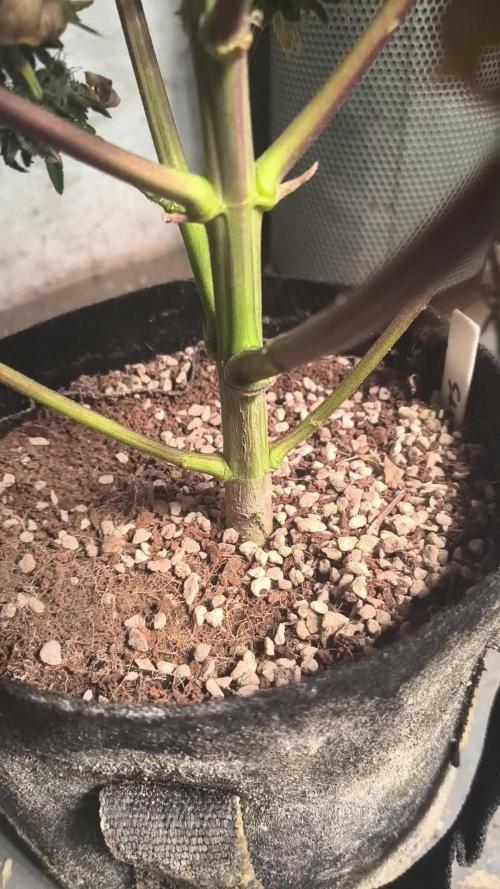
This girl reeks of sweet lemon gas nice chinky colas all up and down the stem really good bud structure nice thick pistols really thick trichome coverage can't wait to get her tested it's a smaller plant so it shouldn't take long to dry

Likes
7
Share


@eldruida_lamota
Follow
Venga familia que acabamos la sexta semana de estás Gelato Olandese de Dutchfem.
Entramos en la recta final esta semana aplicamos el PK de Agrobeta, ExplotaCogollos.
Iremos viendo el proceso de engorde de las flores.
Se ve que tienen un buen color están bien sanas, se ve que progresan adecuadamente.
Agrobeta:
https://www.agrobeta.com/agrobetatiendaonline/36-abonos-canamo
Mars hydro:
Code discount: EL420
https://www.mars-hydro.com/
Las maximas de temperatura no superan los 26 grados y las mínimas no bajan 20, así que no me puedo quejar.
Los niveles de humedad también son los correctos van entre 50%/65% de humedad relativa.
Por supuesto el Ph lo estamos dejando alrededor de 6.
Hasta aquí es todo, buenos humos 💨💨💨.


Likes
9
Share


@FrostyCloudzz
Follow
Flush flush
Bigger buds buds
Let’s prepare harvest :)
Did the full cycle from the advanced nutrients feeding chart , know I flush and prepare the harvest , planing a late harvest for more cbn and relaxing high - and little bit other terps
Today 16.02.2025 - blooming starts at 20.12.2024 - D59

Likes
7
Share

@El-Ecko
Follow
4 Week Flowering
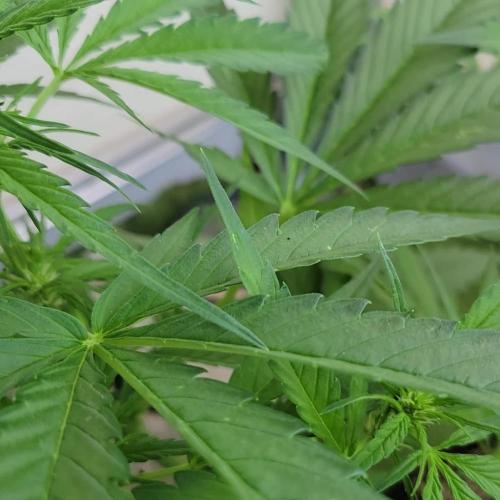
The guava was growing really vigorously, so I decided to do a light LST. 🔝🌱💪 On the one hand, to make the grow a bit more discreet, and on the other, to make better use of the limited hours of direct sunlight.?☀️
I also added some more Azet tomato fertilizer from Neudorff. 🍅🔝

Likes
9
Share


@TiRobotProds
Follow
4ème semaine de floraison. Cette dame ce porte a merveille ☠️☠️💀 irrigation tous les 3 jours environ 6L, 12L/Semaine.

Processing
Likes
12
Share


@Jay419
Follow
Started big bud in week 2 along with some cal max, all the girls are looking healthy and the stretch seems to be slowing may defoliate again this week coming up.
This is actually the end of week 2 was fairly busy and not able to update earlier. Going a lot smoother then my first grow /crosses fingers.
Likes
15
Share


@AmnZhz
Follow
Week 10, 3/5/2020 - 10/5/2020, as you can see she almost has overtaken the tent, she is 1 meter high now, and I think now she 's into full flowering mode. Buds are already glittery and cant wait to see them swell. Her scent is spices and a bit of a diesel.

Likes
17
Share


@420DeepGrow
Follow
Gracias al equipo de Seedsman Marshydro XpertNutrients y Trolmaster sin ellos esto no sería posible.
💐🍁 Tangerine Snow F1 Fast:
Esta gran cepa es un cruce de cuatro vías 75% sativa de (Boost x Tangelo) con (Lavender x Power Plant). Este híbrido Fast F1 proviene de la genética Cali y cuenta con excelentes terpenos cítricos, alta producción de resina para extractos, altos niveles de THC, muy buenos rendimientos y excelente resistencia al moho. Tangerine Snow F1 Fast se puede cultivar tanto en interior como en exterior. Los tiempos de floración en interiores son de entre 8 y 10 semanas, mientras que el tiempo de cosecha en las latitudes del norte es en septiembre, mientras que en el hemisferio sur los productores cosecharán durante marzo. Las regiones climáticas recomendadas son cálidas, secas, húmedas y cálidas. Se trata de plantas altas, semiramificadas, que superan los 200cm y que presentan un alto vigor con muy buena uniformidad. Al igual que muchas otras variedades con fuerte dominancia sativa, Tangerine Snow F1 Fast ofrece una excelente resistencia al moho, así como a las plagas y enfermedades de las plantas. La combinación de terpenos cítricos y mucha resina la convierten en una cepa de muy buen extracto, cuyo método de "lavado" produce muy buenos rendimientos de hachís. El perfil de terpenos cítricos recuerda a las mandarinas y mandarinas y también tiene notas dulces. La producción de THC ha sido verificada en laboratorio en un fuerte 24%, mientras que el CBD es bajo. El efecto es edificante y energizante, perfecto para usar durante el día y las primeras horas de la noche.
🌻🚀 Consigue aqui tus semillas:
💡TS-3000 + TS-1000: se usaran dos de las lámparas de la serie TS de Marshydro, para cubrir todas las necesidades de las plantas durante el ciclo de cultivo, uso las dos lámparas en floracion para llegar a toda la carpa de 1.50 x 1.50 x 1.80.
https://marshydro.eu/products/mars-hydro-ts-3000-led-grow-light/
🏠 : Marshydro 1.50 x 1.50 x 1.80, carpa 100% estanca con ventanas laterales para llegar a todos los lugares durante el grow
https://marshydro.eu/products/diy-150x150x200cm-grow-tent-kit
🌬️💨 Marshydro 6inch + filtro carbon para evitar olores indeseables.
https://marshydro.eu/products/ifresh-smart-6inch-filter-kits/
💻 Trolmaster Tent-X TCS-1 como controlador de luz, optimiza tu cultivo con la última tecnología del mercado, desde donde puedes controlar todos los parametros.
https://www.trolmaster.com/Products/Details/TCS-1
🍣🍦🌴 Xpert Nutrients es una empresa especializada en la producción y comercialización de fertilizantes líquidos y tierras, que garantizan excelentes cosechas y un crecimiento activo para sus plantas durante todas las fases de cultivo.
Consigue aqui tus Nutrientes:
https://xpertnutrients.com/es/shop/
📆 Semana 4:
Continuamos la etapa de vegetación, ella se desarrolla muy bien 😎, comienza el buen tiempo, temperaturas agradables para todos.
Esta semana se aplica una solución de trichodermas para una mejor adaptación aunque realmente va genial.
Se mantiene 1/3 de nutrientes Master Root y Master Grow

Likes
22
Share


@Basementganja
Follow
Growth is good, but a little slow. Hairs visible, and staggered nodes on new growth..
I'm worried she's already transitioning to flower..


Likes
21
Share


@Hazeberg
Follow
Day 72: Welcome to week 11. Today I realized some more damaged leafs. I'm not sure, what it is. I've to ask here, now. But as I saw this and also, that the EC within the soil is increasing, I was thinking, that she is not able to consume the nutrients correctly. I checked my PH meter and I calibrated it wrong last week 🙈 So she got the wrong PH for about 2 days. I hope with the corrected PH, she is able to take the nutrients again.
UPDATE: Thanks to everyone who answered my question. I have done 2 things now. I lowered the level of the LEDs to 7 in AC Infinity Controller 69 Pro to give less intensity to the upper colas. Secondly, I added some CalMag to the reservoir. I also added some distilled water to adjust the EC level and then checked the PH level.
Day 73: For now, it does not look worse to me. I refilled the reservoir and adjusted the PH. I increased the CalMag Agent from 0.6 to 1.5 ml/L.
Day 74: I checked again the symptoms and as I was feeding the PK booster to long, I strongly have to assume, that the CalMag issues she is showing, are the symptoms of too much PK for a too long time. I decided to clear the reservoir completely and added only a bit of CalMag to plain water and adjusted the PH.
Day 75: Today I got a new and more reliable PH meter. It turned out, that the other one was still calibrated wrong and with that information, I assume it is a combination of the wrong PH for days and too much PK for too long. So, I'm happy, with my decision so far. Next time, I'll have to make a note, wenn to stop with the PK boosters ☺️ Learnings over learnings.
Day 76: Today I was able to take some photos and also a video, to show how she looks now. Not too bad and I also checked the trichomes the first time today. It's looks like she is almost ready to harvest. I was aiming week 13 and with that tiny mistake, I guess she is ready someday next week (sorry, for the bad photo of the trichomes, I was not able to get a better one 🙈). I cleaned the reservoir and filled it with plain water @ 6.4.
Day 77: End of the week and I want to share with you some buds of this monster. Trichomes looking good and I wait for my personal taste to be reached.
--------------------------------------------------------------
You also like to get some seeds from Fast Buds?
You like a 15% discount?
Just use the following code on your next order: CSYIJC
Happy growing
--------------------------------------------------------------
🙏 Thanks for visiting and follow for daily updates 🌱


Likes
11
Share


@ibbzy
Follow
Flowers don’t look healthy…but we are getting there. 2nd tent has been bought and half way setup for next grow. Will have 2 tents going for next run. Im addicted to this grow stuff!
So I didn't listen to advice of not removing leaves at Week 5 and went and removed and stripped....I regret it now.
Bud development definitely slowed down and plants concentrated on growing out more leaves as it seems.
Megacrop has been removed from feeding and just Myco Chun as a tea and Plagron 4-in-1 Green Sensation.
Giving me an NPK ration of 1-9-11
Hopefully feed this for a week and then follow up with molasses feedings till harvest
We shall see if that makes the buds develop a bit more.
Buds getting denser and bigger by the day, had to purchase these bud hangers. So nifty.
Just auto mode from now I guess



Likes
16
Share


@HagsGrowsDank
Follow
Jack Herer nugs have swelled up nicely, critical purple and brain cake have a nice terpene profile and are getting some purple colors. Amnesia lemon putting out a pungent lemon smell, will be great for extracts with amazing flavor. Also looking like it’ll go an extra week before getting harvested with the others in 3 weeks.


Likes
15
Share


@dank604
Follow
Girls are loving the light! I was bit worried with the smaller gal and leaves pointing up, but with no sign of light-stress or anything else negative I've taken it as a good sign and they are just thriving so yesssss! I'm prone to want to defoliate as I'm use to growing in a much smaller environment (5 gal bucket lol) but I've been good and have only snipped a handful of leaves that were either blocking other bud-sites or restricting airflow. I cannot wait to see what this harvest brings in, I'm hoping for 3-3.5 oz (85-99grams). Now that they are flowering nicely I'm no longer using Gro, just Micro+Bloom with some calmag and silicate.
Happy growing!! 😎