




Likes
160
Share


@JUNGLE_B4RNS
Follow
Last Week Folks !
Will update when dry for harvest and Total dry weight.
Greetings to:
-Platinium Nutrients
-The Grow Boss and his YouTube channel
-Zamnesia for providing great seeds
-.... all the peoples who has followed this Jumanji party, for all your likes and comments 👍
TO BE CONTINUED..... 😉
P.S: 7min 26sec vid, could be long to load, make a joint 😄


Processing
Likes
52
Share


@ElPresidente
Follow
2nd week complete!
Its growing day to day, with noticeable changes.
Im waiting one more week before I switch to 12-12 and change it to the 12L container.
I've been watering every 2 days, about 50 ml each time I water.
One feed, one water, thats the schedule.
I noticed that there are a lot of bud sites developing in the branch formation, so excited!!
👻

Likes
2
Share

@MaltaHerbman
Follow
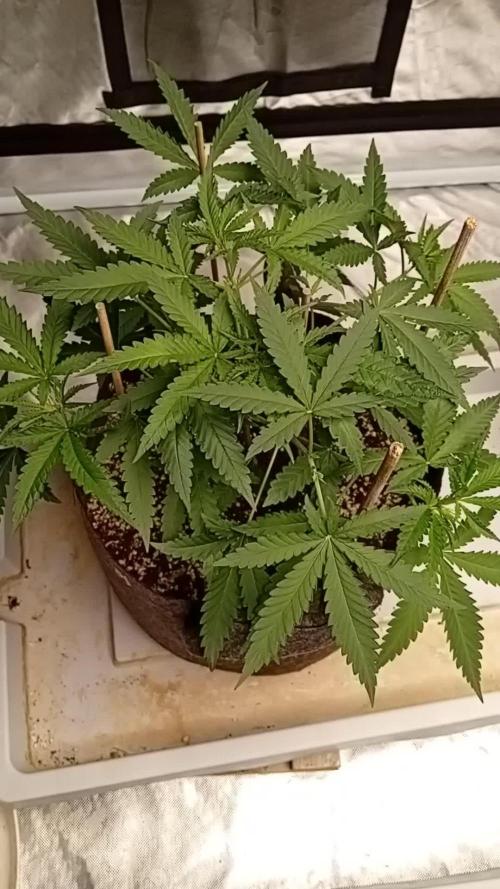
This week I focused on training — topped her multiple times to encourage a bushy structure. She responded well, showing strong growth and lots of new shoots. The stem is thickening nicely and side branches are stretching out, promising a good number of future bud sites. Very happy with how she’s shaping up so far

Likes
26
Share


@Silverback_Guerilla
Follow
11/17:
I fed today but didn't have time for much of a photo session.
Gave them One, Signal, Sweet & Sticky, Cha Ching, and started them on LiquidSoil.
11/19:
The bigger plant just keeps putting on big swollen green calyx every day...such a big lovely freak! Amazing frost and pungent fuel aroma.😋
The smaller plant is a true beauty..got some purple in folage and flower and frosted over wonderfully. This pheno looks more like a Sugar Cane than the other.
Likes
233
Share


@Tropicannibis_Todd
Follow
🐶🐶🐶🐶🐶 👉Alrighty Then👈🐶🐶🐶🐶🐶🐶
We're 35 days in and we be moving along great 👍 really surprised at the bud development thus far 👈
👉The SweetDream Rose is the tallest and biggest mover growing another 6 inches in just one week 😲 gotta love that purple hues coming in 👈
We've also got some double tops on some branches as well as some triple internode branching 👈
All plants are blooming like crazy 🤪 🙀
We got some great growth right across the board on all plants 👈 All plants receiving at least a min of 850 PPFD
🐶 🐕 🐶 🐕 🐶 🐕 🐶
So we are back for another round 😛 But this grow is special because my big boy needs some love too , he's been getting on the old side of things and his hips have been giving him trouble so I've been buying CBD treats for him and it works great so 😉 👍
I've decided to grow this for my little buddy 🐶 so I can make him some Doggy 🐕 Treats and plus I've never tryed it myself and I really wanna give it a go👈 😊 so let's see what it's all about 👈
I will post the recipes at the end of harvest 👏
So Let's Do This👈
👉Soil Provided by ProMix.ca
👉Nutrients Provided by Agrogardens
👉Lighting Provided by MarsHydro.ca
👉Seeds Provided by Kannabia Seeds

Likes
59
Share

@JaramnieJazz
Follow
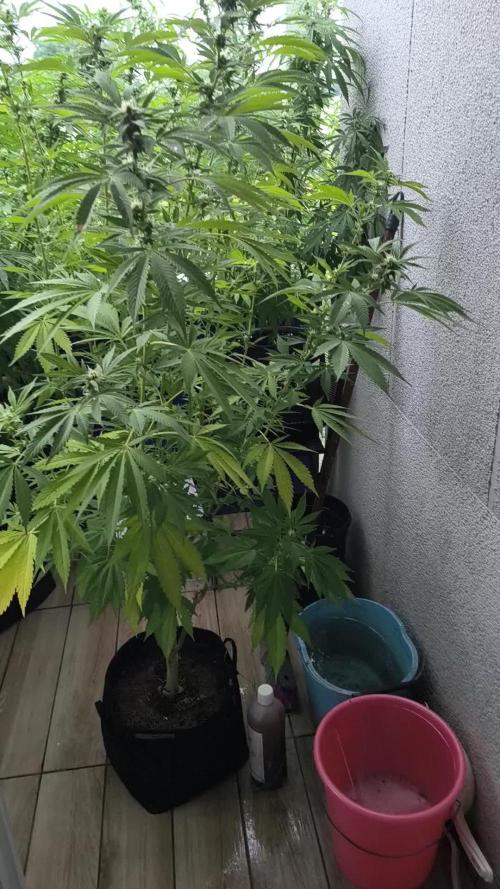
29.07.26 Start der 3 Woche sieht gut aus alle zeigen schon richtig Blüten nur GDP ist ein bisschen hinterher die Skunk Haze wird wohl am besten abwerfen weil schön viel Licht in die Pflanze kommt durch die dünnen Finger.Stretch war praktisch nicht vorhanden ein paar Wochen vor der Blüte gab es ein merklichen boost im Wachstum was wohl der Stretch war hab das schon mal beobachtet wenn die schon so groß sind gibt's praktisch kein Stretch der war glaub ich in Woche 21-23 da haben die ordentlich an Höhe gewonnen. Diese Woche wird noch entblättert um Licht zu den nodien zu bekommen die noch nicht so gut entwickelte Blüten haben jetzt sieht man das nämlich wo noch Bedarf besteht aber nach dieser Woche ist Schluss mit entblättern will sie nicht zu sehr stressen die sollen sich jetzt voll auf die Blüten konzentrieren in den nächsten Wochen. Gab jetzt noch Green Sensation dazu und top max wurde auf 2ml/L erhöht bin mir nicht so sicher ob ich auch den Bloom Dünger erhöhen soll da sie das Guano als topdressing haben wird beobachtet und dann entschieden Danke fürs folgen und vorbei schauen werden jetzt spannende Wochen die uns bevor stehen bis dahin Peace.
💪🏻( ͝° ͜ʖ͡°)👍🏻
" Update " die Silicat Angaben beziehen sich auf 0,4g auf 1L Wasser
04.08.26 Letzter Tag der Woche und es regnet 😑 naja Hauptsache das bleibt nicht dauerhaft so wie letztes Jahr
Jetzt sieht man das absolut kein Platz mehr frei ist und das die beiden in 15L Black Lemon und GDP wohl genau so gut abwerfen werden wie zB Sour Diesel und Chocobang die in 39L sind und größer aber schön viel Licht in die 15L kommt außer Skunk Haze und Apple Betty die werden wohl massiv geben besonders Skunk Haze aber GDP sieht immer besser aus könnte richtig gut werden wenn ich das schaffe die Pflanzen so anzuordnen das jede genug Licht bekommt wir werden sehen bis morgen zur 4 Blüte Woche Peace 🏻


Likes
Comments
Share


@Leonweed10
Follow
Esta semana se hiso poda de ramas bajas y una pequeña desfoleacion a los 16 clones,y se comenzo a alimentar con alga bloom mas power roots aun.


Likes
6
Share

@cangrowz
Follow
frosted guava ❄️
🌱 Anfang Woche 5/10 🌱
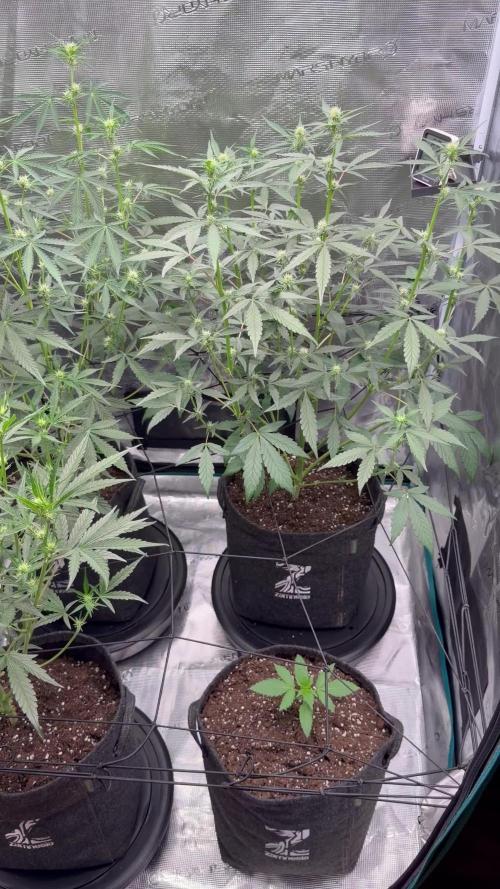
Die drei Frosted Guava legen weiterhin ordentlich an Wachstum zu und entwickeln sich genau in die Richtung, die ich mir vorgestellt habe. Mittlerweile ist die Lampe bereits auf die maximale Höhe eingestellt, da die Pflanzen den verfügbaren Platz immer mehr ausnutzen. Es macht einfach Spaß zu sehen, wie kräftig und gesund sie sich Woche für Woche weiterentwickeln.
Langsam beginnt jetzt die spannende Phase des Grows: Die Blüte startet und die ersten weißen Blütenstempel zeigen sich an allen drei Pflanzen. Damit ist der Übergang von der Wachstumsphase in die Blüte offiziell eingeläutet. Ich bin gespannt, wie sie sich in den kommenden Wochen strecken und wie sich die Buds entwickeln werden.
Auch das Klima spielt momentan wieder gut mit. Nachdem es zwischenzeitlich deutlich wärmer war, liegen die Temperaturen aktuell wieder bei etwa 20 bis 28 °C. Gerade für den Blütestart sind diese Bedingungen deutlich angenehmer, wodurch die Pflanzen hoffentlich ihr volles Potenzial ausschöpfen können.
Diese Woche habe ich außerdem im unteren Bereich ein paar kleinere Triebe entfernt, die ohnehin kaum Licht bekommen hätten. Zusätzlich mussten einige große Blätter weichen, die andere Pflanzenteile unnötig beschattet haben. So kann das Licht besser bis in die unteren Bereiche gelangen und die Luftzirkulation wird ebenfalls verbessert.
Ab sofort bekommen die drei außerdem den Blütedünger von Advanced Nutrients, um sie optimal durch die kommenden Wochen der Blüte zu begleiten. Jetzt heißt es weiterhin beobachten, pflegen und den Pflanzen beim täglichen Wachsen zusehen.
Vielen Dank, dass ihr wieder vorbeigeschaut habt und meinen Grow begleitet.
Happy Growing Growmies! 🌱?💚

Likes
4
Share


@SuperGluedGrow
Follow
Did LST and topped Pheno 1 & 2, 3 is too funky to mess with. I think PH was just my issue and possible too high intensity light as I lowered to 60%, but also brought my PH to 6.5 so I'm guessing that helped too.


Likes
32
Share


@DevelGrow
Follow
Hallo Freunde 👋 Big Demon von Divine Seeds ist 70 Tage Alt! Sie hat einen interessanten Duft am Start und ist weiter als gedacht!(Aussehen) Die Trichome sind an allen Buds, auch innerhalb und unterhalb, komplett milchig und Bernstein! Also wird jetzt nur noch Wasser gegeben und dann geerntet! Persönlich finde ich sie wunderbar gelungen,vom Aussehen, klar durch anderen Schnitt hätte man nur colas bauen können! Wird demnächst mal ausprobiert! 😉 Keep Green and grow High ✌️🍀💚🍀

Likes
22
Share


@Stork
Follow
Day 8 Mon
PH 5.7
EC 0.8
DLI /19h /
PPFD /
Water 23c
Day 9 Thue
Change the water and add nuts 10 L
PH 5.2/5.8
EC 0.8/0.8
DLI /19h /
PPFD /
Water 25c
Day 10 Wed
I've confidently carried out defoliation on the lower branches of my autoflower plant. Despite the advice against it for autoflowers, I've decided to trust my intuition and follow my gut feeling. Time will tell the results. 😎
PH 6.3/5.8
EC 0.8
DLI /19h 17
PPFD /
Water 22c
Day 11 Thu
PH 6.1/5.8
EC 0.8/0.9
DLI /19h 17
PPFD /
Water 22c
Day 13 Sat
Add water to lower EC
PH 5.8/
EC 1.0/0.8
DLI /19h /
PPFD /
Water 22c
Day 14 Sun
The plant was slow to grow, but now it's starting pre-flower early.
Add water to lower EC
PH 5.2/5.8
EC 0.9/0.6
DLI /19h /
PPFD /
Water 20c
Likes
20
Share


@Bread_n_Buds
Follow
I could talk to you for hours about this strain, it has many qualities and I always get excited talking about it because it has brought me so much luck and I am very, very fond of it and therefore I always look for the right words as if to describe my best friend or a person I love so well.
It's not purple this time, anyone who frequents this site should know by now the famous purple plant I made, famous for its beauty, it amazed everyone first.
Color does a lot for beauty and impact on the public but take a good look at this plant. Very compact flowers, with that super density that I like, lots and lots of resin, super beautiful pistils to look at.
Let's understand each other well, it vegetated very little, just over two weeks, but very little and it grew very well and with a lot of quality.
She had a hermaphrodite nearby, she didn't even inseminate herself like many others, truly a super strain guys, try it!
Go to the official website and buy it if you haven't seen it, take a look at the photos with which it is promoted, it's her in all her beauty and majesty...
https://www.zamnesia.io/it/9484-zamnesia-seeds-biscotti.html
Site description
ZAMNESIA SEEDS - BISCUITS: DELICIOUS BISCUITS TO EAT AND SMOKE
Spice up your grows and add the Biscotti strain to your cannabis seed collection. It offers the best qualities of marijuana: potency, productivity and intense flavors. Biscotti is made up of South Florida OG and Gelato genetics and contains 22–25% THC, enough to make your body vibrate from head to toe. The genetic profile of this strain is 80% indica and 20% sativa, with effects that will make you feel relaxed and creative at the same time. Plants of the Biscotti variety produce dark green leaves and numerous pistils, while the buds tend to be small and compact. Towards the end of the flowering phase, when nighttime temperatures drop a few degrees, you may also notice purple hues.
GROWING BISCUITS: FAST FLOWERING
Biscotti won't test your patience. You can break out your scissors and start harvesting her after about 8–9 weeks of flowering indoors. The plants are robust and vigorous and grow well both outdoors and indoors. Under the sun, you can expect heights of 130–170cm and yields of 800g/plant ready in October. Some experienced growers have reported achieving higher yields. So, the results will depend on your skills. Indoors, Biscotti typically reaches a respectable height of 130–150cm and offers yields of 550–650g/m².
FLAVOURS, FLAVORS AND EFFECTS OF BISCUITS: DELICIOUS AND COMPLEX
Once the drying and curing is finished, you will finally be able to taste the fruits of your labor. Biscotti is definitely one of our tastiest varieties, producing aromas of vanilla and honey biscuits contrasting with the classic diesel notes. A great addition to the kitchen where you can prepare delicious baked desserts. Being very potent and producing effects that can overwhelm the user, we advise you to consume it with caution to avoid becoming overwhelmed. This strain offers a relaxing high for the body, while the creative juices will start flowing in the mind.
www.zamnesia.io
Likes
18
Share


@swagy
Follow
Cut the leaves on the 8 week of flower. she have very sweet smell and glue trichomes. Very nice plants ✌️🏻.

Likes
57
Share


@Salokin
Follow
Hi Growmies,
Here we are at the four-week mark of our Epic Buzz's vegetative stage. I must start with an apology for missing last week's update. Rest assured, our Epic Buzz has been far from neglected during this time. This week's entry is a celebration of resilience and flourishing growth.
Let’s delve into the details:
Despite the reservoir not being changed in the last 14 days, our Epic Buzz has shown remarkable resilience. A modest addition of Orca and a bit of boost to feed the fungi has been more than sufficient.
The plant has become a spectacle of health within the reservoir, developing an intricate root ball and sporting sizable fan leaves. This vigorous growth is a clear indicator of the strain's robust genetics and its compatibility with the hydroponic environment.
All side branches have been intentionally removed to direct the plant’s energy towards vertical growth, a technique that's paying off with the plant’s current stature.
The light intensity remains at a conservative 25% to encourage stretching. This cautious approach is shaping the plant into a true beauty, with an ideal structure that should transition well into the flowering stage.
As we edge closer to the flowering phase, anticipation builds. The plant’s current vigor gives me high hopes for its performance during blooming. The sight of the Epic Buzz in its vegetative glory is a promising prelude to the potential explosion of flowers.
I apologize for the gap in updates, but I assure you, the progress of our Epic Buzz has been unwavering. Its current form is a testament to the strain's excellence and adaptability. As we approach the flowering stage, I can't help but feel excited about the possibilities that lie ahead.
Stay tuned for the next entry, where I'll cover the transition into flowering and the ongoing evolution of Epic Buzz's growth journey.
Likes
26
Share


@LongJohn420
Follow
29.6
I think I have missed a week but girls are growing like crazy now. I topped that topped one again and pinched also couple new shoots. Let's see how that turns out never done that before. Gonna switch to flower once these get recovered from that pinch. That topped one is also super cropped. I bend it to half from main stalk and tied to a stake for support. But yes very healthy nice growing plant no problems all good.
3.7 Flipped to flowering today. Next update is flowering week 1 seven days from today. (10.7.)
Both doing very good. Topped girl has got good even bushy shape, like it. Other one has not gotten too tall. They actually are the same height.
Happy growing!

Likes
12
Share


@russrahl
Follow
Plants are 5 weeks old and I decided to switch to flowering for week 6. Plants are all in good shape and the screen is in place to train them to fill the tent. I will be changing out the veg bulb this week and installing the 1000w HPS bulb for flowering. I’m still playing with the light rail speeds and pause times but I seem to have it dialled in now I think. I will also be doing another water change and adding flower nutrients sometime this week. ****Added 7 gal of fresh water to the reservoir on day 38. Added full strength Remo lineup for flowering to the 7 gal added to reservoir. I started to tie down/tuck the larger branches to the net as well.
