




Likes
20
Share


@eldruida_lamota
Follow
Variedad con una floración corta, entre 8/9 semanas.
Procedente del original Exodus Clon (UK).
Predominancia indica con un nivel de thc superior al 16% .
Es muy fácil de cultivar y la alimentación la acepta muy bien en general .
Cada etapa cumplió con mis expectativas y por ello aparte del sabor el colocon ... en cuanto a todas sus etapas le doy 9/10 .
CEPA BRUTAL enserio.

Likes
Comments
Share

@Eniiamrej_01
Follow
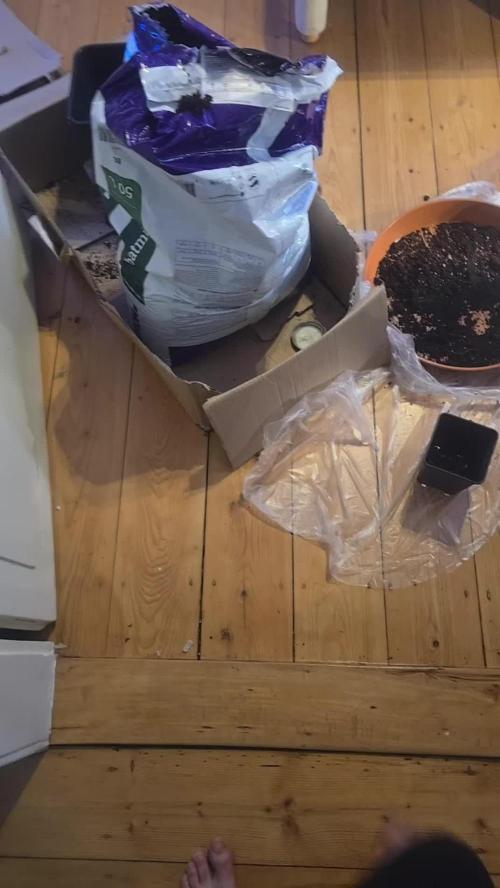
Umtopfung erfolgreich.
Aber es wurde ein Mutant entdeckt mal sehrn wie der sich macht ansonsten wird dieser aussortiert.
Deshalb sieht man noch noch eine plant mehr als angegeben. Das war die cherry poppers
Likes
17
Share


@Elpicor
Follow
D65
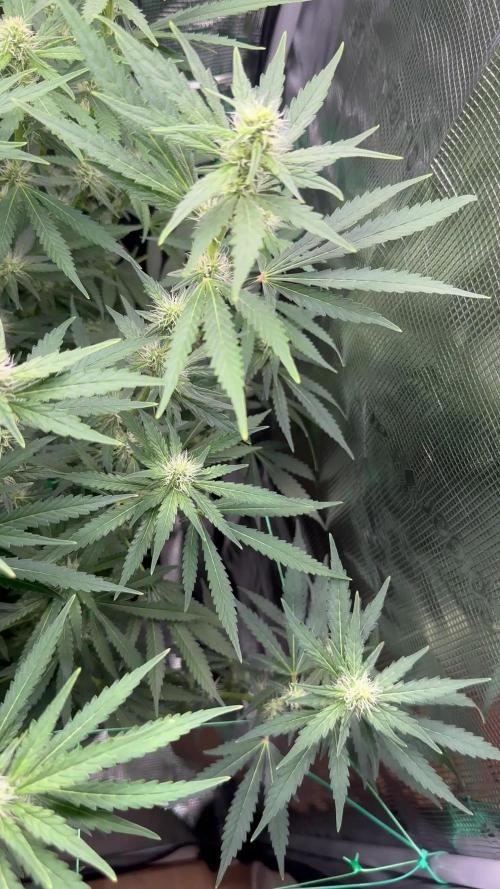
Just a few days until the harvest, I'm checking the evolution of the trichomes and buds, we'll see what happens, I spent a lot of energy and hours I hope it will be worth it, meanwhile in my house there is the scent of ripe oranges and strawberries I hope to find the same aroma in the smoke.
D68
Tomorrow early morning I will harvest Purple Lemonade, no words for describe this magnificent plant!
D69
Tomorrow early morning I will harvest Banana Purple Punch and Cream cookies

Likes
Comments
Share

@nastyy
Follow
Today is start week 5. So this is from week 4. The cookies haze was a bit behind on flip. So I’m not giving pk13/14 to that one yet. I’m counting that one as week 2 flower
And I also just seen that I messed everything up with the nutrients here. I was counting it as 10l and not 1l. So I just fixed it now. I’m sorry about that too. Any questions, please just ask


Likes
4
Share


@Herbie
Follow
This girl has got some absolutely beautiful leaves. They have a dark tinge to them, that I don't know if it shows through on the pictures, but it is very cool.
I think I may have too many buds for the size of my grow space but I can't decide which to trim or if I'm just overthinking things.
Ill leave her for now and just tuck away leaves as the bud sites start to develop and then later trim any, if there are any of course, that may not have time or space to grow.......
so for now I'll leave her to decide.
she looks indica dominant (I've not checked) which suits me, I'm a fan of indica in a growing sense for my space, but means she will be a thirsty girl in my experience, compared to the sativa dominants.
You can see in the photos that she has started to take square shape for her canopy space.
I was once worried about her leaves touching the £1 emergency blanket I use as light reflection in the grow cupboard but has never been an issue its way too thin to hold anyway near enough heat to ever be an issue so the shaping also come somewhat naturally.
shes under a selection of home standard LED bulbs around 10w, random blasts of UVB from a reptile light (I think helps growing with a slight slowing of the auto influence. My own thoughts from previous experiments only.) the other lights remain on 24 hours with a few 5 min breaks in the timer to cool the bulbs down a touch.
I of course talk to her/them on a regular basis which has some scientific backing somewhere showing benefit for both of us.

Processing
Likes
6
Share


@NutsInGuts
Follow
So after our first attempt went down hill pretty fast, we wasted no time in putting another bean to sprout.Here we go! Attempt #2
11.08.2020 - bean started showing first sign of life
12.08.2020 - she started opening up.
19.08.2020 - leaves started burining at the tips again.maybe i removed himdity dome too soon so it was placed back on 2 days ago
Likes
9
Share


@VIPgrower
Follow
Not much to say if following other diary tips burn tiny bit and yellow tops I little flushed with oh water and clear hopefully does trick goin to true black molasses in next couple feeds on a few just to expirement a little I hear it’s good for Cannabis plants all around

Likes
8
Share


@Kirsten
Follow
16.3.25:
I decided to go ahead and take her down. The plant was stunted by my horribly executed LST. Inevitably turned into HST. Very pretty buds. 😋 should be a nice smoke.

Likes
2
Share


@Chi_K24
Follow
Haven't done much this week just regular watering. Was planning to defoliate and prune. But no time.
Ladies are getting thirsty. Watering every other day.
Likes
14
Share


@Mr_nugs_lover_David
Follow
This lady has been Transplanted on day 39 since she was planted (may 10th) and I've prepared the 15L pot with the complete line of biotabs using 2 spoons of startrex for every 5L, sprinkled a couple of grams of mycotrex on the transplant hole before putting the plant and then I added 3 slow release tabs one biotab for every 5L of soil, so that's why in this case I added 3, after the Transplant was done I immediately watered the plant with 1ml/L of orgatrex and 1g/L of bactrex, I hope you guys enjoy my work this season!!

Likes
51
Share


@nonick123
Follow
Día 15 (04/11) Las plantas se muestran esplendidas después del 1er riego e introducir la 1ª Bio Tab! 😍
Subo a DLI 35
Día 16 (05/11) Las plantas se muestran espectaculares y radiantes!
Un color verde intenso y sano! 😍
Día 17 (06/11) CBD Auto 20:1 #1 tiene un crecimiento increíble!
El resto tiene un desarrollo perfecto para sus días 17 días de vida!
Día 18 (07/11) Mudanza y riego!
Las plantas se mudan al armario definitivo de 60 x 120 cm por varios motivos:
- CBD Auto 20:1 #1 está empezando a tocar las paredes del armario pequeño
- CBD Auto 20:1 #2 ha tenido una ventilación menos adecuada que sus compañeras, ya que el ventilador quedaba justo encima de ella, y el flujo de aire era inadecuado
Esto ha provocado que la maceta de CBD Auto 20:1 #2 no se seque a la misma velocidad que el resto. Espero que no afecte a su crecimiento
- Las plantas pasan a tener dos lamparas a su disposición (230W + 100W) ajustadas con el regulador al 60%
- Mantenemos DLI 35 tras varios ajustes (tener 2 lamparas simultaneamente es más complicado de ajustar!)
- Colocamos dos ventiladores oscilantes para que el flujo de aire sea adecuado dentro de la carpa
Riego: 4 días después del 1er riego, las macetas se muestran "ligeras" excepto CBD Auto 20:1 #2 por la falta de ventilación comentada arriba
Riego con 750 ml de H2O RO excepto CBD Auto 20:1 #2
Día 19 (08/11) Las plantas se muestran esplendidas y creciendo mucho!
Día 20 (09/11) Macetas poco pesadas, pero no lo suficientemente ligeras para regar
Día 21 (10/11) Introduzco la 2ª Bio Tab a 5 cm de profundidad, lado izquierdo
Riego con 750 ml de H2O RO a todas excepto CBD Auto 20:1 #2 que se riega con 1 Litro
Aplicación foliar de Boom Boom Spray 5 ml/L. Aplicar justo después de encender la iluminación.
Aplico LST a CBD Auto 20:1 #2
💦Nutrients by Bio Tabs - www.biotabs.nl/en/
🌱Substrate PRO-MIX HP BACILLUS + MYCORRHIZAE - www.pthorticulture.com/en-us/products/pro-mix-hp-biofungicide-plus-mycorrhizae
"GDBT420" 15% DISCOUNT code for the BIOTABS Webshop https://biotabs.nl/en/shop/

Likes
18
Share


@Ananas_Comosus
Follow
Saturday, 12-02-2022
Plants not looking too bad at all. #1 Is smaller than all others but still looking ok. No visible ill effects remaining from DE treatment on all plants. Rain and cloudy conditions throughout the week have limited my feeding. Was only able to feed today since last week. Mix was runoff rainwater with 10 ml/gallon C AB Beta 3.12 and 7.5 ml/gallon Cytokin. Also foliar sprayed with same mix. Runoff water has not insignificant amount of "sand" from waterproofing membrane applied to roof last week. Need to monitor for effect. I cut back on nutrients to 10ml/gallon because the feeding charts of the nutrient I am copying has 10ml/gallon as being the appropriate heavy feeding rate for this stage of growth. Want to start incorporating humic acid to account for the reduced potassium in my nutrient mix.
I noticed what appeared to be whiteflies escaping when I LST'd the two plants. Cotyledons seem to have disease. My IPM plan needs to get going next week.
I need to remind myself that this Grow is a true trial for me. When growing other plants in the the past, I have sometimes been too "precious" or cautious or lazy. I have loved to death countless plants. I want to to try new techniques I have never done, feed on reasonable schedule and just live in each moment of the grow. I am binging Dog Whisperer now and one of the biggest things you can learn from that show is the benefits of just living in the moment. Forgetting the past, prepare for but don't stress about the future and just enjoy right now 😄.
The plants are too underdeveloped to do the topping techniques I want to try but my urge to just do something on them led me to try LST on the two most developed plants. I was in two minds about this. The guide I am following about LST (https://www.420magazine.com/community/threads/the-quadsquad-thread-a-community-for-quadlining.464769/), recommends topping first then training. But again, the urge to just do something to the plants after a week of mentally refining 😅 my techniques was just just too strong. Now that I actually did it I don't feel too bad because I see that nodes 1 and 2 are below my first tie downs so I am interested to see how that will work out. That said, I only have three plants left to grow the "documented way" so I need to control the urge to just act for action's sake without a clear goal from that action.
Sunday, 13-02-2022
LST'd plant tops straightening out quickly, less than 24hrs after first tie down.


Likes
11
Share

@Labar
Follow
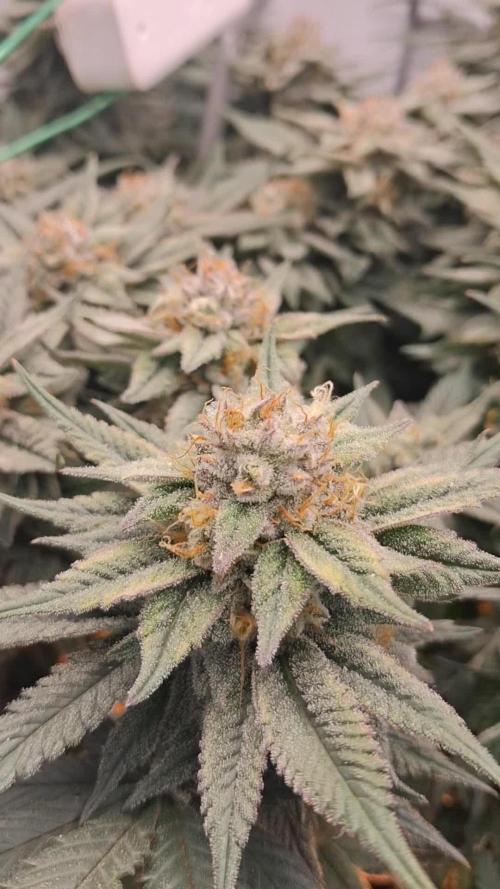
Bloom well
Adding 20w lighting side.
Biotabs Bio PK is back!
Top lighting stills 50% capacité.
Likes
11
Share

@Naujas
Follow
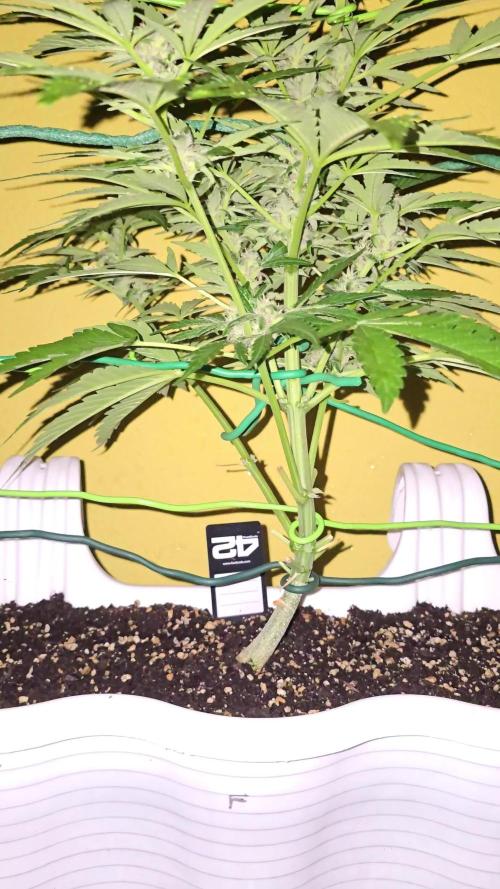
56 dienos!!!! Mergaitė atrodo tikrai gerai, sveika ir labai graži:) , tik vienas dalykas mane neramina, šią savaitę 5 dienas smarkiai lijo, bandau mergaitę šiek tiek paslėpti nuo lietaus, perkeldama ją arčiau namo sienos, bet ji vis dar labai šlapia, o jos žieduose jau renkasi drėgmė (bijau puvinio) na, tikiuosi, kad lietus greitai liausis ir viskas klosis sklandžiai, sėkmės visiems.
Likes
37
Share

@RakonGrow
Follow
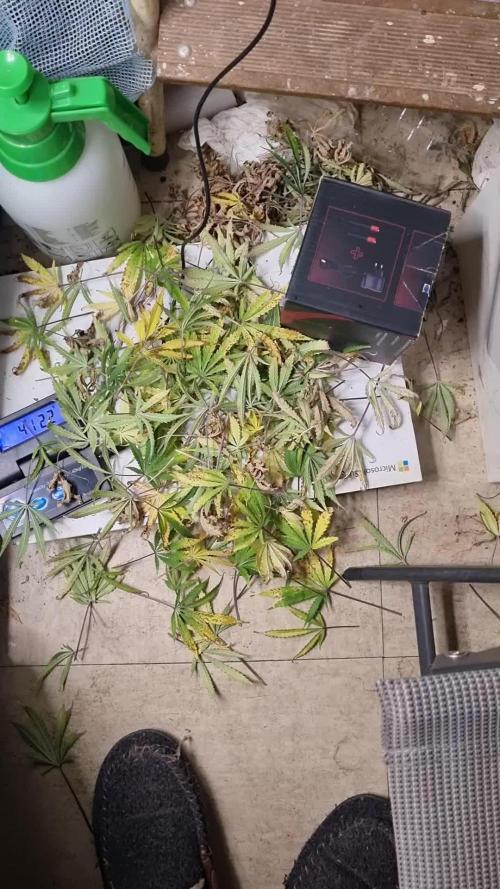
es frist sich selbst da der dünger fehlerhaft ist . aber ansonsten buds werden fetter .
Tag 84:
entlaubt . alles auf sichtbarkeit getrimmt . vielleicht ist es ja nützlich .
Likes
6
Share


@LX1977
Follow
J-50 arrosage eau (pH6.5)
J-51 légère défoliation.
J-52 arrosage avec engrais (pH6.6) + défoliation.
J-54 arrosage eau (pH6.7)
J-55 arrosage avec engrais (1 fastberry est très en retard comparé à l'autre)
Mise en route d'un déshumidificateur pour arriver à 50% d'humidité.
Sinon tout se passe bien et hâte de récolter les Forbidden Runtz 😁
Likes
21
Share


@JuicyFruit
Follow
Day 61 - 24/11/19
Stopped adding nutes a few days ago and decided to flush. only feeding pure phed water now for roughly the next 5 days or so and then harvest time! Smell is insane! buds look a bit small but full of green/purple colours. so excited to be at the finish line for this one :)
all the gear i need for harvesting, drying and curing is on its way so all i have to do now is keep watering and waiting :)
Night 61 - Update
pruning shears arrived! I decided to snip one of the side colas to dry and cure.
the smaller bits of buds came off the stem while trimming so i cant hang them up to dry like the bud in the video i added. ive stored all the trim from the Dwarf diary and the side cola for making edibles this week. got a nice collection going now. and i added pictures and a video to show harvest and my temporary drying solution.
Next update will be the full harvest so keep an aye out for that.
Happy growing!
Likes
18
Share

@DogDoctorOfficial
Follow
🌸 BlueBerry — Week 8 Flower | Shining Toward the Finish Line
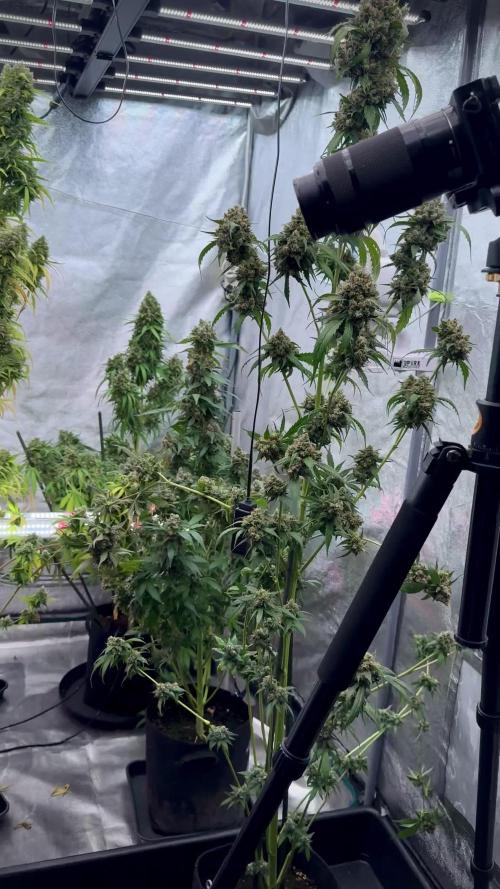
Here we are, my dear readers — Week 8 of flower. The room feels magical. Our BlueBerry girls, both phenos, are in their full glory — dense, fragrant, and sparkling with resin. From seed to now, it’s been a journey of patience, learning, and pure joy. The final stretch has begun, and you can feel it in the air — harvest is not far away, maybe one or two weeks more.
✨ The Girls
Both BlueBerry #1 and BlueBerry #2 are magnificent. Thick colas stacking from top to bottom, glistening with frost under the lights. The pistils are slowly turning color, and the aroma is deep, sweet, and nostalgic — that unmistakable BlueBerry essence that makes this classic a legend.
The trichomes are swelling beautifully, and bud density is impressive. The girls are holding up thanks to the yo-yos — these branches are heavy, bending under the weight of their own success.
⚙️ The Gear
This week, let’s give a shout-out to the gear making this symphony possible:
💡 Lighting Setup
We are running a mix of powerhouses — the ThinkGrow Model One and the ICL 300 inner canopy lights.
Together, they create a perfect, even spread — deep canopy penetration from the ICLs and full-spectrum brilliance from the top lights. The inner canopy lighting has really proven its worth, driving light deep into the plant’s heart and boosting bud formation all the way down.
🌬️ Airflow & Extraction
Two 6-inch extractors keep the air moving — one AeroFan, the other Spider Farmer, both with carbon filters for clean, fresh air.
The Spider Farmer extractor runs through its own GGS controller, while the AeroFan is perfectly synced with the TrolMaster Tent-X system, ensuring ideal airflow at all times.
🎥 Monitoring & Control
Our guardian eye — the TrolMaster camera — keeps a close watch, allowing remote monitoring of the girls in real time. The entire ecosystem (lights, fans, sensors, and camera) is fully integrated, giving us control and data precision from anywhere.
🌿 Environment & Feeding
Temperatures stay warm — around 29°C — while humidity fluctuates around 55–60%. It’s hot, yes, but the airflow and light balance keep things steady enough for the girls to thrive.
We’re continuing with our nutrient mix featuring Aptus Holland and Plagron products. The recipe is fine-tuned now — the balance between power and gentleness, giving the plants the final push to perfect those trichomes and terpene profiles.
💧 What’s Next
As we near the finish line, we’re watching closely:
• Trichome maturity is the main focus now — we’re waiting for that milky-to-amber dance.
• Flushing is coming soon, preparing the soil and the plants for a clean, flavorful harvest.
• Aroma intensifies daily — the room feels alive, sweet, fruity, and full of promise.
💙 Gratitude & Reflection
From germination with The Cannakan method, through every transplant, every tweak, every experiment — it’s been a story of care and curiosity.
Huge thanks to Zamnesia for these legendary genetics, to Aptus Holland and Plagron for their nutrient support, and to TrolMaster, ThinkGrow, Future of Grow, Spider Farmer, and AeroFan for helping make this environment as close to perfect as we can dream.
And of course — thank you to everyone reading, supporting, learning, and growing with us. The haters, the lovers, the curious souls — all of you are part of this. 🌍💚
🌸 What to Expect (and Not)
Expect swelling buds, deeper aromas, and trichomes that’ll make your camera cry tears of joy.
Don’t expect miracles overnight — the last weeks are about patience, precision, and presence. This is where you let nature finish her masterpiece.
📲 Don’t forget to Subscribe and follow me on Instagram and YouTube @DogDoctorOfficial for exclusive content, real-time updates, and behind-the-scenes magic. You won’t want to miss it.
• GrowDiaries Journal: https://growdiaries.com/grower/dogdoctorofficial
• Instagram: https://www.instagram.com/dogdoctorofficial/
• YouTube: https://www.youtube.com/@dogdoctorofficial
⸻
Explore the Gear that Powers My Grow
If you’re curious about the tech I’m using, check out these links:
• Genetics, gear, nutrients, and more – Zamnesia: https://www.zamnesia.com/
• Environmental control & automation – TrolMaster: https://www.trolmaster.eu/
• Advanced LED lighting – Future of Grow: https://www.futureofgrow.com/
• Root and growth nutrition – Aptus Holland: https://aptus-holland.com/
• Nutrient systems & boosters – Plagron: https://plagron.com/en/
• Soil & substrate excellence – PRO-MIX BX: https://www.pthorticulture.com/en-us/products/pro-mix-bx-mycorrhizae
• Curing and storage – Grove Bags: https://grovebags.com/
⸻
We’ve got much more coming as we move through the grow cycles. Trust me, you won’t want to miss the next steps, let’s push the boundaries of indoor horticulture together!
As always, this is shared for educational purposes, aiming to spread understanding and appreciation for this plant. Let’s celebrate it responsibly and continue to learn and grow together.
With true love comes happiness. Always believe in yourself, and always do things expecting nothing and with an open heart. Be a giver, and the universe will give back in ways you could never imagine.
💚 Growers love to all 💚