





@Apfelsaft94
Volgen
40 days are over
3 Out of 4 Plants are fully in flower 1 is still in veg i guess Its not an autoflower and i have to force it to flower.
Removed alot of leafes that blocked light and removed all the bottom leafes


@Metamorph
Volgen
Hello again, dear growers! 🌱👋
We’ve officially stepped into Week 10 of this wild and fragrant journey! Last week ended with a little makeover for the girls—I defoliated about 30-40% of the leaves again. ✂️ The Gorilla decided to keep me on my toes by showing some nutrient deficiencies on her leaves—guess she didn’t get enough food after the flush. 🍌🌿 (Lesson learned: don’t keep a Gorilla hungry!)
Now, let’s talk about Runtz! 😍 She’s an absolute queen—so photogenic that even my struggling phone can’t capture her real beauty. 📸✨ She’s forming into one giant, luscious bud, and her fragrance is something else entirely! 🕵️♂️ The carbon filter is fighting the good fight, but if the room isn’t aired out every 8-9 hours, a little aroma starts sneaking through.
But opening the tent… oh, my friends, that’s where the magic happens! 🌬️💫 The aroma is intoxicating—imagine diving headfirst into a field of flowers while bees whisper secrets in your ears. 🌺🐝 I just sit there, enchanted, savoring the smell, and staring at these beauties like a hypnotized gardener. Honestly, it’s hard to walk away. 😂
Here’s their menu for the week:
🍵 Feed: A+B 4ml/L, Micro Chum 1ml/L, Big Bud 2ml/L
📊 PPM: 1050 | pH: 5.8
💧 Runoff: PPM 1000 | pH 6.0-6.3
Now, for the not-so-great news…
I’m struggling with humidity levels—daytime sits around 65-77%, and at night, it can climb to a stubborn 80%. 🌫️ Temperature-wise, it’s 23-25°C during the day and drops to a cool 16-18°C at night. ❄️🔥
Despite the challenges, the endgame is near, and I’m savoring every moment of this grow! 🌟 🙌 Happy growing, everyone! 🌱🔥


@caliriot73
Volgen
the bud start to fat really fast and the trichomes production is over the top the smell is really sweet n creamy


@YehGreen420
Volgen
Excelente planta não deu mais rendimento por minha culpa mas é algo que estamos sempre aprender

Sour Jealousy Auto · Fast Buds
Pound Cake Auto · Fast Buds
Papaya Cookies Auto · Fast Buds
Orange Sherbet Auto · Fast Buds
Amnesia Haze Auto · Fast Buds
Wedding Cheesecake Auto · Fast Buds
Moby Dick Auto · Fast Buds
Gorilla Cookies Auto · Fast Buds
Lemon AK Auto · Fast Buds

Auto Pineapple Glue · Advanced Seeds
shorts_status_processing


@MG2009
Volgen
Week 3 males developing right on time! Pollen will be dispersing soon.
So now trying to nail down who daddy was? Week 3 day 1 males looking very nice, no sign of either one showing female flowers( no hermaphrodite/ true male) but I will stress them more after reveg for severe stress test. For final results.
Looks like I forgot to feed mom! Shit! But I did not.I used bio tone starter
5-1-1 by Espoma gonna feed in am. With tomato tone with myco 3-4-6 it's all I got and organic to boot 👍
Last grow with Captains cake went to 11 weeks 2 - 3 applications should get me to finish line. No flush should be needed, it's feeding the seeds growth.
Looking at 07/01/2018 harvest. Fingers crossed!
05/05/2018
First burst of male pollen is flying in the air, gonna try to get video of it as I shake the males. I am brewing tea with worm castings unsulphured molasses,topped off with protilizer immediately after brewing it.
Give them a little love (Tea) while they are making seeds👊


@Aleks555
Volgen
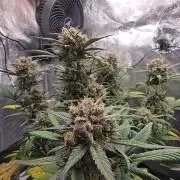
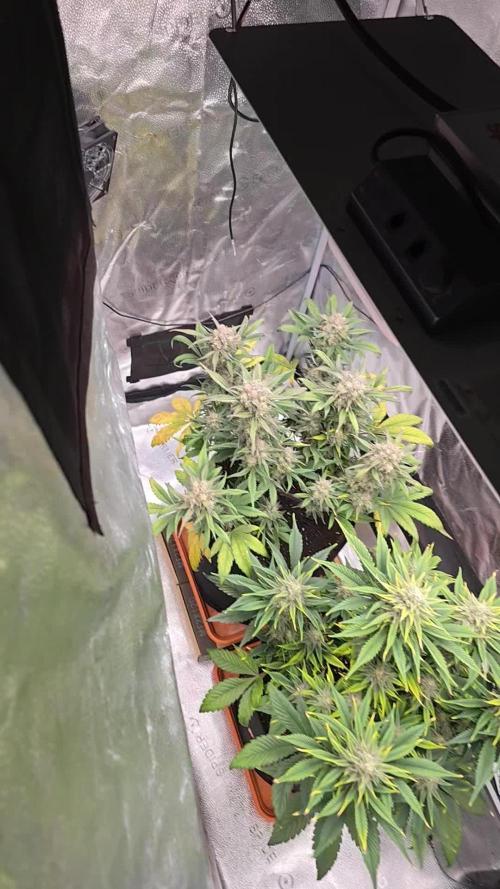
Gorilla Zkittlez Auto is a true work of art among autoflowers. With its powerful, dense buds literally dotted with 'sugar', each stage of growth of this plant is pure eye pleasure. The scent she exudes is as delicious as her taste-sweet, with fruity notes, promising an unforgettable delight. This beauty not only looks great, but also gives a strong, powerful effect that both relaxes and cheers up. Special thanks for this outstanding variety of 42Fast Buds, and, of course, Xpert Nutrients-your fertilizers made such impressive results possible. Each stage of growth was perfect thanks to this tandem. This variety is a real miracle for any grower!
Xpert Nutrients is the fertilizer that truly makes a difference! 🌱
From the very start of our grow, Xpert Nutrients has proven itself to be exceptional. Every plant receiving this nourishment flourishes—from strong roots to dense, trichome-covered buds. With its balanced formula and ease of use, our beauties get everything they need for optimal growth and flowering. It’s a joy to see how the plants respond to this fertilizer!
A huge thank you to Xpert Nutrients for your high-quality product and continuous support. Without your nutrients, our results wouldn't be as impressive! 🙌
@Smev1337
Volgen
Hey all! both plants are doing well and i'm looking forward to the next coming weeks where the flowering stage will come to an end but that is i think in like 4 weeks so? but lets see! happy growing all! 😎✌️💚


@Stickygreens420
Volgen
Three different strains from LIT Farms (https://litfarms.com). Check them out if you haven't heard of them. Looks like they have some fire 🔥 genetics. I'm about to find out!!
12/30/2022: Started all of the seeds in a cup of distilled water, with a splash of hydrogen peroxide for 24 hours.
12/31/2022: moved into a damp paper towel, using the same water/hydrogen peroxide mix the seeds soaked in.
1/1/2023: 5 of 6 seeds germinated and are showing a small tail. The Frozen White Runtz,
Ice Bath, and 3 out of 4 of the Grand Prix. Still planted all 6. The Grand Prix #4 is the one that was not showing a tail yet. Still holding out hope. Only plan to plant 2 of the Grand Prix, so I'm not concerned yet. Hopefully I get two female!!! Planted all the seeds into a solo cup, filled with BuildASoil Light, and watered with ThermX-70, Rootwise Micro Complete, and some fresh aloe juice from an aloe plant in my back yard. My daughter got to pick the color of the solo cups, so looks like we are using pink, haha. Added a light mulch layer of barley straw, and put in my tent under 18 hours of light.
1/3/2023: the same seeds that cracked two days ago broke the surface today, so I'm calling this Day 1. I checked the Grand Prix #4 and decided to cut my losses and throw in a new seed directly into the cup. We'll see if this one pops and can catch up.
1/5/2023 - Day 3: The five seeds that germinated look healthy. The Grand Prix 3 has some leaf curl on it's first set of leaves, but I'm not worried. Still nothing from Grand Prix 4. Cups are all still wet enough so not much else to do but wait at this point. They have been averaging about 85° with 80% RH.
1/6/2022: the new Grand Prix 4 has germinated, but it has not pushed through the soil yet. I cand see the soil bulging, so I'm thinking tomorrow! The other 5 are looking good and the cover crop on the bed is coming in strong.
1/7/2023: The replacement Grand Prix #4 sprouted! Now let's hope I get at least two female of the Grand Prix for the 3x3. It's a waiting game now.


@SherbGrows
Volgen
Ganja Farmer Seeds
Mandarine Auto
Day 25 from sprout
Light: ViparSpectra XS2000 dialed in at 75%
Watering top and bottom every other day to every 2 days
I am very happy thus far with the genetics from Ganja Farmer Seeds. Mandarine Auto is doing well responding to LST and is starting to grow at a faster rate moving into week 4. My hopes is that she takes another week or so to begin pre flower.
See you all next week! happy Growing!


@TheBudWhisperer
Volgen
Week 8 of flower is in the books and this show is quickly coming to an end. I said last week we had about 7-10 days and I was spot on at the 10 day mark. I was only wrong about the order. The cheese is ready to chop before the rest and the gorilla cookies, cherry Bomb and lemon haze will follow in due course. The cheese is a beast and it’ll take a little time to get it all run through the bowl trimmer. At least the big one goes first. Her tallest colas have foxtailed like mar, despite the late supercrop. You can tell where the sweet spot for the light is at about 10” distance from the canopy. Any closer than that and the tails begin to show prominently. It’s a good example of just how close you can get to these fixtures with a little bit of prior experience. It’s been noted for the next run😎👍😎. The res. is on an h2o2 only flush for the remainder until the rest are ready to come down. Not a moment too soon either - the pollen chucking project has stalled out waiting for these girls to finish and now that we’ll have a little extra room, we can start running our cuts in the aerocloner🤟. Not long at all now folks. Thanks for tagging along through all this. Learned a bunch about this system and we’re back to hardware mode to make some serious improvements for the next run🤙😎. I love hardware mode😉.
Background/Repetitive Nonsense
The strain line up on this grow is look’n quite saucy 😈. We’ve got 2 FB strains this time around - Gorilla Cookies (seems we always have some GSC cross in the works). Mainly because the colours look stellar and remind me of a sugar breathe we did last year that was 🔥. The other FB is their original Cheese strain... because we already smoked all our cheese... and we really like our cheese...😉. Emerald triangle was kind enough to include a freebie of Lemon Haze. Wasn’t really big on the list but we haven’t done a haze strain to write home about yet so worth a go👍. The last is a Cherry auto from Bomb seeds that we’ve been trying to get to for months. Let’s just hope that she’s not a dud like the last bean.
The new digs for this run are courtesy MarsHydro👊. Their 2x4 single grow tent, paired with a shiny new 240w QB courtesy ViparSpectra.
These folks were kind enough to discuss a collaboration and as a result, here we are to test out the gear with an inaugural run of autos. Each week, we’ll try to expand on some of the benefits of each, as well as any limiting factors or considerations that need attention when pondering purchase.
Already I can say that both are high quality products in terms of overall craftsmanship.
MarsHydro 2x4 Grow Tent:
Excellent construction in terms of durability. Reinforced stitching on the zippers and corners ensures zero tearing. Conveniently placed screen vents and intake/exhaust ports. The ceiling exhaust port only exists on the right side. Perfect for me but not great if you’re running exhaust from the top on the left side (left side wall port makes up for this however). The aluminum frame is rigid enough to support the weight of the lights and accessories. Once you have some weight in the tent, she’s go’n nowhere and you can assemble and break it down in record time if moving or stashing the grow op.
Only limiting factors I’ve noticed is that temp. Control will be an issue for a tent. It just doesn’t have the same insulating ability as a wood cabinet or other permanent enclosed space. No worries, this is offset by a small desktop heater and keeps the environment exactly where desired. The other issue was a production problem - the ceiling vent was accidentally stitched into the corner seams on the assembly line. Again, no real issue - just pulled it out with no damage or fraying to the tent or port👍.
Website link here:
https://www.mars-hydro.com/grow-tent/buy-mars-hydro-grow-tent-24x48x70-2-x-4-cabinet-closet-grow-box-upgraded-diamond-1680d-mylar-for-sale
ViparSpectra 240w Quantum Board:
This thing is sleek and slick in terms of design. Closest comparable to it that I’ve seen would be spiderfarmers line of qbs. They feature the same top-o-the-line components and roughly similar spectrums. Where VS takes the advantage is in the convenience of the dimmer nob which is easily accessible and works great at 50% with no strobing👍. The heat sink is also larger which contributes to lower temps. That’s not a good thing in my case but beneficial for most folks.
I can already say that this will be a great fixture through all stages of growth. Where I know this light will excel will be in the veg. Stage for sure. Dimming function gives seedlings a much better chance of success with the ability to use lower lighting levels early on and the coverage area on a 240w is great. The average grower will find this panel suitable and fitting to their needs in a 2x4 grow space although I’d suggest 2 units if going any larger than that. The total output in this space equates to about 30w/sq.ft. Which is a decent amount of coverage based on power vs. Growprint. Ideal for veg. Certainly but, in flower - I tend to run closer to 50-60w/sq.ft to achieve higher yields. Again, similar fixtures have performed admirably in the past and while this wouldn’t be considered an “entry-level” fixture, I’d recommend that any grower new to the game not skimp on lighting and start with one of these. The price points are a great value for quality LED tech. These days, so there’s little reason to even consider a lesser fixture👍.
I have no detail on limiting factors for this light as yet but have heard that stock branded fixtures don’t necessarily incorporate enough red diodes. I’ve seen no issue myself but confess - I’m no lighting guru.
Website link:
https://www.viparspectra.com/collections/xs-series/products/xs-series-xs2000
***8% discount when using code: “ItBudWhisper”***
Happy to have you along for the ride if you made it this far through my opening rant!!😎🤟😎🤟😎


@Cannaapeace
Volgen
Next week is the last week before 2 weeks flash:)
I'm a bit sad that they haven't become any real fat buds, but the next run will be with extremely good seeds, you can look forward to it.
Nevertheless, the cherry runtz looks great, it is covered with trichomes and has a very sweet and sour smell
Cannaapeace


@MadeInGermany
Volgen
Hi everyone 🤗.
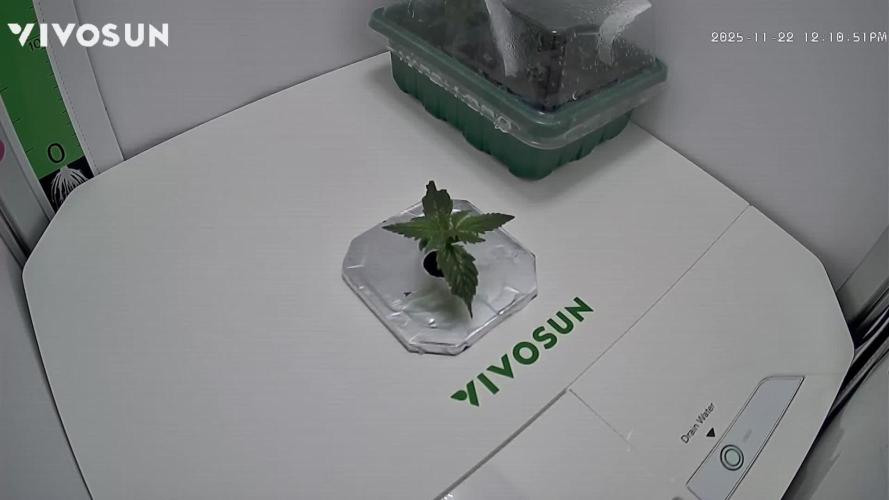
Not much has happened this week. It becomes bushy and bushy 😅.
I even considered giving her another 2-3 weeks of growth, but again to give a bigger pot 😊.
I'll decide spontaneously the days.
I wish you all a nice start into the week, let it grow 🌱 and stay healthy 🙏🏻👍
You can buy this Strain at :
www.Zamnesia.com
Strain : Sour Diesel
☝️🏼😍
Genetik:
Diesel x Northern Lights
👍
Vega Lampe: 2 x Todogrow Led
Quantum Board 100 W
💡
Flower lampe: 2 x Todogrow Led
Cxb 3590 COB 3500 K 205 W
💡 ☝️
Erde: Canna Terra Professional +
☝️
Dünger: Canna Termittel Vegra Vega, Canna Terra Flores, Rizotonic, Cannazym, CANNA Boost, Pk 13/14,
Canna Cal/Mag, Canna Ph - Grow,
Canna Ph - Flores
☝️ 🌱
Water:
Osmosis water mixed with normal water (24 hours stale that the chlorine evaporates) to 0.2 EG. Add Cal / Mag to 0.4 Ec Ph with Organic Ph - to 6.0
💦 💧



@GmiadlichGanjaGrown
Volgen
Mein pH Messgerät war kaputt, aber auf eine eklige Art und Weise, es hat nämlich falsche Werte angezeigt. Das führte dazu, dass der pH überhaupt nicht gepasst hat und die Pflanze ringsum knusprige Blätter hatte. Das habe ich korrigiert und das Wasser getauscht, jetzt explodiert sie förmlich. Schon Wahnsinn wie die immer anschieben wenn die Bedingungen passen.


@Nofeckingclue79
Volgen
I know you shouldn't really be defoliating when auto plants are in flower but I had to clear a path for airflow around the bottom of the plant because humidity is high because of the summer months apart from that she is going from strength to strength couldn't be happier would definitely grow Dutch passion again


@TheCannaProphet
Volgen
~ AirCube Active Oxygen Ebb/Flow System sponsored by GrowAce, featuring Strawberry Gorilla Auto by FastBuds ~
Well guy's and gal's here we go again on another exciting Autoflower run together! This time will be different as I will be doing a 'Hydroponic' run utilizing the AirCube Active Oxygen Ebb/Flow System by GrowAce, who were kind enough to sponsor me for this run, so it should be interesting to see what results I get and have some fun along the way!
•Let me first tell you about this 6 Pot Ebb/Flow system from GrowAce:
"The AirCube system is the one and only Ebb & Flow grow system on the market that combines the benefits of air pruning with a fully automated Ebb+Flow system! With the AirCube's proprietary fabric pot in bucket design, this system is guaranteed to outgrow any other Ebb + Flow system on the market. The results speak for themselves- grow MASSIVE roots that result in MASSIVE fruits!
Air Pruning- Air Pruning only happens with fabric pots. As the roots reach the fabric walls of the pot, they penetrate and grow into the breathable fabric. Once penetrated, the roots are exposed to air, which causes the tips of the root to dehydrate and naturally prune themselves. This natural pruning process forces the roots to grow tons of lateral fibrous feeder roots. This results in a plant that utilizes the entire root zone and fills the entire pot with tons of roots. These fibrous feeder roots are incredibly effective in uptaking water and nutrients, resulting in a plant that grows healthier and more vigorously!
Oxygen Benefits- Without oxygen, nutrient absorption cannot occur. On a molecular level, oxygen is needed to transmit nutrients across the cell walls and into the roots of a plant. With the AirCube's proprietary bottom lifted draining design, the system actively draws all of the water out of the bucket pulls vital oxygen into the root zone.
Maximum Versatility with Any Grow Medium: The AirCube System is the only system on the market that allows you to use any growing medium you like. Use coco coir, soil, peat moss, perlite, vermiculite, hydroton, rockwool or any other medium you wish! This system is the most versatile Ebb and Flow bucket system in today's hydroponics industry.
Temperature Control- with the fabric pots constructed with highly porous polypropylene fabric, heat dissipates easily and effectively. Unlike standard plastic pots, heat isn't trapped in the root zone. Heat in standard plastic containers can reach temperatures of up to 125 degrees. When this type of heat is trapped and unable to escape, it can damage your plant's health and limit the potential of your harvest. Growing in the AirCube System, plant roots grow cooler, healthier, and more vigorous.
Largest Pots in its Class- this system features 5 Gallon grow buckets, the largest pot size of any other ebb and flow hydroponic system in the market.
Modular and Expandable- start with 6 grow buckets and expand up to 36 grow buckets with the optional 105 gallons PopTank reservoir!"
For my medium and nutrients I decided to also switch things up from my regular Organic runs, going with Plagron Nutrients and Root Royale 70/30 Coco/Perlite. When filling the fabric pots with medium, I first added just under a gallon of horticulture perlite from Nor-Cal as a base layer to ensure good drainage and then filled the remainder with the Root Royale.
•Now for one of my favorites, and award winning strain from my friends at FastBuds... Strawberry Gorilla Auto:
I'll be running Strawberry Gorilla Autoflower which is a 55/45 Sativa/Indica Hybrid. "ATTENTION ALL! Due to our continuous efforts in evolving our breeding process, we are proud to confirm that our Strawberry Gorilla Auto has now become one of the most potent autoflowers in the world! Paving the way to our recent success where she ranked on top & brought home the gold at the very first American Autoflower Cup in California. Moreover, she proved that not only modern autoflowers can compete with photoperiods, but they can even beat them in their field. At the most recent edition of the Farmer’s Cup and competing against various photoperiodic strains, Strawberry Gorilla Auto took home the title of 'Highest Combined Terpenes' in the highly sought-after 'Home Grow Hash' category, with an impressive 97.163 mg/g total terpene content! Our exceptional genetic selection's crowning Strawberry Gorilla Auto strain is a spectacular hybrid known for producing yields of up to 600 gr/m2 in 70 days. This is a very manageable grow that can reach heights of up to 150 cm - due to its magnitude we recommend it for more experienced growers, as a huge plant may be a little overwhelming for first-timers. This show stopping sativa heavy hybrid is perfect as an all day smoke, producing a taste bud tingling, pungent berry and diesel terpene-rich flavor combo that leaves you with a grin from ear to ear, a perfect choice for those looking for a day-and-night autoflower! "*
*References: GrowAce.com, 2fast4buds.com
______________________________________________________________________________________________________________________________________________________________________________________________________________________________________________________________________________________________________________________________________________________________________________________________________________________
The Setup:
• AC Infinity 4x4 tent
•AC Infinity Cloudline T6 Exhaust Fan w/ Controller 67
•HLG 650R w/UVA Bar *** For some reason GD does NOT have a listing for the USA version of the 650R so I selected the closest match to it.
•AirCube Active Oxygen Ebb/Flow 6 pot System
•TrolMaster Hydro-X Controller for light
•AutoPilot APC8200 co2 controller fed by a 50# tank
•16" Hurricane oscillating fan and 8" floor fan
•Tent cooling via filtered outside air delivered by AC Infinity Cloudline T6 fan
•BlueLab instruments: PH Pen and Truncheon Nutrient Meter
______________________________________________________________________________________________________________________________________________________________________________________________________________________________________________________________________________________________________________________________________________________________________________________________________________________
Weekly Updates:
10/18- Well here we go into the first real week for the Strawberry Gorilla Auto's from FastBuds!
I've got the AirCube system dialed in now and the plants have responded beautifully! I've upped the nutrients to 650ppm's and am running the PH at 6.0-6.2 @ 74℉. Tent temperatures are running 73/80℉ during lights off/on, RH is being maintained @ 65%, and co2 levels at 1150-1300ppm's. I upped the output of the HLG 650R to 65% via a TrolMaster Hydro-X Controller, and have it hung 28" above the plants.
10/20- Yesterday, I drained and cleaned the reservoir and 'brain bucket', then refilled the system with 60L of well water to which added the following: 100ml each of Plagron Cocos 'A' & 'B', 30ml of Plagron Power Roots and 45ml of Botanicare CalMag+, and 3 tbsp. of Plantonics Amino Bliss amino acids for a final level of 650ppm's. I then checked the ph and adjusted to 6.0 @ 74℉.
I have also set the GrowAce AirCube system to 'Auto' mode and have it set for three 15min feedings a day, six hours apart, beginning two hours after 'lights on'.
10/22- All three Strawberry Gorilla's are looking really good now with great color and vigor. They all have their forth leaf set emerging now and their node spacing is fairly tight currently. With the girls doing well, I'm primarily concentrating on maintaining a consistent environment in the 4x4, paying close attention to temperature, RH, co2 levels and VPD.
The three times a day feeding schedule with Plagron nutrients ( Cocos A & B, Power Roots) continues @ 650ppm. I am also checking the reservoir before each to monitor and adjust the PH and nutrients when needed. I have noticed that after each feed the reservoir PH climbs 0.9of a point to 7.0, so I have been adding 30ml of Safer Grow PH Down which brings the PH down to 6.1.
10/24- Today I drained, cleaned and flushed the AirCube reservoir and 'brain bucket', then filled it with 70L of 74℉ well water. After filling I added the Plagron nutrients separately and also began adding in Plagron Royal Rush.
The feedings of Plagron nutrients continue three times daily, and I'm monitoring the reservoir before each, adjusting the nutrient level to 650-700ppm @ 5.9-6.2 ph. The tent environment has remained dialed in with the VPD averaging 1.40kpa over the last seven days.
The Strawberry Gorilla's are responding well to the feeding schedule, and are also tolerating the increased light output which I now have set to 80% along with setting the co2 levels to 1100-1400ppm.
There goes another week for these beauties and the upcoming weeks promise to be exciting as these girls really take off! See you there!😎❤️
💚 Thank you for checking out my passion in life! Please visit as often as you wish and I hope you enjoy this journey as much as I know I will! Grow what you love, Love what you grow!💚


@FumoGrande
Volgen
Hi guys!
For this run i got some nice looking clones. Really looking forward for this one.
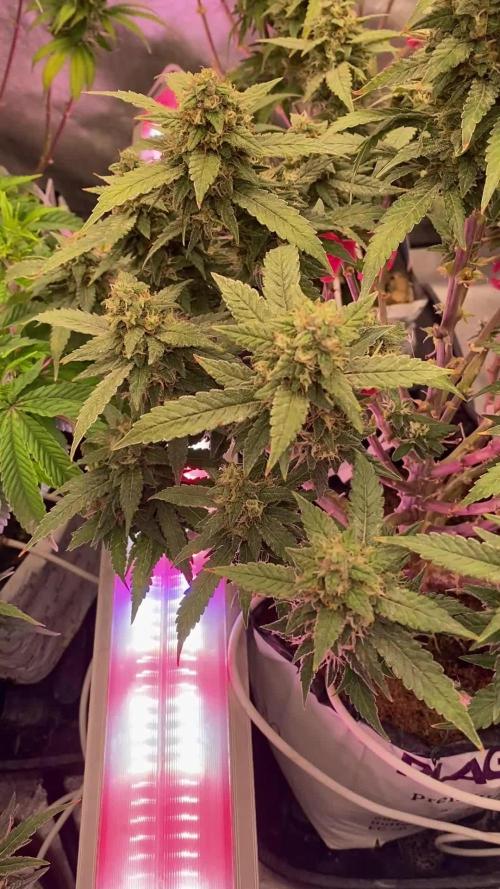
11x Gelato Sorbet (Dna Genetics) left side in the box
13x Cookies&Cream (Exotic Genetics) middle of the box
8x French Macarron (T.H. Seeds) right side of the box
My setup got a nice update with the Sanlight Evo 5 100 with 320w. Aim to upgrade all of my S1 Q6w soon. All together with 985watt now.
I use Biobizz-Lightmix and started to add Nutrients at week 3 after i planted it in the 8l pots.
For this run ill use Hesi Nutrients because i use them for years and worked most of the time pretty well for me.
I fimmed some plants and trained most of them with LST-Training.
I will send them into flower in the middle of week 5
---‐-------------------------
Week 4: Plants are looking ok. I wanted a higher humidity and tried to increase it with a humidifier.
Week 5: The fimming worked quite well on the plants i used it on and i got a nice increase in height and strength
Aiming to send them into flower in the next few days. :)
Week 6: Day 3 of Flowering plants look nice and healthy. Some gelato sorbets had issues from stress but they catched up ok.
Week 7: End of week 2 of flowering plants look ok most of them. After i saw some nice results at tents from friends and had some own nice experience with the terpinator i start giving "purpinator" this run a go and start mixing it into my feeding schedule every watering
Week 8: it looks ok so far but i would be a bit more satisfied if the plants would be a little taller... :)
Hope u like the diarie and follow with this run!


@MetropGrower
Volgen
I think she needs 1-2 weeks more
This time this strain is extremely slow in the flower
But let’s wait



@DogDoctorOfficial
Volgen
💙 PROJECT BLUE TENT – HARVEST DIARY PART 2
🥒 PICKLE LEMON HAZE F1 – PHENO A
⚖️ FINAL HARVEST WEIGHTS, DRYING COMPARISON & CURING JOURNEY
🌱 CLOSING ANOTHER BEAUTIFUL CHAPTER!
Hello everyone, and welcome back to another chapter of Project Blue Tent! 💙🌱
My friends, my friends...
WE'RE BACK TO CLOSE THE BOOK ON PICKLE LEMON HAZE F1 PHENO A! 🥒💚
First of all, a little apology to everyone following this diary!
If you've arrived directly at this report, you might be wondering why we're starting with Part Two.
Well, as explained in our previous update, we've had to divide the harvest, trimming, and smoke review documentation into separate reports because of the GrowDiaries photo limitations.
We're currently limited to 30 photographs per report, and honestly, that's simply not enough for the amount of content we want to share!
We have so many photographs, comparisons, details, and experiences from this harvest that we decided to divide everything into two parts.
In Part One, we covered the harvest, drying process, Dryferm side-by-side comparison, hand trimming, our beautiful flowers, and the gold collected from the TrimBin.
If you haven't seen it yet, I strongly recommend visiting the previous report before continuing here.
That way, you'll have the complete story behind these final results.
And now, let's finish what we started!
🥒💙
⚖️ FINAL HARVEST NUMBERS – THE RESULTS ARE IN!
Let's start with what everyone has been waiting for.
THE NUMBERS!
After harvesting, drying, trimming, and completing the post-harvest process, we finally have the final figures for Pickle Lemon Haze F1 Pheno A.
🌱 WET FLOWER WEIGHT:
1,407.6 grams.
🌱 FINAL DRY FLOWER WEIGHT:
156.4 grams.
That's an impressive result!
More than 1.4 kilograms of wet flowers, resulting in 156.4 grams of finished dry flowers.
I'm genuinely happy with this result.
And when looking at the complete Project Blue Tent adventure, it's another fantastic contribution from one of our four girls.
The flowers were beautiful, the density was impressive, and the final result is something I'm very pleased with.
But the numbers are only part of the story.
One of the most interesting aspects of this harvest was our drying experiment.
📦 DRYFERM BAGS VS. CONVENTIONAL DRYING – OUR EXPERIENCE!
As explained in Part One, we divided the harvest into separate portions to compare two different drying methods.
Some flowers were dried in Dryferm Bags, while others were dried on the rack.
The comparison was particularly interesting because we used material from the same harvest and kept the general drying conditions as consistent as possible.
And once again, the Dryferm Bags impressed me!
From our observations, the flowers inside the bags appeared to dry a little faster and seemed further along in their curing development when we started trimming.
But what really caught my attention was the aromatic difference.
When handling and breaking the flowers apart, the material that had been dried inside the bags seemed noticeably louder.
The aromatic impression was stronger, more pronounced, and particularly interesting compared with the flowers dried alongside it.
Now, I want to be very clear about something.
I haven't conducted laboratory testing, and I don't have analytical measurements proving that the bags preserve higher concentrations of particular terpenes or other compounds.
What I'm sharing here is my personal experience.
The aroma seemed stronger, the flowers seemed to retain more of their aromatic character, and the overall experience made me genuinely curious about what is happening inside these bags.
There are volatile compounds involved in the aroma of flowers, and it's understandable that growers are interested in how different drying and storage environments may influence their preservation.
However, without analytical testing, we shouldn't claim exactly which compounds are retained or in what quantities.
What I can tell you is that, based on my repeated personal observations, I'm very impressed with the results.
And that's why I continue recommending that people explore this product and make their own comparisons.
🔗 DRYFERM – CHECK IT OUT!
Official website:
https://dryferm.de/en/products/dryferm-bag-clips
Visit their website to explore the products and check their current offers and discount opportunities.
I'd genuinely love to hear from other growers who have tried them.
Do you notice the same differences?
Are your results similar?
Let's exchange experiences and keep learning together!
? THE GLASS JARS – BRINGING THE HARVEST TO ITS NEXT STAGE!
After completing the drying and trimming stages, we organized the flowers and moved everything into glass jars.
And this is where we made an interesting decision.
Instead of keeping the two drying methods separated for the entire curing process, we combined the flowers from both side-by-side groups into the same jars.
So, the final curing stage for this phenotype was completed in glass jars, with both portions together.
Why glass?
Because I like having a practical way to observe the flowers, monitor the internal environment, and follow the curing process.
Glass jars are reusable, easy to inspect, and allow us to monitor what's happening inside without having to guess.
And most importantly, we can use our little digital hygrometers to keep track of the relative humidity and temperature.
For this run, I wanted to document the entire process rather than simply put everything away and forget about it.
🌡️ CURING ROUTINE – THE FIRST TWO WEEKS!
During the first two weeks, I followed my usual glass-jar routine.
I opened the jars every day, allowing the internal air to exchange with the surrounding environment.
I also gently moved the flowers around to help expose different surfaces and check their condition.
The idea was to allow any remaining moisture within the flowers to redistribute and escape gradually, while monitoring the overall environment.
During these first weeks, I paid particular attention to the hygrometer readings.
I wanted to make sure there wasn't excessive moisture accumulating inside the jars and that everything was progressing as expected.
After those first two weeks, I reduced the frequency of opening.
From that point onwards, I opened the jars from time to time to check the flowers, inspect their condition, and make sure everything remained as it should.
No unnecessary handling.
Just regular observation and a little patience.
📊 HUMIDITY MONITORING – OUR 55% REFERENCE!
One of the things I appreciate most about using glass jars is being able to monitor the internal environment.
For this run, we placed small digital hygrometers inside the jars.
And the reading I'm particularly happy with is:
💧 Relative humidity: approximately 55%.
That's the reading we're seeing with the jars closed, and it's a level I'm comfortable with for this particular batch.
Being able to see the numbers gives me a much better understanding of what's happening inside.
Instead of relying exclusively on how the flowers feel, I can also monitor the relative humidity and temperature.
Of course, a hygrometer reading is only one part of the evaluation.
I still inspect the flowers, check their condition, and pay attention to any unusual changes.
But having those little instruments inside the jars makes the whole process much easier to follow.
And for someone who loves documenting everything, that's another big advantage!
😂📊
💚 THE CURING EXPERIENCE – VERY HAPPY WITH THE RESULTS!
So, how did everything turn out?
Honestly, I'm very happy!
The flowers have been resting in glass jars, and the curing process has been progressing nicely according to my observations.
The internal humidity readings are sitting around 55% with the jars closed.
The flowers have maintained their beautiful appearance, and the overall result is something I'm genuinely pleased with.
I'm particularly interested in the differences we noticed during the earlier drying stages.
The Dryferm material seemed louder and further along in its development when we started trimming.
However, after combining both portions in the same jars, we're no longer maintaining a separate curing comparison.
That's an important distinction when evaluating the final result.
What I can confidently say is that the overall harvest has turned out beautifully, and I'm delighted with the final flowers.
👃 AROMA, TERPENES & FLAVOUR – SAVING THE BEST FOR THE SMOKE REVIEW!
Now, I know some of you are waiting for the detailed flavour and aroma discussion.
And believe me, I want to talk about it!
But rather than mixing everything into this final harvest report, I've decided to give those details their own dedicated space.
The individual smoke review for Pickle Lemon Haze F1 Pheno A will cover:
👃 Aroma and aromatic character.
🌿 Personal terpene impressions.
👅 Flavour and taste.
💨 Smoothness and overall smoking experience.
🧠 Effects and duration.
⭐ Our personal evaluation.
I want to keep the harvest report focused on the post-harvest journey and give the smoke review the attention it deserves.
So, stay tuned for that final experience!
📸 THE PHOTOGRAPHIC JOURNEY – EVERY DETAIL DOCUMENTED!
One of the things that makes these reports so special to me is the amount of documentation behind them.
From the original flowers to the drying comparison, trimming, collection, and final storage, we've tried to capture every stage.
And that's exactly why we've needed more than one report.
I don't want to publish just a few photographs and leave the rest of the story untold.
Every photograph represents a little part of the journey.
Every comparison gives us something to discuss.
And every result gives us another opportunity to learn.
That's what Project Blue Tent has always been about.
Documenting the process, sharing the experience, and enjoying every stage along the way.
🏆 FINAL EVALUATION – PICKLE LEMON HAZE F1 PHENO A!
My friends, what a beautiful journey!
From the early growing stages to the final harvest, Pheno A has given us a fantastic experience.
Her final numbers:
🌱 Wet flowers: 1,407.6 grams.
🌱 Dry flowers: 156.4 grams.
The flowers turned out beautifully, and I'm very happy with the final result.
The Dryferm comparison was another highlight of this run.
Based on our observations, the material dried in the bags seemed to progress faster and had a stronger aromatic impression during trimming.
The final flowers were then combined and cured together in glass jars.
We followed our usual monitoring routine, opening the jars daily during the first two weeks and checking the internal environment with digital hygrometers.
Our closed-jar humidity reading settled around 55%, which is a level I'm happy with.
And now, the growing and post-harvest chapters for Pickle Lemon Haze F1 Pheno A are complete!
There's still one last piece of the puzzle waiting for us:
The individual smoke review.
But as far as this harvest and curing report goes, we're closing the book!
🥒💙
🙏 A HUGE THANK YOU TO EVERYONE!
A project like this doesn't happen alone, and I want to thank everyone who has been part of this adventure.
A massive thank you to ZAMNESIA for providing the genetics and making it possible for us to document these beautiful Pickle Lemon Haze F1 plants individually.
Thank you to PLAGRON for supporting the project with their nutrient line.
Thank you to MARS HYDRO for the irrigation and drainage equipment.
A special thank you to LUMIFLORA for the under-canopy lighting experiment.
Thank you to DRYFERM for giving us the opportunity to test and document the Dryferm Bag system.
Thank you to GROVE BAGS for being part of our post-harvest journey and allowing us to explore different storage approaches.
Thank you to TRIMBIN for a tool that has been part of my harvest routine for years.
And a massive thank you to GROWDIARIES for providing the platform where we can share our diaries, photographs, experiments, and experiences.
Finally, to everyone following the Project Blue Tent adventure, reading our reports, commenting, sharing, and supporting us:
THANK YOU!
Your support makes this journey even more enjoyable.
💙 COME JOIN OUR DOGDOCTOROFFICIAL DISCORD COMMUNITY!
If you haven't joined us yet, you're more than welcome!
We've built a friendly community where growers can exchange knowledge, share experiences, discuss equipment, show their gardens, and enjoy each other's projects.
We also organize:
🏆 Community competitions and photo championships.
🎁 Giveaways and special prizes.
🌱 Dedicated sponsor channels.
📸 Photography discussions.
💬 Friendly conversations and knowledge sharing.
And the best part?
Everyone is welcome!
You don't need to be an expert.
You don't need years of experience.
You don't need expensive equipment.
No experience level required!
Come and introduce yourself, join the discussions, participate in our competitions, and become part of the adventure.
💙 JOIN US HERE:
https://discord.gg/dogdoctorofficial
And don't forget to check out our ongoing competitions and giveaways!
Growers helping growers.
Sharing knowledge.
Learning together.
And having fun along the way!
💙 CLOSING THE BOOK – ONE PHENOTYPE, ONE BEAUTIFUL JOURNEY!
My friends, this is the end of the harvest and curing documentation for Pickle Lemon Haze F1 Pheno A.
1,407.6 grams wet.
156.4 grams dry.
A beautiful harvest, an interesting drying comparison, and a curing journey that has left me genuinely happy with the results.
We've learned more about Dryferm Bags, continued exploring different post-harvest methods, and documented every stage as carefully as possible.
But most importantly, we've completed another individual story within Project Blue Tent.
Pheno A has had her own journey, her own photographs, her own harvest numbers, and her own final evaluation.
And that's exactly how I want these diaries to remain.
Every phenotype deserves her own space.
Every plant deserves her own story.
And every experience deserves to be documented properly.
One more chapter completed.
One more beautiful girl celebrated.
And one more reminder of why we love doing what we do!
Until the next adventure, my friends...
Keep growing.
Keep learning.
Keep documenting.
Keep experimenting.
And never lose that passion!
GROWERS LOVE, HAPPY GROWING, AND TAKE CARE, EVERYONE! 🌱💙🥒🌈



@IamCy
Volgen
She's starting to fatten up nicely! Terps still off the meter,and the roots are ridiculous. Definitely one of the best plants I've ever grown.