


Likes
Comments
Share


@CannabisAprendiz
Follow
Segunda semana de floracion , se aplica tierra de diatomeas como preventivo de plagas de marca nacional de chile GeoBoost. Se Logra apreciar formaciones de flores a una gran velocidad de estas indicas / Second week of flowering, diatomaceous earth is applied as a preventative of Chilean brand national GeoBoost pests. It is possible to appreciate formations of flowers at a great speed of these indica

Likes
29
Share


@RushGreen
Follow
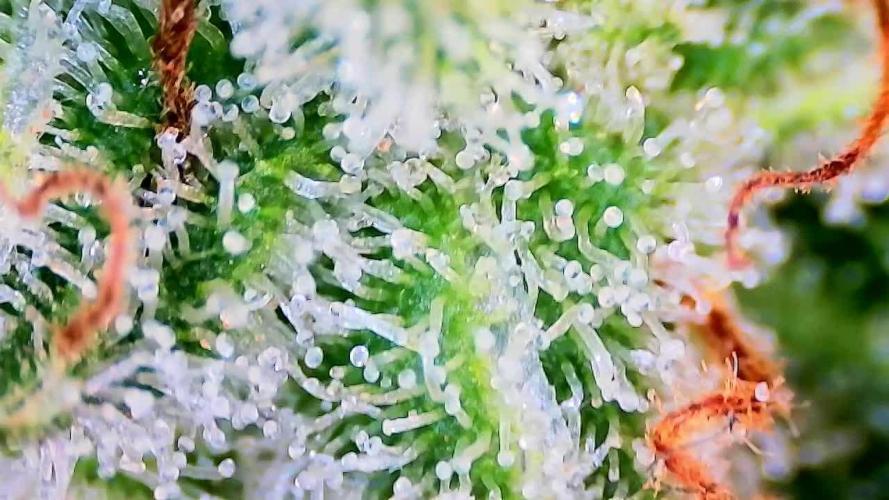
Pour cette semaine nous avons décider de pratiquer la défoliation, pour la première fois, bonne idée ou pas nous verrons par la suite ce que cela donne.
defoliation : 10/12/2018

Likes
13
Share

@Prilyfe13
Follow
12/09/2025
Last week of nutes and last week of real flowering. Both ladies look just about done. Papaya Cookies is nearly there. Lemon Cherry Cookies isn't too far behind either. But she definitely has the whole week plus a couple days to go. Papaya Cookies might be done by the end of the week, if not sooner. I might have to push her a little more so I can harvest them at the same time. I won't be changing out the water until after lights out as I always do. So today will just be a plain water top off. Well, that's been everyday for like 2 weeks. Lol. But, I noticed both ladies definitely didn't drink as much as usual last night. Another sign that they are almost done. Normally it's close to a gallon a day. This was about a half gallon.
Anyway, I won't be recording the morning readings as the water will be changed out today. If it were under the normal night and day schedule, it would be easier to do this, but the AI suggested this time of day for lights out. It's warmer now than at night. Obviously. Lol. So now I have to wait for lights on after the plants have had their rest to change the water out. Then we can take readings.
Next week, which will only be 3 or 4 days, I'll be doing a slow wet trim. Or I guess the defoliation I should have done 2 months ago. Anyway, I'll be pulling anything with a reachable stem. I won't be cutting the sugar leaves. That's after drying with my new cannabrush. We'll see how well this baby works.
On a final note before lights out, Papaya Cookies has a few buds that are nearly done on the bottom and they are super hard. Really nice smalls. There's a bit of larf, and I can't really reach the buds in the middle, but they seem to be the ones taking the longest. So I think we'll be waiting for those ones to finish.
Lemon Cherry Cookies is kind of the same. Lots of bud in the middle that I can't reach. They aren't done and still have loads while pistils. But the buds on top are still swelling, so that's a good thing. We'll definitely see some bigger buds from this little lady.
Good afternoon everyone. It's 6:41pm.
New water new nutes cut in half.
Readings:
Papaya Cookies:
pH: 5.8
EC: 824
TDS: 409
Lemon Cherry Cookies:
pH: 5.8
EC: 874
TDS: 439
So it's 10 pm and I decided to check the pH and whatnot. It spiked to 6.8. What is happening? I cannot get it to stay in range. I don't know what to do here. It has to be something in the roots. I wonder if it's my tap water. It seems to have worsened since I started using it, but I can't afford distilled bottles. I will be ordering distilled for the 3 day flush. But that's only 3 days and I'm saving up for it.
Back to the matter at hand. pH spiking. Both plants. The EC and TDS also increased. Not by much, but still increased. The goal is to decrease. Hopefully, with the lower nutes, the roots or whatever gets diluted enough to slow everything down. They're already not drinking as much. So there's very little time. I wanted to get it corrected by today. But nope. Nothin doin. Well, I guess I'll be checking the pH tomorrow morning and changing the water out. I might have to change it in the morning and after lights out. We shall see. If it drops, I'm going to pH it back to 5.8 and leave the water alone. That's the plan.
12/10/2025
So today I checked the readings like everyday. BUT today my back is killing me and I can't lift the shit. It's really annoying. So frustrating.
Anyway, Lemon Cherry Cookies didn't change one bit overnight. pH is still at 6.8. the EC and TDS are also in roughly the same spot. But she did drink about a half a gallon and there was no change, so that's good. No increase in nutrient concentration. But the pH man, the pH is brutal.
Papaya Cookies dropped her pH down to 6.6, so that's good. Not in range, but still good. Her EC and TDS are also about the same. So same situation but a lower pH.
So I popped 3 ml of pH down in and mixed it up. Half gallon went into each container. It did nothing to Lemon Cherry Cookies. The pH stayed the same. But the EC and TDS dropped a little.
Papaya Cookies with the gallon, dropped down to 6.2 and the EC and TDS dropped a little bit as well.
Readings:
Lemon Cherry Cookies:
pH: 6.74
EC: 922
TDS: 465
Papaya Cookies:
pH: 6.5
EC: 867
TDS: 430
Forget everything you just read. LMAO. The numbers increased. I guess it's just a waiting game now. I'm gonna pH the water for both ladies after lights out. This morning I just added the plain pHed water. And not much happened. It's the roots. Gotta be. There's nothing left to look at. Well there's the tiny dose of nutes, but I don't think that's the problem. It could also be from the water itself. It's pretty hard. But I have no idea what to do about that. Is there a water softener that can be used in a bucket? Or would that be a really bad idea? Also, I just thought about this yesterday when I was removing Lemon Cherry Cookies from her bucket into the reserve for the water swap. As we all know, the tail of the roots is super long. So I have to lift it with my hands out of the water. My question is why didn't it ball up like Papaya Cookies? I think they have the same amount of roots, but Papaya Cookies has an actual ball where Lemon Cherry Cookies has a tail and smaller root ball. What gives?
Anyway, that was my weekly WTF question. Next week it's gonna be something like why won't this carboflush work? Should I add more? Should I swap out the water... Again?... You know. I'm implementing Murphy's Law here. What can go wrong will go wrong. LMAO. It's all good. I'm preparing for that exact question. I bet it's gonna be increasing EC and TDS levels. That's gonna be the problem. And no idea how to solve it. Swap out the water every few hours? That's crazy. Maybe one or two swaps every day, but not every few hours. A waste of carboflush and water.
So I'm super concerned with who will finish first. Papaya Cookies looks like she could be done by the end of the week. Lemon Cherry Cookies looks like she could use the whole week and then some. I know I said this last week, but it is a real concern. And I still have nowhere to put the other tent. But it's only for a few days and not an entire week. Well, hopefully not an entire week.
I have to trim in the tent so I can kinda keep the smell concealed. The fan on level 10 with just a side door open should be fine. Plus, I'm only taking off the sugar leaves at that point. So it should be a little faster with this brush thing and less smell will escape. Oh, I'll be using Grove Bags for the curing process. I really do like them. But I still need to add a Bovida pack because of the dry winter air.
12/11/2025
Morning readings after correction.
Papaya Cookies:
pH: 5.95
EC: 763
TDS: 381
Lemon Cherry Cookies:
pH: 6.2
EC: 946
TDS: 473
I got a couple trichome videos posted for everyone to see. I actually haven't watched them yet, so I'll update shortly.
But in bigger news. I found a full fledged flower on Lemon Cherry Cookies this morning. Complete with 1 seed. Then I found a bud with 3 seeds. Not developed yet, but there nonetheless. So that explains why she's taking longer to finish up. I'm hoping it was isolated and those are the only ones. I looked all through the bottom where I found the 2 sites. I think I found one more, but I left it alone.
My question is, if I clear out the seeded sites, will the plant mature faster? Good question right?! Because what I read was that seeded cannabis plants will take longer to mature because of seed production, as seeds take 6 to 8 weeks to mature.i had a gorilla cookies that went for like 21 weeks because it got seeded everywhere. No clue how, I never found the pollen sacks. But that plant was super healthy and HUGE. Well huge for an Autoflower in a 3x3 tent with 3 more plants in there.
Anyway, I'll definitely have to bring out the 2x2 now. As I said, I have trichome videos and I haven't seen them yet. But I have a feeling that Papaya Cookies is just about finished. As in I could probably start the flush this weeks as I suspected. We'll see though.
Oh speaking of healthy plants. Lemon Cherry Cookies is also still unhealthy. I spoke too soon. Still locked out and now more leaves are turning yellow. The weird thing is, I added a very small amount of nutrients. How there's still an issue I don't know. I guess just wait longer? 🤔
Ok, so I just watched both videos. Lemon Cherry Cookies definitely has more time to go. The trichomes are mostly clear toward the middle of the plant. So she definitely has more time to go. Hopefully with any luck, she'll mature by the end of the week.
Papaya Cookies has almost all cloudy trichomes. I like a bit of amber in the mix and there is none. So I'm going to wait for Sunday I think then start flushing her. I'll flush for 3 days. So that will be finished on Tuesday. And that's when I should be able to start flushing Lemon Cherry Cookies. Then I chop Papaya Cookies and hang her up. At the same time, I do a 3 day dark period for Lemon Cherry Cookies while she finishes up. In the meantime, Papaya Cookies is happily drying right above her. I'm still trying to figure out the best way to work the environment. I'm thinking I can just keep the temp at around 66° and bring the humidity up to 50% I think that's good. I have to look into it. But it's only for a few days and there's still plenty of airflow. I will be turning 1 fan off though. As to not disturb Papaya Cookies while she dries. Plus I don't need 2 fans for 1 plant this size. So yah, that's my plan. And as long as it works I'm good to go.
If it doesn't work, I'll have to bring out the 2x2 and hook it up to the 3x3 and use that exhaust to pull from the tent. I have an extra fan so I can run that as well. For air circulation. Not too sure how I'm gonna keep the humidity up in there. Hmmmm. That's not good. I can definitely keep the temp low, but the humidity is super dry here right now. Well, it'll be 3 days in the 3x3 drying so if the 3x3 isn't ready for both plants to dry, the 2x2 will only be used for like 7 days. With a 10 day dry, that is. I'd rather not rush the drying time. Although, if I can't figure out the humidity, I may be rushing it quite a bit. Like in a very bad way.
So I hurt my back and am having trouble even checking the readings. Hopefully it's not all messed up.
Also, I've been thinking. Both plants have nutrient lockout. Would it make sense to start flushing Papaya Cookies like tomorrow? She only has about a week left.
12/12/2025
Readings:
Papaya Cookies:
pH: 5.5
EC: 731
TDS: 364
Lemon Cherry Cookies:
pH: 6.2
EC: 877
TDS: 438
So I think Papaya Cookies is just about done. Tons of cloudy pistils. But a lot of clear as well on certain parts. I was gonna wait to flush in 4 days, but I think she needs it now. I'll start the flush later this afternoon I think. Or tomorrow. It all depends on how I'm feeling. My back is still out for torture lunch. Fuck, it hurts. Lol.
Anyway, I think she's really close to harvest.
Lemon Cherry Cookies on the other hand definitely needs more time. The tops look fine, but the middle of the plant is loaded with unfinished larf. Larf I can press into concentrate. And frankly, I don't want to harvest just the top of the plant. However, when I pull Papaya Cookies out, I'm going to center Lemon Cherry Cookies in the tent. I'm thinking about tossing the trellis net on there and pull the top branches outward to open up the canopy. That should help with the lowers in finishing a little faster. We shall see how I feel about it. Maybe I'll ask around.
Update:
I moved a couple things around and setup my dry tent. It's going to be exhausted through the 3x3. I'm thinking about putting the exhaust fan up to help with air exchange. Like very low. Anyone think this is a bad idea?
Another Update:
So I decided to start the flush with Papaya Cookies. She's got plenty of cloudy trichomes. Some buds have some clear on them. The only buds that aren't ready are the ones in the center of the plant. Way in there. I expect they will be ready on the next week. Or 3 days. Lol.
I figure if they have too much nutes, then Papaya Cookies should have enough to last a week or so. If that's how it works. We'll find out.
12/13/2025
Goooood Neews Everyone!
Papaya Cookies is done. She has completed her grow journey with me and all of you. I'll be trimming anything with a stem. Today I did the front before the lights went out. I don't think I finished. But a lot, and I mean a lot, of the leaves have been absorbed by the buds, so I can't access the stems. These are regular fan leaves. The buds really aren't THAT big, but whatever. They stay on and will be brushed off with the Cannabrush. (Very excited to use that.) I should be able to access a lot of the stems after drying as well, so I can manicure them right out.
I was considering doing a full wet trim and bucking them off into my drying rack. But, honestly it's not the best idea for me. Clearing out all the fan leaves is one thing, but a full wet trim is a lot of work especially for this plant. So many leaves. Very leafy plant. Good internodal spacing too. Not too tight, not too far away. Not to mention, I have the Lemon Cherry Cookies in the way as well. So it makes trimming about 60% of the plant a bit daunting. I was considering trying to find a way to bring the whole bucket in the dry tent so I can trim there, but alas, I don't have an air pump in that tent. I don't want to lose the bubbles quite yet. But also, I would have to detatch the lines from the air pump in the 3x3 just to bring them over to the dry tent with no light. Just not feeling it.
Lemon Cherry Cookies seems to be doing about the same. Terrible. All the yellow leaves. The larf all over the bottom.
Anyway, her pH was down today. Weird. But not far down. I got her to rest at 5.7 pH. I'm thinking I might be in the clear now. She's still swinging, but it's up and down and it's starting to level off. Not completely mind you, but leveling off nonetheless. It's a lot easier to get her back in range now. So that's really good. I recorded her readings, but for some reason the entry didn't save. So I'll have to take it again during lights on. And of course pH as needed.
I'm trying to avoid it as much as possible for the next few days. Pulling her out that is, to pH. The drying tent is on her side and locked on. So if I really need to, I have to remove the duct from the 3x3 and pull the dry tent out so I can get access to the side door. Pain in the bottom parts. Both cheeks even. Topped her off with 1 ml of pH up at about a half gallon.
Papaya Cookies was also a little low, but in range. I added some pHed water to top her off. Weirdly enough, she took almost the whole gallon. She hasn't done that in days. Is there a thing where the plant takes in more water because of a flushing agent? I wonder. 🤔
I'll have to look into that. Also, should I be adding more Carboflush to the top off? I don't really understand how it works. Unfortunately I have been in a bit of a situation and never really learned if you're supposed to add it in every time or not. I think it's just once per week, unless she's eating more and then add more. But she doesn't need food. So what do?
Update:
Papaya Cookies:
This plant is so very leafy and sticky. I decided to trim the wall side and really couldn't get very far past the forest of buds and giant sugar leaves. And the big fan leaves that have no visible stem. There's lots more leaves to collect, but I just can't get to them. The plant is just too compact.
12/14/2025
Day 2 of flushing Papaya Cookies and honestly I haven't seen any change except for yellowing sugar leaves. Which was happening in the first place. Maybe I'm being impatient, but from what I've read, people only flush for 3 days when growing in DWC. I have been taking leaves off at a rapid pace, so maybe they aren't really turning yet. Could I be stressing the already done plant? Anyway, I'm done taking leaves for now. I can't reach all the way in the back nor on the right side. However, I did manage to get some of it. I might try to get to those two areas after I harvest. You know, hang her up and rotate her until I have all the stemmed fan leaves.
Readings:
Papaya Cookies:
pH: 6.04
EC: 534
TDS: 263
Lemon Cherry Cookies
pH: 5.75
EC: 795
TDS: 396
So I can't really tell, because I keep forgetting to check the EC and TDS before I pH and add water, but I think Lemon Cherry Cookies is taking in nutes now. Yesterday after pH and new water the levels were higher. Today was less than half a gallon. Could she be done?! I don't think so. I'd have to check the trichomes to be sure, but there's still white pistils still popping up. I'm gonna go based on her trichomes from now on. Shouldn't be more than a week or so. At least that's what I think.
Papaya Cookies has been dropping her concentration nicely. All the way down to 263 ppm after some pHed water. I'm considering harvesting her today, but I'm not quite sure yet. I really wanna f get some fade on all these damaged leaves. But I think I cut off all the ones that would turn color. Lol. Maybe tomorrow? I'm not sure, but very very soon. Maybe Tuesday might be the best idea. It's the beginning of a new week and we have a harvest. Then I can push Lemon Cherry Cookies out til next Tuesday if she's ready before then. I'll see what she looks like later this afternoon and tomorrow. I'll especially pay attention to the water consumption. If it stays low, it's time to flush. Then I'll give this one a good 4 to 5 days in the flush, then a dark period. That could start Tuesday. That'll give the plant a week in flush as well as a few days in the dark.
Anyway, I had to pH both plants anyway, so it started out at 5.8 for each bucket. After returning the plants, I waited about a half hour before taking readings. Those are the readings I got. So Lemon Cherry Cookies seems to be dropping and Papaya Cookies increasing. Not by much, but we will have to see after lights on.
The dry tent is looking pretty good. I discovered that with the circulation fan off, the humidity drops super low. Like 35%. But with it set to 3, it circulates the air and blows on the bowl of water. That increased the humidity up to 47%. That should be perfect to start out the drying cycle. I'm pretty sure I'll have to take the bowl of water out though. For the time being. I'll add it back in when the humidity drops to 55%. That should only be a day or 2 maybe 3. The rest of the drying period will be a bit low in the humidity so I might need to break out the tiny humidifier I have. I doubt I'll need it though, the environment is really stable. Still at 64°.
12/15/2025
The whole entry got deleted and I lost today's readings. No good. Anyway, I can say what they looked like.
Papaya Cookies was low in pH. Below 5. Like 4.8 while Lemon Cherry Cookies was even lower at 4.6. I got Papaya Cookies up to 6.2 so she can drop again and maybe hold that space. She also drank nearly a gallon of water again. What is happening? She's definitely ready to go. On the other hand Lemon Cherry Cookies drank next to nothing. Like maybe 500 or 600 ml. Maybe a tiny bit more, but definitely not much. A sure sign she's getting ready.
Papaya Cookies and Lemon Cherry Cookies held roughly the same EC and TDS. A little bit lower than yesterday, so we are going in the right direction. But that's after top off and pH adjustments.
The issue is that while Papaya Cookies has dropped a bit, Lemon Cherry Cookies hasn't shown any signs of getting better. She's still locked out and I'm super concerned about he yellowing of the sugar leaves. They are getting dangerously close to the buds. From what I understand, yellowing getting into the bud can cause bud rot. Definitely don't want that. So I'm trying to figure out if I should harvest in like 2 days or can I hold off for the week I want. If anyone has insight to this please let me know.
Papaya Cookies is rearing to go. She will be sacrificed to the weed gods today, an hour before lights on. I was going to wait til tomorrow, but she's experiencing the same yellowing issue and I can definitely harvest her anytime. So today it is. I'm also not seeing anymore bulking up or anything. Just trichomes changing to cloudy and amber. Very little clear left. I feel like this is the perfect time to harvest a sativa. So experiment underway.
Lemon Cherry Cookies while not ready for harvest, does look kinda pretty. With her buds being so purple and the yellowing being really lush and bright. It actually looks cool. But it be bad. So sad. I could get mad. Just a tad.


Likes
103
Share


@Magnetous_tryko
Follow
That first diary was a very interresting experience! GD community helped a lot and it's a real pleasure to be surrounded by such nice and experienced growers! Thank you to everybody and see you soon on the next run!
Thanks also to the GD team that as always been so kind and reactive! (thanks a lot for posting one of my pics on IG either 😺: 1:)0000

Likes
3
Share


@TS_Greens23
Follow
This week has been important for getting some of the pinning done and setting her up for the stretch,,,being limited for space in the 2x2,,and changing her usual Christmas tree style of growth,,im hoping to create a canopy that flowers evenly,,without one main leader,,but all branches have the chance to be the leader,,and produce flower evenly across the canopy,,!!
Once the pinning is done ,,she can go wild,,😁
Likes
8
Share


@skaterblasted
Follow
Days 120 - 126 (from sprout)
9/20/24 - 9/26/24
The Good Shit - week 13 of flower and trichome heads are looking far more swollen
For IPM I sprayed existing mulch layer with tweetmint, followed up with topping all pots off with build a soil 3.0 and forest collected IMO's - fungus gnats almost completely eliminated overnight
Pots were cover cropped with build a soil seed blend + grape tomatoes, oregano + thyme, snap peas and napoli carrots
Fingers crossed harvest is on the agenda for this lady next week

Likes
19
Share


@sneakymexican712
Follow
Ok this was my first grow and I made mistakes.
-forgot to buffer coco
- nutrient burn
-started the manlining to early
- probably worried to much about every stage these plants.
-ended up with fungus gnats
And probably appt more I can’t rmeber in the moment.
But i learned so much from all of my mistakes and spent so much time researching and seeing in real time how these plants react and grow.
I did do some experimentation
just a normal top with one blue dream.
I topped twice one another blue dream and did a 3 times topped on all the blue dreams and I see why you should at least top three times the eight main colas and spread out the plant I see some of the buds on the one I only topped once not matured at all because there was minimal light other buds were growing so fat it suffocated it basically. I could have probably defoliated and manliness better but ayy. Beginners wil make
Mistakes and I’m happy with what came out of these girls. Not excited for trim hail but I am at the same time 😅😅


Likes
73
Share


@PsiloNoid
Follow
Starting week 1 of flower on this Bruce Banner Auto from FastBuds! She has been a pleasure to grow so far! Had some minor issues dialing in her water amounts last week but she is starting to look better. Im sure last week put a hurting on growth rate but she will still produce nicely. More updates soon!
Day 45 she is starting to perk up more and finally stretching out some! Still monitoring her situation closely though as she does have some slight yellowing around the edges but it may of just been watering issues. She is also incredibly compact and bushy right now. In about a week or so after stretching I'm gonna have to defoliate and open her up some most likely.
Day 47 she is looking better yet! She is really showing signs of perking up fully and bouncing back! She definitely took a beating with these water issues but I think I got her figured out now. We increased airflow around her pot even more so she can dry out better. I suspect the bottom of her pot was staying too wet for daily watering causing issues. Now she seems to be drying out quicker and looking much happier.
Day 48 we removed some dead and dying leaves that she had on her lowers. Looking nice and perky today and starting to stretch out a lot more.
Likes
139
Share
@squalino
Follow
📖 Chroniques de l'Oasis : La Marque Blanche
🐪 Chapitre Final : Le Crépuscule de l'Oasis : L'Adieu à la sultane du Rif
Date : Lundi 18 Mai 2026
Âge : J+89 (Le jour du Grand Sacre)
Résultat :
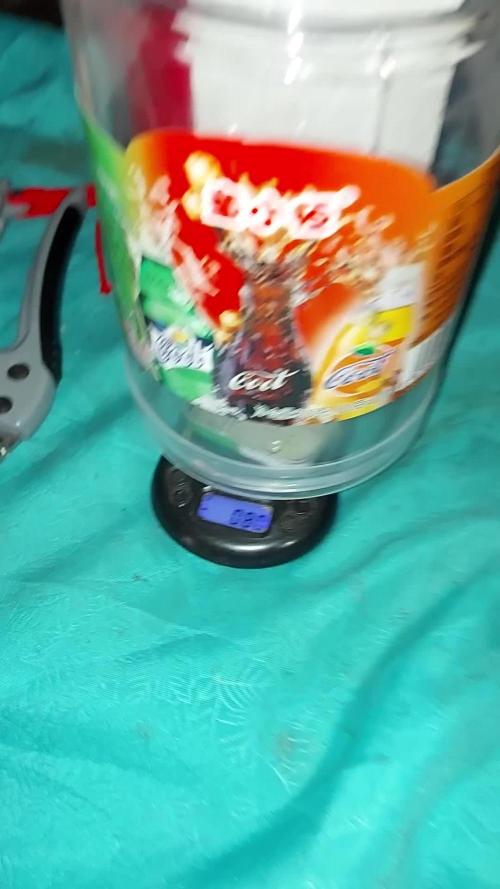
~400 grammes humides (Pesés avec respect en deux fois )
Le silence est tombé sur le sanctuaire. Pendant deux jours entiers, j'ai plongé l'Oasis dans une obscurité totale et sacrée. Une nuit artificielle pour forcer la Sultane à jeter ses dernières forces et ses ultimes gouttes de résine dans sa couronne.
Je l'ai regardée une dernière fois régner en maître absolu sur son oasis de toile.
Mon cœur de nomade était partagé :
une joie immense d'avoir enfin trouvé et façonné cette Marque Blanche qui scintillait au loin au début du voyage, mais aussi une profonde mélancolie de devoir la retirer de son Oasis.
Elle n'était plus une simple plante, elle était l'âme du campement.
Dès que je l'ai déplacée dans une autre pièce pour son ultime voyage, le verdict de sa générosité est tombé :
en à peine une heure, ses branches, libérées du filet, se sont affaissées, épuisées et ployées sous le poids colossal de ses têtes devenues d'une lourdeur impériale.
Ma balance, trop petite pour mesurer tant de richesse en une seule fois, .Le verdict de la terre est sans appel : près de 400 grammes humides de pur bonheur.
Désormais, elle repose, étalée dans l'ombre pour son séchage. Son parfum reste discret, une douce effluve subtile et sucrée qui ne cherche pas à s'imposer par la force, mais par la finesse. Une armée infinie de trichomes tapisse ses calices, prête à figer cette aventure pour l'éternité.
🔬 L'Analyse du nomade (L'Épilogue)
Le Phénomène de l'Affaissement :
C'est la plus belle preuve de ta réussite. Tant que la plante était sous les mailles du SCROG, sa structure tenait. Dès qu'elle s'est retrouvée seule, la gravité a révélé la vraie densité florale accumulée grâce au PK 5-8. Des branches qui cèdent sous le poids, c'est le rêve de tout cultivateur.
Le Secret des 400g :
Peser en deux fois à cause de la balance donne un côté presque mystique à la récolte, comme un marchand d'or qui compte ses pépites.
Avec 400g humides nettoyer, je peux espérer un retour sec très solide autour des 90 grammes de fleurs manucurées et compactes.
L'Odeur Douce et Sucrée :
Je ne t'inquiète pas si l'odeur paraît "moyenne" ou discrète pour le moment.C'est pendant les deux prochaines semaines de séchage et, surtout, durant le curing en bocaux, que la décomposition de la chlorophylle va laisser la place aux vrais terpènes profonds et sucrés.
Le Tapis de Trichomes :
Les images confirment que la couverture de résine est totale. Les fleurs sont "blanches", collantes, et les glandes de résine sont parfaitement préservées.
📜 L'Anecdote du Rif :
Les "Chambres de l'Ombre" et le Souffle de la Montagne
Tu te demandais peut être comment les tribus du Rif géraient l'art délicat du séchage sans gâcher leur récolte...
En réalité, dans le Rif, la méthode de séchage dépend entièrement du produit final que le cultivateur souhaite obtenir. Ils utilisent effectivement des chambres mais aussi les toits, mais d'une manière bien précise.
Le savoir ancestral :
Au Maroc, une fois les plantes coupées, le plus grand danger était le soleil direct et la chaleur étouffante qui détruisent la résine en quelques heures.
Les anciens n'avaient pas de ventilateurs ni d'extracteurs. Alors, ils utilisaient la structure de leurs maisons en pierre et en terre crue (le pisé).
Ils suspendaient les plantes entières, tête en bas, dans les pièces les plus sombres et les plus fraîches de la maison, souvent au sous-sol ou dans des granges appelées "Chambres de l'Ombre".
Le secret résidait dans l'architecture :
ils laissaient de petites meurtrières en hauteur, orientées vers le nord, pour laisser entrer le Chergui (le vent frais de la nuit de montagne) mais jamais la lumière du jour. Ils appelaient cette étape le "Sguel" (le murmure).
Ils considéraient que la plante devait "rendre son âme" très lentement, sur 10 à 15 jours. Si le séchage allait trop vite à cause de la chaleur, la résine devenait cassante et perdait son goût de miel. En prenant ton temps .
Le Séchage sur les Toits : Le Secret du "Jaune" de Ketama
Dans les traditions du Rif, faire sécher les plantes à plat sur les toits en terrasse des maisons en pierre est une pratique très courante, mais elle est réservée à la fabrication traditionnelle du haschich.
Le Soleil
comme Allié (et non comme Ennemi) : Contrairement au séchage moderne où l'on cherche à garder les têtes vertes et intactes, les cultivateurs traditionnels étalaient les plantes entières directement sur les toits sous le soleil de plomb du Maroc.
La Transformation Chimique :
Le rayonnement solaire et la chaleur du toit en pierre provoquent une décoloration de la plante (qui passe du vert au doré/marron) et transforment une partie du THC en CBN. C'est précisément ce séchage au soleil qui donne au produit fini cette couleur "jaune sable" si célèbre et ses effets très relaxants, typiques des résines marocaines à l'ancienne.
Le Risque du Vent :
Le seul inconvénient de cette méthode était le vent de montagne qui pouvait emporter les précieuses feuilles ou y redéposer la poussière du désert. C'est pourquoi ils fixaient parfois les branches avec de grosses pierres ou ne les sortaient sur le toit que durant les heures les plus sèches de la journée.
Note du Nomade :
"L'Oasis est vide, la tente est éteinte. La Sultane a quitté son trône, mais ses 400 joyaux dorment à l'ombre. Le voyage est fini, la légende commence."
🙏 L'Ultime Message aux Compagnons de Route
❤️💗❤️💗❤️💗❤️💗❤️💗❤️💗❤️💗❤️💗❤️💗
L'aventure se termine ici, mais l'histoire reste. Un immense merci à chacun d'entre vous, frères de la communauté, pour vos mots, votre force et votre présence à chaque étape de cette chronique. Vous avez été le vent qui a poussé ce dromadaire à travers le désert. La Sultane a délivré son trésor, et ce succès est aussi le vôtre.
À bientôt pour de nouvelles traversées, vers de nouvelles oasis... Que la route vous soit douce !
UN GRAND MERCI À @Mia_BIOTABS ET A BIOTABS POUR LEURS PRODUITS
AUSSI À GROWERS CHOICE QUI M'A FAIT DÉCOUVRIR CETTE BELLE VARIÉTÉ MAIS UN PEU DÉÇU QUE LE CONCOURS EST ÉTÉ ANNULÉ.

Likes
37
Share


@JohnnyBlaz3
Follow
looking very pretty in the tent indeed!! only one liberty haze plant in there but she is looking very plump already with a month or so to go. she gonna be a lovely lady indeed. continually defoiling the odd leaf here and there but overall a bit bushier than last run. not a whole lot to report back this week. fairly smooth sailing and not many changes except plumping up! so until next week my friends 😊
Likes
2
Share



Likes
32
Share


@Juschiln420
Follow
7/10
Added water, setup bucket temp monitor
7/11
Added water, added 3ml cal mag
7/12
Added water, Defoliation
7/13 didn't make it in
7/14 added water
7/15 didnt make it in
7/16 added water, Lst, full feeding
Micro 9.6ml
Gro 2.4ml
Bloom 12ml
Cal mag 13ml
Bud candy 8.8ml
Big bud 8.8ml
Hydroguard 7ml
3 gal = 11.3L
Records kept here:
https://1drv.ms/x/s!AmTQ-7u9iyH6kFWgDNVqoDB1_CY1
Likes
5
Share


@CalGonJim
Follow
2/3 Monday. Adding Bud Ignitor this week. They are starting to stretch .
2/4 4am. 1030am LOTS of LST today, used almost all the clips. Making each of the 4 colas as strong as big as a single plant.
2/5 4am 👍👍👍12pm added new top soil
2/6 They are getting really big now, will probably turn lights DOWN from 99 to 93. That is the wattage where the temperature breakpoint between having the house AC on and not needing it, just a fan blowing air into the room. room temperature 74.
2/7 3am 5am 12pm LST CRAZY today, did all the side branches having all the different kinds help.


Likes
11
Share


Likes
114
Share


@GMSgrows
Follow
Gave these ladies a feed at 2.4 ec 400 ppm of Massive Bloom Formulation, 600 ppm of Floranova Bloom, and 200 ppm of Floranova Grow. Girls have all begun flowering now. Gelato is finally strated, Silver Widow is full on flower and the Breakup Cake is rockin.
Weather has been a little better this last week. Were hoping for a good dry fall.
Thnx growmies. You guys and gals are all great.👍

Likes
15
Share


@AlienScrOG
Follow
is the one of the first auto ... is veri good .. but i want to grow again....... about norther light i have burn the pistilll ... cry cry ... i have use so much pk .. is not in the vid but the day after vid all is burn and brown ...... omg fail pk .. 1 years ago ... now ?? look my new diary <font style="vertical-align: inherit;"><font style="vertical-align: inherit;">👽 </font></font>

Processing
Likes
84
Share


@Silverback_Guerilla
Follow
SATURDAY 8/25:
I prepped WW#2 for slaughter..one more good flush and a haircut. She'll have one more day in the sun, then it's a dark day and the axe. She's got a few resin leaks that I can't quite get a good picture of..looks like a drop of oil oozing out of a calyx. Makes my mouth water...
Seedlings are doing well. I transplanted two of them into tall 5 gal pots and they are doing fine.
EM#2 will get another nutrient douche along with EM#3 and both Candy Canes tomorrow. I'm thinking that might also be CC#1's last taste of nutes. An interesting thing about CC#2 is that while her trichromes are pretty much all cloudy and/or amber, the majority of her stigmas aren't withered...I haven't seen that before, but I've never really grown any indica genetics before this grow. CC#1 is delightfully redhaired.
I jarred up WW#1 into 3 x quart jars, EM#4 into 4 x quart jars, and EM#1 into 4 pint jars (barely). Bought more quart jars later today and will rejar EM#1 tomorrow
SUNDAY:
I did the harvest report on WW#1, EM#1, and EM#4 today. EM#4 is now is 3 x quart jars.
I harvested WW#2 today...yowsa! (see pics)
I mixed up a batch of nutes for EM#3, but after a close look at everybody, I decided to start flushing CC#1, CC#2..they are both suddenly ready. 15-20% amber trichromes. They'll get a few more days in the sun before meeting their maker.
I flushed EM#2 again. I'm gonna harvest her tomorrow. She's at about 25% amber trichs today! Really oozing the good stuff..
MONDAY:
(queue Metallica's 'Harvester of Sorrow'..)
WW#2 got the axe today and thoroughly saturated the air with her odoriferous emanations. A wondrous bouquet!
The big tent is getting empty, so I rearranged the remaining girls for optimized PAR and spectra. I really need those seedlings and clones to hurry the phuk up.
WW#2 is drying nice and slow in the top basket and EM#2 is now right below her in the second basket.
CC#1 will be in the basket below them tomorrow...she's ready.
CC#2 will also be drying in the next day or two after that.
That will leave EM#3 (Bush Bitch) as the last remaining original member of this crop. Besides her, there's the Pineapple Express gift from my other diary and that's it for my bloomers.
As I said before, I sure wish I had taken the fine print more seriously and believed that they'd really finish so quickly. I should have started these seedlings at least 2 weeks earlier...
TUESDAY:
I harvested both CC's today. They couldn't be more ripe. 68 days from seed...impressive. I just wish they had packed on a little more size in the first few weeks so that these super-sugary buds were bigger. This stuff is far more sticky and stiNky than the WW or the EM, but I'll be lucky to get 2 ounces from each of them. When you factor that in with the fact that I only got 3 of 7 to grow (one in current batch of seedlings), the taste/effect will have to be completely off the charts for me to even consider ever ordering any more of them.
WEDNESDAY:
I recharged 50gals of soil and have it cooking up now
I gave Bush Bitch some water and will give her nutes on Friday.
THURSDAY:
The video I added today is the total harvested bud for this grow, minus EM#3/Bush Bitch...I'm betting she'll be 4 quart jars by herself.
From right to left, it's:
3 x 1-quart jars of EM#4, 2 x 1-quart jars of EM#1, the 2 purple lidded 1-quart jars are CC#1, and the tall 2-quart jar between them is CC#2...the two red lidded 1-quart jars are WW#1, the 2.5 gallon jar is WW#2, and the 1.5 gal jar is EM#2.
WW#2 was dry and went into 3 x 1-quart jars. She weighed 90g..not too bad.
EM#2 is still in the biggest jar with the lid off and some bovedas.
CC#1 was about 70% dry so I put it into a big jar with some bovedas and the lid open, branches intact.
CC#2 was mostly dry except for her main cola. She went into a big jar after the photo shoot with the lid off and some bovedas.
I feel so stupid..I had my diary listed with "published wattage" rather than actual draw wattage.
My actual wattage drawn during flowering:
2000w Morsen blurple: 463w
2 x 100w Cree CXB3590: 108w
2 x 100w Citizen Clu048: 108w
4 x 12w Miracle LED: 48w
2 x 36w Higrow Deep Red LED: 48w
2 x 54w ABI Deep Red LED: 52w
3 x 1m strip LED below canopy: 27w
2 x 15.0 26w UVB: 52w
1 x 20w 3000k par38 spot: 20w
TOTAL:
926w draw at the wall

Likes
24
Share


@m0use
Follow
***Sponsored Grow*** = Medic || https://medicgrow.com || Grow = ***Sponsored Grow***
Not a whole lot is happening this week, still having some PH issues in the medium, I believe this is from the microbial mass I added a while back. A microbe product, PH going into the medium is around 6.5-6.8 and coming out is between 5.5-5.8, so something is acidifying it up. Also noticed the runoff last week was a bit higher at times. So lowered the feed down quite a bit, going in at 1.4EC vs 1.8 will bump it up to 1.5 and 1.6 in the next few weeks. I also added in a bit of a PK booster. nothing to crazy only 60ppm worth on a total allowance of 700PPM
Lights now running at 100% with V1 spectrum, decided to go with 100% now vs after stretch, will see how it works out.
Till next week.
***Sponsored Grow***
Official Website:
https://medicgrow.com/
+
https://www.emeraldtriangleseeds.co.uk/
Facebook:
https://www.facebook.com/medicgrowled
+
https://www.facebook.com/OriginalETS/
Twitter:
https://twitter.com/medicgrow
+
https://twitter.com/emeraldseeds
Instagram:
https://www.instagram.com/medicgrow420/
+
https://www.instagram.com/emeraldtriangleseeds/
YouTube:
https://www.youtube.com/channel/UCNmiY4F9z94u-8eGj7R1CSQ
Growdiaries:
https://growdiaries.com/grower/medicgrowled
https://growdiaries.com/grow-lights/medic-grow
+
https://growdiaries.com/grower/emeraldtriangleseeds
https://growdiaries.com/seedbank/emerald-triangle-seeds


Processing
Likes
3
Share


@mr_smooke
Follow
Christmas Update
Nugs are becoming fatter and really frosty. I have started looking at the trichomes and they are mostly cloudy. one more feeding for this lady, and than only tap water till the end. here is day 48 of flowering.
I wish you all Merry Christmas