








@SolitudeCorners
Volgen
Blue Banana Cream by Mademen Genetics - Week 5 Update
VPD aim 1-1.2kPa
Continuing from the last update, this week has shown even more trichome development.
Pheno #1: Bud structure remains airy, but trichomes are steadily increasing
Pheno #2: Medium-density compact buds, showing traits reminiscent of the Banana lineage
The grow room is starting to fill with a stronger aroma as the plants enter the bud-building phase. Exciting progress ahead—thank you for following along!


@GreenthumbJacobs
Volgen
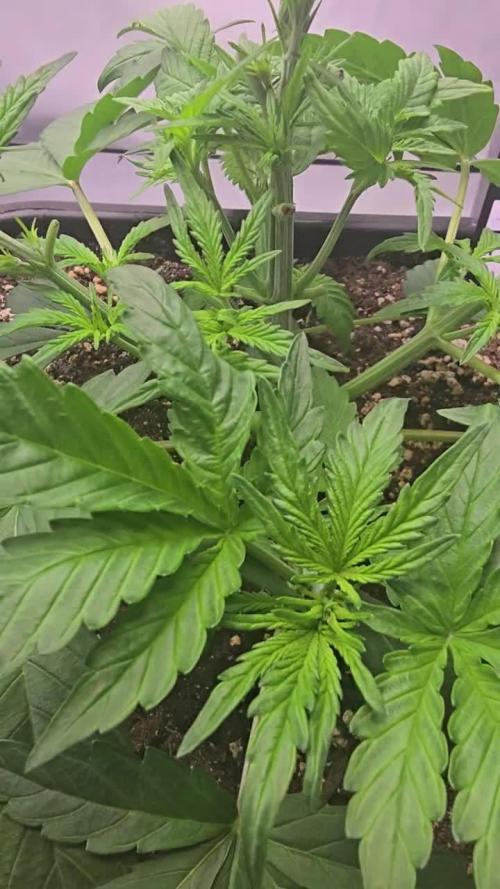
Woche 12 beginnt. Sie ist fast fertig. Eine absolute tolle Genetik!
Lässt sich super trainieren ! Geruch ist sehr stark.
Hatte noch ein bisschen calmag Probleme was durch die 300w lumatek verursacht wurde.
Aber es geht ihr gut dank plagron.
Hab die gute gespült. Die spitzen sehen aus la ob sie leichten nutriens Brand bekommen. Aber das sollte die letzten paar Tage vor der Ernte kein Problem sein.



@ThatsmyGrow
Volgen
🌱 Week 3 – Gorilla Cookies Auto Pheno Hunt
Another week down and the differences between the phenos are becoming more obvious every day 👀🔥
The environment stayed very stable this week with temperatures, humidity, and VPD remaining consistent. Because all plants are growing under the exact same conditions, it’s really interesting to see how differently each phenotype develops genetically.
📈 Current observations:
Several phenos are already reaching close to 30 cm in height
Meanwhile, some smaller phenos — especially Pheno #6 — are still around 13 cm
Leaf structure and overall plant shape continue to vary a lot between phenos
Growth vigor is clearly different from plant to plant now
💧 Feeding & maintenance:
This week the plants received their first proper feeding with around 4 liters of nutrient water.
Some phenos seem to react more sensitively to the nutrients, as a few plants are starting to show slight brown leaf tips, so I’ll keep a close eye on them over the next days 👀
I also removed more large fan leaves to improve light penetration and allow the lower branches to develop more evenly.
📊 Current environment:
Temperature stable around 26°C
Humidity staying between 63–65%
VPD maintained around 1.3 kPa
Light intensity remaining at 35%
Now I’m really curious to see when the first flowering signs will appear 🌸🔥
💬 Which pheno would you pick so far?


@ShowsWorld
Volgen
The stretch is real with this phenotype during the flower stage. The smell is something like guava but it also has the smell of like coffee beans. Everything seems to be going great I believe I solved the ph problem. Peyote is looking much better.

shorts_status_processing


@HeavensHarvest89
Volgen
Great plant man I am loving her she is growing like a champ even after all i put her thru and snapped one of her colas but all good she bounced back like nothing happened will be growing more Fast Bud strains


@HappyOne
Volgen
Very dynamic effect. Keep head clear and no stress. Crafty vaporiser effect is the best.


@Chuckwaggon420
Volgen
This clone smells killer omg hash plant/christmas/sweet/heavy skunk. It smells killer and is a decent resin coverage it looks like coming in early like this in week 3 in flower. It filled in the 18"x 24" space i had open just perfect.
She gets a heavy feed of canna nutrients @ ph of 5.6-5.7. I think staying on higher side of nutrients and back off if I see burn has been doing good on chimera run and don't tend to b hurting this clone either so full steam ahead!
Much changes coming for me new flower tent is going to help alot!
Stay up everyone
Happy boxing day all u Canadians!


@IncognitoGreenThumb
Volgen
Week 19 and it happens to be a rainy week with on and off cloud coverage which was actually beneficial to my plant but the humidity has been up due to the fact I also use a swamp cooler and if it's gonna be this humid for another couple days then I'm worried about mold developing on the buds so i think I'll break out the AC to get rid of some of that moisture in the air and maybe alternate between the two.
The AC hasn't been used once the whole grow cycle so far but living in AZ we get random storms from the monsoon season not to mention tons of dust, high winds, flash flooding which could be used to flush my plant because it needs it now if rain builds up around and gets under the green house, j/k lol. I've been thinking about buying lady bugs to get rid of all the white flies, any experience anybody, would that work?
After writing the above, I could hear the wind picking up outside and remembered that a storm was coming so I ran outside to prepare and it punched it's way through Phoenix with extremely high velocity hurricane type wind, gusting up to whatever it takes to bring large trees down or make a wooden shed door fly off with a wall of dust to the sky and then finally finishing with heavy rain. I was outside the entire storm from beginning to end, well at least until the wind died down and it was just light showers by then. Even with having my greenhouse tied down I had to hold onto it for dear life or it would have taken off like in the wizard of OZ.
Honest to god I was almost pulled off the ground or several times more onto my greenhouse when the tsunami type wind would hit, pounding me and the greenhouse from behind having to pull down while leaning back with all my weight and strength.The whole time I'm screaming for my brother who was inside to come out and hold the greenhouse so I could tie it down better because it was just coming apart trying trying to fly away or be ripped apart as storm hit us I was holding on for Amy's Green Drop's dear life. It was pretty insane and wish I had video of me doing it but just have a video a friend sent of his backyard getting hit so you can imagine that wind hitting my greenhouse.
The after math was bad 😭 the wall of the greenhouse was getting hit so hard by the wind making it press inward towards plant it snapped off in the middle one of the lower branches making the two buds on the end half hanging there from a 90 degree angle from branch so I knew there was no way to support it back in place enough to heal itself so I clipped it off and started drying it. One other next to it got bent up pretty bad so I'm trying to LST it back to place. The storm also killed my swamp cooler somehow, I guess it's because it has a lot of electronic components on top that was soaked from the wind the rain came from the side, I know, you'd think a swamp cooler could get wet.
Now I'm stuck using only my A/C and a humidifier to control moisture and temp and I'm worried it's gonna be pretty hard only using AC in such a small greenhouse as it takes time to find the right ratio of intake and outtake air but can only open greenhouse to mix in so much hot dry air, so starting it was getting down into the high 60's, and I have to figure something out because I can't let it get that cold in there for the last few weeks. I'm almost ready to call it quits If I can't find an equilibrium with AC and humidifier, and if there are anymore storms on the way.
Next time I'm getting a bigger sturdier greenhouse that goes into the ground and has hard clear walls and roof, other than the recent storm and excessive sunlight finding the right shading it's been very beneficial doing the indoor/outdoor combo grow and would recommend it as you can live in any weathered extreme hot/cold climate and still grow outside,


@Baboon_Grows
Volgen
Did 10l two days ago and it’s bone dry, from 5 to 10l every two days or less ,
Just a rain water this whole week .
She stacking nice , heat still burning some terps but it’s not as bad as 28C+
Clones recovered too and doing somewhat ok , glad they had little stunt so I have time to finish mom off and then repot them


@Roberts
Volgen
Fruity Pebbles autoflower #2 is doing great. Once she got into the solution, she exploded in growth. She just got her roots pruned, lst, and selective defoliation done to her. She is growing in the Athena blended line nutrition, under the Medic Grow Mini Sun-2. Everything is looking great, and ready for another week. Thank you Athena, Medic Grow, and I Love Growing Marijuana. 🤜🏻🤛🏻🌱🌱🌱
Thank you grow diaries community for the 👇likes👇, follows, comments, and subscriptions on my YouTube channel👇. ❄️🌱🍻
Happy Growing 🌱🌱🌱
https://youtube.com/channel/UCAhN7yRzWLpcaRHhMIQ7X4g

shorts_status_processing


@GreenHouseLab
Volgen
Harvested Z1 (Zkittlez 1) at 95 days and Z2 (Zkittlez 2) at 90 days, At week 11 the trichomes were 90% milky with 50% orange pistils. They both received a minimum 2 full water flush, what I mean by that is a good 20% runoff to get all that built up out of the fabric pots.
Note to self. 7 Gallon pots were unnecessary for these autos, 5 Gallons would be more than sufficient possibly even 3 Gallon.
I believed the yield would be more considering how dense these buds are. I had forgotten Z2 had been massacred throughout this grow, unintentional topping as she was starting to flower and the carbon filter which fell on the plant damaging the top bud and other smaller bud sites. Taking these into consideration and after weighing Z1 I am very impressed by Fastbudz genetics especially under 13 weeks! I added a video of Z1 & Z2 dry weight to show transparency of my end results for this grow. I think better internodal spacing could allow for better bud development hence a better yield. Overall extremely pleased.
Z1 = 97gr
Z2= 61gr
Density of Buds: 10/10
Resin: 9/10
Smell: 10/10
Dry Time and Cure for Smoke Report: 6 days (are now placed in Masson jars open lid for the next 2 days then 30 min x2/day) at Relative Humidity 60% // Temp: 72° F
Smoke Report : High THC can be felt but not overpowering. Easily tell its heavier on the Indica side - will only know for sure once I try Zkittlez pheno 1.
Curing will take some time. Generally I find 8 weeks minimum tends to give me a good quality product. I will be burping the mason jars twice a day for the next 2 weeks or so and add a 58% Bodeva pack. I prefer 58% vs 62% because I tend to use a Pax vaporizer.
00


@Ultraviolet
Volgen
Yellow butterfly came to see me the other day; that was nice.
Starting to show signs of stress on the odd leaf, localized isolated blips, blemishes, who said growing up was going to be easy!
Smaller leaves have less surface area for stomata to occupy, so the stomata are packed more densely to maintain adequate gas exchange. Smaller leaves might have higher stomatal density to compensate for their smaller size, potentially maximizing carbon uptake and minimizing water loss. Environmental conditions like light intensity and water availability can influence stomatal density, and these factors can affect leaf size as well. Leaf development involves cell division and expansion, and stomatal differentiation is sensitive to these processes. In essence, the smaller leaf size can lead to a higher stomatal density due to the constraints of available space and the need to optimize gas exchange for photosynthesis and transpiration. In the long term, UV-B radiation can lead to more complex changes in stomatal morphology, including effects on both stomatal density and size, potentially impacting carbon sequestration and water use. In essence, UV-B can be a double-edged sword for stomata: It can induce stomatal closure and potentially reduce stomatal size, but it may also trigger an increase in stomatal density as a compensatory mechanism. It is generally more efficient for gas exchange to have smaller leaves with a higher stomatal density, rather than large leaves with lower stomatal density. This is because smaller stomata can facilitate faster gas exchange due to shorter diffusion pathways, even though they may have the same total pore area as fewer, larger stomata. Leaf size tends to decrease in colder climates to reduce heat loss, while larger leaves are more common in warmer, humid environments. Plants in arid regions often develop smaller leaves with a thicker cuticle and/or hairs to minimize water loss through transpiration. Conversely, plants in wet environments may have larger leaves and drip tips to facilitate water runoff. Leaf size and shape can vary based on light availability. For example, leaves in shaded areas may be larger and thinner to maximize light absorption. Leaf mass per area (LMA) can be higher in stressful environments with limited nutrients, indicating a greater investment in structural components for protection and critical resource conservation. Wind speed, humidity, and soil conditions can also influence leaf morphology, leading to variations in leaf shape, size, and surface characteristics. Small leaves: Reduce water loss in arid or cold climates.
Environmental conditions significantly affect gene expression in plants. Plants are sessile organisms, meaning they cannot move to escape unfavorable conditions, so they rely on gene expression to adapt to their surroundings. Environmental factors like light, temperature, water, and nutrient availability can trigger changes in gene expression, allowing plants to respond to and survive in diverse environments.
Depending on the environment a young seedling encounters, the developmental program following seed germination could be skotomorphogenesis in the dark or photomorphogenesis in the light. Light signals are interpreted by a repertoire of photoreceptors followed by sophisticated gene expression networks, eventually resulting in developmental changes. The expression and functions of photoreceptors and key signaling molecules are highly coordinated and regulated at multiple levels of the central dogma in molecular biology. Light activates gene expression through the actions of positive transcriptional regulators and the relaxation of chromatin by histone acetylation. Small regulatory RNAs help attenuate the expression of light-responsive genes. Alternative splicing, protein phosphorylation/dephosphorylation, the formation of diverse transcriptional complexes, and selective protein degradation all contribute to proteome diversity and change the functions of individual proteins.
Photomorphogenesis, the light-driven developmental changes in plants, significantly impacts gene expression. It involves a cascade of events where light signals, perceived by photoreceptors, trigger changes in gene expression patterns, ultimately leading to the development of a plant in response to its light environment.
Genes are expressed, not dictated! While having the potential to encode proteins, genes are not automatically and constantly active. Instead, their expression (the process of turning them into proteins) is carefully regulated by the cell, responding to internal and external signals. This means that genes can be "turned on" or "turned off," and the level of expression can be adjusted, depending on the cell's needs and the surrounding environment. In plants, genes are not simply "on" or "off" but rather their expression is carefully regulated based on various factors, including the cell type, developmental stage, and environmental conditions. This means that while all cells in a plant contain the same genetic information (the same genes), different cells will express different subsets of those genes at different times. This regulation is crucial for the proper functioning and development of the plant.
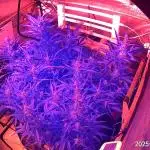
When a green plant is exposed to red light, much of the red light is absorbed, but some is also reflected back. The reflected red light, along with any blue light reflected from other parts of the plant, can be perceived by our eyes as purple.
Carotenoids absorb light in blue-green region of the visible spectrum, complementing chlorophyll's absorption in the red region. They safeguard the photosynthetic machinery from excessive light by activating singlet oxygen, an oxidant formed during photosynthesis. Carotenoids also quench triplet chlorophyll, which can negatively affect photosynthesis, and scavenge reactive oxygen species (ROS) that can damage cellular proteins. Additionally, carotenoid derivatives signal plant development and responses to environmental cues. They serve as precursors for the biosynthesis of phytohormones such as abscisic acid () and strigolactones (SLs). These pigments are responsible for the orange, red, and yellow hues of fruits and vegetables, while acting as free scavengers to protect plants during photosynthesis.
Singlet oxygen (¹O₂) is an electronically excited state of molecular oxygen (O₂). Singlet oxygen is produced as a byproduct during photosynthesis, primarily within the photosystem II (PSII) reaction center and light-harvesting antenna complex. This occurs when excess energy from excited chlorophyll molecules is transferred to molecular oxygen. While singlet oxygen can cause oxidative damage, plants have mechanisms to manage its production and mitigate its harmful effects.
Singlet oxygen (¹O₂) is considered a reactive oxygen species (ROS). It's a form of oxygen with higher energy and reactivity compared to the more common triplet oxygen found in its ground state. Singlet oxygen is generated both in biological systems, such as during photosynthesis in plants, and in cellular processes, and through chemical and photochemical reactions. While singlet oxygen is a ROS, it's important to note that it differs from other ROS like superoxide (O₂⁻), hydrogen peroxide (H₂O₂), and hydroxyl radicals (OH) in its formation, reactivity, and specific biological roles. Non-photochemical quenching (NPQ) protects plants from damage caused by reactive oxygen species (ROS) by dissipating excess light energy as heat. This process reduces the overexcitation of photosynthetic pigments, which can lead to the production of ROS, thus mitigating the potential for photodamage. Zeaxanthin, a carotenoid pigment, plays a crucial role in photoprotection in plants by both enhancing non-photochemical quenching (NPQ) and scavenging reactive oxygen species (ROS). In high-light conditions, zeaxanthin is synthesized from violaxanthin through the xanthophyll cycle, and this zeaxanthin then facilitates heat dissipation of excess light energy (NPQ) and quenches harmful ROS.
The Issue of Singlet Oxygen!!
ROS Formation: Blue light, with its higher energy photons, can promote the formation of reactive oxygen species (ROS), including singlet oxygen, within the plant.
Potential Damage: High levels of ROS can damage cellular components, including proteins, lipids, and DNA, potentially impacting plant health and productivity.
Balancing Act: A balanced spectrum of light, including both blue and red light, is crucial for mitigating the harmful effects of excessive blue light and promoting optimal plant growth and stress tolerance.
The Importance of Red Light:
Red light (especially far-red) can help to mitigate the negative effects of excessive blue light by:
Balancing the Photoreceptor Response: Red light can influence the activity of photoreceptors like phytochrome, which are involved in regulating plant responses to different light wavelengths.
Enhancing Antioxidant Production: Red and blue light can stimulate the production of antioxidants, which help to neutralize ROS and protect the plant from oxidative damage.
Optimizing Photosynthesis: Red light is efficiently used in photosynthesis, and its combination with blue light can lead to increased photosynthetic efficiency and biomass production.
In controlled environments like greenhouses and vertical farms, optimizing the ratio of blue and red light is a key strategy for promoting healthy plant growth and yield.
Understanding the interplay between blue light signaling, ROS production, and antioxidant defense mechanisms can inform breeding programs and biotechnological interventions aimed at improving plant stress resistance. In summary, while blue light is essential for plant development and photosynthesis, it's crucial to balance it with other light wavelengths, particularly red light, to prevent excessive ROS formation and promote overall plant health. Oxidative damage in plants occurs when there's an imbalance between the production of reactive oxygen species (ROS) and the plant's ability to neutralize them, leading to cellular damage. This imbalance, known as oxidative stress, can result from various environmental stressors, affecting plant growth, development, and overall productivity.
Causes of Oxidative Damage: Abiotic stresses: These include extreme temperatures (heat and cold), drought, salinity, heavy metal toxicity, and excessive light. Biotic stresses: Pathogen attacks and insect infestations can also trigger oxidative stress. Metabolic processes: Normal cellular activities, particularly in chloroplasts, mitochondria, and peroxisomes, can generate ROS as byproducts. Certain chlorophyll biosynthesis intermediates can produce singlet oxygen (1O2), a potent ROS, leading to oxidative damage. ROS can damage lipids (lipid peroxidation), proteins, carbohydrates, and nucleic acids (DNA). Oxidative stress can compromise the integrity of cell membranes, affecting their function and permeability. Oxidative damage can interfere with essential cellular functions, including photosynthesis, respiration, and signal transduction. In severe cases, oxidative stress can trigger programmed cell death (apoptosis). Oxidative damage can lead to stunted growth, reduced biomass, and lower crop yields.
Plants have evolved intricate antioxidant defense systems to counteract oxidative stress. These include: Enzymes like superoxide dismutase (SOD), catalase (CAT), and various peroxidases scavenge ROS and neutralize their damaging effects. Antioxidant molecules like glutathione, ascorbic acid (vitamin C), C60 fullerene, and carotenoids directly neutralize ROS. Developing plant varieties with gene expression focused on enhanced antioxidant capacity and stress tolerance is crucial. Optimizing irrigation, fertilization, and other management practices can help minimize stress and oxidative damage. Applying antioxidant compounds or elicitors can help plants cope with oxidative stress. Introducing genes for enhanced antioxidant enzymes or stress-related proteins over generations.
Phytohormones, also known as plant hormones, are a group of naturally occurring organic compounds that regulate plant growth, development, and various physiological processes. The five major classes of phytohormones are: auxins, gibberellins, cytokinins, ethylene, and abscisic acid. In addition to these, other phytohormones like brassinosteroids, jasmonates, and salicylates also play significant roles.
Here's a breakdown of the key phytohormones:
Auxins: Primarily involved in cell elongation, root initiation, and apical dominance.
Gibberellins: Promote stem elongation, seed germination, and flowering.
Cytokinins: Stimulate cell division and differentiation, and delay leaf senescence.
Ethylene: Regulates fruit ripening, leaf abscission, and senescence.
Abscisic acid (ABA): Plays a role in seed dormancy, stomatal closure, and stress responses.
Brassinosteroids: Involved in cell elongation, division, and stress responses.
Jasmonates: Regulate plant defense against pathogens and herbivores, as well as other processes.
Salicylic acid: Plays a role in plant defense against pathogens.
1. Red and Far-Red Light (Phytochromes):
Red light:
Primarily activates the phytochrome system, converting it to its active form (Pfr), which promotes processes like stem elongation and flowering.
Far-red light:
Inhibits the phytochrome system by converting the active Pfr form back to the inactive Pr form. This can trigger shade avoidance responses and inhibit germination.
Phytohormones:
Red and far-red light regulate phytohormones like auxin and gibberellins, which are involved in stem elongation and other growth processes.
2. Blue Light (Cryptochromes and Phototropins):
Blue light:
Activates cryptochromes and phototropins, which are involved in various processes like stomatal opening, seedling de-etiolation, and phototropism (growth towards light).
Phytohormones:
Blue light affects auxin levels, influencing stem growth, and also impacts other phytohormones involved in these processes.
Example:
Blue light can promote vegetative growth and can interact with red light to promote flowering.
3. UV-B Light (UV-B Receptors):
UV-B light:
Perceived by UVR8 receptors, it can affect plant growth and development and has roles in stress responses, like UV protection.
Phytohormones:
UV-B light can influence phytohormones involved in stress responses, potentially affecting growth and development.
4. Other Colors:
Green light:
Plants are generally less sensitive to green light, as chlorophyll reflects it.
Other wavelengths:
While less studied, other wavelengths can also influence plant growth and development through interactions with different photoreceptors and phytohormones.
Key Points:
Cross-Signaling:
Plants often experience a mix of light wavelengths, leading to complex interactions between different photoreceptors and phytohormones.
Species Variability:
The precise effects of light color on phytohormones can vary between different plant species.
Hormonal Interactions:
Phytohormones don't act in isolation; their interactions and interplay with other phytohormones and environmental signals are critical for plant responses.
The spectral ratio of light (the composition of different colors of light) significantly influences a plant's hormonal balance. Different wavelengths of light are perceived by specific photoreceptors in plants, which in turn regulate the production and activity of various plant hormones (phytohormones). These hormones then control a wide range of developmental processes.


@SpaceGorilla_01
Volgen
This week has been amazing really see the love and effort put into these girls the whole garden is taking shape very fast daily could not have done it without Royal Qween Seeds big shout out to them 1st seed company I've ever used and will continue to have RQS in my garden somewhere for future grows and shout out to spider farmer - living soils - future garden-spacehydro - UK skunkworks -
could not be were I am now without these guys


@Bruno_The_Stoner
Volgen
The best taste under the sun, great color of buds, unforgettable gorillas for me;) After quite a long fight with high temperatures and lack of support in the form of boosters, I am happy with the final result.


@Rock_n_Roll_Randy
Volgen
By far the best fertilizer products 👍🤘
www.mars-hydro.com
www.marshydroled.ca
PROMO CODE: rocknroll
Instagram: @marshydropenny
VISIT THE MARS HYDRO STORE AT:
@marshydro_aliexpress
BREEDERS AND SEEDS:
DIVINE SEEDS:
MAZAR, OPIUM, WHITE WIDOW, OG KUSH, PABLO ESCOBAR, DIVINE INDICA.
AUTO WHITE WIDOW
AUTO PABLO ESCOBAR
AUTO WHITE RUSSIAN
AUTO FRACTAL
AUTO MONTREAL
AUTO OPIUM
AUTO KABUL
AUTO MAZAR.
WEEDSEED EXPRESS:
GREEN CRACK, GHOST TRAIN HAZE, LITHIUM OG, CHEESE.
DOCTORS CHOICE:
DC KUSH, AUTO NIAGARA, AUTO ROCK MACHINE.
EXOTIC SEEDS:
HIPPIE BERRY, MALASANA GELATO, EXOTIC ANIMAL.
GENE/MEME SEEDS:
BLACK HELL.
ORIGINAL SENSIBLE SEEDS:
PURPLE PUNCH COOKIES, WEDDING CAKE, PURE KUSH, GORILLA COOKIES.
SWEET SEEDS:
BLACK JACK, GORILLA GIRL, SWEET ZKITTLES.
EMERALD TRIANGLE SEEDS:
GORILLA GLUE, MASTODON KUSH.
SEEDSMAN SEEDS:
BLACK SUGAR, PEYOTE FORUM, PEYOTE WIFI, BADAZZ COOKIES OG, PURPLE GHOST CANDY, STRAWBERRY BANANA GRAPE, L.A. PEYOTE KUSH, PEYOTE WIFI CBD, FUEL DOG, CRITICAL PURPLE KUSH.
AMSTERDAM MARIJUANA SEEDS:
GIRL SCOUT COOKIES EXTREME, GREEN CRACK.
QUEBEC CANNABIS SEEDS:
BRUCE BANNER, GREEN CRACK, QUEBEC CBD 20:1.
I 💚 GROWING MARIJUANA:
SKYWALKER OG, BANANA KUSH, CBD BLUEBERRY
https://growdiaries.com/grower/rock-n-roll-randy
https://greenbuzzliquids.com/
#greenbuzzliquids
@GreenBuzzLiquids
https://greenbuzzliquids.com/en/shop/
PROMO CODE: rocknroll... 15% off
JOIN THE GROW DIARIES COMMUNITY TO TRACK GROWS, MEET GROWERS, ASK AND ANSWER GROW QUESTIONS, LEARN ABOUT LIGHTS, TENTS, FERTILIZER AND SEED BREEDERS
@SecretHerb-Sanctuary
Volgen
Leider hat mir diese Woche die Zeit etwas gefehlt, um mich etwas ausgiebiger um mein Mädchen zu kümmern.
So konnte sie in Ruhe noch etwas wachsen und sich auf die bevorstehenden Strapazen vorbereiten,
indem sie ihr Wurzelwerk noch mehr ausbilden konnte und etwas an Größe zulegen konnte.
Das ist auch gar nicht schlimm, da sie sowieso getoppt wird...


@dirty_jay
Volgen
I think I'm getting real close to harvest. I'm fairly nervous about the drying and curing. Think I'm mostly going to use brown paper bags as I'm not sure I can control the humidity well enough in my grow space. The last 4 rounds of watering I've given nutes twice. Usually I go 6 cycles of watering fertalizing twice. Maybe this too was a bad idea and I'm going to start flushing soon anyway. Possibly one more round of nutes in a couple days.


@Wenz004
Volgen
Lets start new experiment
Try to minimize effort and No1 will get Bionova...only 2 different bottles...at veg only one
No2 will get the full range from CANNA
Of course both will get some calmag, too.
Nutrients support will start at week one...with low ec 0.7 -0.8...will need destiled water as well


@Kevin_grows_hard
Volgen
A huge thank you to AC Infinity! I was the lucky winner of their brand new, just released, ECO FRIENDLY Refillable carbon filter! No more wasting the entire unit when it's not quite cutting it anymore, Available NOW in two different sizes for your convenience on:
THE AC INFINITY WEBSITE https://acinfinity.com/hydroponics-growers/ventilation/refillable-carbon-filters/
As well as on the AC INFINITY STORE PAGE at:
https://www.amazon.com/acinfinity
While you're there make sure you check out the rest of the world class lineup presented to you by AC Infinity and proud supporter Kevin_grows_hard and the GrowAddicts family.
AC Infinity,
There Quality is to infinity and beyond.

