


Likes
Comments
Share


@Wastent91
Follow
Allora, come avete potuto vedere con i vostri occhi, i questa ragazza ha avuto un sacco di problemi fin dall inizio, ha avuto stress da calore, stress da condizioni non stabili come avrei voluto di umidità /temperatura, ma nel complesso è uscita una ganja, un prodotto automedicante davvero interessante, da sperimentare prossimamente con attenzioni migliori! Purtroppo non ero abituato a gestire così tante oaintae in uno spazio così ridotto , al prossimo ciclo manderò in fioritura una settimana prima, altrimenti mi ritroverò con dei mostri un bel po' difficili da gestire in una box come la mia , ma devo dire che sono rimasto davvero sorpreso dei risultati che sono riuscito a raggiungere, merito della mia sconfinata passione per questa meravigliosa pianta magica, e anche grazie a voi che mi seguite! Ne vedrete delle belle prossimamente! Un buon 420 a tutti voi!, fumate e state tranquilli! 💪😸😽💨

Likes
4
Share


@FredFlintstoned
Follow
Harvest was a longggg sticky process. Took me a good 3 hours just one plant and i can trim pretty fast. Smell was euphoric and i wanted to shove it all up my nose. I instantly pressed a few grams the day it finished drying to taste it i couldn’t wait.
Likes
2
Share

@RebelSeedBank
Follow
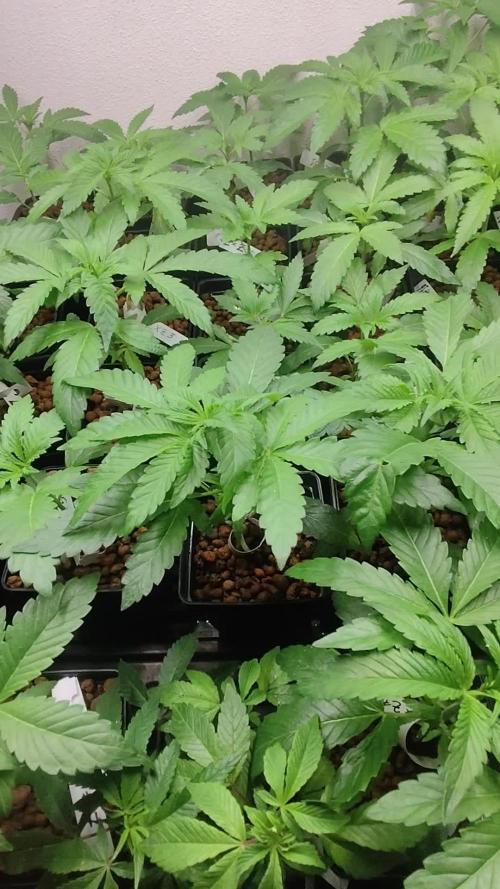
Week 7 il phenohunting procede bene
35piante tra cui #1 e #15 stanno mostrando una vigorosita esplosiva 5/5
N4 e 6 4/5
N23 3/5
Ma non scarto le altre...
Profili terpenici e flawor sono la mia priorità
Processing
Likes
7
Share


@Learntogrow818
Follow
Autos transferred to 1gl pots.. Looking good so far.. Going into 4 weeks and soon ready for LST. 🌱🎋


Likes
13
Share


@Zegr8
Follow
Day 31 - omg more calcium deficiency sings, unbelievable!!! The liquid calcium I’ve bought suggests 5ml/L per week, this is the second time this week I’m supplementing it.
I did major bending this morning, almost everything jumped on square, it took me almost two hours.
I broke two small shootings in the process, RIP
Day 33
Reservoir refill, in 20L:
Megacrop A 9g
Megacrop B 11g
Epsom 4g
Gypsum 6g
Sulfuric acid 6,5ml

Likes
4
Share


@Finsfan
Follow
I did a heavy defoliation with the green crack for the first time.. the first 3 pics are pre- and the last 3 pics are post-defoliation.
Definitely better air flow now as well as more "tops" being seen.
Tomorrow going to do the durban.. update w more pics then.


Likes
5
Share


@Crackfamily18
Follow
Muy bien buenos resultados ,olvidaba comentar es mi primer cultivo .


Likes
Comments
Share

@Gardens_of_Of
Follow
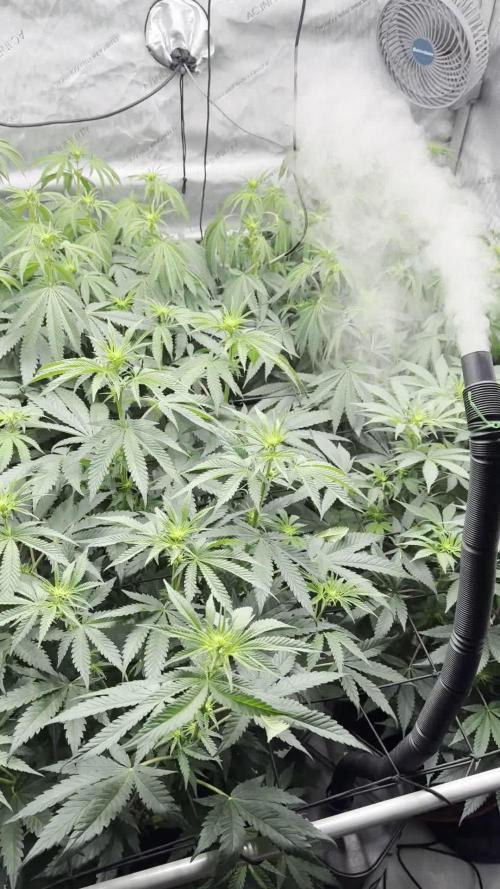
The second week of flowering has come to an end. This week also included Mary Jane, which was as much fun as ever and a welcome break before getting back to the daily routine in the grow room.
The weather was quite rainy throughout the week, making it a challenge to keep the relative humidity below 60%. Fortunately, this is not a major concern at this stage of flowering, but I will continue to monitor it closely as the buds begin to develop and the risk of mold gradually increases.
The feeding schedule remains unchanged. I continue to apply Bio Enhancer every two weeks, along with a weekly dose of Cal-Mag to support healthy growth. Whether the exceptional vigor is the result of the worm humus I incorporated during Week 5 of the vegetative stage or simply the genetics of these cultivars, the plants have been growing explosively. Their response has been outstanding, and the canopy has now filled approximately 85–90% of the available space.
Gelato remains slightly smaller than the other plants, but she continues to develop healthy bud sites throughout the canopy. Although she is less vigorous in terms of stretch, she appears to be thriving in her own way and keeping pace where it matters most.
Overall, everything is progressing exactly as hoped. The plants look healthy, the canopy is nearly full, and the garden is well positioned for the weeks ahead as flower development begins to accelerate.






Likes
14
Share


Likes
14
Share


@goeser
Follow
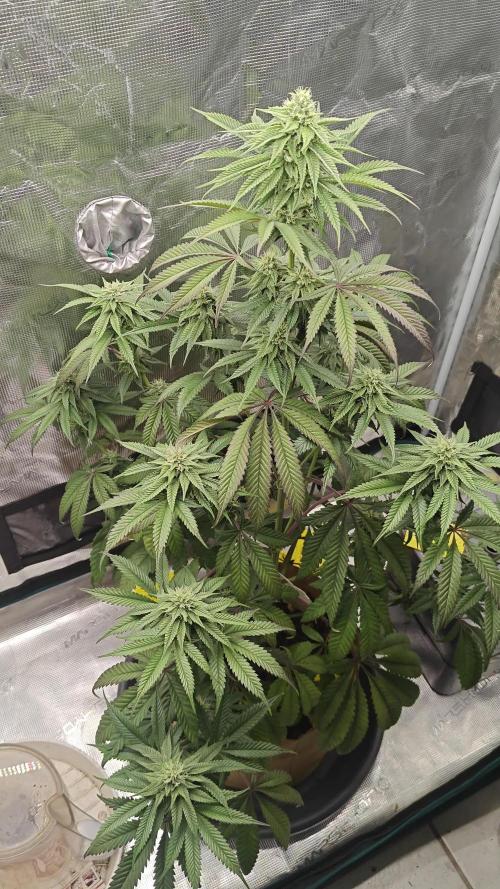
08.11.2020 | Finally it looks like the ladies are starting to grow
_________
10.11.2020
Maybe a bit to „early“ but because they are autos i prefer them to be as early as possible in the big pots. 11Liter pots.
______________
14.11.2020
girls starting to grow nice. also started with biobizz bio grow 2ml/l.

Likes
3
Share


@The_Lonely_Farmer
Follow
This diary will be solely too showcase as I go along also too help me keep track here and there when needed.
Not all will be correct or down too perfection but is still a journey you can join along with 🌱
Gifted these great beans from across the water and glad to finally see them pop through the soil 💚

Likes
31
Share


@Chucky324
Follow
Hello. Got the plants into the main grow room.
There is 2 videos . In the first I just sit in the room quitly and turn the camera. you get a sense :) of what it's like in there. In the second I try to describe what's in the room, equipment and maybe a new technique. With the tomato cages I use, and needing the plant to slow down, I twist the stock into a large figure 8. Eventually I take off what is on the lower part of the 8, and just work the top of the 8.
About 2 weeks in veg in this room. Then I take clones of everything before I switch to flower.
>Carbon dioxide enhancement: I had to make that choice 20 years ago. I could, rent a tank and have my name on a list, at the gas store. Or make my own. They didn't have the small propane tanks like they do today for the blue flame you get when you burn it. I decided on a kerosene lamp burning down as low as it could be without going out. It makes a half blue and half yellow flame. I vent constantly so the small amount of carbon monoxide is not a problem. For the first week you can smell it a bit, but the smell disappears after that. I light the lamp in the morning and put it out at lights out (unless it's bed time). It needs to be put in a place in the room that cant get knocked over (pets, children, ?). I try to use extra attention whenever I use it. It can burn down the place. Be careful Please.
>About 17 years ago I thought I'd lower my table by knocking a hole in the cement and dropping my 10 gallon reservoir more. I was able to lower it by 16 inches. Still have to watch the height of some plants though, it worked out well. Watch the video.
> Air cleaner: The reason I got a big 8 inch exhaust fan was, I had a bout of powder mildew and needed better a exhaust system. When I plugged it in there was too much air moving. I phoned and asked and the salesman said that a dimmer switch wasn't a good idea. I put one on anyway. Works great. I have the fan barely on in the winter and about half way on in the middle of the summer. I haven't had any powdery mildew since. About 12 years ago I bought a good air cleaner. An ORECK, It has electrified plates that zap any organic particle or spore that come between the plates. Use to grow a Northern Lights that got 6 to 8 ounces per harvest, it grew big buds. Buds as big as my forearm. I had problems with gray mold attaching the buds. But none since I bought the air cleaner. Ya learn as you go.
Likes
Comments
Share


@eldruida_lamota
Follow
Vamos familia, actualizamos la tercera semana de floración de estas Granny’s Home de Seedstockers, salieron las 2 de 3, 66% ratio éxito.
Aplicamos varios productos de Agrobeta, que son increíbles para aportar una buena alimentación a las plantas.
Temperatura y humedad dentro de los rangos correctos dentro de la etapa de floración.
La tierra utilizada es al mix top crop, por cambiar.
De 2 ejemplares me quede con los 2 para completar el indoor, también cambie el fotoperiodo a 12/12 y aplique una poda de bajos, se ven bien sanas las plantas, tienen un buen color progresan a muy buen ritmo por el momento, las flores están empezando a formarse, hasta aquí todo.
Agrobeta:
https://www.agrobeta.com/agrobetatiendaonline/36-abonos-canamo
Hasta aquí todo, Buenos humos 💨💨💨.
Likes
6
Share


@dank604
Follow
Looking good but I'm hoping the smaller colas beef up a bit more, makes me worry about the yield. Surprised to see ambers but I'll take it as a good sign.
Good news is my tent and light arrive tomorrow! Just a 2x2x4 and a mars ts1000 but I'm really looking forward to growing in it. I plan to grow two 3-gallon pots at a time, autoflowers of course! Looking forward to having more room to work with instead of just the bucket and about 12" diameter that I've had my first 2 grows in. Happy growing y'all! 😎
Likes
4
Share

@MaxWax
Follow
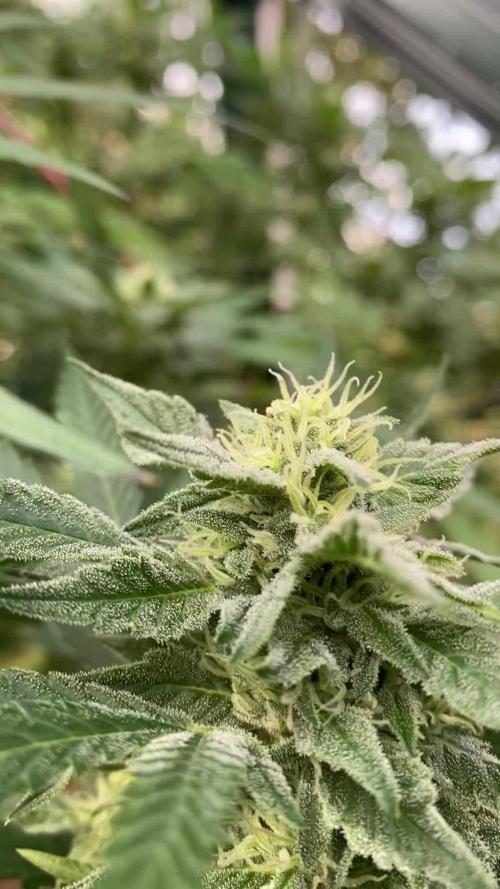
The plant is still doing well, but I spotted some spider mites :-/ Luckily, it’s still in the early stages. I’ve already bought and placed some predatory mites, so hopefully, they will take care of the problem. Other than that, she is already smelling extremely fruity and is getting super sticky! 🍇❄️

Likes
3
Share


@RainerWinklerGrow
Follow
Forgot to document further, this is all i had before harvest, harvested around week 11 of flower