


Likes
Comments
Share


@ScouseCityLX
Follow
Week 7 we can see the beauty behind exotic genetics creation. Strawberry candy terps present heavily at this point.

Likes
48
Share


@AsNoriu
Follow
Day 99. Girls are superb, as always too thin, too lanky, but in reality its million of buds and i am more than happy ! ;))
Last feed in the middle of week without any BioGrow. Then only water.
In plans 24-25 of May is chop day, thinking to defoliate more a week before chop.
Day 103. Girls are pumping and fading, some are fading ;))))) All 4 Runtz most green, but Mini and Frosty looks like almost ready, they are a week upfront with others. Monster Blue Dream eats herself like no-one else, she is fading fast, loads of nuggy, frosty buds, but i will push all to the same day, some trees will be for day smoke, some for crash out evenings ;)))
Day 105. Girls got last light feed , we are on final stretch !
Happy Growing !

Likes
12
Share


@Purrple_Haze
Follow
Stretch Mystery & Waiting Game 🌱🕵️♂️
This week’s been all about patience and potential. We’re technically in Bloom Week 2, but our little mystery queen is still holding her cards close—no visible pistils yet, even though her structure and energy say she’s gearing up for something big. 🌿✨
That said, the stretch is definitely on. She’s reaching higher each day, and those side branches are starting to fan out beautifully. The symmetry is looking solid, and she seems right on track—even if she's taking her sweet time to show her true identity. 👀
Same feeding routine, steady rhythm:
🔸 BioBizz Grow, Bloom, TopMax + CalMag + Alg-a-Mic
🔸 Homemade compost tea, applied two days post-feed
🔸 Effective Microorganisms added 48h later
🔸 Silica spray every 3 days for added resilience
🔸 pH holding steady at 6.55, EC at a gentle 1400 µS/cm
She’s been soaking up plenty of sun and dancing in the breeze—no signs of pests or stress. Just one healthy, mystery-laced autoflower doing her thing at her own pace. 🌀
Let’s see what the next few days bring. Hopefully, we’ll spot some pistils soon—until then, I’m enjoying the ride. 🌸💫

Likes
9
Share

@MistaOC
Follow
29.08.
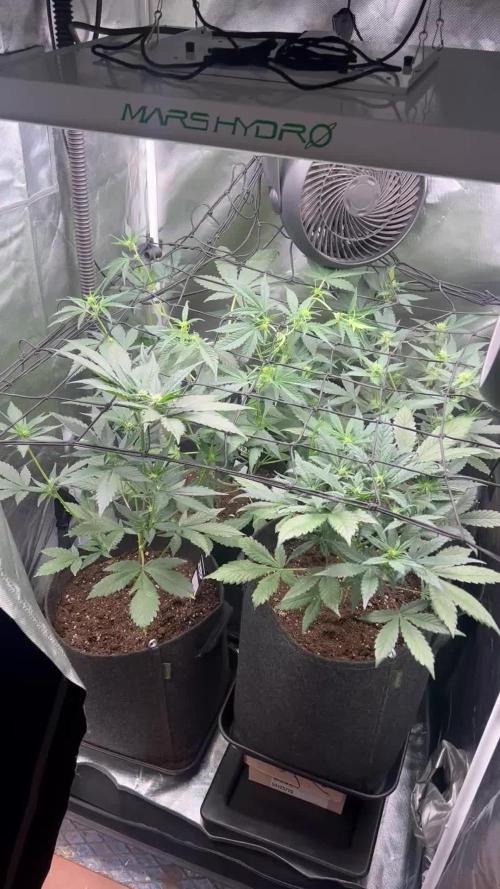
Update – Day 31
• The flip is complete: all plants have now officially transitioned into flowering.
• Differences in genetics are clearly visible – some plants are taller and more stretched, while others remain more compact.
• Despite these variations, all ladies are in excellent health, showing strong growth and vibrant green leaves.
⸻
Pest Situation
• The thrips problem continues to improve since the nematodes were applied.
• While there are still a few thrips present, the overall pressure is noticeably reduced.
• If necessary, a second round of nematodes will be considered to fully bring the situation under control.
⸻
Notes & Outlook
• The start of the flowering phase looks very promising, with all plants well-prepared for the next stretch.
• Structural differences between the phenotypes may result in an interesting variety in bud formation later on.
• Everything is running smoothly overall – healthy growth, steady development, and pests slowly being pushed back.
• Once again, a big thank you to Biotabs for keeping this grow simple and effective with their Only-Water nutrient system.
⸻
🌱 Day 31 – the flowering stage has begun: healthy plants, genetics showing their traits, and thrips slowly but surely coming under control.

Likes
23
Share


@Ezzjaybruh
Follow
Chugging along.
Much better fertilization rate than expected. All looking good up and down each branch. Almost all budsites are stacked with seeds even the lower ones
Moved to different tent cuz original one was a damn mess with plant matter and whatnot on the floor.
Only one that looks possibly behind us the PotG. I just think it’s a matter of not having seeds busting out the bracts quite like the others.
Very happy with the results
Check out previous weeks for procedure information. I’ll add them to each with soon. If not showing now go back to first couple weeks of the diary to see specifics on what I used, and how.


Likes
19
Share


@proud_to_grow_loud
Follow
i switched to a worm casting and kelp extract from Fox Farm big bloom and took out the Morbloom. I was getting enough from the open sesame that didnt require it. I would find that I didnt even need the open sesame and ran a flush half way into the week. The plants didnt show signs of burn but I checked the soil and it was getting salty. I ran a flush with sledgehammer about 5 gallons per plant. run off turned 6.8 and the ppm turned back to 300 like in early to mid veg. I then went back to a tea about 4 days after letting the soil dry out again. Keep an eye on the soil at this point. I will be flushing everyt plant like this before flower from here on out unless KNF decides to be the way to go.
I defoliated and lollipopped the plants this week too. The flush and the stretch bushed these suckers out. The soil I used through out is a custom home made recipe that I perfected. if you want details to the sources dm me on IG @ Proud_to_Grow_loud I am showing the last 5 weeks now of these strains and pheno hunt.


Likes
10
Share

@Allybearx3
Follow
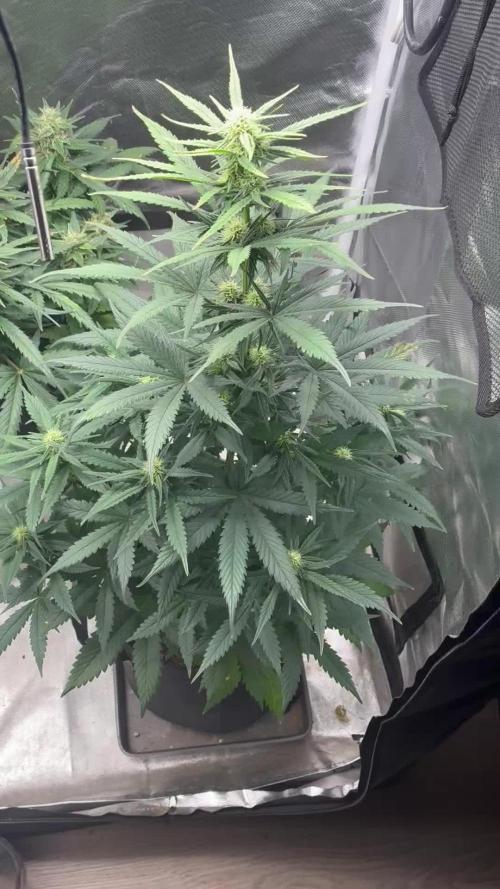
Week 7 done and these are doing amazing, the one on the left buds are really stacking up and getting really frosty and she’s really starting to stank lol but she also smells sweet/citrusy, the one on the right has stopped it stretch and budsites are starting to stack up, been watching them closely, was feeding them the same but switched it up cause I felt the one on the right needed more nutes then the one on left due to it being in reused soil, all in all they are doing well and I will continue to watch them closely are they continue to grow


Likes
24
Share


@olli0420
Follow
Harvest time! Finally! Super happy with this grow! I'll update harvest with pics of jarred buds after it dried 💚
Last values were 200 ppm💚

Likes
26
Share


@BillMonroe
Follow
Finally flowering something out here 😊 This plant has been more than ready for it
Nothing exciting yet. day 3 of flowering light cycle. This plant reeks!
(On the left: Blue Cheese)
Quite a fast response. Hairs in the crowns already. Cheese is a bit slower so far.


Likes
13
Share


@Ukulele47
Follow
25th May - just updated pics , and to start of week 11 , it smells nice and looks alright think I will be pleased with the outcome ✌️

Likes
5
Share


@TheBulldozerSicily
Follow
Ecco che spuntano i primi peletti, presto si inizieranno a formare i primi fiori! Già fanno un


Likes
39
Share


@MrSpooky882
Follow
Wie man sieht kommt ziemlich viel Farbe ins Spiel ich liebe diese Sorte jetzt schon 😬😁👌
Alles bestens habe gedüngt aber weniger angegeben...😏

Likes
28
Share


@Roberts
Follow
Melon Gum is not doing so good. I got root rot and she is struggling to finish. It's summer here and really hot. It's hard to keep water temps down. She will likely finish. Just not in all she could do. Thank you Pure Instinto, Spider Farmer, and Athena nutrition. 🤜🏻🤛🏻🌱🌱🌱
Thank you grow diaries community for the 👇likes👇, follows, comments, and subscriptions on my YouTube channel👇.
❄️🌱🍻 Happy Growing 🌱🌱🌱
https://youtube.com/channel/UCAhN7yRzWLpcaRHhMIQ7X4g.

Likes
29
Share


@GrownwithLED
Follow
After week 16 of this grow my 'Fruity Terps'-plants are ready to harvest. I check the trichome-heads with a handheld-microscope (magnification of 150, available in every growshop) and see that all have turned milky and some start to turn amber already. That means PEAK-THC (=all trichome-heads have turned milky) has been reached inside the trichome and it is time to harvest. If I would let them go longer now and continue to flower them, more of the trichome heads will turn amber as the THC breaks down again to other cannabinoids, and the effect of the cannabis will get more sedative when smoked. For some chronic pain patients this is what they want from their medicine, therefore it is advisable for them to let the weed flower than recommended.
The aroma coming out of the tent is STRONG and DELICIOUSLY FRUITY! 😍 The fade from the flush has turned the bigger fan-leaves yellow or purple now, this shows the plant is using her own sugars now and has used up all nutrients saved inside her. That is exactly what I want, since a well flushed plant ensures a clean, smooth smoke when the buds are dried. This is my MEDICINE and I use it against my chranic back-pain from hernia, therefore I have to make sure I can consume my medicine as pure and clean as possible.
All my plants have grown big buds, which are glistening with TRICHOMES, the SANlight EVO4-120 LEDs did an OUTSTANDING JOB! In combination with the BIO NOVA nutrients, all plants THRIVED throughout the cycle and were able to grow healthy to their full potential.


Likes
38
Share


@GreenHouseLab
Follow
Made the switch to the Nova and voila. Huge difference in overall health and should be rocking the pistils here in no time.
Merry Christmas to all,
GHL
Likes
2
Share


@Fat_Olsh_Farms
Follow
Day 22. Strong and healthy. General Hydroponics maxigro every other watering til 15% runoff.
Day 25. Continuing with LST & HST daily.
Likes
16
Share


@Sur_cannabico
Follow
El día 8 de de marzo se realizo el cambio de fotoperiodo a 12/12
Esta semana hemos notado un crecimiento explosivo y notorio de las variedades green gelato de RQS.
Aun no tenemos la aparición de los primeros pistilos pero en si la planta ya formando sus ápices y buenas estructuras para las flores que están por venir.
Además dejamos de aplicar green grow de Quemanta para pasar de lleno a los nutrientes correspondientes a la fase de floración
Blue bloom
Purple mac
Gold sunshine
Veremos como se desarrollan esta semana tras el gran crecimiento post cambio a 12/12
