


Likes
Comments
Share


@9LittleGrow
Follow
This flowering week gave me some experience about watering because i used only hand watering method so i made a mistake when i watered in this week . some nutrient dropped upon some leaves of my banana daddy one (the second biggest of my babies). But i also experienced this on vegetative state so i can take care very well of my plants and they made a great start . Can't wait to see the flowers of my babies but i'm still trying to do another steps and to grow organic.


Likes
325
Share


@Metatronix
Follow
Hello to you my dear friends and visitors👋
I transplanted the plant to a bigger rockwool cube on the fifth of september and added some veg nutrients...on September 10th i transplanted the Blue Cheese Auto seedling into a golden cheese grater, that i thought would be my idea for the Tiny Pop competition organized by Seedsman®️ Wish me luck 😊
The bright and lovely TS 1000 lamp from Mars Hydro is set at 55% of power is using about 65 Watt and is hanging at the height of 30cm as the manufacturer recommends.
All the best to my fellow growers and friends, keep it growing friends 💪

Likes
20
Share


@LockDownGrow
Follow
😫Been a tuff week as my ph pen failed so had signs of defiantly
But that’s now corrected so hope it didn’t set them all back too much

Likes
8
Share


@Mo_Powers
Follow
and another week has passed. she is developing very well. she tolerated the FIMing very well and she is getting really bushy. i have changed the fertiliser from biobizz-grow to biobizz-fishmix.

Likes
Comments
Share

@Zengrower
Follow
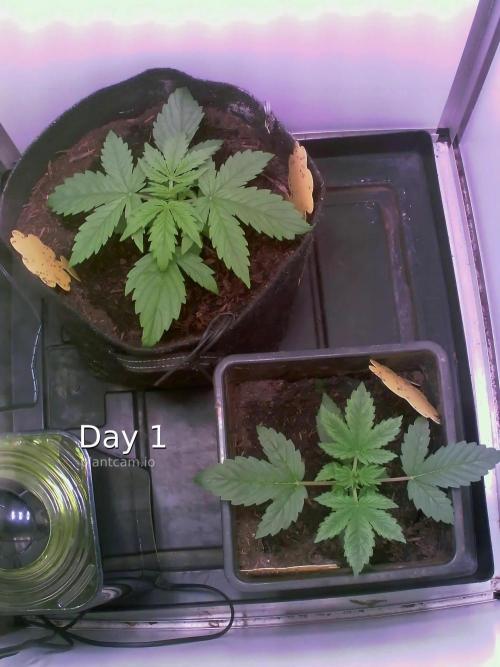
☘️ Gaining Body & First Signs of Flower ☘️
Week three marks a clear shift in development.
Both plants are really starting to gain some body now. Even the more compact, bushy pheno is beginning to stretch out slightly and find her balance. The structural differences are still there, but they’re both building a solid framework that feels strong and healthy.
I received a useful tip from the breeder this week: the plants could use a little extra nitrogen. Based on that advice, I started adding 4 ml of Plagron Alga Grow daily as a gentle boost. The response has been very noticeable. The leaf color has deepened into a rich, healthy green compared to the previous weeks — always a reassuring sign that they’re getting what they need.
The fungus gnats are almost completely gone now. The nematodes I introduced last week are clearly doing their job beneath the surface, interrupting the larvae cycle, while the remaining adults are being caught on the sticky traps. A nice example of working with biology instead of against it 😉
Another interesting development this week is the sudden growth of the side branches. They’ve really taken off and are now nearly matching — or even slightly overtaking — the main tops. No complaints there. In a G-tools cabinet with limited vertical space, strong lateral growth is actually very welcome… although the real stretch phase is likely still ahead of us.
And then, the moment every auto grower watches for…
Very subtle but unmistakable: the first early signs of flowering. Tiny pistils are beginning to appear, and preflower became visible this week. It’s still early and delicate, but the transition has officially begun.
Overall, it’s been a smooth and relatively carefree week. If everything continues like this, we should have some beautiful, clearly visible pistils to photograph next week ✌️🌿
More soon.
Likes
Comments
Share


@bibabananakush
Follow
Es ist sehr regnerisch und stürmisch gewesen sie hatte es aber ganz gut überstanden.
Ich mache mir langsam wegen den Pünktchen sorgen


Likes
18
Share


@CRK00
Follow
9th Week Report 12/12/19 - 19/12/19
In photos CMXL is on the left and LSD on the right
12/12/19
Unfortunately humidity at 80% and since is too high from next week I will try to give them more aeration. Hope there won't be mold.
Changed solution and raised its strength to 90% and unlikely the last change I didn't added a small quantity (0.5/L) of "grow" nutrient as both are in full flowering
13/12/19
CMXL got a bigger defoliation and now you can see even more bud sites! 😁 Just waiting for her ;)
Looking to LSD I guess next week we probably will be ready to harvest. As you can see she almost has no more space, CMXL is giant (and beautiful) and she is starting to cover LSD, but hopefully LSD will be harvested soon and consequently CMXL will have all the space she needs.
CMXL was defoliated every couple of days, the quantity of leaves that were removed during every defoliation session is more or less like in the photo uploaded.
However it looks like CMXL is not anymore stretching and just fattening up, so from the next week will get light defoliation just when needed (if she will cover everything again like last week probably will get one more last stronger defoliation).
Any comment or suggestions is appreciated, especially if you have tips about LSD time to harvest! Thanks in advance dudes 😁👊
Last Update 19/12/19
See you guys ;)


Likes
4
Share


@Altitonans_Fulmen
Follow
The thoughts shared in this journal are my own—a snapshot of personal understanding at the exact moment of writing. It is not intended as a reference of absolute fact, but rather as an exercise in ἐπίνοια (epinoia): an exploration of thought, intuition, and creative insight.
Epinoia(ἐπίνοια) is a Greek term meaning thought, intention, purpose, or conception, stemming from "mind" (nous) and "upon" (epi), representing the mind's reflective or creative process, used in philosophy (Aristotle, Gnosticism) and theology to discuss understanding and divine names, appearing once in the New Testament for the "intent of your heart" (Acts 8:22). It signifies the mind's operation to form ideas or designs, contrasting with raw data or innate perception, and in Gnosticism, it's an emanation of divine wisdom (Sophia).
"Φsis" is a stylized spelling of the Ancient Greek word φύσις (physis), which translates directly to "nature" or the intrinsic essence of a living thing.
Exploring the deep intersection of science, intuition, and creative insight often leads to breakthroughs that challenge our understanding of what is possible. When we approach high-performance cultivation not just as a hobby, but as an exercise in pushing a biological system to its absolute genetic ceiling, the results can transform from simple data points into profound proof of concept. Achieving a highly optimized environment requires a shift in mindset away from empty promises and directly toward verifiable proof, building true confidence through a detailed archive of past lessons and strategic adjustments.
This philosophy turns a standard space into a precise mass and energy balance equation, where every variable is managed to eliminate biological bottlenecks entirely. In a recent project four individual plants produced 344 grams, 280 grams, 445 grams, and 255 grams respectively, resulting in a total harvest of 1,324 grams, or 47.2 ounces, of dry product. Operating with a 600-watt light source inside a four-by-four footprint, this brings the final efficiency to an exceptional 2.21 grams per watt.
To put this in perspective, the standard traditional indoor benchmark has long been established at 1.0 grams per watt, while expert commercial operations target 1.5 grams per watt, and elite commercial systems push the envelope between 1.8 and 2.0 grams per watt. Reaching 2.21 grams per watt places the outcome squarely within the top 0.1 percent of global benchmarks, acting as a true statistical outlier that demonstrates what happens when flawless environmental parameters meet a cultivar pushed to its maximum potential. Reaching this level of mastery demands that we move past the common trap of the mirror fallacy, where the ego mistakes its own limited perspective for universal truth and views different ideas as personal threats. True progress requires curiosity and dismantling the illusion that our immediate viewpoint is the objective standard, shifting the focus instead toward how a system actually operates under the absolute laws of physics. In a high-performance setup, maximizing output is never about adding random additives or forcing growth, but rather about systematically removing the limitations that hold the organism back. By maintaining a perfect vapor pressure deficit, ideal root-zone oxygenation, and precise structural canopy training every single minute of the cycle, the plant is freed to express 100 percent of its DNA potential without any lingering genetic latency.
Managing a dense canopy inside a tight footprint presents the ultimate challenge of mitigating stagnant air and preventing moisture issues. Overcoming this bottleneck relies on a sophisticated synganic approach, which seamlessly marries the precise control of synthetic mineral inputs with the natural resilience of active organic living soil. This method transforms the room into a closed-loop system where the internal microclimate is entirely isolated from external weather fluctuations and pests. Rather than openly exhausting the atmosphere, the air is continuously recirculated, enriched, and scrubbed using 264-nanometer ultraviolet light.
The foundation of this thriving ecosystem is a comprehensive substrate composition designed to provide perfect aeration, structural integrity, and biological buffering. The primary media base integrates expanded clay aggregates, coir chunks, premium coco coir, sphagnum peat moss, horticultural perlite, vermiculite, pumice, and volcanic basalt rock. To continuously condition the soil and fine-tune mineral availability, the mixture is amended with agricultural gypsum, wollastonite, dolomitic limestone, basalt rock dust, micronutrient-rich volcanic ash, greensand, crushed seashells, biochar, and shungite. This mineral architecture creates an incredibly stable environment where active soil biology naturally prevents salt toxicity and ensures steady, reliable nutrition throughout the entire life cycle.
Living organisms within the substrate play a vital role in maintaining this delicate biological balance and breaking down organic material. Red wigglers continuously process organic matter into easily accessible plant nutrients while aerating the media; specialized predatory mites offer excellent biological control against common soil pests, and pillbugs excel at breaking down tough, woody elements. These biological components are further supported by a rich layer of organic amendments including high-phosphorus steamed bone meal, high-nitrogen dehydrated blood meal, fish bone meal, cold-processed kelp meal, dehydrated moringa powder, spirulina powder, and marine crustacean biomass rich in chitin. Combined with biological inoculants like mycorrhizal fungi, premium worm castings, and concentrated humic and fulvic acids, the entire system operates as a flawless biological transducer of light and energy.
Ultimately, shifting our perspective to view a grow space as a complete mass and energy balance equation changes the entire nature of agriculture. Success ceases to be a matter of luck or anecdotal habits and instead becomes the predictable result of meticulous design, patience, and the strategic elimination of failure. When science, biology, and engineering converge so harmoniously, we gain a deeper appreciation for the intricate natural systems that sustain life and growth. By sharing these detailed insights and refining our techniques, we can continue to unlock the absolute maximum potential hidden within the living world around us.
Comprehensive Substrate Composition:
1. Substrate Base & Aeration Media
Expanded Clay Aggregates (Hydroton Pebbles)
Coir Chunks & Horticultural Coco Coir
Sphagnum Peat Moss
Horticultural Perlite
Horticultural Vermiculite
Horticultural Pumice
Volcanic Basalt Rock
2. Mineral Amendments & Soil Conditioners
Agricultural Gypsum (Calcium Sulfate)
Wollastonite (Calcium Silicate)
Dolomitic Limestone (Calcium Magnesium Carbonate)
Basalt Rock Dust (Trace Mineralizer)
Azomite (Micronutrient-Rich Volcanic Ash)
Glauconite (Greensand)
Crushed Seashells (Calcium Carbonate Source)
Pyrolyzed Carbon Feedstocks (Biochar & Horticultural Charcoal)
Shungite (Carbonaceous Mineraloid)
3. Organic Nutrient Amendments
Steamed Bone Meal (High Phosphorus)
Dehydrated Blood Meal (High Nitrogen)
Fish Bone Meal (Phosphorus & Trace Calcium)
Cold-Processed Kelp Meal (Ascophyllum nodosum)
Dehydrated Moringa Oleifera Powder (Botanical Nutrient)
Spirulina Powder (Arthrospira platensis / Cyanobacteria Nutrient)
Marine Crustacean Biomass (Shrimp & Crab Chitin)
4. Biological Inoculants & Organic Acids
Mycorrhizal Fungi Inoculant (Endomycorrhizae / Ectomycorrhizae)
Vermicompost (Premium Worm Castings)
Humic & Fulvic Acids (Concentrated Humates)
Human Body
65% Oxygen (in all liquids and tissues, bones, and proteins)
18% Carbon (everywhere)
10% Hydrogen (in all liquids and tissues, bones, proteins
3% Nitrogen (in all liquids and tissues, proteins
1,5% Calcium (lungs, kidney, liver, thyroid, brain, muscles, heart, bones)
1% Phosphorus (urine, bones, DNA)
0,35% Potassium (enzymes)
0,25% Sulphur (proteins)
0,15% Sodium (in all liquids and tissues) (in terms of salt)
0,05% Magnesium (lungs, kidney, liver, thyroid, brain, muscles, heart)
Plant
Mother-nutrients: Carbon 47%, Oxygen 43%, Hydrogen 4%.
Macro-nutrients: Nitrogen 3%, Phosphorus1%, Potassium1%, Calcium1%, Magnesium0.5%, Sulfur0.5%.
Micro-nutrients: All the rest combined 1%
More energy, more blueprint.
Although CO2 is a naturally occurring gas that both humans and plants use, it is invisible and odorless and can be fatal at high-levels. If you’re supplementing carbon dioxide in your grow room, ensure there are no leaks in any CO2 devices and always use a CO2 monitor and alarm.
0.02% Life unsustainable
0.03% Life OK
0.04% Current ambient atmospheric co2
0.04%-0.1% =400-1000ppm standard indoor co2.
0.1%-0.2% = 1000- 2000 ppm (prolonged exposure: drowsiness).
0.2%-0.4% = 2000-4000ppm (Headaches, fatigue, stagnation, stuffiness, poor concentration, loss of focus, increased heart rate, nausea).
1% is toxic
5% is quick death.
"Dabo vobis quod oculus non vidit, nec auris audivit, nec manus tetigit, quod in cor hominis non ascendit."
Likes
8
Share


@Squaregrouper
Follow
Extremely resinous and sticky it is stickier Outdoors then it is indoors same cologne but this is the first time growing this plant outdoors.
So I humbly ask your opinion and definitely the opinion of the seed company.
Dinafem I need your guidance..
Likes
4
Share


@Drtomb
Follow
Well its just past week three and the plant is full on flowering. I've been trimming Sucker branches and now it's time for the plant to start its autopilot journey. Nutrient changes and then harvest for these girls. Expect them to thicken up in about 2 weeks. Then continue to pack on the weight until the end of harvest.

Likes
7
Share

@sunshinegroww
Follow
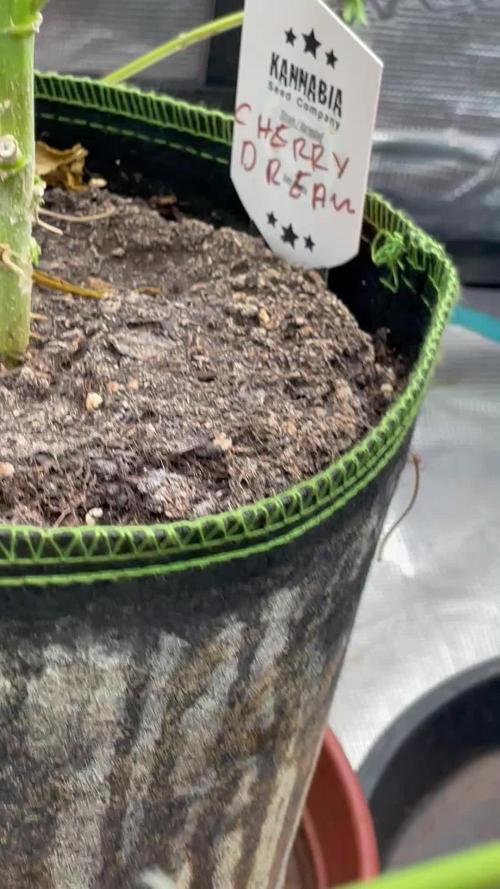
Hard as rock flowers big ones too very easy to grow indeed,very compact ideal for small spaces big thanks to Kanabia providing the beans ??😍👊

Likes
3
Share

@tterpy
Follow
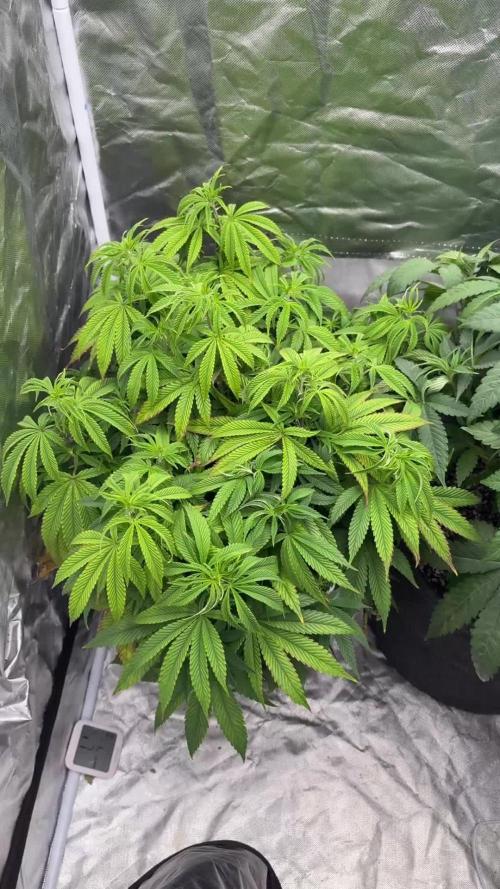
This regular seed has been growing great for the first 5 to 6 weeks then after this yellow wing has started. It seems to be getting back on track with the new growth. Didn’t want to flip this until I got back on track.
Fed with lotus week 4
5/18/26
Likes
11
Share


@Madman2020
Follow
Generative steering
Day 30 sprayed with Jas
Day 31 noticed spider mites
Likes
9
Share


@papexa
Follow
all was ok in this stage, using an automatic temperature regulator made by myself
Likes
22
Share


@Polliceverde18
Follow
Aggiornamento 15/ 2 /21. Quarta settimana tutto procede bene senza carenze ed eccessi stanno bevendo di più e promettono bene !!!
Aggiornamento 16/2/21 ho notato che una bimba ha delle foglie un po bruciacchiate le altre 2 crescono benissimo. Ho dato 1 l solo acqua a ciascuna oggi.
Aggiornamento 19/2/21 ho riscontrato una deficienza da calcio così ho somministrato cal-mag bio bizz con un po di rhino skin su due bimbe (già sono diventate 2 le bimbe infette) mentre all altra che cresce bene ho dato il biglietto bud rimpiazzandolo al long flowering greenhose.

Likes
15
Share


@Siriuz
Follow
Alright guys here at the week #11
Officially Early bloom
We are adding molasses today for the very first time to all of them ladies....
We did such a mix with some tea as well
So hopefully all this girls get to fatten buds and resinn super tasty...
It's our first time but we have some kind of intuition about it
Let's see how it goes
We check over the ppms and where around 2000ppm over 2liters
I think around 500ml each plant and we saved for later on Flowering
We also water them well and now we just waiting to see what happens literally.
😏✌️🏻😎😉
Likes
10
Share


@Young_agronomist
Follow
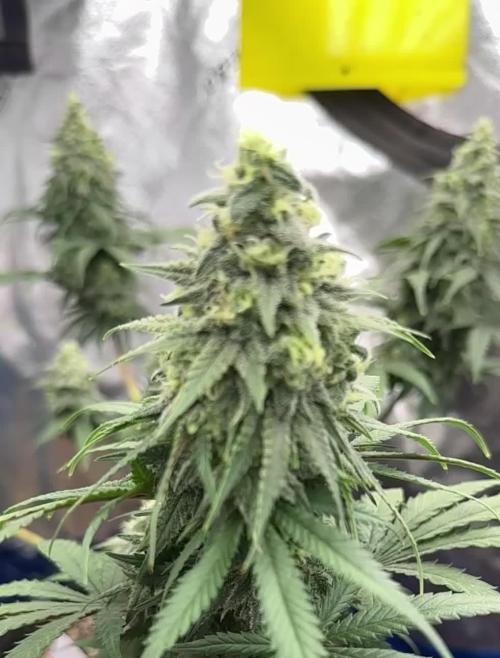
08.08.23- пересажен в горшок 8 литров , до этого был в сиаканеи0.35 л
10.09.23-Произведен топпинг четырех узлов и срезаны большие листья .
Все ветки зафиксированы для придание формы .


Likes
6
Share

@Rangaku
Follow
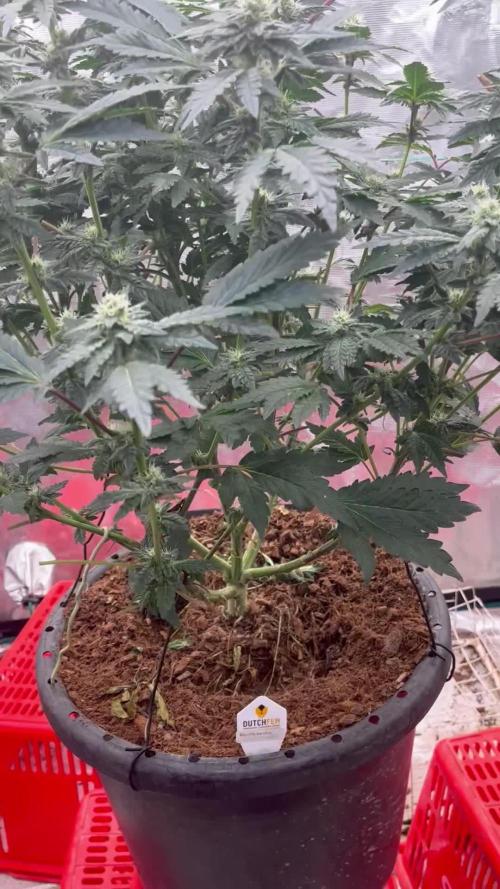
Wow , week 3 of flower and she’s in full thc mode . Crystals covering pistalls, smell is sweet and skunky . This plant is so thick and hearty the leaves are so thick . I’m expecting this biscotti vanilla by Dutchfem to be really special from what she’s showing early on
Likes
8
Share


@MMVSS
Follow
Almost Ready to incorporate fish into the res to feed the Few roots hanging out! Cover crop coming in nicely! Seedlings looking super happy! Can't complain so far so good can't wait to start Feeding fish!!!