


Likes
Comments
Share


@nowayReggie
Follow
Breeder Suggested Harvest Window opens tomorrow at day 65 and continues on for 15 days to Dec 15.
+Will start the flush process on the 5th of December
+ 1ST video on Growdiaries.
Planned on flushing on the 5th
Watered 2.5 gallons.
Life scheduled events and had to cut it short a few days and harvest day -NO MATTER WHAT - would have to be the 10th.
putting us at Day 75 of flower
Flushed with 17.5 gallons
Considering water was filtering through soil, it drained ABSOLUTELY clear by the last emtpying of the container I was using to catch
Buds are fattening up very nicely.
Smells of Lemon/Citrus/Sour
-----------------------------------------------------------------
nowayReggie

Likes
96
Share


@DogDoctorOfficial
Follow
Hello, fellow cultivators! Week 7 with our magnificent Big Cheese Auto is like witnessing a green monster awaken, and the excitement is through the roof. Massive shoutout to Seeds Mafia for the genetics that keep surprising and delighting.
Our green beast is romping through her third week of flowering, and oh my, what a spectacle! It's like she's unleashed her inner monster, growing wild and free. The Autopot system is the backstage pass, allowing her to indulge in a nutrient feast on her terms. It's like the VIP treatment for a botanical rockstar.
P-Boost and Topbooster, our dynamic duo, are pulling off some serious nutrient sorcery. Organic nitrogen, L-amino acids, trace elements, and natural stimulants are the secret ingredients to this blooming potion. The anticipation for those colossal, aromatic buds is reaching fever pitch.
And there's more to the nutrient party! Say hello to K-Boost, the organo-mineral maturation booster that's about to elevate our Big Cheese Auto's bloom to new heights. This powerhouse contains a symphony of L-amino acids, potassium (K), and sulphur trioxide (SO3), creating a concoction that's nothing short of a maturation marvel.
Picture it like a botanical spa treatment. The L-amino acids are the pampering session, promoting a luxurious maturation process. Meanwhile, the potassium (K) is the nutrient chauffeur, ensuring a smooth ride for our buds to reach their full potential. Sulphur trioxide (SO3) is the secret sauce, enhancing the overall yield and end quality.
As we venture into the next phase of our green odyssey, K-Boost is here to ensure that our Big Cheese Auto not only blooms but does so with an unparalleled maturation finesse. The anticipation for a bountiful harvest with top-notch quality is now taken up a notch.
I've thrown caution to the wind and let her go wild. It's like allowing a creature of the cannabis jungle to thrive in its natural habitat. No holding back, just the unbridled energy of a green beast in bloom. The canopy is turning into a wild tapestry, and I'm loving every untamed inch of it.
Our TDS is dancing at a robust 420, and the pH is in perfect harmony at 6.0. It's like a botanical orchestra playing the sweetest tunes, all thanks to the Autopot and the nutrient magic.
The leaf-bending spectacle continues. It's like a dance of chlorophyll, creating an even canopy that bathes in the natural light. Defoliation is on the horizon, a grooming session for our wild beauty. Ensuring every bud gets its moment in the spotlight.
A heartfelt thanks to Seeds Mafia, Aptus Holland, Grow Diaries, and the phenomenal community. Your support is the heartbeat of this green odyssey.
As we plunge into the next week, the excitement is untamed. Our Big Cheese Auto is not just growing; she's evolving into a botanical marvel. I can't wait to see the monstrous beauty that unfolds.
Let's continue to cultivate greatness together!
Genetics -Seeds Mafia Big Cheese Automatic
Light - LUMATEK ZEUS 465 COMPACT PRO
Food - APTUS HOLLAND
All info and full product details can be find in can find @
https://seedsmafia.com
https://aptus-holland.com/
https://lumatek-lighting.com/
As always, thank you all for joining me on this journey, for your love, and for it all. My horticultural odyssey would never be the same without you. Your love and support are cherished, and I feel both honored and blessed to have you in my life <3 <3 <3
With true love comes happiness. Always believe in yourself and always do things expecting nothing in return, with an open heart. Be a giver, and the universe will respond in ways you can't even dream off.
Friendly reminder: all you see here is pure research and for educational purposes only
<3 <3 <3 Growers love to you all <3 <3 <3
P.S- I must extend my sincerest apologies for the missing video reports. Regrettably, Grow Diaries is still facing some technical issues that are preventing me from uploading them. Rest assured, as soon as the situation is resolved, I'll share those videos to give you an even closer look at this fascinating journey.( i can only upload 100 Mb files with is not enough for the most type of videos i do, and even the photos is hard sometimes ) i was able to upload a edited small version today keeping my faith up growers love to you all


Processing
Likes
15
Share


@vibealive
Follow
Man... What a week!
So we closed in on week 6.
I JUST moved all of my stuff across town! Went well!
I FINALLY got everyone setup where they belong...

Likes
14
Share

@Pierrougarou21
Follow
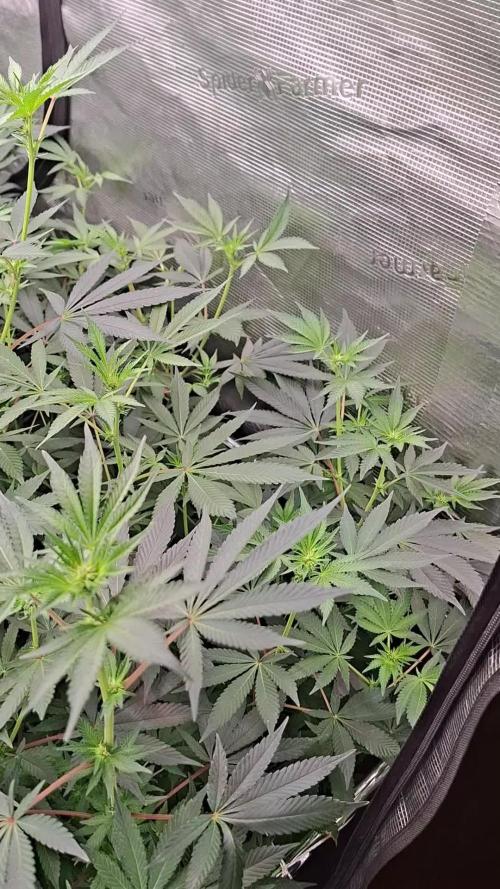
22/09 Jour 2 de la deuxième semaine de floraison
UNvec l aide du rouge intense et rouge profond que j allume 15 avant l extinction de la lampe et s eteind 10 minutes après j aide la plante à passer une bonne nuit afin qu elle profite à 100% de son cycle de nuit
23/09 Clones en cours d enracinement

Likes
9
Share


@DrewbieDoobieNoobie
Follow
I cant fix the damage that was done but they are putting on a little weight and the Trichomes are starting to amber up say 15%-20% i think i can push it one more week. I will give 2 days of dark on Wednesday and chop at week 10-11 as i put them into flower on 3/20


Processing
Likes
14
Share


@420Somewhere
Follow
Day 14 of flower and all 4 plants have stretched over a foot in the last week. Should start putting all of their energy into flowering now.
Looking really good so far. Really, really good.

Likes
29
Share

@Bunterbiber
Follow
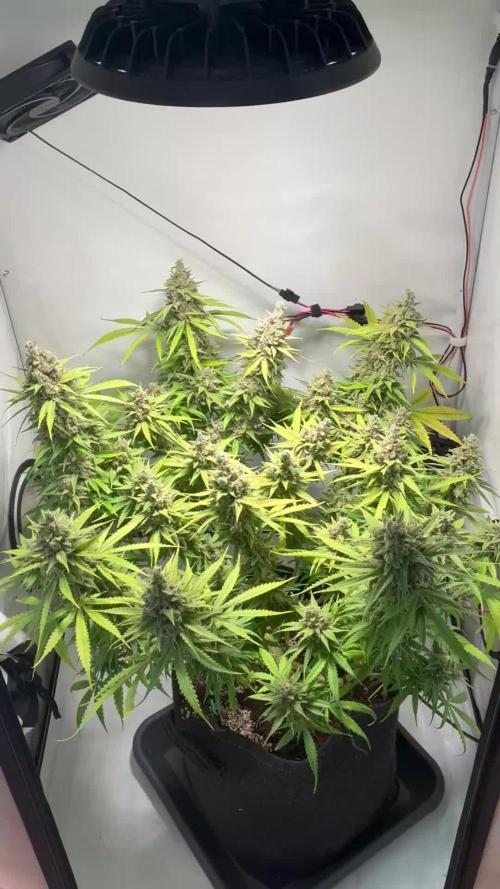
Chop day is officially here! By the end of Week 16, I decided to pull the trigger. The trichomes were mostly cloudy with a few ambers popping up here and there. While I could have let her go another week, my personal schedule made this the perfect time to harvest.
I also had a new toy in the garden today: a Vevor bowl trimmer. I used it for the small and medium-sized buds while hand-trimming the 'top shelf' colas. Honestly? I’m blown away. It’s not as surgical as a manual trim, but the time-saving is a total game-changer.
The Stats:
- Wet weight: 544g
Next step: Into the Dryfermbags for about a week until the limited amount (due to German law) is ready for the jar.
Overall, I couldn't be happier with this grow. No issues, no drama—this strain was an absolute breeze to grow and performed like a champ. Now, I just need to nail the drying and curing phase!
P.S. Need some cleaning advice! Cleaning the Vevor trimmer (especially the grate) is a nightmare. I’ve been using ISO and a cloth, but it’s still a struggle to get all that resin off. If anyone has a pro-tip or a better method for cleaning these machines, please let me know in the comments!"
Likes
6
Share

@Smev1337
Follow
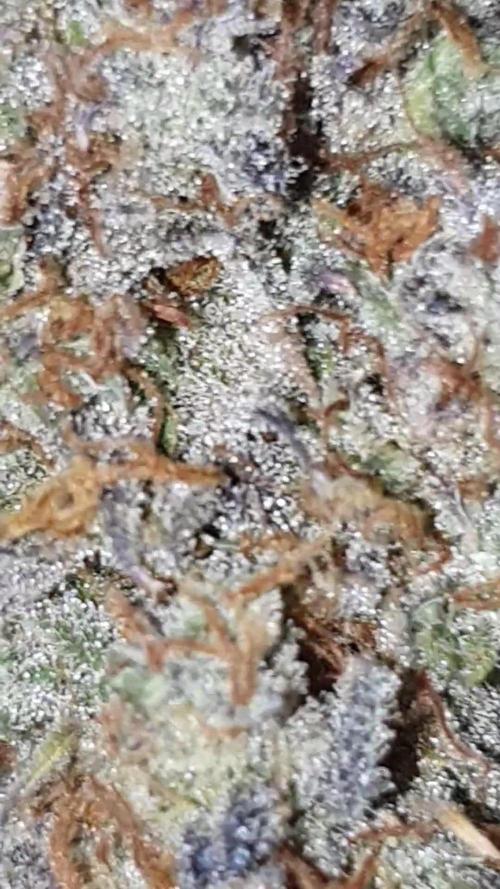
This is the end of this journey with my first grow and it turned out pretty good for an newbie grower like me, i let the plant cure properly also to get the maximum out of the terps 😋 i'm really happy with the grow and will continue to grow more and more 😈

Likes
13
Share


@SwabianMadness
Follow
My Ladies are really thirsty. I was not at home for four Days and give them 5 Liters per Plant. When i came home they looks like they want dying
Buds was so fat now that they hang down on some Stems. So i decided to use the Scrog Net
They are getting frosty but Trichomes are just clear

Likes
9
Share


@newenglandgrowers
Follow
Just starting week 5 will keep updating as I go been having a couple issues lately with some of the top fan leaves, they've been starting to get a couple brown spots on 3-4 of the fan leaves not sure what the problem is yet if anyone has any suggestions let me know. Update: Just ordered in a new ph meter from Apera I'm pretty sure my cheap $15 dollar ph meter was all sorts of messed up. UPDATE: ec going in .7 runoff ec .86, ph going in 5.7 runoff ph 6.6 I'll see if the ph goes down now that I have the new ph meter my old one was definitely off. UPDATE: Got the EC down to .4 gonna start slowly introducing nutrients back in, also got the medium pH down to 6.1 from 6.6. Finishing up week 5 think I've gotten things under control now just need to get my EC back up now showing a couple signs up deficiencies on some leaves but nothing too bad, I'm thinking Week 6 will start flower. Did a Flush this Week now looking back on it I shouldn't have done that that caused my plant to go into a deficiency, what I should've done was not flush with half strength nutes I should've used normal strength nutes but just lower the ph more that was the real problem.


Likes
10
Share


@Kitties_and_Colas
Follow
We skipped a week of documenting, life got in the way.... She wasn't a big plant, we expected her to stay small after topping at the first node like that, it was a nice little experiment and i'm glad we let her grow, she made for a nice little side stash and break from the strain we've been on ... happy growing everyone!


Likes
20
Share


@Boomdrawfyah
Follow
Dia 64 desde la germinación y 36 dias despues del trasplante así lucen de sanas las geneticas de paradise seeds junto con los productos de nutrición y elicitación de terranbis, han crecido bastante en las 5 semanas de trasplante ya pasan de 1,50 m. Seguimos trabajando para obtener los mejores resultados 👊🏼👊🏼🔥

Likes
17
Share


@Elpakkio
Follow
Today I’m very sad Guys I understand where was the my mistake! I not use the definitive pots whit this plant! I think will By good aniway becouse is still healthy but the grow is stop! If some one have a same experience please say the your experience by comment


Likes
120
Share

@DogDoctorOfficial
Follow
Week 10, the second week of flowering, has been a wild ride in our Tropical Tangie Ninja Run. Our girl is on fire!
Talk about growth – she's become a bona fide giant, standing tall and proud. The canopy's like a green sea, and I'm thinking she might outgrow the room soon! I might have to sneak in for that defoliation before day 21 – let's see how ninja-fearless I can be!
And guess what? Her fruits are stepping into the limelight, and they're like little works of art in the making. They're shaping up beautifully and in promising numbers. It's like she's a fruity ninja master!
Now, let's talk numbers: Starting the week at a TDS of 300 and a pH of 6.1, things were looking balanced. But she surprised me with her super hydration skills – guzzling down 6 liters a day! So, as her thirst grew, I decided to amp up her food to 420 ppm. Yeah, the numbers asked for a little humor, didn't they?
And let's give it up for my ninja buddies! They're on ninja-duty, keeping a vigilant watch over everything. The pH's sitting pretty at 6.2, ensuring the perfect conditions for our Tangie to thrive.
And here's something enchanting: Our Tangie's always in prayer mode. Those upward-reaching leaves are like a constant reminder of her strength and the wonder of nature.
Stay tuned for more thrilling ninja updates! Remember, every leaf, every prayer, and every growth spurt is a testament to the incredible journey we're on. Keep cultivating with love and passion, you leafy warriors!
As always thank you all for stopping by, for the love and for it all , this journey of mine wold just not be the same without you guys, the love and support is very much appreciated and i fell honored and blessed with you all in my life<3 <3 <3
#aptus #aptusplanttech #aptusgang #aptusfamily #aptustrueplantscience #inbalancewithnature #trueplantscience #dutchpassion #dogdoctorofficial #legoninjago #growerslove
With true love comes happiness <3 <3 <3 Always believe in your self and always do things expecting nothing and with an open heart , be a giver and the universe will give back to you in ways you could not even imagine so <3 <3 <3
Friendly reminder all you see here is pure research and for educational purposes only
<3 <3 <3 Growers Love To you All <3 <3 <3
P.S.- Caught me in action, huh? Charging up my medicine with my trusty ninja buddies by my side. Gotta apologize for the smoke – looks like they're testing their ninja smoke bomb skills!
But hey, we're all about good vibes and green adventures here. So let's embrace the ninja spirit, roll with the giggles, and keep spreading that herbal happiness!
Oh and i had some photos from her babies this way you guys can follow that along also <3 <3 <3
Remember, even in the cloud of smoke, there's always room for a ninja's grin. Stay lit, my leafy warriors! 🍃💨

Likes
10
Share


@TiRobotProds
Follow
Les colas commencent a gonflé j'ai enlevé les grosses feuilles pour une meilleure qualité lumineuse. Pas signe de surengraissage(les pointe des feuilles ne sont pas décolorés), plante petite mais compacte avec une odeur d'agrume verte laissons la dans sa course pour la coupe de DuctchPassion@ la suite au prochain épisode.
Likes
8
Share


@420DeepGrow
Follow
Semana 8
La Swag MDC sigue destacando con su forma inusual y cogollos cada vez más densos y cubiertos de tricomas. Las hojas anómalas brillan aún más con resina, dándole un look muy particular 🌿✨.
La nutrición con XpertNutrients se mantiene ajustada y efectiva, sin excesos. El riego ha sido afinado para favorecer la maduración y mantener un sustrato bien oxigenado 💧.
Las luces Adlite continúan aportando una cobertura excelente, permitiendo un desarrollo homogéneo incluso en las zonas bajas 💡. El clima permanece estable (21-24 °C, 50% HR) y sin señales de problemas.
El aroma evoluciona con fuerza: base frutal madura, notas herbales más intensas y un perfil más complejo cada día 🌱.
Una planta muy curiosa, distinta en todos los sentidos.
¡Seguimos creciendo fuerte! 💪


