


Likes
Comments
Share


@Ultraviolet
Follow
Voltage, also known as electric pressure, electric tension, or (electric) potential difference, is the difference in electric potential between two points. In a static electric field, it corresponds to the work needed per unit of charge to move a test charge between the two points. In the International System of Units (SI), the derived unit for voltage is named volt.
The voltage between points can be caused by the build-up of electric charge (e.g., a capacitor), and from an electromotive force (e.g., electromagnetic induction in generators, inductors, and transformers). On a macroscopic scale, a potential difference can be caused by electrochemical processes (e.g., cells and batteries), the pressure-induced piezoelectric effect, and the thermoelectric effect. Since it is the difference in electric potential, it is a physical scalar quantity.
A voltmeter can be used to measure the voltage between two points in a system. Often a common reference potential such as the ground of the system is used as one of the points. A voltage can represent either a source of energy or the loss, dissipation, or storage of energy.
Dropping the temps will slightly raise the humidity, air holds less % water the colder it is. Lights on 25-35rh% the same water content will spike to 50rh% + at night just by dropping the temps.
At night all the juice photosynthesis has been storing up is mashed and mixed up to make all the goodies we need for bud, water is used to transport all these things everywhere, like little solvent transport devices, once a nutrient/protein has been delivered to destination the plant needs to get rid of all this excess water molecules it was using to transport. The only solution at night is to spit it back out into the air at night. During the peak of flower, this can catch a grower unaware, with a 4x4 full tent it can be a challenge to control all that moisture exhaust overnight especially if you're really pushing the limits.
Got my first full whiff of the smell of purple lemonade, always surprises me how accurately the smell fits names, the dominant terpenes in the Purple Lemonade weed strain are carene, linalool, limonene, and myrcene. Carene gives this strain its sweet, citrus flavor and some woody notes, whereas the linalool I recognize so well from Granddaddy Purp. Myrcene has been shown to have sedative qualities while bringing musky, earthy elements to the flavor profile.
Trichome production started to ramp up, and the plant that grew taller/closer to UV showed noticeably thicker coatings. The taller plant shows slight yellowing of lower leaves, and the smaller plant is green and lush but the buds are slightly less progressed, interesting.
I super-cropped the main stem of the tall one just over a week ago (clean). I expected it to be the one slightly behind in development.
The plant has roughly 10-15% "Total resources" that it keeps in case emergencies arise. Reserves if you will.
My rationale behind breaking anything goes hand in hand with slowing things down as production is lost due to the time it takes to repair damage.
I recall watching a YouTube video, where a curly hair gentleman would super crop in a manner to damage but not disrupt using a twisting method, using fingers and thumbs placing them close together one goes clockwise other counter clock this varies a lot depending on the thickness of stem but what you wait for is a tiny snap, it may take several rolls to weaken if walls are tough I found. No snapping or bending of the stem, you want just to fracture it but not puncture this way the xylem and phloem channels remain flowing,the damage is repaired almost instantly and the 10-15% is dispatched with very little repair time. Everything in the general vicinity of the stress will now grow stronger so as to prevent further similar damage.
This is why I had expected the tall one to lag behind in development once I had cropped it but low and behold it worked and the tall one has slightly more developed buds.
The effects of birdsong on plant life may at first glance be far-fetched. Nigh on ten years ago an article appeared in Nexus Magazine on the discovery or invention of a method of growing plants using bird sounds. Christopher Bird and Peter Tompkins describe the development of Dan Carlson’s Sonic Bloom in their book The Secret Life of Plants. Many others have, it seems, recognized the role of birdsong in the growth of plants, and influenced or directly helped Carlson to develop his invention.
Dan Carlson’s desire to see that no one need be hungry through shortage of food sought to understand the optimum growth of plants. He discovered that plants also feed from ‘the top down’ as well as the roots. Underneath all leaves are pores called stomata which open to take in nutrients and moisture from the air. Carlson’s observation that the more bird life there is on the farm, the more abundant is plant life, has been echoed by farmers throughout history, except in modern times. Where there is little bird life, plants are stunted, and dwarfed. Nature has the birds sing at dawn and dusk, which dilates the stomata, and so feeds the plants. One can immediately see the importance of trees.
The development of Sonic Bloom was to create birdsong, which is played to the plants, while a foliar nutrient is sprayed onto the plants at the same time as they are being stimulated by the sound, to enhance their growth. This method produced fantastic results in the amount of abundantly nutritious produce from one plant, often in poor soils and in drought conditions. Carlson showed that the breathing leaves of plants are the source of the nutrient intake for growth. This of course is also true for humans—the breath is food. We shall discourse on this on another occasion. Plants transfer nutrients to the soil via this breathing, and Carlson showed that his plants improved the soil and helped earthworms proliferate.
The secret of Sonic Bloom was the development of the music of the same frequency as the dawn chorus of the birds. With the help of a Minneapolis music teacher, Michael Holtz, a cassette was prepared. It seems that both birds and plants found Indian melodies called ragas delightfully suitable. This is actually quite profound, although the American farmers, especially women, who had to endure this music whilst it was played to the plants, found it irritating. Holtz found the “Spring” movement of Vivaldi’s The Four Seasons appropriate and concludes: “I realized that Vivaldi, in his day, must have known all about birdsong, which he tried to imitate in his long violin passages.
Holtz, it is related by the authors Bird and Tompkins, also realized that the violin music dominant in “Spring” reflected Johann Sebastian Bach’s violin sonatas broadcast by the Ottawa University researchers to a wheat field, which had obtained remarkable crops with 66 percent greater yield than average, with larger and heavier seeds. Accordingly, Holtz selected Bach’s E-major concerto for violin for inclusion on the tape. “I chose that particular concerto,” explained Holtz, “because it has many repetitions but varying notes. Bach was such a musical genius he could change his harmonic rhythm at nearly every other beat, with his chords going from E to B to G-sharp and so on, whereas Vivaldi would frequently keep to one chord for as long as four measures. That is why Bach is considered the greatest composer that ever lived. I chose Bach’s string concerto, rather than his more popular organ music, because the timbre of the violin, and its harmonic structure, is far richer than that of the organ.
Birdsong has long been loved but also studied with reference to the musical scale and harmonics. As Holtz deepened his study he said, “I began to feel that God had created the birds for more than just freely flying about and warbling. Their very singing must somehow be intimately linked to the mysteries of seed germination and plant growth.
The spring season down on the farms is much more silent than ever before. DDT killed off many birds and others never seem to have taken their place. Who knows what magical effect a bird like the wood thrush might have on its environment, singing three separate notes all at the same time, warbling two of them and sustaining the others.
Tree and bird life are essential to Earth's existence, which Carlson, Holtz, and others have shown, but indeed others see and feel. “Plants”, says Steiner, “can only be understood when considered in connection with all that is circling, weaving, and living around them. In spring and autumn, when swallows produce vibrations as they flock in a body of air, causing currents with their wing beats, these and birdsong, have a powerful effect on the flowering and fruiting of plants. Remove the winged creatures, Steiner warns, and there would be stunting of vegetation. Nothing more needs to be added here.
It has been said that you cannot hurt the humblest creature or disturb the smallest pebble without your action having a reaction upon something else...You cannot think of an evil thought, no matter how private, without it having an effect upon somebody else. Whatsoever you do in life sets up some form of resonance.
When I say the morning chorus of the birds awakens the earth I mean that the characteristic song of the birds sets in motion a series of vibrations which react upon other forms of life. Remember, the soil of the earth is full of living microorganisms. The plants are also living organisms. You, yourselves, are living organisms. Now, this is the beauty and wonder of it all—when one aspect of nature has been moved into a state of resonance it immediately relays its vibrational motion to something else.
So when I say the dawn chorus awakens the earth I literally mean what I say. I do not suggest that the earth would come to a standstill without the bird song, but I do mean that life on earth would be sluggish and ineffectual without that first instigating outburst of vibrational power poured forth at just the right pitch and tone to set off a chain effect.
I know some of you will say, what happens in those parts of the world where there are no birds? Well, what does happen? Very little, I assure you. The hot deserts and the polar regions where there are few, if any, birds are not renowned for their wonders of nature. It is as though they are asleep. Nothing grows, few things live. Little resonates and there is a great stillness over everything.
You see, that outburst of sound just before dawn is like the little lever that works the bigger lever which turns the wheel which moves the machine…and so on. Never underestimate small things.
Animals are blessed with instantaneous and unthought-out wisdom. They are in direct contact with the divine, and they act and live as though they are fully aware of it. Men are also in contact with God, but most of them act as though they have never heard of God because they are largely veiled from their divine center by their own thinking minds, of which they are so proud.

Processing
Likes
26
Share


@BigBadLion
Follow
Hey everyone! It's week 2 of flower and this week was a surprise!
The girl on the back, the one that has the "long" stem leaves and I didn't have high hopes started to grow a lot and develop quite fast! I'm quite impressed by her!
Flowers are also starting to be way more developed this week, which is absolutely amazing I'd say and looks very pretty!
This week was very uneventful besides that! And since they are growing so well I decided to increase the amount of nutrients! 😍 I also trimmed a lot of leaves from both babies speciallyy the one from the back) and played with the LST a bit more. Both of them were quite bushy (specially the one in the back) and I hope this won't affect them negatively! Probably not but we never know.
Anyway, that's all for now! I hope you'll enjoy the photos and timelapse I took! 👋


Likes
7
Share


@BushDoctor740
Follow
These two girls are moving along just fine in the 3 gal pots.Was going to transplant these two into bigger pots earlier on but decided not to.They are in a 60 inch high tent and I want to keep them short and stout.I did a lot more defoliation and fed some cal mag and recharge this week.I did top dress with Gaia green power bloom and they seem to be taking it nicely.


Likes
1
Share

@XoticGROW666
Follow
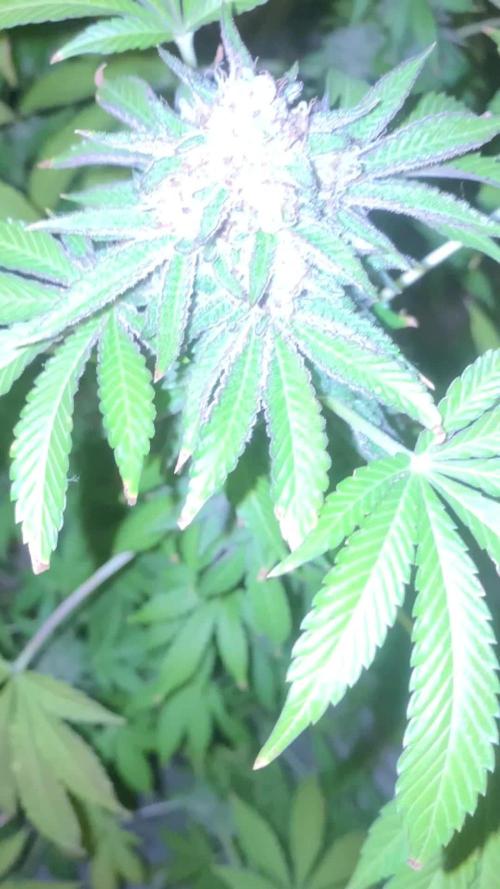
More Pink hues Purple buds with intense Candy terps kickin inn more 🍭🍬💜
Likes
2
Share


@weedismalifebra
Follow
After some def. The buds started to grow like crazy the weather is not good but it’s still going 🏎️
Likes
26
Share


@Wicked_Stix
Follow
I really like the colors coming out in these buds. They are getting more purple every day. Looks like they are going to stack up pretty fat too. I spread the plants out a little this week so they get better light and air flow. Other than that I haven't done anything besides keep the reservoir full. Still pumping nutrients 1 minute on 20 minutes off. They are getting .5 tsp maxibloom per gallon. Not going to run any boosters this round. They dont look like they want or need it.

Likes
17
Share


@ipoke_smot420
Follow
Everyone has doubled or more in size. The White Widow from @fast_buds went from 8'' a week ago, to 18'' today! 🤯. Shout-out also to my sponsors @fast_buds and @atlasseed, and also to my good friends at @seedsman.
Big 👍🏼👍🏼 to @sunraise because my girls seem to be loving this Bar2400.
And thank you to @sensorpush for gifting me this temp/hum sensor🙏🏼
And I also want to thank @aeromixer for the pump/aerator keeping 300 gallons of rainwater in check for me and my girls🙏🏼🙏🏼🙏🏼🙏🏼🙏🏼. If anyone is looking for an awesome pump/aerator, check these guys out, and use my code.
#growingwithfriends #growinghappiness #growyourown #growyourownmeds #ilovecannabis #ilovegrowingcannabis #fastbuds #atlasseed #seedsman #sunraiseled #sensorpushtech


Likes
51
Share

@Hologram
Follow
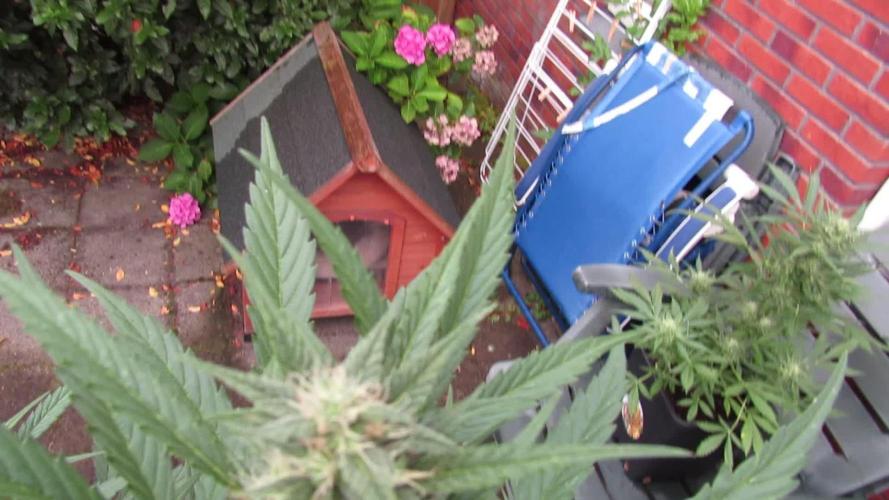
mogge :)
zoals ik zei in de video,het zou kunnen dat ik de Rapier en de black opium door elkaar heb gehaald ..
want ik heb nog vage herinneringen dat ik het niet zo goed meer wist...(natuurlijk 😉)
maar zeker weten doen we het nooit dus ach..
ze bloeit iig lekker👊
@)@}@}}@)]}-}}--}}}
Happy growing 4 all✊
PS:Ik heb toch de namen van de dagboeken omgewisseld.. het is duidelijk dat dit Rapier is.. en niet black Opium.. #justsaying
PS: i changed the names of the diaries..its very clearthat this is Rapier and not blackopium!
PPS: i changed them back!! 😁👊
**KISS! growingtechnique: keepItSimple, Stupid!
**how 2make thcoil: https://growdiaries.com/diaries/179107-grow-journal-by-hologram

Likes
105
Share


@Hipichic
Follow
June 7th: We had a Thunderstorm roll through our neighborhood yesterday afternoon, with forty mph gusts and it almost knocked over a few plants, managed to grab what we had and prop up the stems for support. Hoping they weren't too stressed after it all!

Likes
31
Share


@420DeepGrow
Follow
Gracias al equipo de AnesiaSeeds, Marshydro, XpertNutrients y Trolmaster sin ellos esto no sería posible.
💐🤯 39%Thc Wham Boom:
Sube al ring con WHAM BOOM de Anesia Seeds, donde la energía electrizante de Wham choca con las vibraciones frías de RS54, creando una variedad que es todo equilibrio, potencia y sabor. Este peso pesado feminizado ofrece una mezcla perfecta de 50% Sativa y 50% Indica, proporcionando una experiencia que te hará flotar de euforia mientras tu cuerpo se sumerge en una serena relajación.
WHAM BOOM es una productora prolífica, con rendimientos en interior de 600g/m² y en exterior que alcanzan la asombrosa cifra de 900 - 1200g por planta. Con una floración de entre 65 y 70 días, esta variedad está lista a principios de octubre, lo que la convierte en una competidora ideal para los cultivadores que aspiran a una cosecha de campeonato. Con una imponente presencia de 100-140 cm en interior y 160-220 cm en exterior, WHAM BOOM se alza como testimonio de su destreza genética.
🏠 : Marshydro 1.50 x 1.50 x 1.80, carpa 100% estanca con ventanas laterales para llegar a todos los lugares durante el grow
https://marshydro.eu/products/diy-150x150x200cm-grow-tent-kit
🌬️💨 Marshydro 6inch + filtro carbon para evitar olores indeseables.
https://marshydro.eu/products/ifresh-smart-6inch-filter-kits/
💻 Trolmaster Tent-X TCS-1 como controlador de luz, optimiza tu cultivo con la última tecnología del mercado, desde donde puedes controlar todos los parametros.
https://www.trolmaster.com/Products/Details/TCS-1
🍣🍦🌴 Xpert Nutrients es una empresa especializada en la producción y comercialización de fertilizantes líquidos y tierras, que garantizan excelentes cosechas y un crecimiento activo para sus plantas durante todas las fases de cultivo.
Consigue aqui tus Nutrientes:
https://xpertnutrients.com/es/shop/
📆 Semana 3:
Muy buena semana, he aplicado un riego solamente con agua de manantial para reducir la cantidad de sales acumuladas en el sustrato y se ha notado una mejoria .
Creo que le quedan unas dos semanas por estirar, parece que va a ser una buena cosecha.
Se mantiene un buen control del cuarto de cultivo gracias a @marshydro y @trolmaster.
Mantengo las dosis de 1/3 de nutrientes recomendados por el fabricante.
Potencia del foco 80%

Likes
4
Share


@MallorcaBreeders
Follow
Estos ultimos dias las plantas an estirado mucho a lo alto, muy repentino, dejando algunas ramas abajo. pues de los 3 phenos an salido en estas cantidades.
Gelato pheno ultimate - 1
Esta es la mas grande,mas tragona y robusta
Gelato Pheno sinbranca - 4
Estas son de porte medio, muy robustas, pero muy poco ramificada, sus ramas apenas tiene fuerza, mucha distancia internudal
Gelato Pheno Branca - 5
estas son una mezcla entre los 2 phenos anteriores, estatura de sinbranca y estructura de ultimate


Likes
15
Share


@Messypies
Follow
Buds are swelling up coming up to the final couple of weeks in flower. Will push for another week or two as trichomes are now mostly cloudy. Some of the tops have been pulled out slightly just to try an increase light penetration


Likes
11
Share


Likes
48
Share


@TheCannaProphet
Follow
~ WEDDING CHEESECAKE FAST FLOWER by FastBuds ~
Well fam, here we go again with another epic strain from FastBuds Fast Flowering stable. After having such tremendous success growing their Gorilla Cookies Fast Flower outdoors last year, I've decided to run another of their fast flowering strains outdoors this year... Wedding Cheesecake Fast Flower!
The best description of this awesome cultivar comes directly from my friends at FastBuds which is as follows:
"A delight for the mind and body: Wedding Cheesecake FF (Fast-Flowering) is a delicious strain that offers XXL yields in a 7-8 weeks flowering cycle. This terpene powerhouse produces loads and loads of mouth-watering vanilla-creamy-cookie-scented terps with hints of citrus and cinnamon. In addition to its delicious aromas, this variety grows very well in both indoor and outdoor setups, yielding up to 650 g/m2 without extra maintenance, making it the ideal strain for beginners as it allows you to maximize yields while minimizing work. This super-fast feminized photoperiod version offers upbeat and energetic yet deeply relaxing effects that are perfect for consumers looking for a heavily focused, motivating, and creative high. It’s the ideal strain for those needing that extra energy boost to start a busy day on the right foot.
Wedding Cheesecake FF boasts chunky, large-sized buds with a thick layer of silvery-white resin and bright orange hairs scattered all over: that just screams ‘quality’. The lime-green flowers sparkle with an array of hues ranging from dark to light green, to magenta and purple, and reek of a delicious aroma that’ll remind you of fresh store-bought cheesecake.
This is an XXL hybrid that grows extremely tall in height, reaching up to 3m with one huge main cola and multiple long side branches that can withstand enormous yields of up to 650 g/m2 with ease. Wedding Cheesecake FF is extremely resilient to the elements and can be grown in almost every climate as long as you’ve got the space and basics covered, making her an excellent choice for those looking for large-scale harvests with a quick turnaround time without much effort."
________________________________________________________________________________________________________________________________________________________________________________________________________________________________________________________________________________________________________________________
The Setup:
This is going to be an outdoor grow, but I have started the Wedding Cheesecake FF indoors as our weather is still too cold to put her outside (nighttime temp's dipping regularly into the 30's℉).
The plan is simple... let her grow inside under a 19/5 light schedule until the nighttime temperatures stay above the mid 40's℉, at which point she'll be moved outside and transplanted into the soil which I have already setup and inoculated with beneficial microbes, and then let the fun begin!🤪💚
________________________________________________________________________________________________________________________________________________________________________________________________________________________________________________________________________________________________________________________
Weekly Updates:
9/14- Here we go into the sixth week of flower for the Wedding Cheesecake Fast Flower by FastBuds and she's on a mission! The Wedding Cheesecake FF is going strong and is continuing to stack her frosty flowers. She also now has a very pronounced 'cheesy' aroma coming off of her!
9/16- My daily routine of watering, removing dead foliage and checking over the flowers continues.
9/18- I'm checking the trichomes on the Wedding Cheesecake FF every other day now to try and dial in the harvest time for this beast.
9/20- I checked the Wedding Cheesecake Fast Flower's trichomes today and they are getting super close to ideal so I will be keeping a close eye on them and anticipate her being ready to harvest within a week!
Week 6 is on the books and the Wedding Cheesecake FF is just about finished up. Next week is looking to be 'the one' for this incredible cultivar from FastBuds, I hope to see you there!
Thank you for checking out my diary, your positive comments and support make it all worthwhile! 💚Growers Love!💚😎🙏
Likes
2
Share


@MT_Farmer
Follow
I put a net in to try to get a more even canopy and utilise the space of the tent. It didnt really work too well though. I ended up only leaving it in for periods as i found it really annoying to water and manage devices in the tent with the net in.
Likes
54
Share


@nonick123
Follow
Bienvenidos a la semana #7 😀😬😐🙏
Día 46 (26/06)
CC & RB han reaccionado super bien a los nuevos abonos!
Tienen un verdor espectacular!
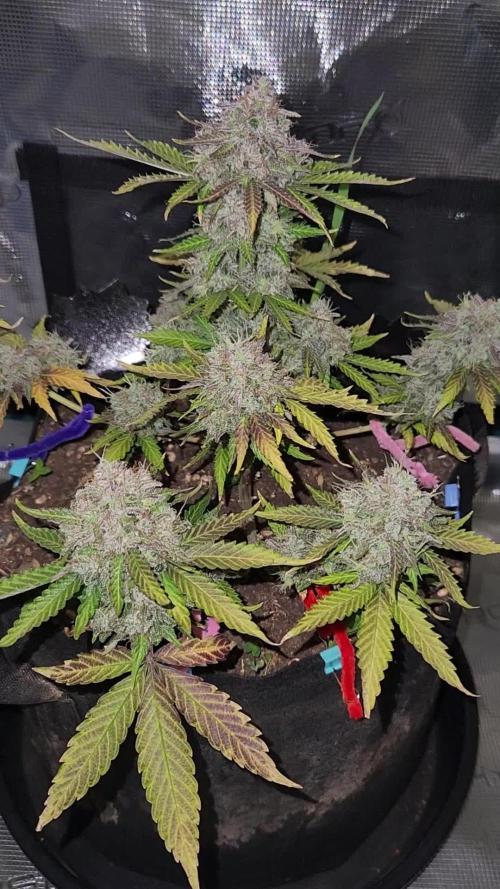
NL no para de engordar, y tiene el olor típico de las Northern Lights de la Old School. Vaya pasada! 😀
Las OF siguen consumiendo sus hojas de abanico y tienen el mismo tratamiento que el resto... Me da que es una cepa bastante débil... 😑
Día 47 (27/06)
Continuamos con organic way!
Se echa en la parte superior del sustrato
11 gramos de harina de huesos
11 gramos de guano de murciélago (por planta)
Se riega con la siguiente mezcla: 1 ml/l de Melaza + 30 ml/l de Té de Hummus
OF#1 = 250 m
lCC y RB = 500 ml
NL = 1.000 ml
NL está cogiendo un grosor de cogollos y un olor de la vieja escuela brutal! 😬
Día 48 (28/06)
Día nublado. Nada que decir
Día 49 (29/06)
Mi primer riego con EC controlada
Gracias maestro @deFharo por los consejos!
Mezcla: 1 ml/l de Melaza + 40 ml/l de Té de Hummus en agua del grifo reposada
ph = 6.5
EC = 1.6
OF#1 = 250 m
CC y RB = 250 ml
NL = 0 ml (la maceta está muy pesada)
Día 50 (30/06)
No hay necesidad de riego
Los colores son impresionantes y los cogollos están engordando y cubiertos de tricomas :-D
Día 51 (01/07)
Gracias al maestro @deFharo introduzco una nueva receta al cultivo: el Guanato
Os la dejo más abajo, pero el mérito es todo de @deFharo
Mezcla de riego: 1 ml/l de Melaza + 5 ml/l de Humato PK + 5 ml/l de Guanato en agua del grifo reposada
ph = 6.4EC = 1.680
OF#1 = 250 ml
CC y RB = 500 ml
NL = 1000 ml
__________________________________________________________________________________
Receta de Guanato
Ingredientes:
125 gr de guano de murcielago
1 litro de agua (osmosis o grifo reposada)
25 g de hidróxido de potasio
Pasos
1- Disolver el Hidróxido de Potasio en 500 ml de agua
2- Añadir el guano de murcielago y remover
3- Revolver o agitar varias veces
4- A las 24 horas añadir el resto del agua (500 ml) a 40 - 50 ºC
5- Revolver varias veces al día durante al menos 3 días (alargarlo hasta 6-7 días si no hay prisa)



Likes
1
Share

@LokalGrenz
Follow
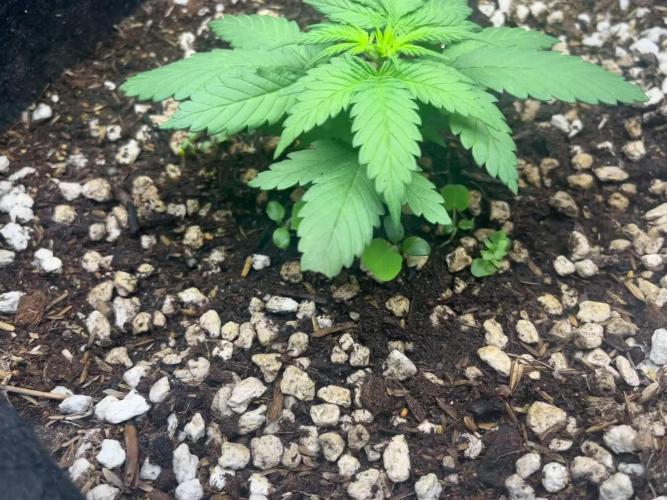
She’s is looking good and coming along fine will be feeding tea once a week
Likes
22
Share


@NanoLeaf
Follow
End of Week 16 (9th week of flower)
Final week of flower.
Turned the lights wattage down at the end of this week to 400W to mimmic the sun moving further away from the earth during Autumn and Winter seasons. This also creates an overall cooler temperature signalling to the ladies that the end is in sight. This also protects the trichomes and ensures they don't get damaged and also dropped the
The ladies are fading more and more into their vibrant autumn shades. With hues of pink and purple that makes me so excited!
Feeding just PH correct water until harvest, which is around the corner. We are currently on day 63 of flower and checked the trichomes - just a few specs of amber and the cloudy trichomes are more prominent although there are still some clear ones.
We will push to harvest within the next couple of days, around day 67-69
Pest Report: None
Smell Report: Staaaaanky!
