


Likes
Comments
Share


@Bluemels
Follow
Tag 40: Ich gebe zusätzlich Alg a mic in das Gießwasser zur Stressbehandlung.
Tag 46: Ich habe mich entschlossen diesen Grow abzubrechen. Seit kurzem werden die Blätter hell und fühlen sich trocken an. Ich vermute es liegt daran das ich einmal ein großen Schluck zu hartes Wasser genommen habe. Ich hatte einmal zuwenig Gießwasser vorbereitet (PH wert eingestellt 6,3) und es lief unten nicht raus so nahm unvorbereitetes (PH wert 7 etwa) Wasser zum Schluss, zunächst wuchs die Pflanze normal weiter, doch nach 1-2 Wochen stagniert das Wachstum die Blätter sind hell und trocken, auch die neuen Triebe sehen nicht gut aus.

Likes
18
Share


@JeyGanesha
Follow
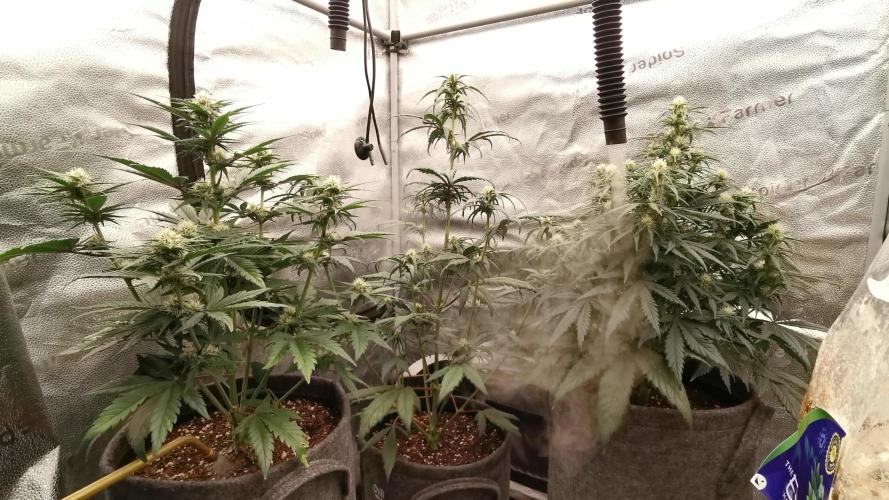
4°settimana di fioritura colori e profumi iniziano a uscire forti😂✌️💪e la deliziosa 🍓🦍
Oggi 5/12/2024 il delizioso profumo di big Babol alla fragola 🍓😉👍😋🤤🤤🤤🤤

Likes
9
Share

@CannaArchive
Follow
Light intensity was increased to around 1000 PPFD under stable conditions.☀️
Temperature stayed at ~25°C with ~50% RH.
Both plants remained in their 20L final pots.
Watering was done every 2–3 days, based on pot weight, using RO water + CalMag.💧
Additionally, the plants received 1x BioTabs Bio PK during this week.
By the end of Week 6, the stretch was basically finished.🌿
Apricot #2 remained the tallest plant in the tent.
Apricot #1 stayed more compact but looked overall better structured and more balanced.
Bud sites were clearly forming, though still relatively small at this stage. A large number of pistils were visible, showing that the plants had fully transitioned into flower. 🌸
The first trichomes were already noticeable, but aroma was still subtle.
Leaf color remained a healthy green, and overall plant health looked stable and strong.
Likes
22
Share


@Greenwolvesfarmer
Follow
Ha reaccionado bien a sus estímulos , agua , CO2 , luz y amor...
Esta semana le daré solo agüita para que descanse de los fertilizantes , de todas maneras , todo depende de la planta misma ...esperando no maissss
Likes
18
Share


@Grower_Of_Persia
Follow
week intel:
every thing is amazing girls are ripening , we can now cause more e.c stress than before because:
1-plants are very mature now and can handle stress
2- at this week its the only stress that is helpful for increasing plant resins
stresses :
E.C stress around 1.6 and 1.7 3 times a week
feeding:
i replaced B-52 with Bloom Base Nutrient
i feed them 3 times this week with this order :
day 1 : i feed them high with base nutrients(calcium & micros (half dose) + Bloom) about 850 ppm - 1.7 e.c to cause a little stress.
day 3 : i feed them high dose of Top-Max + Bloom Base Nutrient around 877 ppm - 1.7 e.c to cause stress .
day 5 : i feed them high dose of Feeding Booster around 850 ppm - 1.7 e.c to cause e.c stress again
guide of the week :
last weeks are time of ripening , and the only helpful stress is e.c stress at this moment

Likes
23
Share

@Bizarrr
Follow
Zdar všem.Tak jsem se dočkal a poslední hlášení s mými opičkami.Den květu 67. Jantary už jsou místy vidět,takže přesně čas.Jak bych to shrnul.Troufam si říct že jsem dost načetl o indooru,ještě než jsem vůbec v boxu rozsvítil a to mi dost pomohlo a byl jsem připraven.A samozřejmě videa od Hombreho jsem měl nakoukany,díky ti takhle veřejně. Výběr semínek: Věděl jsem že chci Barney's, takže klasika na stránkách filtr (vysoké thc,vysoký výnos atd) a pak jsem kouknul na HD na žebříček a vybíral mezi Zillions a Gorilla zkittlez. Volba padla na gorily,ani nevím proč vlastně.Seminka 3/3 vyklíčila a mohli jsme začít.S nějakými problémy jsem se ani moc nesetkal,občas nějaké malé deficity v kvetu,hlavně na jedné holce,ktera byla víc žravá a jako jediná končila na 3ml/L calmagu. Největší strach jsem měl ze zvířátek,jelikož jsem měl smutnicomix,jak se u nás přezdívá Biobizz lightmix.Ale ani muška naštěstí.Co bych dnes udělal jinak?Nic zásadního mě nenapadá,možná vzít v květové defoliaci ještě víc tich spodků,ale samotného mě zajímalo co tam dole vyroste.Uvidime další kolo,jestli to nebylo štěstí začátečníka.Ale já jsem maximálně spokojen a na tom záleží nejvíc.Léto asi pauza a na podzim,začneme další kolo ICE Tower (Hombre seeds) a možná ten Zillions k němu přidám.Takže hezké léto všem 💚

Processing
Likes
5
Share


@AgroCultiveta
Follow
Son fotos y videos de múltiples cultivos debido a que nunca e realizado un seguimiento como tal, espero realizar uno ahora!
Nutrientes Utilizados en general Trybac y Trypack biobizz.
Las criticas siempre serán bien recibidas!😋
Espero les guste el contenido!


Likes
15
Share


@Mazgoth
Follow
I'm only watering with just a ph all those days(writing this at D10) I will update it when I will start using nutrients
D12/14 I start using 0.5ml of nutrients
Likes
12
Share


@Kloud9gardenz
Follow
Don't have a lot of time these days to take pics so I'll sum things up. CO2 got outta control and the plants took tf off literally. The video is around middle of week 3, I had to flip at week 4 BC I literally ran out of room and I had to constantly defoliate.

Likes
Comments
Share

@alex93
Follow
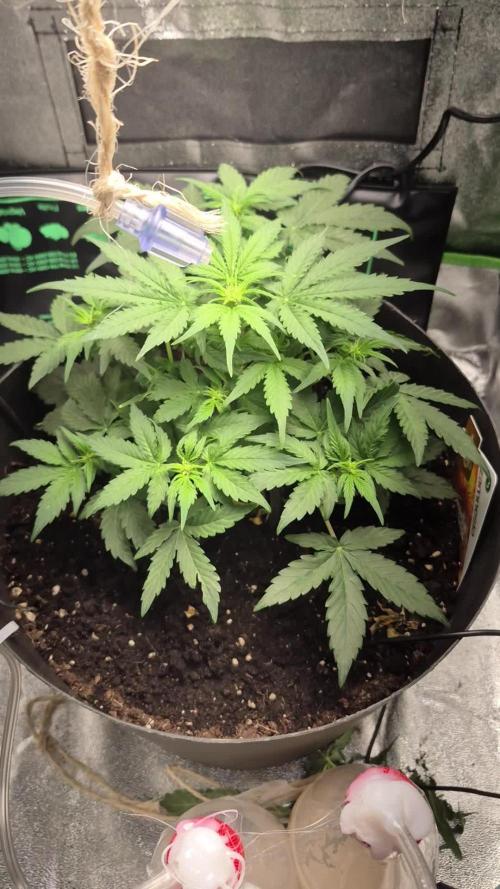
Vigorous plant (I avoid excessive defoliation). Despite a slight light stress last week, I quickly solved the problem and she recovered without any worries. It started its stretch and flowering well. I'm about to start Cal-Mag to support this!


Processing
Likes
14
Share


@Slurpy_Terpy
Follow
Day 84 (day 21 flower):
Major defoliation on both the Brain Cake and Bakers Delight. Both the ladies are getting sticky! The Brain Cake smell is pretty neutral but the Bakers Delight has a bit more smell and reminds me a bit of a Tangine Kush (Rare Dankness) I grew a while back.
Changed the water reservoirs to the flower bloom booster nutrients (Plagron green sensation).
Day 86 (day 23 flower):
They seem to be coming along nicely, a tiny bit of progression in the buds since defoliating. The Bakers Delight is more sensitive to nutrients so added some tap water to dilute the nutrients a little (TDS 510 -> 470).
Day 87 (day 24 flower):
Both doing well. The Bakers Delight seems to be reacting positively to the slightly lower nutrient concentration. Both water reservoirs between 5.7 and 6.3 at all times and around 20-21c.
Day 89 (day 26 flower):
Everything seems fine, water stats are stable, for as far as I can see no deficiencies or excess, bud are growing in height and seem to be producing nice amounts of thc giving the buds a slightly grey color. Some of the pistils are turning orange very early, might be due to stress the past weeks, or the new full spectrum light or just genetics. The Bakers Delight currently has a stronger smell, also a more peppery background. The Brain Cake has a neutral fresh 'plant material' green hash smell, nothing special going on yet with her odor.
--> Slowly been hanging the light closer, at 50cm from the Brain Cake and 60cm from the Bakers Delight, will slowly lower till its approx 40cm from the Brain Cake and 50cm from the Bakers Delight (because the BD is 10 cm shorter...). Hopefully this will get the top buds to get even bigger and stronger and hopefully aswell the bottom buds will pull some weight and most importantly the bottom buds need to ripen as fast as the top buds which is usually the main issue when they dont get enough light... Curious to see how it plays out. Might need another minor defoliation around day 40-44.


Likes
8
Share

@Aleks555
Follow
Привет, друзья, привет, садоводы!
Сегодня 3 июля 2026 года, и это день сбора урожая! 🌱✂️
Как проходил этот процесс выращивания? Это был непростой путь, но мы справились. Самым сложным было не выращивание самого растения, а всё, что происходило вокруг нас. Те, кто следил за этим дневником с самого начала, точно поймут, о чём я говорю. А если вы только что нашли этот дневник, вы можете проследить весь процесс выращивания от начала до конца и понять историю, стоящую за ним.
Я хотел бы от всей души поблагодарить **Fast Buds** за семена, за вашу поддержку и за такую потрясающую генетику.
Несколько слов о **Banana Purple Punch Auto RF3**:
Семена проросли всего за 24 часа. С самого начала она хорошо росла. Мы допустили несколько ошибок, но генетика оказалась невероятно сильной и без проблем справилась со всеми стрессами. Она также очень хорошо отреагировала на LST (низкострессовую тренировку).
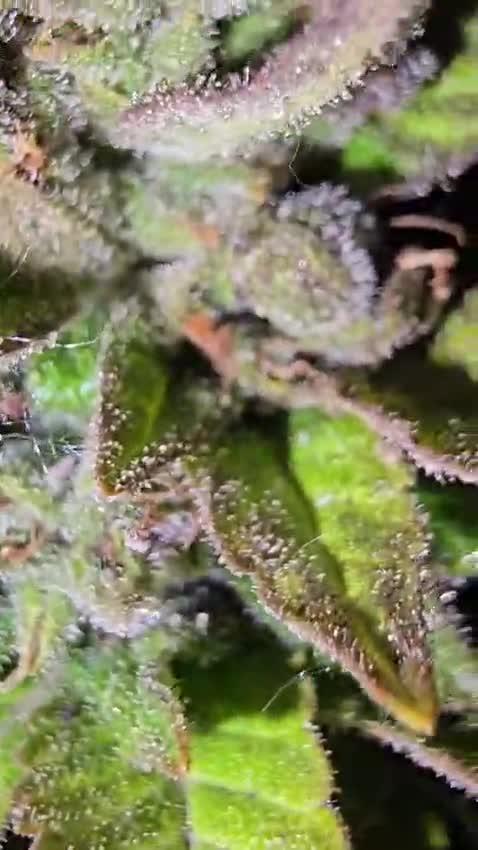
Аромат невероятно интенсивный — очень сильный и насыщенный. Шишки полностью покрыты трихомами. Мы попробовали небольшой образец около трех недель назад, и я могу честно сказать, что он был превосходным: сильный, мощный и восхитительный. Теперь мы с нетерпением ждем, как разовьются аромат, вкус и эффект после надлежащей сушки и ферментации.
В заключение хочу поблагодарить всех, кто следил за моими дневниками выращивания на протяжении многих лет. Спасибо каждому гроверу — как новичкам, так и профессионалам — всем селекционерам и всем, кто поддерживает и помогает этому замечательному сообществу расти.
Увидимся на следующем цикле выращивания!
Как только оно полностью высохнет и будет подстрижено, я сообщу вам окончательный вес.
После того, как у нас будет возможность попробовать его еще раз после надлежащей сушки и ферментации, я также поделюсь своими мыслями о вкусе, силе воздействия и общем эффекте.
Likes
10
Share


@UrbanFog
Follow
Plants continued to mature this week and all the buds are getting fat they will have there last nutrient feed this week in prep for flushing and harvest next week.
The Lemon Zkittles looks and smells amazing looks amazing. Nearly all the plants look and smell the small, good genetics and breading.
The Cxx is again a very stable genetics and flowered and smells exactly as the last grow did. Good genetics.
The Peyote Cookies and Shishkaberry also grew well and similar, good genetics.
Afghan Kush amazing buds and very earthy smell.classic
The gorilla cookies had a rather large variation in pheno types but all look amazing and each will be a pleasure to smoke.


Likes
5
Share


@Jays_Not_Here_Man
Follow
Started some LST early in the week for the slightly older plant, then later in the week with the other two. I was going to let them go Christmas tree style, but I can tell already they will out stretch the others. Ended up just bending the top and tying with pant ties. This should promote some busier plants.
Still figuring out the Correct Cronk Dosage, it’s pretty strong stuff, just trying to find the balance. Happy Gardening 🇨🇦👊❤️


Likes
26
Share


@pifflestikkz
Follow
Day 22
22/07/24 Monday
Nothing new to report. Starting to see them beautiful fans appear that's all 😁✌️
Day 23
23/07/24 Tuesday
Feed today, giving them straight all nutes Inc flowering nutes.
I will update the dose as they grow and develop a bigger hunger.
(Not sure what's wrong with Overdose #2, bit mutated, we'll see how she gets on 😅)
Video updates 👌💚
Day 26
26/07/24 Friday
De-chlorinated watering pH 6 with 5ml calmag to 5L water.
Watered each with 250ml and had small run off.
I will continue to feed/water with small run offs to help prevent salt build ups.
Video update.

Processing
Likes
50
Share


@WsCalighost
Follow
Nice flowering stretch time to see some buds soon i guess.
It has stretched nicely i guess during the flowering period.
I have upgraded the tent size to 1m x 1m x 2m and seems to be better air flow and humidity levels.
Also changed the hygrometer to a AirComfort bluetooth wireless monitor which gives great detailed information on temps and humidity as per picture added.
Finally pistils have developed cant wait to see bud sites.