


Likes
Comments
Share

@DeepRootsGrowTrees
Follow
MATERO BLUE by KANNABIA
Week #15 Overall
Week #1 Flower
This week it's that time we all wait for as growers she has flipped and is starting to flower she's looking good. Stay Growing!!
Kannabia.com MATARO BLUE

Likes
15
Share


@northern_rookie
Follow
Hifi 4G seems to be a bit sensitive to the current and previous feeding levels. Had multiple leaves exhibit nutrient burn. Otherwise all seem to be happy. Hifi 4G, NL/Skunk and Blueberry continue to lead the pack on Bud development. God I hope I don't screw this up!


Likes
11
Share


@TOTEM
Follow
I don’t say I’m impressed, because it wouldn’t be enough. This plant stretched in a way that I’ve always dreamed about. She’s a REAL sativa, but not all the phenotypes are the same. My other Dance World is not as strong as this one, and she’s not going to become as tall as this as well.
The heat lamp is now very close to her pot, and this makes the soil to drain up faster. This means that I have to water (+ nutrients) twice a week, instead of one like all the other plants inside the grow room. But this is not a problem since she’s very big and needs a lot of food to manage all that stuff.

Likes
84
Share


@Mrs_Larimar
Follow
Friday, 2021-06-25
Definitely the last Week of Flower for her, soon Harvest will come
And she stands now under the VIPARSPECTRA XS-2000
Light is on 75 Percent, to get used to... because the Lights are very Powerful
and I dont want to burn// stress her in her last Days
Leaves are discoloring, all Pistils are Orange/ brown
Trichomes are all Milky and afew Amber ones
Tomorrow she gets agood drink with " Clean Fruits" to help her devour the Nutrient-Remainings
Shopping Link for the LIghts:
Amazon US:
XS1000 10% off: it10mlarimar http://yx-8.cn/0y-6
XS1500 5% off: it15mlarimar http://yx-8.cn/0yA
XS2000 5% off: it20mlarimar http://yx-8.cn/0y2Y
XS4000 5% off: it40mlarimar http://yx-8.cn/0y5k
Amazon Canada
XS1000 10% off: it10mlarimar https://amzn.to/38udUVe
XS1500 5% off: it15mlarimar https://amzn.to/3esVUyr
XS2000 5% off: it20mlarimar https://amzn.to/3l5zAfg
XS4000 5% off: it40mlarimar https://amzn.to/3l7k5Uj

Likes
14
Share


@Mr_Dior21
Follow
Another slow week. I increased light schedule to 13/11. I’m going to slowly lower the time of light until by the time harvest day comes it’ll have a longer dark period. I’m also going to stop feeding the bottle nutrients my soil is moist still so I gotta wait. I’m predicting a couple ounces this grow.
Likes
12
Share


@Charly_grower
Follow
Vamos bien el olor es dulce fuerte afrutado y de flor muy prensada. Esta casi listo todo para poder disfrutar de estas deliciosa hiervas..muchos tricomas
Regadas con amor y mucha felicidad
Charly Grower 👨🌾

Likes
8
Share


@Canna055
Follow
Flower day 29
So 4 weeks done in flower the cherry Poppers are doing fantastic could lollipop them a bit more tbh but they’ve got yesterday the last topdess feeding till harvest just pure water
The HerzOG plants are 2 completly different phenos the one to the left seems to be more sativa dominant & the one to the Right more like a indica- hybrid
At least 5-6 weeks to go from now till harvest


Likes
57
Share


@Ultraviolet
Follow
Views expressed are my own. All opinions are my own. The opinions expressed here belong solely to me and do not reflect the views of Growdiaries or Grandcru Genetics.
The cannabis strain Grape Guava can be a purple strain, depending on its specific phenotype and genetic makeup. While not all phenotypes of Grape Guava are purple, some variations, such as the Zatix Grape Guava, are noted for their striking purple appearance due to the genetic expression of anthocyanin pigments.
Grand Cru Genetics is a cannabis seed bank that emerged in 2018 from a group of breeders in Madrid to provide a satisfactory experience to all cannabis users.
"If we do things, we do them well. Due to our experience in the sector and our taste for excellence, we know high quality and we seek it in everything we propose and do."
"We have a “cultivate without giving up” philosophy that we apply to everything we do. We do not give up, we are friends of change, and we adapt as necessary in a still restricted sector."
"We speak relaxed because we know how to relax. We are not intense or preachy; we accept everyone as they are, and we understand that farming is not for everyone. But for those who do, we are here to accompany you. We like to do it and tell it. We are experts in the field because we are the first to do it. We speak from experience and connect with others because we share the passion for cultivation."
"Cannabis has the ability to show us a world of possibilities. When you cultivate and live its growth process, you enjoy a path full of emotions and not just the final destination. At Grand Cru we find beauty in small things. We are attentive, observant, detail-oriented and aware of everyday things, and we savor them without rushing."
In a garden of green, Grape Guava gleams,
With its fruity aroma, enchanting dreams.
Clusters of grapes, guava's sweetness ignite,
A strain so divine, in purple and white.
Euphoria whispers, a lush fruity haze,
Grape Guava's embrace, a tranquil daze.
Off and away.@1400ppm. The increased CO2 allows plants to thrive at higher temperatures, which in turn necessitates higher humidity to maintain the ideal VPD for healthy growth and transpiration. 80F -5F = 75F LST with 70% RH = 0.72 kPa. Higher temperatures and humidity promote rapid growth, nutrient uptake, and photosynthesis while maintaining a lower stress level. Temperature influences the rate of enzymatic reactions involved in aerobic respiration. Enzymes, such as those involved in glycolysis, the Krebs cycle, and the electron transport chain, work most efficiently at an optimal temperature range. In low temperatures, enzymatic activity will slow down, thus reducing the rate of aerobic respiration. In high temperatures, enzymes can become denatured, thus impairing their function and stopping the process of aerobic respiration. Glucose is the primary fuel for aerobic respiration. The rate of aerobic respiration increases with the availability of glucose, as it is the starting point for glycolysis. If glucose levels are low, cells may rely on alternative energy sources such as fatty acids or amino acids , but these processes may yield less ATP or be less efficient. To determine this effect, carbon dioxide volume was measured (as carbon dioxide is an output of aerobic respiration)
18/6 with the 6 being IR. The near infrared (IR-a) borders around 700nm up to 1400nm @ photon par flux density of 1.8 instead of darkness, keeping temps overnight a neat 77F-80F.
I think of my tent as a lung. What goes in must come out. When the rate of air going out exceeds the amount of air coming in, it creates a negative pressure. Tent concaves (bends in). If set up correctly, the RH will begin to drop slowly to the desired level I set, and the extraction turns off when it reaches the desired RH. The plant, as it performs cellular respiration, will always release more water into the air; therefore, the RH% of the tent overnight will increase, as long as oxidative phosphorylation is occurring. As soon as the RH% creeps back up to 55%, the extraction turns back on, over and over. This creates a strong pressure differential, which will work wonders with mass flow. Replicating high and low-pressure fronts in nature. Critical for oxygen diffusion at the critical time of peak cellular respiratory function..
Moisture will not transfer from a saturated atmosphere to another if that air is already at or above its saturation point, meaning the air can't hold any more water vapor. Once I understood that water is produced as a by product during cellular respiration, specifically at the very end of the electron transport chain (ETC) where electrons are finally transferred to molecular oxygen, the higher the RH of the air, the more resistance there is for more moisture to be added to that environment, and effects the ease with which it does so. But none of that water comes from the pot; it's pulled from the air. If you run high daytime RH, your medium/pot is 100% reliant on transpirational root pull to move water. ZERO evaporation happens across the atmosphere if the tent air has high RH%, the medium cannot release its water through evaporation. Once a canopy develops, light no longer slowly wicks and evaporates from the topsoil. The Soil-Plant-Atmosphere Continuum (SPAC) describes the continuous pathway and process of water movement, driven by a gradient in water potential, from the soil, through the plant's roots, stem, and leaves, and finally evaporating into the atmosphere through transpiration. There is evaporation, there is transpiration, and then there is evapotranspiration; Evapotranspiration (ET) is the combined total of two processes: evaporation (water lost directly from soil and surface water into the atmosphere) and transpiration (water released from plants to the atmosphere through their leaves). Evapotranspiration represents the total amount of water that moves from the medium into the air. There is no such thing as a medium with too much water, only a medium that retains too much for too long.
The water must always flow efficiently from one atmosphere(Medium) to another(Air) in a timely manner. Moisture is a critical factor for bacterial growth and decay. Dictating how long it's allowed to sit in any one location for any given period is a key preferred control. To ensure a net reduction in a bacterial population, the rate of removal (ET) must exceed the rate of bacterial growth (decay rate), which is often modeled as a growth rate for the specific bacterium under the given conditions. By optimizing daytime VPD, we also optimize conditions for bacterial growth to explode exponentially above 77°F.. If water is allowed to sit in a medium without an escape within a timeframe, nothing good will happen. IF High RH is maintained overnight as well as during the day, placing 100% of water movement at the behest of daytime transpiration, roots can only pull where they can reach, and if soil is compressed above a certain point, moisture will become trapped in a medium with no way of moving day or night. This will begin the countdown for decay to take hold. When water stagnates in a medium, it loses oxygen, creating anaerobic conditions that foster the growth of harmful microorganisms like bacteria and fungi, which can produce toxins and disease vectors.
Thigmomorphogenesis, the process by which plants respond to mechanical stimuli like touch by altering their growth and development, results in significant morphological changes to improve survival against mechanical perturbations. This complex response involves sensing touch and initiating physiological and genetic responses, leading to changes in form and structure over days or weeks. The process is triggered by physical forces such as wind, rain, or touch. Plants adapt to these stimuli by changing their shape and structure, which may include slower growth, thickened stems, or altered leaf development. Plants possess sophisticated mechanisms to detect even subtle mechanical stimuli and initiate responses. A variety of molecules, including calcium ions, jasmonates, ethylene, and nitric oxide, are involved in signaling these mechanical inputs. Touch can induce the expression of genes that encode proteins for calcium sensing, cell wall modification, and defense mechanisms. A plant exposed to constant wind may become shorter and sturdier. A plant that is touched frequently might grow more slowly to conserve energy and develop thicker cell walls. These changes increase a plant's resilience and ability to survive in harsh environments.
Let's get Thiggy with it.
Likes
4
Share


@Mr_nugs_lover_David
Follow
Tiene unos cogollos bien duros y compactos,son muy pegajosos y los pistilos son de un naranja radioactivo,tiene un aroma muy rico como terroso y mentolado

Likes
21
Share


@reirrac1
Follow
Started out pretty slow, then blew up like crazy during preflower before running into deficiencies followed by nute burn. In the end I switched to organic nutes and she came out great! Big frosty purple buds consistently ping pong ball sized. Smells like straight skunky oranges. Although this took a really long time for an auto, I would grow this again!


Likes
10
Share


@SubliminalSociety
Follow
It's time. The trichomes have clouded over, a milky haze obscuring the clear heads. The smell is faint. Very herby of thyme and salvia. The buds are small and round.

Likes
14
Share


@CANNASIM
Follow
Topped N1.
Using only water, and gave a dose of compost tea i have brewed, follows the recipe:
———Basic tea with a twist #1———
20l unclorinated water, using a filter, but vitamin c powder is an option or aerating for 12 to 48h.
1 cup worm castings
1 cup bokashi
1/3 cup molasses, unsulfured organic.
2 1/2 tbsp Recharge
Brew aerating for 24h, using a Hydro air pump. EC was at 0.4 and PH a bit low but used full strength no ph adjustment.
A basic tea would be only worm castings and molasses. For a nutrient tea is possible to add kelp extract, fish emulsion, bat guano and so on, best to check the EC specially if using guanos before using full strength...
Watering schedule is more or less every other day 1 liter. Tea every third watering +-...
Next week Biobizz will enter the schedule in a discrete dosage.
For this strain i’m Running two plants, one is behind.
Likes
8
Share
@HashishOculus
Follow
Week 12 - Flower Week 7
12. of Feb. Day 78 - Flower Day 43
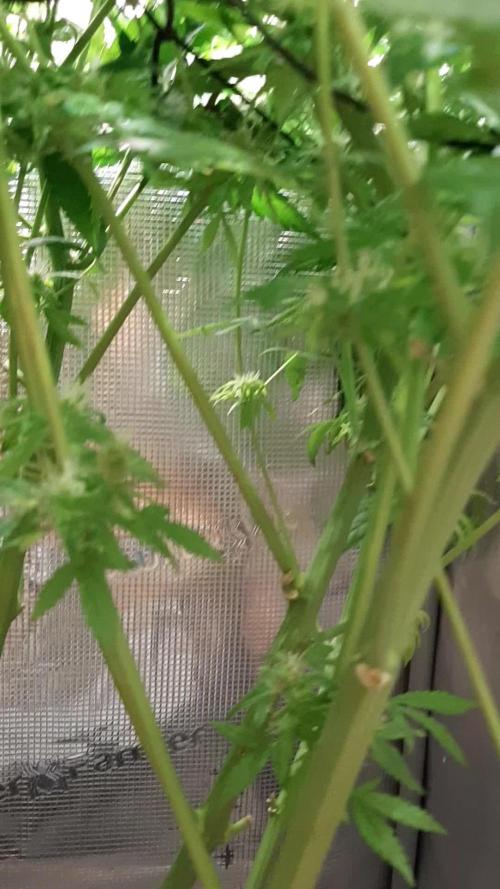
Reservoir steady in the mid-1.6 EC range. pH behaving normally after corrections. Drinking roughly around a liter per 24h. The tops are mostly orange. Very few white pistils up top. That’s what’s dominating my attention. It feels early for them to look this mature. I start questioning whether the late-January catastrophe pushed her into finishing prematurely. Trichomes look mostly clear on closer inspection - not milky like I first thought. That’s important.
13. of Feb Day 79 - Flower Day 44
Pre top-off EC dips slightly - small sign of uptake. pH stable in the mid-5s after correction. Still fixated on the topmost crowns. They look static. I compare pictures from a week earlier and struggle to see obvious swelling. That’s frustrating.
14th of Feb Day 80 - Flower Day 45
Numbers stable again. EC mid-1.6s, pH mid-5.8s after top-off. Drinking steady but not aggressive. I consider whether development has stalled. Buds look healthy, not deteriorating - but not exploding either.
15th of Feb Day 81 - Flower Day 46
The mental tension is still there. Considered drastic action (flush), but decided against it after reviewing the data. Numbers weren’t extreme. Plant wasn’t collapsing. Chose stability instead of panic. EC held in the mid-1.6 range. pH stable. Drinking continued. EC trends stable. pH predictable. Roots healthy. No worsening damage.
16th of Feb Day 82 - Flower Day 47
00:15 pre top-off:
pH 5.5
EC 1484
She drank just over a liter. After top-off:
pH ~5.8
EC mid-1.6
This is the first real shift in perspective. I notice that underneath the canopy, popcorn buds and mid-level sites still have completely white pistils. That’s a crucial observation. If she were truly finishing early, those would not be fresh and white. This doesn’t look like shutdown. It looks uneven maturity between canopy layers.
17th of Feb Day 83 - Flower Day 48
00:10 pre top-off:
pH 5.73
EC 1564
After circulation:
pH 5.75
EC 1620
EC meter seems to show too low values at first.
Drinking 1L again.
This is the day I actually see bulking happening. Not on the very tip of the highest tops - but right below them. The secondary crowns are stacking visibly. Calyxes swelling. Structure thickening. I realize I’ve been staring at the most stressed tissue (the very tops affected by the earlier light/EC incident) instead of looking at the plant as a whole.
18th of Feb Day 84 - Flower Day 49
Pre top-off:
pH 5.92
EC ~1.6-1.7 (meter slightly inconsistent but trend stable)
After top-off:
pH 5.87
EC 1620
She drinks over a liter again. The brown pistils on the very top now feel less like “premature finish” and more like scars from the January event. Lower pistils remain white. Calyxes are not collapsing. Bud density is slowly improving.
This week ends in a different place than it began.
Not explosive. Not perfect. But alive, feeding, stacking - and very much still in flower.
Next week should hopefully be all about stability and bulking.

Likes
21
Share


@Lontra
Follow
One of the targets for that grow is to keep the height of the plant as low as possible, because i only have about 80 cm from the bottom of the box to the LED lights as available space for the plant, so i thought i will a give that LST a try. Additionally i slowly started incresing the power of the LED to 60%.
By now (a few weeks later) I already know that i started the LST a little bit early, but the plant was reacting well and kept growing.
Furthermore I added a cheap webcam to my setup to create some timelapse videos. It's not a high res camera, but I still find it very interesting to watch that plant grow in timelapse 😁
Likes
32
Share


@BigBadLion
Follow
And this is it! The last week! 😲 And an early update as well! 😁
This is the last video and last photos of my girls before they were chopped and I'm quite happy right now! Almost everything went how I planned it, which is great 💪
I lowered the lights (5cm) and I did a good chunk of defoliation to allow more light penetration which I believe totally helped! Some of the branches got a lot of weight and could barely hold themselves (good thing they didn't break!) I also think that I should've chopped my girls last week because I got way more amber trichomes than what I originally wanted 😝 but eh, I got more weight in exchange! 😆
Oh, I also gave my girls some ice cold water! Hoping to get some extra purple!
There are a lot of stuff this week, so please let me know what you all think about them! :D
See you all in the next and final update! 👋


Processing
Likes
15
Share


@Sup3rNov4
Follow
Day 2. All the girls are coming along nicely one has a little heat damage to the main cola so redirected the airflow. almost all fan leaves are naturally falling off
Cool little slide show of there life cycle. https://lightmv.com/v/mqatait] Link to Slide Show
Day 4. So so so close to harvest I tried to check the trichomes but the scope got covered in THC 😂 and the iPhone 12 Camera sucks so can't get a picture of them


