


Likes
Comments
Share


@Lucyfer
Follow
Whats up?
sorry for no post last week, I had dengue. feeling much better now but plants sure suffered a bit trought the week, ran out from nutrients and did not have the strength to care for them. Gladly, I had some assistance with my own health issues, so the little energy i had i spent on training the girls and watering them, as you can see there was a deficiency that led to some bleaching and discoloration of new growth and old, water levels started to change and it stabilized in 145 PPM and 6.1 pH.
I was worried about not giving them anything to eat, but when i spoke to Howweedgrow about it, he recommended me to only water them without nutes, although i think he did not read my message properly as he answered with a "its better to water them than not at all", when my original question was in regards of making some food without FloraMicro (the ONE nutrient i ran out of), luckily i was able to get some and in 5 days time it arrived.
Firls looked like this for the week
Lvls in bucket where as follows:
EC 283 uS/cm
TDS: 141 ppm
pH 6.02
Temps 23.3 C 73.9 F


Likes
4
Share


@KhaVigga
Follow
now im start to using many kind of sugar till harvest, beer-fpj-molasses-coconut water...

Likes
15
Share


@IsseyBukkake
Follow
We've made it to week 3! (10/12/20)
I'm very happy with how the girls are going, they have definitely put in a HUGE amount of work over the past 7 days.
Plants 3 & 8 are very similar(extremely fat leaves & extra bushy)
Plants 1 & 5 are similar (smaller phenos reacting to nutes slightly differently)
& Plants 2, 4, 6 & 7 seem to be a cross between the previously mentioned phenos(not too small and not too big/bushy & reacting to nutes fine)
Feel free to compare Week 1, 2 & 3 to see the differences.
Nutes are staying the same this week, although I will be spacing feedings out a little bit further(18 hours-ish), as well as feeding straight PH'd water once a fortnight.
I am contemplating hooking my simple drip-to-waste irrigation system up, although the girls are pretty close to the medium still and the halos sit 5-10cm above the medium, meaning fan leaves would be drooping onto the wet halos, so I'll give it another week and see how they're doing :)
Update 11/12/20 - day 22
The girls have beefed up quite a bit over the last 24 hours, I'm really looking forward to seeing a stretch soon :)
No feeding today & will water plain ph'd water tomorrow.
Update 12/12/20 - day 23
Gave the girls straight ph'd water today with little run off.
Veg growth is really starting to boom now, looking forward to seeing where this grow goes!
I'm gladly accepting any tips or tricks, as I'm still only a beginner to indoors.
Update 13/12/20 - day 24
Girls are looking great today, not much to report.
They didn't get a feed or watering today as the medium was still wet after a pure watering yesterday.
Update 14/12/20 - day 25
There's been a big increase in growth over the past 24 hours.
All the girls besides the 2 smaller phenos look 100% happy, the smaller ones have looked a little weird since day 1(Weird as in colour of the fan leaves look deficient of something, but I'm not sure what.
The girls will be getting a full feeding today.
There's still no signs of sex but they are feminised seeds.
Update 15/12/20 - day 26
Girls are looking happy today.
Temps are back to normal after a heat wave in my city(its only going to get hotter from here on out).
No feeding/watering today, pots are heavy/wet enough.
Started using iphone for photos now, my only lens for my DSLR is useless for most grow related photos.
I will upgrade my lens before next grow.
I received my new silenced fan today! I couldnt be any happier :)
It is a silenced Sigilventus SE-A150J, which I have set-up with a brand new Can-lite carbon filter.
I went from a rocket loud eBay fan to a completely silent inline EC fan :D
I hope the girls like the silence!
Update 16/12/20 - day 27
The girls are continuing to boom! and I'm over the moon about it :D
I gave them a full feeding today.
I have seen white pistils coming out of calyx's on most of the girls, so i'm hoping they start to flower soon.
I'm having weird issues with my humidity, it seems to be fine at 40-50% for 70% of the day, but the remaing 30% of the day it goes up to 60-65%.
Temps stay the same in the 5x5 tent, I have ducted air-con in the house which is on most of the day.
Thanks for viewing! :)

Likes
28
Share


@OrganicPower
Follow
Week 6 flower, half way there! Buds are starting to fill in now and getting some decent frost. A couple of tops are getting more light than others, and fattening a bit more and looking real nice. It looks like there is some purple starting to come out at the tops. Also spotted some discolouration on a few leaves closest to the light, so I turned the one light down to 60-75%, no need to push it at this point and burn her up! She will go as fast as the soil and environmental conditions will allow her to. Hand watered in Gaia Green Soluble Seaweed Extract 0-0-17, otherwise water drip is running on same schedule. Just using straight tap water that sits in a 30 gallon reservoir with a submergible water pump running 24/7 breaking surface and aerating water. Water comes out the tap @ 7ph and less than 15ppm. So I don’t do nothing to it, I drink it:) Thanks for the view 🤜 Have a great week!

Likes
16
Share


@HegauHillsFarmers_M11
Follow
Die Pflanze wurde Mitte letzter Woche an Tag 66 geerntet. Getrocknet wurden die Blüten 6 Tage lang bei einer Luftfeuchtigkeit von 53% bevor sie nun ins Glas kommen.
Getrimmt wurde die Pflanze trocken.

Likes
4
Share

@420DeepGrow
Follow
📆 Semana 7
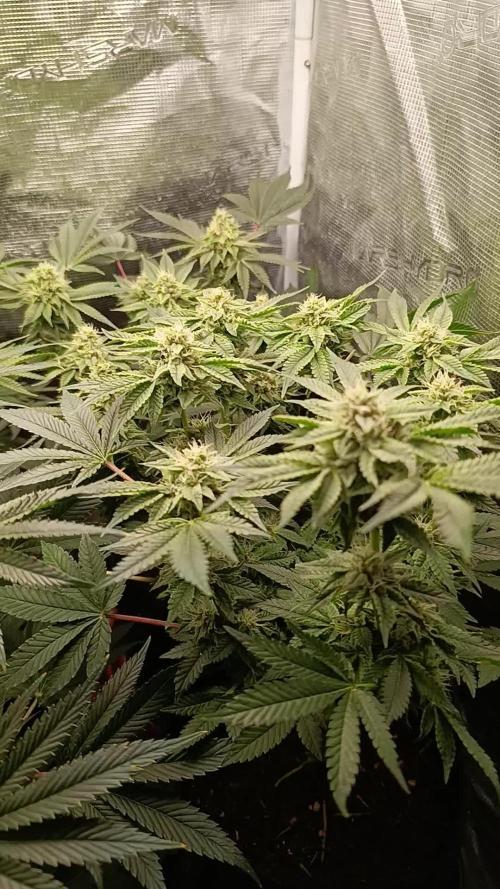
El engorde se acelera, con cogollos cada vez más densos y compactos, formando colas bien definidas. La planta enfoca su energía en las flores, manteniendo una canopia uniforme y eficiente.
La resina aumenta notablemente, dando un aspecto más escarchado, mientras los aromas se intensifican y empiezan a diferenciarse según la genética.
Seguimos creciendo fuerte 💪!
Likes
8
Share


@DogDoctorOfficial
Follow
💙 Project Blue Tent – Week 7
Blue Waffle F1 – Pheno A (Folder 13A)
Welcome back everyone to another week inside Project Blue Tent! 💙🌱
If you're new here, welcome aboard.
This project is all about exploring the incredible Blue Waffle F1 genetics from Zamnesia while putting the complete growing ecosystem through its paces.
Rather than documenting four plants as a single diary, each phenotype receives its own individual journey from seed to harvest. They share the same tent, the same environment, the same nutrition, the same irrigation and the same lighting.
And yet...
They still manage to tell four completely different stories.
As I always like to say:
We're not just growing plants.
We're getting to know them.
────────────────────────
🌿 Week Seven – The Final Cleanup
This week feels like a milestone.
The SCROG has done its job.
The canopy is full.
The plants have established their structure.
And now it's time to prepare everything for the next chapter...
Flowering. 🌸
Plant A is looking absolutely beautiful at the moment.
Her foliage has developed into the rich, healthy green I've been hoping to see, and the overall structure is remarkably balanced. After several weeks of gently guiding branches underneath the SCROG, we've managed to create a canopy that is surprisingly even from one side of the tent to the other.
At approximately 60 cm, she's sitting comfortably within the space we've created for her.
And although she could certainly continue growing vegetatively, I don't want to simply keep filling the tent with more and more foliage.
At some point, you have to stop building the canopy...
...and start preparing it for what comes next.
That's exactly where we are now.
────────────────────────
🕸️ From SCROG to Flower
Over the last couple of weeks, the SCROG has completely changed the way these plants occupy the tent.
Instead of allowing individual branches to dominate vertically, we've been gently guiding them horizontally beneath the screen.
The result is exactly what we were looking for:
A broad, relatively even canopy with many developing tops sharing the available light.
SCROG isn't about forcing a plant into submission.
It's about working with its natural growth and redistributing that growth across the available space.
And looking at the tent now...
I'd say the mission has been accomplished.
The screen is filled.
The plants have claimed their territory.
Now we need to create the best possible starting point for flowering.
Which brings us to this week's main job.
────────────────────────
✂️ Defoliation – Cleaning Today for a Better Tomorrow
This week we're performing a deep, purposeful defoliation across the canopy.
For anyone unfamiliar with the technique, defoliation simply means selectively removing leaves from the plant.
But it's important to understand what defoliation isn't.
It isn't stripping a plant bare.
It isn't removing leaves just because they're in the way.
And it isn't something that should automatically be performed every week.
The purpose is to improve the structure we've already created.
After several weeks of SCROG training, there is now a tremendous amount of foliage packed into a relatively small space. While those leaves are essential during vegetative growth, too much overlapping foliage can eventually create unnecessary congestion inside the canopy.
So we're removing selected leaves that are:
• Blocking developing growth
• Creating unnecessary overlap
• Restricting airflow through the interior
• Shading lower areas that we've decided to retain
• Or simply no longer contributing enough to justify occupying that space
The goal isn't to make the plant look empty.
The goal is to make the plant efficient.
────────────────────────
🌬️ Why Defoliate Before Flower?
Timing is everything.
We're doing this now because the plants are still in vegetative growth and have time to recover before we ask them to transition into flowering.
Defoliation is a form of stress.
Even when performed carefully, removing a significant amount of foliage temporarily changes the plant's balance between its leaves, roots and growing points.
That's why I don't want to perform a major cleanup deep into flowering unless there's a very good reason.
Right now, the plants can take that short period of recovery while they're still operating under an 18/6 light schedule and actively producing new vegetative growth.
After the cleanup, we'll give them time to recover, settle and rebuild their foliage before flipping the lights.
The idea is simple:
Stress now.
Recover now.
Flower later.
Rather than asking the plant to simultaneously deal with a major transition into flowering and a significant amount of pruning, we're separating those events.
One step at a time.
That's especially important in a project like this, where I'm trying to observe the plants rather than simply push them as hard as possible.
────────────────────────
🌿 Plant A – Looking Better Than Ever
Plant A continues to impress me.
The first thing that stands out this week is the colour.
That slightly lighter appearance we saw earlier in the grow has completely disappeared. The foliage is now displaying that rich, healthy green that tells me the current nutritional strategy is working extremely well.
She's vigorous without looking excessive.
Healthy without showing signs of nutritional stress.
And most importantly...
She's balanced.
Her branches have responded beautifully to the SCROG, and the canopy has developed into a very usable structure for flowering.
This is one of those moments where you can look at the plant and realize that the weeks of small adjustments have finally come together.
The topping.
The recovery.
The daily SCROG work.
The irrigation.
The feeding.
The environmental stability.
None of those things created this canopy by themselves.
They're all pieces of the same puzzle.
────────────────────────
💧 The Drip Irrigation System
One of the things I have become particularly impressed with during this project is the automatic drip irrigation system.
It's working beautifully.
With the plants now drinking more consistently and the canopy becoming increasingly demanding, having a reliable irrigation system makes maintaining uniformity across the tent considerably easier.
Each plant is currently receiving approximately 1.2 L per 24 hours, delivered through the drip system.
And the plants are clearly enjoying the consistency.
One of the advantages of automated irrigation isn't simply saving time.
It's repeatability.
Instead of relying on every watering being manually performed at exactly the same interval and volume, the system provides a much more consistent routine for the plants.
That consistency becomes increasingly valuable as the root systems develop and the plants transition toward flowering.
So far...
The system is doing exactly what I wanted it to do.
And honestly, watching four plants respond so uniformly to the same irrigation strategy has been one of the most satisfying parts of this project.
────────────────────────
🥥 Feeding Program
The feeding recipe remains unchanged this week.
And for now, I don't see a reason to interfere with something that is clearly working.
Current nutrition:
• Plagron Hydro A — 1.9 ml/L
• Plagron Hydro B — 1.9 ml/L
• Plagron Hydro Roots — 1 ml/L
Current EC remains approximately:
1.92 mS/cm
with the solution maintained around 18°C and pH at 5.8.
The plants are showing excellent colour, strong growth and healthy leaf development, so I'm perfectly comfortable maintaining the current recipe for now.
We may increase the nutritional strength next week depending on how the plants respond after defoliation and as flowering approaches.
But that's exactly why I don't like changing several variables at once.
First, we observe.
Then we adjust.
The plants will tell us what they need.
────────────────────────
🌡️ Environmental Conditions
The Blue Tent continues to remain remarkably stable.
This week's average conditions were:
• 🌡️ Day Temperature: 28°C
• 🌙 Night Temperature: 27°C
• 💧 Relative Humidity: 65%
• 🥥 Substrate Temperature: 24°C
• 💦 Nutrient Solution: 18°C
• ⚗️ pH: 5.8
• ⚡ EC: 1.92 mS/cm
• 💨 CO₂: approximately 450 ppm
• 💡 Light Schedule: 18/6
• 💧 Irrigation: approximately 1.2 L/plant/24h
• ? Pot Size: 8 L
• 📏 Plant Height: approximately 60 cm
The plants are continuing to respond beautifully to these conditions.
The root-zone temperature remains particularly stable, irrigation is consistent, and the canopy has enough air movement to support vigorous transpiration.
As we move toward flowering, environmental management will become even more important.
The room we've created now needs to support not only vegetative growth...
...but the much denser flowering structure that is coming next.
────────────────────────
🌬️ Why the Cleanup Matters
One of my main objectives with this defoliation isn't simply aesthetics.
It's airflow.
When four vigorous plants completely fill a 100 × 100 × 200 cm tent, the amount of foliage inside that space becomes considerable.
From above, everything can look absolutely perfect.
But underneath that beautiful canopy is another story.
Leaves overlap.
Branches cross.
Interior spaces become crowded.
Air needs to move through all of that.
By selectively removing excess foliage now, we're opening those internal spaces before flowering begins.
That gives us a cleaner structure going forward and makes it much easier to inspect the plants, maintain airflow and monitor the developing flowers.
This is also one reason I'm much happier doing the major cleanup before the flip rather than waiting until the plants are deep into flowering.
Once flowering begins, the priorities change.
I want the plant concentrating its energy on developing flowers rather than repeatedly recovering from major structural work.
So we're preparing the room now.
Clean canopy.
Good airflow.
Healthy structure.
Then...
Flower.
────────────────────────
🧠 Defoliation Isn't About Removing Leaves
One of the biggest misconceptions surrounding defoliation is that more leaves automatically means a worse plant.
That's not true.
Leaves are incredibly important.
They're the plant's solar panels.
They capture light and help drive photosynthesis.
So the objective should never be:
"How many leaves can I remove?"
The better question is:
"Which leaves are no longer contributing enough to justify occupying this space?"
That's the philosophy I'm following here.
We're not trying to weaken the plant.
We're trying to improve the relationship between:
Light → canopy → airflow → growing sites.
And because we've already spent weeks creating the structure with SCROG, this cleanup is simply the final refinement of that work.
────────────────────────
🌱 Plant A's Personality
Every phenotype continues to develop its own personality, even when all four plants are living under almost identical conditions.
Plant A has consistently been one of the more balanced girls in the tent.
She doesn't appear interested in becoming the biggest plant in the room.
Instead, she seems much more interested in becoming an efficient one.
Her growth is structured.
Her canopy is balanced.
Her foliage is beautiful.
And after weeks of training, she has settled into the SCROG extremely well.
Now, after today's cleanup, she looks almost like a different plant.
Less crowded.
More open.
More organized.
And ready for the next chapter.
That's the part of growing I really enjoy.
You spend weeks slowly building something...
Then one day you step back and suddenly realize:
It all came together.
────────────────────────
👀 Looking Ahead
The next few days will be about one thing:
Recovery.
No unnecessary training.
No chasing perfection.
No constantly changing the environment.
Just observation.
The plants have been through topping.
They've been trained beneath the SCROG.
They've filled the canopy.
And now they've received their final major vegetative cleanup.
So we're going to let them breathe.
Let them recover.
Let them continue growing.
And then, assuming everything continues to look as good as it does today...
we flip the Blue Tent into flower. 🌸
This is the point where all those weeks of preparation finally start paying off.
The screen is full.
The structure is ready.
The plants are healthy.
Now we just need to let them do what plants do best.
Grow.
────────────────────────
💙 Thank You
A huge thank you to Zamnesia for making Project Blue Tent possible, from these fantastic Blue Waffle F1 genetics to the complete ecosystem surrounding this grow.
A massive thank you to Plagron for providing the Premium Growbags together with the Hydro nutrient line, which continues delivering excellent results and beautifully healthy growth.
A special thank you to Mars Hydro for the drip irrigation and automatic drainage system. After watching these plants respond to the consistency of automated irrigation week after week, I'm genuinely impressed with how well the system is performing.
Thank you as well to GrowDiaries, for giving growers around the world a place to document their journeys, exchange knowledge and learn from one another.
And finally...
Thank you to everyone following Project Blue Tent.
Every comment, every question, every bit of feedback and every person simply stopping by to see how these four phenotypes are developing means more than you probably realize.
We've spent weeks building this canopy together.
Now the really exciting part is about to begin.
The plants are cleaned.
The SCROG has been filled.
The room is ready.
Flower is next. 🌸💙
Until next week...
Growers Love, happy growing, and take care everyone! 🌱💙



Likes
25
Share


@Gutismoke102
Follow
The girls are fill out beautifully green and healthy. Maintaining a clean and controlled environment is key for a healthy grow so I clean my grow area once a week with peroxide.
Also doing some extra preventative maintenance for pest twice a week. Stay tuned and thanks for following

Likes
10
Share


@CanarianGrow92
Follow
End of week 6 for the Green Papaya from super sativa seeds club.
We are almost done, some trichomes are starting to get brown, but just a small portion, i guess we will be reviewing day by day and maybe extended another week, lets see 🙈
Likes
69
Share


@DogDoctorOfficial
Follow
Eternity Grow Cup - Week 1 Flower Report
Welcome to the first week of flower in the Eternity Grow Cup! This is a crucial stage in the cycle, and we’ve made some important moves to set the girls up for success. Let’s dive into all the details and talk about the key elements shaping this transition.
48 Hours Dark Period & Transition to Flower
Before flipping to flower, we implemented a 48-hour dark period. In my experience, this technique helps the plants transition more smoothly and accelerates their hormonal shift into flowering. It’s a method that has consistently worked well for me, and I encourage growers to explore different approaches to find what best suits their setup.
The Power of Reds - Far Red & Deep Red
As part of this transition, we have introduced far red and deep red lighting. These are turned on 15 minutes before the main whites and stay on for 15 minutes after. The reason? This simulates the natural sunrise and sunset effect, which helps optimize the flowering response and enhances overall plant development. The red spectrum plays a crucial role in promoting stretch and enhancing bud formation early on.
Light Schedule - 11/13 Cycle
From the start of flower, we are running an 11 hours light / 13 hours dark schedule. Over the years, I’ve found this lighting strategy beneficial in inducing faster flower onset, increasing terpene production, and ultimately producing better-quality fruits. This is something I personally swear by, but as always, I encourage others to experiment and see what works best for their unique environments.
Spending Time with the Girls
One of my favorite parts of the grow is spending time with the plants, enjoying some good medicine, and simply being present in the garden. The connection we have with our plants is invaluable, and I believe they truly respond to the energy we bring. It’s a labor of love, and every moment spent with them contributes to their health and vitality.
Monitoring with TrolMaster TM + App
All data is being closely monitored using the TrolMaster TM + app, and I highly encourage everyone to check it out. Seeing all the details, tracking trends, and adjusting conditions accordingly is a game-changer. If you love data as much as I do, this is definitely something worth exploring.
Gear Spotlight - AeroFan Extraction
Let’s talk about one of the essential pieces of gear in this setup: the AeroFan Extraction System. This exhaust fan is an absolute beast, keeping the environment perfectly dialed in while looking sleek mounted on the wall. A good extraction system is key to maintaining ideal airflow, temperature, and humidity control, and this one has been doing an incredible job.
Current Environmental & Nutrient Data
Water pH: 6.0
Water EC: 1.36
Water Temperature: 16°C (a bit low, will be adjusting soon)
Soil EC: 1.44
Soil Temperature: 20°C (decent but could be slightly higher)
Maintaining the right balance of temperature, pH, and EC is essential for a successful flowering phase, so I’ll be keeping a close eye on these numbers and making any necessary adjustments as we progress.
Shoutouts & Community Love
A huge thank you to Plagron, Zamnesia, and Grow Diaries for making the Eternity Grow Cup possible! Massive appreciation to the entire community—supporters, competitors, lovers, and even the haters—you all keep this space thriving.
Let’s also take a moment to wish everyone the best of luck in the competition. The level of dedication and skill across the board is truly inspiring. Keep pushing, keep growing, and let’s make this an unforgettable run!
Join the Journey
For those who want the full experience, make sure to check out the YouTube channel! Some of the episodes are too big for Grow Diaries, but they’ll be available in 4K for the best viewing experience. Stay tuned for all the updates, and don’t miss out on the upcoming episodes.
Wishing everyone an outstanding week ahead! Let’s keep the energy high, and let’s keep growing strong! 🌱🔥
See you all in the next update!
Genetics - Runtz https://www.zamnesia.com/6000-zamnesia-seeds-runtz-feminized.html
Nutrients - Plagron https://plagron.com/en/hobby
- Aptus Holland https://aptus-holland.com/
Controls - Trol Master https://www.trolmaster.eu/
LED - https://www.futureofgrow.com/en
LED - https://www.thinkgrowled.com
Soil - https://www.promixgardening.com/en
Germination - Cannakan https://cannakan.com/?srsltid=AfmBOopXr-inLXajXu3QFgKXCXXos4F1oEvScjMKIB5MR5dk8-GJ-F49
DOGDOCTOR 15% off
Smoking Papers - https://ziggioriginal.com/
Terpene saver - https://grovebags.com/
As always thank you all for stopping by, for the love and for it all , this journey of mine wold just not be the same without you guys, the love and support is very much appreciloved and i fell honored with you all in my life
With true love comes happiness Always believe in your self and always do things expecting nothing and with an open heart , be a giver and the universe will give back to you in ways you could not even imagine so
As always, this is shared for educational purposes, aiming to spread understanding and appreciation for this plant. The journey with nature is one of discovery, creativity, and respect. Let’s celebrate it responsibly and continue to learn and grow together!
Growers Love To you All 💚
#EternityGrowCup #RuntzHunt #GrowersLove #CannabisCommunity #AptusHolland #ProMixSoil #TrolMaster #Zamnesia #Plagron #ZiggiPapers #Grovebags
Likes
Comments
Share


Likes
16
Share


@CannaTrope
Follow
I tried to tie down and make an even canopy with FBT2311 and 2312. These two plants are now starting to fill in nicely with pistils and hopefully are nearing the end of stretching
FBT2313 is a very stout plant. I beleive that my lights were turned too high and the fan blew too hard, causing a phenotypic response. Much further into flower development then 2311 and 2312. A much smaller plant means ot needs less nutes, but the soil was amended with organic inputs at the beginning of the grow and I didn't cut back on supplement feeding enough, so it seems to have more P and/or K then it needs. I did not need to tie down but I used the trellis as a way to open the canopy some for air flow and light penetraion.
FBT2314 ended up slightly larger and stretched a little more then 2313. Flowers are developing nicely and some signs of deficiencies and possible light burn. Otherwise going pretty good. It's difficult to trim the back part of the grow tent so I am letting these ride and see what happens.


Likes
27
Share


@valiotoro
Follow
Pheno 1 dark purple : On the nose, it reveals a sharp burst of fresh lemon, layered with a powerful eucalyptus aroma that’s both invigorating and camphorous. A truly refreshing and vibrant terpene profile😈🍋
Pheno 2 Green : this one is a real surprise! If I close my eyes, it’s like Nutella! It’s as if you’ve just walked into a kitchen where hazelnuts have been freshly roasted 🤤🌰
Pheno 3 light purple : It’s a mix of the first two with a hint of amarena cherry at the end🍒🍧
Likes
7
Share


@Craiz
Follow
The main Stem snaped on the QO whilst doing some LST but it seems to be healing quite well after I attached it back with some tape. I can already see pistils shooting out on both of the plants especially on the Quick One.

Likes
2
Share


@wavycannabis
Follow
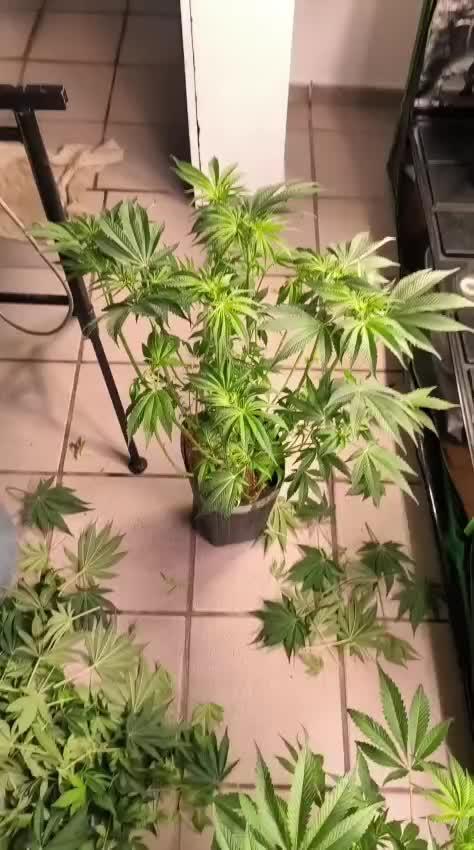
Few days into flowering and the lower internal nodes are already stretching up through the trellis. Hope they keep stretching for another week before they start bulking up.


Likes
5
Share


@Slappin719
Follow
Ok I'm supposed to be harvest around the 5 I just uploaded a bunch of weeks at once tried to keep it together. Ha

Likes
12
Share


@GrowBrosInc
Follow
Hectic week. Had some plumbing issues in the house so sorry for late update but the cal mag seems to be working. Last week I add any Nutes. It will be just flushing for the next two weeks. Left plant is maturing at a faster rate but nothing we cant handle! Really looking forward to Harvest time!
