Likes
Comments
Share
9/1/23 - Day 80 - Things are going well, the buds are growing everyday still. A couple more weeks! 9/3/23 - Day 82 - I snuck in about 1 min before the lights turned on. I got some cool shots up above. I also snuck in a cool photo from the base of the plant looking up. 9/5/23 - Day 84 - I took a few microscope shots of the THC. They are still very much see through so there is still a couple more weeks to go. I also got a mockup of the hanging system I will be using see pics above. If you are looking for this experience, check out https://www.getleaf.co/
Likes
5
Share
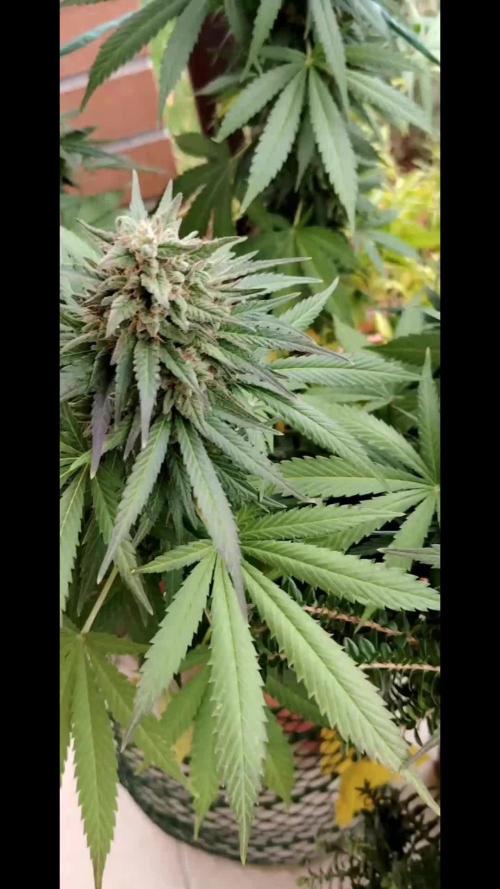
Growing's been good this week she transitioned to the outside very nicely very easily with little to no stress! She been super easy to this point
Likes
11
Share
ZKITTALICIOUS what a banger cant wait to smoke this Brand new strain from exotic seeds we would like to thank EXOTIC SEEDS for there sponsor on this grow Greenfingeress will be cloning her for more and I will be doing the veg on her. shes at week 2 now so it wont be long for more updates😎
Likes
13
Share
@Rob96
Follow
Decided to cut these now as trichs are all looking nice and milky with few ambers, buds are looking really nice, nice few tint of darker colours in there too really happy with result, hanging to dry now and will update the final week once all dry, been a great plant overall no issues and finished with some really nice looking weed hopefully smokes as nice as it looks
Likes
5
Share
I’m unloading two weeks today was just busy last week and forgot to add
Likes
6
Share
I'm very sorry. Everybody had a big move. This past couple weeks, everything settled in one of the plants did not make it unfortunately. This is the sour jealousy 2 weeks into flowering. Change the dose on the blue nutrient, up to fifteen milliliters per gallon, while dropping grow nutrients. Roots have more than filled the bucket and its space growing very well had a small p. H deficiency and stress from the move. Plant is recovering healthy.
Likes
12
Share
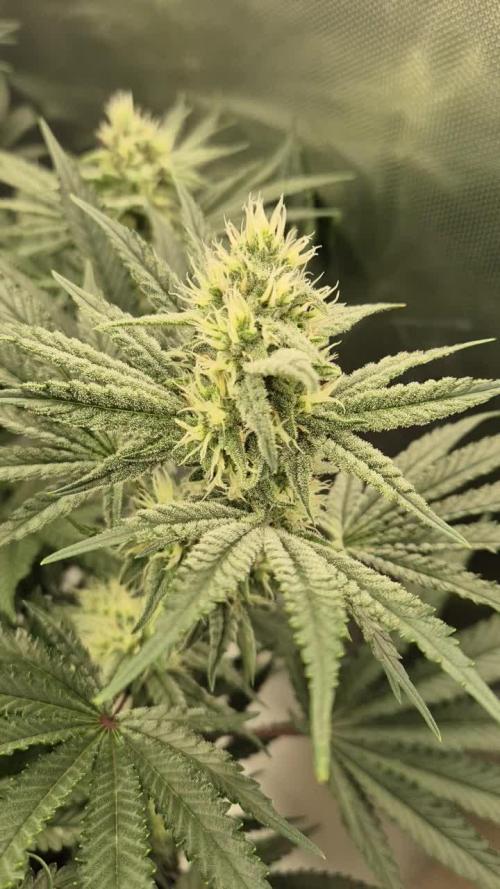
This ladie looking nice and short and buds starting ti fattened up nicely ,she smells insane really gassy ,she is rather thirsty thou,so far no major troubles with her shell get some defoliation during this week as really bushy,very sticky and good amount of resin so far
Likes
4
Share
Thriving in the indoor tent. Leaf and node growth all showing well. There is some lower growth in will need to cut but these auto girls are at least 10 days behind so no stress for them.
Likes
3
Share
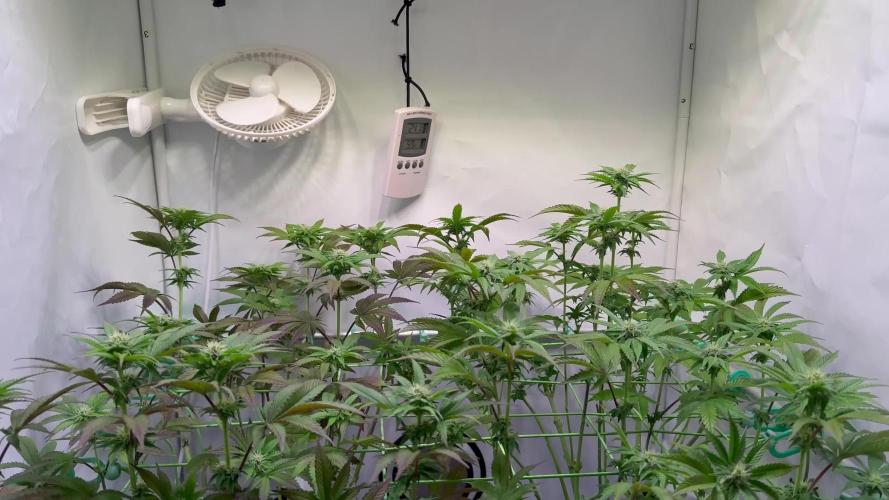
Everything still looking good. I did a small defoliation yesterday. For the most part, the stretch is over. May get one or two more inches though. Lights aren't moving any higher. Thanks for stopping by...
Likes
68
Share
Removed autoflower and put her in her own pot outside the tent. Foliars applied in strong blue 430nm with 4000Hz tone. 20-minute dose prior to application. In essence, you're seeing a combination of the infrared light reflected by the plant, which the camera perceives as red, and any residual visible blue light the plant reflects, which results in a purple hue. I was doing more stretching of the stems, adjusting weights, just a little too much, and it snapped almost clean. I got a little lucky in that it was still connected, wrapped her almost instantly while holding her in place with yoyo's. The core framework is now in place. If your soil has a high pH, it's not ideal; you want a pH of 6.4, 6.5, or 6.6, which is ideal. If you are over a pH of 7, you have no hydrogen on the clay colloid. If you want your pH down, add Carbon. If you keep the pH below 7, you will unlock hydrogen, a whole host of new microbes become active and begin working, the plant will now be able to make more sugar because she has microbes giving off carbon dioxide, and the carbon you added hangs onto water. Everything has electricity in it. When you get the microbes eating carbon, breathing oxygen, giving off CO2, those aerobic soil microbes will carry about 0.5V of electricity that makes up the EC. The microorganisms will take a metal-based mineral and a non-metal-based mineral with about 1000 different combinations, and they will create an organic salt! That doesn't kill them, that the plant loves, that the plant enjoys. This creates an environment that is conducive to growing its own food. Metal-based: Could include elements like iron, manganese, copper, or zinc, which are essential nutrients for plants but can exist in forms not readily accessible. Non-metal-based: Examples like calcium carbonate, phosphate, or sulfur are also important for plant growth and potentially serve as building blocks for the organic salt. Chelation in a plant medium is a chemical process where a chelating agent, a negatively charged organic compound, binds to positively charged metal ions, like iron, zinc, and manganese. This forms a stable, soluble complex that protects the micronutrient from becoming unavailable to the plant in the soil or solution. The chelate complex is then more easily absorbed by the plant's roots, preventing nutrient deficiency, improving nutrient uptake, and enhancing plant growth. Chelation is similar to how microorganisms create organic salts, as both involve using organic molecules to bind with metal ions, but chelation specifically forms ring-like structures, or chelates, while the "organic salts" of microorganisms primarily refer to metal-complexed low molecular weight organic acids like gluconic acid. Microorganisms use this process to solubilize soil phosphates by chelating cations such as iron (Fe) and calcium (Ca), increasing their availability. Added sugars stimulate soil microbial activity, but directly applying sugar, especially in viscous form, can be tricky to dilute. Adding to the soil is generally not a beneficial practice for the plant itself and is not a substitute for fertilizer. While beneficial microbes can be encouraged by the sugar, harmful ones may also be stimulated, and the added sugar is a poor source of essential plant nutrients. Sugar in soil acts as a food source for microbes, but its effects on plants vary significantly with the sugar's form and concentration: simple sugars like glucose can quickly boost microbial activity and nutrient release. But scavenge A LOT of oxygen in the process, precious oxygen. Overly high concentrations of any sugar can attract pests, cause root rot by disrupting osmotic balance, and lead to detrimental fungal growth. If you are one who likes warm tropical high rh, dead already. Beneficial, absolutely, but only to those who don't run out of oxygen. Blackstrap is mostly glucose, iirc regular molasses is mostly sucrose. Sugars, especially sucrose, act as signaling molecules that interact with plant hormones and regulate gene expression, which are critical for triggering the floral transition. When sucrose is added to the growth medium significantly influences its effect on floral transition. Probably wouldn't bother with blackstrap given its higher glucose content. Microbes in the soil consume the sugar and, in the process, draw nitrogen from the soil, which is the same nutrient the plant needs. Glucose is not an oxygen scavenger itself, but it acts as a substrate for the glucose oxidase (GOx) enzyme, effectively removing oxygen from a system. Regular molasses (powdered if you can), as soon as she flips to flower or a week before, the wrong form of sugar can delay flower, or worse. Wrong quantity, not great either. The timing of sucrose application is crucial. It was more complicated than I gave it credit for, that's for sure. When a medium's carbon-to-nitrogen (C:N) ratio reaches 24:1, it signifies an optimal balance for soil microbes to thrive, leading to efficient decomposition and nutrient cycling. At this ratio, soil microorganisms have enough nitrogen for their metabolic needs, allowing them to break down organic matter and release vital nutrients like phosphorus and zinc for plants. Exceeding this ratio results in slower decomposition and nitrogen immobilization, while a ratio below 24:1 leads to faster breakdown and excess nitrogen availability. Carbon and nitrogen are two elements in soils and are required by most biology for energy. Carbon and nitrogen occur in the soil as both organic and inorganic forms. The inorganic carbon in the soil has minimal effect on soil biochemical activity, whereas the organic forms of carbon are essential for biological activity. Inorganic carbon in the soil is primarily present as carbonates, whereas organic carbon is present in many forms, including live and dead plant materials and microorganisms; some are more labile and therefore can be easily decomposed, such as sugars, amino acids, and root exudates, while others are more recalcitrant, such as lignin, humin, and humic acids. Soil nitrogen is mostly present in organic forms (usually more than 95 % of the total soil nitrogen), but also in inorganic forms, such as nitrate and ammonium. Soil biology prefers a certain ratio of carbon to nitrogen (C:N). Amino acids make up proteins and are one of the nitrogen-containing compounds in the soil that are essential for biological energy. The C:N ratio of soil microbes is about 10:1, whereas the preferred C:N ratio of their food is 24:1 (USDA Natural Resource Conservation Service 2011). Soil bacteria (3-10:1 C:N ratio) generally have a lower C:N ratio than soil fungi (4-18:1 C:N ratio) (Hoorman & Islam 2010; Zhang and Elser 2017). It is also important to mention that the ratio of carbon to other nutrients, such as sulfur (S) and phosphorous (P) also are relevant to determine net mineralization/immobilization. For example, plant material with C:S ratio smaller than 200:1 will promote mineralization of sulfate, while C:S ratio higher than 400:1 will promote immobilization (Scherer 2001). In soil science and microbiology, the C:S ratio helps determine whether sulfur will be released (mineralized) or tied up (immobilized) by microorganisms. A carbon-to-sulfur (C:S) ratio smaller than 200:1 promotes the mineralization of sulfate, when the C:S ratio is low, it indicates that the organic matter decomposing in the soil is rich in sulfur relative to carbon. Microorganisms require both carbon and sulfur for their metabolic processes. With an excess of sulfur, microbes take what they need and release the surplus sulfur into the soil as plant-available sulfate A carbon-to-sulfur (C:S) ratio higher than 400:1 will promote the immobilization of sulfur from the soil. This occurs because when high-carbon, low-sulfur materials (like sawdust) are added to soil, microbes consume the carbon and pull sulfur from the soil to meet their nutritional needs, temporarily making it unavailable to plants. 200:1 C:S 400:1: In this range, both mineralization and immobilization can occur simultaneously, making the net availability of sulfur less predictable. This dynamic is similar to how the carbon-to-nitrogen (C:N) ratio regulates the availability of nitrogen in soil. Just as microbes need a certain amount of nitrogen to process carbon, they also require a balanced amount of sulfur. Both mineralization and immobilization are driven by the metabolic needs of the soil's microbial population. Sulfur is crucial for protein synthesis. A balanced ratio is particularly important in relation to nitrogen (N), as plants need adequate sulfur to efficiently use nitrogen. A severely imbalanced C:S ratio can hinder the efficient use of nitrogen, as seen in trials where adding nitrogen without balancing sulfur levels actually lowered crop yields. Maintaining a balanced carbon-to-sulfur (C:S) ratio is highly beneficial for plant growth, but this happens indirectly by regulating soil microbial activity. Unlike the C:N ratio, which is widely discussed for its direct effect on nutrient availability, the C:S ratio determines whether sulfur in the soil's organic matter is released (mineralized) or temporarily locked up (immobilized). Applied 3-day drought stress. Glucose will hinder oxygenation more than sucrose in a solution because glucose is consumed faster and has a higher oxygen demand, leading to a more rapid decrease in oxygen levels. When cells respire, they use oxygen to break down glucose, and this process requires more oxygen for glucose than for sucrose because sucrose must first be broken down into glucose and fructose before it can be metabolized. In a growth medium, glucose is a more immediate and universal signaling molecule for unicellular and multicellular organisms because it is directly used for energy and triggers a rapid gene expression response. In contrast, sucrose primarily acts as a signaling molecule in plants to regulate specific developmental processes by being transported or broken down, which can be a more complex and slower signaling process. Critical stuff. During wakefulness (DC electric current) life can not entangle electrons and protons. During the daytime, the light is sensed as multiple color frequencies in sunlight. Coherence requires monochromatic light. Therefore, at night, IR light dominates cell biology. This is another reason why the DC electric current disappears during the night. The coherence of water is maintained by using its density changes imparted by infrared light released from mitochondria in the absence of light. This density change can be examined by NMR analysis, and water is found to be in its icosahedral molecular form. This is the state that water should be in at night. This is when a light frequency is lowest and when the wave part of the photoelectric effect is in maximum use. 3600
Likes
6
Share
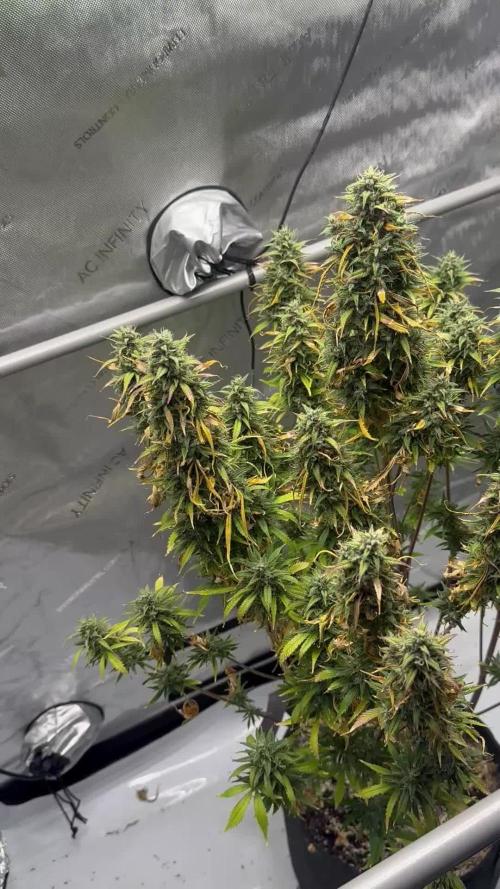
Just crazy. Stretched so high. Healthy strong branches with lots of bud sites. Defoliation next week
Likes
17
Share
Welcome to Flower Week 6 of Kannabia Pink Gelato I'm excited to share my grow journey with you from my Kannabia Seeds Project . It's going to be an incredible ride, full of learning, growing, and connecting with fellow growers from all around the world! Check out Kannabia Seeds with my link [https://www.kannabia.com/de?ref=61966] and grab the germination device or the strains I used . Trust me – it’s worth it for sure ! Get another 20% Discount at all products using the code [GGD] at the checkout. For this Project , I’ve chosen the Feminized Photo Strain Pink Gelato: Here’s what I’m working with: • 🌱 Tent: 225x150x150 • 🧑‍🌾 Breeder Company: Kannabia Seeds • 💧 Humidity Range: 45 • ⏳ Flowering Time: 56-63 Days • Strain Info: 23%THC • 🌡️ Temperature: 26 • 🍵 Pot Size: 20 • Nutrient Brand: Hy-Pro • ⚡ Lights : 600W x 2 A huge thank you to Kannabia Seeds for allowing me to try my Best with this amazing collection from Photo Strains they managed to Sponsore . Big thanks for supporting the grower community worldwide! Your genetics and passion speak for themselves! Let’s grow together – and don’t forget to stop by again to see the latest updates! Happy growing! Stay lifted and stay curious! Peace & Buds!
Likes
17
Share
Processed 2 plants and took some colas off one of the remaining plants make sure my washing volume is consistent. Holy smokes some amazing rosin. Consistency and terps are loud and stinky. Very potent effects. This mfker will put you on ur ass. The fresh press rosin is just outta this world. This strain dumps trichromes. What a great experience. Half way done and I have nearly 80 grams of rosin. Insane! Business is boomin
Likes
1
Share
Let em dry back for a week fed em a tea turned Blumat back on after calibration and cranked the light and adjustment to environment. Through them into a fit so I turned light back down and cranked vpd again. These girls are being super finicky this time around all root zone issues starting to think it's genetic never dealt with soany root zone issues before
Likes
4
Share
This week i transplanted to prepare for flower, watch the video and see exactly how I do it step by step. Sonnenerde discount code POT5
Processing
Likes
15
Share
@Dico29
Follow
They are starting to shoot some pistils. I added some random store fertilizer that is 1-4-7 and put it in the 3 gallon. I poured it in a water bottle and just eye balled it pretty slow and not for long. It seems to help
Likes
10
Share
@dillande3
Follow
Hello Guys, after 36 Hrs got a really good tap roots on Lemoncheollo Haze and Bubba Kush its long too, So just planted them directly to grow medium, Both uses Homemade Compost+Coco Coir +PottingSoil, after plant seeds then I covers them with clear solo cups (which is no need now I know) like after 1 Day I got lucky with LH and BK also showing some sign, Everything is OK yesterday. But in the next morning (Today) i got LH going down and looking Yellow color, quickly I did a another DIY dome with small LED that i got from cheap seedling dome.. Now its almost evening i got more green on the cotyledons, and i covers it with some dirt around. After checking answers from fellow growers, I Immediately took out the Domes and used my P1000 Light using my Phone LUX meter i used 4000 LUX, like less than 25% dimming and the LED is bit in up, Maybe i am wrong there! pls advise ,I also place a mini USB oscillating fan there too I hope i am not bothering you guys.)) Thanks
Likes
Comments
Share
Merry Christmas and happy holidays to everyone, and above all, a fantastic new year of growth with monsters, plants, unicorns, and all the magical beings we love. ** This week, mostly just growbox photos so you don't miss out on updates during the holidays. Our Georgia Pie #2 from Zamnesia has emerged with the first seedlings, and after a strong vegetative phase, a fimming seemed right to send her into flowering, especially since I'm afraid she'll get too tall. The first week went well; there are four of us in a small growbox, but I'll soon expand with the release of all the autoflowering strains. Selected techniques - This plant is going like a rocket, just repeated fimming and no topping, so she's practically straight, just like nature intended. We're 100% organic and 1000% Plagron, as usual. The soil we've chosen is Plagron Promix, unfertilized and 100% organic. The green bag and green label mean this with Plagron. We're in the early stages of the bloom phase, but we're well-equipped with fertilizers and additives. We've added Power Buds and switched too ALga Bloom, using power buds from first week is important to launch the bloom activity fast: - Power Roots 1 ml/l - Pure Zym 1 ml/l - Silic Rock 1 ml/l - CalMag Pro 1 ml/l - Sugar Royal 1 ml/l - Alga Grow 5 ml/l Once a week as a foliar spray - Vita Race 5 ml/l Choose your favorite style and calculate your results on the website: www.plagron.com Our new 720W Spider King lamp from Vanguard Hydroponics is still dimmed to its lowest setting. Visit the new Growshop area on the Zamnesia website: Z - https://www.zamnesia.io/it/531-growshop I can almost hear Ray Charles singing...Georgiaaa, try it. Z - https://www.zamnesia.io/en/11085-zamnesia-seeds-georgia-pie.html Z - Spice up your grow with this delicious US hybrid. Originally created in San Francisco, Zamnesia breeders worked hard to trace and stabilize the Gelatti x Kush Mints lineage that gave rise to the original Georgia Pie. The result? A 50/50 indica/sativa hybrid that grows beautifully both indoors and outdoors, quickly producing dense buds with deliciously sweet terpenes and a potent effect. Combining the genetics of two fantastic parent strains (Gelatti and Kush Mints), Georgia Pie is both productive and easy to grow. During the vegetative stage, plants grow vigorously, developing moderately spaced internodes and fairly broad fan leaves. Expect noticeable stretch when it transitions to flowering: mature plants can reach 130cm indoors and up to 200cm outdoors, with numerous side branches that will develop large buds. Thanks to its exuberant leaf growth, Georgia Pie responds very well to regular pruning, defoliation, and training. These interventions will open up the plant's canopy, exposing even the lower buds to light. Indoors, Georgia Pie typically requires 8–10 weeks of flowering to produce up to 500g/m², while outdoor plants are generally ready to harvest around mid-October, producing up to 500g/plant. You know it but I recommend it, here you will find many beautiful things basically "all the best that nature has to offer" Z - www.zamnesia.com Music // www.radionula.com + Feng Shui Music + Frequencies 432 Hz