Likes
Comments
Share
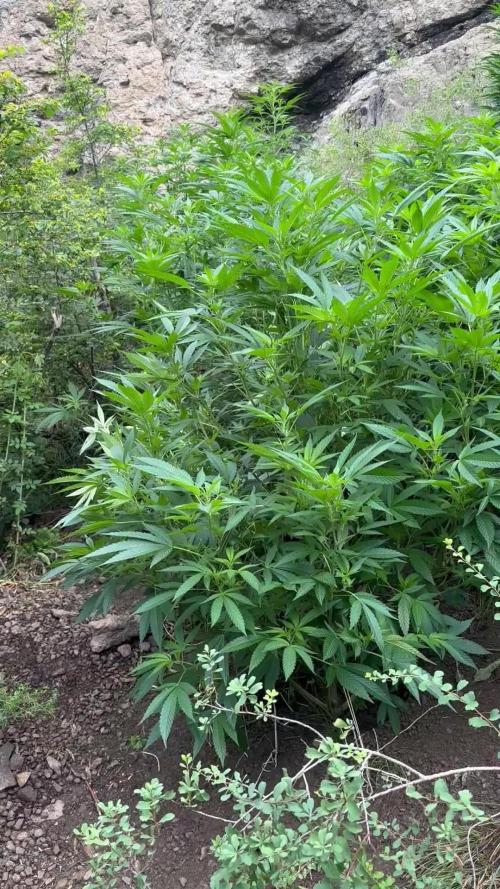
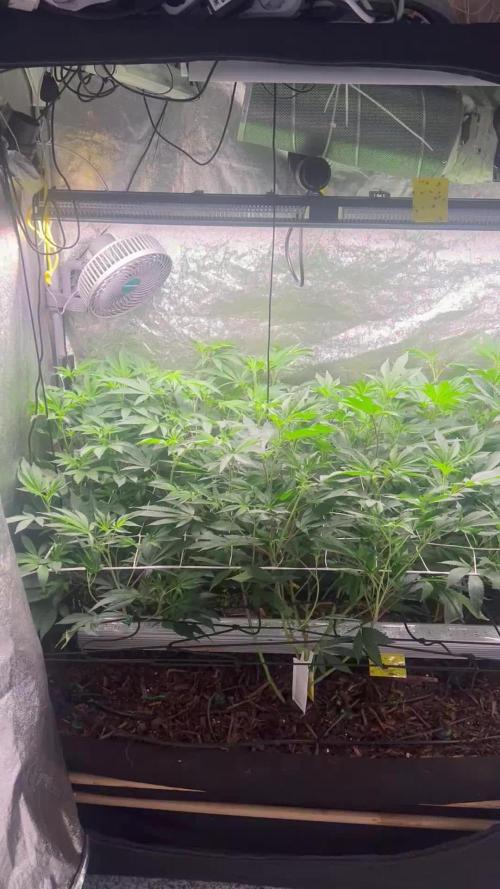
Aug 24: biggest of the four plants this year, and seems to be doing fine. Don’t take flash pics of photoperiods unless you’re immediately using a 730 nm light to put them into dark mode. Aug 26: have been watering in the morning with warmed water and that seems to help. Small kettle takes a while to boil but 2 L in a 5 gallon pail will warm up pretty cold water left out overnight. Lazy compost tea again today. I’ve held off for a couple weeks on the tea thinking that I didn’t want to over do N, but now’s the time for a little tea tuneup. Aug 27: all four plants look happier the day after another lazy compost tea. The yellow on the new growth has been pretty persistent on the Gelato throughout this grow, but she’s notably greener today. Now down to 14 h daylight, and still using the 730 nm far red light every night at dusk. Aug 28: still growing taller. Aug 30: this plant is get quite big for her intentionally smallish 5 gallon pot which will hopefully encourage her to finish faster.
Processing
Likes
6
Share
@metlotter
Follow
Switching nutrients to "Mid Bloom" ratios as of Sunday (I've been starting and ending my weeks on Thursday, so this is like a half week of early, half week of mid).
Likes
17
Share
@grow_rva
Follow
GP #1 required another week of heavy defoliation. Light defoliation on GP#2. Shes sticky to the touch and starting to show orange hairs. Smell is starting to really come out in the room even before I open the tent. GP#1 is at 43 inches and GP#2 is at 40 and a half. I added a video where she knuckled up after being supercropped a couple of weeks ago. I thought I needed to brace her to handle the bud weight but she’s going to be just fine. Til next week!
Likes
9
Share
@Wenz004
Follow
Experiment explanation see week1 this week got this: Plagron sugar royal 1ml/l Plagron power buds 1ml/l Plagron alga bloom 4ml/l Plagron green sensation 1 ml/l Aptus CalMg 0.6 ml/l smell is the best I have smelled ever...incredible
Likes
9
Share
@Sudo17
Follow
4/24/23 @ 12:30pm - We did something a little different today. Both plants given 1 gallon of campden water + 1 TSP RECHARGE + 1 TSP Mega Crop + 2 TSP Bloom. This should act like a flush of sorts but the water is loaded with nutes so hopefully this helps the plants turn more green. 4/26/23 @ 9pm - I checked on both plants tonight and the first inch or so of soil felt dry so I decided to water. pH'd 6.5 campden water + 1.75 tsp MegaCrop + 1 tsp Bloom + 1 tsp RECHARGE. 1.5 Gallons per plant. Still some yellowing and wilting but the leaves have straightened out since the wind burn adjustments. Hopefully they uptake all these nutrients, the smells are getting incredible. 4/28/23 @ 2:30pm - Checked on the girls today and I am happy to report they're finally starting to turn back to a nice shade of green. The wind burnt leaves have either died off or recovered. The smells are getting very strong and all the colas are super sticky. Hoping to see some fattening up over the next 2-4 weeks until harvest time. 4/29/23 @ 6pm - Both plants given 1 gallon of campden water + 1/2 tsp MC (4 grams) + 3/4 TSP Bloom + 1/2 TSP RECHARGE pH'd to 6.5 - First pistils starting to turn amber!
Likes
8
Share
@Skully
Follow
🇩🇪 Alles sieht gut aus 👌🏻 🇺🇸 Everything looks good 👌🏻 🇪🇸 Todo se ve bien 👌🏻
Likes
19
Share
Weirdo is at it again. Seems to me like she is in her final phase. Most of the leaves dying back buds starting to fall over but still a little immature🤷‍♂️ the other girl has a few weeks it seems but weirdo could be within the week. Ambers are starting to appear on the lower flowers. I am a little underwhelmed with her progress this week. I took a lower sample to evaluate things a little better. Plant two is moving along. Both plants cut their water demand down🤷‍♂️ After inspecting the sample, i notice alot of amber, mostly cloudy, with a few still clear, trichomes. I dont think she is ready as the buds are still developping new bracts. Hold out for a day or two, and go from there
Likes
8
Share
Likes
18
Share
Hey fellow green thumbs! 🌿💚 The day has finally come—our Auto Northern Dragon Fuel from Super Sativa Seed Club has been harvested! After an exciting journey, we’re thrilled to share the details of this incredible plant’s final stage. Let’s dive into the harvest report! 🌟 Harvest Details: Day 75: Harvest Day • Harvest Date: Day 75 • Harvest Method: Our beautiful Auto Northern Dragon Fuel was harvested yesterday. After weeks of careful nurturing, the time was right to bring in this amazing plant. 🌿🌼 • Preparation: Before hanging, we meticulously cleaned the plant, removing all leaves without trichomes to ensure a smooth drying process and to enhance the quality of the final product. 🌿✂️ Current Drying Process: • Method: The entire plant is now hanging upside down to dry. This method helps maintain moisture levels within the buds, allowing for a slower and more even drying process. 🌿🔄 • Environment: • Temperature: 18-22°C (65-72°F) • Humidity: 50-60% Maintaining these conditions is crucial for achieving a perfect dry and preserving the plant’s aromatic and flavorful profile. 🌡️💧 🌟 Plant and Bud Characteristics: Auto Northern Dragon Fuel: • Bud Structure: Dense and sticky, with an impressive trichome coverage. The buds are beautifully formed, showcasing the robust genetics of this strain. • Aroma: Even in the drying phase, the rich and potent aroma is unmistakable. Expect a delightful scent that hints at the powerful experience to come. • Trichomes: A thick layer of trichomes covers the buds, promising a potent final product with a great flavor profile. 🌿✨ 🌟 Care Tips: • Drying Process: Patience is key. Allowing the plant to dry slowly will enhance the final quality, preserving both flavor and potency. Ensure good airflow around the hanging plant to prevent mold and mildew. 🌬️💧 • Trimming: Once the drying process is complete (typically 10-14 days), it will be time to trim the buds. This is where we’ll shape the final product and get it ready for curing. ✂️🌿 • Curing: After trimming, curing the buds in jars for at least 2-4 weeks will further enhance the flavor and smoothness. This final step is essential for achieving the best possible smoking experience. 🍁 🌟 Genetics Spotlight: Auto Northern Dragon Fuel: • Characteristics: Known for its robust structure and dense buds, this strain has shown remarkable resilience and impressive bud development throughout the grow. The final product promises to be potent and flavorful, thanks to the thick trichome coverage and rich aroma. • Harvest Expectations: High-quality buds with a strong aroma and potent effects. The slow drying process will ensure the best possible preservation of cannabinoids and terpenes. 🌍🌿 Fun Fact: Did you know? 🌿✨ Drying the entire plant slowly helps retain more terpenes, which are responsible for the plant’s aroma and flavor. This method also helps preserve the potency and quality of the buds, resulting in a smoother and more enjoyable experience. For all the in-depth action and detailed explanations, head over to my YouTube channel! 🎥✨ I’m sharing all the tips, tricks, and step-by-step guides to help you get the best results from your grow. This week’s harvest has been particularly exciting, and there’s so much more to explore and learn together! 👉 Join me on YouTube Link in my profile 👈 🌟 Conclusion: Harvesting Auto Northern Dragon Fuel at Day 75 has been a rewarding experience. With the plant now drying, we’re eagerly awaiting the final product. Stay tuned for updates on the drying, trimming, and curing process, and get ready for a high-quality harvest! Happy growing, and see you next time! 🌿💚✨ #SuperSativaSeedClub #HarvestReport #NorthernDragonFuel #PlantMagic #GardeningJoy #NatureLovers #PlantPower #InspireGrow #YouTubeJourney
Likes
20
Share
Not particularly growing for speed or any dedicated reason this time round, just adding water and a abundande of positivity, gotta admit I do like the autoseed logo. Off we go again into the magical forest. (Arthrospira platensis) cultivated in high-alkaline, mineral-rich water in Kailua-Kona, Hawaii. It is renowned for having a higher nutrient content, including more carotenoids and essential fats, compared to other spirulina brands. It is frequently cited as a "complete food" due to its dense concentration of proteins, vitamins, minerals, and pigments. The nutritional profile of standard dried Spirulina platensis biomass. 3kg of spirulina powder has an approximate NPK ratio of 10-2-1 (or 10% Nitrogen, 2% Phosphorus, and 1% Potassium). Here is the breakdown of the nutrient content for 3kg of powder: Nitrogen (N): ~300g (10% of total mass) Phosphorus (P): ~60g (roughly 2% of total mass) Potassium (K): ~30g (roughly 1% of total mass) 3kg of spirulina powder is more than enough nitrogen for 4 cannabis plants in a 100-gallon pot—in fact, it is likely excessive and could cause severe nutrient burn or toxicity if not properly managed. Spirulina has a very high protein content (46% to 63% dry weight), which translates to a significant nitrogen source. It is often described as a 5-1-1 NPK fertilizer. 3kg (3000g) of powder in 100 gallons means 30g per gallon. General organic recommendations for potent amendments (like frass) are often around 1–3 tablespoons per gallon. 30g of powder is roughly 2-3 tablespoons, making this a very high-strength application rate if added all at once. Balance this with calcium/magnesium, and organic nutrient delivery in soil growing can lead to deficiencies in these nutrients. Not all of that 100 gallon is used, so figuring out precise measurements was ballpark, but there is about 10kg of engineered biochar in that pot. Mostly in the top half. Ideally, I'd have 25kg in a full active 100-gallon, but......... don't mess with something that is not broken. Roots do not utilize the entire 100 gallons. This has been a couple of years of trial and error, mostly error. The amount of cations you can add in grams depends entirely on the specific cation exchange capacity (CEC) of your biochar and the type of cation being added. Biochar CEC values vary widely, typically ranging from 4 to over 300cmolc/kg. Multiple Biochars in use, ranging upwards of 100cmolc/km. Different cations have different atomic weights Potassium K+ 39.1g/mol. Calcium Ca2+ 40.1g/mol. Magnesium Mg2+ 24.3g/mol. Nitrogen NH4+ 18.04g/mol. You get more nitrogen bang for your buck. It all depends on the CEC of the biochar you use, but brrrrrrrrrr roughly I'm looking at 500-600 grams worth of elemental cation exchange capacity, give or take. That's just for the biochar alone. Elemental cation exchange capacity refers to the ability of materials—such as soil, minerals, and biochar to adsorb, hold, and release positively charged ions Ca2+, Mg2+, K+, Na+, Al3+, and Zn2+. This capacity is a critical measure of nutrient availability in soil and energy density in electrochemical systems. Added calmag 2:1 to complement spirulina. Calcium (Ca): Approximately 150g - 300g of elemental calcium. Magnesium (Mg): Approximately 75g - 150g of elemental magnesium. So long as pH stays in 6.3 to 6.7 ish, the plant will unlock hydrogen. Plants will be able to cycle CEC for their own needs. Hydrogen ion pumping (proton pumping) is a fundamental mechanism used by plant roots to facilitate the cycling of nutrients within a medium's Cation Exchange Capacity (CEC), directly increasing nutrient availability. A growing medium's Cation Exchange Capacity (CEC) does not contribute directly to Electrical Conductivity (EC). CEC represents potential nutrient storage, while EC represents active nutrients in the water/soil solution. A medium with a high CEC can hold many nutrients, but if there is no water present, the EC will be low. 98% of plant nutrient uptake comes directly from the soil solution. 2% of nutrient uptake is directly from soil particles. Nutrients held on exchange sites (CEC) are not directly measured by EC until they are released into the soil solution through exchange with other ions (e.g., hydrogen ions from roots or fertilizer). Plants source the H+ ions (protons) used in cation exchange primarily by exuding carbon sugars into the rhizosphere, then microorganisms perform root respiration, which reacts with soil water to form carbonic acid H2CO3 that dissociates into H+ and bicarbonate. Roots also actively pump out H+ ions directly to acidify the rhizosphere, plants trade hydrogen produced through metabolism for essential nutrients held by the soil. In plant cells, the H+ (protons) used in proton pumping across the plasma membrane come primarily from the cytoplasm (cytosol). The protons are derived from internal cellular sources, including metabolic processes that release H+, and the regulation of intracellular pH homeostasis. Distilled water is highly useful in managing the electrical conductivity (EC) of a growing medium by allowing for precise control over nutrient concentration and assisting in the mobilization of nutrients from the cation exchange capacity (CEC) into the active, plant-available nutrient solution. Just add water & positive energy. Potential hydrogen. pH. + - , potential charge balance for hydrogen. So long as there is adequate oxygen in the soil and air and water moves at a decent interval, its practically impossible for the pH to skew in a soil that is taking in oxygen and releasing CO2 and nitrogen, I say practically, but meh, even with plenty of oxygen, the process of converting ammonium NH4+ to nitrate NO3- by bacteria releases hydrogen ions H+, which directly causes acidification (lowering pH). While water movement is necessary, consistent water moving through the soil can leach away basic cations Ca2+, Mg2+, K+, Na+, leaving behind acidic hydrogen and aluminum ions, causing pH to drop, especially in humid regions. High levels of CO2 in the soil (from intense respiration) dissolve in soil water to create carbonic acid, H2CO3, which lowers the pH. (barometric pumping removes that possibility) The pH in a cannabis cultivation environment, particularly in hydroponic or soilless setups, will often naturally drift towards acidic (lower pH) over time. Understand how to know when to lime the pH back up. Complex but critical. Once I understood this it helped ease the pain of understanding pH. Base saturation directly reflects the percentage of CEC occupied by base cations. Generally, as base saturation increases, soil pH increases because fewer acidic cations, H+ and Al3,+ are present on the soil colloid surfaces. At a pH of 7 or higher, the soil colloids are saturated with base cations, resulting in a base saturation of 90+%. While many sources include Sodium Na+ as a base cation, some calculations focused specifically on plant nutrients (like in some nutrient management contexts) may focus solely on the "Big 3": Ca2+, Mg2+, and K+. However, in soil science and CEC (Cation Exchange Capacity) measurements, sodium is usually included in the definition of total base cations, making it the "Big 4" base cations. At a pH around 5.5, soils often have a 45–55% base saturation, while a soil with a pH between 6.5 and 6.8 generally has an 80–90% base saturation. Base saturation is considered a reliable, albeit complex, indicator of soil fertility and the degree of soil weathering, acting as a crucial metric in soil classification and management. Once you take full control of the pH, so long as there is oxygen, and one keeps tabs on base saturation levels. Its near impossible for anything to go wrong. All you are essentially doing is adding water and waiting for any sign of deficiency. Not so much growing as eliminating the possibilities of things going sideways. Can't over or under water, can't skew pH, can't go anaerobic. Everything runs in optimal cycles, watering every 2 to 3 days or as required, depending on the rate of combined ET. A little warmer, a little drier, but never short on water. All the nutrients are already there in the medium, we still focus on the water, just not adding salts, but to mobilize nutrients held in the Cation Exchange Capacity (CEC) and move them into the active soil solution for plant uptake, the best supplements to add to water are fulvic acid, humic acid, or seaweed/kelp extract. Liquid solutions with high concentrations of essential trace elements. Distilled water has no alkalinity or minerals to help buffer or release nutrients. Adding these supplements turns the "empty" water into an active agent that forces nutrients off the CEC colloids into the solution for plant uptake. When to water? When Electrical Conductivity of soil gets low. No water, no conductivity.
Likes
30
Share
@SooSan
Follow
12/12 + 47 jours Vu qu’il y a 16 plantes mais que sur growdiaries on ne peut mettre que 8 variétés j'ai divisé en 2 diaries pour le bas de la tente 1️⃣ 🏠 90x60x90 ☀️ FC-E 4800 => puissance a 80% 🍁 1x Black Bomb / Philosopher Seed 2x Amnesia Lemon / PEV Seeds 1x Blueberry / PEV Seeds 1x Blueberry / 00 Seeds 1x Wappa / Paradise Seed 1x Dark Phoenix / Green House Seed 1x Quick Sherbet / Exotic Seeds 1x Mango Cream / Exotic Seeds 1x Banana Frosting / Sensi Seed 1x Hindu Kush / Sensi Seed 3x Fast Mix / Sweet Seed 📎 https://growdiaries.com/diaries/122084-grow-journal-by-soosan 📎https://growdiaries.com/diaries/124052-grow-journal-by-soosan 2️⃣ 🏠 30x60x50 ☀️TS1000 => puissance a 100% 🍁 4x Quick Sherbet - Exotic Seed 📎 https://growdiaries.com/diaries/122080-grow-journal-by-soosan
Processing
Likes
3
Share
Tried not to mess with them too much this week. Less stress for everyone!
Likes
4
Share
@Rangaku
Follow
Pulled the orange cookie today and couldn’t be happier, the yield is massive, the buds are dense, fruity sweet , sticky and pungent. This plant is prolly my best so far thanks to Dutchfem for another awesome strain . If you’re looking for something special give this strain a try . I’ve smoked a bit of this already and it’s Girl Scout cookies all over then just like a pallet cleanser of citrus freshness that keeps you coming back fir more .
Likes
12
Share
@Pedro_88
Follow
Estoy muy satisfecho con el crecimiento de mi chemical bride, ayer hubo un fuerte viento y tumbo a mí watermelon skittlez no la pude encontrar, pero ya tenemos otra en proceso que verán en estos días
Likes
14
Share
D85/F41 - 24/06/23 - She's almost ready, I think I'll start the flush soon D86/F42 - 25/06/23 - Temp is still too high, I'm trying to refresh the environment with air conditioning D87/F43 - 26/06/23 - First Thricomes Video. I'm going to start the flush today and I'll arwest next WE D88/F44 - 27/06/23 - Flushing D89/F45 - 28/06/23 - Flushing D90/F46 - 29/06/23 - Flushing D91/F47 - 30/06/23 - She's ready. Tomorrow I'll cut her
Likes
32
Share
@Belverde
Follow
Welcome everyone The first seven days of flowering have just ended for this beauty AYAHUASCA PURPLE 😈 Wow , she's already purple and smel like it 🔥🔥 Shecwas pretty fast in producing flowers 🌻 The appearance is not extremely healthy because of me, I was away for a few days and my self-irrigation system did not work properly, leaving the plants in shortage of water 💦 Maintaining the correct proportions between dry and wet soil is essential But she will recover 💪 In this week I have slightly defoliated to allow the light to penetrate more and also better ventilation ✂️🍃 About the lights cycle 💡 We are now in a 12/12 on / off.. Always under two SP3000, from Mars-Hydro, at 75% of the power.. About nutrients 👇 I still giving their always organic/veganic nutrients.. A little bit of silicium (Bionova) / Activator (Biomagno) / Crescita (Biomagno) / Activera (Biobizz) / Grow vegan (Bionova) / The Missing Link (Bionova) / X-Cell (Bionova) / Bioheaven (Biobizz) , a little bit of P-K 3-5 (Bionova) {in spray solution } and for the firsth time a little bit of Fioritura (Biomagno) and Bloom vegan (Bionova) Like i usually do, a little bit of everything at any watering 💧 And that's pretty much everything i've done.. See you in week n°7 📆 Thanks guys for stopping by 😎👍👍 FC ✌️ 🇮🇹
Likes
3
Share
Week 09 flower and still just watering until the end. Removed all leaf that had a long petiole, but the top three of main branches. Leaves are turning a dark purple and the buds a purple hue to them. The bud are good and frosty with the classic death bubba smell.
Likes
1
Share
@JibbyJack
Follow
This week the girls are looking strong, I will continue exactly the same regime. The buds are developing well. They are very sticky. The 2 non budding plants are showing signs of pre bud. Growing different strains is challenging. The timelines are very different. The 2 budding strains are Anethesia Auto from FB420 and Purple Haze from Zamnesia. I installed the Infinity AC Spectrum 3 camera this week, so far it has been awesome.
Likes
5
Share
They are close to being ready to harvest! Smelling very nicely and looking frosty. I’ll start flushing them soon since they should need only a week or so more to ripen.