


Likes
Comments
Share


@Lazuli
Follow
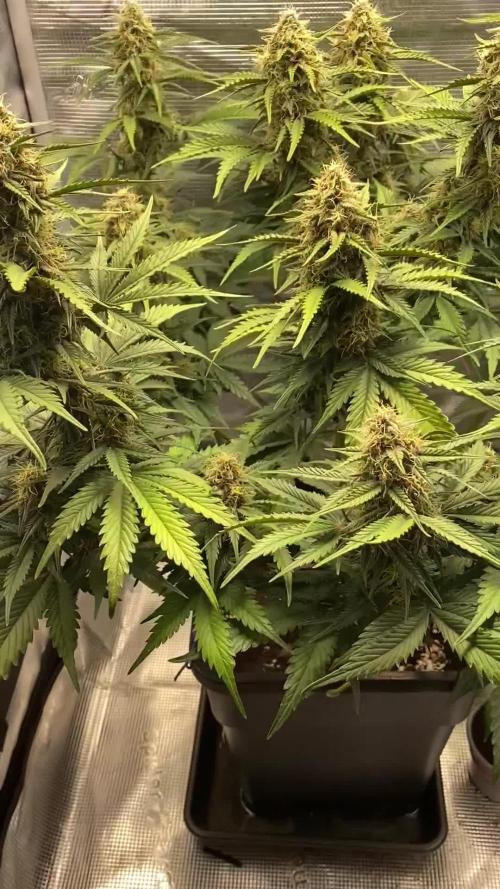
Big love to MSNL seeds for breeding this fire, if i ever win the lottery i will save each and every one of u guys and buy big mansions.
This plant is pure gold, elite level smell and resin production i cant believe its like life is a dream. Believe me if u grow it your life will change 💚



Likes
23
Share


@elementhc
Follow
3 autos are getting cut this week probably the last watering today.
The other 4 are a few weeks behind.
The big Photos are straight monsters Ethos genetics are amazing 👏.
They are in week 2 since flip.
The small photos are around week 5 or 6 veg they just got put under their own light for the first time SF7000 doing 50% at about 22" just to see how they react to the new light. They were also translated and topped yesterday.


Likes
23
Share


@peterfly98
Follow
Day24: wedding cheesecake and Tropicana cookies are flowering while the gorilla cookies is a little behind. I turned the exhaust system on to lower the humidity and manage the smell
Day26: I added bloom nutes and increased the light power to 75%. I also tied some branches down. Let’s see how they respond. So far they are going very well
Day27: good response to lst, a little healthier now as well

Likes
15
Share


@Daan_Buds
Follow
Good morning everyone😁😁
Day 16 of the flowering period plant is showing me she want some extra nutes. So i raised it with some extra pk and calmag from aptus just to give her an extra boost. Within the week i wanna see results. Now it s time to slowly dry her out so the lv will be at 40. In the end of her day the lv is between 52 and 42 but i want to lower it to 40 and try to keep it at 40 to max 46. Keep ya all posted
Day 19 already, and got some nutes probs. Runtz is going fine but the ww xl is having some major probs i think it' s missing some pk. Looking also at the Runtz i think she is also missing a little pk so raised pk on both ladies. Hope to see some results before the end of the week.
Day 21 has past and things are not in control yet. Raised my watering to 1.5 liter cause she is so thirsty. Hope to see results in the coming 2 days
Keep m green and grow Big Buds😁💚💯

Likes
4
Share


@Barcelona_Farmers710
Follow
Mientras yo me divertía en la spannabis las niñas se ponian cada vez mas resinosas farmers!! Solo basta ver la shining haze para darse cuenta que el mammoth p es brutal!!👌🏻

Likes
1
Share


Likes
10
Share

@Sators
Follow
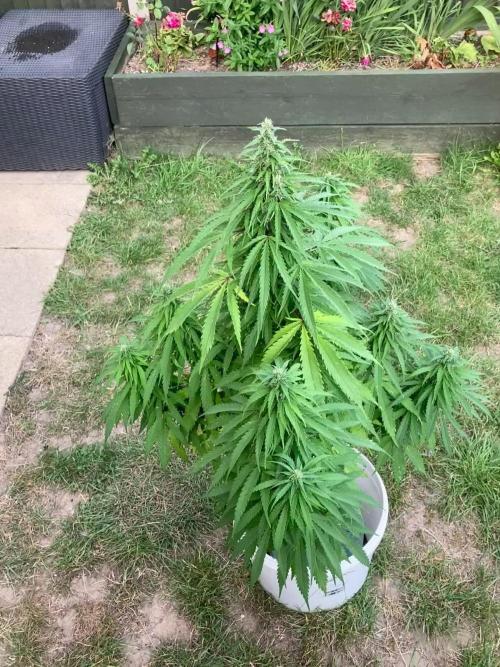
Day 99 – Royal resilience in full bloom!
What a week it’s been in Ramsgate — mostly dry, high UV, and just enough breeze to test her stems! Yet this CBD Auto 20:1 by FastBuds stands proud and unfazed. She’s forming a majestic canopy with striking vertical growth, and those buds are stacking like she means business.
After 17 days since the last Bat Guano top-dress, I’m preparing for a final microboost — a light sprinkle to support resin and terpene production as she enters her ripening phase.
Yellowing lower leaves show she’s using her energy wisely, and given this organic setup — super soil, sunlight, and zero synthetic inputs — her response has been truly exceptional.
A massive shoutout to FastBuds for creating such a powerful, stable, and sun-loving CBD strain! The vigor, resistance, and structure of this phenotype are nothing short of impressive — a real gift for low-intervention growers looking for clean, medicinal harvests.
This lady is thriving with confidence, and I’m genuinely excited to see her final expression soon. Patience and sunlight are doing their magic.
Likes
76
Share


@MagnoliaFrost
Follow
SETUP:
-MIGRO 100
-Grow space 60X60X160 (Mammoth PRO 60).
-Grow medium is Gold Label Special Mix Gold edition Premium, Airpot (10l).
_____________________________
29th August - Day 6 (Day 8 Beer Cup) - Gave them 50ml of 💧each. The Beer Cup one is looking like she needed more water.
_____________________________
1st September - Day 9 (Day 11 Beer Cup that's been transplanted) - I need to support both cause the tip over if not :(
_____________________________
6th September - Day 14 (Day 16 "Beer Cup") - Gave Final Pot 100ml of 💧. Nothing for "Beer Cup". Increased the LED from 1/5 of strength to 2/5 of strength.
Likes
7
Share


@StickyFingah420
Follow
Inicio de la sexta semana y así sigue el avance de la floración.
Ésta plata ha crecido a un ritmo impresionante y apesar de ser más pequeña en un inicio que su compañera de tienda, ha superado su tamaño notoriamente.
Todo sigue bien y sano como se esperaba.
Buenos humos! 👽
Likes
6
Share


@Hazecat_420
Follow
Se viene próximamente la cosecha, cultivo limpio, estructura buena, buen olor y aroma intenso. Se aplica Flawless Finish para utilizar los últimos nutrientes de estas plantas, se espera el secado del sustrato y se comienza la cosecha

Likes
20
Share


@eldruida_lamota
Follow
Venga familia que ya viene la cosecha de estas Apple Fritter de RoyalQueenSeeds, que ganas que tenia ya de darles machetazo.
No veas que pinta que tienen estas plantas.
Las flores aparte de prietas se ven bien resinosas.
a sido una genética con la que disfruté mucho cultivarla, es algo complicada cultivarla pero merece la pena si eres cultivador con experiencia no te será problema cosechar.
Agrobeta:
https://www.agrobeta.com/agrobetatiendaonline/36-abonos-canamo
Mars hydro:
Code discount: EL420
https://www.mars-hydro.com/
Hasta aquí es todo , espero que lo disfrutéis, buenos humos 💨💨.
Likes
4
Share


@DRO420
Follow
Last week of flowering. I defoliated some more to let in more light to the lower buds so they can fatten up. Trics are all cloudy/milky with 1 or 2 yellowish trics.


Likes
14
Share

@MrGrowDiarie
Follow
Day 63
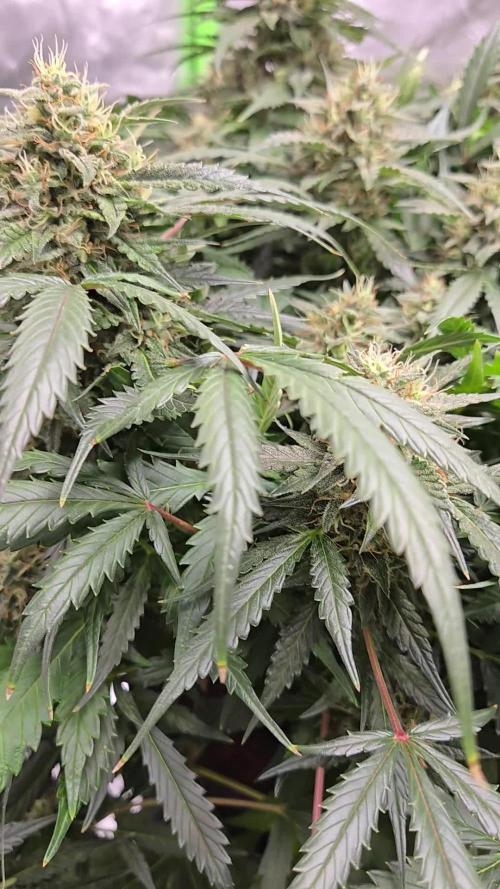
Today marks day 63 of flowering and the plants are really showing their final form. The buds have packed on a lot of weight over the past week, and the colas are looking dense, swollen and sticky to the touch. The pistils have mostly changed color now, with a good portion curling in and turning orange and amber, which gives the flowers that mature, finished look. When I check the trichomes under the loupe I can see that the majority are cloudy, with just a few still clear and the first signs of amber starting to show. This is a good sign that the harvest window is opening soon, though I’ll probably let them go a few more days to really finish and develop that extra potency and flavor.
The smell is very intense at this point. Every time I open the tent I’m hit with a strong wave of aroma that’s a mix of sweet, earthy and slightly fruity notes, depending on which plant I’m leaning into. It’s sticky enough now that just brushing against a bud leaves resin on my fingers. The leaves are starting to fade naturally as the plant finishes up, showing yellows and some purples, which also makes the buds stand out even more.
I’ve stopped feeding nutrients and have been giving only plain, pH-balanced water to let the medium flush out. Runoff is looking clean and the plants seem to be using up the last of their stored energy. Temperatures and humidity are steady, and the airflow in the tent is keeping everything fresh with no signs of mold or rot, which is always something I watch carefully this late in flower.
Overall the garden looks amazing and I feel like I’m right on track for harvest. The next week will be about patience and daily trichome checks until I see the balance of cloudy and amber that I’m aiming for. It feels like the long wait is finally paying off, and the excitement is building to finally chop, dry, and cure these beautiful buds
Likes
18
Share


@Budhunter
Follow
Day 108 of cycle, day 60 of flowering
Looking close at the trichomes I believe it could handle few days more to get more amber but I am satisfied with what I am seeing ✨
Harvesting day finished

Likes
6
Share



Likes
52
Share


@Ultraviolet
Follow
Ne Obliviscaris.
Humidity Day 40-45%, Night 60-65%
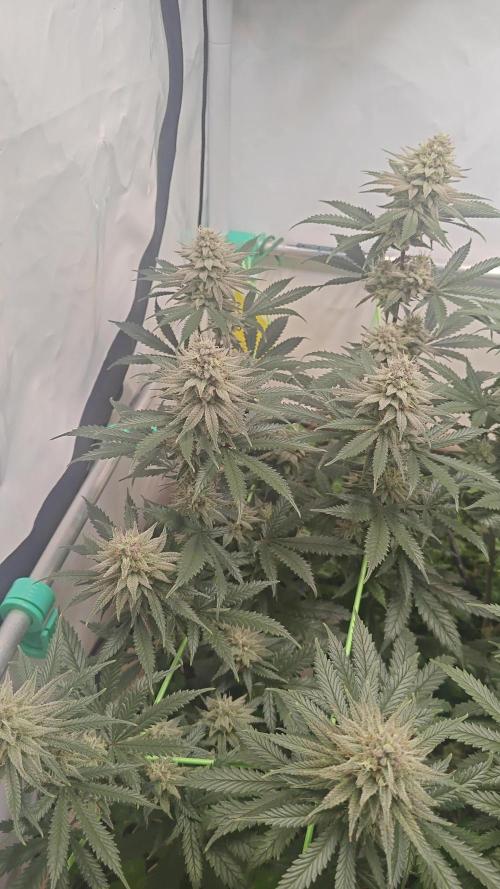
Internodes are very close together. was hitting 450umol at seedling level making it absorb more than it can use, reduced to 280-300umol @18 hours as expected vertical growth increased.
During the 18 hours of daylight the first 9 is highly saturated in blue, 5000 kelvin, the 9 hours thereafter are closer to 3000 kelvin.
Last 9 hours dosed 280nm. Height is too far to cause damage.
UVB light is not detected by plants in the same way other wavelength/colours are. UV cannot be measured using umol as it doesn't drive photosynthesis.
The plant has tiny little sensors that get set off to even little amounts, dimer salt bridges, the UV decays these salt bridges, which initiate response.
You don't need large/long exposure doses for the plant to recognize UV is present.
What's an enzyme?
Think of it like a multiplier, you can add an enzyme to any particular biological process to vastly increase its proficiency at a particular process.
Cannabis plants take blue/violet light and use it to create an enzyme called "photolayse". This allows the plant to repair UV damage done to the plant using a process called excision repair, this repairs the damage at a much much faster rate than it could by itself. Repairing 100% damage.
The key is the plant needs time to build a reserve of the repair enzymes before using it.
This is replicated in nature as, by midday UV levels peak, the generally cooler mornings allow lifetime to build up.
The problem I encountered was dosing with 280nm lights on or 1 hour after the lights were on.
Photomorphogenesis, the plant plans for the future of its growth, if the wavelength is not present during growth then how can it plan accordingly?
The very presence of UV changes parameters with which the plant will grow, light itself dictates the growth pattern of the plant.
Not only that it can dramatically alter the regular terpene profile of a strain in unexpected ways.
Gran daddy purple grown using 280nm can triple already high terpene linalool.
Linalool is terpene best known for lavender, largely responsible for its beautiful smell.
Trouble sleeping you say?
Having tried Durban poison from a dispensary and reading about its levels of tetrahydrocannabivarin. I've always wanted to taste the difference UV would make to such an already stand-out strain such as Durban.


Likes
Comments
Share


@BackdoorMan
Follow
Got back from an extensive vacation to find the girls healthy. Thanks son! Let’s go!
Likes
6
Share


@GoldenWeedGrower
Follow
Legend
Timestamp: 📅
EC - pH: ⚗️
Temp - Hum: 🌡️
Water: 🌊
Food: 🍗
pH Correction: 💧
Actions: 💼
Thoughts: 🧠
Events: 🚀
Media: 🎬
D: DAY, G: GERMINATION, V: VEGETATIVE, B: BLOOMING, R: RIPENING, D: DRYING, C: CURING
______________
📅 D57/B20 - 11/06/24
⚗️ EC: 1.0 pH: 6.1
🌡️ T: 25°C H: 70%
🌊
🍗
💧
💼
🧠
🚀
🎬 1 TL video
______________
📅 D58/B21 - 12/06/24
⚗️ EC: 1.0 pH: 6.4
🌡️ T: 25°C H: 80%
🌊 8 L
🍗 Calmag - Bloom A-B
💧
💼
🧠
🚀
🎬 1 TL video
______________
📅 D59/B22 - 13/06/24
⚗️ EC: 1.2 pH: 6.6
🌡️ T: 25°C H: 70%
🌊
🍗
💧
💼
🧠
🚀
🎬 1 TL video
______________
📅 D60/B23 - 14/06/24
⚗️ EC: 1.0 pH: 5.8
🌡️ T: 25°C H: 70%
🌊 15 L
🍗 Calmag - Bloom A-B - B52 - Big Bud - Bud Candy
💧
💼 Spinosad and pH-
🧠
🚀
🎬 1 TL video
______________
📅 D61/B24 - 15/06/24
⚗️ EC: 1.0 pH: 5.8
🌡️ T: 25°C H: 70%
🌊
🍗
💧
💼
🧠
🚀
🎬 1 TL video
______________
📅 D62/B25 - 16/06/24
⚗️ EC: 1.0 pH: 5.5
🌡️ T: 26°C H: 80%
🌊
🍗
💧
💼
🧠
🚀
🎬 1 TL video
______________
📅 D63/B26 - 17/06/24
⚗️ EC: 1.0 pH: 5.2
🌡️ T: 26°C H: 80%
🌊
🍗
💧
💼
🧠
🚀
🎬 1 TL video
