



shorts_status_processing


@BARNAMONKEYMAN
Volgen
Hi Sisters & Broos.
It's Just a spoiler from a final movie.
Enjoy it. Its the time to curate. I use jam pots of glass. I'll open 1h every day during the next 20 days.
Bye



@Black_Widow
Volgen
Привет садоводы
Началась новая неделя
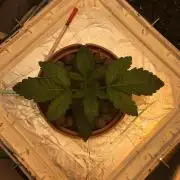
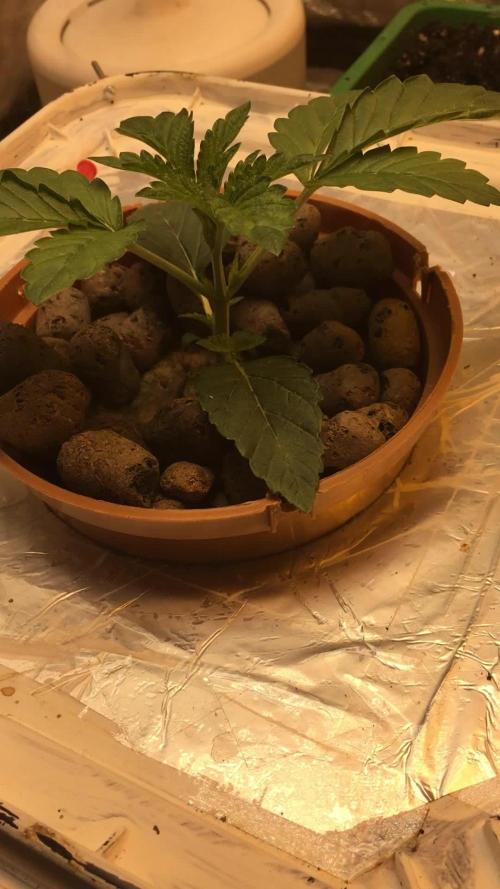
растения прошли начальную стадию роста и уже пересажены в свои горшки
растения чувствуют себя хорошо
в гидропонике раствор разведен на 600 ppm
в нем поддерживается ph 5.6
хочу еще немного подождать когда растения подрастут и начать их тренировать LST


@btcywtsitw
Volgen
All and all the plant was great but I would probably not grow again. It had a much slower flower time and really struggled.



@Natrona
Volgen
Frostbanger Plants 1-6
Week 8 May 18– 24
FLOWER 4
Nutrients :
GH Micro 25 ml
GH Gro 10 ml
GH Bloom 30ml
CalMag 30 ml
Recharge 10ml
Green sensation 16.5ml
Power buds 7.5 ml
5/17 PH 6.3, PPM 1130, temp 71
1ltr each
5/18 PH 6.67, PPM 935, temp 68.5 1 ltr each
5/20 PH 6.67, PPM 1330, temp 68.5 2 ltr each
5/21 PH 6.66, PPM 984, temp 69 1 ltr each videos & pics
5/17 Defoliation of yellowing leaves, feed, pics
As I mentioned last week, I must monitor and control the tent environment manually. For the past month, the humidifier has been an issue putting out way too much humidity; often leaving water in the bottom of the tent. In addition, the temperatures are also out of control. I added an AC last week to keep the temperature below 80. I finally determined the exhaust vent is also broken and has been for some time. AC Infinity does not extend the warranty to the replacement parts. I guess that makes sense since they would be in a state of perpetual free replacements. I bought a new one from Amazon that came with a new controller which is different from the controller 69 currently using. I decided that while it is very inconvenient and inefficient to monitor the tent through the day, I would rather finish this Frostbanger run without introducing a new unknown variable. I will continue using 3 circulating fans, the 4” exhaust vent from my 3x3.
I have the AC pushing air in and the exhaust pulling air out. This creates a neutral pressure tent environment-neither positive nor negative.
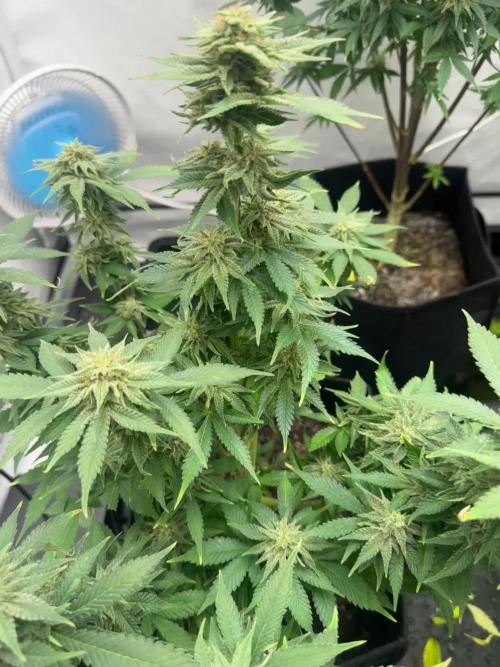
It looks like growth has stopped and plant height has been reached. Now is the time for buds to fatten and frost up. All 6 of them are short remaining less than 3 ft. They range from 15 to 31 inches. #4, 5 &6 are showing some fade, particularly #4.
Upon opening the tent, a melon smell comes off the buds if I get close, and more stickiness was observed during the process of defoliation. They are living up to the new strain’s name. #5 is the frostiest followed by #2. Wow week 3 of flower and that much frost already. Before FastBuds announced the strain name and characteristics, I was disappointed that FBA2502 could be an indica sleepy strain but the universe provides what you need at the time. The new strain profile indicates a whopping 29%THC with mainly sativa uplifting, euphoric, social effects with sweet fruity flavors which I love and enjoy. In addition, I recently bought a dap press and this strain is frosty and resinous. She will be great to press for live rosin.
FBA2502 is FROSTBANGER. Meet Frostbanger Auto, an autoflowering and Indica-leaning hybrid packing a staggeringly high THC content averaging 29%, making this one of the most potent strains on the market. It was created by Fast Buds through crossbreeding Gorilla Glue and Chemdawg, two equally iconic strains. Growers must know that these difficult-to-grow plants will pose specific challenges in terms of environmental control and nutrition, making them best suited for cultivators with some experience under their belt. The flowering cycle is short, averaging only 50 days, and yields are usually around 300g/m². The Frostbanger Auto flavor and aroma are both mouthwatering with a delightful combination of sweet, fruity, and flowery notes. The high is mainly Sativa-driven with uplifting and happiness-inducing effects that lead to euphoria and a general sense of well-being. You might feel sociable and talkative, but too spacey to say something. Following this surge of energy comes a deepening sense of relaxation, leaving you sedated and completely at ease with the world. Due to its potency and these long-lasting effects, medical patients hail Frostbanger Auto for treating chronic pain, stress, and even depression.
Measurements:
#1 15”
#2 20”
#3 17”
#4 30”
#5 31”
#6 24”
Your likes and comments are appreciated. Thanks for stopping by.
Growers love 💚🌿
💫Natrona💫



@ibbzy
Volgen
Sorry for the lack of posts but been dealing with a huge thrip infestation which is so devastating. Most tents are ruined but still salvageable and IPM on the way before next run!
Last photo is what's cooking in the background


@prebiancagrower
Volgen
Helloooo good people, how are you all?
I am very happy with this ladies, the Northern Light leaves are sooooo beautiful, wtf!!! :-D
The roots are amazing as well!
The Mimosa Auto I had to clean up all the plant, she was a little bit weak, but on the next day after defoliation, she was wonderful, full of energy again!!!
A happy growth for everyone.
Love!!

shorts_status_processing


@Stick
Volgen
In my quest for the perfect modern grow room, I got my hands on a super cool device: SensorPush. Each SensorPush is a tiny low-energy-bluetooth thermomether+hygrometer. I have 1 sensor in the indoor tent and 1 sensor in the outdoor micro greenhouse. Both are connected to the "SensorPush Wifi Gateway", allowing me to access to the datas at anytime from anywhere in the world. SO COOL! I started to collect datas more than a week ago and it has been already so helpful, I noticed that every single adjustment (side fan speed, thermostat mix/max, window opened/closed, driver dimming..) has a direct and immediate impact on the environment, and being able to see the detailed live statistics is the perfect way to adjust the parameters. I had one important issue this week: my timer was acting weird and the light was turning on 40 mins while the plants were in the middle of their night, but thanks to SensorPush I was able to notice the problem immediately and fix what could have gone dramatical. I love these sensors so much that I've started to dig into the SensorPush API, and guess what: after a few minutes I was able to get the datas showing up on my webcam feed, so now my webcam app is also showing me the temp+RH! SO COOL! Thanks for stopping-by and stay tuned for more big-data 😎


@KushSlayer
Volgen
week 5 of flowering. no problems and ladies are happy.
I put Alfa boost nutrient to laughing buddha and imperium x.
Just this month and they will be rady :)


@eldruida_lamota
Volgen
Acabamos la séptima semana de floración de las Original de GrowBarato familia, y no podéis imaginaros lo bien que huelen.
Tienen un buen color, se ven sanas, y van progresando adecuadamente la flor va poco a poco engordando y tirando bien de tricomas.
Creo que seguiré abonando una semana más , ya iremos viendo estos días que hago pero si creo que una semana más es necesario.
Agrobeta:
https://www.agrobeta.com/agrobetatiendaonline/36-abonos-canamo
Mars hydro:
Code discount: EL420
https://www.mars-hydro.com/
Las maximas de temperatura no superan los 26 grados y las mínimas no bajan 20, así que no me puedo quejar.
Los niveles de humedad también son los correctos van entre 45%/55% de humedad relativa.
Por supuesto el Ph lo estamos dejando alrededor de 6.
Hasta aquí es todo, buenos humos 💨💨💨.


@Drgreenthumb627
Volgen
by far the strongest and most vigorous of all my ladies. she is showing signs of flower more quickly than all the others



@DogDoctorOfficial
Volgen
💙 PROJECT BLUE TENT – WEEK 15 💙
🌿 BLUE WAFFLE F1 – PHENO B
🍂 AUTUMN IS HERE! BEAUTIFUL LIGHTER COLOURS, INCREDIBLY DENSE FLOWERS, AND THE FINAL CHAPTERS OF OUR JOURNEY!
Hello everyone, and welcome back to another chapter of Project Blue Tent! 💙🌱
My friends, my friends...
WHAT A BEAUTIFUL WAY TO APPROACH THE FINISH! 😂🌈❄️
The season is changing, the colours are appearing everywhere, and the girls are showing us their individual expressions as they approach the end of their flowering journey.
And today, it's all about Blue Waffle F1 Pheno B!
Her sister has been showing us some beautiful darker colours, with pronounced purple, reddish, and brown tones.
But Pheno B?
She's telling a slightly different story!
We're seeing lighter green tones, beautiful colour transitions, and fading throughout the plant. Her flowers are incredibly dense and compact, with an outstanding structure that makes her every bit as interesting as her sister.
Two phenotypes from the same F1 cultivar.
The same tent.
The same ecosystem.
And two beautiful individual expressions!
We're now in Week 15 of flowering, and after observing the flowers, the trichomes, the aroma, and the overall development, I've decided that it's time to move to plain water.
We're bringing the EC down to approximately 0.2 mS/cm, which is our starting-point water reading.
The pH is naturally around 6.8, and we're not using pH Plus or pH Minus.
We're keeping things simple and giving the girls a little time as we approach what I genuinely believe will be the final stage of this journey.
But there's plenty more happening inside this room!
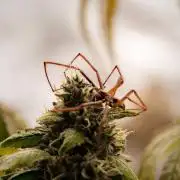
Matilda, our little spider friend, is making another appearance.
We're continuing our macro photography adventures, experimenting with some 3D-printed irrigation accessories for the next run, and observing the results of our under-canopy lighting setup.
And when I look at the flowers throughout this tent, I can't help feeling that all those weeks of work are coming together beautifully.
So, let's give Pheno B the attention she deserves!
🌿🌈💙
🌱 A QUICK LOOK BACK – HOW DID WE GET HERE?
Before getting into this week's observations, let's take a moment to remember the adventure behind Project Blue Tent.
We're growing four individual plants from two different Zamnesia F1 cultivars:
🌈 Blue Waffle F1 – Pheno A.
🌈 Blue Waffle F1 – Pheno B.
🥒 Pickle Lemon Haze F1 – Pheno A.
🥒 Pickle Lemon Haze F1 – Pheno B.
Four plants, two cultivars, and one shared ecosystem.
All four girls have been sharing the same tent, the same general environmental conditions, the same reservoir, the same irrigation system, and the same nutritional program.
Throughout this journey, we've documented their development individually, following the plants from their early stages through transplantation, topping, LST, canopy management, SCROG, defoliation, and flowering.
We've spent considerable time establishing the structure, organizing the branches, managing the canopy, and experimenting with different aspects of our growing environment.
We've also introduced supplemental under-canopy lighting using two LumiFlora 150W full-spectrum fixtures arranged in an X-cross configuration.
Nutritionally, we've been working with the PLAGRON Hydro line, gradually adjusting the program as the girls progressed through flowering.
And now, we're approaching the end.
The major structural work is behind us.
The flowers have developed throughout the canopy.
The plants are showing their individual characteristics.
And we're beginning to see the beautiful changes associated with this final stage.
One of the most interesting aspects of this project is that sharing the same environment doesn't mean every plant will express itself identically.
Even two plants from the same cultivar can show differences in structure, pigmentation, flower formation, and other characteristics.
And that's exactly what we're seeing with our two Blue Waffle F1 sisters.
Pheno A has been showing us some darker, more dramatic colours.
Pheno B is displaying a different visual expression, with lighter greens and her own beautiful combination of colours.
Same genetics.
Same room.
Same general approach.
Different expressions.
And that's precisely why every phenotype deserves her own diary!
💙🌱
🌿 BLUE WAFFLE F1 PHENO B – HER OWN BEAUTIFUL EXPRESSION!
Let's talk about this girl!
Because although her sister has been stealing plenty of attention with those darker colours, Pheno B is certainly not staying behind!
She's looking absolutely beautiful.
The first thing that catches my attention is the overall flower structure.
The flowers are incredibly compact, dense, and beautifully formed.
Looking throughout the plant, we're seeing those little golf-ball-like flowers from the lower sections towards the top of the canopy.
And that's one of the things I've been particularly enjoying during these last weeks.
The plant has developed within the structure we've established throughout the earlier stages, and now we're able to appreciate the results.
The flowers are taking centre stage.
The surrounding foliage is changing.
And the overall appearance is becoming increasingly interesting.
Compared with Pheno A, this girl is showing lighter green tones.
Her sister is moving towards a darker colour palette, while Pheno B retains a more pronounced green appearance throughout parts of her flowers and foliage.
But that doesn't make one more interesting than the other.
They're simply expressing themselves differently.
And honestly, I love having the opportunity to document those differences.
It's easy to look at two plants from the same cultivar and expect them to behave or look exactly alike.
But that's not always what happens.
Individual phenotypic expression can produce noticeable differences, even when plants share the same general environment.
And Pheno B is giving us another beautiful example.
💚🌈
🍂 THE FADING – WHY DOES PHENO B LOOK DIFFERENT FROM HER SISTER?
This is one of the most interesting things happening throughout the tent right now.
We're seeing fading across the plants, but the way that fading appears isn't identical between the two Blue Waffle F1 sisters.
Pheno A has been showing us more pronounced darker colours, including purple, reddish, and brown tones.
Pheno B, on the other hand, is retaining lighter green tones while also showing yellowing and other changes throughout her foliage.
So, why does this happen?
There are several factors involved in the colour changes we observe as plants progress through their life cycle.
One of the main contributors to the green appearance of leaves is chlorophyll.
As chlorophyll levels decline, other pigments can become more visible.
Carotenoids contribute yellow and orange colours, while anthocyanins are associated with red, purple, and blue shades.
Genetics play an important role in how these pigments are expressed.
Environmental conditions, including temperature and light exposure, can also influence the colours we observe.
This means that two plants growing side by side can display different colour combinations, even when they're exposed to the same general conditions.
And that's precisely what we're documenting.
We shouldn't assume that every colour change has the same cause, nor should we use fading alone as proof that a plant is ready for harvest.
Instead, we're looking at the complete picture.
The flower development.
The trichomes.
The pistils.
The aroma.
The overall condition of the plant.
And the changes we've observed throughout the previous weeks.
For Pheno B, the fading is becoming increasingly visible, but her overall appearance remains beautifully green compared with her sister.
And I genuinely love that contrast!
Two sisters, two colour palettes, and two individual stories.
🍂💚🌈
❄️ FLOWERS – DENSE, COMPACT, AND BEAUTIFULLY FORMED!
Now, let's appreciate those flowers!
Because this is where Pheno B really shines.
The flower structure is outstanding.
We're seeing beautifully compact flowers, with a dense appearance throughout the canopy.
And the consistency of the development is particularly interesting.
From the lower flowering sites to the upper sections, we're finding plenty of beautiful flowers to admire.
The photographs show the different angles, the overall structure, and the details that make this phenotype so enjoyable to document.
When we step back, we can appreciate the shape of the plant and the distribution of the flowering sites.
When we get closer, there's an entirely different world waiting for us.
The textures.
The pistils.
The trichomes.
The intricate details of the flowers and surrounding sugar leaves.
And that's one of the reasons I enjoy macro photography so much.
It allows us to explore the details that we might otherwise overlook.
Pheno B has developed a beautiful structure, and the compact appearance of her flowers is particularly impressive.
Combined with the changing colours and the visible frost, she's giving us plenty of reasons to keep the cameras ready.
And just like her sister, she's making it difficult to walk into the room without taking another photograph!
😂📸❄️
👃 THE AROMA – TWO SISTERS, ONE BEAUTIFUL ROOM!
Now, let's talk about something that our photographs cannot communicate.
The aroma!
The room smells absolutely incredible, and the overall aromatic experience is becoming another memorable part of this final stage.
One of the interesting observations is the similarity between the two Blue Waffle F1 sisters.
Visually, they're showing different expressions.
But the overall aromatic impression is remarkably similar.
Of course, without proper analytical testing, I'm not going to invent a terpene profile or assign specific aromatic compounds to either phenotype.
What I can tell you is what I'm experiencing.
The smell is beautiful, the room is wonderfully aromatic, and spending time around these girls has become an absolute pleasure.
And that's something I wish I could share through the photographs!
Unfortunately, you'll have to use your imagination for that part.
😂🌸💙
💡 UNDER-CANOPY LIGHTING – A HIGHLIGHT OF PROJECT BLUE TENT!
I really want to dedicate a section to our supplemental lighting experiment.
Throughout this project, we've been using two LumiFlora 150W full-spectrum fixtures beneath the canopy.
They're arranged in an X-cross configuration, supplementing the main overhead lighting.
And now, as we approach the final stage, we're able to appreciate the flowers developing throughout the different sections of the plants.
The lower flowering sites are particularly interesting to observe.
We're seeing compact flowers throughout the canopy, and the overall development has made this experiment one of the highlights of Project Blue Tent.
The main lighting system provides our primary illumination from above, while the LumiFlora fixtures add supplemental light beneath the canopy.
It's important to remember that several variables contribute to the final result.
Genetics, plant structure, canopy management, environmental conditions, nutrition, and the complete lighting arrangement all play their respective roles.
We cannot attribute every result to one piece of equipment.
But we can document the setup, follow the development, and evaluate what we're observing.
And that's precisely what we've been doing.
I'm particularly interested in reviewing the complete photographic record once the project is finished.
Having individual diaries for all four plants will also give us an opportunity to compare their development and identify interesting differences.
A massive thank you to LumiFlora for making this experiment possible!
These two 150W fixtures have certainly given us plenty to explore.
💡💙🌱
🌡️ ENVIRONMENT – SAME ROOM, SAME CONDITIONS!
Now, let's look at the environmental conditions.
As we've explained throughout Project Blue Tent, all four plants share the same general growing environment.
And this week, we're maintaining the established conditions.
Outside temperatures have increased slightly again, particularly during nighttime.
We're seeing readings above 22°C outside, with one measurement reaching approximately 22.4°C around midnight.
Fortunately, with the air conditioning running, we're managing to maintain the conditions inside the tent without allowing those outside fluctuations to push our internal temperatures higher than intended.
Our current environmental reference is:
🌡️ Day air temperature: approximately 25°C.
🌙 Night air temperature: approximately 20°C.
💧 Relative humidity: approximately 55%.
💧 Solution temperature: approximately 21°C.
🌱 Substrate temperature: approximately 21°C.
We're also keeping an eye on the other environmental readings throughout the room.
CO₂ reference: approximately 666 ppm.
The important thing is maintaining consistency.
We don't want sudden environmental changes simply because the weather outside has decided to become warmer again.
The AC is helping us manage those fluctuations, and we're continuing to monitor the room.
It's quite funny when you think about it.
Outside, summer is trying to make another appearance.
Inside, our girls are giving us a beautiful autumn display!
😂🍂🌈
💧 IRRIGATION – THE ESTABLISHED SYSTEM CONTINUES
The irrigation and drainage arrangement remains unchanged.
All four plants continue sharing the same reservoir and irrigation system.
The recorded watering volume remains approximately 1.6 litres per plant over 24 hours.
As always, this is our recorded reference value rather than a guarantee that every individual plant consumes exactly the same amount.
Individual plants can behave differently, even when they're sharing the same system.
That's another reason why we're continuing to observe each phenotype separately.
At this stage, we're concentrating on keeping the established system consistent while monitoring the plants and their individual development.
We're not introducing unnecessary changes to an arrangement that's already been established throughout the project.
And as we're now moving to plain water, we'll continue documenting the reservoir readings and the changes in our irrigation approach.
💧🌱
⚗️ THE NUTRITIONAL CHANGE – PLAIN WATER FROM HERE!
Now, let's talk about this week's biggest change.
As mentioned in our previous report for Pheno A, I've decided that it's time to move away from our previous nutritional recipe and introduce plain water.
We're now doing the same for Pheno B.
All four plants share the same reservoir, so this change applies to the entire room.
Our current readings are:
💧 EC: approximately 0.2 mS/cm.
💧 pH: approximately 6.8.
The EC represents the starting-point water reading.
The pH is naturally around 6.8, and we're not using pH Plus or pH Minus.
We're no longer adding:
PLAGRON Hydro A.
PLAGRON Hydro B.
PLAGRON Power Buds.
PLAGRON Green Sensation had already been discontinued earlier in flowering.
Why the change?
Simply because, after observing the plants, I feel we're approaching the end of the journey.
The flower development, the density, the aroma, the trichomes, and the overall appearance are all contributing to that impression.
Since this project isn't following an organic nutritional program, I've decided to introduce a period using plain water.
For now, I'm thinking about a few days, potentially around one week.
We'll continue observing the girls and decide how things progress.
I'm not putting an exact date on it because I want to keep the final decisions based on the actual condition and maturity of the individual plants.
And one important clarification: plain water doesn't magically remove nutrients from the flowers or guarantee a particular flavour outcome.
This is simply the nutritional change I've chosen for this stage of this particular project.
The important thing is to document exactly what we're doing and why.
So, from this week onward:
EC approximately 0.2 mS/cm.
pH approximately 6.8.
No additional nutrients.
Let's see how the final chapter unfolds!
💧💙
🕷️ MAHTILDA RETURNS – OUR LITTLE MACRO MODEL!
Well, my friends, apparently Matilda isn't finished with us yet!
Our little spider friend is making another appearance inside Project Blue Tent.
For anyone who missed the previous update, Mathilda is the little spider I spotted wandering around the room.
I decided to give her a temporary starring role in our photography session, and she turned out to be a fantastic subject.
And this week, we're continuing the photographic adventure!
I've included more photographs of Mathilda, because I genuinely enjoy the opportunity to capture these little details.
Look at those legs!
The textures!
The incredible structure!
The details that become visible when we move closer!
It's fascinating how different the world looks through a macro lens.
Something that might otherwise go unnoticed suddenly becomes an entirely different photographic subject.
And that's what I love about macro photography.
It encourages us to slow down, look closer, and appreciate details that we normally overlook.
Matilda has officially become part of the Project Blue Tent photographic collection.
😂🕷️💙
Of course, she's only a little guest appearance, but she's certainly making the most of her time in the spotlight!
📸 MACRO PHOTOGRAPHY – GETTING CLOSER TO THE DETAILS
Photography has always been an important part of documenting these projects.
And during these final weeks, there's so much to appreciate.
The flower structures.
The changing colours.
The trichomes.
The textures.
And our unexpected little spider visitor!
I've been enjoying getting closer to the subjects and capturing details that aren't always visible in ordinary photographs.
I'm also continuing to experiment with macro photography and focus stacking.
For anyone unfamiliar with the technique, focus stacking involves combining multiple photographs taken at different focus distances to create an image with a greater depth of field.
It's particularly useful when working with small subjects at high magnification, where only a limited area can remain sharply focused in a single photograph.
And between the flowers and Matilda, we've had plenty of opportunities to experiment!
I hope you enjoy the photographs as much as I enjoy taking them.
Sometimes the smallest details make the biggest difference.
📸💙
🖨️ BEHIND THE SCENES – NEW 3D-PRINTED IRRIGATION EXPERIMENTS!
Now, let's move away from the flowers for a moment and introduce something I've been working on behind the scenes.
I've been experimenting with 3D printing and have produced a number of prototype bases that I'm currently testing.
The idea is to create a small distribution plate beneath the watering points.
Instead of having water fall directly onto one concentrated area of the coco surface, the plate is designed to help distribute the incoming water more evenly.
The objective is simple:
A more even distribution of water across the surface.
I've printed several prototypes, and I'm currently evaluating their design and how they behave during small tests.
Will the water distribute as intended?
Will the design need adjustments?
Will the final version be suitable for the next run?
That's exactly what we're trying to find out!
I'm not making any claims about the results yet because this is still an experiment.
At the moment, I'm only carrying out a few small tests and checking how the water flows across the plates.
The proper evaluation will come with the next project.
I've included some photographs so you can have a little preview of what I've been working on.
And that's one of the things I enjoy most about this hobby.
There's always something to improve, something to experiment with, and something new to learn.
Project Blue Tent might be approaching its finish, but the next adventure is already taking shape!
😂🖨️💙
🔭 WHAT TO EXPECT NEXT WEEK – IS THIS THE LAST WEEK BEFORE HARVEST?
And here comes the big question!
My friends, I genuinely feel we're very close to the finish.
Looking at the flowers, their density, the trichomes, the aroma, and the overall development, I have the feeling that we're approaching the final days of this journey.
We've now introduced plain water, and we'll continue observing the plants over the coming days.
Perhaps this is the last weekly update before we move into harvest.
Perhaps we'll have one more chapter.
Let's see!
What I don't want to do is promise a harvest date simply because we're excited to reach the finish.
We'll continue looking at the individual plants and assessing their maturity.
Remember, we're growing two different cultivars in the same tent, and even the individual phenotypes can progress differently.
So we need to remain patient and allow each plant to reach her own finish.
What should you expect from the next update?
More observations.
More photographs.
More attention to the trichomes and overall flower maturity.
And potentially the beginning of our harvest documentation!
What shouldn't you expect?
Major environmental changes.
New training sessions.
A new nutritional recipe.
Or unnecessary interventions.
The girls have already done their part.
Now it's time to observe, document, and prepare for the next chapter.
We're getting there!
💙🌸🍂
💬 COME JOIN OUR DOGDOCTOROFFICIAL DISCORD COMMUNITY!
Before we finish, I want to invite everyone to join our Discord family!
If you're already part of the community, you know what we're building together.
And if you haven't joined yet, you're more than welcome!
We've created a place where growers can share their experiences, exchange knowledge, discuss equipment, show their gardens, share photography, and learn from each other.
We also organize our community photo championships, cups, and giveaways!
There's always something happening, and one of the things I appreciate most is the opportunity to learn from people with different experiences, setups, and approaches.
You don't need to be an expert.
You don't need expensive equipment.
You don't need years of experience.
Everyone is welcome!
Come and introduce yourself, share your photographs, join the discussions, and become part of the adventure.
And don't forget to check out our giveaway channels!
👽 Mr. Baggy and other surprises are waiting for you!
💙 JOIN US HERE:
https://discord.gg/dogdoctorofficial
Growers helping growers.
Sharing knowledge.
Learning together.
And having a little fun along the way!
We'd love to have you with us!
💙 FINAL THOUGHTS – TWO SISTERS, TWO EXPRESSIONS, ONE BEAUTIFUL JOURNEY!
My friends, Week 15 has been another beautiful chapter for Blue Waffle F1 Pheno B.
She's looking fantastic.
The flowers are incredibly dense and compact, the structure is outstanding, and the changing colours are giving us another beautiful expression of this F1 cultivar.
Compared with her sister, Pheno B is retaining lighter green tones, while Pheno A is showing us more pronounced darker colours.
And that's precisely what makes documenting individual phenotypes so interesting.
They share the same environment, the same general conditions, and the same nutritional program, yet each plant brings her own characteristics to the table.
We've also introduced plain water this week, bringing our EC down to approximately 0.2 mS/cm, with the natural water pH sitting around 6.8.
The environmental conditions remain stable despite the warmer temperatures outside.
Our irrigation arrangement remains in place.
And our two LumiFlora 150W under-canopy fixtures continue to be an important part of this project's lighting experiment.
We've had Matilda making another appearance, enjoyed more macro photography, and started testing some 3D-printed irrigation prototypes for our next adventure.
And now, we're approaching the finish.
I genuinely feel that this may be the final weekly chapter before harvest, but we'll let the plants guide us.
No rushing.
No guessing.
Just observation, patience, and good documentation.
Two Blue Waffle F1 sisters.
Two beautiful individual expressions.
And another reminder of why every plant deserves her own story.
Same tent.
Same ecosystem.
Different expressions.
Same passion.
Same love.
And another beautiful chapter of Project Blue Tent! 💙🌈🍂❄️
🙏 A HUGE THANK YOU – THE PEOPLE BEHIND PROJECT BLUE TENT!
A project like this doesn't happen alone, and I want to take a moment to thank everyone who has been part of this adventure.
A massive thank you to ZAMNESIA for providing the genetics and making it possible for us to document these beautiful Blue Waffle F1 and Pickle Lemon Haze F1 plants individually.
Thank you to PLAGRON for the Hydro nutrient line supporting the project throughout the journey.
A huge thank you to MARS HYDRO for the irrigation and drainage equipment helping us maintain consistency throughout the room.
Thank you to ZAMNESIA for the Phytonaut LED lighting, curved scissors, and clip fans that continue playing important roles in our setup.
A special thank you to LUMIFLORA for the two 150W full-spectrum under-canopy fixtures. This has been one of the most interesting experiments in Project Blue Tent, and I'm looking forward to exploring the results further.
Thank you to HEMP HOOKS for joining our adventure and providing our community with an exclusive discount opportunity.
🌐 https://hemphooks.com/
Discount code: DogDoctor
15% OFF YOUR ENTIRE ORDER!
We're looking forward to exploring your products further in upcoming projects and sharing our experiences with the community.
Thank you to GROWDIARIES for providing the platform where we can document the plants, share our photographs, and record the lessons we learn along the way.
And finally, a massive thank you to everyone following Project Blue Tent, reading our diaries, supporting the reports, sharing comments, and enjoying the photographs.
Your support makes sharing these individual chapters even more enjoyable.
And to our Discord family, thank you for making this community such a fantastic place to learn, share, and grow together.
If you haven't joined us yet, come and say hello, check out our cups and giveaways, and become part of the adventure!
💙 https://discord.gg/dogdoctorofficial
Until the next chapter, my friends...
Keep growing.
Keep learning.
Keep documenting.
Keep experimenting.
And never lose that passion for the little details that make every run special.
GROWERS LOVE, HAPPY GROWING, AND TAKE CARE, EVERYONE! 🌱💙🌈🍂❄️



@GuerillaGorilla
Volgen
28th August
Finally the first pistils pop out.
A glimpse of flower, allthough nothing compared to the other strains.
She already got her bloom feed last time.
Handfull of thomaskali. Maybe this helped to kick in flowering.
Not as thirsty as the others


@Gram_Solo
Volgen
Harvested 2.4 ounce from 1 plant so not bad results, taste was really good and got better over time,
Can't believe the colours coming thru was mint !


@Master_weeda
Volgen
Bonjour à tous les padawans et maîtres jedis
Tout d'abord merci à Tom de seedsman pour ses graines ainsi que greenhouse de me permettre de faire cette culture en m'offrant le feeding greenhouse
Je rappelle que cultive simultanément 9 pots de 10 et 11 litres dans une box prévu pour 4 et que je n'utilise que le strict minimum du matériel nécessaire à une culture correcte au prix le plus bas possible
MATÉRIEL CONFIGURATION
Box 80×80×160
Lampe led Lampwin 300 watts ×2
Ventilateur à pince 15 watts
Xiaomi Deerma humidificateurs 5L
Hygrometre thermomètre
Extracteur PROFAN 107 m3/h - 100
Prise programmable électronique ×2
1 pot carré noir 10 litres
Green house feeding enhancer
Green house feeding biobloom
Green house feeding biogrow
Substrat biobizz ligthmix
Fil de fer et pince coupante
Microscope
Petite balance de précision
CULTURE ÉTAPE PAR ÉTAPE
J'ai tout dabord fais germé ma graine avec le easy start de Royal queen seed et je suis agréablement surpris car franchement le taux de réussite est très élevé (17 graines sur 19) simple d'utilisation et très efficace.
Une fois la plantule sortie et d'une hauteur de 2 ou 3 centimètres je la prend délicatement et la place directement dans son pot définitif. Je préconise des pots allant entre 10 litres et 15 litres pour des autofloraisons cultivées en intérieur.
Le pot aura été préalablement préparé (video dans diarie) avec 30 grammes d'engrais greenhouse feeding biobloom et 30 grammes de greenhouse feeding biogrow, soit l'équivalent de 3 grammes par litre de substrat.
Je dépose donc la plantule dans son pot définitif je recouvre un peu de avec de la terre je tasse légèrement et j'arrose pour garder le substrat humide pas plus
Je place ma lampe led 300watts à environ 90 centimètres de la plantule avec un cycle de lumière de 24/24 pendant une semaine. Au début de la semaine 2 le cycle de lumière passera en 20/4 grace a un programmateur car c'est pour moi le cycle de lumière qui offre le meilleur rendement pour une autofloraison.
Jour1: léger arrosage
Jour2: léger arrosage
Jour3: la plantule commence à être plus vigoureuse mise en place de la ventilation pour augmenter sa masse racinaire et léger arrosage
Jour4: arrosage avec un litre et demi d'eau ph6.3 à laquelle j'ai ajouté 0.9 gramme de greenhouse feeding enhancer (soit 0.6 gramme par litre d'eau)
Jour5: aucune technique spéciale
Jour6: aucune technique spéciale
Semaine agréablement calme sans problème ni carence apparente
Que la force soit avec vous !

shorts_status_processing


@GrowGuy97
Volgen
Day 49 - Still giving the ladies just PH water with no nutrients trying to see if I can fix whatever is wrong with them😅 All in all the White Widow & Orange Sherbet plants I took individual pictures of are growing great & should have a pretty nice yield! Thank you for following & make sure to check back for daily updates! Happy growing friends!🌱✌️🏼


@NoProbation4Weed
Volgen
Very Nice looking and good Smelling Plant. Buds after Trim are medium dense but very tasty.
Flavourwise it goes into ripe Berrys with a hint of Citrus and Soapyness in the background.
The Plant looks exactly like on the pictures High-Giraffe-Seeds shows on their website.
All in all definetly a recommendable Plant to grow.



@RatmanJR
Volgen
June 21st update. 28 days since flip.
Plant is growing phenomenal. Was able to crank the lights up to 80% for the first time in this grow without her throwing a fit.
All of the banana peels I’ve fed her the last few weeks have disappeared and have been feeding my soil mites and my worms. I have not had any bad pests since I started using these predator mites I love it.
I can’t even begin to describe the smell of this thing. It’s like a raspberry tart mixed with just a little hint of gas. I’m so excited to give this a try when the time comes
Noticing Trichomes going all the way down some of the fan leaves so that is always cool to see.
Also I noticed this is common with living soil but I’m done bothering trying to defoliate. I will do one more in two weeks at day 42. But anything I remove at this point is just going to come right back.
As always nothing but water. Will give her some tea tmmr like every Sunday with some big 6, worm castings, molasses, and some cow cal 24.